Colin Powell has convincingly shown why force is required to disarm Iraq, argues Max Boot
Tony Blair, John Howard and other responsible world leaders recognise that Powell is right
COLIN Powell made a powerful, indeed incontrovertible case, at the UN yesterday that Saddam Hussein is sabotaging the UN weapons inspection process.
By tape recordings, satellite photographs and phone intercepts, the Secretary of State told the UN that Hussein is a murderous tyrant who has never wavered in his quest to acquire the most destructive weapons on earth. And not only that, Powell said, the Iraqi dictator has close ties with the al-Qaida terrorist network.
Of course, a good part of Powell's address was already known to the world. But his scathing indictment of Iraq's weapons programs and efforts to conceal them from inspectors constituted "irrefutable and undeniable" evidence that Hussein has committed a material breach of UN Resolution 1441. Tony Blair, John Howard and other responsible world leaders recognise that Powell is right, and that force most likely will be required to make Baghdad comply with its international obligations. Yet many people remain unconvinced -- and not all of them speak with French accents.
Despite the wealth of details provided by Powell, sceptics still scoff that there's no "smoking gun". The problem is that a gun doesn't smoke until after it's been fired. The world can hardly afford to wait for Hussein to use his chemical or biological weapons -- or, heaven forbid, nuclear weapons -- before deciding he's a menace.
Proponents of inaction inevitably raise the spectre of unintended consequences. This is a legitimate point. No leader should make the decision to unleash the dogs of war lightly, and history shows that the consequences of doing so are often unpredictable. But it's important to remember that the reverse is true as well: Not going to war -- not deposing the Iraqi dictator -- can have very serious consequences, too.
Just imagine what would happen if the US-led coalition were to back down now in the face of French and German intransigence at the UN. In America, Europe and Australia, this would be viewed by many as a victory for peace, harmony and free love. It would be viewed rather differently in the Middle East.
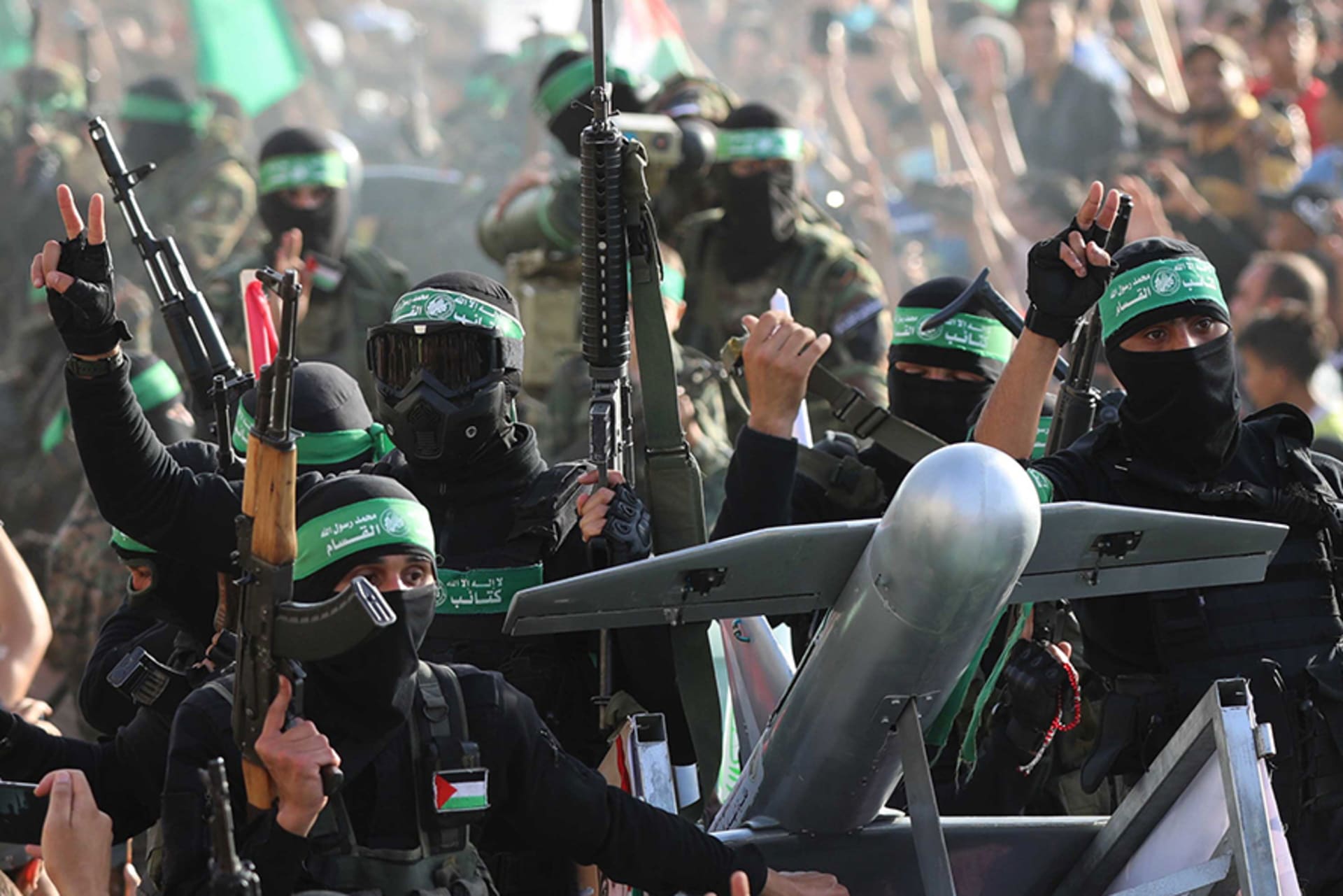
For months now, Hussein and his henchmen have been making outlandish threats against the coalition assembled on Iraq's doorstep. The Baathists promise to launch a holy war against the infidels and, in the words of Iraq's representative in Canberra this week, to make Australian soldiers suffer "horrible casualties" if they join US forces in an invasion of Iraq. Most Westerners hearing such bluster tend to roll their eyes and smirk. But such talk is taken much more seriously on the "Arab street" where all sorts of fantastical notions (such as it was the Mossad, not al-Qaida, that destroyed the World Trade Centre) are accepted as holy writ.
Hussein has already managed to spin his defeat in the 1991 Gulf War into a glorious victory commemorated at his grandiose Mother of All Battles mosque on the outskirts of Baghdad, decorated with minarets in the form of Scud missiles and Kalashnikov rifles. This rewriting of history will become all the more convincing if the US and its allies give Hussein another pass.
The West would be perceived as bowing before Hussein's threats, afraid to march on Baghdad for fear of the stout-hearted Iraqi soldiery and the weapons of mass destruction which they deny possessing. The US would get no points for its passivity; it would earn the contempt of the Muslim world for its weakness. This would be sure to inflame further anti-Western violence.
Recall what happened after September 11. There was dancing in the streets of the Middle East because America had been brought low. What happened three months later when the Taliban fell? Many commentators predicted that overthrowing a Muslim regime would arouse the Arab street. Instead there was a deathly silence -- sign of a new-found respect for the power of the US. The lesson is clear: Arabs (and most people in general) respect strength and shun weakness.
Osama bin Laden has been quite explicit in stating this view. "When people see a strong horse and a weak horse," the al-Qaida leader has said, "by nature they will like the strong horse." Unfortunately, the US and her allies have not appeared to be the strong horse for many years. Surveying a series of American defeats -- Vietnam, Lebanon, Somalia -- al-Qaida concluded that if you kill a few Americans you can chase them out of your country.
Coupled with their victory over Russia in Afghanistan, this emboldened the mujahidin to challenge the Great Satan directly. "We believe that America is much weaker than Russia," bin Laden said in a 2000 recruitment video, "and our brothers who fought in Somalia told us they were astonished to observe how weak, impotent and cowardly the American soldier is."
This (false) view of US weakness led al-Qaida to mount a series of escalating attacks against the US, bombing the World Trade Centre in 1993, two embassies in Africa in 1998, the USS Cole in 2000, and the World Trade Centre and Pentagon in 2001. The allied success in Afghanistan has stripped al-Qaida of some of its illusions -- but not all. They have continued attacking innocents, the worst recent atrocity being the bombing that left 181 people dead and 200 injured in Bali last year.
It does not matter if there is a direct connection between Hussein and al-Qaida, although there is much circumstantial evidence, laid out by Powell, to suggest that there is. What matters is how a failure to depose Hussein now will be perceived by the al-Qaidas of the world. It will be seen as a green light for further terrorism. No one can say what the effect of ousting the Butcher of Baghdad will be. But it is likely that, at the very least, it will make the enemies of civilisation think twice before striking again.
Max Boot, author of The Savage Wars of Peace: Small Wars and the Rise of American Power (Basic Books, 2002), is senior fellow at the Council on Foreign Relations in New York.