Why does this page look this way?
It appears that you are using either an older, classic Web browser or a hand-held device that allows you to view our content but may not work with every feature of our site. If you are using an older browser, please upgrade for the best experience.
Navigation
home > by publication type > task force reports > Finding America’s Voice
| Chair: | Peter G. Peterson, Senior Chairman and Co-Founder, The Blackstone Group |
|---|---|
| Director: | Jennifer Sieg |
| Publisher: | Council on Foreign Relations Press |
|---|
Release Date: September 2003
90 pages
ISBN 0876093217
$15.00
Task Force Report No. 48
The world’s opinion of the United States and of U.S. policy has plummeted in the wake of the war in Iraq. The resulting widespread anger, fear, and mistrust, warns this timely report of the independent Task Force on Public Diplomacy, are creating immediate and long-term problems for the United States that must be addressed.
The Task Force, which first issued a report after September 11, 2001, points to evidence that, despite administration efforts, anti-Americanism is more widespread and dangerous than ever before. The consequences are substantial, ranging from the difficulty faced by the Bush administration in forming a coalition for U.S. efforts in Iraq, to the increase in new terrorist attacks on American interests, to strained relations with America’s transatlantic partners.
Among the recommendations of the Task Force are making U.S. foreign policy more sensitive to concerns of public diplomacy, improving communications strategies overseas, enhancing training for U.S. ambassadors, and building congressional support for public diplomacy. Failure to take these steps will make it more difficult for the United States to maintain the war against terror and other policy undertakings, the Task Force concludes.
Peter G. Peterson, The Blackstone Group
Peter Ackerman, Rockport Capital, Inc.
Roger Ames, Warner Music International
Donald A. Baer, Discovery Communications, Inc.; former assistant to the White House director of strategic planning and communications
Ali Banuazizi, Boston College
Kathy F. Bloomgarden, Ruder Finn
Joan Ganz Cooney, Sesame Workshop
Geoffrey Cowan, University of Southern California; former director, International Broadcasting Bureau
Raghida Dergham, Al-Hayat
Joseph Duffey, Sylvan International Universities
Lynn Forester de Rothschild, ELR Holdings, LLC
Barry Fulton, Public Diplomacy Institute, George Washington University
Peter Georgescu, Young and Rubicam, Inc.
Marc Charles Ginsberg, NorthStar Equity Group, Inc., former U.S. ambassador to Morocco
Martin Gross, Sandalwood Securities
Bruce Gregory, Public Diplomacy Council
Henry A. Grunwald, former editor in chief, Time Inc. Publications; former U.S. ambassador to Austria
Bernard Haykel, New York University
John W. Leslie, Jr., Weber Shandwick Worldwide
Bette Bao Lord, Freedom House
Lewis Manilow, U.S. Advisory Commission on Public Diplomacy
Randolph Martin, International Rescue Committee
Scott Miller, Core Strategy Group
David E. Morey, DMG, Inc.
M. Ishaq Nadiri, New York University; adviser to Afghanistan President Hamid Karzai
Nancy Nielsen, Pfizer, Inc.
Harold C. Pachios, U.S. Advisory Commission on Public Diplomacy
Norman J. Pattiz, Westwood One; Broadcasting Board of Governors
Richard Plepler, Home Box Office
Moeen Qureshi, Emerging Markets Partnership; interim prime minister of Pakistan, 1993
Walter R. Roberts, Public Diplomacy Institute, George Washington University
William A. Rugh, AMIDEAST; former Foreign Service officer, U.S. Information Agency
Jill A. Schuker, The Kamber Group; former senior director for public affairs,
National Security Council
Ron Silver, Primiparous Productions, Inc.
Elliot Stein, Caribbean International News Corporation
Shibley Telhami, University of Maryland
James J. Zogby, Arab American Institute
Barry Zorthian, Public Diplomacy Foundation
To order Task Force reports, Council Special Reports, and Critical Policy Choices, please call, fax, or order online from our distributor, the Brookings Institution Press: phone +1.800.537.5487, fax +1.410.516.6998.
For information on other reports that are not for sale, or for general publications information, please call +1.212.434.9516 or email publications@cfr.org.
Start-Up Nation addresses the trillion-dollar question: How is it that Israel—a country of 7.1 million, only sixty years old, surrounded by enemies— produces more start-up companies than large, peaceful, and stable nations like Japan, China, India, Korea, Canada, and the UK? With the insights of geopolitical experts and investors, the authors examine this nation’s adversity-driven culture to answer this question and offer prescriptions for a global economy on the rebound.
In Forces of Fortune, Vali Nasr presents a paradigm-changing revelation that will transform the understanding of the Muslim world at large. He reveals that there is a vital but unseen rising force in the Islamic world—a new business-minded middle class—that is building a vibrant new Muslim world economy and that holds the key to winning the cold war against Iran and extremists.
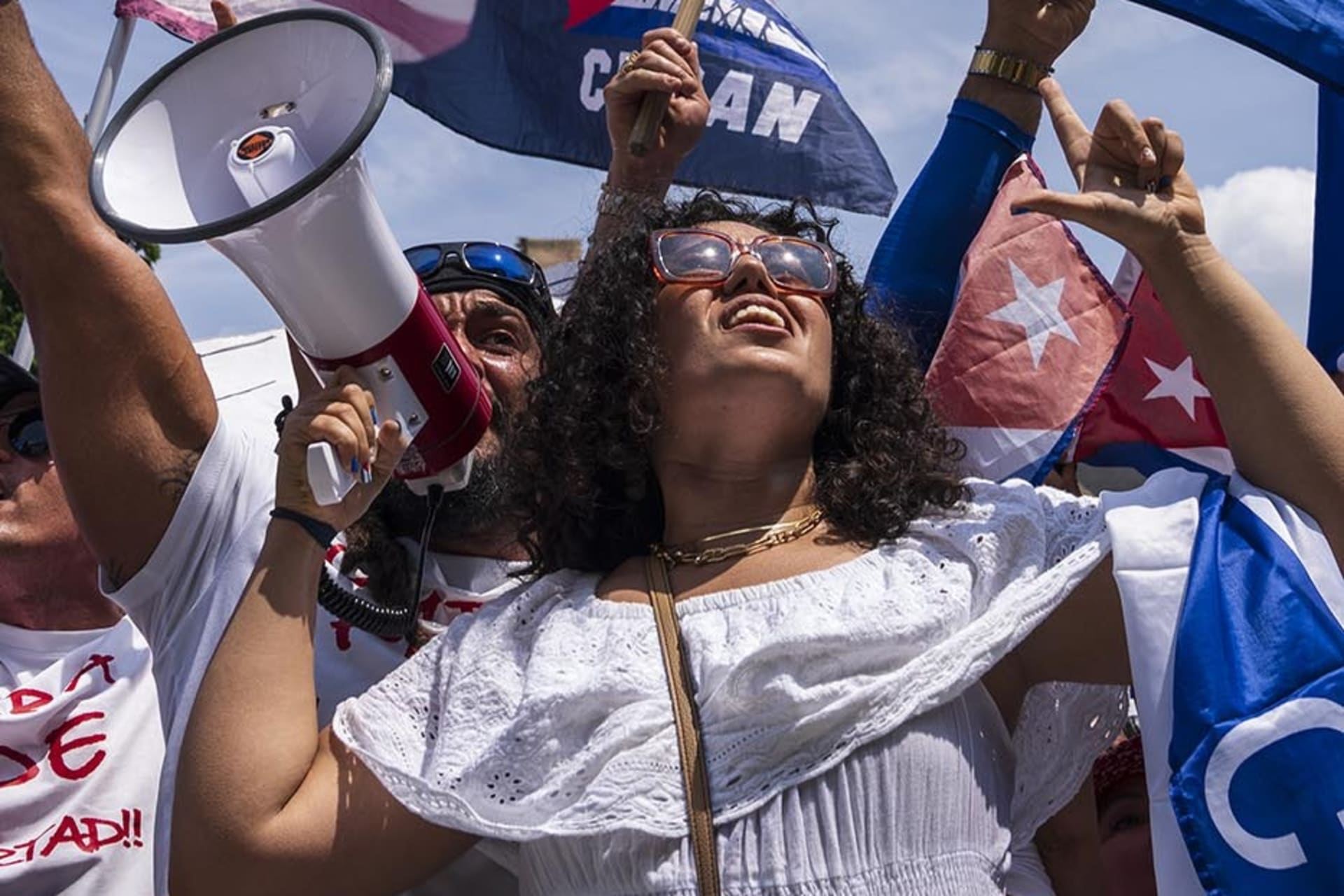
In Cuba: What Everyone Needs to Know, Julia E. Sweig presents a remarkably accessible portrait of Cuba's unique place on the world stage over the past fifty years, including its internal politics, its often fraught relationship with the United States, and its shifting relationship with the global community.
Complete list of CFR Books
The report of this bipartisan Task Force of distinguished leaders and experts represents a strong consensus on the importance of repairing America's immigration policy. It makes the case that maintaining America's political and economic leadership depends on attracting talented and hard-working immigrants, and on securing the country's borders in a smart, effective, and humane way.
This report finds that nuclear weapons will remain a fundamental element of U.S. national security in the near term, and makes recommendations on how to ensure the safety, security, and reliability of the U.S. deterrent nuclear force, prevent nuclear terrorism, and strengthen the nuclear nonproliferation regime.
About Independent Task Forces at CFR
Complete list of Task Force reports
Identifying international threats and acting on them may be the most difficult job for U.S. policymakers. This report
provides an actionable road map for managing international threats before they erupt into crises and makes a strong case that preventive action is not a luxury but a necessity.
For more than a decade, the United States has mostly watched from the sidelines as Asian countries organize themselves into an alphabet soup of new multilateral groups. In this report, the authors review the relationship between pan-Asian and trans-Pacific institutions and suggest policy guidelines for a new U.S. approach to this new Asian landscape.
Complete list of Council Special Reports
To request permission to reprint or reuse CFR material, please fill out this permissions request form (PDF), referring to the instructions on page 1.
Browse Content By Region IssuePublication TypeThe Think TankFor The MediaFor Educators About CFR
Copyright 2009 by the Council on Foreign Relations. All Rights Reserved.