Why does this page look this way?
It appears that you are using either an older, classic Web browser or a hand-held device that allows you to view our content but may not work with every feature of our site. If you are using an older browser, please upgrade for the best experience.
Navigation
home > by publication type > op-eds > Sharon’s Gamble Could Trigger a Holy War
| Author: | Henry Siegman, Former Senior Fellow and Director for the U.S./Middle East Project, Council on Foreign Relations |
|---|
April 7, 2004
Financial Times
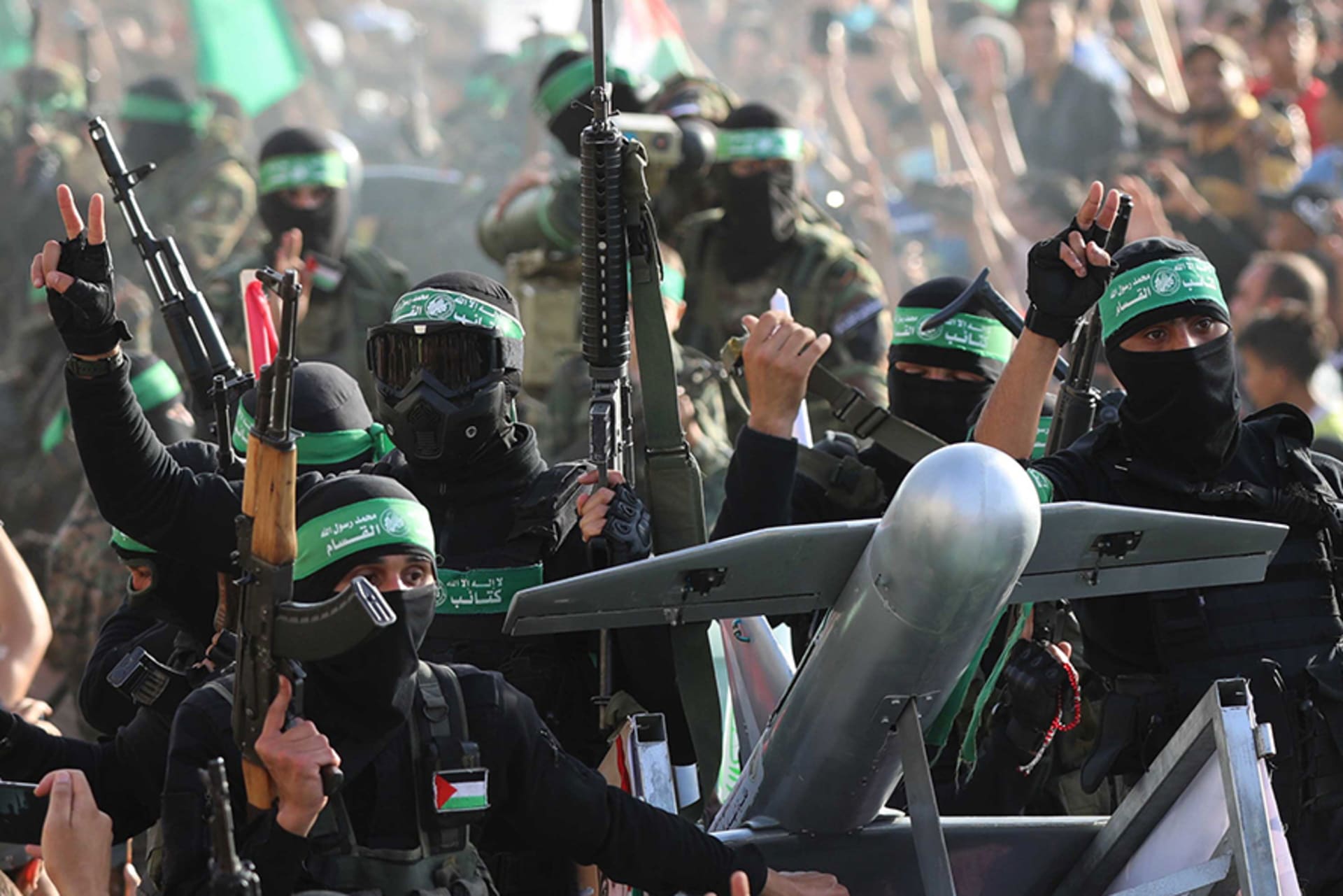
Since September 11 2001, Ariel Sharon, Israels prime minister, and members of his government have insisted that there is not much difference between al-Qaeda and Hamas and that indeed Israels war with Hamas places Israel in the vanguard of President George W. Bushs global war on terror.
It is this conception of Hamas that underlies not only Mr Sharons justification for the assassination two weeks ago of Sheikh Ahmed Yassin, the founder and spiritual leader of Hamas, but also the difficulty Mr Bush seems to have in objecting to Mr Sharons resort to extra-judicial executions.
The analogy between Hamas and al-Qaeda is false. Hamas, for all its fundamentalist Islamic passions, is a movement for Palestinian national liberation with a clear political agenda - the establishment of a Palestinian state. While its convictions define the Palestinian national goal as a return to all of Palestine, the goal of statehood is so central for Hamas that Sheikh Yassin offered an open-ended ceasefire (hudna) if Israel were to end its occupation of the West Bank and Gaza and return to the pre-1967 borders.
Israelis view those who attach any seriousness to such Hamas declarations as hopelessly naive. They are convinced that no one understands Hamas and Palestinians better than they do because they live with them and next to them. But for all this geographic intimacy, the understanding that many Israelis have of Palestinians is profoundly and pathologically distorted. The two peoples century-long conflict has resulted in demonisation of the other, not deeper mutual understanding.
An Israeli security expert who sees the situation in entirely different terms is Ephraim Halevy. Mr Halevy was until last September the head of Israels National Security Council and Mr Sharons national security adviser. In an interview published in the newspaper Haaretz (September 4 2003), Mr Halevy said: Anyone who thinks it is possible to ignore so central an element of Palestinian society (as Hamas) is simply mistaken. While Mr Halevy advocated a strategy of brutal force against its terrorist activities, he urged Israels government to encourage Hamas political and religious leadership to enter the fabric of the Palestinian establishment. He added: In the end, there will be no way around Hamas being a partner in the Palestinian government. Mr Halevy also insisted that the conflict between Judaism and Islam was resolvable and that the two could achieve a historic hudna such as existed between Islam and Christianity for the past 300 years.
When Abu Mazen was appointed prime minister of the Palestinian Authority last year, Hamas leaders declared a hudna partly because they did not want the US or their own activists to see their conflict with Israel as connected to al-Qaedas ideological war with the west. They feared that such a perception would discredit the Palestinian national struggle and permanently alienate Washington. Despite their political and ideological extremism, Hamas leaders are pragmatic and understand that, ultimately, Palestinian statehood cannot be achieved without US support. That is why when Abdel Aziz Rantisi, a hard-liner who replaced Sheikh Yassin as Hamas leader in the occupied territories, threatened to launch terrorist attacks against the US, he retracted the threat the following day.
Crown Prince Abdullah of Saudi Arabia in Jeddah told me in 1999 that Saudis saw the Israeli-Palestinian conflict in political, not religious, terms. Therefore, if the two parties were to reach a reasonable compromise based on the pre-1967 borders, Saudi Arabia would establish normal diplomatic ties with Israel.
Mr Sharons decision, however, to assassinate a man seen as a religious leader by both Palestinians and Muslims risks transforming what most Muslims have so far considered to be a conflict over competing national and territorial claims - albeit claims that have religious resonances - into a religious conflict whose claims are absolute and existential.
The insistence by Mr Sharon and so many Israelis that Sheikh Yassin deserved his fate is beside the point. To be sure, Hamas had no right to demand immunity for someone who provided religious legitimacy for the brutal killing of Israeli civilians. But if the assassination is transforming Israels conflict with the Palestinians into a religious war, the Israeli civilians in whose name Mr Sharon carries out these extra-judicial killings may yet pay a far more bitter price.
The writer is a senior fellow on the Middle East at the Council on Foreign Relations
To order Task Force reports, Council Special Reports, and Critical Policy Choices, please call, fax, or order online from our distributor, the Brookings Institution Press: phone +1.800.537.5487, fax +1.410.516.6998.
For information on other reports that are not for sale, or for general publications information, please call +1.212.434.9516 or email publications@cfr.org.
Start-Up Nation addresses the trillion-dollar question: How is it that Israel—a country of 7.1 million, only sixty years old, surrounded by enemies— produces more start-up companies than large, peaceful, and stable nations like Japan, China, India, Korea, Canada, and the UK? With the insights of geopolitical experts and investors, the authors examine this nation’s adversity-driven culture to answer this question and offer prescriptions for a global economy on the rebound.
In Forces of Fortune, Vali Nasr presents a paradigm-changing revelation that will transform the understanding of the Muslim world at large. He reveals that there is a vital but unseen rising force in the Islamic world—a new business-minded middle class—that is building a vibrant new Muslim world economy and that holds the key to winning the cold war against Iran and extremists.
In Cuba: What Everyone Needs to Know, Julia E. Sweig presents a remarkably accessible portrait of Cuba's unique place on the world stage over the past fifty years, including its internal politics, its often fraught relationship with the United States, and its shifting relationship with the global community.
Complete list of CFR Books
Browse Content By Region IssuePublication TypeThe Think TankFor The MediaFor Educators About CFR
Copyright 2009 by the Council on Foreign Relations. All Rights Reserved.