Why does this page look this way?
It appears that you are using either an older, classic Web browser or a hand-held device that allows you to view our content but may not work with every feature of our site. If you are using an older browser, please upgrade for the best experience.
Navigation
home > by publication type > interviews > Mead: Bush Needs to Be More 'Pro-Palestinian' to Win Friends In Mideast; Kerry Must Distinguish Himself from Clinton
| Interviewer: | Bernard Gwertzman, Consulting Editor |
|---|---|
| Interviewee: | Walter Russell Mead, Henry A. Kissinger Senior Fellow for U.S. Foreign Policy |
April 19, 2004
Walter Russell Mead, the Council on Foreign Relations’ Henry A. Kissinger senior fellow in U.S. foreign policy who recently spent five weeks in the Middle East, says he would advise President Bush that “the United States doesn’t need to be less pro-Israel, but we do need to figure out a way to be more pro-Palestinian.” The author of the newly published “ Power, Terror, Peace, and War: America’s Grand Strategy in a World at Risk,” Mead says that undertaking a major project on behalf of the thousands of displaced Palestinians is more important to Arabs in the Middle East than developments in Iraq and would do more to improve U.S. standing in the region.
Mead says that he would urge presumptive Democratic presidential nominee John Kerry to disavow the foreign policy of former President Bill Clinton. The Kerry camp has “scored some points in attacking mistakes the Bush administration made both before and after September 11, but you get too much of a feeling now that they would essentially like to go back to the foreign policy of the Clinton years. And the groundwork for a lot of the anti-Americanism that has flared in the last few years was laid in the 1990s.”
Mead was interviewed by Bernard Gwertzman, consulting editor for cfr.org, on April 19, 2004.
If President Bush read “Power, Terror, Peace, and War” and called you for foreign policy advice, what counsel would you give him?
The first piece of advice would be that the United States doesn’t need to be less pro-Israel, but we do need to figure out a way to be more pro-Palestinian. In my book I write about this, and I have just been in the Middle East for five weeks. My clear impression is that most people in the region now understand that Israel is here to stay. They understand also that Palestinians are not in large numbers going back to the lands which are now part of Israel. And most people are ready to move beyond that. But what they find unaccountable is that the peace process, both at Oslo [the peace accord that grew out of secret Israeli-Palestinian talks in 1993] and since then, has talked so little about the Palestinian people. That is to say, U.N. resolutions talk about compensation for the Palestinians [who lived on land now inhabited by Israelis]. Really no work has been done on how to set up the tribunal that will certify these claims. Where’s the money going to come from to pay them? What are the legal precedents in all of this? That should be part of a comprehensive peace process, and there is no reason the United States can’t take the lead on that.
Of course, President Bush has always stressed the need for a Palestinian state. And so did President Clinton.
But Bush more clearly.
What do you make of Israeli Prime Minister Ariel Sharon’s plan for abandoning the Israeli settlements in Gaza and some of the settlements in the West Bank?
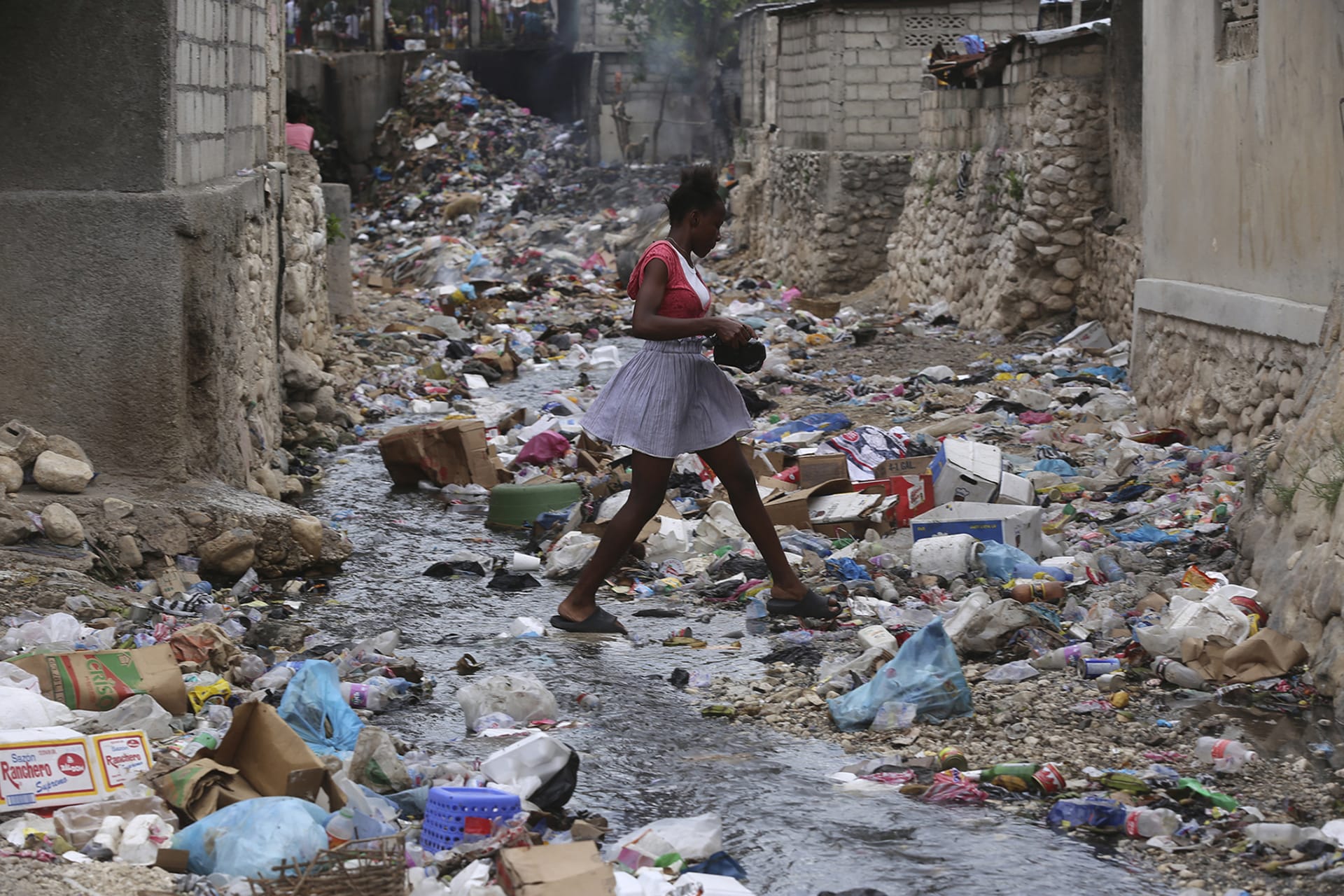
The problem is not so much on points of geography, but about what happens to the Palestinians. They are not all going to live in the West Bank and Gaza. They can’t. So how do we make sure that every Palestinian has a passport when there is a peace treaty? For a comfortable Palestinian farmer with an olive farm, this compromise peace is fine. The Israelis are out of his hair. He doesn’t have to worry about a settlement popping up, a wall is not going to go across his fields. But what about the people living in concrete hovels who have nothing, no economic future? The United Nations has been supporting a lot of these people. But when there is a peace treaty, suppose the world says to the Palestinians, “Congratulations, you’re not refugees anymore. You are citizens of Palestine. Go forth and multiply. Prosper. Be happy. Goodbye.”
Wouldn’t you expect the Arab states to do more?
The Arab states don’t seem to do a good job of providing for their own people, so I am not sure why they would suddenly develop an ability to help the Palestinians. Jordan is the only Arab state that has provided citizenship to Palestinian refugees and integrated them. But something has to be done about the Palestinians living in refugee camps in Syria and Lebanon. They all need to have some passport at the end of the day and rights to full economic and social participation where they are. Again, there are a number of Palestinians who are among the most educated and well-integrated people in the Middle East or anywhere in the world, and they are not so much of a worry. But you’ve got hundreds of thousands, perhaps millions, of Palestinians who are very poor and dependent on international assistance, and the fact is that peace needs to offer them something concrete so they would be more supportive of it.
But beyond all of that, I think the effect in the greater Middle East of seeing the United States take the lead in proposing a just and prosperous future for the Palestinians without in any way compromising Israel’s security and right to exist would dramatically reduce the level of anti-Americanism in the region. I think it is something we can and should do, and I hope the president will take a look at it.
On your trip to the Middle East, which included stops in several Arab countries, what kind of vibe did you get on Iraq?
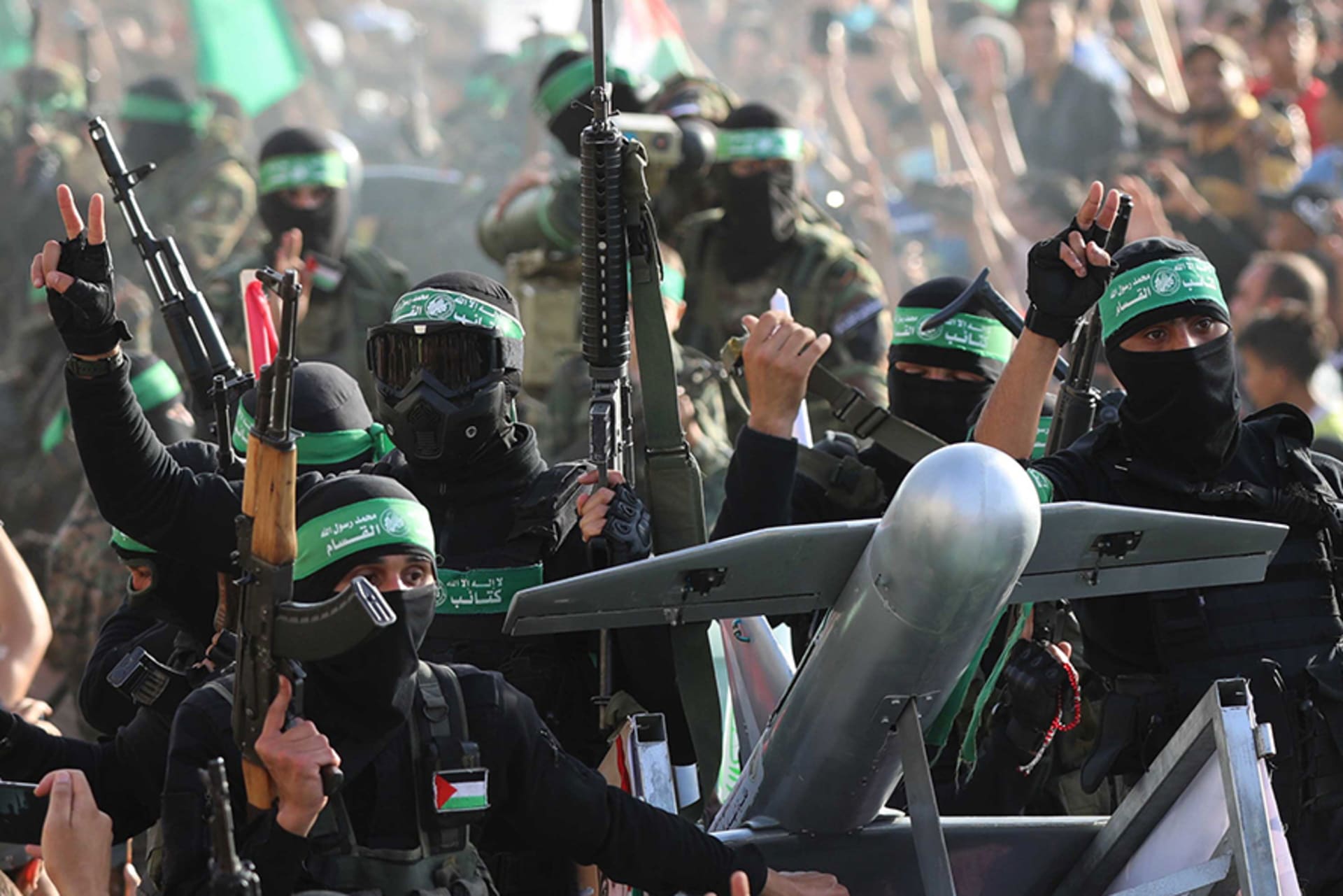
Interestingly, Iraq did not loom as large in the Arab world as the Palestinian issue. This is partly because I was in Jordan, for example, on March 22, the day [Hamas leader] Sheik Ahmed Yassin was killed. There really is very little sympathy for Saddam Hussein in the Arab world. There is not a great sense that the Americans know what they are doing, or are making much progress in Iraq. And there is satisfaction in seeing that the Iraqis are successful in resisting the United States. It is a kind of ego booster, the way Egypt’s “winning” the 1973 war, in the first stages, was an uplift. But I did not find when I spoke to people that the war in Iraq was seen as the major issue in American-Arab relations.
If the United States could broker an Israeli-Palestinian accord, would that go a long way to improving America’s standing in the region?
Even beyond an agreement, if we could get ourselves on the right side of the question of the Palestinian future, so that we are seen as a power actively seeking to promote a just and decent future for the Palestinians, that would help more than anything else.
So what has to be on the table here has to be a deal that meets enough of the Palestinians’ aspirations and needs that Palestinian opinion is prepared, however grudgingly, to accept it. This does not mean more concessions from Israel, whether geographically or economically. Israel has long said it is ready to help with the compensation issue, but obviously a lot of that money is going to have to come from outside, from the United States, from the Europeans. Our German friends are going to have to remember that there was a reason why so many Jews suddenly appeared in the Middle East in the late 1940s. The Germans have a historic responsibility for the displacement of the Palestinians, and they have one more big bill to pay.
Do you have an estimate for how much this will cost?
It’s hard to say. Everyone has a different estimate. The total paid to survivors of the Holocaust is somewhere between $50 and $100 billion. My guess is that the final number for the Palestinians will be in the same range, adjusted for inflation. Some of it might be in kind, settlements turned over by the Israelis, for instance. But the Palestinians were not the only people displaced in the Middle East. There are Jews who were forced to leave Arab countries. Israel would insist that a truly just compensation addresses their losses as well. So what you are looking at is a comprehensive approach that says that displaced Middle Easterners are entitled to the same kind of [compensation received by] so many Europeans who were displaced or lost everything after World War II.
If Senator John Kerry asked you for advice on his campaign, you’d give him the same answer, I suppose, about the Palestinians?
I would give that advice to any president or candidate. But for the Kerry campaign, there is something else that is very important. What I don’t hear yet from the Kerry campaign is an understanding that the Democrats, before September 11, did not have all the answers. They have scored some points in attacking mistakes the Bush administration made both before and after September 11, but you get too much of a feeling now that they would essentially like to go back to the foreign policy of the Clinton years. And the groundwork for a lot of the anti-Americanism that has flared in the last few years was laid in the 1990s.
I always assumed Bush’s personality and policies were largely responsible for the anti-Americanism.
The French had already made the decision in the 1990s that American power was too great and France needed to resist it. I think Bush gave them some opportunities. But the French strategic decision to reduce American power and build a multipolar world evolved from the foreign policy that was emerging in the 1990s. And in East Asia, the United States is blamed for not doing much to help those nations out after the 1997 financial crisis. A lot of the anti-Americanism in South Korea was really inflamed by that, and continues to be a factor to this day. The utter collapse of Indonesia and the new anti-Americanism that you see and the opportunity for radical Islamic groups to gain strength in Indonesia have their origins in the catastrophic consequences of both the collapse itself and the reaction to it.
What was the Clinton administration’s reaction to the East Asia crisis?
It supported the International Monetary Fund in very tough adjustment programs. What people said at the time was that when Mexico collapsed in 1994, the Clinton administration proposed a very generous bailout. And then when it happened in East Asia, it was very tough. Most people would agree the Clinton bailouts did not help in Asia. Kerry needs to understand that we did not have it right in the 1990s and that it somehow got screwed up by Bush. And also, the 9/11 Commission should hold Bush responsible for what went on between January 20 and September 11 of 2001, but you can’t ignore the fact that there were eight years of Democratic government before that and clearly we were not ready for what happened on 9/11. If you look at the 1990s, you can say we developed a beautiful constitution for Bosnia, but the two big things of the 1990s— the genocide in Rwanda and the buildup of the terror movement aimed at the destruction of the United States— we missed. That is not an acceptable record.
Kerry needs to say, “This is a new Democratic Party.” And I think to build the kind of confidence among the voters about new directions in foreign policy, the Kerry people have to make clear how the world changed for Senator Kerry on 9/11. Every American has a different story of how his or her view of the world changed on that date and afterwards. Kerry has not really shared that with people.
It is so tempting for the Democrats to bash Bush, and Bush, to be fair, has given them a great many easy targets to hit. The Kerry people have made an argument that sounds like, “We will do less than Bush about September 11. Maybe we will do it smarter. Maybe we will be wiser. But basically we are going to have a foreign policy that is less altered by September 11.” That’s the wrong line to take.
Weigh in on this issue by emailing CFR.org.
To order Task Force reports, Council Special Reports, and Critical Policy Choices, please call, fax, or order online from our distributor, the Brookings Institution Press: phone +1.800.537.5487, fax +1.410.516.6998.
For information on other reports that are not for sale, or for general publications information, please call +1.212.434.9516 or email publications@cfr.org.
Start-Up Nation addresses the trillion-dollar question: How is it that Israel—a country of 7.1 million, only sixty years old, surrounded by enemies— produces more start-up companies than large, peaceful, and stable nations like Japan, China, India, Korea, Canada, and the UK? With the insights of geopolitical experts and investors, the authors examine this nation’s adversity-driven culture to answer this question and offer prescriptions for a global economy on the rebound.
In Forces of Fortune, Vali Nasr presents a paradigm-changing revelation that will transform the understanding of the Muslim world at large. He reveals that there is a vital but unseen rising force in the Islamic world—a new business-minded middle class—that is building a vibrant new Muslim world economy and that holds the key to winning the cold war against Iran and extremists.
In Cuba: What Everyone Needs to Know, Julia E. Sweig presents a remarkably accessible portrait of Cuba's unique place on the world stage over the past fifty years, including its internal politics, its often fraught relationship with the United States, and its shifting relationship with the global community.
Complete list of CFR Books
The report of this bipartisan Task Force of distinguished leaders and experts represents a strong consensus on the importance of repairing America's immigration policy. It makes the case that maintaining America's political and economic leadership depends on attracting talented and hard-working immigrants, and on securing the country's borders in a smart, effective, and humane way.
This report finds that nuclear weapons will remain a fundamental element of U.S. national security in the near term, and makes recommendations on how to ensure the safety, security, and reliability of the U.S. deterrent nuclear force, prevent nuclear terrorism, and strengthen the nuclear nonproliferation regime.
About Independent Task Forces at CFR
Complete list of Task Force reports
Identifying international threats and acting on them may be the most difficult job for U.S. policymakers. This report
provides an actionable road map for managing international threats before they erupt into crises and makes a strong case that preventive action is not a luxury but a necessity.
For more than a decade, the United States has mostly watched from the sidelines as Asian countries organize themselves into an alphabet soup of new multilateral groups. In this report, the authors review the relationship between pan-Asian and trans-Pacific institutions and suggest policy guidelines for a new U.S. approach to this new Asian landscape.
Complete list of Council Special Reports
To request permission to reprint or reuse CFR material, please fill out this permissions request form (PDF), referring to the instructions on page 1.
Browse Content By Region IssuePublication TypeThe Think TankFor The MediaFor Educators About CFR
Copyright 2009 by the Council on Foreign Relations. All Rights Reserved.