Why does this page look this way?
It appears that you are using either an older, classic Web browser or a hand-held device that allows you to view our content but may not work with every feature of our site. If you are using an older browser, please upgrade for the best experience.
Navigation
home > by publication type > interviews > Bronson: Bush’s Handling of Sharon's Gaza Plan Was 'Diplomatically Inept'
| Interviewer: | Bernard Gwertzman, Consulting Editor |
|---|---|
| Interviewee: | Rachel Bronson, Former Adjunct Senior Fellow for Middle East Studies |
April 20, 2004
President Bush’s April 14 endorsement of Israeli Prime Minister Ariel Sharon’s withdrawal plan from Gaza was “diplomatically inept,” according to Rachel Bronson. A senior fellow and director of Middle East and Gulf studies at the Council on Foreign Relations, Bronson says the two issues Bush emphasized— denying a Palestinian “right of return” to Israel and allowing Israel to retain some West Bank settlements— were concessions many thought Palestinians might be forced to make eventually as part of a comprehensive peace plan. But she criticizes Bush’s effort to “cherry-pick” only those elements. “By just offering pieces of the peace deal rather than the whole thing,” she says, “the administration has made a settlement all the more elusive, at a time when we have enough headaches in the region.”
Bronson was interviewed by Bernard Gwertzman, consulting editor for cfr.org, on April 20, 2004.
President Bush has endorsed Israeli Prime Minister Ariel Sharon’s so-called unilateral disengagement plan. What do you make of the Israeli-Palestinian situation and the implications for overall U.S. Middle East policy?
The president very publicly endorsed two key issues. First, Palestinian refugees would by and large not be able to return to the homes they left or lands their families owned in what is now considered Israel proper. Second, in any resolution of the conflict, Israel would be able to keep some settlements. This represents a radical departure from American policy toward the conflict.
These concessions, however, are ones that most observers had expected the Palestinians to have to make eventually. They had been at least hinted at in the raft of peace proposals in recent years, including Saudi Crown Prince Abdullah’s peace initiative, the Clinton plan, the Taba talks, and the unofficial Geneva Accord.
The devastating part of what happened, though, is that the president has cherry-picked pieces of those plans but has not endorsed an entire plan, a plan that would have helped to soften the blow on the Palestinians and moved the parties toward reconciliation.
For instance, it has been clear for some time that the Palestinian refugees would not be able to return to their homes. But in return, they were to be given options: you can go to a Palestinian state, as the president offered, or be compensated through an international fund to which the United States, Europeans, Arabs, and Israelis would contribute. As far as I can tell, the administration has not put any effort into creating such a fund, although the idea has been bandied about for a while. Also, there is currently no Palestinian state to go to, although the president has endorsed the idea of one. The president is basically saying that Palestinians can’t return home, and they can’t afford to go anywhere else, but someday, if a Palestinian state is created, they could go there.
As for settlements, allowing Israel to keep some of them makes sense, but only as an incentive to give up other treasured territory in the West Bank. The deal needs to be that Israel gives up territory and in return it keeps a few towns, such as Ariel and Maale Adumim, and gets a raft of international security guarantees. Five years from now, the Israelis will be asked to give up territory and will ask what they get in return. It won’t be convincing to anyone to say, “Remember those settlements you got to keep in 2004? That’s what you get.” What incentive will there be to give up West Bank territory?
And, finally, if this were truly done right, there would be a statement that Jerusalem would be capital of two states. By just offering pieces of the peace deal rather than the whole thing, the administration has made a settlement all the more elusive, at a time when we have enough headaches in the region.
Why did Bush do it?
Two reasons: First, he is very excited about the notion of Ariel Sharon agreeing to pull out of Gaza. This is a major event for any Israeli leader, particularly Ariel Sharon, who is the so-called father of the settlements. Second, and this is more speculative, the president probably said, “Look, we all know Israel’s going to get these settlements anyway and the refugees cannot all go home, so let’s throw Sharon a bone to beat back his right-wing opponents.” But, of course, it is enormously explosive and I think the United States should have offered either the whole package or not said anything. I would argue for the former.
But surely the United States had to give something to get Sharon to withdraw from Gaza?
We gave Israel a pass on assassinating Hamas leaders Sheik Ahmed Yassin and Abdel Aziz Rantisi, which I think was a good deal for Israel. We did not join the world chorus against Israel for doing this. In return for Sharon pulling out, I believe he should gain some leniency in ensuring that the area doesn’t become a security nightmare for Israel. We didn’t need to give Sharon more.
Domestic American politics certainly figured into this, didn’t it?
That’s for those who know Karl Rove better. But I think you can explain a lot of this without looking at domestic politics.
There’s something else I’d like to add. I don’t want to underestimate the importance of Sharon giving up territory. But we need to be honest. Gaza is a hellhole. And it’s not what most Palestinians think about in terms of historical Palestine. It’s not Ramallah. It’s not Bethlehem. Yes, Sharon is pulling out of it. But it is not the crux of the problem.
Gaza was owned by Egypt until when?
Egypt occupied it in 1948 during Israel’s War of Independence and lost it to Israel in the 1967 War.
It is not a traditional Palestinian land?
Most of the residents are refugees from 1948. There’s important Palestine Authority leadership there that we would like someday to work with more directly.
The president has made a major push for democracy in the Middle East. Implicit in that is improving U.S. relations with all the Arab countries. Does his endorsement of the Sharon plan set that back?
It would seem to me that fighting a two-front insurgency in Najaf and Falluja would be enough for one month. It’s a very difficult time to do this. King Abdullah of Jordan, of all people, actually postponed his meeting with the president. If there were one Arab leader we would want to make life easier for, it is King Abdullah of Jordan. And yet he is forced to cancel his meeting. The administration has made it very difficult for anyone in the region who might, for a moment, think of helping us.
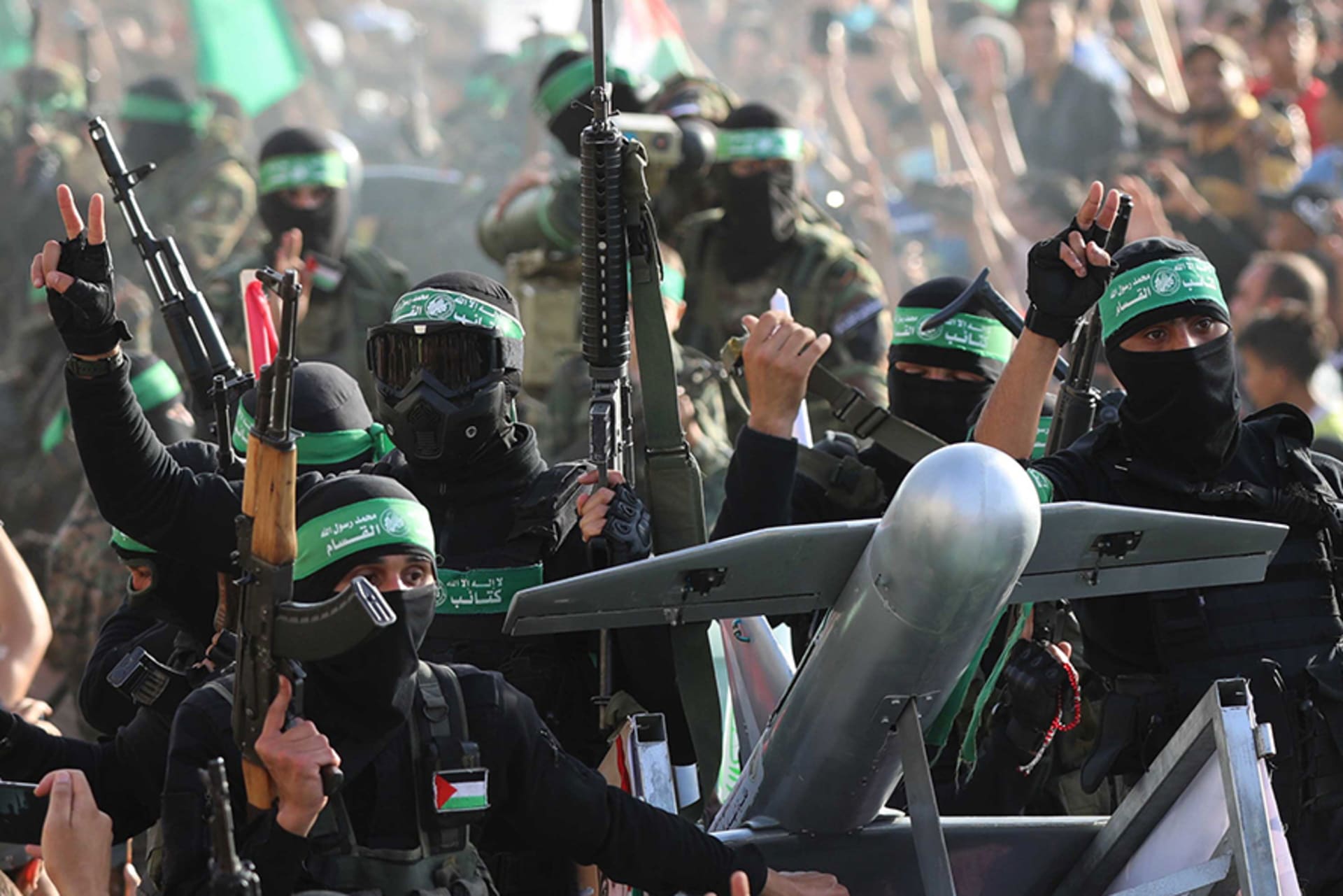
And to return for a moment to Gaza, we have a frightening situation emerging where we are trying to avoid having Hamas fill the vacuum when the Israelis leave. There are negotiations going on between the Palestinian Authority and Hamas, and the president’s comments will further shift the balance toward Hamas. This is exactly what we don’t want to happen. It makes it difficult for our friends to talk to us.
And, now, let’s add another whopper. The president plans to roll out a major Middle East initiative in June; he hopes to do it in conjunction with the Europeans. A draft was leaked a few months ago and provoked enormous opposition, because it seemed to be something we were going to impose on the Arabs. If done right, I believe this is something that should have enormous appeal. [Richard] Lugar [R-Ind., chairman of the Senate Foreign Relations Committee] got it right when he encouraged the president to stick with it, but it has to be done thoughtfully and constructively, and most importantly, seriously.
There is almost no way these leaders can consult with us and persuade their people that it is a good thing as we keep piling one controversial issue on top of another. And again, I say all this with the caveat that part of what the president said vis-à-vis the Israel-Palestinian issue was right. It is exactly what we know is going to happen. But without the other pieces of the puzzle, it was enormously provocative and doesn’t help future negotiations at all. It was diplomatically inept.
Let’s talk about Iraq. Where are we headed?
We’re really in the thick of things in Iraq. We’re losing the Spanish and Honduran troops. The façade of an international coalition is exposed. The troops were sent as favors to America, not because others believed deeply in the mission. If they did, the challenges posed would bolster, not undermine, their resolve. How many Americans even knew Honduras was represented in Iraq? Shouldn’t that be something our leaders constantly remind us of and publicly convey appreciation for? How many American leaders have headed off to Spain, Poland, and El Salvador to regularly extend America’s appreciation?
I believe it is going to be a very tough summer. With the transition to Iraqi sovereignty in June, we’ve been hearing increasingly that not much will change. The United States will have the largest embassy in the world— 3,000 staffers— plus the troops will still be there.
I worry that we are being too complacent about how little will change. There is a nightmare scenario that is easy to imagine: A small riot breaks out on a street corner in Baghdad and the Iraqi police try to put it down, but it gets out of control. The Americans are called in. The Americans are going to have two choices: to react or not. Let’s say they react and kill four Iraqis. Newspaper headlines across the world will read “Americans Kill Iraqis.” Iraqis, Americans, and others will rightfully ask, “What are we still doing there? And killing Iraqis to boot?” The second option is that the American troops do nothing and violence escalates. Then we will get newspaper headlines, as in Haiti, saying “Americans Stand Idle as Iraqis Butchered.” This may seem a small issue, but it reflects the larger problems and changed political environment we will be operating in. Granted, my scenario is a rules-of-engagement issue and the U.S. military is very good at working them out. But I’m still worried.
I am perhaps even more worried about a lack of planning in terms of the political rules of engagement. We don’t even know to whom we are transitioning. The president has finally appointed the ambassador [current U.N. Ambassador John Negroponte], but ideally you would have wanted this transition to be done by June 30. You would have wanted a rolling transition so that one office after another gets on board instead of transferring all authority in one day and everyone will be new. It’s going to be hot in Iraq. The electric power level is not going to be where we want it to be. Baghdad’s going to be a very tense city. I’m very nervous about it.
What is the U.N. role going to be?
The United Nations is still working on what its role is going to be, and how the United States will interact with it. But something the president could do now would be to endorse a kind of “six plus two” structure for Iraq, just as we did in Afghanistan in the late 1990s. The “six plus two” process was introduced when it appeared that Iran might invade Afghanistan. It brought together Afghanistan’s six neighbors plus the Russians and the United States in a U.N. context. It didn’t solve that many problems, but when it came time for a new political process in Afghanistan, that structure morphed into the Bonn agreement framework. It was one place where we had official conversations with the Iranians.
We need something like that for Iraq, to include all of Iraq’s neighbors plus the United States and Iraq. You need the neighbors, unpleasant as this sounds. As we move toward the transition to sovereignty, there are going to be enormous issues to deal with. The neighbors will be jittery. We don’t trust them, in particular the Iranians and the Syrians. None of them trusts the other— or us, for that matter. We need to have at all times some channel for speaking with them and getting a sense of what’s going on. The recent Iranian involvement in negotiating with competing Shiite factions in Iraq speaks to the necessity of having them aboard. This could also lead to small steps toward reconciliation among the parties themselves and become a forum to introduce other initiatives for discussion, like the Greater Middle East Initiative.
It will be very tough for this administration to put such an idea together, since Iran was part of the president’s “axis of evil” and has a mixed record in Iraq, and Syria was a leading contender for that list. Saudi Arabia is still a problem domestically in the United States. But it is crucial that we develop this kind of regional institution. When the president said [April 13] that he was sending [Deputy Secretary of State Richard] Armitage to the region, it was a step in the right direction. We should build on the example of success and try to build a similar structure for Iraq.
Weigh in on this issue by emailing CFR.org.
To order Task Force reports, Council Special Reports, and Critical Policy Choices, please call, fax, or order online from our distributor, the Brookings Institution Press: phone +1.800.537.5487, fax +1.410.516.6998.
For information on other reports that are not for sale, or for general publications information, please call +1.212.434.9516 or email publications@cfr.org.
Start-Up Nation addresses the trillion-dollar question: How is it that Israel—a country of 7.1 million, only sixty years old, surrounded by enemies— produces more start-up companies than large, peaceful, and stable nations like Japan, China, India, Korea, Canada, and the UK? With the insights of geopolitical experts and investors, the authors examine this nation’s adversity-driven culture to answer this question and offer prescriptions for a global economy on the rebound.
In Forces of Fortune, Vali Nasr presents a paradigm-changing revelation that will transform the understanding of the Muslim world at large. He reveals that there is a vital but unseen rising force in the Islamic world—a new business-minded middle class—that is building a vibrant new Muslim world economy and that holds the key to winning the cold war against Iran and extremists.
In Cuba: What Everyone Needs to Know, Julia E. Sweig presents a remarkably accessible portrait of Cuba's unique place on the world stage over the past fifty years, including its internal politics, its often fraught relationship with the United States, and its shifting relationship with the global community.
Complete list of CFR Books
The report of this bipartisan Task Force of distinguished leaders and experts represents a strong consensus on the importance of repairing America's immigration policy. It makes the case that maintaining America's political and economic leadership depends on attracting talented and hard-working immigrants, and on securing the country's borders in a smart, effective, and humane way.
This report finds that nuclear weapons will remain a fundamental element of U.S. national security in the near term, and makes recommendations on how to ensure the safety, security, and reliability of the U.S. deterrent nuclear force, prevent nuclear terrorism, and strengthen the nuclear nonproliferation regime.
About Independent Task Forces at CFR
Complete list of Task Force reports
Identifying international threats and acting on them may be the most difficult job for U.S. policymakers. This report
provides an actionable road map for managing international threats before they erupt into crises and makes a strong case that preventive action is not a luxury but a necessity.
For more than a decade, the United States has mostly watched from the sidelines as Asian countries organize themselves into an alphabet soup of new multilateral groups. In this report, the authors review the relationship between pan-Asian and trans-Pacific institutions and suggest policy guidelines for a new U.S. approach to this new Asian landscape.
Complete list of Council Special Reports
To request permission to reprint or reuse CFR material, please fill out this permissions request form (PDF), referring to the instructions on page 1.
Browse Content By Region IssuePublication TypeThe Think TankFor The MediaFor Educators About CFR
Copyright 2009 by the Council on Foreign Relations. All Rights Reserved.