Why does this page look this way?
It appears that you are using either an older, classic Web browser or a hand-held device that allows you to view our content but may not work with every feature of our site. If you are using an older browser, please upgrade for the best experience.
Navigation
home > by publication type > op-eds > The Wrong Way to Build a Nation
| Author: | Kathy Gannon |
|---|
May 18, 2004
Los Angeles Times
Afghanistan is pretty much off the international radar screen these days. But it wasn't so long ago that the United Nations was called upon to bring stability, self-rule and security to the country -- a mandate not unlike the one it faces today in Iraq.
Adding to the similarity is Lakhdar Brahimi, the man heading the U.N. team in Iraq, who also navigated Afghanistan's post-Taliban transition.
Yes, they are two very different countries: Iraq with an educated people, an infrastructure that once worked and institutions with competent functionaries. Then there is Afghanistan, destroyed by more than two decades of war, with a largely uneducated population and no institutions to speak of.
Yet there are enough parallels to make an examination of how the U.N. fared in Afghanistan valid. Chief among these parallels are the ethnic and religious divisions that have plagued both countries for generations. So what can we learn from the first experience as we get started on the second? If we graded the U.N.'s performance in Afghanistan, here's how it would rate:
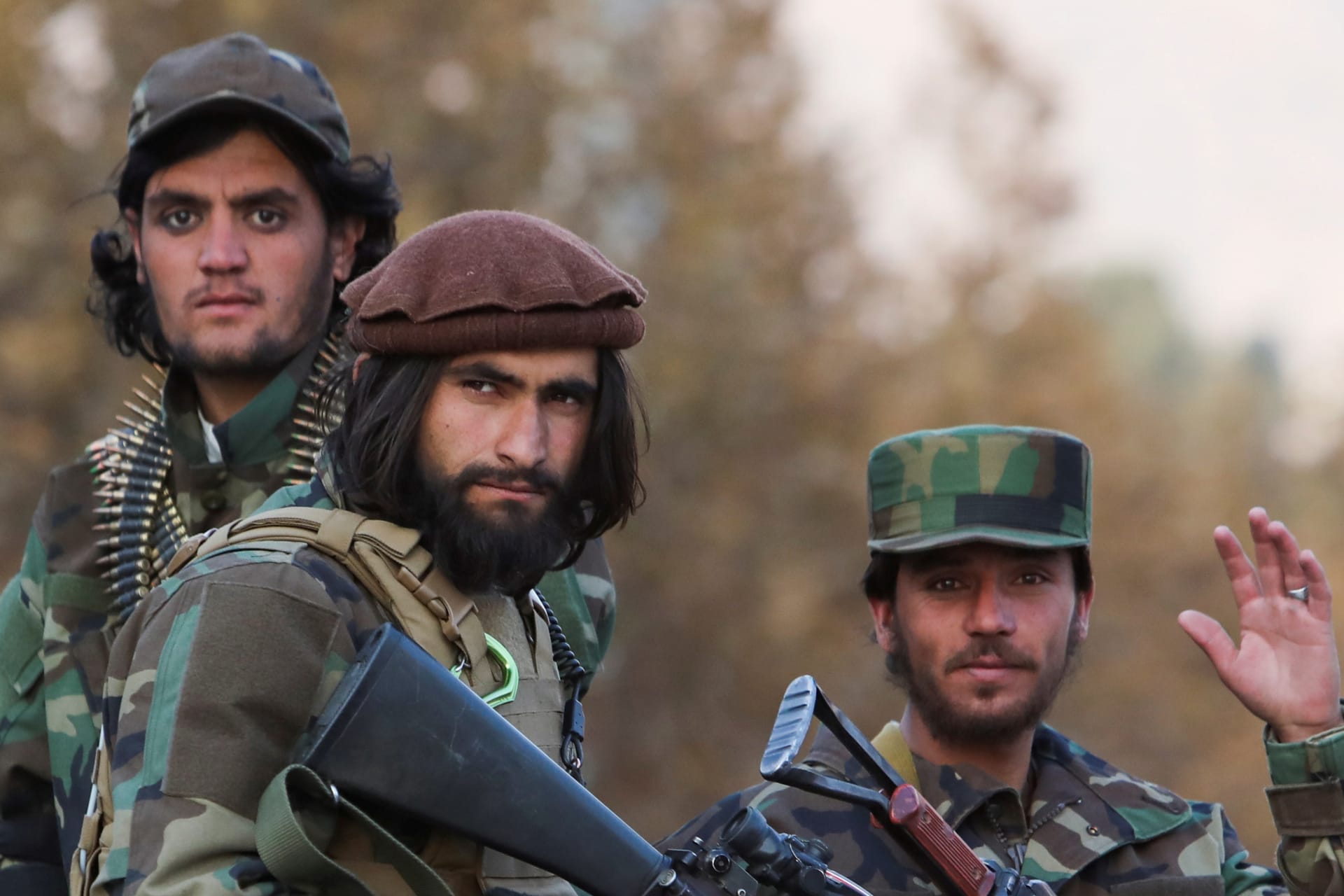
Security: This would have to be an F, given that Brahimi himself, in his farewell speech, admitted, "There is fear in the heart of every Afghan because there is no rule of law." How did this happen? Right from the outset, Brahimi and the U.N. made concessions that led to an insecure Afghanistan. The ink hadn't even dried on the Bonn agreement that brought the first post-Taliban government to power in Afghanistan when the U.N. let armed militias flout the accord. These militias stayed in Kabul in defiance of this agreement, which demanded they be evicted.
The U.N. compromised away Afghanistan's security step by step so that it could meet a series of deadlines: two loya jirgas (grand councils), a constitution and elections.
That Afghanistan today is a struggling nation, overrun by drugs and undermined by powerful militias and their warlord leaders-turned-government-ministers, reflects a United Nations that measures itself by successes on paper, not on the ground.
Development: another failing grade. The Afghans' expectations following the collapse of the Taliban were high, maybe too high. Today, nearly three years later, they are a deeply disappointed people. They have seen very little development outside of the cities. Jobs are rare, the infrastructure is still woefully inadequate and little substantive change has come to their daily lives. Yet Afghans see international aid workers in fleets of large, four-wheel-drive vehicles, living in grandly refurbished and rebuilt homes.
Self-governance: Another disappointment. Elections have been postponed until September, and most Afghans aren't registered to vote. It's still not clear whether elections will be just for a president or for the assemblies as well.
Any criticism of the former moujahedeen, who are now power brokers and government ministers, is met with death threats and demands for apologies. The new constitution does some good for women, giving them two representatives from each province. But the violent reaction from the men to criticism of moujahedeen from a woman delegate is just one example of how far women in Afghanistan still have to travel.
Ethnic and religious rapprochement: The U.N. failed here as well. It did nothing in Afghanistan to stop a cycle of discrimination and linguistic chauvinism. Its inaction actually encouraged discrimination against ethnic Pashtuns because they had been the backbone of the Taliban. Worse, it created a feeling among Pashtuns that they had no political recourse.
Getting this right at the outset of a post-conflict situation seems critical. Pandering to ethnic and religious discriminations and giving one group prominence because it was previously the target of discrimination is a losing game. Such a course also doesn't recognize that at the very heart of ethnic discrimination is power, either getting it or retaining it. Taking this path, as the United Nations always does, only promises further power struggles.
During the Taliban regime there was discrimination against Dari-speaking Afghans. But before the Taliban, Dari-speaking Afghans discriminated against Pashto speakers. It's a cycle we can't understand, but one we can easily -- and wrongly -- perpetuate through acceptance, which the United Nations does.
Stability: It's a tenuous stability that seems likely to collapse when international forces leave the country. Yet to Afghans, that's what seems likely in the face of militia activity, ethnic divisions and little development or reconstruction.
The report card for the United Nations and its chief architect in Afghanistan speaks for itself. We can only hope they will do better in Iraq.
Kathy Gannon, a fellow at the Council on Foreign Relations, is on leave as Associated Press bureau chief for Afghanistan and Pakistan, where she has been a reporter for 15 years.
To order Task Force reports, Council Special Reports, and Critical Policy Choices, please call, fax, or order online from our distributor, the Brookings Institution Press: phone +1.800.537.5487, fax +1.410.516.6998.
For information on other reports that are not for sale, or for general publications information, please call +1.212.434.9516 or email publications@cfr.org.
Start-Up Nation addresses the trillion-dollar question: How is it that Israel—a country of 7.1 million, only sixty years old, surrounded by enemies— produces more start-up companies than large, peaceful, and stable nations like Japan, China, India, Korea, Canada, and the UK? With the insights of geopolitical experts and investors, the authors examine this nation’s adversity-driven culture to answer this question and offer prescriptions for a global economy on the rebound.
In Forces of Fortune, Vali Nasr presents a paradigm-changing revelation that will transform the understanding of the Muslim world at large. He reveals that there is a vital but unseen rising force in the Islamic world—a new business-minded middle class—that is building a vibrant new Muslim world economy and that holds the key to winning the cold war against Iran and extremists.
In Cuba: What Everyone Needs to Know, Julia E. Sweig presents a remarkably accessible portrait of Cuba's unique place on the world stage over the past fifty years, including its internal politics, its often fraught relationship with the United States, and its shifting relationship with the global community.
Complete list of CFR Books
Browse Content By Region IssuePublication TypeThe Think TankFor The MediaFor Educators About CFR
Copyright 2009 by the Council on Foreign Relations. All Rights Reserved.