Why does this page look this way?
It appears that you are using either an older, classic Web browser or a hand-held device that allows you to view our content but may not work with every feature of our site. If you are using an older browser, please upgrade for the best experience.
Navigation
home > by publication type > op-eds > A Darker Shadow Than Iraq
| Author: | Walter Russell Mead, Henry A. Kissinger Senior Fellow for U.S. Foreign Policy |
|---|
July 25, 2004
Los Angeles Times
Americans and the two major presidential candidates have reached a consensus on the Middle East: We would like it to go away and stop bothering us for a while. Unfortunately, that isn't going to happen.
The trouble isn't coming from the usual suspects. Despite continuing low-level violence, Iraq seems to be settling down a bit under the interim government of Prime Minister Iyad Allawi, whose success at gaining international legitimacy has made Iraq less of an issue in the rest of the world. With the Israelis negotiating a possible coalition government, and the Palestinians consumed by their own political crisis, both sides in the Middle East's longest and bitterest dispute seem too preoccupied to launch a major new international crisis.
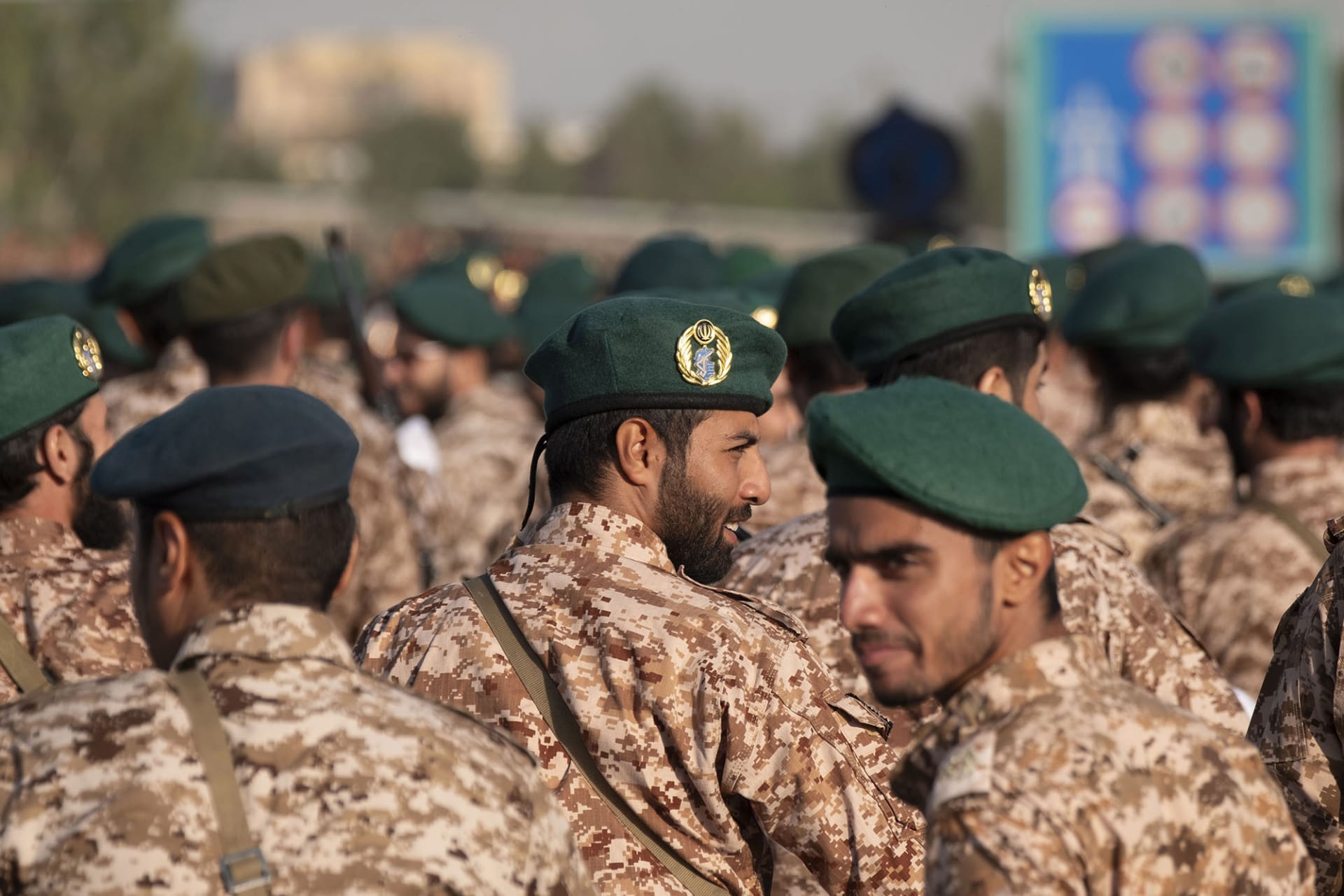
Iraq and the unhappy cotenants of the Holy Land will no doubt be heard from again, but there's a larger and darker shadow over the Middle East, one that neither the U.S. nor anybody else has a clear idea of what to do. The problem is Iran -- or, rather, Iran's effort to get nuclear weapons.
What Saddam Hussein was accused of -- building and stockpiling weapons of mass destruction in violation of international obligations and harboring and cooperating with terrorists -- Iran does. Its links to Al Qaeda seem both more extensive than Hussein's and better documented.
Moreover, Iran's statements about the nuclear weapons it hopes to build are far from reassuring. In December 2001, former Iranian President Hashemi Rafsanjani said the "application of an atom bomb would not leave anything in Israel" but would produce only "damages" in the Muslim world. After the nuclear destruction of Israel, Rafsanjani said, "Jews shall expect to once again be scattered and wandering around the globe."
Nobody in the United States wants a confrontation with Iran. An independent Council on Foreign Relations task force, co-chaired by former national security advisor Zbigniew Brzezinski and former CIA Director Robert M. Gates, calls for closer engagement with Iran in the hope of increased cooperation. Brzezinski's presence on the task force was particularly significant. As President Carter's national security advisor during the Iranian hostage crisis, Brzezinski persistently favored a more hawkish approach to Iran than Secretary of State Cyrus Vance.
The Bush administration, for its part, has treated Iran the way many of its critics wanted it to treat Iraq: It has supported a European Union initiative to resolve the nuclear issue in a peaceful way.
So there's a widespread U.S. consensus to engage Iran in peaceful negotiations in partnership with Europe. This strategy has one small flaw: So far, it isn't working.
European and even Russian pressure on Iran, with the possibility of additional U.S. pressure down the road, has not persuaded the Iranians to reassure the world about their nuclear intentions. The diplomats haven't given up yet -- and they shouldn't. There might even be, as the task force report suggests, some additional carrots to put on the table. Both Iran and the U.S. have much to gain from ending a generation of hostility and learning to work together on issues of mutual concern.
But Americans should ask the hard questions. What happens if Iran continues to resist European and U.S. efforts to engage over the nuclear issue? To put it more bluntly, if all the alternatives have been exhausted, if peaceful engagement doesn't work, are we willing to go to war with Iran to prevent it from getting nuclear weapons?
This is probably a tougher question for Democrats than for the Bush administration. Clearly, the administration isn't spoiling for new crises, to say nothing of new wars, in the Middle East. But the Bush Doctrine is pretty clear on this point. Iran is an authoritarian regime pursuing weapons of mass destruction while maintaining links to terrorists. An administration faced with an Iran that rejects diplomacy would have to either eat the Bush Doctrine or press forward toward military confrontation -- hoping that coercive diplomacy, backed up by a credible threat of force, would persuade Iran's mullahs that compromise was the only option.
It's unclear how a John Kerry administration would respond. Many scholars contend that the U.S. can live with a nuclear Iran. They say nuclear weapons have tended to make regimes more responsible, not less, over time. Look at the Soviet Union and China. Look at India and Pakistan. Beyond this, much of the Democratic Party's base believes that Iraq was one Middle Eastern war too many to fight for the Bush Doctrine.
Yet the political pressure on a Kerry White House to stop Iran's drive for nuclear weapons would be intense. A nuclear Iran threatening genocidal strikes against Israel while flirting with terror groups sworn to destroy the U.S. is not exactly the kind of Middle East that Democrats want.
Many Democrats (and quite a few Republicans) hope there's an intermediate step between failed negotiations and coercive diplomacy backed by the threat of force. If negotiations break down, wouldn't the U.N. Security Council impose sanctions that would make Iran reconsider?
Let's hope so, but once again let's look at the facts. France and Russia have large commercial interests at stake in Iran, they have their own political agendas in the Middle East and they may not see a nuclear Iran as threatening their interests in the way Americans do. France and/or Russia might block any sanctions tough enough to work. We may find that the most we can get from the United Nations would be "slap on the wrist" sanctions that anger and insult Iran but don't reduce its ability to go nuclear.
The U.S. may wind up facing in Iran the choice our intelligence agencies told us we faced in Iraq: between military action against a rogue regime or allowing that regime to assemble an arsenal of nuclear and other weapons of mass destruction.
If we get to that unhappy place, the chances are we will again not get Security Council backing for military action.
This choice is not yet inevitable, and the diplomats still have some tricks up their sleeves, but the U.S. is closer than many think to what could well be the biggest and most difficult crisis in the war on terror yet.
Walter Russell Mead, a contributing editor to Opinion and a senior fellow at the Council on Foreign Relations, is the author, most recently, of "Power, Terror, Peace and War: America's Grand Strategy in a World at Risk."
To order Task Force reports, Council Special Reports, and Critical Policy Choices, please call, fax, or order online from our distributor, the Brookings Institution Press: phone +1.800.537.5487, fax +1.410.516.6998.
For information on other reports that are not for sale, or for general publications information, please call +1.212.434.9516 or email publications@cfr.org.
Start-Up Nation addresses the trillion-dollar question: How is it that Israel—a country of 7.1 million, only sixty years old, surrounded by enemies— produces more start-up companies than large, peaceful, and stable nations like Japan, China, India, Korea, Canada, and the UK? With the insights of geopolitical experts and investors, the authors examine this nation’s adversity-driven culture to answer this question and offer prescriptions for a global economy on the rebound.
In Forces of Fortune, Vali Nasr presents a paradigm-changing revelation that will transform the understanding of the Muslim world at large. He reveals that there is a vital but unseen rising force in the Islamic world—a new business-minded middle class—that is building a vibrant new Muslim world economy and that holds the key to winning the cold war against Iran and extremists.
In Cuba: What Everyone Needs to Know, Julia E. Sweig presents a remarkably accessible portrait of Cuba's unique place on the world stage over the past fifty years, including its internal politics, its often fraught relationship with the United States, and its shifting relationship with the global community.
Complete list of CFR Books
Browse Content By Region IssuePublication TypeThe Think TankFor The MediaFor Educators About CFR
Copyright 2009 by the Council on Foreign Relations. All Rights Reserved.