Why does this page look this way?
It appears that you are using either an older, classic Web browser or a hand-held device that allows you to view our content but may not work with every feature of our site. If you are using an older browser, please upgrade for the best experience.
home > by publication type > interviews > Shikaki: No Political Will for Palestinian National Elections
| Interviewee: | Khalil Shikaki, Director, Palestinian Center for Policy and Survey Research (PSR), Ramallah |
|---|---|
| Interviewer: | Bernard Gwertzman, Consulting Editor |
August 11, 2004
Khalil Shikaki, a prominent Palestinian political expert, says national elections in Gaza and the West Bank will spark Palestinian government reform and weaken the authority of President Yasir Arafat. But they won’t take place because three powerful figures are opposed: Arafat, Israeli Prime Minister Ariel Sharon, and U.S. President George Bush. Arafat, who Shikaki says is guaranteed re-election, fears a national vote would sweep out many of his old guard supporters. Bush and Sharon, he says, share a “personal obsession” centered on Arafat “and their desire not to see him re-elected.”
Shikaki, the director of the Palestinian Center for Policy and Survey Research in Ramallah, was interviewed via telephone by Bernard Gwertzman, consulting editor for cfr.org, on August 11, 2004.
Given the unrest of recent weeks, what’s the situation now in Gaza?
The tension that we saw in June and July has subsided somewhat, but the basic tensions that have produced conflict among different elements within the Palestinian national movement, particularly among the so-called young guards and the old guards and the warlords, have not disappeared. There’s been no attempt yet to resolve these issues, and I doubt very much that there will be a serious attempt to really deal with them. That means, in the end, this is going to be seen, as [the events in July were also seen], as just another episode of turmoil that will be followed by several others as we get closer to the Israeli disengagement date—the date of Israeli withdrawal from Gaza. I think we will probably see certain escalations in these clashes as the parties become more and more anxious to secure their positions in the post-withdrawal environment.
An article you wrote in The Wall Street Journal strongly urged Palestinian elections. Is it possible to have elections? How could they be arranged?
There are certain things that are possible; other things are not possible at the moment and require certain changes in the positions of the Palestinian, American, and Israeli leaderships. On the technical side, I think elections can be held three months after a decision is made. Municipal elections are scheduled for November, but there is no date for national elections. Essentially, the technical difficulties are in voter registration, and voter registration will officially start early next month, in September, and two months later the bulk of the work will be done. Anytime after that, you can hold elections if you give people enough time to organize their election campaigns.
The difficulties in terms of the security situation, of course, are immense. You cannot hold elections if there is no cease-fire, and you can’t hold elections if the Israeli army is in Palestinian towns and cities and if the checkpoints remain in place. Therefore, all these things will have to change. Palestinians will have to agree to a cease-fire—and I think this is possible—and the Israelis would have to stop entering into Palestinian cities. For the most part, Israelis enter these cities only occasionally. They would have to remove the checkpoints. The Israelis, during the last two months, have removed many of the checkpoints that they have instituted over the last few years, and I don’t think it would hurt to remove a few more of those, particularly if there’s a cease-fire in place. So I do not see the security situation as being a major impediment.
What is the major impediment, the political will to hold national elections?
That’s right. On the part of the Palestinian National Authority, the old guard [would] certainly oppose elections. They have no reason to hold elections; they stand to lose and lose big. The era of the old guard will be over if we hold elections. Arafat certainly will find it very difficult to govern without the old guard. With the national movement led essentially by young-guard [individuals], I think Arafat will find it very difficult to [exercise] control in an authoritarian manner, and he would lose a great deal of power. Even though he would be re-elected, he would have to confront a much more rebellious young guard.
Briefly describe the Palestinian political structure. Arafat is president, but there is an elected legislature, too?
The Palestinian political system has a constitution, a basic law, and the basic law has been implemented only recently—about two years ago—but it has been in place for almost seven years. We have an elected parliament—that is, thePalestinian Legislative Council. It was elected in January of 1996. There’s been no election since then. We have a Cabinetthat requires a vote of confidence from the parliament. A prime ministerposition has been recently instituted into the Palestinian political system. Theoretically, we have an independent judiciary, but the reform process has not yet reached the judiciary. At the moment, the judiciary is in total disrepair, and it hasn’t yet been able to function effectively. The executive is divided, as I said, into the Cabinet on one hand and the president on the other.
The president has tended to act in a very authoritarian manner before and after the establishment of the prime minister [position]. He has, for example, lost some control over funding [because of] the reform process and pressure from the international community, but he has not given up control of the security services. Under our basic law, these security services should come under the control of the Cabinet, the prime minister, and, in this case, also the interior minister. But the president has not allowed this to happen.
I would argue that if we held elections today, this all would change. The president’s ability to control the political process is dependent on his ability to control the institutions of Fatah, which is sort of the ruling party. Let me put it this way: the institutions of Fatah are, today, almost totally controlled by the old guard. That means that the foot soldiers, the Fatah young guard—those who control the street and would do very well, in fact, if elections were held—have zero power in the institutions of Fatah. By controlling the institutions of Fatah, Arafat controls the political party, which, in turn, controls the political systems. That way the system remains authoritarian in reality. The old guard no longer has the support, the sympathy, or the confidence of the Palestinian public, and they would lose if elections were held tomorrow. That’s why, on the political level, Arafat and the old guard are opposed to holding national elections. They cannot, in reality, explain to the Palestinian public why they are opposed to elections, so they publicly do not declare their opposition to elections. Instead, they hide behind American and Israeli objections to elections. And at the moment, this is sufficient.
Why does the United States object to elections?
The United States, I think, objects to elections [because] it lacks an understanding of the socio-political reality in the Palestinian areas. The administration is focused on Arafat; it is obsessed with Arafat. And it does not want to see Arafat re-elected. It does not understand the nature of the political process among the Palestinians; it does not understand the grassroots changes that have been taking place over the last 10 years, which have very much affected not only Palestinian civil society but also the mainstream national movement, Fatah. Arafat’s control is no longer assured; he can no longer control the young guard. And I’m hoping, of course, that the recent turmoil in Gaza is something of a wake-up call to the administration, so that it can see that Arafat’s Fatah, which he used to control, is no longer with him, and if elections are held tomorrow, he will not be able to control this movement.
I suppose the Americans are afraid that groups like Hamas or the more militant groups would win the elections.
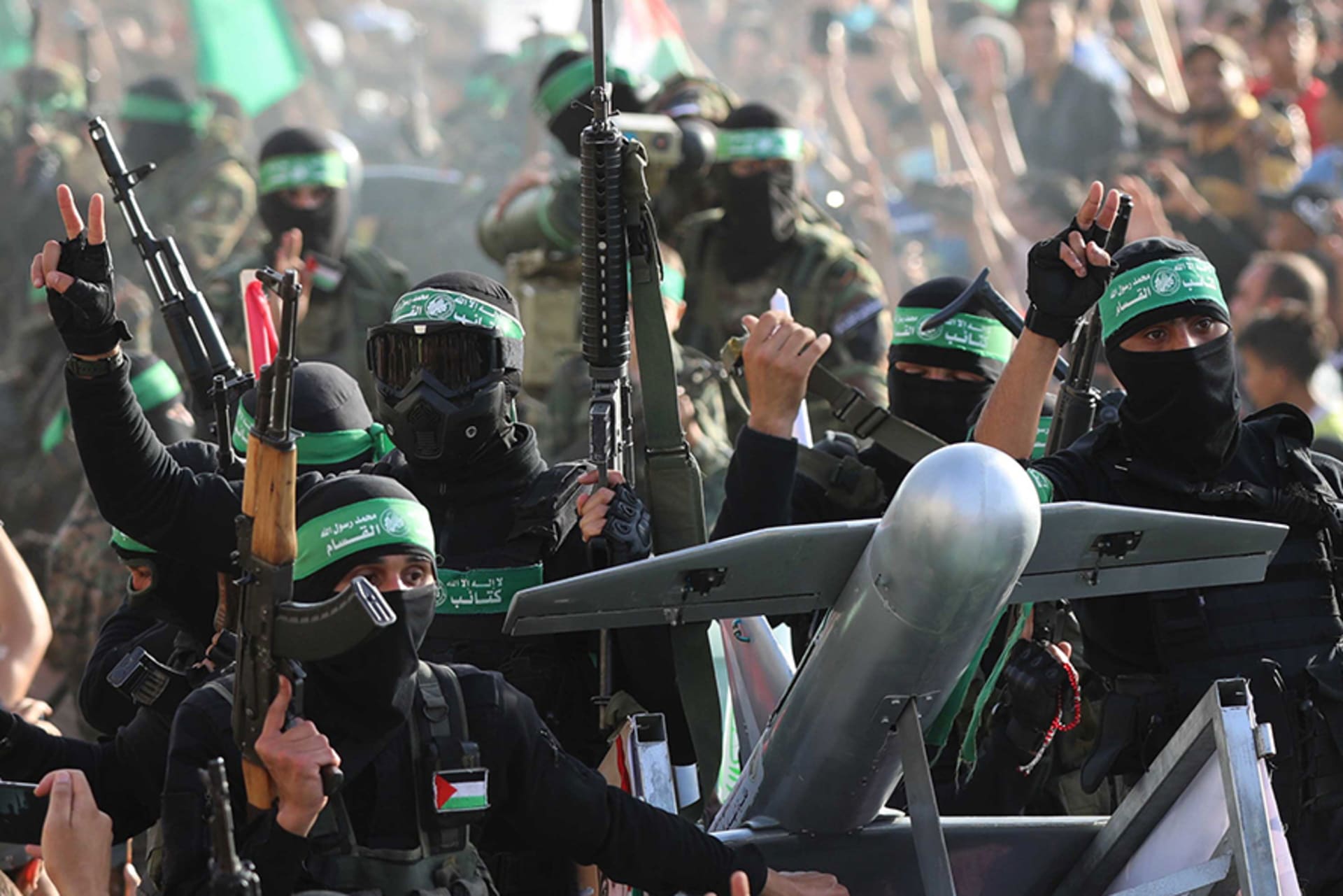
I don’t think this is a real concern. From my discussions in Washington, I gather that while, certainly, some people have raised this issue, I think there is a recognition that Hamas is a grassroots organization. Yes, it is involved in violence, but the way to take it away from violence is by incorporating it in the political system. That is not to say that everyone is convinced of that, but I think that most Israelis and, to some extent, Americans—in fact, the Israelis even more than the Americans—are reaching the conclusion that Hamas must be integrated into the political system if one is going to be able to deal with it.
I think the American administration’s experience in Iraq is leading it to certain conclusions about how to deal with Islamist militants. Sometimes you need to deal with them violently, but at times, I think the administration is recognizing, you need to involve them in the political system. I think the way the administration has dealt with, during last April and May, Muqtada al-Sadr, the Shiite leader in Iraq, has taught them a lesson or two about how to deal with Hamas. I think there’s more recognition today that Hamas can be incorporated into the political system and that [it] will provide Hamas with the means to continue to exercise influence over the Palestinian decision-making process without resorting to violence. This is the right conclusion, and so I don’t believe the administration is as worried about Hamas as it is about Arafat.
Essentially, [Bush’s] obsession with Arafat [explains his] opposition to the elections. As for Israel, I of course recognize fully that the Israeli public has zero confidence in Arafat, but this is not the reason the Israeli government is opposed to elections. I think the opposition emanates, essentially, from Sharon’s desire not to see Arafat re-elected. Sharon knows elections will restrain his room for maneuvering. I hope this can change; I’m not sure this can be changed—that is, the personal obsession of both Sharon and Bush with Arafat and their desire not to see him re-elected.
I just don’t see how, without presidential elections, we can hold elections, so I do not see any way of holding the elections without Arafat participating. What we saw in Gaza in July is certainly an indication that things may not work out the way that both Bush and Sharon want things to work out, particularly with regard to the disengagement from Gaza. The stakes [for a successful withdrawal from Gaza] are much higher today for both the administration in Washington and for Sharon. If things continue the way they are, chances are the pullout from Gaza will not do anything to reduce the violence against Israelis.
In Israel there’s concern that the withdrawal may not take place, that the settlers will rise up against the army.
That is certainly a matter that Israelis are talking about. Israel will still have to [decide] what to do about its relationship with the Palestinians: continue with this violence and, thereby, say there’s no Palestinian partner, or recognize that they need to sit down and negotiate with their Palestinian neighbors. Eventually, with or without this disengagement, the Israelis will have to confront these issues: do they have a partner next door; is this violence inevitable; can they live with it and for how long? If the answer is they don’t want the violence and they want to negotiate with their neighbors, then it is in their best interest to have a democratic partner, a partner that they can negotiate with because [its government] is transparent, based on the will of the people, and will do what the public wants. And at the moment, what the public wants is negotiations.
If Arafat seems unpopular among many Palestinians, why is he so certain of being re-elected?
Arafat is having a problem within Fatah because he is not reforming. But Arafat has a different side to him in his position as the man who is managing, administrating, leading the Palestinian Authority. He is also a man with a legacy, the legacy of the Palestinian national movement. He is a symbol of the Palestinian aspiration for independence. He is the man who embodies that aspiration for independence. At the moment, he is the unchallenged founding father of the national movement. The Palestinians certainly want to see him remain as that leader. They don’t want to get rid of him; they want him to reform the system. He is resisting that, and as a result, he is losing a lot of the confidence and trust of the public. But he still remains unchallenged. There is no alternative to him at the moment. And if he decides to run, as he will certainly want to, I think there is absolutely no chance that anybody else will win.
Is the intifada about over? I’ve read stories to that effect. Do people feel the second intifada is dying out?
I think when we ask people this question, they will probably tell us what they hope for, and what they hope for is that it’s not over. I think while there is a lot of criticism of some aspects of the intifada, the public still believes theintifada has been good for the Palestinians, and they want it continued. Is it in reality continuing? Well, there’s no doubt that the level of violence has been reduced tremendously, particularly during the last six months. But nobody wants to say that this is the end. Just today, there was a car bomb just outside Ramallah, the entry to Jerusalem, in which Israeli soldiers were injured. Given the fact that the whole Gaza Strip and the West Bank are in total siege—internal and external—the blockade continues to remind people that life is not going back to normal and that a lot has to happen before they can feel a certain normalization to their lives.
Do you think the American position will change if Senator Kerry wins the presidential election?
It’s difficult to tell what [a] President Kerry would do. I think, on the one hand, the problem of Bush and his obsession with Arafat will change, and I hope this will make Washington more open-minded with regard to elections and the possibility of Arafat participating. In general, the notion of regime change that the Bush administration has espoused with regard to the Palestinians, in the June 2002 speech, is a policy that has been very counterproductive. I hope that Kerry would be more rational in the way he addresses the question of Palestinian leadership. In addition to that, I hope the Kerry administration will be more willing to engage the process from the start and that the involvement of the administration will be solid and comprehensive, and it will not let this issue simmer. If it is involved, this could lead to progress.
Weigh in on this issue by emailing CFR.org.
CFR maintains archives of multimedia from its on-the-record meetings. Full-length videos, as well as brief highlight videos of select meetings, audio recordings, and unedited transcripts can be accessed at the following links:
Through compelling analysis and rich historical examples that span the globe and range from the thirteenth century through the present, Charles A. Kupchan explores how adversaries can transform enmity into amity, and exposes prevalent myths about the causes of peace.
With the insights of geopolitical experts and investors, the authors examine Israel's adversity-driven culture to offer prescriptions for a global economy on the rebound.
Vali Nasr reveals that there is a vital but unseen rising force in the Islamic world—a new business-minded middle class—that is building a vibrant new Muslim world economy and that holds the key to winning the cold war against Iran and extremists.
Complete list of CFR Books
This report explores how international legal rules regarding military force might evolve to better meet the challenges of mass atrocities.
The authors of this CSR explain why the United States needs to place greater emphasis on preventive action and how current organizational arrangements can be changed to meet that need.
This report addresses pan-Asian and trans-Pacific architectures and guidelines for how the United States can revise its approach in order to consolidate and improve the efficacy of these Asian institutions.
Complete list of Council Special Reports
The report of this bipartisan Task Force makes the case that maintaining America's political and economic leadership depends on attracting talented and hard-working immigrants, and on securing the country's borders in a smart, effective, and humane way.
This report makes recommendations on how to ensure the safety, security, and reliability of the U.S. deterrent nuclear force, prevent nuclear terrorism, and strengthen the nuclear nonproliferation regime.
About Independent Task Forces at CFR
Complete list of Task Force reports
To order Task Force reports, Council Special Reports, and Critical Policy Choices, please call, fax, or order online from our distributor, the Brookings Institution Press: phone +1.800.537.5487, fax +1.410.516.6998.
For information on other reports that are not for sale, or for general publications information, please call +1.212.434.9516 or email publications@cfr.org.
To request permission to reprint or reuse CFR material, please fill out this permissions request form (PDF), referring to the instructions on page 1.