Why does this page look this way?
It appears that you are using either an older, classic Web browser or a hand-held device that allows you to view our content but may not work with every feature of our site. If you are using an older browser, please upgrade for the best experience.
Navigation
home > by publication type > transcripts > Briefing for Journalists on the President’s Trip to Europe
| Speakers: | James M. Goldgeier, Adjunct Senior Fellow, Council on Foreign Relations |
|---|---|
| Stephen Sestanovich, George F. Kennan Senior Fellow for Russian and Eurasian studies, Council on Foreign Relations | |
| Elizabeth Sherwood-Randall, Adjunct Senior Fellow for Alliance Relations, Council on Foreign Relations |
February 17, 2005
Council on Foreign Relations
Washington, DC
SESTANOVICH: Jim, why don’t we start with you? Liz, and then I’ve got a couple of—Jim and Liz have been following the transatlantic dimension of this—of American policy, and I’m going to say a little bit about Russia.
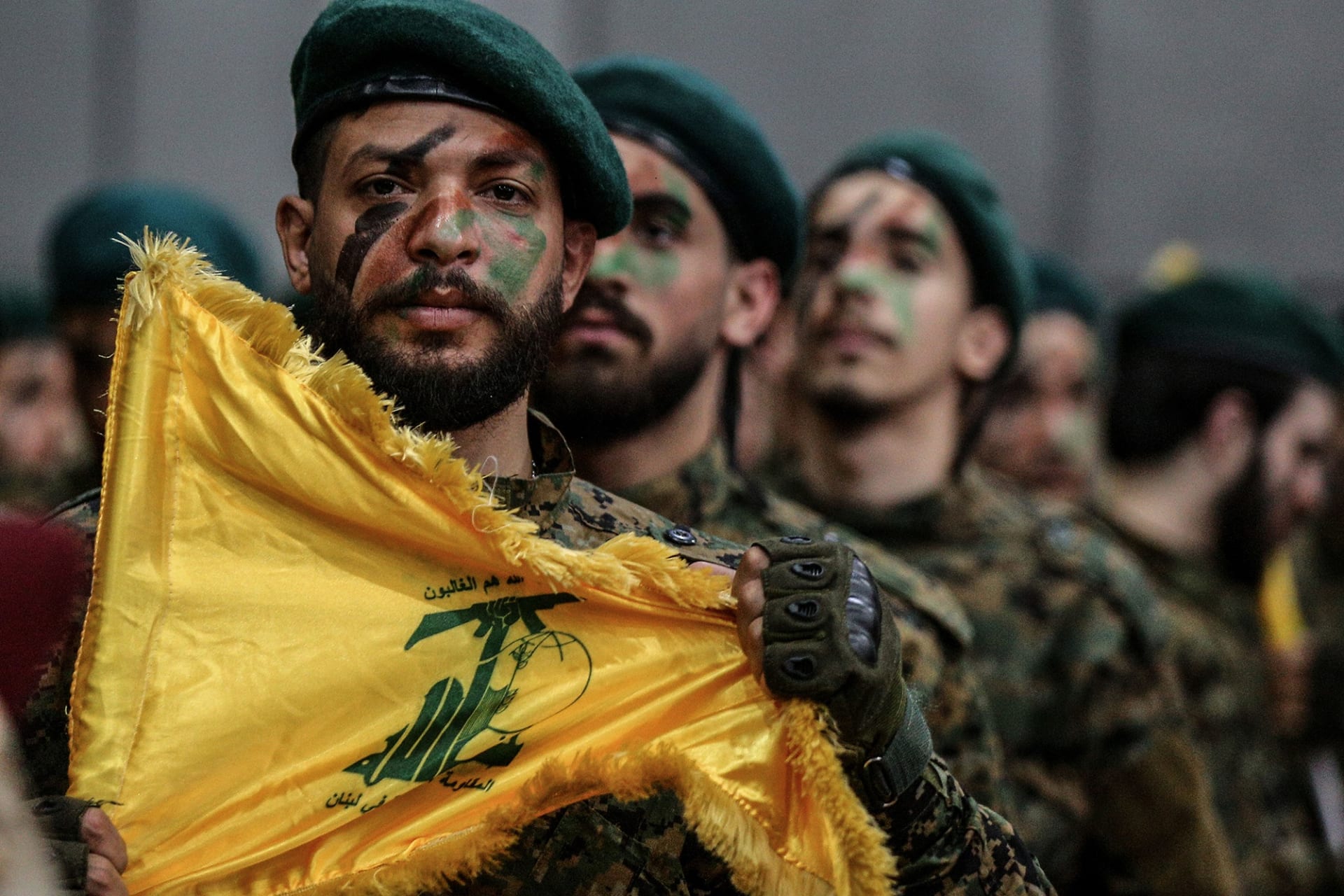
GOLDGEIER: Yeah, well, I—just a few points to get us started in terms of thinking about a mix of goals of the trip for the president. Just in terms of some of the themes—things that I’m interested in looking for that I would hope all of us are interested in looking for. First of all, you know, the broadest theme, following on the decision to make this trip and make it as the first foreign trip of the second term and to reach out, to make the focus working together on future problems as opposed to reliving past debates, the theme that Secretary [of State Condoleezza] Rice laid out. And of course, there are still major substantive disagreements on a lot of key issues, so just saying we’re going to work together isn’t going to be enough. And, of course, having substantive disagreements doesn’t necessarily mean you can’t work through them together. But on issues like Iran and how to treat Hezbollah, for example, where we’ve seen disagreements emerge, how are the Americans and Europeans going to frame how they intend to work together on these kinds of problems?
The president goes to Brussels, two big agenda items. One, reaffirm NATO [North Atlantic Treaty Organization] as the foundation of transatlantic security, foundation of the transatlantic alliance, and try to head off these discussions about alternatives that have been floated recently about other mechanisms for transatlantic security. The United States is going to want to keep the focus on NATO.
And the big part of this trip is his going to the EU [European Union], which is a major sign of respect and also an opportunity to follow up on Secretary Rice’s remarks, which laid out a vision of America wanting to work together with a united Europe and seeing a united Europe as a positive force in world affairs. This was American foreign policy from the late 1940s until 2001, but it was not the foreign policy of the first term, where the administration seemed, at best, ambivalent about Europe’s unity and, at times, hostile to it and openly fostering division. So I think this is a major thing for Europe.
And then the last point I would make—Steve’s going to talk more about Russia, but the U.S.-Russia summit in Bratislava. The president has put himself in a corner with the Russia policy because of laying out the big freedom agenda. And that means he’s got to say something somewhere about authoritarian trends that we’ve seen in Russia and, I think importantly, the way this has been framed regarding other countries. Rice on her trip was asked to distinguish between Pakistan and Iran and said that it’s the trends, it’s the direction. Pakistan over the last three and a half years, she said, is going in a good direction; Iran is not going in a good direction.
Well, what’s the direction in Russia? It would be hard to characterize it as good. So how do you talk about that at the same time that Bush is going to want to keep talking about the importance of cooperation with Russia? He’s put himself in this box with his agenda. I myself think it’s a good thing to be talking about freedom and democracy with respect to Russia, but he’s focused in the past on the Middle East and left Russia out of it. I think now is the time that he should start talking about Russia from the context of democracy.
SESTANOVICH: Thank you, Jim. Liz?
SHERWOOD-RANDALL: We met with journalists, [Council senior fellow and director of Europe studies] Charlie Kupchan and I, about two months ago to talk about the transition to the new administration. And Charlie and I had a disagreement at the time—some of you were present—about the way to think about a new term. And I said at the time I thought we should give them the benefit of the doubt and look for signs of interest and recommitment to Europe on purely instrumental grounds. That is, this would not be for sentimental reasons but for reasons of needing to work with Europe to get the job done around the world that the Bush administration wants to get done.
And I think we do see those signs today, Condi’s first trip outside the United States being to Europe, and then the president’s first trip outside the United States being to Europe. So I think that we should continue to look to these signals as a real course correction on the part of the Bush administration with respect to working with the transatlantic institutions that we’ve built over a half-century and the individual allies and members of those organizations.
Now the challenge is to move beyond atmospherics, obviously, and work on the substance on policy. And there I would say I, of course, agree with Jim that there’s a lot of disagreement over significant issues. Iran, Syria, the actual implementation of a peace process, the greater Middle East initiative, Chinese arms sales on the part of Europe, these are all going to be highly contentious, and we don’t know anything about the content of the second-term policies on these issues.
There is one extremely significant sign, however, with respect to content of policy, and Jim has already mentioned it, which is what Condi said in Paris about the European Union. This was a huge statement on the part of the administration that, as Jim also said, literally tried to undermine the process by creating obstacles to effective cooperation between the European Union and NATO. And I think that what we want to see is an elaboration of the statement of policy in steps to make real and meaningful the linkages between the European Union and NATO and the United States. If I were in the government today, I would be writing a memo to my superiors arguing for us to use our imagination to shape the European Union in a fashion that will strengthen transatlantic cooperation. I think that should be the goal of U.S. policy with respect to the European Union, shape it so that we strengthen transatlantic ties.
There we have—interestingly, we have a number of German journalists, so I would add that at the Wehrkunde meeting [the annual Munich security conference], [German] Chancellor [Gerhard] Schroeder, through the voice of [German Defense] Minister [Peter] Stuck, made this very interesting speech. It was perceived as something of a grenade because it had not been at all prepared in advance. It made a sort of nasty jab at NATO about its not being the venue of choice for transatlantic discussion, and at the same time it made a serious proposal for trying to create some kind of commission that would look at concrete steps to be taken to create real and meaningful connections between the EU and NATO. And I think that’s significant and should be followed up on.
Finally—and again, Jim and I didn’t coordinate at all on this, but we share the same perspective. This is somewhat outside the area of responsibility for transatlantic relations, but I also do Russia policy occasionally, and I would say, watch Russia. I think this is going to be a huge challenge for this administration. Condi at the helm, Sovietologist by training, recognizes clearly the trajectory in Moscow, and yet she is faced with two things: one, her president having gazed into [Russian President Vladimir] Putin’s eyes and seen his soul; and second, a liberty doctrine pronounced in the Inaugural Address, which is in direct contradiction to what’s going on in the Putin government. So this is going to be a challenge for them.
SESTANOVICH: Thank you, Liz. Let me just add a few comments about Russia since both Jim and Liz ended up there. I’ve got four points to make.
First of all, we need to understand how bad the context of Russian-American relations is. At no time between Bush and Putin, but even before in dealing with Putin’s predecessors, has the image of Russia been as negative as it is now. The handling of the Yukos affair [the arrest and prosecution of Mikhail Khodorkovsky, head of Russian oil giant Yukos] in the past year and more has made Russian economic policy look increasingly politicized, non-transparent, and corrupt. One of the leading opposition figures—if one can still speak of an opposition in Russia—Boris Nemtsov, published a piece last week with the subtitle: Putin’s regime is based on, quote, lies, bureaucracy, and corruption. I commend it to you. It pulls no punches and it’s very amusing and has a lot of good quotes. Transparency International ranks Russia 90th—tied with Gambia—for transparency. And one of Putin’s own advisers, Dimitri Kozak, has said judicial reform in Russia is a disaster. He said when judges can be bought, it is the beginning of the end of the state. When Russian officials talk about “the beginning of the end of the state,” it’s supposed to sound extremely ominous.
Secondly, the handling of the [August 2004] Beslan terrorist incident made the Russian state look vulnerable and incompetent. The handling of the Ukrainian election made the Russian government look heavy-handed and imperial. And the handling of welfare reform has, for the first time, made Putin himself look out of touch and potentially unpopular. So you’ve got a unique convergence of negative trends that make it hard to treat Putin as the same kind of partner that the administration hoped he would be after September 11th and for a long time thereafter. That’s point No. 1: the context is terrible.
Second point: despite this, there is no reason to believe that either Bush or Putin wants a major change in the relationship. But there is an acute awareness that there needs to be some adjustment to make the relationship more sustainable and more credibly productive. Both sides are preparing for this meeting by suggesting that there will be a tough discussion; that each guy is going to give as good as he gets. And Russian rhetoric in particular is interesting. You know, Russians have complained about all criticism of Russia as reflecting a resurgence of Cold War hostility. They have said, “We have questions of our own to put to Bush.” Despite that kind of tough talk, both sides also emphasize continuity. Secretary Rice has said isolation of Russia is definitely, quote, not the answer. And she has had many other formulations that hint at that, that make the same point in different ways; that relations with Russia are productive on substantive issues of international security, and there needs to be a relationship preserved that continues to secure those benefits for the United States. So [there is an] an interesting continuity on both sides, even with some adjustments. That’s my second point.
The third is how to make continuity credible. What are the adjustments that need to be made in order to show that this relationship is not as bad as it looks? And here I think one should be approaching the meeting in Bratislava, and the relationship over the next several months, with a kind of checklist in mind: Where is it that the two sides can show that there are changes that are—that demonstrate the value of the relationship?
For example, both sides have emphasized that nonproliferation is going to be an important element of the Bratislava discussion; how to make credible that Russian policy is working in tandem with American policy, given, for example, that Sergey Ivanov, the Russian defense minister, has rebuffed any suggestions that there’s a problem with the security of Russian nuclear weapons—a concern of the administration’s. Given that there is daylight between Russia and the United States on Iran, are there going to be any changes in this sphere of policy?
Secondly, how do you make Russian policy and Russian-American cooperation in the global war on terrorism more credible? Given that Russia has just this week blocked the rotation of an AWACS [surveillance] aircraft into Kyrgyzstan, something that, you know, the Defense Department would explain is associated with operations in Afghanistan; given that the Russians have, in advance of the Iraqi elections, derided them; and that in his speech in Wehrkunde, at least from the transcript that I’ve seen, Sergey Ivanov, in his presentation on security and stability in the Middle East, didn’t even mention Iraq, is it possible in this area to say that there are adjustments in Russian-American cooperation that make the relationship more credible?
A third item on a checklist that one might have in mind is how to show that Russian policy toward its neighbors in the wake of the Ukraine fiasco is more respectful of their sovereignty, particularly given that this week negotiations between the Russians and the Georgians on the removal of Russian forces and bases have broken down yet again in the face of Russian—very uncompromising Russian positions.
A fourth item for a checklist would be adjustments in Russian policy that might show that domestic policy is headed in the right direction. As both Jim and Liz have suggested, the trend of events is important, but the trend in Russia is negative. And in the past couple of weeks, Putin’s advisers have become—have started to talk publicly about a third term and changing the constitution. That’s a negative development from the point of view of the administration.
And finally, if you’re looking for a checklist of issues where one would show that there is an adjustment in the relationship to strengthen cooperation, one might look at economic cooperation. The Russians have said this is their lead item for Bratislava. How to do that at a time when the Yukos dismantlement is almost complete; at a time when President Putin’s own economic adviser, Andrei Illarionov, has called it theft? He has said, by the way, if you haven’t caught this, that in the end, the Yukos assets that had been stripped will have to be returned to their rightful owners because, he says, Russia is a Christian country and obeys the commandment “Thou shalt not steal.” You know, is there any change in this area?
There are five—I’ve got five items on this checklist to look for at Bratislava, to see whether there’s any indication, from this meeting or beyond, that there are adjustments in Russian-American relations that make the relationship look more credible. Let me end with a last point, which is relevant to the question of what happens if there’s not adjustment and if the—if it’s hard to make the relationship look more credible, and that’s my fourth point. The administration is clearly thinking about what it will—how to present this relationship if it can’t be claimed that there are adjustments that prove its worth.
Secretary Rice has a couple of times used an arresting phrase about needing to sketch a shadow of the future for the Russians, sketch a shadow of the future of the relationship if things don’t improve. That’s an odd kind of suggestion of what might lie ahead if the Russians do not come to grips with the negative pass that Russian-American relations have reached. It’s only a hint. It’s not elaborated in any way, in anything that I’ve seen that she said.
But just to round this conversation out and connect what I’ve said with what Jim and Liz have said, obviously, a shadow of the future that the Russians take seriously and are—and would work to avoid would, to be credible, depend on a coordinated U.S.-European approach to Russia. And that will presumably be one of the items on the agenda in Bush’s conversations in Europe.
We haven’t talked about Ukraine. We should mention that one of the things that will happen at NATO is a NATO-Ukraine summit. In fact, that’s one of the principal items of business that will take place there. [Ukrainian President Viktor] Yushchenko is coming up from Kiev for a meeting of a body within NATO that was created in 1997 in connection with the first wave of NATO enlargement. At that time, a NATO-Russia council—not called that at that time—was created in order to provide a mechanism for consultations between Russia and NATO, and the same was created for Ukraine. That council with Ukraine of course now has enormous potential, given the change of government in Kiev and the evident interest of the—of the Yushchenko team in a closer relationship with NATO, ultimately leading to membership. Why don’t I stop there, and we can take up your questions.
QUESTIONER: Well, I’ll start if no one else will.
SESTANOVICH: Sure.
QUESTIONER: I think that basically what you all said at first is the Bush administration has done a very good job of categorizing countries, those who are with us or against us, and now faces the difficult challenge of somehow attenuating and finding middle ground. Russia comes to mind, Russia and then I think so does Germany and France. Could you give us your thoughts on where you see opportunities for the administration to attenuate those relationships and how could you do so?
SESTANOVICH: Sure.
GOLDGEIER: Well, you know, I mean, part of the with us or against us that’s been so important has been this notion of consultation means we tell you what our policy is and then, you know, you either agree, in which case we’ve consulted effectively, or you disagree, in which case we don’t work with you on that particular issue. The Europeans have a different view of what that should look like, which is serious give and take in which the United States presents its ideas and the Europeans present their ideas and there is some effort to work through the different perspectives in trying to reach a common ground and forge ahead with policies to deal with common problems.
And so the Europeans are—the Europeans are eager to have this be a successful trip. So that’s an important point. They want the president’s visit to go well because the president had made the effort to say I’m reaching out to you. But they are also looking for a sign that the president is coming to really hear what they have to say and is interested in serious interaction and serious taking account of their views.
As Liz said, on some of these other issues that have been so important to the Europeans, like the environment generally, climate change in particular, nobody’s expecting Bush to say yes, we’re joining Kyoto, but there is an expectation that he will—he will reach out by showing that he takes the European position seriously and that he has an interest in working on this set of issues. And if the trip ends up being a repeat of what we saw in the first term, which is, “here are our views, and we look forward to your accepting them,” then it’s not going to—there won’t be anything to build on. There really has to be an effort by the United States.
And then in return, if Bush does really reach out in a more substantive way, the Europeans should not miss the opportunity to reach back. If they miss the opportunity, then they’ve really missed something significant.
SHERWOOD-RANDALL: I’d like to add to that. Can you just—[inaudible]--yeah. I’ll add to what Jim has said. First of all, I agree on the description of the content of consultations. The distinction for me is whether you go to inform or actually consult, [laughter] and I think the pattern of the last four years has been, “We inform you of our views—you’re with us or against us.” We’re looking for real—and I think the Europeans are looking for real—listening and engagement.
I mean, the tradition in the alliance, the alliance that worked for 50 years, was that we actually used the fora that we had built, both formal and informal mechanisms of dialogue, to reach agreement on the most contentious issues, out of the limelight. And the whole purpose was that we would discuss and disagree, but not have a pissing match in public. And so the question is whether we can find some way to get back to a process in which we actually talk, listen, and work out agreed positions on highly contentious issues.
There I would look for, in response to your question, a couple of—in a couple of areas, signals from the administration of a real willingness to take on European perspectives and develop U.S. policy with those perspectives in mind. And here I would suggest Iran because of the stake the Europeans have laid, especially their parties—three countries in Europe—to the process of dealing with Iranian proliferation. And there, I think, there can be some matching of a diplomatic process, led by the Europeans, with a threat to back it up with force by the United States. That is something that often is more effective than diplomacy alone, as we saw in the former Yugoslavia.
The other area where I think the Americans are not fully aware of the passion of sentiment in Europe is with respect to arms sales to China. And I think that we are heading for a train wreck there if we don’t figure out an agreed strategy for dealing with this, and it probably has something to do with the development of a new set of arms export control regulations that would govern sales to a region that could well become the next arms racing region of the world. And a really dangerous spiral could develop in Asia should we move down that path.
And finally, back to what I said originally. I mean, I think looking for real content in making the relationship between the European Union and NATO a meaningful one, especially in terms of supporting European desires, [is] to develop defense capabilities that could be used independent of the United States.
SESTANOVICH: Can I just add one thing here? Neither of my colleagues has mentioned Iraq, and I think it is important to keep that issue in mind as a measure of the ability of both American and European policy-makers to find a more productive formula for dealing with an issue that the United States, at least, has to treat as its No. 1 foreign policy concern. Is it going to find on this trip any kind of receptivity to an argument that is surely going to be made, that in the wake of the Iraqi elections there is a new requirement for European leaders to show that they’ve got something to contribute to making Iraq policy a success or, if they don’t want to simply sign up to making American policy a success, to helping Iraq succeed? And I think if there’s nothing on that, that the American reading of the trip is likely to be pretty predictable; that is, that the Europeans are not prepared to step up to first-order international security issues and work with the United States.
However, I’d just add one other thing. You don’t expect a trip to, by itself, completely change that atmosphere. Political leaders look for small steps that can be the symbol of, you know, cooperation to come in the future. That’s why, for example, at Bratislava, Secretary Rice and Defense Minister Ivanov will sign this agreement on MANPADS [man-portable air defense systems, shoulder-launched missiles] that they, that was worked out in principle last month when Ivanov was in Washington. They want a symbol of some kind of cooperation in dealing with terrorism and nonproliferation.
The question that I would frame for American-European relations as it—as they relate to Iraq is: Are there steps of that kind that can show that there is more concrete cooperation in the offing between America and Europe?
SHERWOOD-RANDALL: Can I add one thing to what you said? Because there was a development in the week in which Condi went to NATO, which was quite significant and got a little bit of press coverage. But I think it is a sign of very concrete cooperation in Afghanistan, in which NATO has—now is going to take over command. That is, the U.S. command is going to be subsumed into a NATO command for the higher-end anti-terrorism effort, so that NATO’s not just going to do the peacekeeping and reconstruction part, but actually do the counterterrorist work that the United States had been doing separately. That’s a quite significant step for NATO out of area, and required, I think, an enormous amount of diplomacy to achieve and a willingness on the part of the Europeans to step forward in taking on a mission that is, you know, far from the original intent of the Atlantic Alliance.
SESTANOVICH: Good. Other comments? Yeah? Why don’t you remind us of your name and affiliation?
QUESTIONER: Tom [inaudible]--United Press International. Aren’t people setting themselves up for a fall through these expectations that are maybe too great? Everyone’s putting a great deal on this trip. President Bush in Canada made it quite clear that his overall foreign policy is not really changing. He wants to work multilaterally, but the more unilateralist and cherry-picking approach will continue.
Meanwhile, we have Europeans saying, “Isn’t Condi wonderful?” But, as France says, there must still be a counter to U.S. hegemony and it sees itself as the leader of that. We have Germany saying that a Cold War structure is not working and there needs to be new structures put in place. We have the European Union—the people pushing for a European Union constitution wanting a more single foreign policy, which again would challenge a United States leadership. As you say, there’s a pissing match in public over policy. Isn’t that an indication of the collapse of the Cold War, where there’s no one single enemy anymore and the other peripheral issues can’t be kept behind closed doors?
You have both sides, at least the press, saying that this could happen, the Europeans want Bush to show this, and Bush wants that. Aren’t we setting ourselves up for a terrible downfall, that it’s not really going to happen, that the basic differences that have arisen over the last 10, 15 years, exemplified by Iraq as a symptom, are still there?
SHERWOOD-RANDALL: I’ll give it a try. You know, you can hold two views simultaneously. So one view is, this is a honeymoon period and then you get into marriage, which is hard work. And the other is that there has been a great deal of pent-up desire in Europe for a better United States than the one that Europe has seen in the last four years, and that there’s a real appreciation of the possibility for cooperation again because we collectively—those countries that have worked together, the democracies of the United States, Canada, and Europe—have worked together for half a century to secure freedom in Europe and in other places, and that we need to continue to work together because there’s no one else to work with in terms of the closest set of historical and cultural and values ties. And there, I mean, [British historian] Timothy Garton Ash has written a very compelling treatise on this subject called “Free World,” which makes a lot of, I think, very significant points about why there really is not an alternative. So I hold those two views simultaneously, that it can go very bad or we can all ask the most of ourselves and have it go much better than it has in the last four years.
GOLDGEIER: The United States, this administration—I think the major reason for the reaching out is a recognition that it does need some legitimacy out there in the world for the policies it wants to take, and if you’re not that enthralled with major international institutions providing that, where do you look? And this, for reasons Liz has just described, Europe is a place to look.
Probably my view is that, if you’re going to have a successful foreign policy and you’re going to work well with other countries, you have to be able to put yourself in the other person’s shoes and you have to be able to have an understanding of what those other interests are and why countries’ leaders would take the positions they do based on the interests that they have. And I think that this is something that this administration seems to have had a very difficult time doing, to just being able to have that sense of we understand why this or that leader, this or that country, is taking the position it does, and we have a respect for it. And I think that—because the great certainty that the American policy is right makes it difficult to work with others who may have other, certainly in their view, legitimate points of view. And so in that sense, if that doesn’t change, then I think it’s going to be hard to get past the differences that we have.
SESTANOVICH: Three quick factors that might lead you to think there’s a little more potential for a sort of re-solidified relationship. One is, a lot of Europeans recognize that they have not themselves gotten very much out of this period of discord. And they have undertaken their own samokritika is the old Leninist term—self-criticism. You see that in the way in which the current French foreign minister distinguishes himself from his predecessor, who had nothing but, you know, arguments with [former] Secretary [of State Colin] Powell.
Second, is for all that people make fun of the [Secretary of Defense Donald H.] Rumsfeld formulation, "old Europe, new Europe," there are differences among European states as to the priority of cooperation with the United States, and as to the substance of policies that they should be pursuing. You saw that rather interestingly in the case of Ukraine, where new EU members—notably the Poles and Baltic States—were pushing the old countries forward, [and] the old EU members, who were far more reluctant to antagonize the Russians. Those new EU members had it right, in my view, and they carried along the old EU members. So internal disagreements among Europeans can produce results that are different from what we’ve seen in the past few years.
And finally, a change that is related to American policy. You’ve got something really new now with a secretary of state who speaks, without any doubt, for the president. And that means that there can be less complacency among Europeans that they can play different elements of the U.S. government against each other. Yeah?
QUESTIONER: [Inaudible]--from Germany. With the president [inaudible] my area of Germany next week, I’m wondering how important Germany is in the old European context for this administration, and how this administration, especially the president, will work out a new style, maybe a new substance in relationship to the chancellor, who just waved NATO goodbye [inaudible].
SHERWOOD-RANDALL: I would say Germany is crucially important, but I don’t think that the atmospherics for this coming week are optimal, given what happened at the Wehrkunde. I mean, I can’t—you can interpret for us why your chancellor chose to proceed as he did, but it wouldn’t seem to set the stage perfectly for a meeting with the American president.
SESTANOVICH: And I think the week between now and the president’s trip will be marked by consultations among Europeans in which other Europeans are going to be saying to the Germans, “Why did you do that?” [That is] my prediction.
SHERWOOD-RANDALL: But again, as I said, if you—I mean, the content of the speech—because I read it several times, because first I was appalled, and then I thought OK, go back—I mean appalled in the sense of, you know, the derisiveness with respect to NATO, the—you know, this is finished, we don’t use it anymore, we don’t go through it. And then trying to think about what is constructive in here. So, the question is whether those who are working on the inside on the administration, in their memo to the president in preparation for his meeting, say, "Here are the positive elements of this proposal that we can build upon." I mean, do you want to focus on the negative or the positive?
SESTANOVICH: I’d be really surprised if there’s such a memo. [Laughter] Let’s look at the positive elements of that proposal. Jim?
GOLDGEIER: Sorry. Go ahead. [Inaudible]
QUESTIONER: It simply—it seems perfectly reasonable that the president should want to improve relations with France and Germany and other European countries on an individual basis. What I don’t understand is this new policy towards the European Union as an institution. If you talk to anyone in the administration, as I’m sure you know, they regard the EU as just a monstrous abortion. I don’t believe there’s been a sudden conversion of enthusiasm for the EU. Now with this president, we’ve always known that when he says something, he means it, and he usually means what he says. And whether you like it or not, at least there’s never been any doubt about what American policy has been on the international front.
But now he seems to be saying things he doesn’t really mean about the European Union, and particularly its constitution. Firstly, what is behind that? And secondly, you know, is the president turning into Bill Clinton?
GOLDGEIER: No. [Laughter] I don’t think we’re ever going to accuse George Bush of turning into Bill Clinton. But, I mean, let’s think about two of the major reasons why this administration has looked at Europe the way it has in the past. One, sort of the nature of the whole thing, in a general sense—if you’re the folks in this administration, you have an anti-bureaucracy view, and what do they see when they look at Europe? This bureaucracy and the whole issue surrounding democratic deficit and so on. And so there’s not a lot of love for that kind of an institution. You know, it just looks like big government. And so there’s that essence of it.
And then there’s the concern about what would happen to “New Europe,” that as they came into this institution—an institution that France and Germany still try to run—that France and Germany would try to socialize those countries into European ways of thinking and that these countries, as they have already, have really had to start looking at where they fit in Europe, and the importance of their relations with European countries, and a concern from this administration that that would pull them away from a more pro-American stance that they came into the whole project with.
And so I think those doubts are still there. In my view, the statements—the decision to change the phrasing is a reflection of reality: that Europe is forging ahead; there certainly are differences within Europe, but that they have to take seriously the European Union as an actor in world affairs; that the European Union is important to Europeans. And if you’re going to go to Europe and reach out to Europeans, you’re going to have to change at least the way you talk about it, even if—substantively, again, Liz has made this important point—that what we want to see is, are they prepared to really work on thinking about this stronger relationship between the European Union and NATO and efforts to really build mechanisms? And the president’s going to do both, in Brussels. So it’s a good time to start on the substance.
SHERWOOD-RANDALL: I’m going to add one thought to what Jim has said, which is about who is around Condi. I think that actually is of significant importance. She has assembled a team of lifelong transatlantic ists with a deep understanding of Europe and appreciation of the value of the relationship with Europe. And if you look at [Deputy Secretary of State-designate] Bob Zoellick, [executive director of the 9/11 Commission] Phil Zelikow, and Nick Burns, who’s still our ambassador to NATO but will become the senior Foreign Service officer, these are people who know what’s happening in Europe and, I think, who have wisely advised that it is time to embrace this development in a constructive and positive way.
When the American president makes a visit—I mean, this is the first time an American president has ever gone to the Brussels EU institutions. American presidents don’t just do things for no reason. This is meaningful in the act of doing it and will lead, I think, to concrete steps. And Europe needs to meet those steps responsively.
SESTANOVICH: "Concrete steps" is the right point to come away from this discussion with. There are some areas of cooperation that the United States can point to—for example, the EU has taken over from NATO in Balkans peacekeeping. That is the kind of cooperation that presumably the administration is happy to foster and to say can be the foundation of a more cooperative relationship. My guess is that it will be—if the change in tone that you describe is to come to anything, it has to be built, you know, brick by brick on that kind of cooperation rather than on a wholesale embrace of the institution, which, on the American side is—as you point out—perhaps semi-sincere at best.
QUESTIONER: Getting back to this [inaudible] one significant, as you pointed out already when you talked about [inaudible] cooperation in Iraq [inaudible]. Can we assume that there is not going to be anything forthcoming beyond NATO’s commitment of training a thousand soldiers a year, which, you know, will mean 120 years by my calculations? [Laughter] So, I mean, in other words, on Iraq—
UNKNOWN: That’s an exit strategy. [Laughter]
QUESTIONER: OK. Can we assume that there’s nothing of significance being worked on on Iraq, that’s something we’ve calculated in. No. 2, what about Syria?
SHERWOOD-RANDALL: [Inaudible.] I don’t think you can assume that on Iraq. I mean, I think the administration will continue to push hard, and I think much will depend on the larger context and how the relationships evolve over the next six to 12 months, and also the situation on the ground in Iraq.
I mean, none of us are billed for you as being specialists on Iraq or the Middle East, so to your question on Syria I think—you’ve seen Steve Weisman’s piece in The New York Times today, as I have—which says, you know, this is going to be another issue of strain with the allies, which leads back to the larger question of trying to get an agreed strategy and not having a strategy that divides us.
GOLDGEIER: Yeah, I just think the Syria issue, though, is a place where we could see potential for cooperation. There’s been the focus recently, and again this morning in the press, on the differences about how to treat Hezbollah. But on the issue of Syrian occupation and military involvement and involvement in the politics of Lebanon, we do see France and the United States wanting to move forward on trying to remove that Syrian involvement in Lebanese politics and using the United Nations as a venue. This seems to be a real opportunity for the two countries to actually both want to use the United Nations. And so I do think that even though there are differences over some of the pieces of this policy, I think Syria is perhaps a better opportunity for cooperation than Iraq has been and will be.
SHERWOOD-RANDALL: But Jim, I would say that on a number of these issues there has been a consistent difference of approach. Our view is to isolate and penalize, whether we’re talking about Syria in recent days or Iran or North Korea, and a European policy that says the way to change—to bring about change is to engage. And there’s going to have to be some reconciliation between these two views for us to move forward constructively.
SESTANOVICH: I’d give a simpler answer to your question, which is if you come out of this trip and out of this year without a larger European contribution to the effort to make a success of the new Iraqi government, you’ve got a big hole in transatlantic cooperation and you’ve got an experience that fortifies an American judgment that when it comes to really big problems, the Europeans can’t handle it.
Any other questions, or should we let Anya dismiss us? We’re willing to take others, even though we know the president is calling you.
SHERWOOD-RANDALL: [Laughter] We are scheduled until 10:30, but can continue if everyone likes, so...
SESTANOVICH: OK.
QUESTIONER: The Europeans have wanted to become more engaged in the Middle East peace process. Would it be wrong to think that Syria and Hezbollah would have an effect upon maybe the peace process moving ahead, whatever improvements have come about, and the fear of this peace process unraveling would actually help bring the United States and Europe closer together in dealing with Syria, reining it in, putting some kind of pressure on it maybe to cut off support for some of the Palestinian rejectionist groups?
GOLDGEIER: Not one I’m...
SHERWOOD-RANDALL: This is the wrong group. But I would say, I mean, if you’re looking at transatlantic relations, the important thing is with respect to an overall plan for reaching some—for achieving progress on the Middle East peace front, I believe we should be doing what we have traditionally done with the Europeans, which is to go to Europe first, talk to our key allies about what we’re thinking about doing, work out an agreed process that they are a part of, and use our collective leverage to bring about results. So it’s not about us going out first and then hoping people will come along; it’s about going through Europe first. I mean, that’s the big difference in psychology: whether you choose to strengthen transatlantic ties as you pursue broader goals, or whether you go around Europe and expect people to either be with you or against you and bear the consequences of being against you, which was the first-term approach.
My view is we are much more effective, much stronger, both in terms of our policies in the world and also the importance of our relations with Europe, if we choose to go to Europe first. That needs to be a part of any action plan: to consult first with our European allies bilaterally and multilaterally, in capitals and at NATO.
QUESTIONER: [Inaudible.]
SESTANOVICH: I can’t describe the practical or organizational needs that, you know, could be met by greater European contribution. But I’ll give you one example of a country that is actually offering a larger role, in the face of some public opposition and in the face of rather acute resource needs, and that’s Georgia. Georgia is more than doubling the number of military personnel that it’s going to have in Baghdad, so as to provide a protection force for the U.N. presence that goes back into Iraq. It may be—I offer no opinion on this because I’m not an expert on it. It may be that European opinion is so—German opinion is so ferocious on this issue that Germany can’t even provide protection for a U.N. presence in Iraq. But if so, you’re describing a rather deep divide between Europe and the United States.
GOLDGEIER: It gets back to these questions about, you know, are we setting ourselves up for a fall or not, this ability to understand on each side; on the American side getting back to how important the environment is to Europeans. And when you think about some of our closest friends, especially the United Kingdom, with Prime Minister Blair having laid out that climate change is one of the two major issues he wants to focus on for the host presidency of the G-8 this year, an American understanding of the European views on the environment. And on the Palestinian-Israeli question, that you do have these significant differences in the way Americans and Europeans approach the issue and an understanding. And then on the American side, OK, it’s one thing to think the Europeans differed on the war, and it’s one thing to think that some Europeans differed on how the post-war reconstruction was going. But after having seen folks brave very difficult conditions to go to the polls in Iraq, it’s very hard for Americans—and not just the administration, but more broadly—to look and think, well, why wouldn’t the Europeans now say, great, the Iraqi people really are trying to get this together and build some kind of democracy? Why would the Europeans continue, and the Germans in particular, to express such reluctance about trying to help? I think it’s extremely difficult to understand.
QUESTIONER: Isn’t it interesting we have these governments and governments [inaudible] somehow deal with each other and all this, but underlying the whole divide, it seems to me there’s a societal gap and perceptions of each other. I think [inaudible] had some very interesting surveys on what a European would go to war over and what an American would go to war over; gaps in why force should be used and when force should be used; the role of government in people’s lives and so forth—which, of course, government leaders still have to take that all into consideration when they deal with other governments, with us or whoever, in their policies; otherwise, they won’t be in government.
SHERWOOD-RANDALL: One of the values of alliance relationships is the effort made in the context of an alliance to work out an agreed threat assessment. And I would say there is a huge gap right now in terms of perception of threat in the world. And it’s most acute in the case, for example, of the relationship between the United States and Germany. When we talk about the things that motivate us most in the world, we seem to be very far apart. And there I would hope that in the meeting that takes place next week between our two leaders and in follow-on meetings, both bilaterally and multilaterally, much more will be done to bring us back together again; because that is creating, I think, very dangerous separations between our countries.
QUESTIONER: [Inaudible] on Condi’s part in France, it seems to me a lot of people missed a comment she made where she was talking about values in foreign policy. She said something to the effect of, I know you Europeans giggle when we talk about our values in our foreign policy, but we’re Americans, we’re not Europeans, and it’s important to us. A lot of people missed that. I thought that was a very powerful statement.
SHERWOOD-RANDALL: It actually was interesting. I read some of the French commentary after her speech because I was curious to read not just what we were saying about how the French saw it, but how the French actually saw it. [Laughter]And there were a number of French commentators who said, We have been so proud of our values and the way in which our values in Europe have been embodied in our policies, both in the European context and abroad, and we should stand for this too. This isn’t something that belongs to [inaudible.]
End
(C) COPYRIGHT 2005, FEDERAL NEWS SERVICE, INC., 1000 VERMONT AVE.
NW; 5TH FLOOR; WASHINGTON, DC - 20005, USA. ALL RIGHTS RESERVED. ANY REPRODUCTION, REDISTRIBUTION OR RETRANSMISSION IS EXPRESSLY PROHIBITED.
UNAUTHORIZED REPRODUCTION, REDISTRIBUTION OR RETRANSMISSION CONSTITUTES A MISAPPROPRIATION UNDER APPLICABLE UNFAIR COMPETITION LAW, AND FEDERAL NEWS SERVICE, INC. RESERVES THE RIGHT TO PURSUE ALL REMEDIES AVAILABLE TO IT IN RESPECT TO SUCH MISAPPROPRIATION.
FEDERAL NEWS SERVICE, INC. IS A PRIVATE FIRM AND IS NOT AFFILIATED WITH THE FEDERAL GOVERNMENT. NO COPYRIGHT IS CLAIMED AS TO ANY PART OF THE ORIGINAL WORK PREPARED BY A UNITED STATES GOVERNMENT OFFICER OR EMPLOYEE AS PART OF THAT PERSON’S OFFICIAL DUTIES.
FOR INFORMATION ON SUBSCRIBING TO FNS, PLEASE CALL JACK GRAEME AT 202-347-1400.
THIS IS A RUSH TRANSCRIPT.
To order Task Force reports, Council Special Reports, and Critical Policy Choices, please call, fax, or order online from our distributor, the Brookings Institution Press: phone +1.800.537.5487, fax +1.410.516.6998.
For information on other reports that are not for sale, or for general publications information, please call +1.212.434.9516 or email publications@cfr.org.
Start-Up Nation addresses the trillion-dollar question: How is it that Israel—a country of 7.1 million, only sixty years old, surrounded by enemies— produces more start-up companies than large, peaceful, and stable nations like Japan, China, India, Korea, Canada, and the UK? With the insights of geopolitical experts and investors, the authors examine this nation’s adversity-driven culture to answer this question and offer prescriptions for a global economy on the rebound.
In Forces of Fortune, Vali Nasr presents a paradigm-changing revelation that will transform the understanding of the Muslim world at large. He reveals that there is a vital but unseen rising force in the Islamic world—a new business-minded middle class—that is building a vibrant new Muslim world economy and that holds the key to winning the cold war against Iran and extremists.
In Cuba: What Everyone Needs to Know, Julia E. Sweig presents a remarkably accessible portrait of Cuba's unique place on the world stage over the past fifty years, including its internal politics, its often fraught relationship with the United States, and its shifting relationship with the global community.
Complete list of CFR Books
The report of this bipartisan Task Force of distinguished leaders and experts represents a strong consensus on the importance of repairing America's immigration policy. It makes the case that maintaining America's political and economic leadership depends on attracting talented and hard-working immigrants, and on securing the country's borders in a smart, effective, and humane way.
This report finds that nuclear weapons will remain a fundamental element of U.S. national security in the near term, and makes recommendations on how to ensure the safety, security, and reliability of the U.S. deterrent nuclear force, prevent nuclear terrorism, and strengthen the nuclear nonproliferation regime.
About Independent Task Forces at CFR
Complete list of Task Force reports
Identifying international threats and acting on them may be the most difficult job for U.S. policymakers. This report
provides an actionable road map for managing international threats before they erupt into crises and makes a strong case that preventive action is not a luxury but a necessity.
For more than a decade, the United States has mostly watched from the sidelines as Asian countries organize themselves into an alphabet soup of new multilateral groups. In this report, the authors review the relationship between pan-Asian and trans-Pacific institutions and suggest policy guidelines for a new U.S. approach to this new Asian landscape.
Complete list of Council Special Reports
To request permission to reprint or reuse CFR material, please fill out this permissions request form (PDF), referring to the instructions on page 1.
Browse Content By Region IssuePublication TypeThe Think TankFor The MediaFor Educators About CFR
Copyright 2009 by the Council on Foreign Relations. All Rights Reserved.