Why does this page look this way?
It appears that you are using either an older, classic Web browser or a hand-held device that allows you to view our content but may not work with every feature of our site. If you are using an older browser, please upgrade for the best experience.
home > by publication type > backgrounders > Islam: Governing Under Sharia
| Author: | Lauren Vriens |
|---|
March 23, 2009
Sharia, or Islamic law, influences the legal code in most Muslim countries. A movement to allow sharia to govern personal status law, a set of regulations that pertain to marriage, divorce, inheritance, and custody, is even expanding into the West. "There are so many varying interpretations of what sharia actually means that in some places it can be incorporated into political systems relatively easily," says Steven A. Cook, CFR senior fellow for Middle Eastern studies. Sharia's influence on both personal status law and criminal law is highly controversial, though. Some interpretations are used to justify cruel punishments such as amputation and stoning as well as unequal treatment of women in inheritance, dress, and independence. The debate is growing as to whether sharia can coexist with secularism, democracy, or even modernity.
Also meaning "path" in Arabic, sharia guides all aspects of Muslim life including daily routines, familial and religious obligations, and financial dealings. It is derived primarily from the Quran and the Sunna--the sayings, practices, and teachings of the Prophet Mohammed. Precedents and analogy applied by Muslim scholars are used to address new issues. The consensus of the Muslim community also plays a role in defining this theological manual.
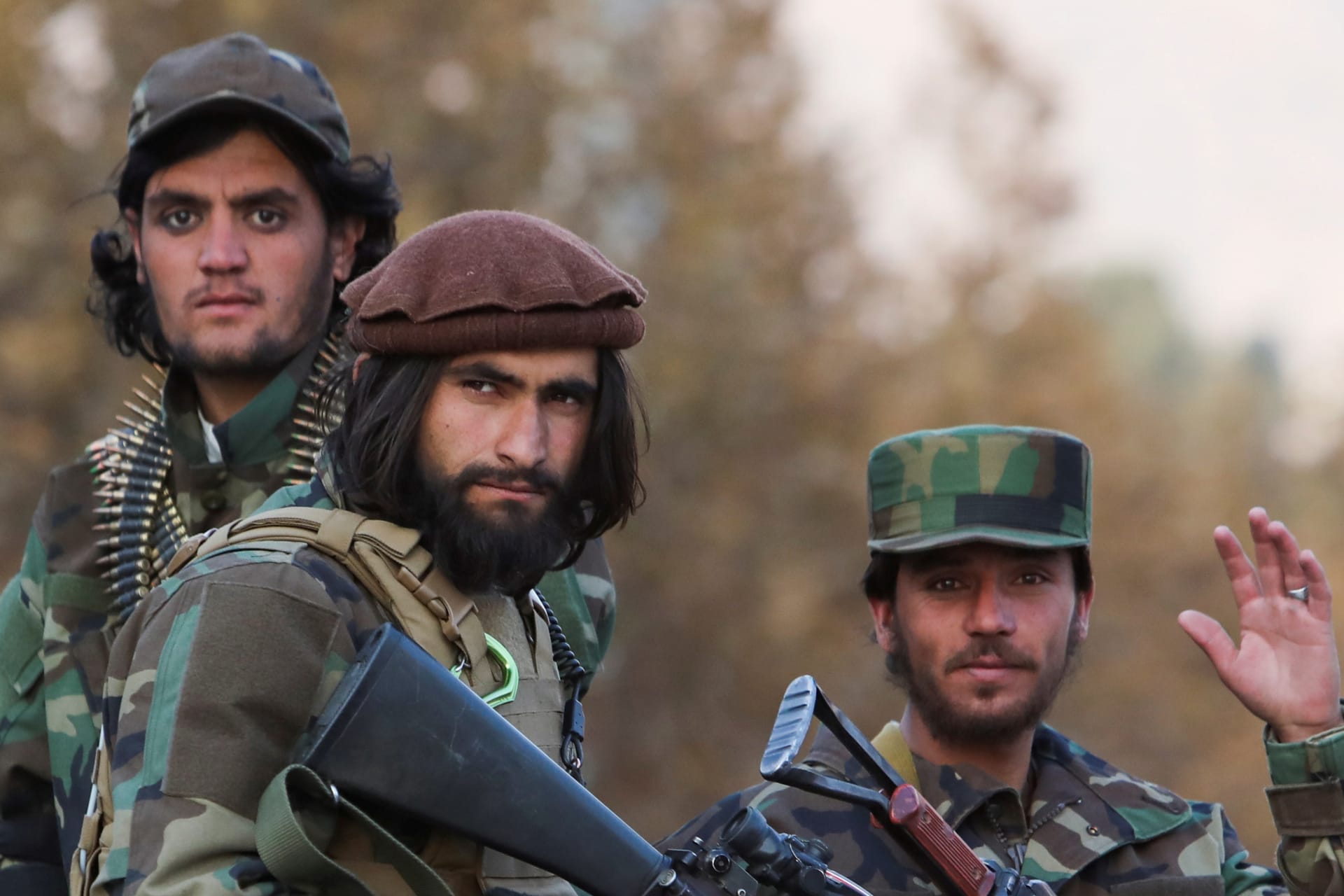
Sharia developed several hundred years after the Prophet Mohammed's death in 632 CE as the Islamic empire expanded to the edge of North Africa in the West and to China in the East. Since the Prophet Mohammed was considered the most pious of all believers, his life and ways became a model for all other Muslims and were collected by scholars into what is known as the hadith. As each locality tried to reconcile local customs and Islam, hadith literature grew and developed into distinct schools of Islamic thought: the Sunni schools, Hanbali, Maliki, Shafi'i, Hanafi; and the Shiite school, Ja'fari. Named after the scholars that inspired them, they differ in the weight each applies to the sources from which sharia is derived, the Quran, hadith, Islamic scholars, and consensus of the community. The Hanbali school, known for following the most Orthodox form of Islam, is embraced in Saudi Arabia and by the Taliban. The Hanafi school, known for being the most liberal and the most focused on reason and analogy, is dominant among Sunnis in Central Asia, Egypt, Pakistan, India, China, Turkey, the Balkans, and the Caucasus. The Maliki school is dominant in North Africa and the Shafi'i school in Indonesia, Malaysia, Brunei Darussalam, and Yemen. Shia Muslims follow the Ja'fari school, most notably in Shia-dominant Iran. The distinctions have more impact on the legal systems in each country, however, than on individual Muslims, as many do not adhere to one school in their personal lives.
Marriage and divorce are the most significant aspects of sharia, but criminal law is the most controversial. In sharia, there are categories of offenses: those that are prescribed a specific punishment in the Quran, known as hadd punishments, those that fall under a judge's discretion, and those resolved through a tit-for-tat measure (ie., blood money paid to the family of a murder victim). There are five hadd crimes: unlawful sexual intercourse (sex outside of marriage and adultery), false accusation of unlawful sexual intercourse, wine drinking (sometimes extended to include all alcohol drinking), theft, and highway robbery. Punishments for hadd offenses--flogging, stoning, amputation, exile, or execution--get a significant amount of media attention when they occur. These sentences are not often prescribed, however. "In reality, most Muslim countries do not use traditional classical Islamic punishments," says Ali Mazrui of the Institute of Global Cultural Studies in a Voice of America interview. These punishments remain on the books in some countries but lesser penalties are often considered sufficient.
Despite official reluctance to use hadd punishments, vigilante justice still takes place. Honor killings, murders committed in retaliation for bringing dishonor on one's family, are a worldwide problem. While precise statistics are scarce, the UN estimates thousands of women are killed annually in the name of family honor (National Geographic). Other practices that are woven into the sharia debate, such as female genital mutilation, adolescent marriages, polygamy, and gender-biased inheritance rules, elicit as much controversy. There is significant debate over what the Quran sanctions and what practices were pulled from local customs and predate Islam. Those that seek to eliminate or at least modify these controversial practices cite the religious tenet of tajdid. The concept is one of renewal, where Islamic society must be reformed constantly to keep it in its purest form. "With the passage of time and changing circumstances since traditional classical jurisprudence was founded, people's problems have changed and conversely, there must be new thought to address these changes and events," says Dr. Abdul Fatah Idris, head of the comparative jurisprudence department at Al-Azhar University in Cairo. Though many scholars share this line of thought, there are those who consider the purest form of Islam to be the one practiced in the seventh century.
In a 2007 University of Maryland poll (PDF), more than 60 percent of the populations in Egypt, Morocco, Pakistan, and Indonesia responded that democracy was a good way to govern their respective countries, while at the same time, an average of 71 percent agreed with requiring "strict application of [sharia] law in every Islamic country." Whether democracy and Islam can coexist is a topic of heated debate. Some Islamists argue democracy is a purely Western concept imposed on Muslim countries. Others feel Islam necessitates a democratic system and that democracy has a basis in the Quran since "mutual consultation" among the people is commended (42:38 Quran). John L. Esposito and John O. Voll explain the debate in a 2001 article in the journal Humanities.
Noah Feldman, CFR adjunct senior fellow, writes in a 2008 New York Times Magazine article that the full incorporation of Islamic law is viewed as creating "a path to just and legitimate government in much of the Muslim world." It places duplicitous rulers alongside their constituents under the rule of God. "For many Muslims today, living in corrupt autocracies, the call for [sharia] is not a call for sexism, obscurantism or savage punishment but for an Islamic version of what the West considers its most prized principle of political justice: the rule of law," Feldman argues.
On the other hand, some Muslim scholars say that secular government is the best way to observe sharia. "Enforcing a [sharia] through coercive power of the state negates its religious nature, because Muslims would be observing the law of the state and not freely performing their religious obligation as Muslims," says Abdullahi Ahmed An-Na'im, a professor of law at Emory University and author of a book on the future of sharia. Opinions on the best balance of Islamic law and secular law vary, but sharia has been incorporated into political systems in three general ways:
Growing at an estimated 15 percent annually, Islamic banking and finance is a worldwide industry that modifies modern business practices to conform to the rules of sharia. Central to this field is riba, the charging or payment of interest, banned under Islamic law. Clever twists on standard financial products like credit cards, savings accounts, mortgages, loans, and even trust funds bypass the interest business model. A 2008 report by the General Council for Islamic Banks and Financial Institutions estimates the Islamic banking industry to stand at $442 billion. Even big name banks such as Citigroup, HSBC, and Deutsche Bank are developing Islamic banking sectors to cater to the demand. The industry is small in comparison to the global market, but may grow as some non-Muslims are turning to sharia-compliant services. Some of the ethically minded are also switching over to sharia-compliant investments. Businesses are required to avoid transactions related to forbidden things, such as weapons, alcohol, tobacco, gambling, pornography and pork, and investors are guaranteed that their money won't end up financing those industries. Governments are also looking to get a piece of the pie: Malaysia is the largest issuer of sharia-compliant bonds and Indonesia launched its own in January 2009.
Weigh in on this issue by emailing CFR.org.
CFR maintains archives of multimedia from its on-the-record meetings. Full-length videos, as well as brief highlight videos of select meetings, audio recordings, and unedited transcripts can be accessed at the following links:
Through compelling analysis and rich historical examples that span the globe and range from the thirteenth century through the present, Charles A. Kupchan explores how adversaries can transform enmity into amity, and exposes prevalent myths about the causes of peace.
With the insights of geopolitical experts and investors, the authors examine Israel's adversity-driven culture to offer prescriptions for a global economy on the rebound.
Vali Nasr reveals that there is a vital but unseen rising force in the Islamic world—a new business-minded middle class—that is building a vibrant new Muslim world economy and that holds the key to winning the cold war against Iran and extremists.
Complete list of CFR Books
This report explores how international legal rules regarding military force might evolve to better meet the challenges of mass atrocities.
The authors of this CSR explain why the United States needs to place greater emphasis on preventive action and how current organizational arrangements can be changed to meet that need.
This report addresses pan-Asian and trans-Pacific architectures and guidelines for how the United States can revise its approach in order to consolidate and improve the efficacy of these Asian institutions.
Complete list of Council Special Reports
The report of this bipartisan Task Force makes the case that maintaining America's political and economic leadership depends on attracting talented and hard-working immigrants, and on securing the country's borders in a smart, effective, and humane way.
This report makes recommendations on how to ensure the safety, security, and reliability of the U.S. deterrent nuclear force, prevent nuclear terrorism, and strengthen the nuclear nonproliferation regime.
About Independent Task Forces at CFR
Complete list of Task Force reports
To order Task Force reports, Council Special Reports, and Critical Policy Choices, please call, fax, or order online from our distributor, the Brookings Institution Press: phone +1.800.537.5487, fax +1.410.516.6998.
For information on other reports that are not for sale, or for general publications information, please call +1.212.434.9516 or email publications@cfr.org.
To request permission to reprint or reuse CFR material, please fill out this permissions request form (PDF), referring to the instructions on page 1.