Ali Banuazizi, an expert on Iranian politics, says that of the various candidates for the next presidential election in Iran on June 17, only former President Ali Akbar Hashemi Rafsanjani has a chance of ending the standoff with Washington over Iran’s nuclear program. Rafsanjani, he says, has held every position of authority in the Islamic Republic, and therefore “has the credibility, much like Nixon did vis-a-vis China, to cross that bridge.”
Rafsanjani, who is considered a pragmatic politician, will face a number of opponents for the office, including old-guard conservatives, reformists critical of the Iranian government, and a new category of younger conservatives from military backgrounds. But the election will be far from free, Banuazizi says. “The media are certainly controlled by the regime and there is the decisive intervention of the Guardian Council [which vets all candidates for their religious qualifications for office]. In addition, a number of the leading opponents of the regime, including journalists, are in jail.”
Banuazizi, president of the Middle East Studies Association of North America and a professor of cultural psychology at Boston College, was interviewed by Bernard Gwertzman, consulting editor for cfr.org, on May 11, 2005.
Other Interviews
Registration for presidential candidates has started in Iran. Who are the most likely candidates?
Perhaps we could put them in three distinct categories. The conservatives include Ali Larijani, who was head of Iranian television and radio, and appointed by the Supreme Leader [Ayatollah Ali Khamenei]. The second conservative candidate is Ali Akbar Velayati, who was foreign minister for 16 years, from 1981 to 1997.
There are what I would call two reformist candidates. One is Mehdi Karubi, who was the speaker of the parliament. He’s a cleric and generally regarded as relatively liberal. And the other one is Mustafa Moein, who was the minister of higher education and science, and relatively younger, in his fifties. He has been a critic, particularly in the past few months, of the system.
Now, in addition to these, of course, there is the big name who has dominated [the news coverage] and is likely to dominate the poll itself, Ali Akbar Hashemi Rafsanjani, who is about 70 years of age. He has held every top position in the Islamic Republic, including, of course, being the speaker of the parliament for a number of years. After that, [he was] the president for eight years, from 1989 to 1997, and then after that, the head of the so-called Expediency Council that tries to resolve conflicts that emerge between the parliament and the Guardian Council [a 12-member council, with six Islamic clerics and six lay jurists, that can veto laws passed by parliament.]
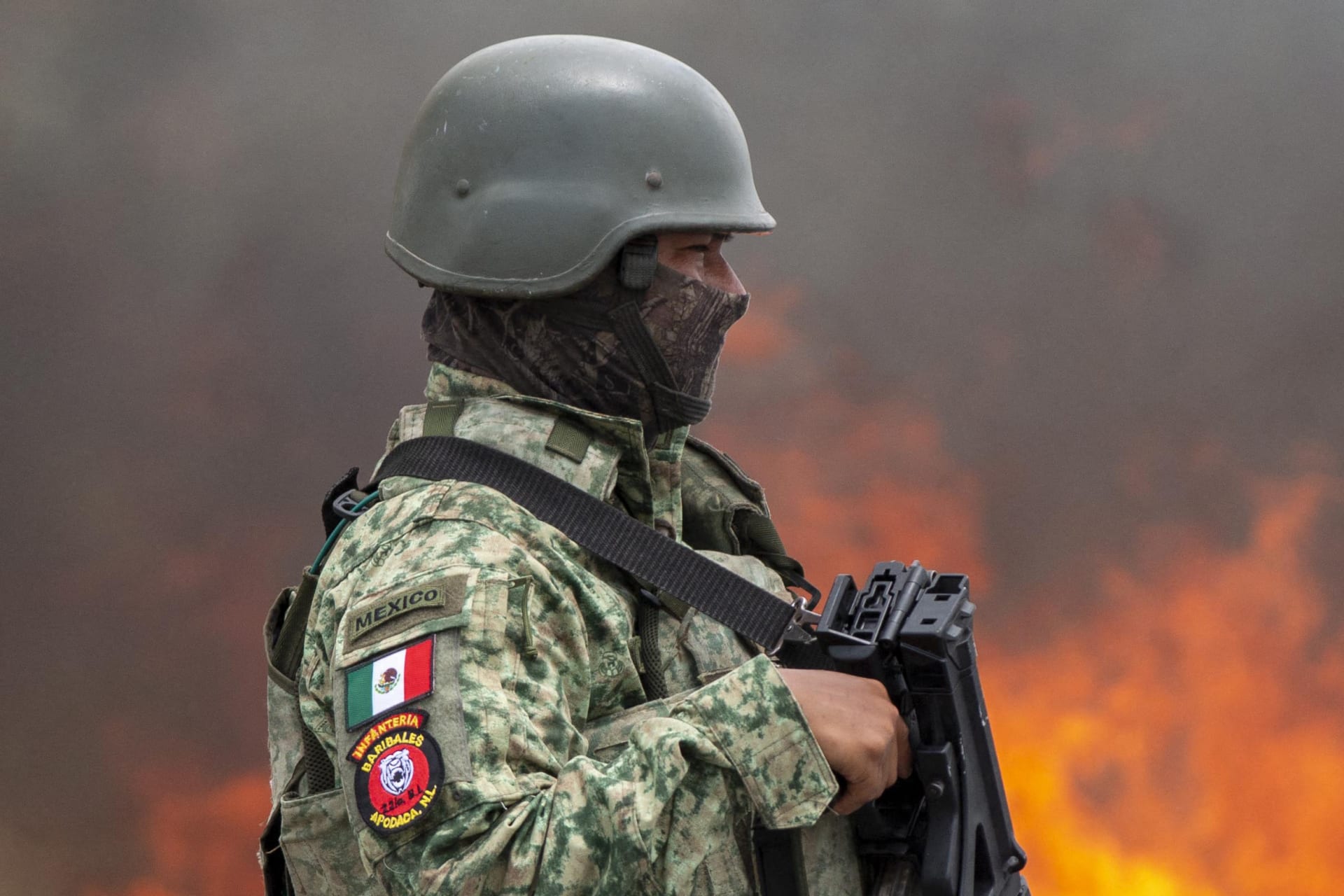
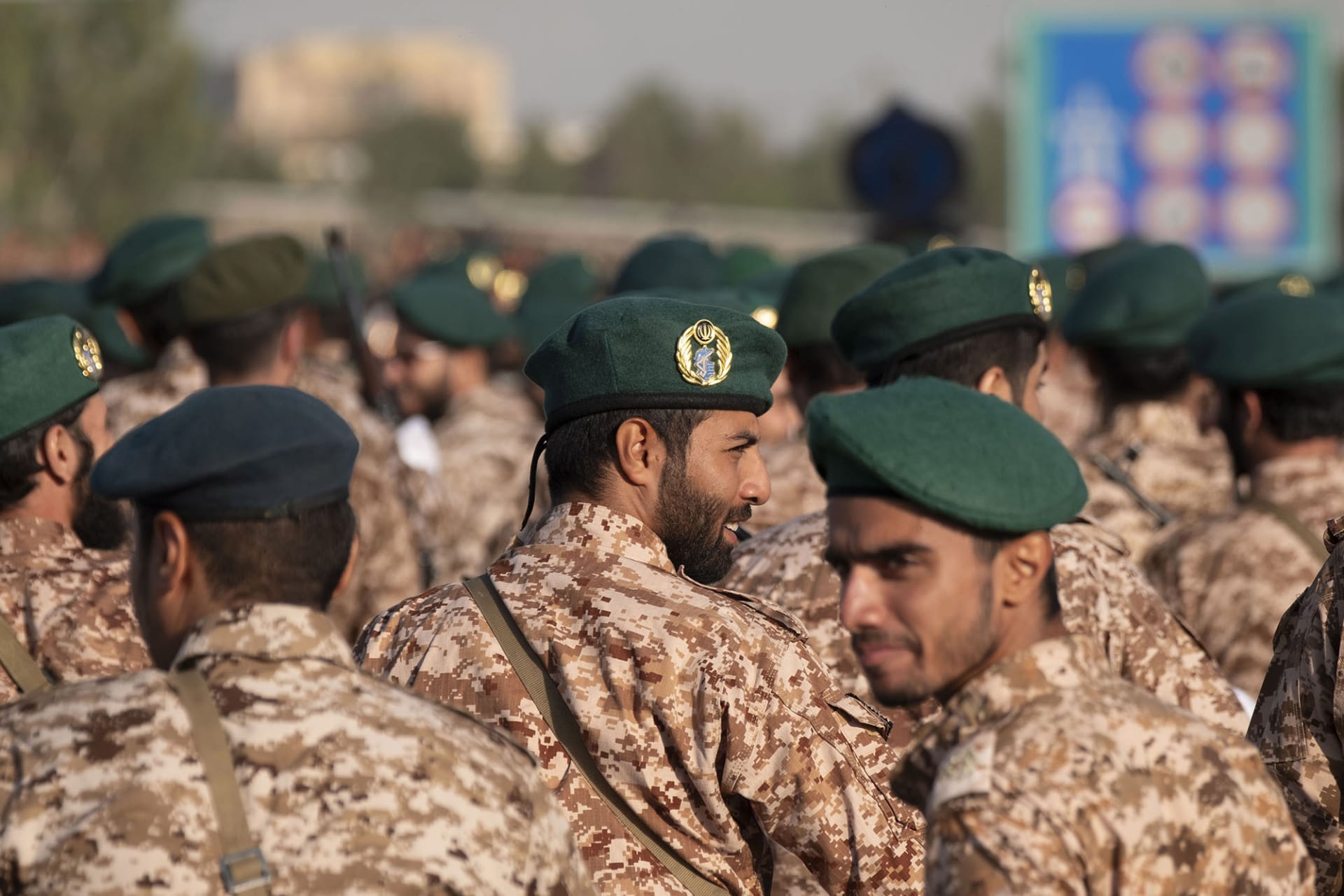
I want to mention a new group of conservative candidates that is quite interesting. These are primarily younger individuals. One of them is the mayor of Tehran, Mahmud Ahmadi-Nejad. The other one—a very significant figure, in fact, in this election—is a man by the name of Mohammed Baqer Qalibaf, who is 43 years old. He headed the Islamic Revolutionary Guard’s air force until 2000, and then became the chief of the national police force. The last on this list of younger candidates is a man by the name of Mohsen Rezai, who headed the Islamic Revolutionary Guards corps, obviously a very important position, from 1981 to 1997. He is now the secretary of the Expediency Council—that is, the council that Rafsanjani heads. The reason I’m mentioning this last group, and particularly the two individuals with military backgrounds, is that this is quite new in Iranian post-revolutionary politics. These are individuals who are quite decisive in their approach. And they promise that, under their presidency, the country and economy will be managed better. They project an image of efficiency and managerial skillfulness, which clerical members of the elite certainly cannot project, and as such, they may have some appeal to the electorate.
Most of the news coverage in the United States and Britain seems to suggest that Rafsanjani is likely to win. Does he really have that kind of popularity?
He certainly has greater name recognition than any other candidate. He’s obviously regarded as a pillar of the system, and that’s both an advantage and, clearly, a liability as well in the minds of many of the voters. My own guess is that none of the candidates will be able to get a majority, but he would certainly be one of the major candidates and vote-getters in the election.
Do you need a majority to win, or might a run-off be necessary?
Well, there will be a run-off if no candidate wins a majority. The way the process is set up right now, over the next few days until May 15, the minister of the interior will collect the names of all those who put themselves up—who nominate themselves, essentially, as candidates. Then on May 15, the list is forwarded to the Guardian Council, which will review and vet the candidates and declare the list of qualified candidates on May 24. And then the campaign will begin, and the candidates whose names appear on that list will have from May 27—that is, three days after the declaration of their names— until 24 hours before the day of the election, which is on June 17. So, roughly, they will have a three-week window for campaigning.
In the current atmosphere in Iran, is there relative press freedom? Can people campaign freely, or is the process controlled by the conservatives?
It’s very much controlled by the conservatives, and let me say a very important stage is this review by the Guardian Council. That’s a very conservative council, which, of course, is the very body that disqualified the majority of the candidates for the parliamentary elections in 2004. And just to put this in perspective, back in 1997, there were 200 applicants or nominees, and only four were accepted by the Guardian Council. And then four years later, there were something like 810 applicants and only 10 were accepted. So that’s obviously a very major hurdle and, in a sense, the outcome of the election is very much a function of whom they choose as qualified.
Are the names you mentioned likely to be approved?
Yes, but it is not entirely certain. Rafsanjani, obviously, as the head of the Expediency Council, would certainly be accepted, and so would the other candidates on the conservative side.
The United States and Iran have very poor relations right now, to say the least, and the United States is very concerned about Iran’s nuclear program. Would Washington favor any of these candidates? From their perspective, a U.S. endorsement might be the kiss of death, I suppose.
That would certainly be the case; an embrace by Washington of any of these candidates would clearly work to their great disadvantage. But on all accounts, it appears that, if there is one person who could try to work out some sort of a deal with the United States on the nuclear issue, it would be Rafsanjani. As you may know, in an interview in USA Today, he said he is the one who could restore U.S.-Iranian relations. Of course, subsequently, he denied the interview ever took place. But it did take place.
And on various other occasions, while he’s been critical of the United States, he has said that he has a plan for restoring relations with the United States. This was a statement that he made on May 3. And he has the credibility, much like Nixon did vis-a-vis China, to cross that bridge. Among the conservatives, I think it would be less likely that relations would be resumed or some kind of modus vivendi would be worked out, at least in the short run. And quite frankly, a reformist would have a very hard time moving the establishment towards some kind of detente or rapprochement with the United States.
Let’s talk a bit more about Rafsanjani. I guess, when the revolution took place, he was a close compatriot of Grand Ayatollah Ruhollah Khomeini?
A much, much younger lieutenant, or shall we say, an adjutant of Khomeini in Iran. He was never outside of Iran. He became politically active as a teenager when he went to the seminary in Qom and remained active, was in jail a number of times, and so on. And since the revolution, he has, as I mentioned before, held every important position in the country since 1979. He was the person who engineered the relatively uneventful crisis of succession, if you will, after Khomeini’s death in 1989. And without any question, he was the king-maker. He was the one who made it possible for Ayatollah Ali Khamenei to [succeed Grand Ayatollah Khomeini] as the supreme leader, and Rafsanjani himself, of course, became a candidate and won the presidency. Then after his own two terms from 1989 to 1997 were completed, he, in a sense, was the one who chose [current president Mohammad] Khatami as a candidate, even though Khatami’s electoral victory was due to his own campaign platform and the democratic movement in Iran that was taking shape in the 1990s. He was not responsible for Khatami’s victory, but surely he was the one who handpicked or made it possible for Khatami to stand for president.
Has Rafsanjani had much experience dealing with Washington?
Of course, he has the experience of the famous Reagan “cake.” [This is a reference to the secret arms-for-hostages negotiations carried on during the Reagan administration. At the first meeting in Tehran in September 1986, the U.S. side presented the Iranians with a cake in the shape of a key meant to symbolize the opening of U.S.-Iranian friendship.]
He was heavily involved with [former President Reagan’s National Security Adviser Robert C.] McFarlane and that whole affair. He was an “operator” and was able to live down the damage to his reputation when the whole episode became public.
What was his job then?
He was the speaker of the parliament, and clearly, one of the key power brokers in Iran.
Who would the so-called liberal students favor? They have been fairly silent recently.
They’re not very silent. In fact, they have issued a number of statements. And I think this is something we really should stay on for a moment. We have to emphasize that this is not a free election: the media are certainly controlled by the regime and there is the decisive intervention of the Guardian Council. In addition, a number of the leading opponents of the regime, including journalists, are in jail.
But students, as well as some of the better-known traditional figures, are speaking out. These include Ibrahim Yazdi, a former foreign minister. He and a group of other liberal Islamic personages, the followers of the late Prime Minister Mehdi Bazargan, are very much on the stage, and they’re demanding the elections be carried out in a free fashion. A number of other reformist and democratic groups have made statements—all of them quite critical of this tight control over the entire process, and particularly the role of the Guardian Council.