Why does this page look this way?
It appears that you are using either an older, classic Web browser or a hand-held device that allows you to view our content but may not work with every feature of our site. If you are using an older browser, please upgrade for the best experience.
Navigation
home > by publication type > op-eds > What to Do About China
| Author: | Richard N. Haass, President, Council on Foreign Relations |
|---|
June 20, 2005
U.S. News & World Report
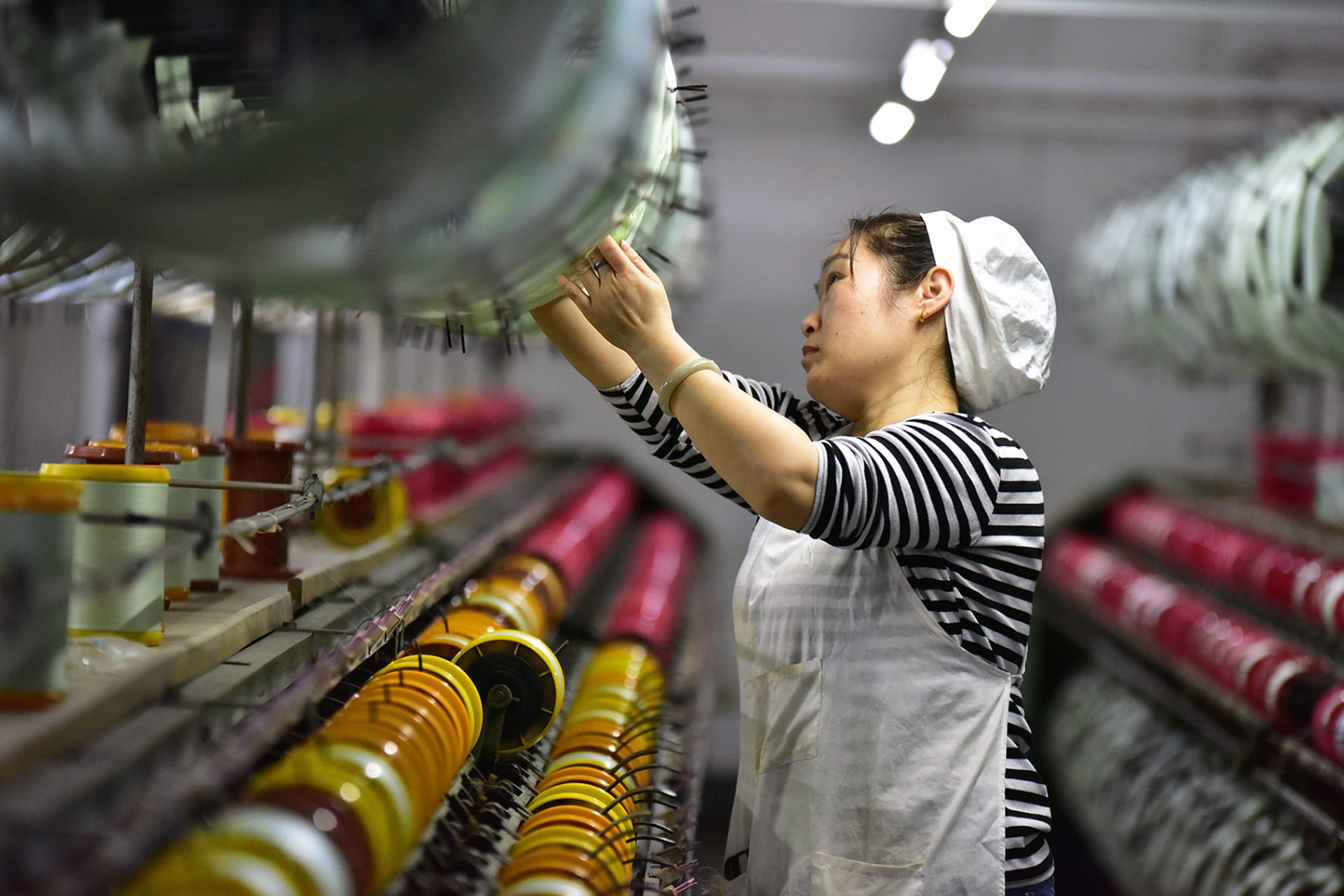
A good deal of history is determined by relations between and among great powers. The 21st century promises to be no different. The most critical relationship will be that between the United States, today's dominant power, and China, the world's rising power. And have no doubt about it, China is rising. China's gross domestic product is roughly half that of the United States, but in three decades, the total value of the goods and services it produces should be about the same. China is also converting some of its wealth into military might. It now boasts the third-largest military budget in the world.
At the same time, it is important not to exaggerate China's accomplishments. Income per capita is less than $ 5,000. China's leaders understand that the country requires a generation or more of peace and stability so that it can focus on economic growth and help its hundreds of millions of poor people.
Still, foreign policy "realists," citing history, argue that China will inevitably challenge American primacy and that it is a question of "when" and not "if" the U.S.-China relationship turns competitive or worse. Their conclusion? The United States should seek to prevent China's rise.
One problem with this thinking is that the rise and fall of countries is largely beyond the ability of the United States or any other outsider to control. The performance of states is mostly the result of demographics, culture, natural resources, educational systems, economic policy, political stability, and foreign policy. It is not clear the United States could prevent China's rise even if it wanted to. But should the United States want to? The answer is no. For one thing, attempting to block China's rise would guarantee its animosity and all but ensure its working against U.S. interests around the world.
Test case. More important, the United States shouldn't want to discourage the rise of a strong China. America needs other countries to be strong if it is to have the partners it needs to meet the many challenges posed by globalization: the spread of nuclear weapons, terrorism, infectious diseases, drugs, and global climate change. The issue for American foreign policy shouldn't be whether China becomes strong but how China uses its growing strength.
Working with India, Japan, and others, our goal should be to integrate China into the international system, to make it a pillar of the global establishment. China is already working with the United States against terrorism, but the most pressing area for expanded cooperation is North Korea. The problem is that China isn't using its considerable economic ties with North Korea to pressure it to stop developing nuclear weapons. It needs to do more. The United States should also do more to change China's stance: by offering North Korea some attractive incentives to give up its nuclear materials and weapons, by reassuring China that if that happens, Washington will oppose the emergence of any new nuclear-weapons state in the region, and by underscoring that this is a test case for U.S.-China ties.
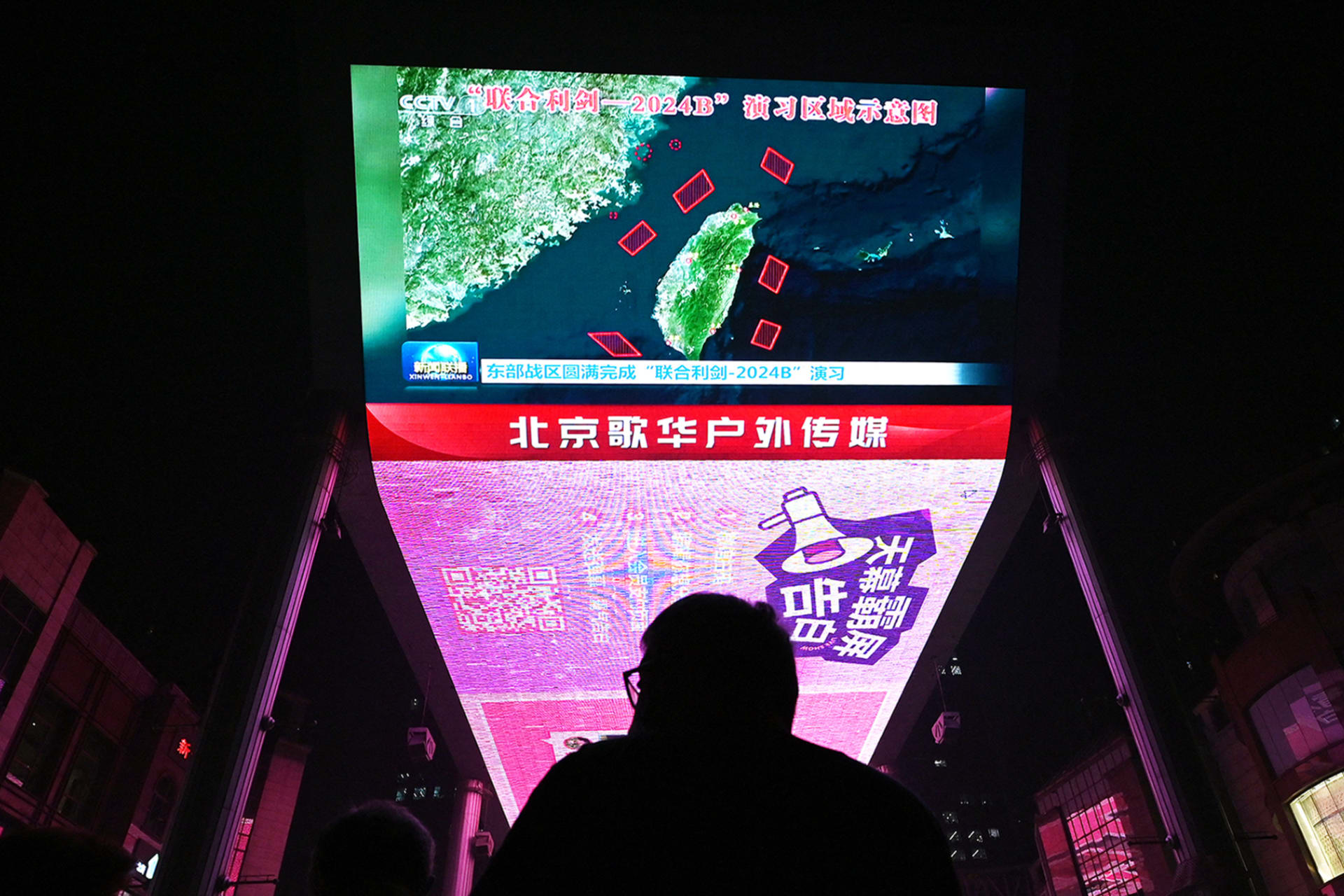
The other issue that could seriously hurt U.S.-China ties, or even bring the two powers into conflict, is Taiwan. Taiwan must be pressed not to take unilateral steps that would be tantamount to independence and risk a military response from the mainland. China needs to be reminded not to use force to unify the country. Neither China nor Taiwan should count on Washington standing aside if they change the status quo.
Yet another source of growing irritation is trade. China now exports to the United States some $ 160 billion more than it takes in. What's important is that U.S. exports to China enjoy fair access and that disputes are settled by the World Trade Organization. What we want to avoid is having trade becoming a source of friction rather than integration.
A final consideration is China's domestic politics. China is more open economically than politically and more open politically than it was a decade ago. But it has a long way to go. The best way to promote democratization is by bolstering the middle class, extending the rule of law, and limiting the role of the state. Such political evolution is crucial; as the lure of communism fades, it is important that nationalism not fill the political and ideological void.
This is easier said than done, of course. The rise of Chinese nationalism is a reminder of just how difficult it will be for America and China to reach an accommodation. A U.S.-China cold war would be costly, dangerous, and distracting, robbing attention and resources from pressing internal and global challenges. Both countries have a stake in avoiding this outcome; the course of this century will depend in no small part on whether they succeed.
Richard N. Haass is the president of the Council on Foreign Relations and the author of "The Opportunity: America's Moment to Alter History's Course."
To order Task Force reports, Council Special Reports, and Critical Policy Choices, please call, fax, or order online from our distributor, the Brookings Institution Press: phone +1.800.537.5487, fax +1.410.516.6998.
For information on other reports that are not for sale, or for general publications information, please call +1.212.434.9516 or email publications@cfr.org.
Start-Up Nation addresses the trillion-dollar question: How is it that Israel—a country of 7.1 million, only sixty years old, surrounded by enemies— produces more start-up companies than large, peaceful, and stable nations like Japan, China, India, Korea, Canada, and the UK? With the insights of geopolitical experts and investors, the authors examine this nation’s adversity-driven culture to answer this question and offer prescriptions for a global economy on the rebound.
In Forces of Fortune, Vali Nasr presents a paradigm-changing revelation that will transform the understanding of the Muslim world at large. He reveals that there is a vital but unseen rising force in the Islamic world—a new business-minded middle class—that is building a vibrant new Muslim world economy and that holds the key to winning the cold war against Iran and extremists.
In Cuba: What Everyone Needs to Know, Julia E. Sweig presents a remarkably accessible portrait of Cuba's unique place on the world stage over the past fifty years, including its internal politics, its often fraught relationship with the United States, and its shifting relationship with the global community.
Complete list of CFR Books
Browse Content By Region IssuePublication TypeThe Think TankFor The MediaFor Educators About CFR
Copyright 2009 by the Council on Foreign Relations. All Rights Reserved.