Why does this page look this way?
It appears that you are using either an older, classic Web browser or a hand-held device that allows you to view our content but may not work with every feature of our site. If you are using an older browser, please upgrade for the best experience.
Navigation
home > by publication type > books > Cases and Strategies for Preventive Action
| Author: | Barnett R. Rubin, New York University |
|---|
| Publisher: | A CFR Book. The Century Fund |
|---|
Release Date: June 1998
120
ISBN 0870784129
$11.95
In 1996, there were violent intrastate conflicts in ninety countries around the world. Governments, international organizations, nongovernmental organizations, and scholars continue to investigate how these deadly conflicts can be prevented. In order to assess what has been learned about conflict prevention and encourage further examination of cases and strategies, the Center for Preventive Action (CPA) of the Council on Foreign Relations convenes an annual
conference. CPA's December 1996 Conference on Preventive Action examined three regions where CPA has programs—Nigeria, the Great Lakes region of Central Africa, and the South Balkans— and three tools of prevention—religion, economic sanctions and incentives, and small weapons disarmament.
This conference volume is the second book in CPA's series of Preventive Action Reports. It uses CPA's case studies to examine the effectiveness of the tools of preventive action, and draws on comparative studies to guide the analysis of the case studies. Included: Edward J. Laurance of the Monterey Institute of International Studies on small weapons disarmament; David Cortright of the Fourth Freedom Forum and George Lopez of the Kroc Institute of International Peace Studies, University of Notre Dame, on the use of economic sanctions and incentives; Reverend Donald Shriver of Union Theological Seminary on
religion and violence prevention; Steven Burg of Brandeis University on the South Balkans; Michael Lund of Creative Associates International on Burundi and the Great Lakes region of Central Africa; and Peter Lewis of American University on Nigeria.
Introduction
Acknowledgments
Preface
1. Introduction: Experience in Prevention
2. Nationalism and Civic Identity: Ethnic Models for Macedonia and Kosovo
3. Learning from Burundi's Failed Democratic Transistion, 1993-96: Did
International Initiatives Match the Problem?
4. Nigeria: The Challenge of Preventative Action
5. Carrots, Sticks, and Cooperation: Economic Tools of Statecraft
6. Small Arms, Light Weapons, and Conflict Prevention: The New Post-Cold
War Logic of Disarmament
7. Religion and Violence Prevention
Appendix A. Program: Center for Preventative Action's Third Annual Conference
Appendix B. Directories of Organizations Working in Conflict Prevention and Resolution
Appendix C. Selected Bibliography
Appendix D. Authors' Biographies
Appendix E. Advisory Board of the Center for Preventative Action
Notes
Index
To order Task Force reports, Council Special Reports, and Critical Policy Choices, please call, fax, or order online from our distributor, the Brookings Institution Press: phone +1.800.537.5487, fax +1.410.516.6998.
For information on other reports that are not for sale, or for general publications information, please call +1.212.434.9516 or email publications@cfr.org.
Start-Up Nation addresses the trillion-dollar question: How is it that Israel—a country of 7.1 million, only sixty years old, surrounded by enemies— produces more start-up companies than large, peaceful, and stable nations like Japan, China, India, Korea, Canada, and the UK? With the insights of geopolitical experts and investors, the authors examine this nation’s adversity-driven culture to answer this question and offer prescriptions for a global economy on the rebound.
In Forces of Fortune, Vali Nasr presents a paradigm-changing revelation that will transform the understanding of the Muslim world at large. He reveals that there is a vital but unseen rising force in the Islamic world—a new business-minded middle class—that is building a vibrant new Muslim world economy and that holds the key to winning the cold war against Iran and extremists.
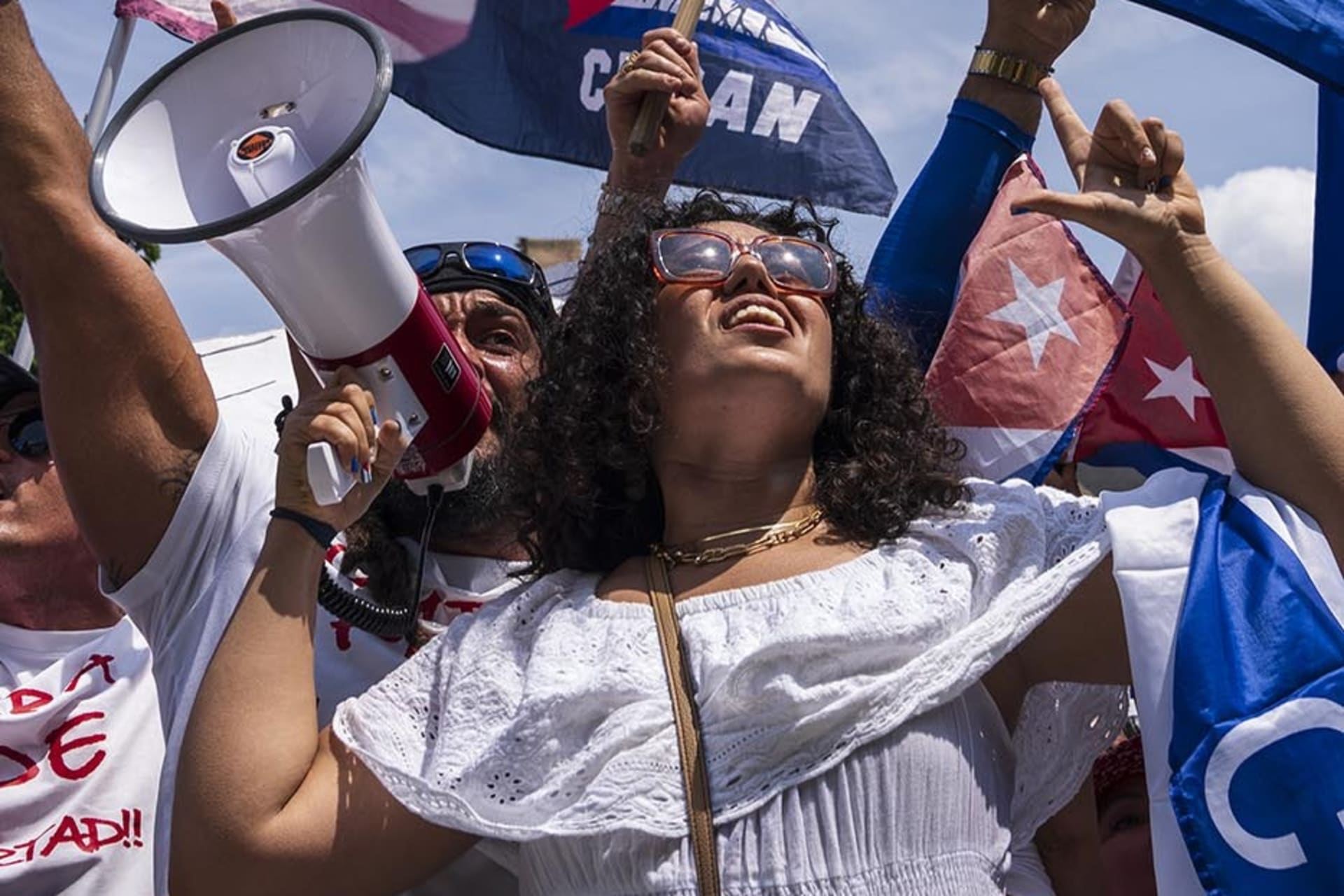
In Cuba: What Everyone Needs to Know, Julia E. Sweig presents a remarkably accessible portrait of Cuba's unique place on the world stage over the past fifty years, including its internal politics, its often fraught relationship with the United States, and its shifting relationship with the global community.
Complete list of CFR Books
The report of this bipartisan Task Force of distinguished leaders and experts represents a strong consensus on the importance of repairing America's immigration policy. It makes the case that maintaining America's political and economic leadership depends on attracting talented and hard-working immigrants, and on securing the country's borders in a smart, effective, and humane way.
This report finds that nuclear weapons will remain a fundamental element of U.S. national security in the near term, and makes recommendations on how to ensure the safety, security, and reliability of the U.S. deterrent nuclear force, prevent nuclear terrorism, and strengthen the nuclear nonproliferation regime.
About Independent Task Forces at CFR
Complete list of Task Force reports
Identifying international threats and acting on them may be the most difficult job for U.S. policymakers. This report
provides an actionable road map for managing international threats before they erupt into crises and makes a strong case that preventive action is not a luxury but a necessity.
For more than a decade, the United States has mostly watched from the sidelines as Asian countries organize themselves into an alphabet soup of new multilateral groups. In this report, the authors review the relationship between pan-Asian and trans-Pacific institutions and suggest policy guidelines for a new U.S. approach to this new Asian landscape.
Complete list of Council Special Reports
To request permission to reprint or reuse CFR material, please fill out this permissions request form (PDF), referring to the instructions on page 1.
Browse Content By Region IssuePublication TypeThe Think TankFor The MediaFor Educators About CFR
Copyright 2009 by the Council on Foreign Relations. All Rights Reserved.