 Council of Councils
 Think Global Health
 Online Store
Introduction
Over the last several decades, governments have collectively pledged to slow global warming. But despite intensified diplomacy, the world is already facing the consequences of climate…

Centers & Programs
Greenberg Center for Geoeconomic Studies
The Greenberg Center for Geoeconomic Studies works to promote a better understanding of how economic and geopolitical forces interact to shape the world.
2.1% Increase of U.S. GDP in 2022
Featured

A dramatic and powerful new perspective on the political career of Henry Wallace—a perspective that will forever change how we view the making of U.S. and Soviet foreign policy at the dawn of the Cold War.
The dam holding back chaos in U.S. foreign policy is cracking.
One of the IIJA's lesser known components is the investment it provides for resilience against cyber threats to critical infrastructure like ports, energy grids, transmission lines, and railways.
This interactive map tracks China’s growing maritime influence through investments in strategic overseas ports. Users can plot the location of each port and view satellite images alongside detailed information on the share of Chinese ownership, the total amount of Chinese investment, and the port’s suitability for use by the Chinese military.
Germans and Americans are pessimistic about their economies. While the European Central Bank and Federal Reserve remain committed to fighting inflation, the ECB faces a much tougher task.
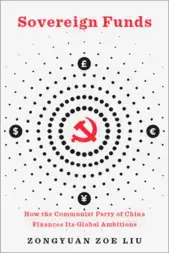
The first in-depth account of the sudden growth of China’s sovereign wealth funds and their transformative impact on global markets, domestic and multinational businesses, and international politics.
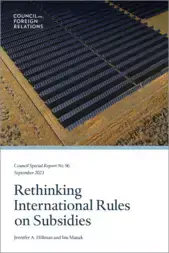
The World Trade Organization needs an updated toolbox in the face of rising industrial policies across the globe.
What trends will shape world events in the year ahead? Five CFR experts weigh in.
Stalemate over a trade deal with the European Union has left Mercosur on life support. Its revival depends on spurring greater intraregional trade.
A. Michael Spence, distinguished visiting fellow at CFR, provides a global perspective on the changing landscape of labor and economic productivity. Sharon Block, professor of practice and executive …
International trade has shaped the world for much of the past century. Countries benefited from the global flow of goods, and the world became richer and safer. At the same time, many Americans lost their jobs to cheaper overseas competitors. Now, a series of compounding challenges, including great power competition and climate change, have led U.S. officials to rethink trade policy. What's next for international trade? And can the United States retain the benefits of trade while protecting critical supply chains and fighting climate change?
As the effects of climate change mount, high-carbon energy sources continue to provide most of the world’s power. On average, 84 percent of tracker countries’ energy comes from high-carbon sources such as oil, whereas 16 percent comes from solar and other renewables. Low-carbon sources, however, are on the rise, particularly in developed countries.
Program Experts

Center Director
Matthew P. GoodmanDistinguished Fellow and Director of the Greenberg Center for Geoeconomic Studies


Bloomberg Chair in Global Health; Senior Fellow for International Economics, Law, and Development; and Director of the Global Health Program


Vice President, Deputy Director of Studies, and Nelson and David Rockefeller Senior Fellow for Latin America Studies


-
With India's development continuing to gain steam, one of the biggest challenges will be to avoid the mistake that others have made when they failed to recognize their newly acquired global systemic influence and adapt accordingly. Both China and Big Tech show that it is never too early to start managing one's own rise.
-
The dam holding back chaos in U.S. foreign policy is cracking.