![]()
Home |
Site Index |
FAQs |
Contact |
RSS
|
Podcast
Navigation
home > about cfr > history > history of cfr > foreword
IN CONTINUING THE INQUIRY Peter Grose offers a lively history of the Council from its founding in 1921 . Since those early days, the basic identity of the Council remains what it was: an independent, nonpartisan foreign policy think tank and membership organization. Yet as Giuseppe di Lampedusa writes in his classic novel The Leopard: “if we want things to stay as they are, they will have to change.” Originally published in 1996 , Continuing the Inquiry documents many such changes. In the ten ensuing years, the Council has undergone further transformation, ensuring its continued relevance and preeminence.
As Grose notes in closing, the Council’s leadership recognized that a fresh perspective was needed in the post–Cold War era—an era in which foreign affairs would no longer revolve around great power rivalry. To this end, then–Council President Leslie H. Gelb articulated a threefold vision for the Council: to add value by improving understanding of world affairs and by providing new ideas for U.S. foreign policy; to transform the Council into a national organization to benefit from the expertise and experience of leaders nationwide; and to find and nurture the next generation of foreign policy leaders.
Under the inspired leadership of Les and Council Chairman Peter G. Peterson, the Council made extraordinary progress in these areas. In 1995 , the first Independent Task Force published its report, Nuclear Proliferation: Confronting the New Challenges , inaugurating what has become one of the Council’s most successful means of encouraging informed policy debate.
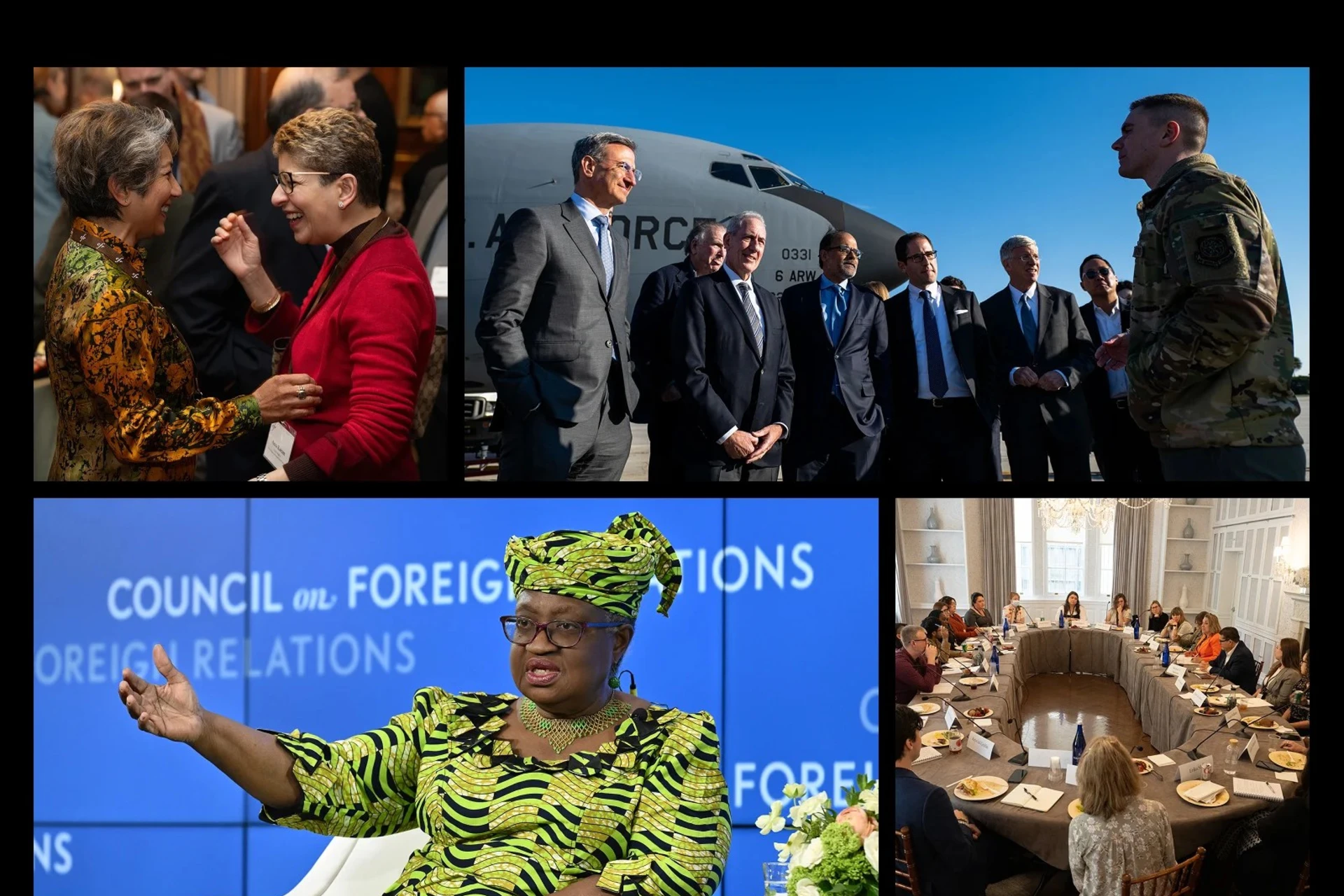
Comprised of experts diverse in background and perspective, Independent Task Forces seek consensus to make policy recommendations on issues of critical importance. To date, the Council has convened more than fifty. The vision of the Council as a truly national organization has been realized. National members now make up more than one-third of the total membership, with the other two-thirds divided between New York and Washington, DC. National members participate in programming in twelve cities across the country, as well as London. They also stay closely linked to Council events in New York City and Washington through teleconferences, webcasts, and, more recently, podcasts. June 2006 marked our The Term Member Program, intended to train the next generation of foreign policy leaders, has flourished as well. Elected between the ages of
30 and 36 to five-year terms, our more than 500 term members enjoy a full schedule dedicated to their interests. Notable recent events include a trip to India and meetings with officials of U.S. government agencies such as the CIA and the Department of State. Term members also participate in general meetings and make valuable contributions to the broader Council community.
Following the attacks of September 11 , 2001 , Les Gelb inaugurated what he referred to as “Goal Four”: an outreach strategy designed to cultivate the Council’s unique ability to be a resource for a public increasingly attuned to foreign affairs. The Council’s characteristically informed, nonpartisan analysis was shared via its website, with pages devoted to “Terrorism Q&A” and “Campaign 2004 ,” and through heightened Independent Task Force activity, publications, press briefings, and on-the-record meetings.
In my three years as president of the Council, I have endeavored to build upon Les’s achievements. Our Studies Program, the intellectual heart of the Council, consists of approximately two dozen full-time and two dozen part-time scholars, and each year it produces an impressive array of books, articles, and op-eds that enrich the policy debate. Programming for members is vibrant and increasingly creative, due in part to collaborations with HBO, PBS, and others. The Washington Program is stronger than ever and has successfully engaged both Capitol Hill and the diplomatic community.
Our Corporate Program boasts more than 250 member companies and completed its second annual conference in March. In addition to Independent Task Force reports, each year we publish numerous Council Special Reports—concise policy briefs designed to respond rapidly to a developing crisis or emerging policy debate—and other timely publications.
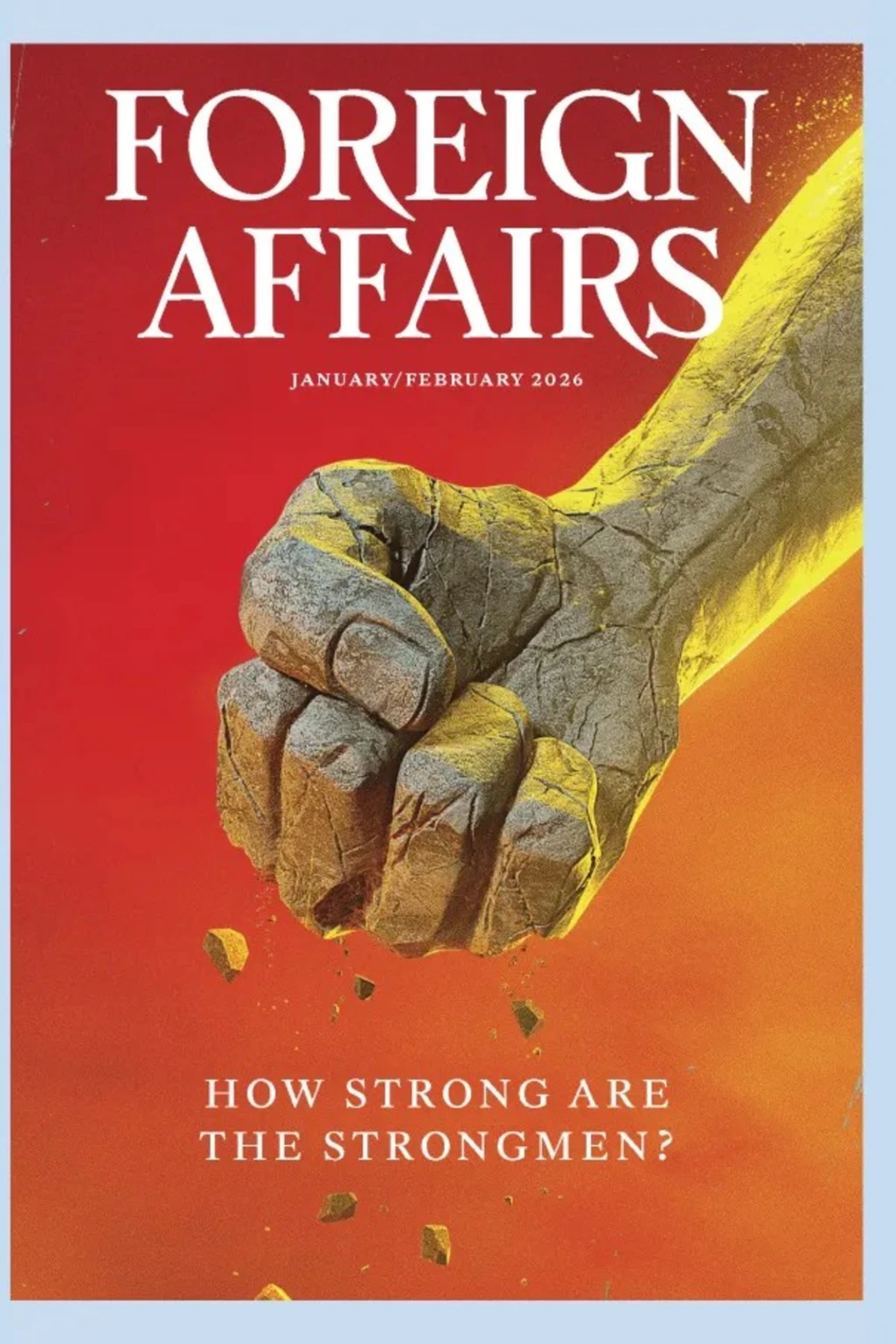
The Council’s website, CFR.org, has been transformed into what we believe is the best site anywhere for information on and analysis of foreign policy. With a paid circulation of 140 , 000 , Foreign Affairs’ quality, range, and reach is nothing less than stellar. Representing the very best in their respective fields, our members—life, term, and corporate—continue to contribute incredible energy and talent to the Council and its many programs.
And recently, the Council has extended its outreach efforts to connect with and serve as a resource for those individuals who too often are absent from the foreign policy debate, but whose participation, understanding, and voices are critical to the national debate. This year the Council is systematizing its outreach to religious and congregational leaders, to university professors, administrators, and students, and to state and local officials.
All this activity does not obscure our core commitment to preserve the Council’s mission and identity. Despite the impressive growth and activity of the past decade, the Council continues to be a place where members can rely on open, informed discussion. They, and our staff of approximately 200 in New York and Washington, remain devoted to the ideal of nonpartisanship set out by the Council’s founders eighty-five years ago. The Council’s ability to sustain this tradition, while contributing to the public debate and serving as a resource on an ever-expanding range of foreign policy issues, is a testament to the strength, wisdom, and value of this institution. It is an honor and a responsibility to serve as its president.
Richard N. Haass
President
Council on Foreign Relations
June 2006
![]()
![]()
![]()
The Council offers a variety of email newsletters about up-to-date CFR.org material on what’s happening around the world.
Enter your email address,and click 'Go' to subscribe.
![]()
![]()
Council Experts are based in the Council’s New York and Washington offices. Each expert's bio page contains his or her contact information, professional and educational history, links to publications and current research, a downloadable one-page biographical narrative, and a high-definition photo.
![]()
![]()
In The Fall and Rise of the Islamic State, Noah Feldman tells the story behind the increasingly popular call for the establishment of the sharia—the law of the traditional Islamic state—in the modern Muslim world.
In Regional Monetary Integration, Peter B. Kenen poses an important question: Should various country groups follow the lead of the European Monetary Union and form similar full-fledged monetary unions?
Walter Russell Mead recounts the story of the centuries-long rivalry between the English- speaking peoples and their enemies in God and Gold.
Complete list of CFR Books.
![]()
![]()
![]()
![]()
If you wish to receive a printed copy of one of our annual reports, please email your request to publications@cfr.org or call +1-212-434-9665.
Be sure to include your complete mailing address, phone number, and the year of the annual report that you wish to receive.
![]()
Copyright 2008 by the Council on Foreign Relations. All Rights Reserved.