Annual Report:
CFR in 2025
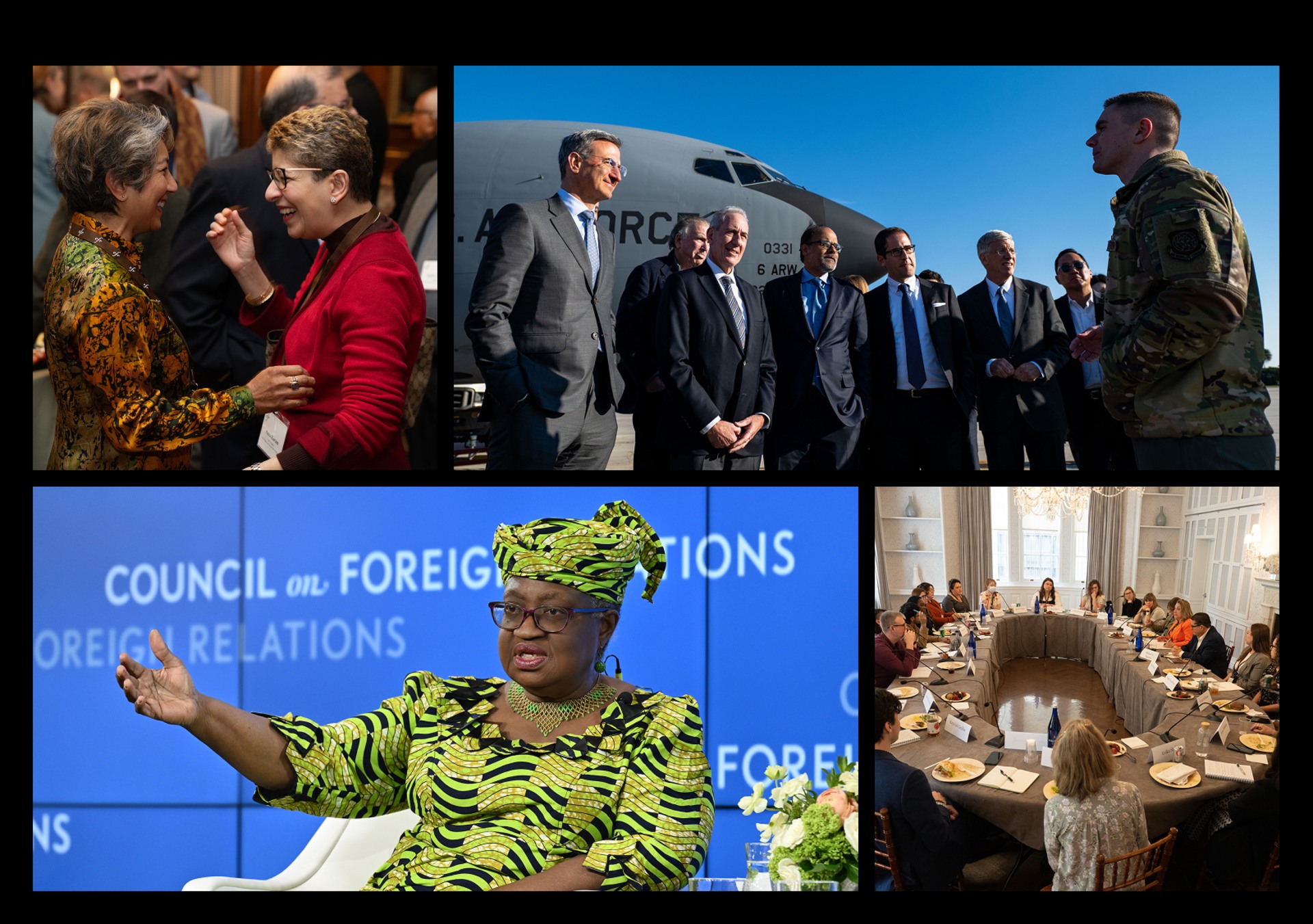
CFR is a leading resource for members, policymakers, corporate leaders, the media, educators, students, and all those striving to better understand the world.
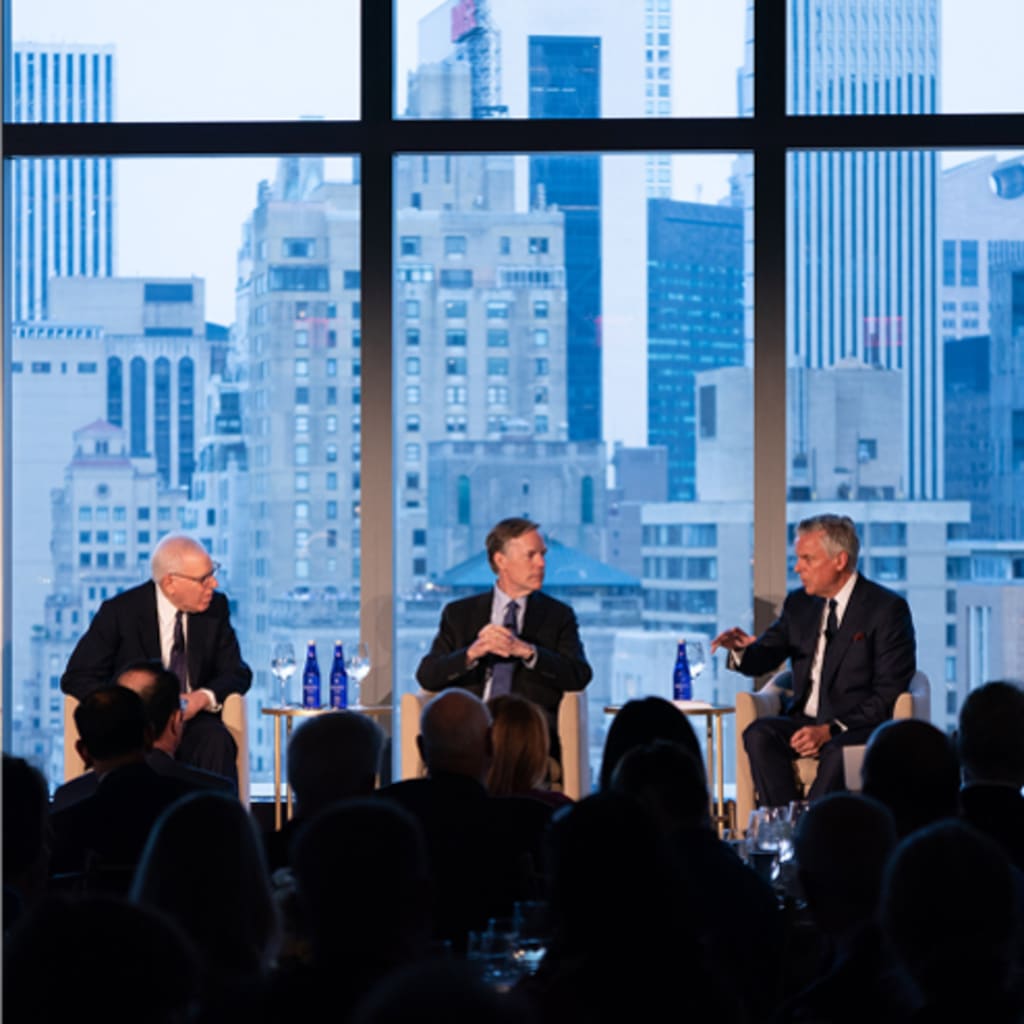
CFR in 2025—A Look Back
Transition, disruption, challenge, and opportunity marked the past year. The Council continued to address the range of issues facing U.S. foreign policy through its core strengths and mission—illustrated below and throughout this annual report.
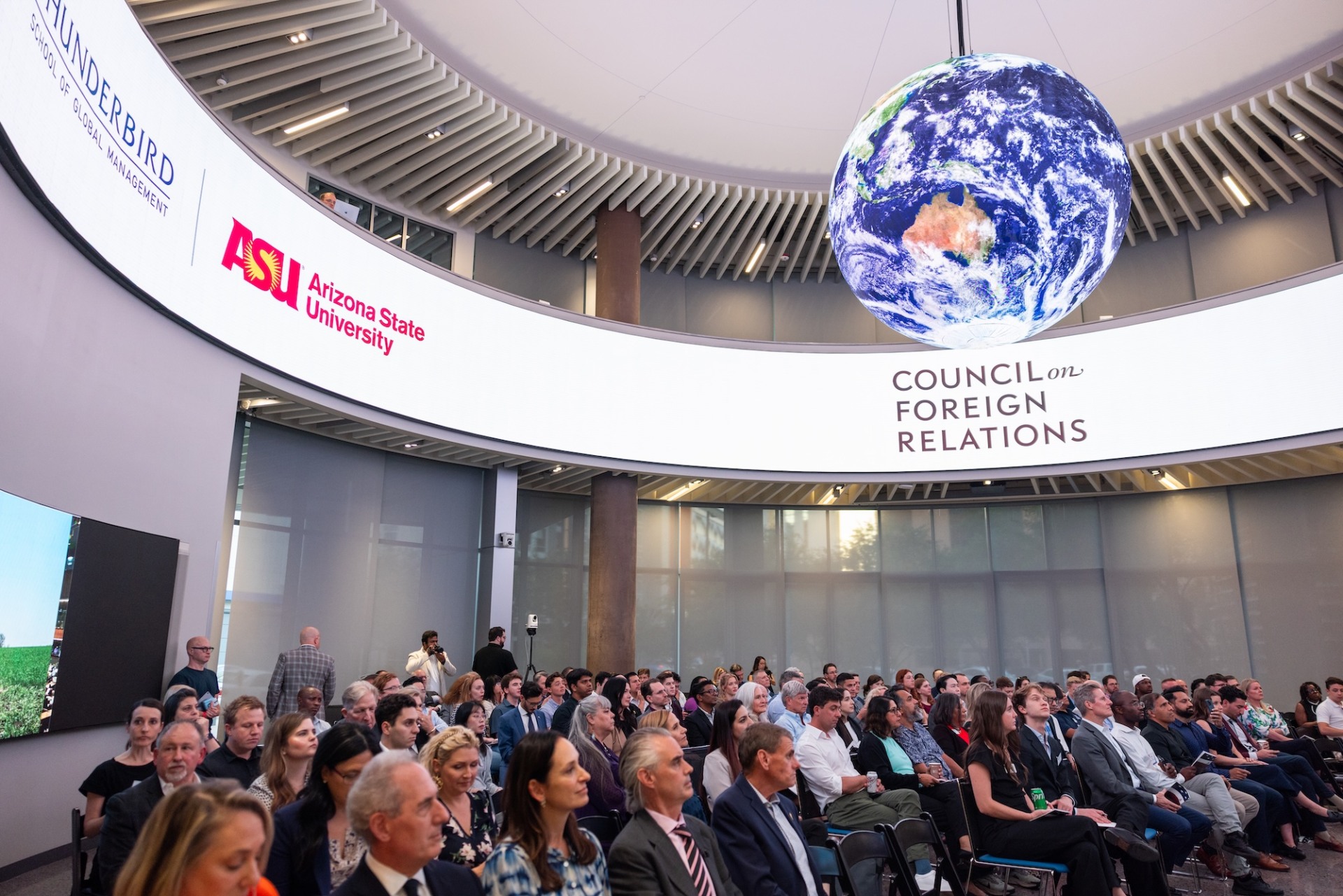
The David Rockefeller Studies Program
The analysis produced by the David Rockefeller Studies Program, CFR’s think tank, has never been more indispensable to conversations surrounding U.S. engagement in the world. As the foreign policy landscape has shifted, so has the Studies Program, better positioning CFR to be a vital source of relevant, nonpartisan perspectives on the most pressing questions of today.
The program welcomed nineteen additional fellows this year, representing a wide array of regional and topical areas of expertise to complement our roster of outstanding fellows. In chronological order, Varun Sivaram joined as senior fellow for energy and climate and director of CFR’s Climate Realism Initiative, Daniel B. Poneman joined as senior fellow, Ed Husain joined as senior fellow, Timothy Snyder joined as senior fellow for democracy, David M. Hart joined as senior fellow for climate and energy, Jonathan E. Hillman joined as senior fellow for geoeconomics, Stuart Reid joined as senior fellow for history and foreign policy and deputy director of the Studies Program, Gina M. Raimondo joined as distinguished fellow, Michael C. Horowitz joined as senior fellow for technology and innovation, Prashant Yadav joined as senior fellow for global health, David Lipton joined as senior fellow for geoeconomics, Rebecca Patterson joined as senior fellow, William Henagan joined as research fellow, Laura Taylor-Kale joined as senior fellow for geoeconomics and defense, Rebecca Lissner joined as senior fellow for U.S. foreign policy, Michael Werz joined as senior fellow, Jessica Brandt joined as senior fellow for technology and national security, Erin D. Dumbacher joined as Stanton nuclear security senior fellow, and Clara Gillispie joined as senior fellow for climate and energy.
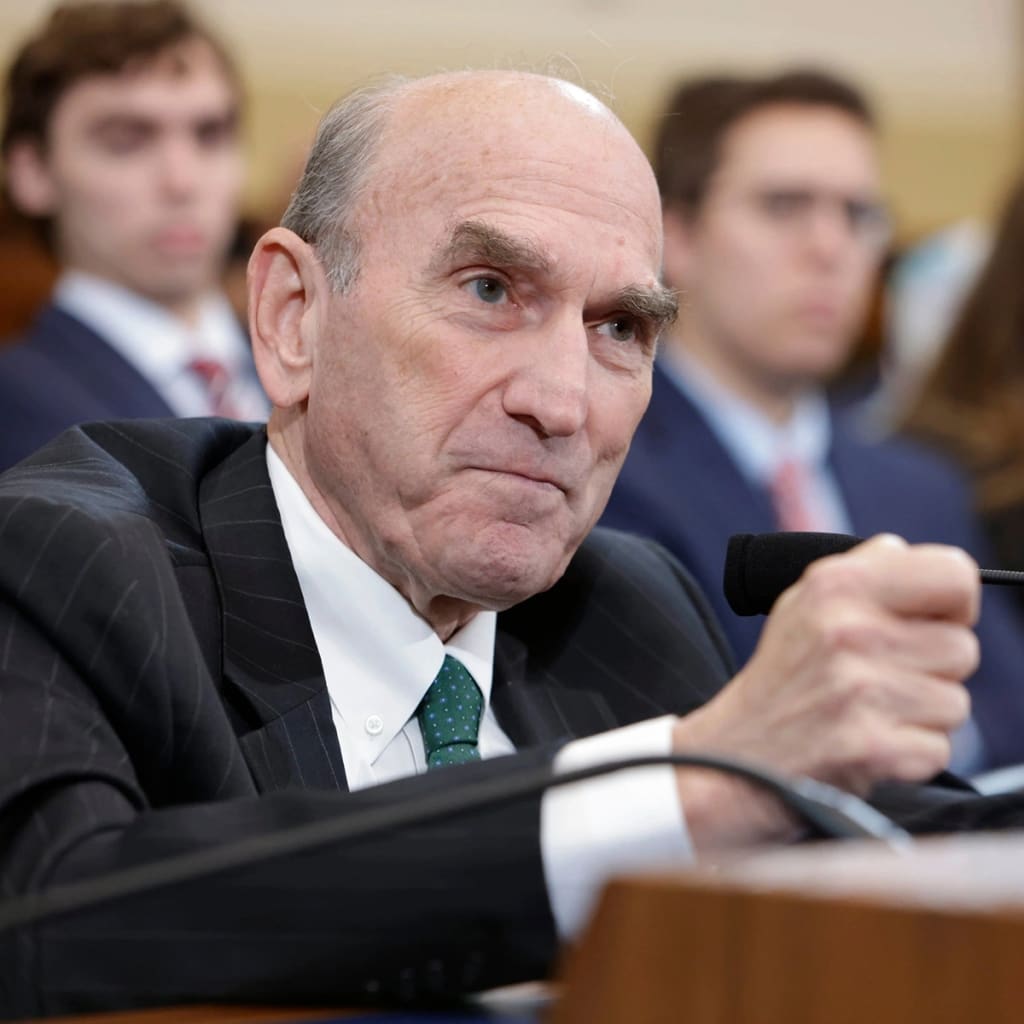
CFR fellows produced five books this fiscal year. In chronological order, those works were Max Boot’s Reagan: His Life and Legend, which illuminates the untold story of Ronald Reagan; Elliott Abrams’s If You Will It: Rebuilding Jewish Peoplehood for the 21st Century, which examines the history and future of Jewish identity in the twenty-first century; Topographies of African Spirituality, a volume edited in part by Ebenezer Obadare, which explores African spiritual life inside and outside religion; Edward Alden and Laurie Trautman’s When the World Closed Its Doors: The COVID-19 Tragedy and the Future of Borders, a detailed exploration of the most sweeping government border closures in human history; and Jerome A. Cohen’s memoir Eastward, Westward: A Life in Law, in which he recounts a dramatic life of striving for a better world from Washington, DC, to Beijing.
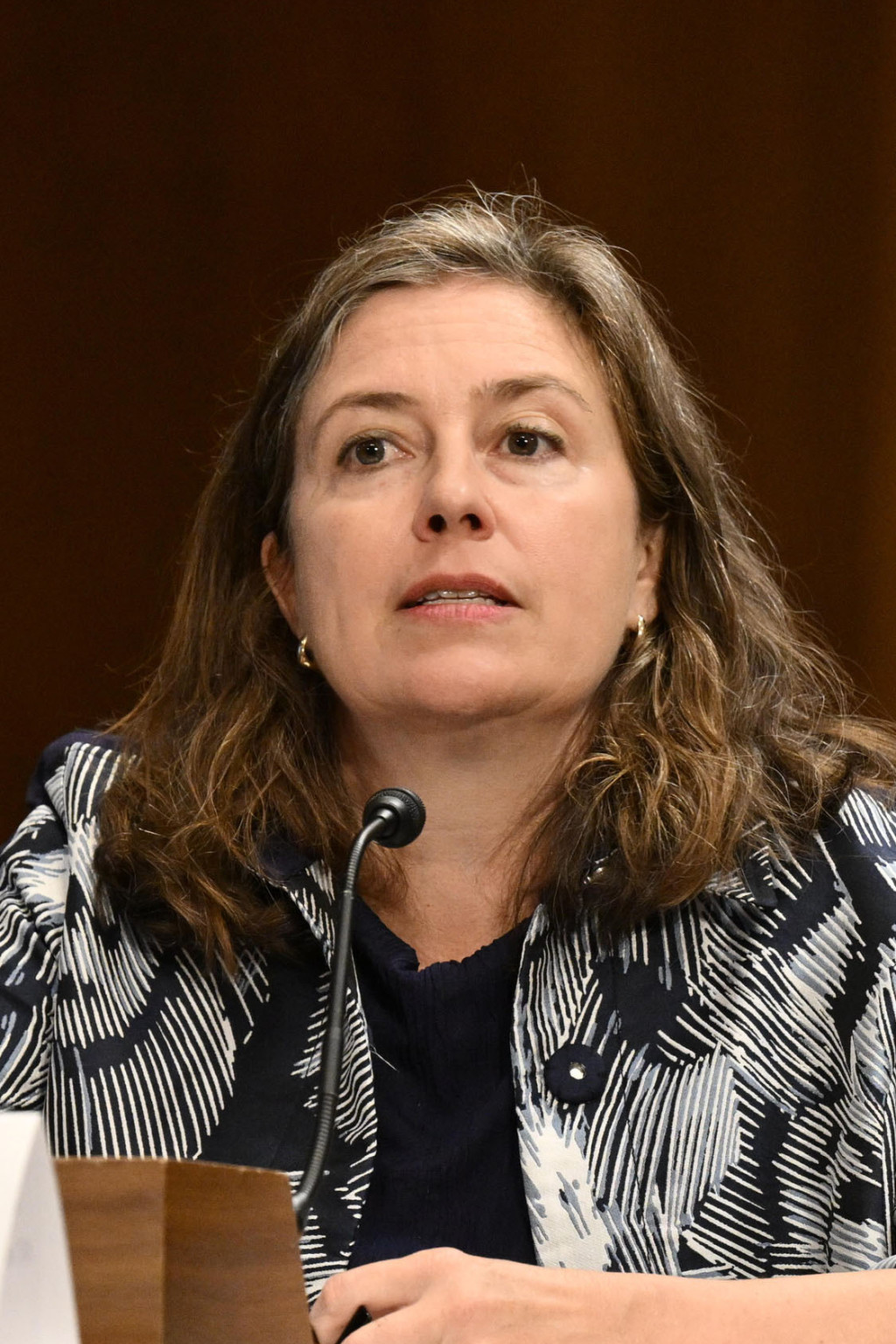
In addition to those important works, Council scholars have published nearly eight hundred articles, op-eds, and reports over the last twelve months, appearing in Foreign Affairs, Foreign Policy, the Hill, the New York Times, Politico, the Wall Street Journal, and the Washington Post. Fellows provided timely, relevant scholarship on issues during the lead-up to the 2024 presidential election and brought their expertise to bear regarding U.S.-China relations, defense innovation, the future of the U.S. dollar and U.S. trade policy, trends in global public health, tensions in the Middle East, the war in Ukraine, and dozens of other important topics.
Fellows also took their first-rate knowledge directly to executive branch officials and lawmakers on Capitol Hill, briefing and testifying a record number of times on the defense industrial base, American economic statecraft, the dangers posed by Iranian-backed terrorism, geopolitical developments and religious freedom in Africa, great power competition with China, and more. CFR was sought out for expert briefings on changes to U.S. foreign policy and their impact on the role and priorities of various government agencies.
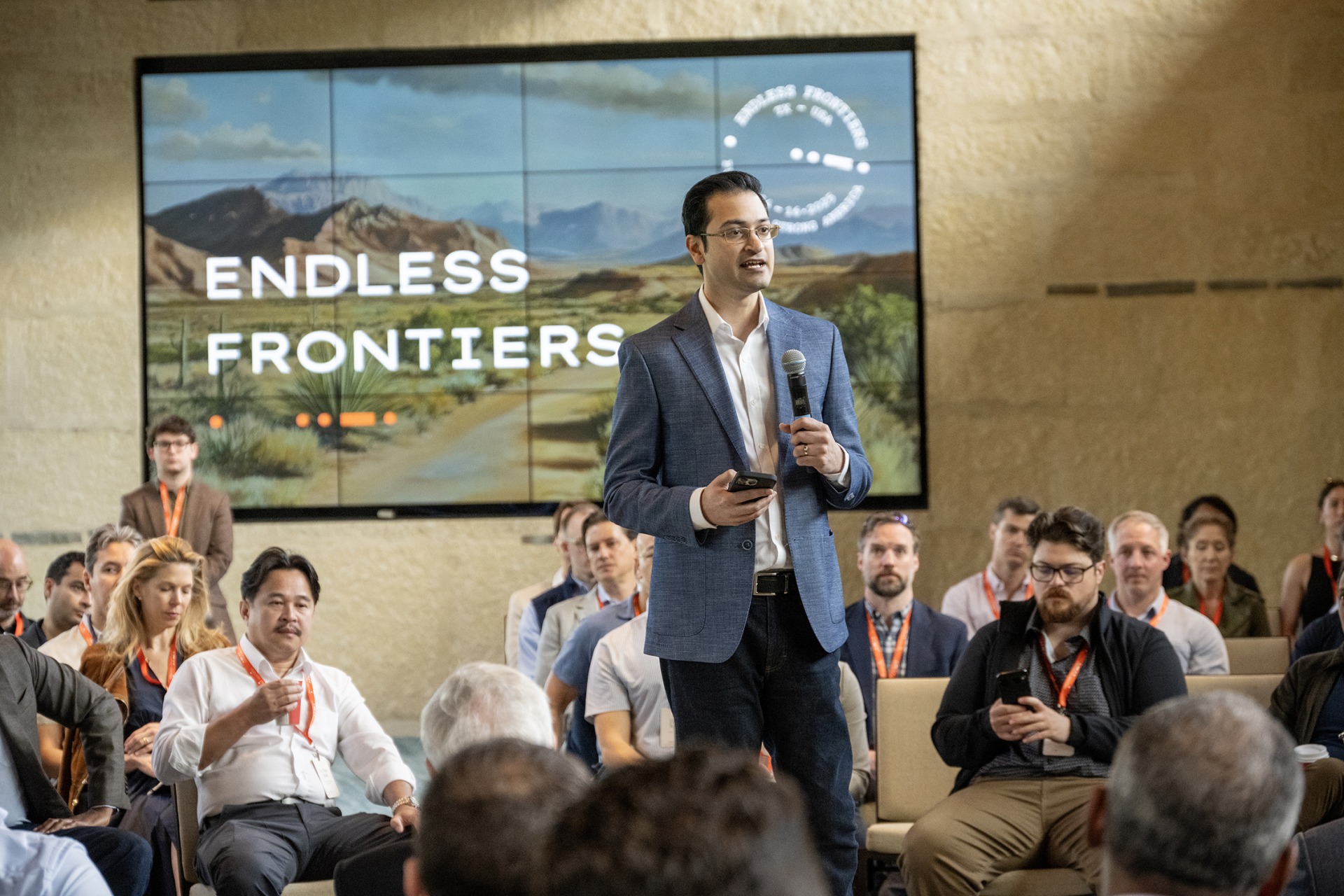
The Studies Program expanded the work of existing initiatives and created new ones. CFR’s China Strategy Initiative, as part of the Endless Frontiers retreat, partnered with Baylor University, Rice University, Texas A&M University, and the University of Texas at Austin to host more than two hundred of the nation’s top policymakers, founders, scientists, investors, and university leaders. Participants discussed how to rebuild U.S. strength at a time of technological transformation and geopolitical competition and grappled with the China challenge. Studies launched the Climate Realism Initiative, which charts a pragmatic course for U.S. energy and climate policy that is both realistic in forecasting climate impacts and U.S. leverage and realist in assessing that countries will compete and pursue policies to advance their own interests. Studies also created the Special Initiative on Securing Ukraine’s Future that led to a series of papers and events about rebuilding postwar Ukraine, defending it from future aggression, and deterring Russia from changing borders through force.
Finally, the Council has awarded twenty-seven fellowships for the 2025−26 fellowship cycle. Twelve of those individuals will spend their tenure at CFR: six military fellows, four international affairs fellows, one Stanton nuclear security fellow, and one Edward R. Murrow press fellow. Others will be at government agencies in the United States or at research centers or universities overseas. CFR welcomed its first U.S. Space Force fellow in September 2025.
Task Force Program
CFR’s Task Force Program convenes distinguished, bipartisan groups of experts to assess critical U.S. foreign policy issues and produce consensus reports with actionable recommendations. Each Task Force consults high-level stakeholders during its deliberations and briefs key policymakers and other influential leaders on the publication.
In February 2025, the Task Force on Space Policy released its report, Securing Space: A Plan for U.S. Action. The Task Force was cochaired by retired Lieutenant General Nina M. Armagno, the first director of staff at the U.S. Space Force, and former Congresswoman Jane Harman, who represented the aerospace center of southern California in Congress for nine terms. CFR’s James H. Binger Senior Fellow in Global Governance Esther D. Brimmer served as project director.
The report examined policy challenges and threats to U.S. national security in space, arguing for revitalized U.S. leadership and strengthened international coordination to manage that critical strategic domain.
Cochairs Armagno and Harman engaged with U.S. and international stakeholders before and after the report launch, including briefings with bipartisan members of Congress, a panel at the Munich Security Conference, the Space Foundation’s fortieth annual symposium, and a roundtable with international space counselors hosted by the Embassy of New Zealand.
The Task Force Program also announced a new Task Force on Economic Security, cochaired by former Secretary of Commerce Gina M. Raimondo, former Deputy Secretary of the Treasury Justin G. Muzinich, and current Lockheed Martin Chairman, President, and CEO James D. Taiclet. Convened under the RealEcon Initiative, the Task Force comprises thirty diverse experts and is directed by Jonathan E. Hillman. As the worlds of national security and economics increasingly converge, that Task Force is examining how the United States can lead in key technologies and use economic security tools to maintain strategic advantages and build resilience. Between March and June, the Task Force held three group meetings to deliberate on the report’s findings and recommendations. The Task Force anticipates a report launch in fall 2025 and expects to engage with Trump administration officials, members of Congress, and business leaders.
Council of Councils
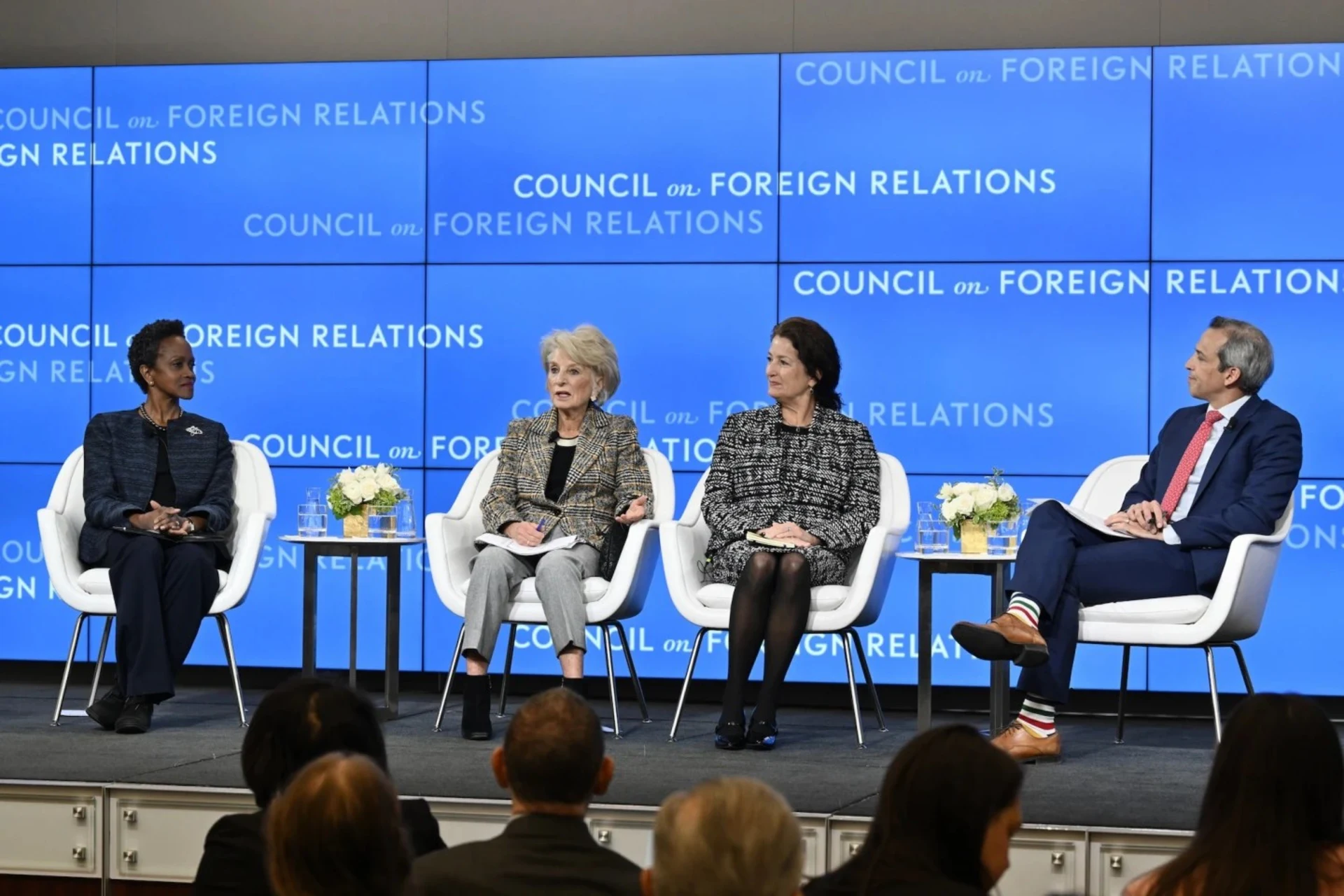
The Council of Councils, a CFR initiative, is a consortium of twenty-seven leading global think tanks that convenes in-person and virtual conferences throughout the year to discuss the state of global governance and explore ways to make it more effective. Council of Councils publications and events provide ongoing commentaries and perspectives from experts based around the world.
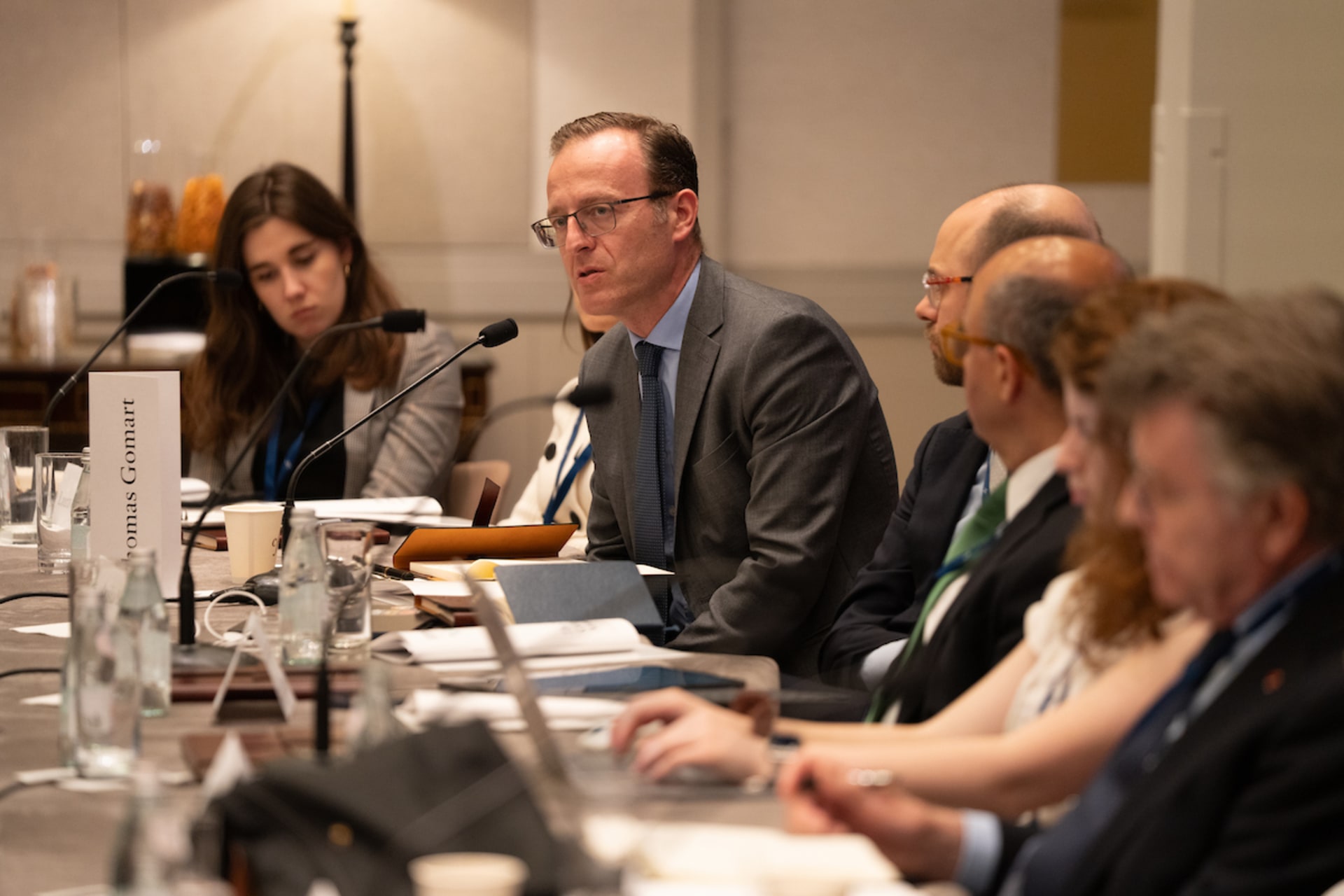
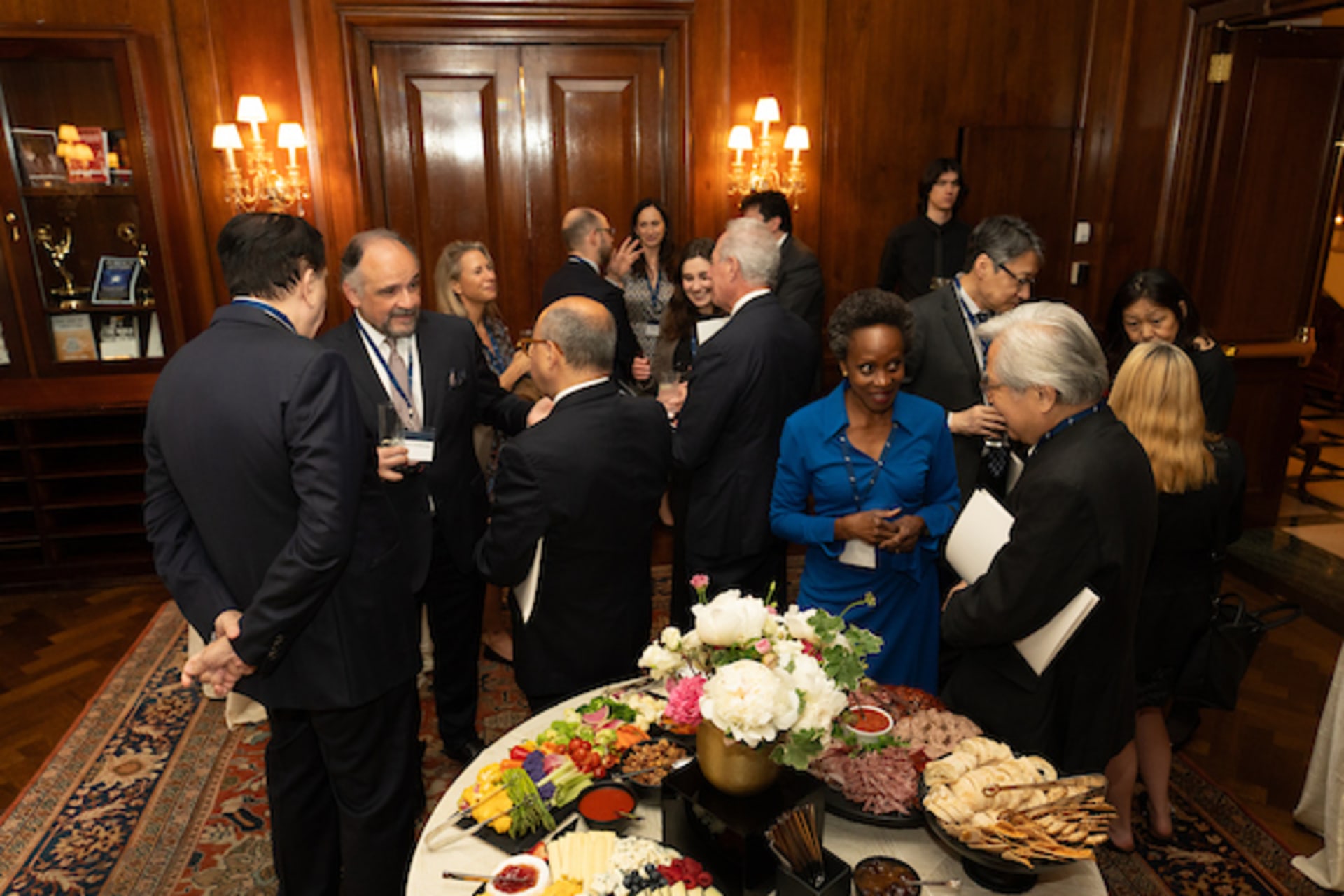
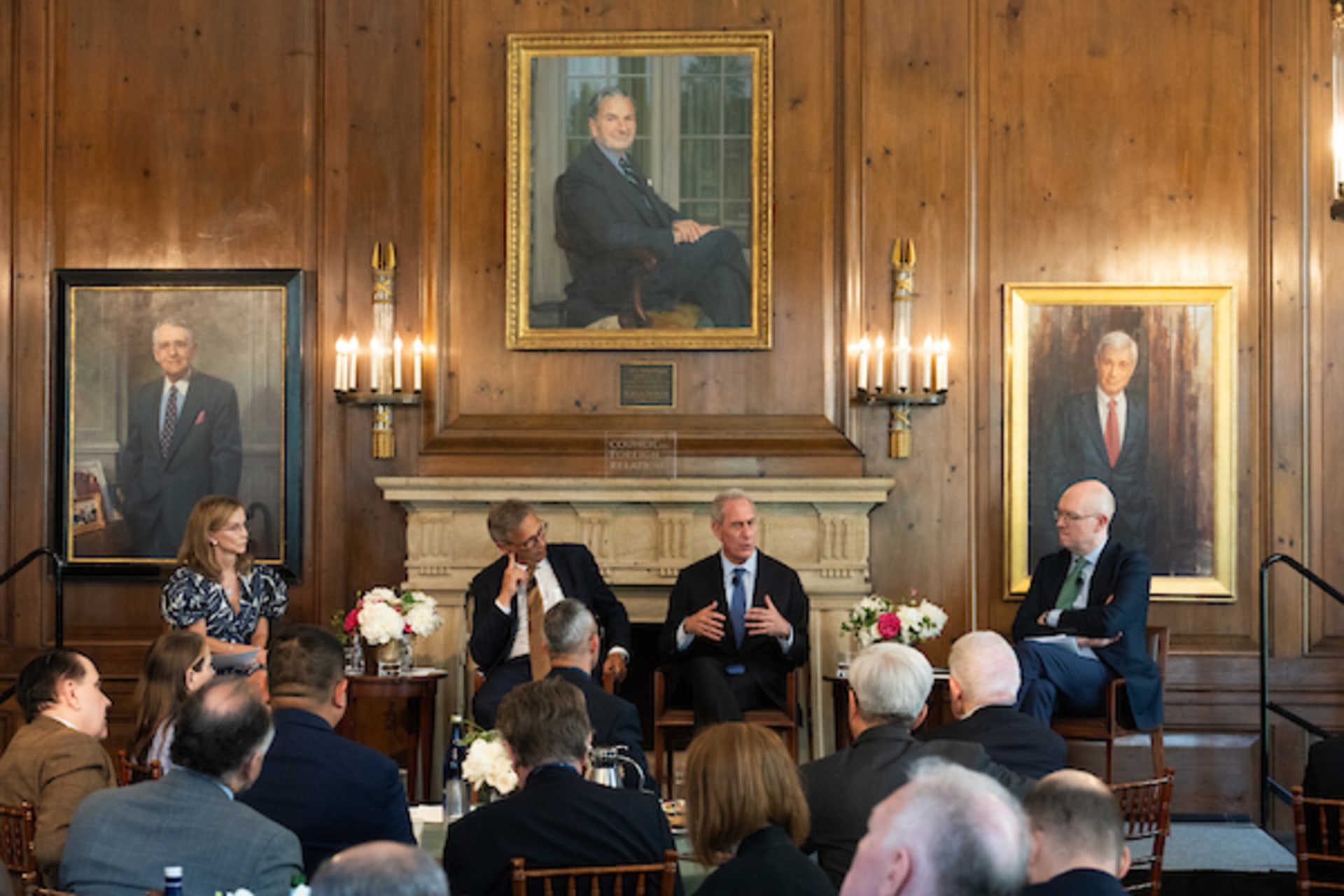
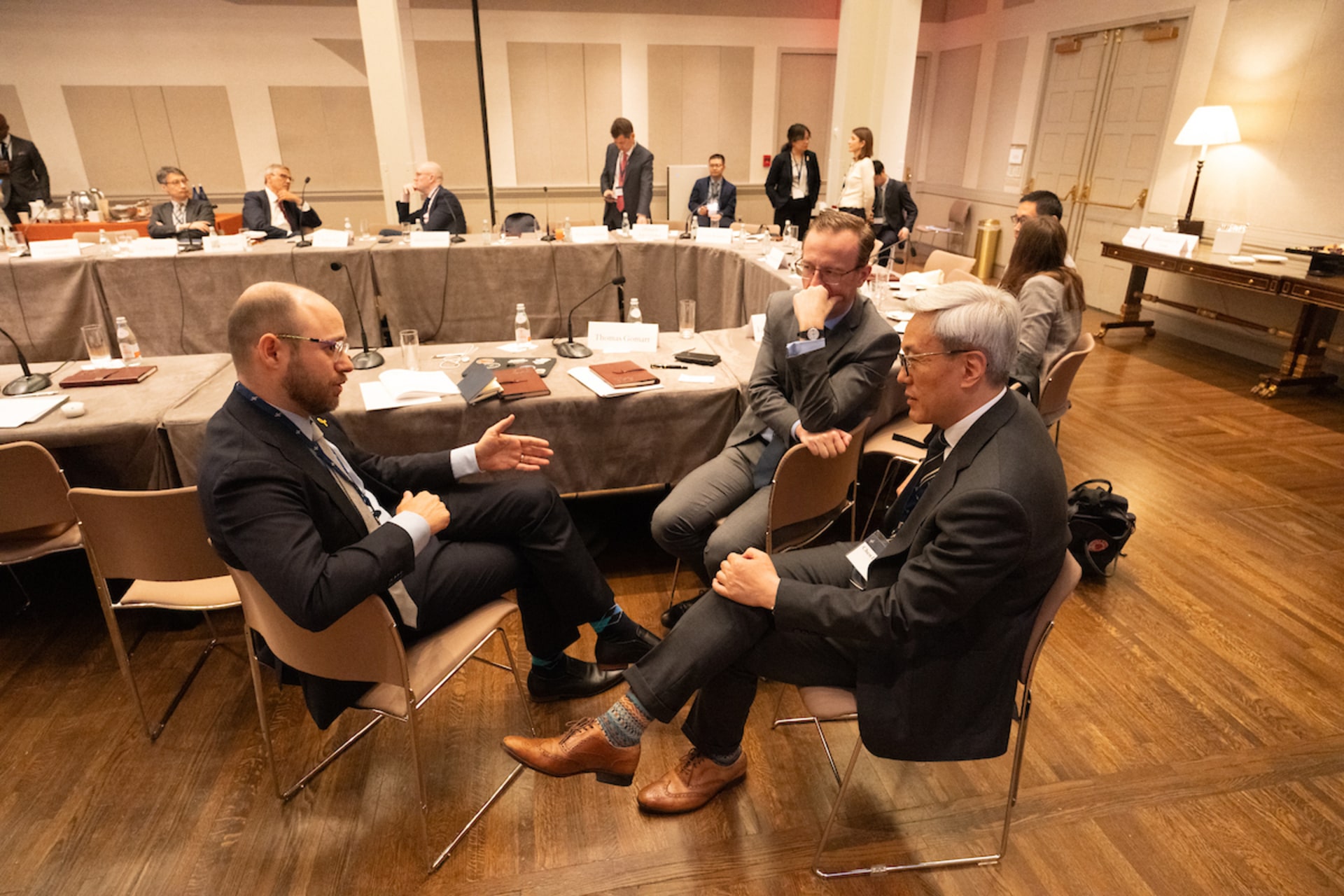
Recognizing the importance of the U.S. presidential election to the rest of the world, in fall 2024, the Council of Councils published a five-article series on why the election mattered to Africa, the Americas, Europe, the Indo-Pacific, and the Middle East. That series featured contributions from nineteen Council of Councils policy institutes spanning the globe.
In May 2025, the Council of Councils marked its fourteenth annual conference, which was held in New York. Participants from seventeen countries contributed to the meeting. The discussions spanned a range of challenges for multilateral cooperation, including the future of the world order, changing regional dynamics in the Middle East, global health institutions, cooperation and contest in space, competition in the Arctic, and the acquisition of critical minerals.
In October 2024, the fifteenth regional conference of the Council of Councils was cohosted with the Centre for European Policy Studies in Brussels. Representatives from two dozen policy research organizations gathered to discuss the fragmentation of the world order, industrial policy for green and digital transitions, Ukraine’s reconstruction and security, and the EU’s relationship with different regions of the world, among other global challenges.
The Council of Councils published thirteen articles, including the election series and pieces on the BRICS (the bloc of nations including Brazil, Russia, India, China, and South Africa, which has expanded to include Egypt, Ethiopia, Indonesia, Iran, and the United Arab Emirates) and Group of Twenty summits, global reactions to Trump’s address to Congress in March, the global economy, and a preview of global summits to watch in 2025.
Meetings
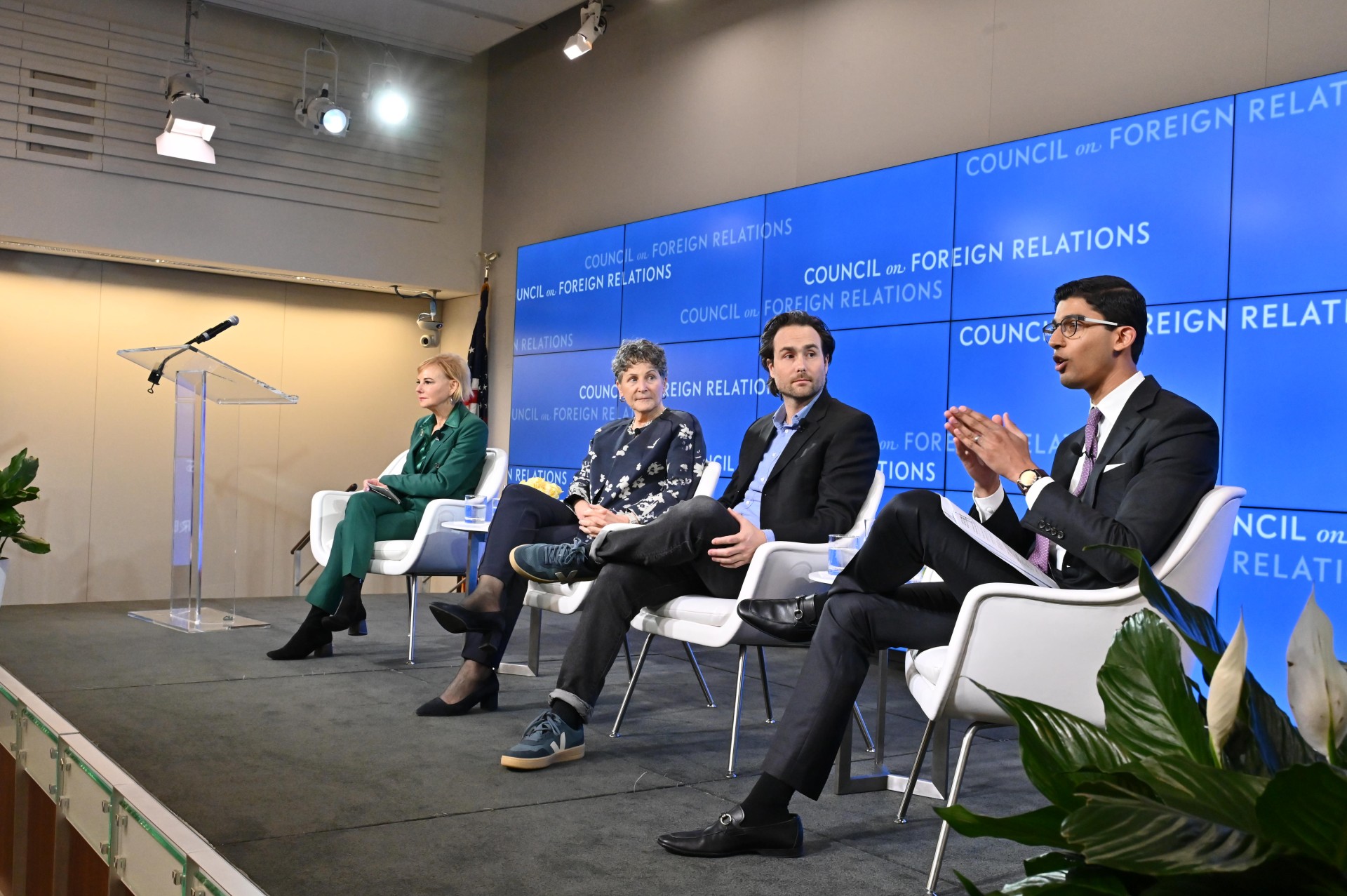
Each year, the Meetings Program brings a wide range of foreign officials to speak with members and engage in substantive not-for-attribution and on-the-record discussions. The nonpartisan programming extends invitations to leaders across the political spectrum, both in the United States and abroad. In the 2025 fiscal year, the Council hosted more than two hundred events in New York and Washington, DC.
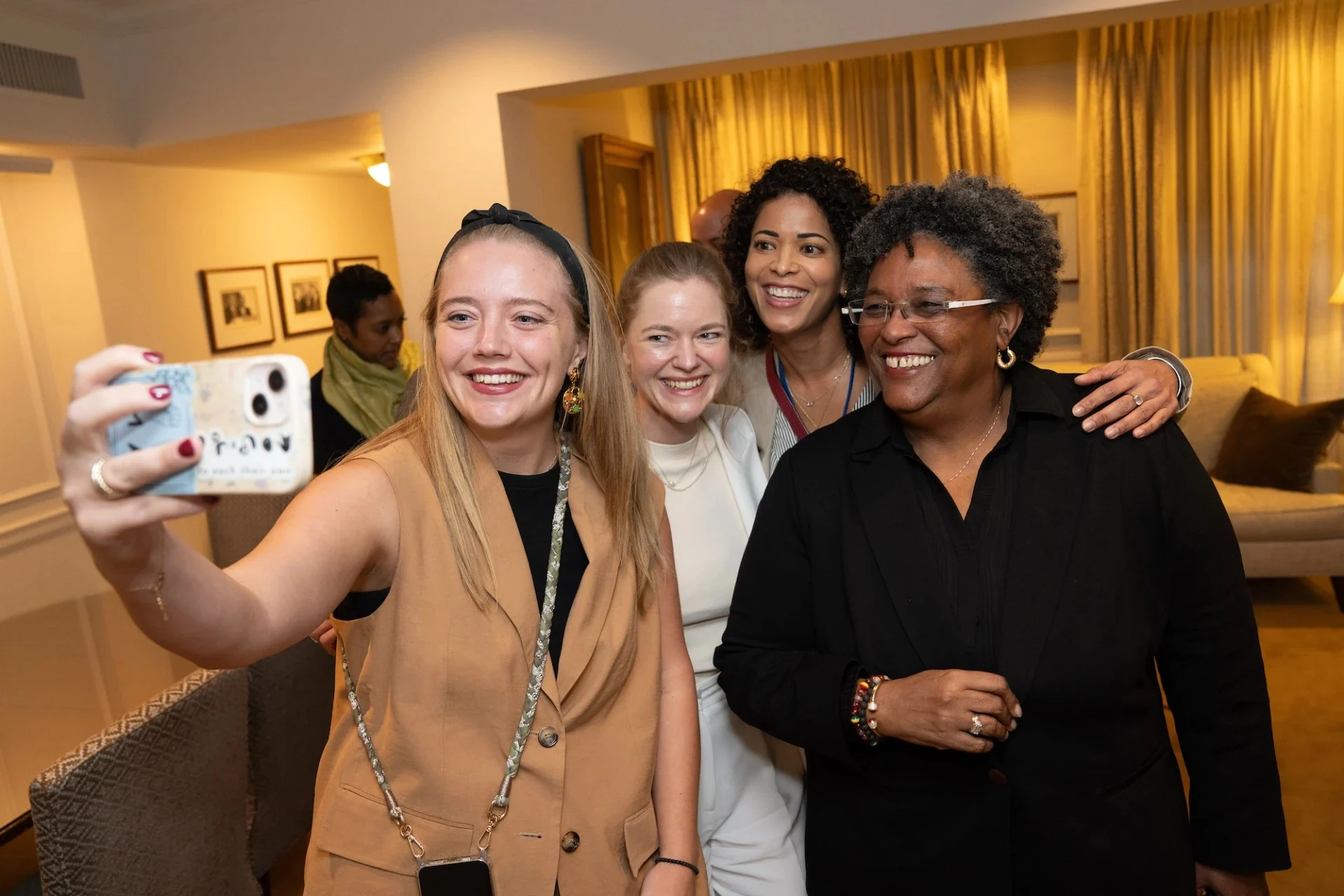
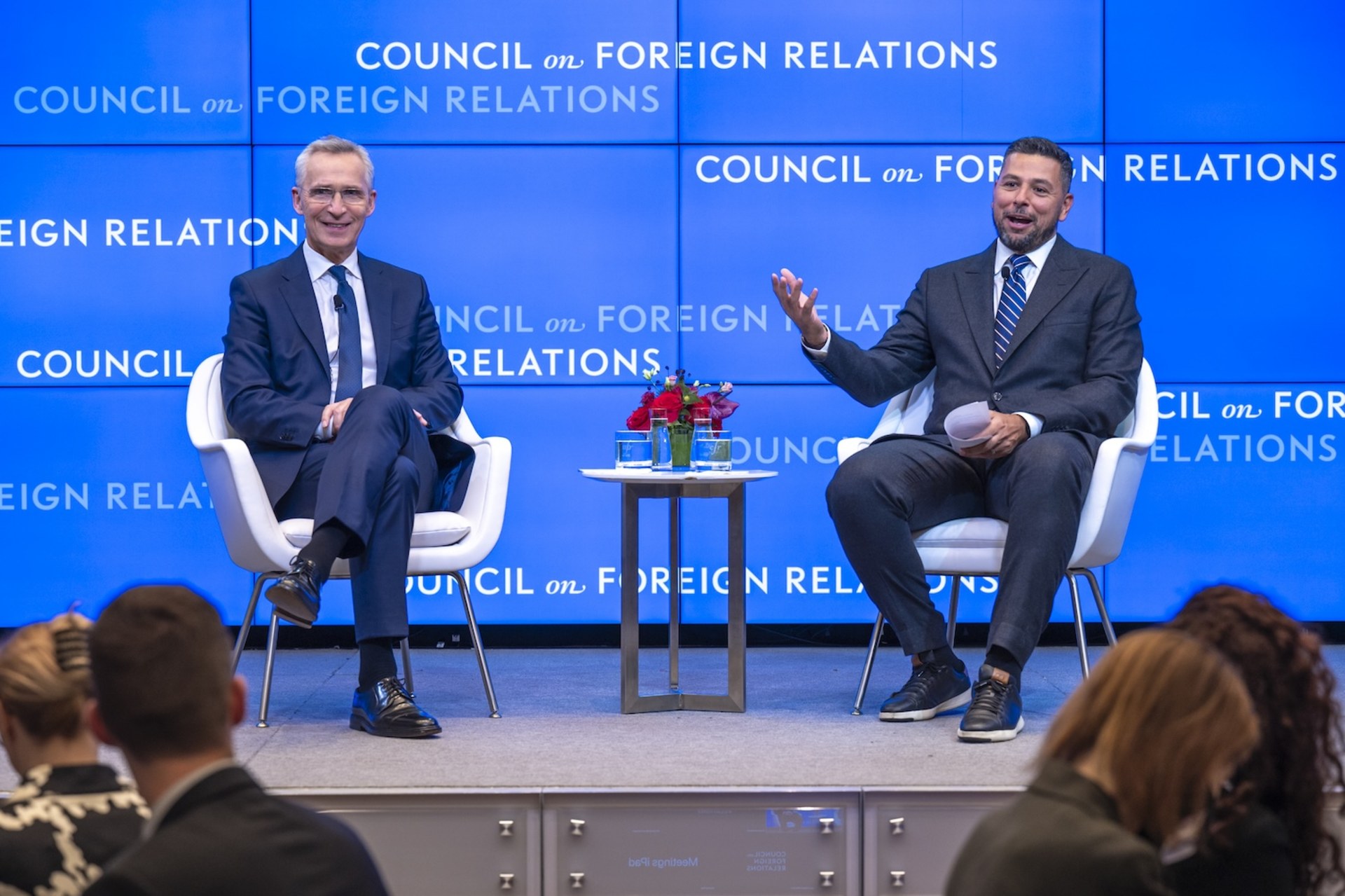
During the UN General Assembly in September 2024, the Council hosted numerous heads of state, including Barbadian Prime Minister Mia Amor Mottley, Guatemalan President César Bernardo Arévalo de León, Kosovar President Vjosa Osmani Sadriu, and Yemeni President Rashad Muhammad Al-Alimi, as well as foreign officials such as European Commission Vice President Josep Borrell Fontelles, Polish Foreign Minister Radosław Sikorski, and United Arab Emirates Foreign Minister Abdullah bin Zayed Al Nahyan. The Council also hosted NATO Secretary-General Jens Stoltenberg and International Energy Agency Executive Director Fatih Birol. On the sidelines of the World Bank and International Monetary Fund meetings, the Council hosted Central Bank of Argentina Governor Santiago Bausili, International Atomic Energy Agency Director General Rafael M. Grossi, and World Trade Organization Director General Ngozi Okonjo-Iweala. During the July 2024 NATO Summit in Washington, DC, members heard from Danish Prime Minister Mette Frederiksen and Greek Prime Minister Kyriakos Mitsotakis.
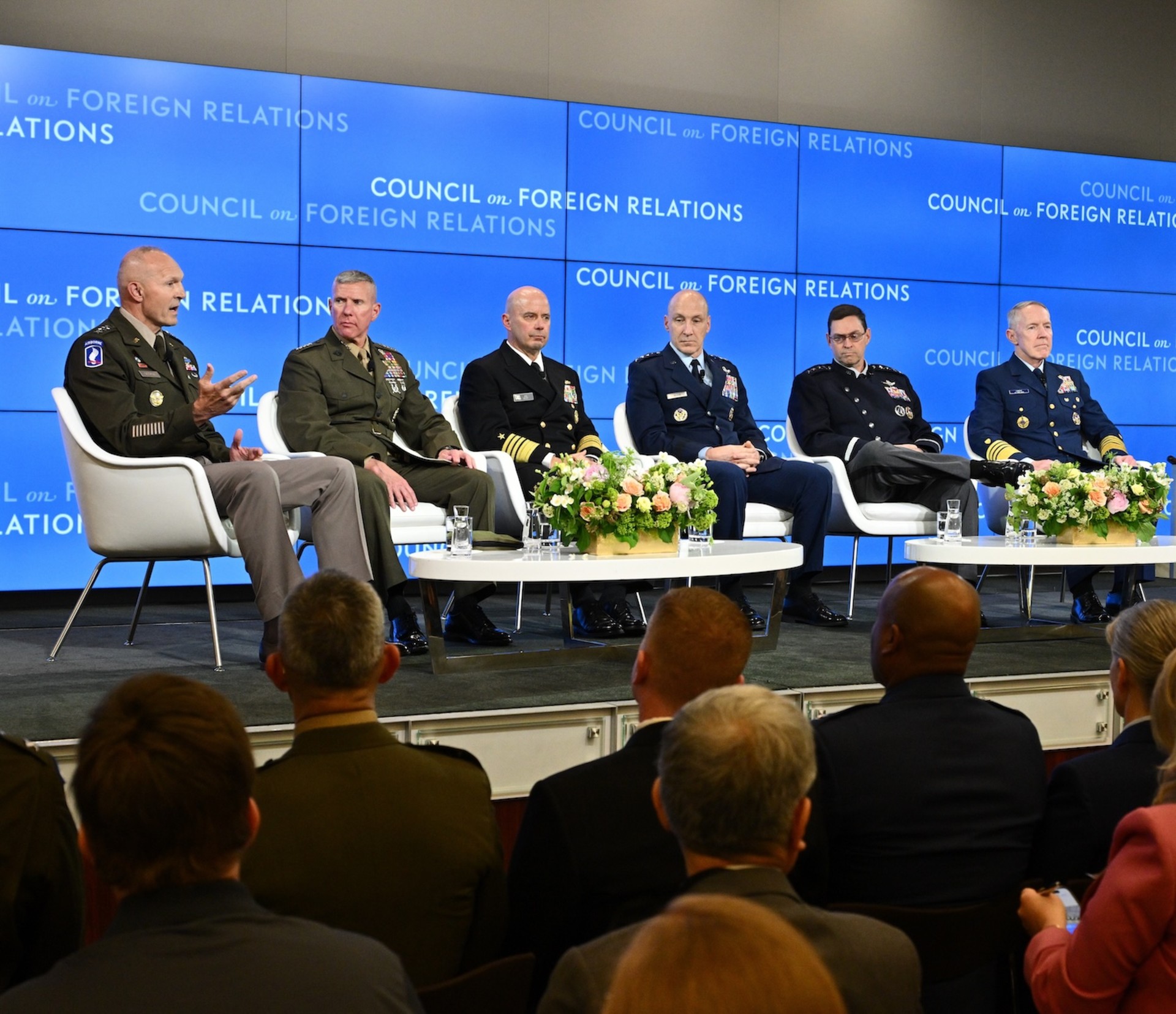
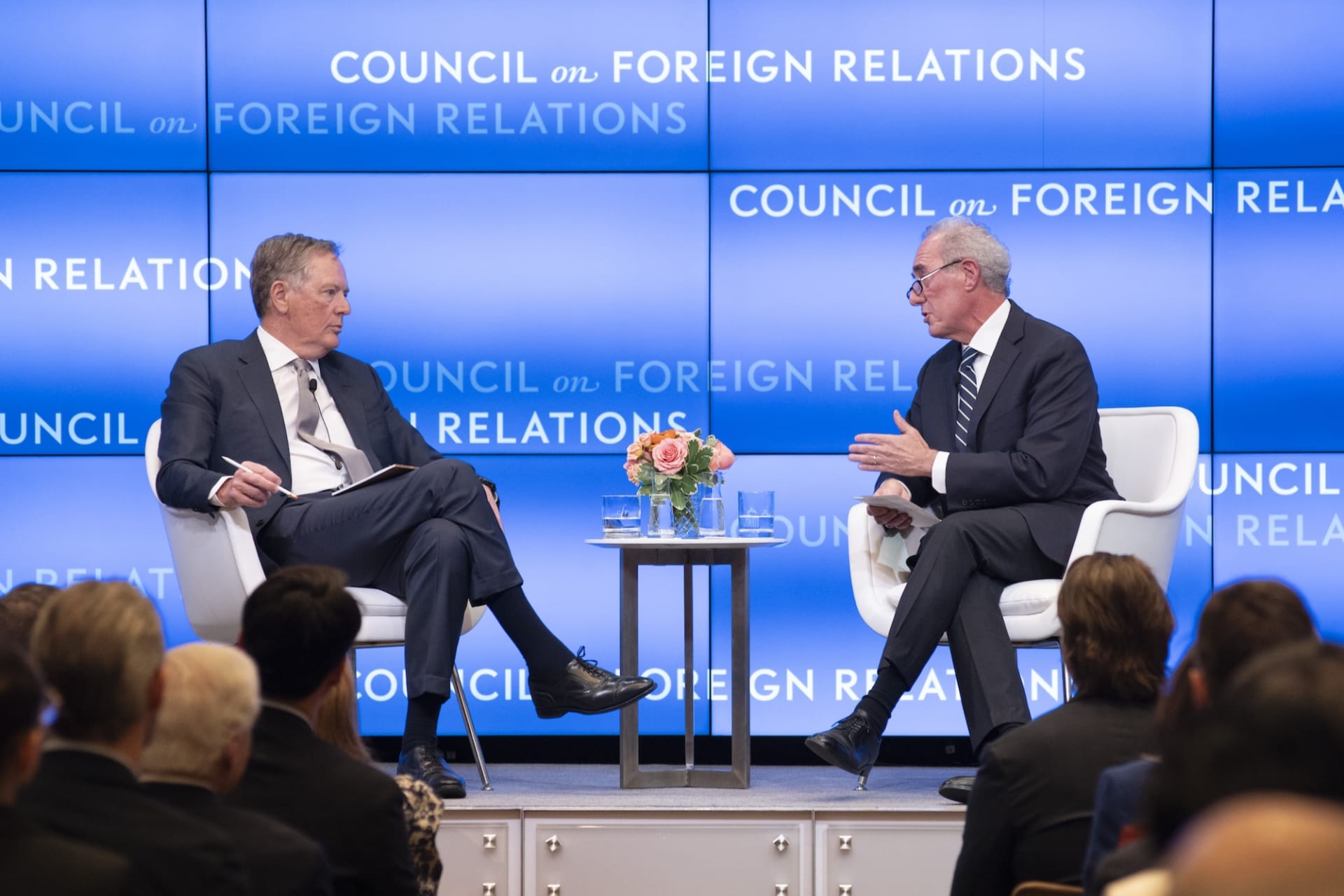
The Council also focused efforts domestically, securing members of the Biden administration in its last months and the second Trump administration in its first few months. In the fall, members heard from Secretary of State Antony J. Blinken, USAID administrator Samantha Power, Director of National Intelligence Avril Haines, Special Envoy for Sudan Thomas Perriello, Treasury Secretary Janet Yellen, Joint Chiefs of Staff Chairman General Charles Q. Brown Jr., National Economic Council Director Lael Brainard, Federal Trade Commission Chair Lina Khan, U.S. Envoy to the Middle East Amos Hochstein, Surgeon General Vivek H. Murthy, and U.S. Ambassador to the United Nations Linda Thomas-Greenfield. In the spring, events featured U.S. Trade Representative Jamieson L. Greer, Deputy Treasury Secretary Michael W. Faulkender, and U.S. Assistant to the President and Special Presidential Envoy for Ukraine and Russia Keith Kellogg. The Council also hosted a panel discussion with U.S. Army Chief of Staff Randy A. George, U.S. Marine Corps Commandant Eric M. Smith, U.S. Navy Acting Chief of Naval Operations James W. Kilby, U.S. Air Force Chief of Staff David W. Allvin, U.S. Space Force Chief of Space Operations B. Chance Saltzman, and U.S. Coast Guard Acting Commandant Kevin E. Lunday.
The Council organized several events as part of the Transition 2025 series, examining key foreign policy challenges the United States faces. Topics included tariffs and trade, climate and energy, immigration and border security, the transatlantic alliance, AI and national security, China, the Middle East, and Russia.
Council members were offered opportunities to venture offsite and to attend meetings that provided informed debates. Special offsite programming included performances of the plays We Live in Cairo at the New York Theatre Workshop, revealing the experiences of young protesters during the Arab uprisings, and Blind Runner at St. Ann’s Warehouse, examining the plight of political prisoners in Iran. In an ongoing collaboration with Open to Debate, CFR hosted a discussion on whether Trump was right to increase tariffs on Chinese imports, a conversation on whether the United States should decouple from China, and a three-part summit on Trump’s foreign policy approaches to Israel, Russia, and U.S. alliances. In January 2025, the Council continued its partnership with the University of California, San Diego’s China Forum with an opening session featuring David Feith, then special assistant to Trump and senior director for technology and national security, and Ivan J. Kanapathy, then special assistant to Trump and senior director for Asia at the National Security Council.
CFR convened the Conference on Expanding Access to International Affairs in New York in June 2025. The two-day event brought together high-achieving college and graduate students, as well as young professionals, from a wide range of perspectives and backgrounds. Featured speakers included Helene D. Gayle, president emerita of Spelman College and former CEO of CARE and Chicago Community Trust, and Sewell Chan, senior fellow at the University of Southern California’s Annenberg School for Communication and Journalism and former editor in chief of the Texas Tribune.
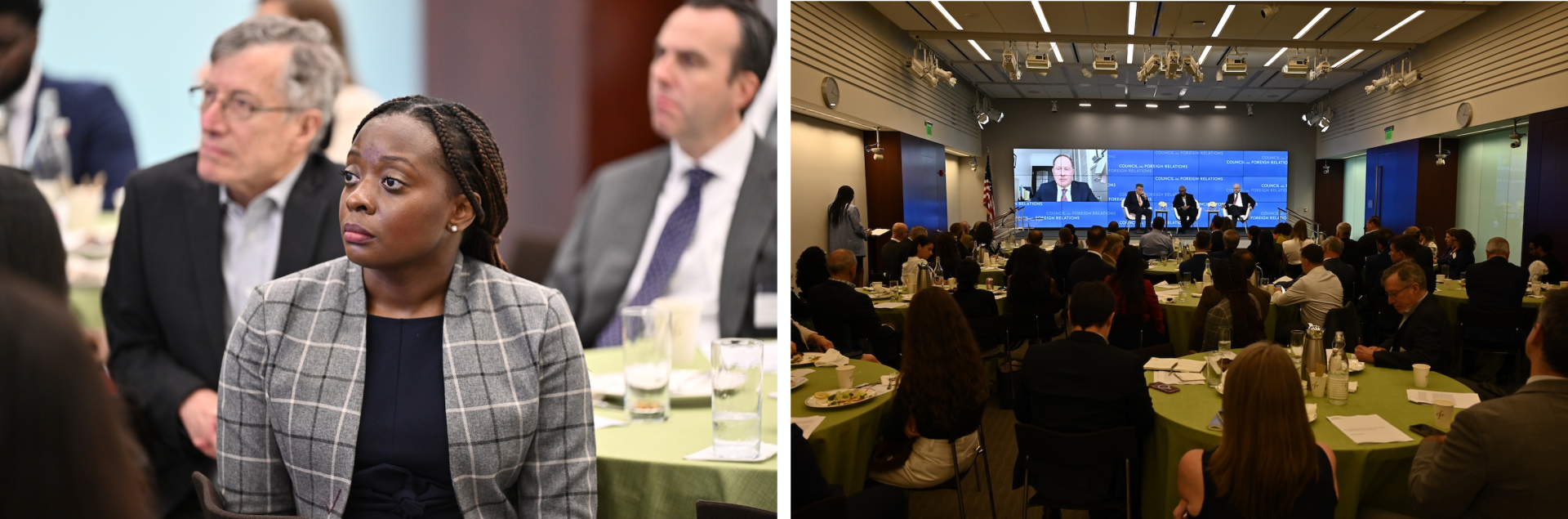
The Stephen M. Kellen Term Member Program, which provides five-year memberships for people age thirty to thirty-six, gave term members the opportunity to join in roundtable discussions with their peers on the future of bipartisanship on Capitol Hill, the importance of public and private partnerships in defense innovation, the war in Ukraine, resilience and recovery after the California wildfires, soft power and countering Chinese propaganda, U.S. strategy in the Indo-Pacific, and rebuilding trust in public institutions. The program also hosted its largest conference ever in October 2024 in Washington, DC, attracting almost four hundred term members from around the country. The keynote session featured U.S. Ambassador-at-Large for Cyberspace and Digital Policy Nathaniel C. Fick.
CFR trips returned in full swing. Term members especially took part in international trips. One highlight was the nine-day study trip to Saudi Arabia that provided an on-the-ground look at the country’s political, economic, and social dynamics and deepened members’ understandings of its transformational changes and pivotal role in the Middle East. In March 2025, term members traveled to Houston to participate in conversations on climate, energy, and technology. In May 2025, term members visited Mexico City to better understand the U.S-Mexico economic relationship. Life members embarked on their fair share of trips as well. A life member trip to the CIA’s headquarters in Langley, Virginia, was hosted by Deputy Director David S. Cohen; a semiconductor-focused trip to Phoenix included a rare tour of a Taiwan Semiconductor Manufacturing Company (TSMC) fabrication plant, ASU’s research and development facilities, and Luke Air Force Base; and a trip to the “Submarine Capital of the World” in Groton, Connecticut, included a visit to General Dynamics Electric Boat, Naval Submarine Base New London, and the USS California, a Virginia-class nuclear-powered attack submarine.
National Program
The National Program connects the plurality of CFR members who live outside New York and Washington, DC, by offering in-person events and interactive virtual roundtables to discuss pressing foreign policy issues and contribute to CFR’s research.
Across twelve programming cities, the National Program convened members to discuss defining geopolitical issues, such as the Russia-Ukraine war, U.S.-China relations, AI, the future of trade and tariffs, and the future of the Middle East. Additionally, the National Program supported several CFR fellows, such as Edward Alden, Max Boot, Steven A. Cook, and Benn Steil, in their national book rollouts through partnerships with the World Affairs Councils of America, local Committees on Foreign Relations, the Texas Tribune Festival, the Miami Book Fair, and the Chicago Humanities Festival, along with member-specific programming in national cities.
In Los Angeles, CFR term member and Nominal CEO Cameron L. McCord hosted members for a site visit that explored how the U.S. Department of Defense uses and integrates AI into its hardware. The National Program also continued hosting sessions in the Bay Area as part of its Young Professionals Briefing Series for Technologists and its Technology and Foreign Policy series, programs that provide forums for dialogue between technologists, policymakers, and CFR members on issues at the nexus of innovation and foreign policy while bridging the divide between Silicon Valley and Washington, DC.
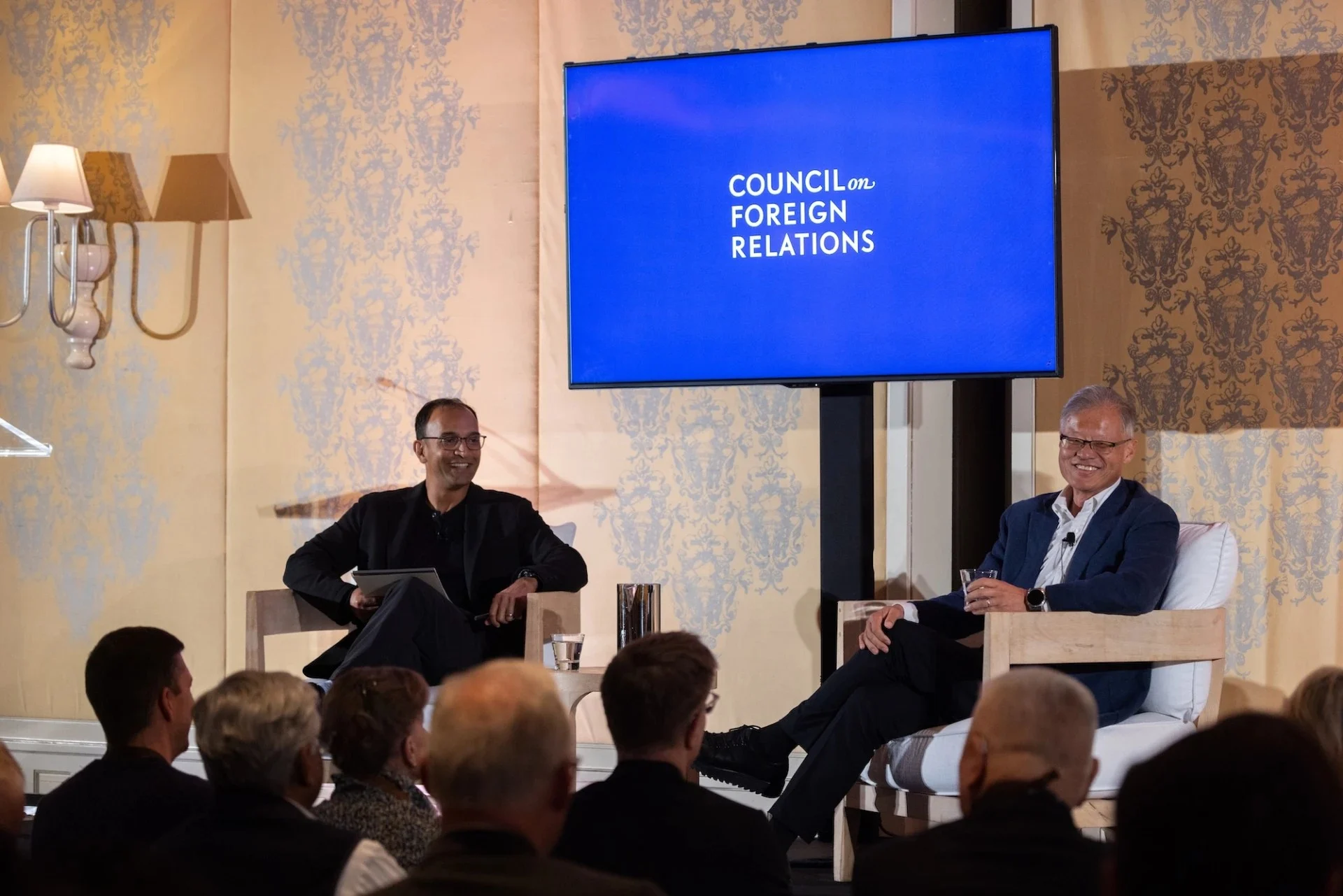
In December 2024, CFR held the tenth annual National Symposium in Menlo Park, California, which gathered two hundred participants to discuss issues at the intersection of technology and national security. This year, the symposium included site visits to Anthropic, OpenAI, the Defense Innovation Unit, and the SLAC National Accelerator Laboratory, which gave members the opportunity to see innovation in the region firsthand. Fireside conversations with Stripe cofounder and CEO Patrick Collison and Yahoo cofounder and AME Cloud Ventures founding partner Jerry Yang bookended the symposium; sessions on AI and climate, U.S.-China relations, and the future of American grand strategy rounded out the agenda.
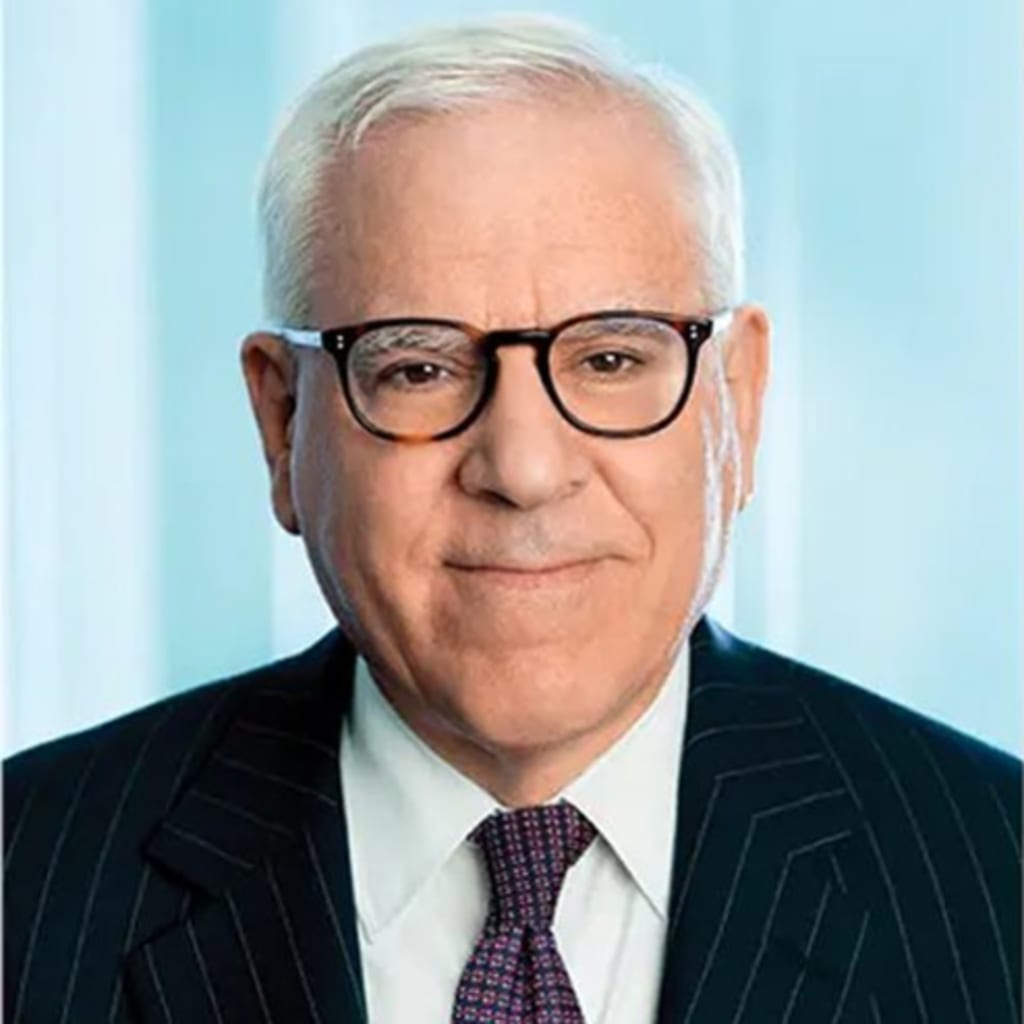
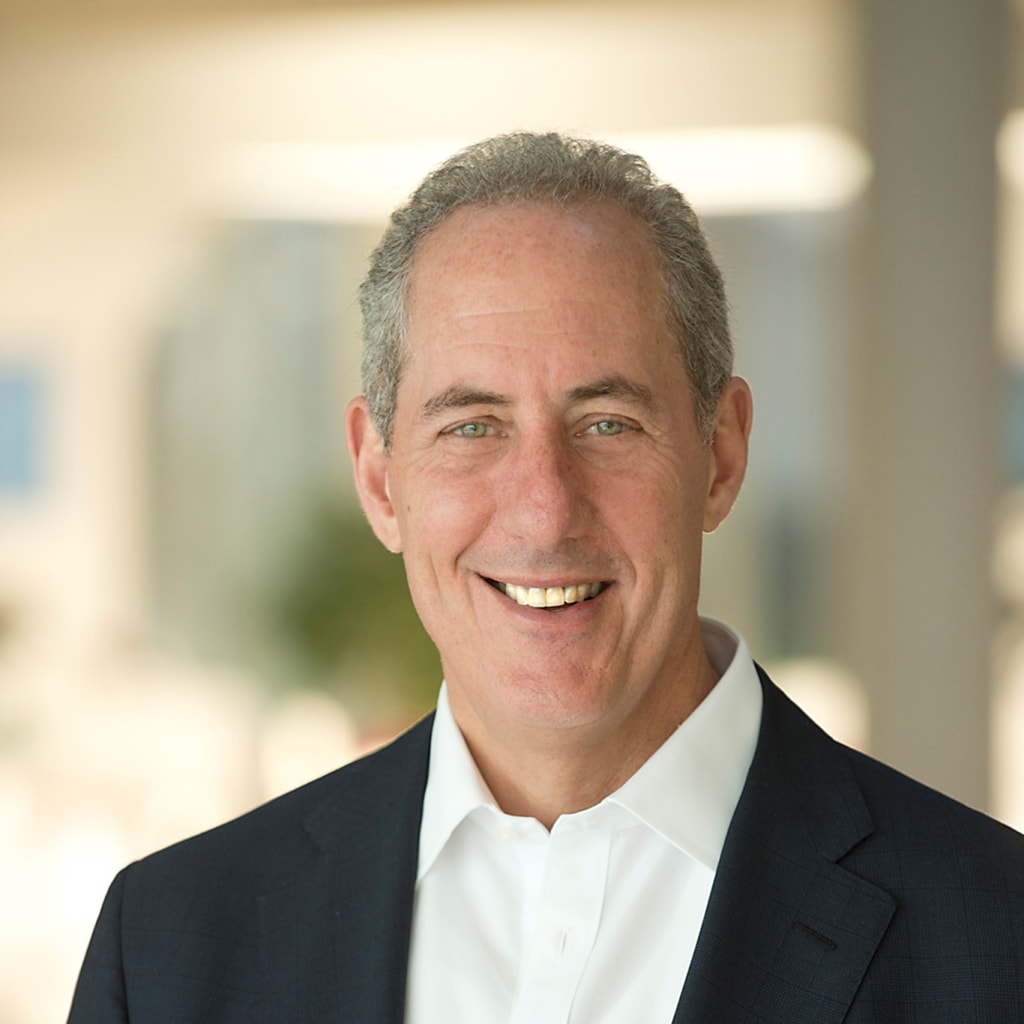
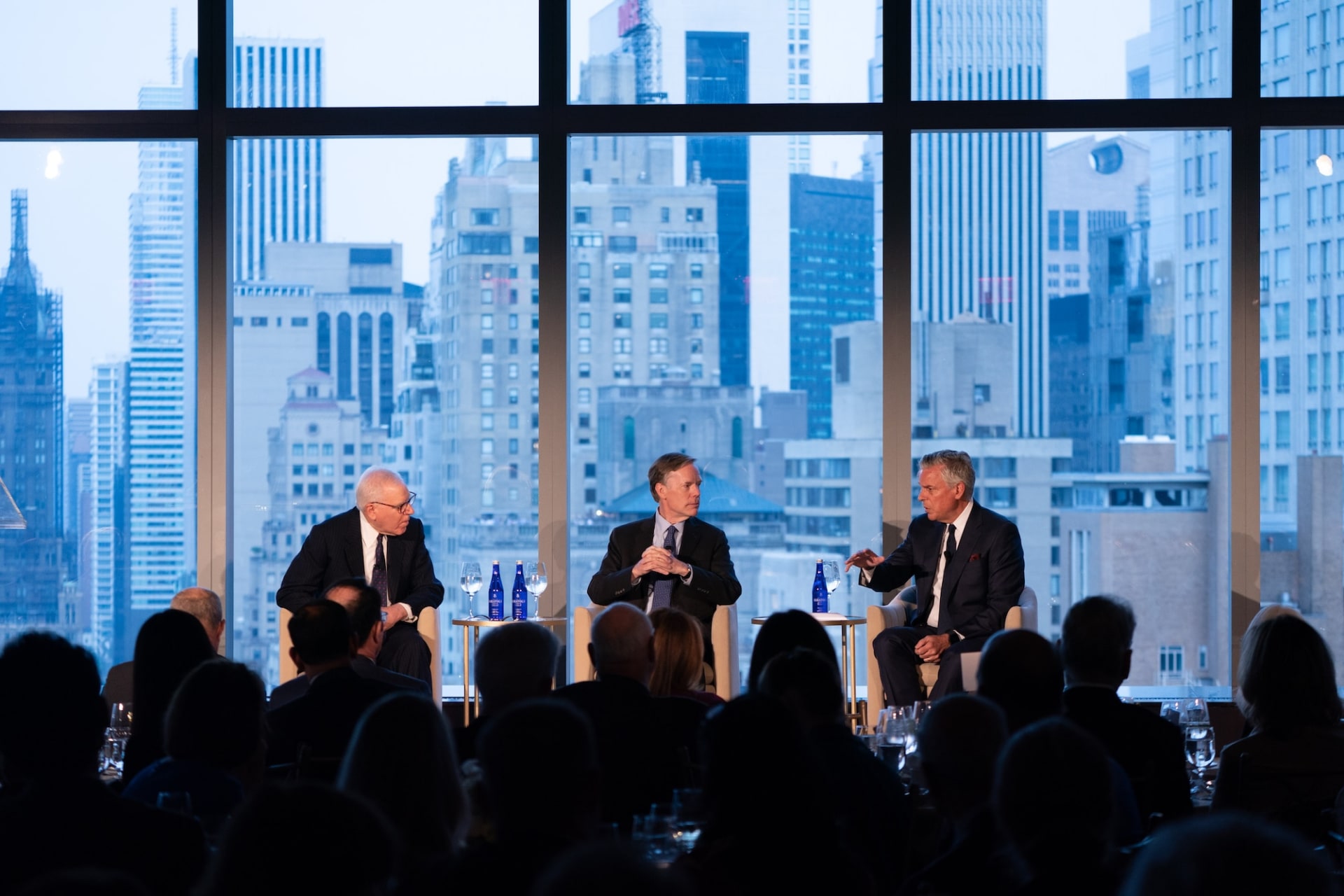
In June 2025, the National Program hosted the thirtieth annual National Conference, which convened nearly four hundred participants in New York from across the country and around the world. The keynote sessions featured Ajay Banga in conversation with CFR President Michael Froman, as well as Nick Burns and Jon M. Huntsman Jr. in conversation with CFR Chairman David M. Rubenstein. Panels examined the future of North America, the shifting global order, breaking updates on the Middle East, technology and politics, and the geopolitics of the Arctic.
Outreach
Students and Educators Initiative
CFR’s Students and Educators initiative connects college and university students and educators with programming for teaching and learning about international affairs, CFR and Foreign Affairs publications, and digital educational products.
The initiative continued its two flagship webinar series and made recordings accessible through the CFR Education website. Among the most well-attended sessions in the Global Affairs Expert Webinar series were discussions on international cooperation on migration, U.S.-China strategy, the war in Ukraine and U.S.-Russia relations, Trump and the future of American statecraft, how technology firms shape geopolitics, and the axis of autocracies. A total of 1,199 attendees from 495 colleges and universities participated during the reporting period, an average of 177 students and professors from 128 schools attending each webinar (up by 17 percent and 23 percent, respectively, from the 2024 fiscal year). The Higher Education Webinar series for college and university leaders, administrators, and professors held sessions with CFR Education on cross-sector collaboration in higher education, teaching climate change, and academic freedom and democracy.
The initiative also participated in external conferences, including the American Library Association Annual Conference in Philadelphia, the 2025 Association of American Colleges and Universities Conference in Washington, DC, and the International Studies Association Annual Convention in Chicago. CFR sponsored the annual tournament of the National Speech and Debate Association (NSDA), arranging for CFR Digital’s Managing Editor Robert McMahon to judge the final round of the “International Extemporaneous Speaking” event and providing CFR and Foreign Affairs resources for the NSDA tournament prep guide.
In the spring, CFR convened the thirteenth annual College and University Educators Workshop, with ninety-four educators in attendance from ninety-two colleges and universities across forty-three states and Washington, DC. Of the participating institutions, nearly one-third were minority-serving institutions.
Religion and Foreign Policy Program
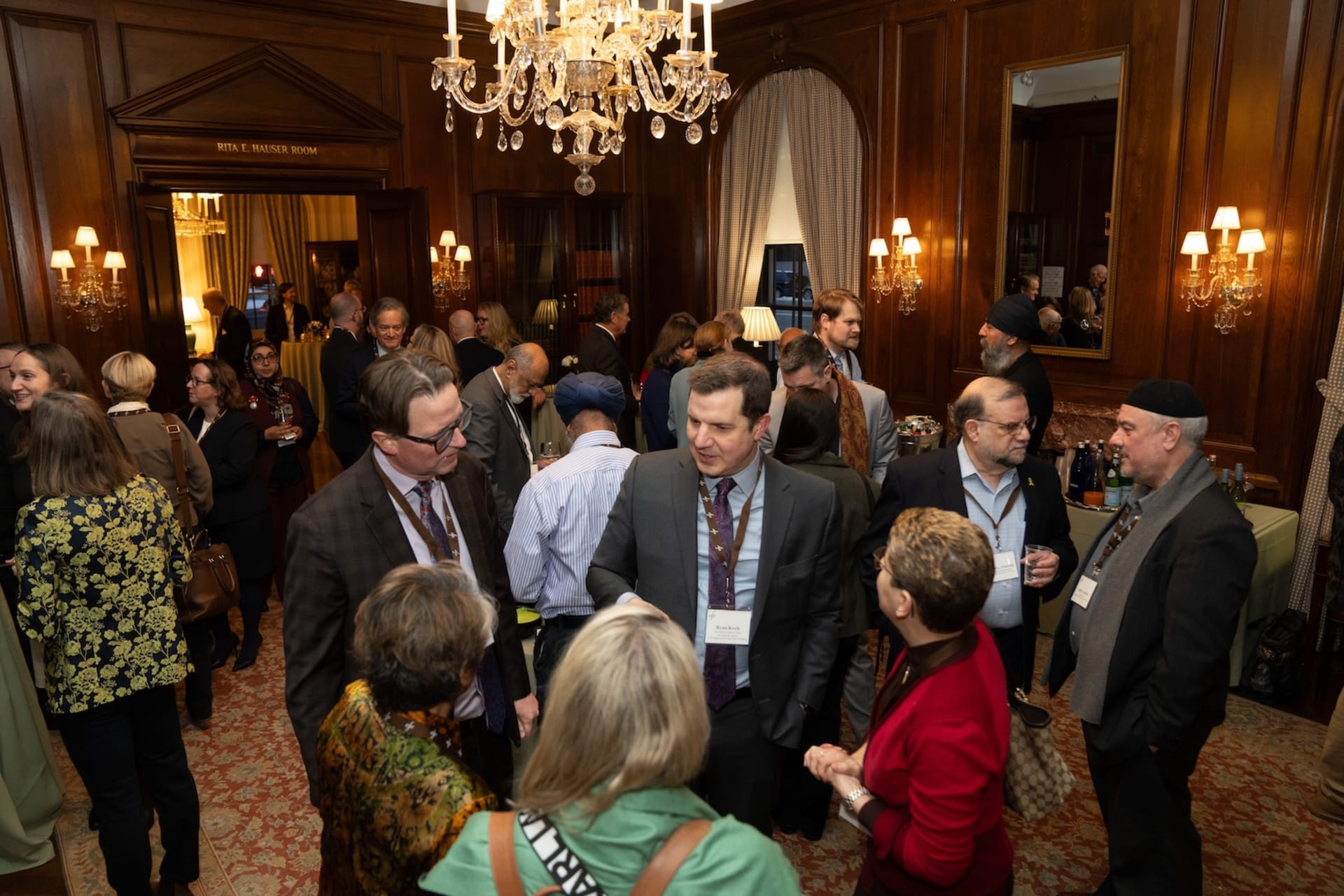
Since 2006, CFR’s Religion and Foreign Policy program has been a resource for faith leaders and policymakers, offering a nonpartisan forum for interfaith dialogue on global issues. The program engages congregational leaders, seminary heads, scholars of religion, and representatives of faith-based organizations.
From July 2024 to June 2025, the program hosted seven webinars as part of its Religion and Foreign Policy Webinar series, addressing issues at the intersection of religion and international affairs. Sessions included “Religion in the U.S. Election,” “Muslim-American Perspectives on U.S. Foreign Policy,” and “Jewish-American Perspectives on U.S. Foreign Policy.” Additional topics included the pope and international relations, statelessness of religious and ethnic minorities, Indigenous faith and climate policy, and AI’s religious and policy implications. The series drew 330 unique participants from 43 states and 48 distinct religious sects, averaging 74 attendees per session.
In February 2025, CFR hosted its sixteenth annual Religion and Foreign Policy Workshop, welcoming eighty-eight participants from thirty faith traditions and sects and twenty states, as well as the UK and Sri Lanka. Prominent speakers included the UN Special Rapporteur on Freedom of Religion or Belief Nazila Ghanea, U.S. Commission on International Religious Freedom Commissioner Mohamed Elsanousi, and former Director of the White House Office for Faith-Based Partnerships Melissa Rogers. Plenary sessions and discussion groups centered on topics including sustaining bipartisan religious engagement in U.S. foreign policy; faith, peacebuilding, and reconciliation; international religious freedom; genocide and religious violence; migration and statelessness; and more.
The program also participated in three external conferences: the Association for Jewish Studies Annual Conference, the National Association for Evangelicals (NAE) Christian Student Leadership Conference, and the Religion News Association Annual Conference. The program organized a briefing for the NAE’s conference participants at CFR’s office in Washington, DC, where Ebenezer Obadare spoke to a group of ninety young faith leaders.
State and Local Officials Initiative
CFR’s State and Local Officials initiative connects governors, mayors, state legislators, and city and county leaders with resources on global issues that affect local agendas. The initiative has continued to strengthen CFR’s ties with subnational leadership at all levels, beginning with an inaugural foreign policy forum cohosted by the Rodel Institute, the nation’s premier leadership development program for state and local officials.
Under that new partnership, the initiative hosted a bipartisan group of twenty-eight municipal and statewide elected officials selected by CFR and Rodel to ensure a balance of political party affiliation. The group convened over the course of three days at CFR’s New York headquarters in July 2024 for a mix of working seminars and panel discussions on topics including trade, the U.S. role in the world, U.S.-Europe relations, conflict in the Middle East, AI, and the future of democracy.
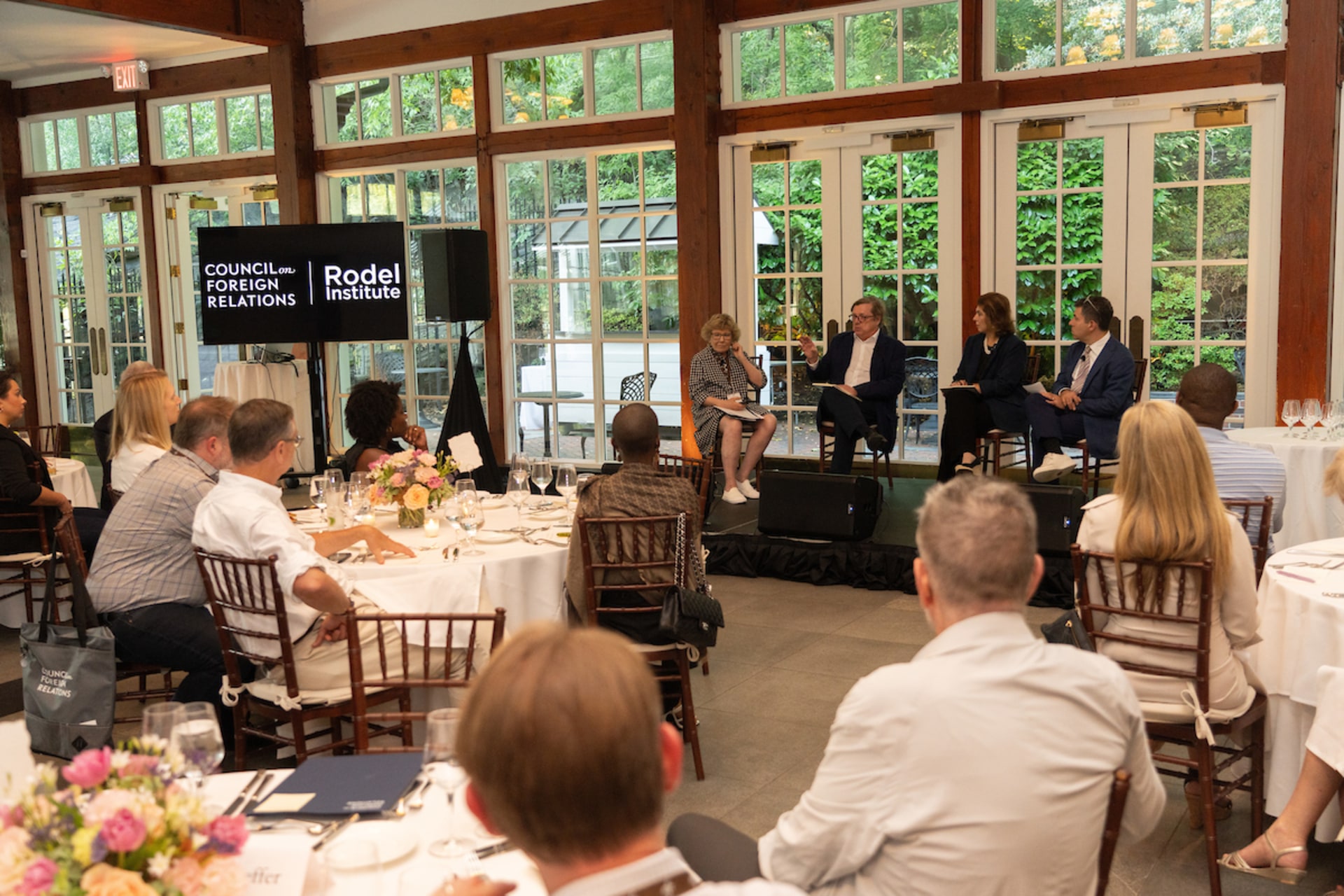
CFR continued its collaborative relationship with national convening organizations to reach stakeholders working in all levels of subnational government. CFR exhibited or provided speakers at the National Conference of State Legislatures Legislative Summit, the State International Development Organization Best Practices and Training Forum, the National League of Cities City Summit, and the State International Development Organization Washington Leadership Forum. CFR also launched the Governors Circle program to provide governors nationwide with opportunities to engage with the Council and gain access to events, expertise, and resources during their time in office.
Local Journalists Initiative
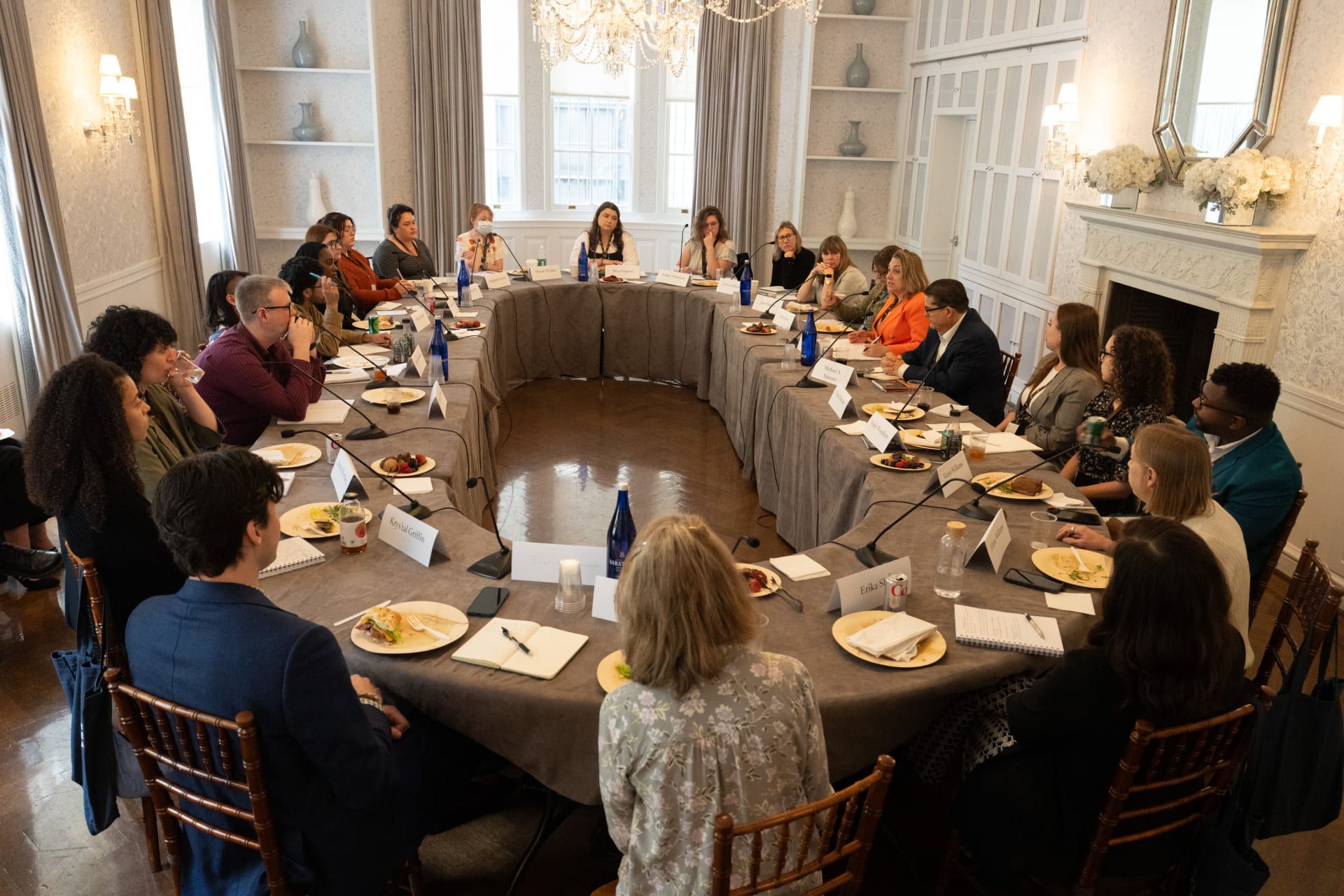
To elevate conversations on U.S. foreign policy choices and increase civic participation, CFR’s Local Journalists initiative helps print, broadcast, and digital-first journalists working for local and regional outlets across the United States draw connections between the local issues they cover and national and international events and dynamics.
CFR continued its webinar series, hosted by CFR Senior Fellow Carla Anne Robbins, which allows local journalists to connect with experts and provides a forum to share best practices. Sessions included reporting on statehouses and elected officials, infrastructure investment, extremism and political violence, new frontiers of local news, and tariffs. CFR also tracked forty articles published by local journalists citing CFR resources or expertise.
With support from the John S. and James L. Knight Foundation, CFR convened its fourth Local Journalists Workshop in May 2025 at CFR’s New York headquarters, bringing together eighty-two journalists from forty-seven states and Washington, DC. The event featured a keynote session with New York Times White House and national security correspondent David E. Sanger and plenary sessions on trade, tariffs, and the economy; press freedom; and deportations and immigration. Participants also took part in discussion groups led by CFR experts on topics that included energy and the environment, public health threats, news consumption and authenticity, U.S. government spending, and national security and defense preparedness.
The initiative represented CFR at the Haymaker Group Media Summit in New York; the International Symposium on Online Journalism in Austin, Texas; the twenty-fifth annual Investigative Reporters and Editors Conference in New Orleans; and the Public Media Journalists Association Conference in Kansas City, Missouri.
National and Outreach Strategic Partnerships
With support from the Carnegie Corporation of New York, CFR partnered with colleges and universities in four battleground states (Arizona, Georgia, Michigan, and Pennsylvania) to host nonpartisan conversations on the U.S. role in the world and the foreign policy issues at stake in the 2024 presidential election. The in-person, interactive discussions, all held in October 2024, were unique to each community and focused on the trade-offs presented by different local and global policy options while providing context on the international issues, choices, and challenges facing the next president. The four forums were attended in person by 845 participants, and the forum videos have garnered 1,124 virtual views.
To complement in-person offerings, CFR also partnered with the Brookings Institution to host a three-event virtual series on topics pertinent to the election: U.S.-Europe relations, technology and electoral dynamics, and the future of the Middle East. Those events were open to all and allowed CFR to reach prospective voters outside the states chosen for the forums.
On May 22, CFR cosponsored the opening night dinner of the NATO Parliamentary Assembly in Dayton, Ohio, with the Charles F. Kettering Foundation. The event centered on lessons learned from the Dayton Peace Accords and how sitting policymakers can apply them to ongoing global crises and conflicts. Hosted by Representative Michael Turner (R-OH), the event brought together nearly two hundred attendees, including delegates of the NATO PA, dignitaries from around the world, community leaders, and CFR members.
Corporate and CEO Programs
Now more than ever, geopolitical uncertainty is rapidly reshaping the landscape for global business. CFR’s Corporate and CEO Programs equip firms and executives with insights and discussions to deepen their understanding of the global forces driving risk, policy, and opportunity.
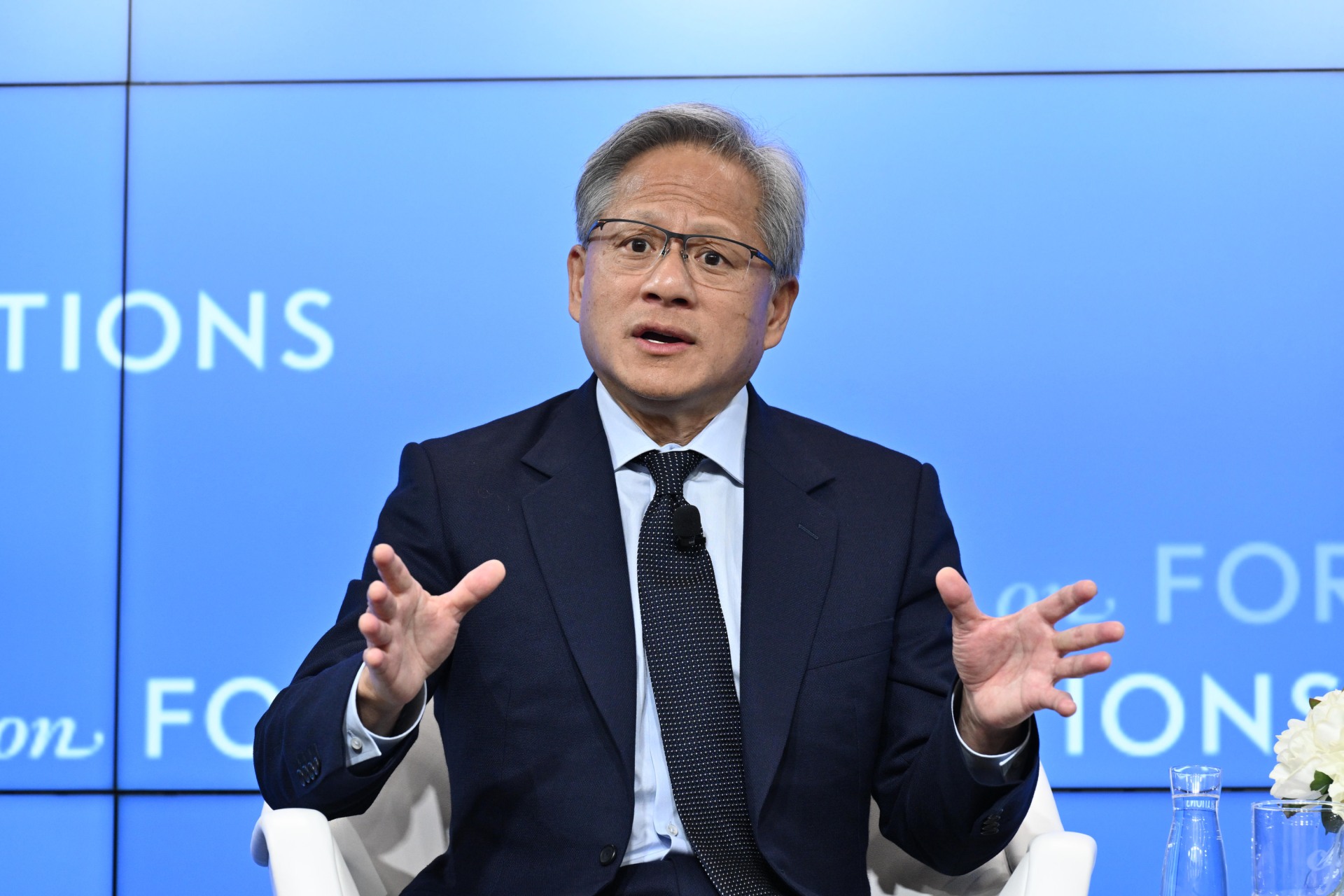
This year, Corporate programming featured roundtables on trade policy and tariffs, the economic outlook for the year ahead, how regional geoeconomics and geopolitics affect global trade, and more. The CEO Speaker series—a forum for leading global CEOs to share their perspectives on issues at the center of commerce and foreign policy and on the changing role of business—included Jensen Huang of NVIDIA, Patrick Pouyanné of TotalEnergies, and Dario Amodei of Anthropic.
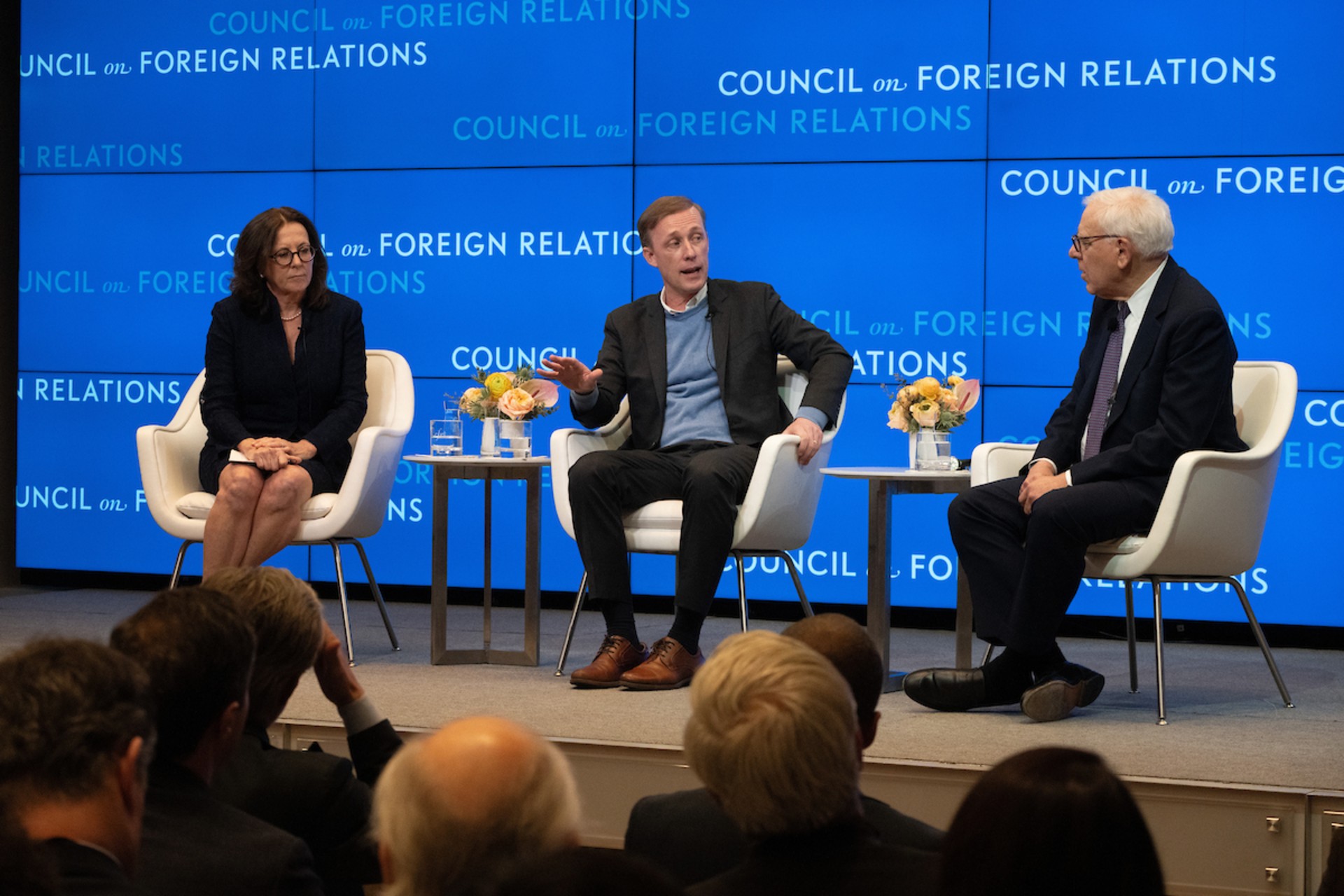
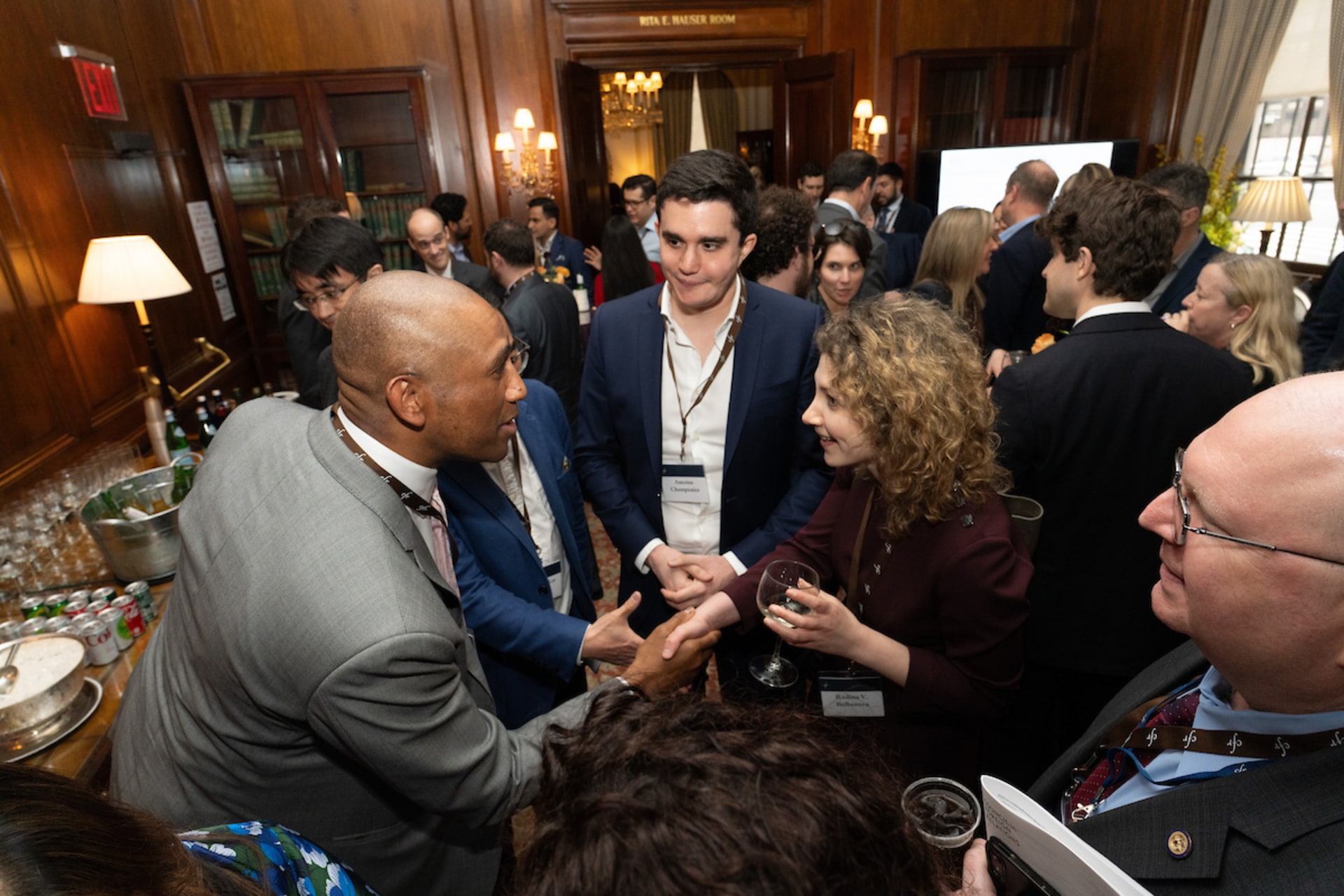
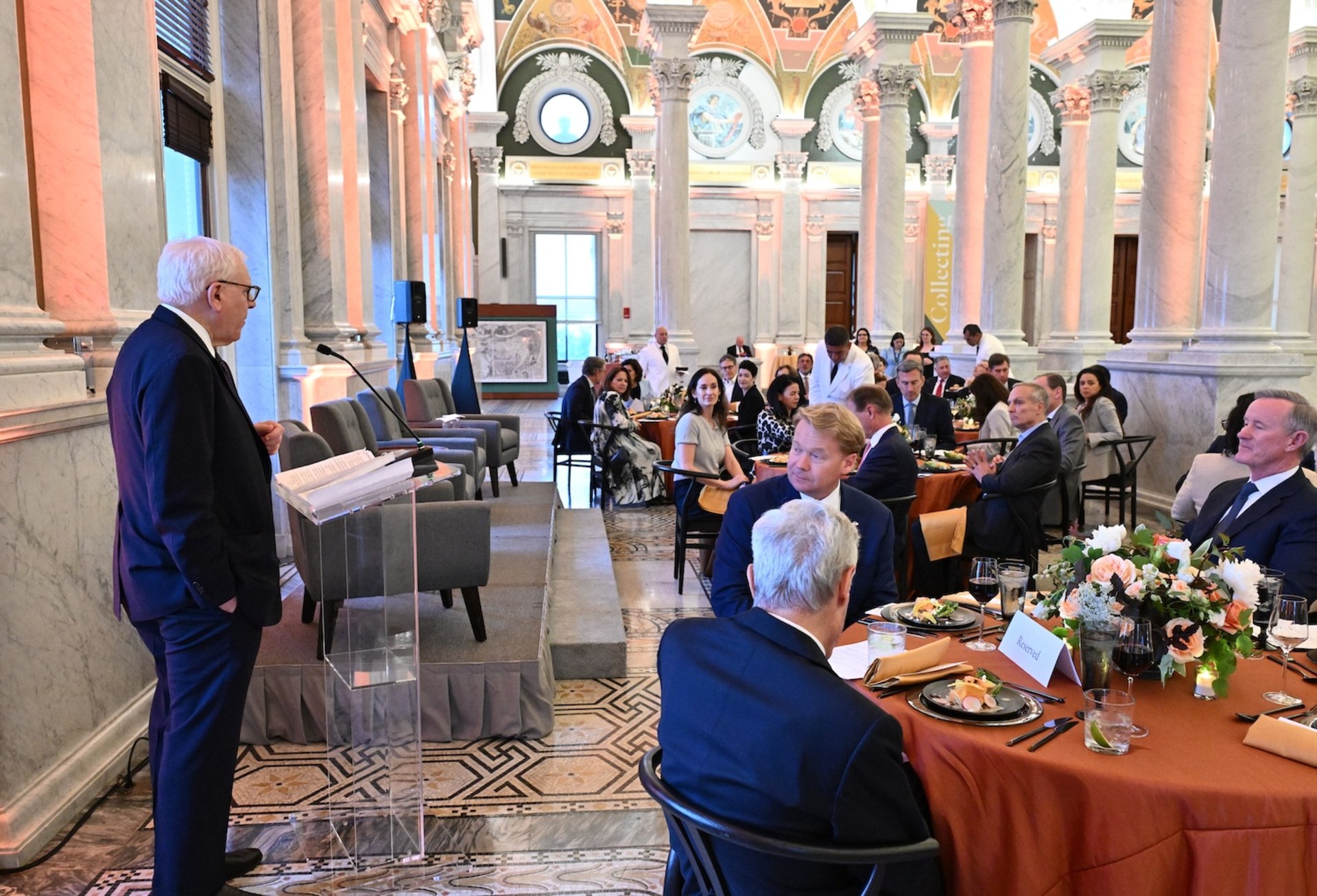
The annual CEO Summit convened in Washington, DC, for the first time, bringing together more than thirty CEOs, CFR Board members, and policy experts for a dinner in the Great Hall of the Library of Congress, followed by working sessions with leaders from Congress and the Council of Economic Advisers.
The 2025 Corporate Conference took place on April 3 and 4 in New York with more than three hundred in attendance in person and virtually. Jeremy Allaire, Circle cofounder, chairman, and CEO, spoke at the keynote session. Plenary session topics included global economic trends, geopolitical hot spots, and trade policy. Concurrent breakout sessions led by CFR fellows and corporate member experts focused on AI, economic security, energy, the Middle East, and U.S.-China relations.
Profile of the Corporate Membership
Founded in 1953 with twenty-five corporate members, Corporate and CEO Programs now include more than one hundred companies from various industries and regions of the world. Through exclusive events and engagement with globally respected experts, the programs equip executives at member companies with the strategic insight needed to navigate a rapidly evolving global landscape and to understand the critical links between foreign policy and business. Business leaders have access to the Council’s intellectual capital through briefings and rapid-response discussions, Foreign Affairs, and hundreds of meetings and small discussions convened virtually and in New York, Washington, DC, other major U.S. cities, and around the world.
The Corporate Conference and the CEO Summit are the programs’ centerpieces. Both events help executives and CEOs, respectively, address geopolitical risk, global economics, trade, and technology.
Benefits of CFR Corporate Membership
Corporate membership is available at three levels: Gold ($100,000), Silver ($75,000), and Bronze ($50,000). Member companies are offered briefings with CFR fellows, invitations to events covering a wide range of topics, and professional development opportunities for high performers and early career professionals.
Gold ($100,000+)
All Silver and Bronze benefits plus:
- Opportunity to invite select clients to join high-level events
- Four CFR fellow briefings tailored to the company’s interests
- Opportunity for one annual briefing with CFR President Michael Froman
- Six nomination slots for rising executives to participate in the Corporate Leadership Development Network, an exclusive talent development program for professionals on a senior management track
- One-time complimentary premium position print advertisement in Foreign Affairs magazine plus 50 percent off one renewable print advertisement; complimentary online and e-newsletter advertising benefits with Foreign Affairs, valued at more than $20,000; and one-time 50 percent discount on sponsored content, prewritten or crafted with the Foreign Affairs marketing team
- One complimentary rental of the historic Harold Pratt House ballroom and library (based on availability)
- Prominent logo placement on the Corporate Program webpage and at the annual Corporate Conference
Silver ($75,000)
All Bronze benefits plus:
- Invitations for leadership-level executives to attend the Chairman’s Circle Dinner and the Annual Dinner with CFR’s Board of Directors and Global Board of Advisors
- Two CFR fellow briefings tailored to the company’s interests
- Four nomination slots for rising executives to participate in the Corporate Leadership Development Network, an exclusive talent development program for professionals on a senior management track
- One-time complimentary full-page print advertisement in Foreign Affairs magazine plus 30 percent off one renewable print advertisement; complimentary online and e-newsletter advertising benefits valued at more than $15,000
Bronze ($50,000)
- Invitations to hundreds of CFR events each year (virtual, New York, and Washington, DC), including rapid-response discussions around major world events and roundtables with CFR fellows that cover wide-ranging geopolitical issues, such as American economic leadership, China strategy, climate and energy, and AI
- Invitations to join CFR’s regular programming in Atlanta, Boston, Chicago, Dallas, Houston, Los Angeles, Miami, San Francisco, Seattle, and London
- One CFR fellow briefing tailored to the company’s interests
- Invitations for executives to attend the Corporate Conference, CFR’s annual gathering on geopolitical and geoeconomic issues of interest to the international business community
- Talent development opportunities for young professionals through CFR events and networking
- Access to Foreign Affairs magazine online and in print
- Exclusive discounts on digital, sponsored content, print, and CFR e-newsletter advertising with Foreign Affairs magazine
- Recognition on CFR’s corporate membership roster
Note: Corporate membership dues are 65 percent tax deductible. Corporate dues provide unrestricted funding that helps CFR maintain its role as an independent, nonpartisan resource for its members and the general public on current and emerging foreign policy issues.
For more information, please contact the Corporate Program at [email protected] or 212.434.9684.
Development
The Council on Foreign Relations receives charitable contributions from various private sources, including its members, corporations, and foundations.
In a year marked by global volatility and rapid change, CFR’s Development team rose to the occasion, delivering a record-setting performance in strategic fundraising and meaningful donor engagement to ensure that CFR remains a trusted, independent voice in foreign policy. The Council secured more than $32 million in new major gifts—an unprecedented achievement for a noncampaign year. Those funds were instrumental in launching and sustaining key strategic initiatives, including the Wachenheim Program on Peace and Security, two Stanton fellowships focused on nuclear issues, and new efforts in China strategy, economic policy, climate policy, and national security technologies.
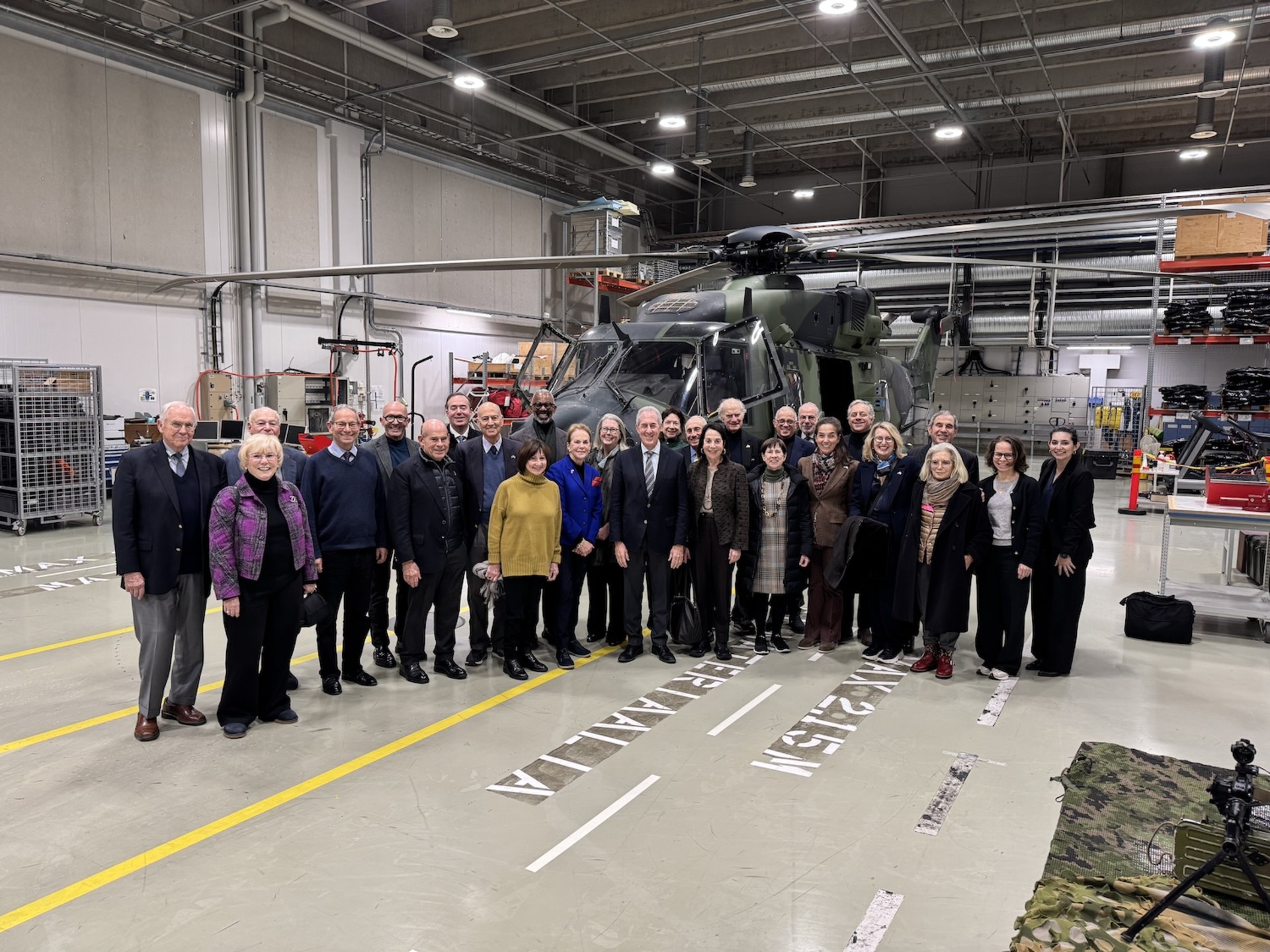
The Annual Fund campaign also exceeded expectations, raising more than $11.1 million (a new record). That success reflects the deep commitment of CFR’s member community and the effectiveness of a personalized engagement strategy. The campaign’s $250,000 challenge appeal, inspired by an anonymous unrestricted gift, reactivated more than 150 donors and generated more than $750,000—tripling its original goal. Those results underscore the strength of CFR’s philanthropic culture and the trust placed in its mission.
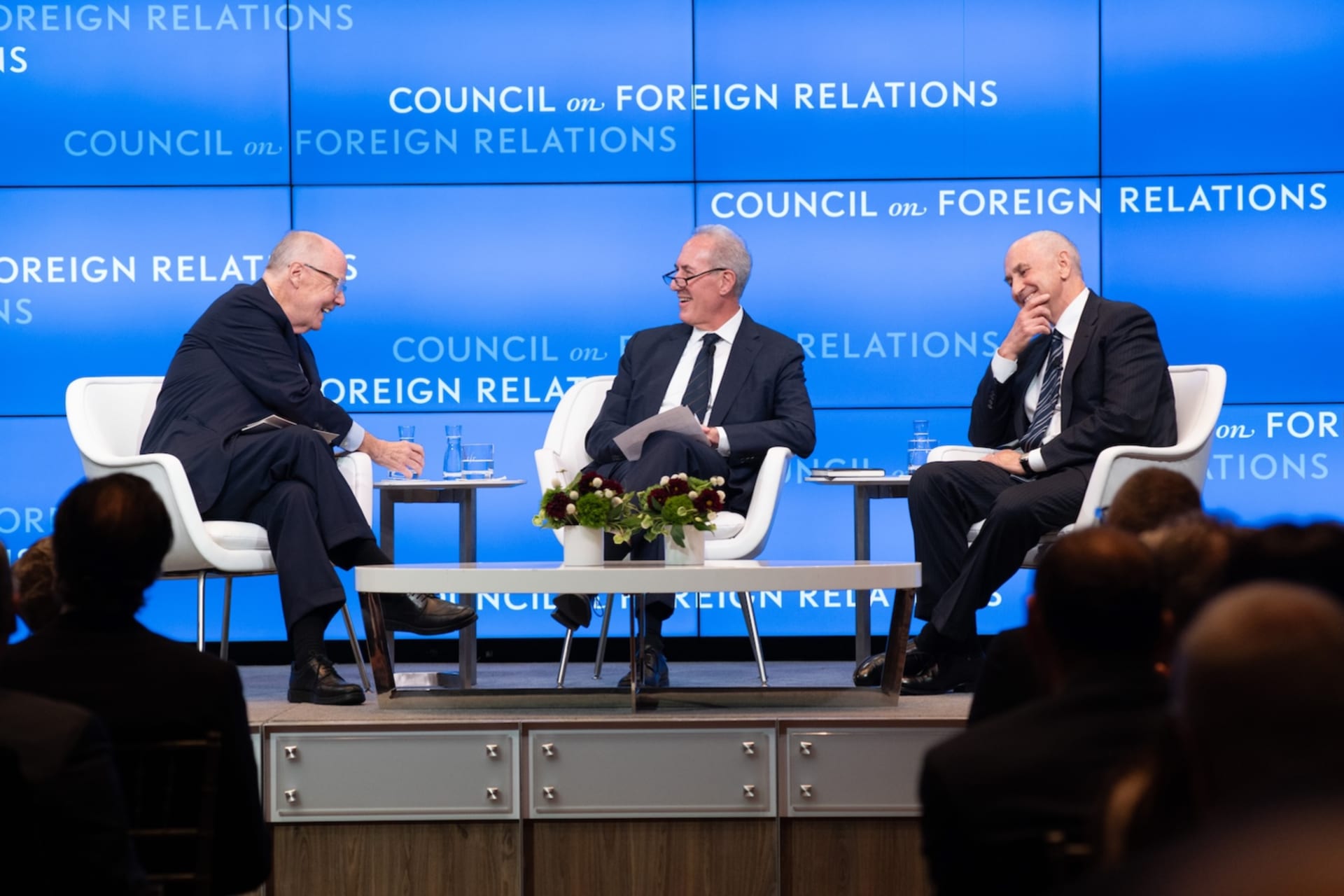
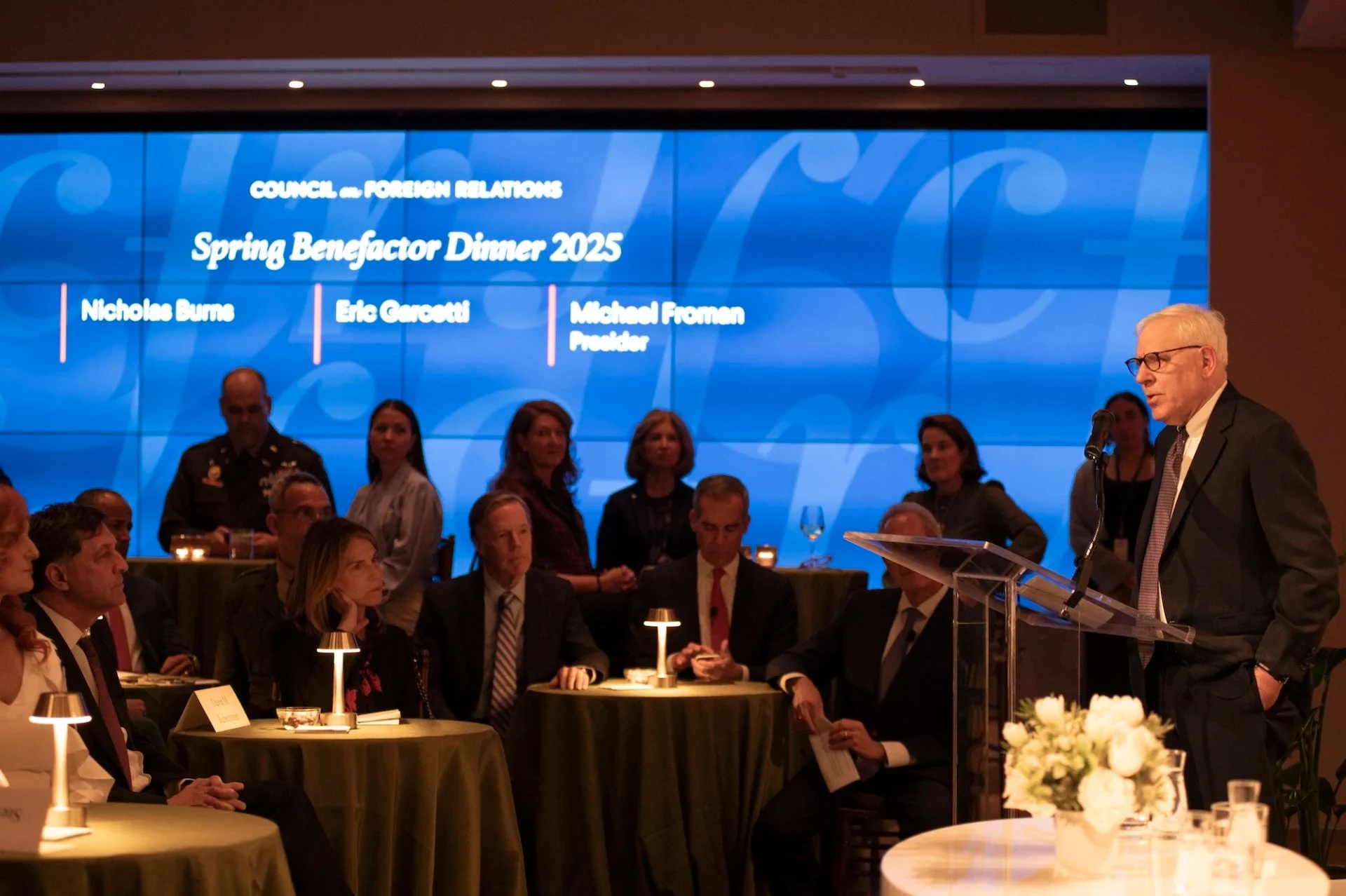
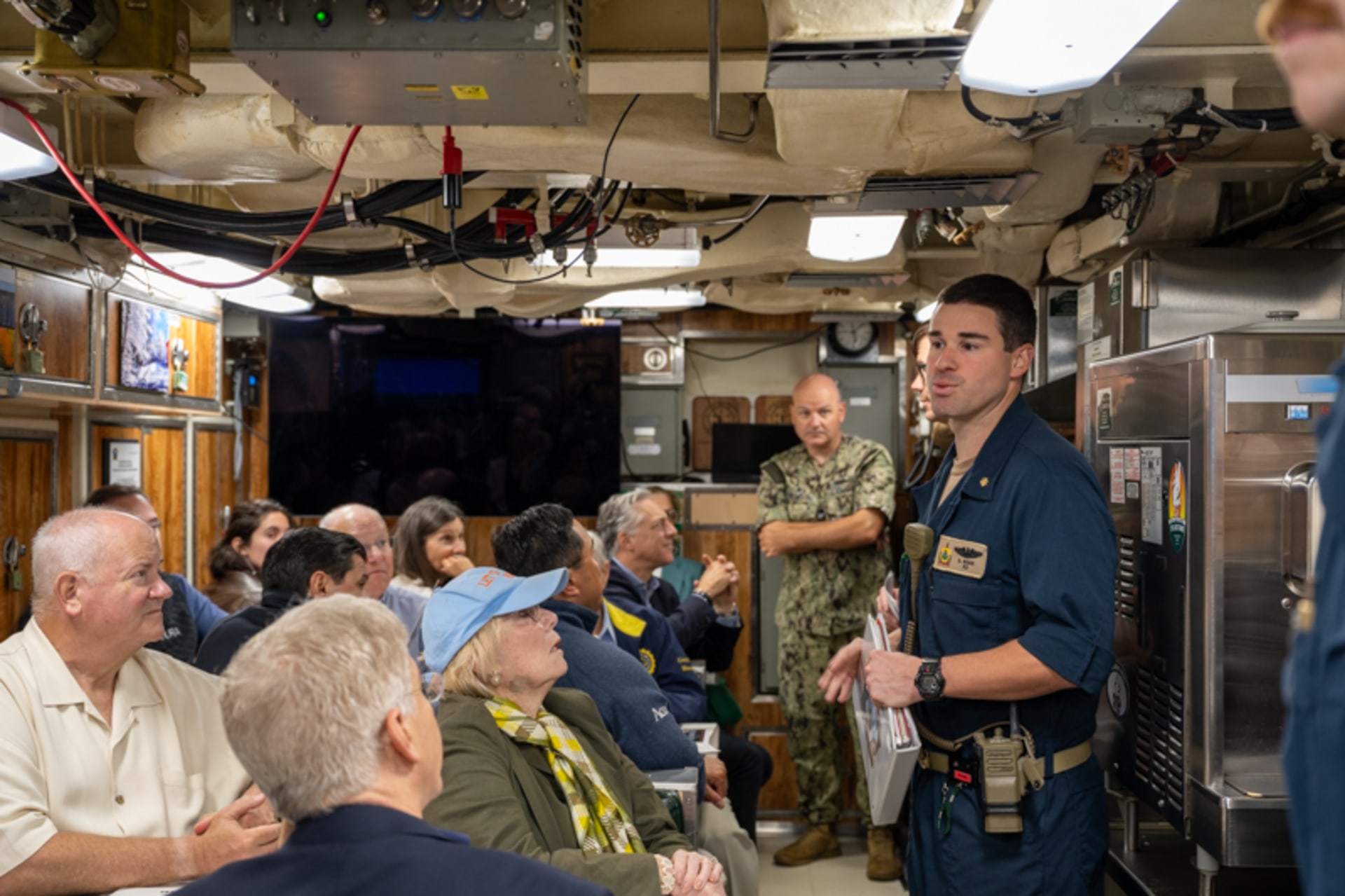
The Spring Benefactor Dinner featured a compelling conversation with Nick Burns and former U.S. Ambassador to India Eric Garcetti, and two donor trips—one to Connecticut for the commissioning of the USS Iowa and another to Hawaii for high-level military briefings—offered immersive, high-value experiences. Those events showcased CFR’s unique access and thought leadership.
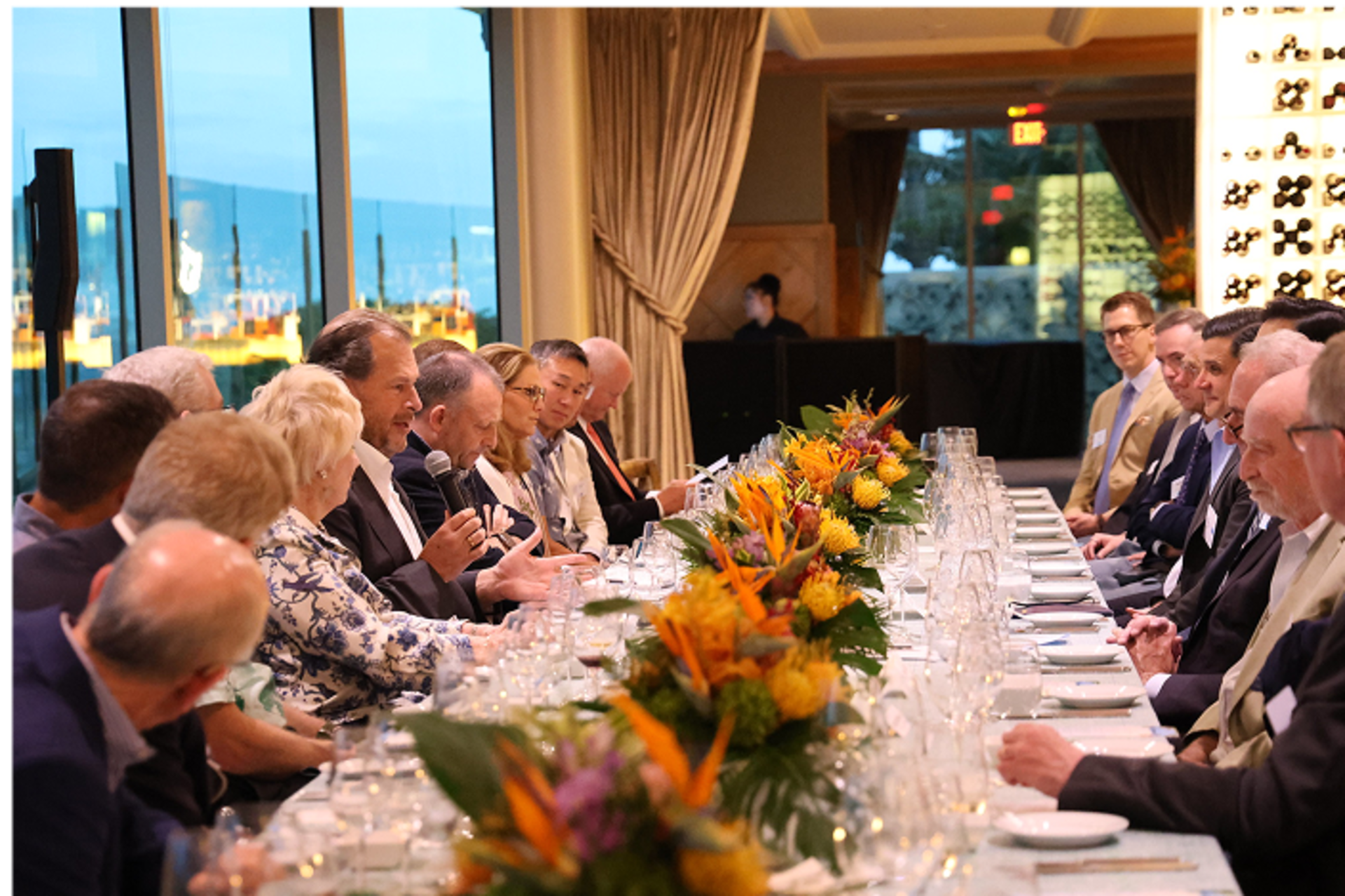
Another milestone included the launch of the Richard Haass Center for Education, honoring the legacy of CFR’s longtime president and celebrating the generosity of its supporters. Complementing those marquee events were intimate roundtables with CFR fellows, such as Steven A. Cook and Farah Pandith, offering donors timely insights into Middle East policy and counterterrorism.
CFR Digital
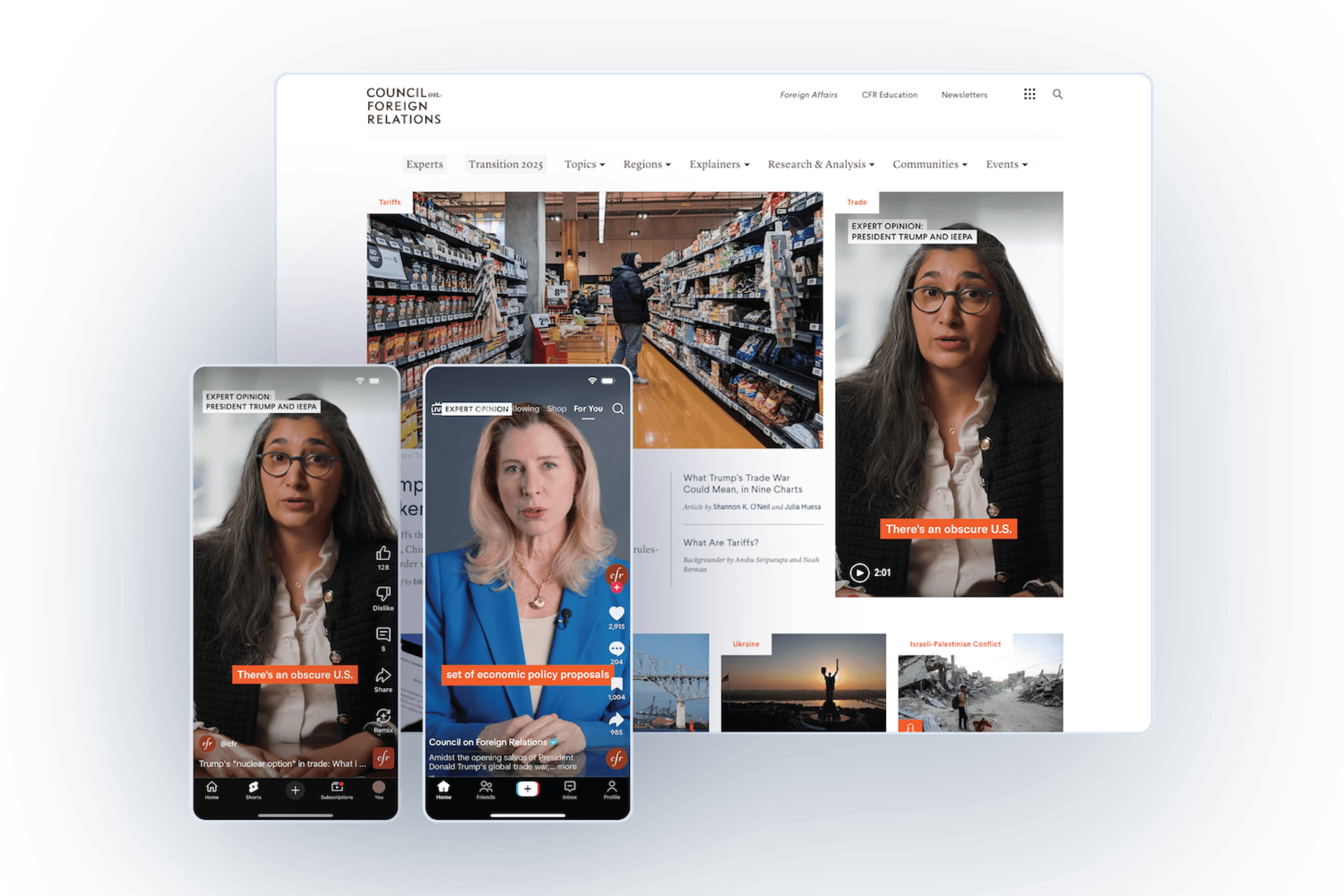
This past year, CFR Digital expanded its platforms, innovated editorially, and achieved record audience engagement. The team produced expert-informed and context-rich Explainers on immigration and U.S. deportations, vaccine diplomacy, the dismantling of USAID, escalating conflict in the Middle East and Ukraine, and shifting dynamics in elections across the globe, among other timely topics. Trade policy was a major focus in response to the second Trump administration’s actions, resulting in collaborative editorial packages with the Studies Program, a special season takeover of the Why It Matters podcast on tariffs, and widely viewed videos by Benn Steil and Zongyuan Zoe Liu. Digital’s explanatory content drove record traffic to CFR.org.
CFR Digital amplified the foreign policy stakes of the 2024 presidential election through its coverage and multiple products. The Election 2024 hub featured candidate position trackers on ten issues, quick-turn pieces on major developments, such as the attempted assassination of Trump and President Joe Biden’s stepping down, and resource guides for university forums in battleground states. Those efforts were paired with short-form videos and social-friendly content showcasing student engagement with global issues.
This was also the “Year of Video,” underscoring significant investments in off-platform growth, particularly on YouTube, Instagram, and TikTok. YouTube subscribers surpassed three hundred thousand and generated more than twenty-one million views. TikTok and Instagram views grew by 6,174 percent and 229 percent year over year, respectively. Top-performing videos included clips from CFR events and short explainers on tariffs and China policy. That surge in video engagement exemplified a broader strategy of meeting audiences where they are and making CFR content more accessible and resonant across platforms.
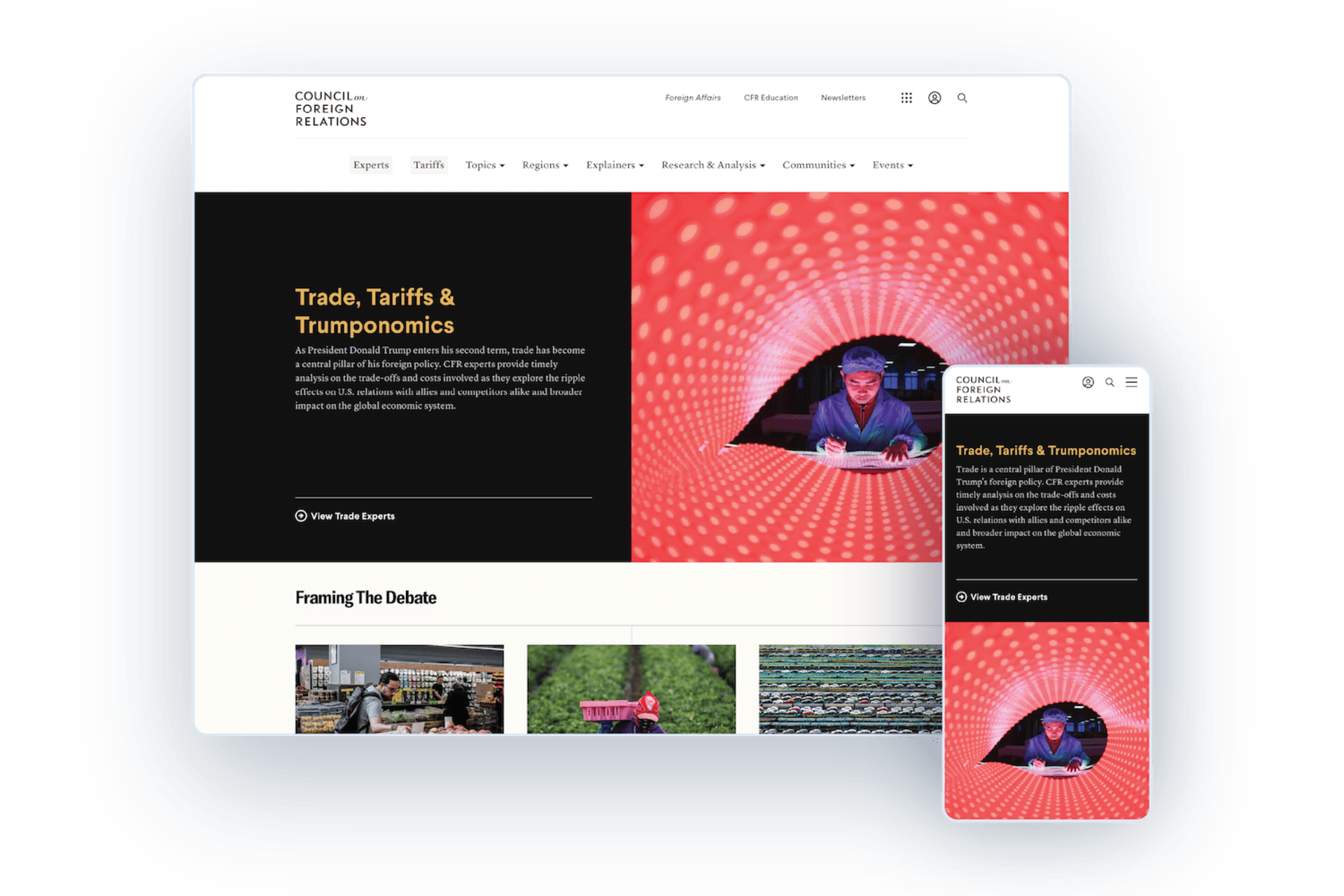
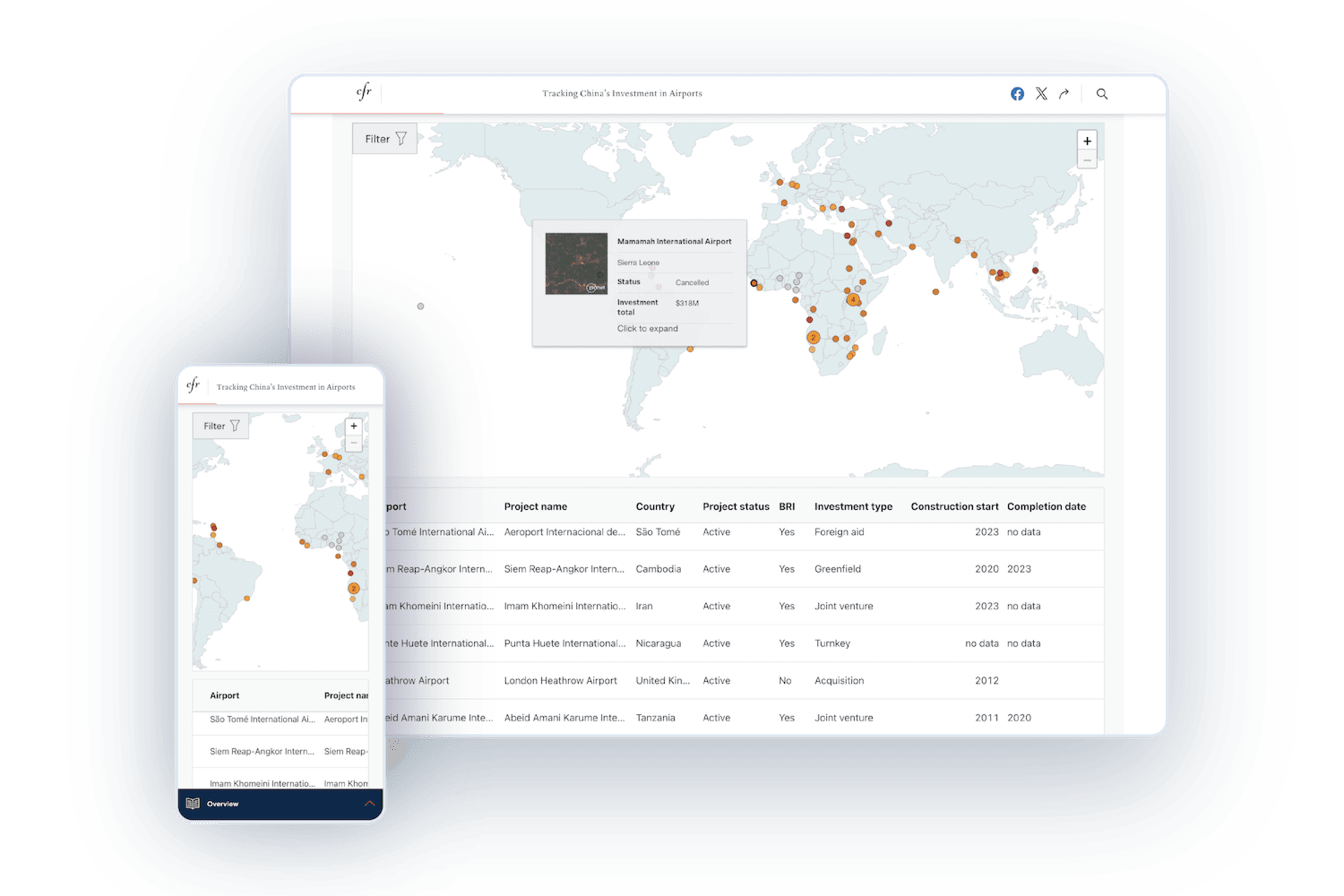
Throughout the year, CFR Digital also launched and improved a series of innovative data and design products—from interactive maps of Chinese airport investments and U.S. military deployments to redesigned Climate Realism hub pages and a new visualization on life without satellites. Those digital experiences complemented policy research and extended the impact of CFR’s scholarship to broader audiences.
Newsletter subscriber growth surpassed gains from the previous two years, led by Think Global Health (which grew by more than 55 percent) and The World This Week (which grew by more than 18 percent). Those trends underscore CFR Digital’s increasingly data-informed and strategic approach to product development and audience engagement, all in service of amplifying CFR’s mission to provide nonpartisan, expert-informed context on global affairs.
Global Communications
This past year, the Global Communications team focused on three primary areas in service of the Council’s mission to inform the U.S. role in the world: bolstering media relations (highlighting Studies, Foreign Affairs, high profile convenings, and CFR fellows’ expertise), crafting an institutional communications strategy, and enhancing an internal engagement function—all during a period of leadership transition in the team.
Building on a strong foundation, Global Communications elevated CFR’s profile as a trusted source of expertise, analysis, and perspective—reaching key players and the public by developing a more strategic, integrated approach to meet the moment.
That included hosting a series of media events on breaking geopolitical developments, including quick-turn briefings for media and members on global trade and tariffs, Trump’s trip to the Middle East, and the future of Ukraine. Working with National Program, Corporate and CEO Programs, and Membership colleagues, the team attracted local journalists, congressional staffers, diplomats, business representatives, and members, with attendance ranging from two hundred to more than four hundred participants each session.
The team expanded its executive and internal communications support, amplifying the Council president’s voice and his column, The World This Week, on a wide range of media platforms—from traditional broadcast and print outlets such as CNBC, CNN, Fox News, MSNBC, the New York Times, NPR, TIME, and the Wall Street Journal, to digital-first platforms including Axios, Politico, and Semafor.
Collaboration across departments remained central to Global Communications’ efforts to amplify CFR initiatives and broaden impact. The team streamlined processes, expanded capabilities, and introduced new tools to support the reach of Studies output, Digital content, Meetings sessions, staff and member engagement, National Program activities, and Education resources. For instance, Global Communications supported Studies and the launch of the Climate Realism Initiative (landing a preview piece in Axios Generate), as well as CFR’s partnership in the Endless Frontiers retreat in Austin, Texas.
Media Relations
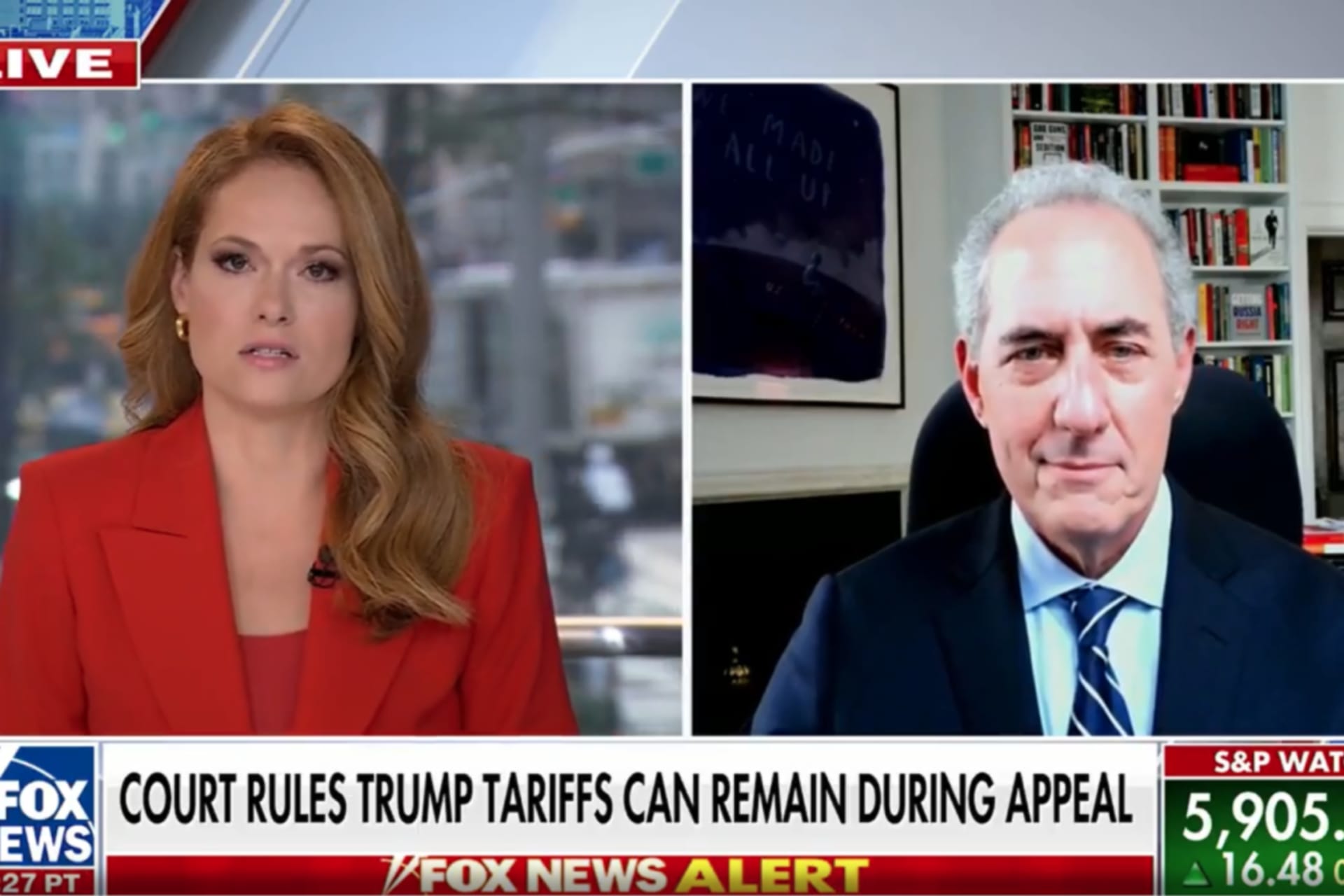
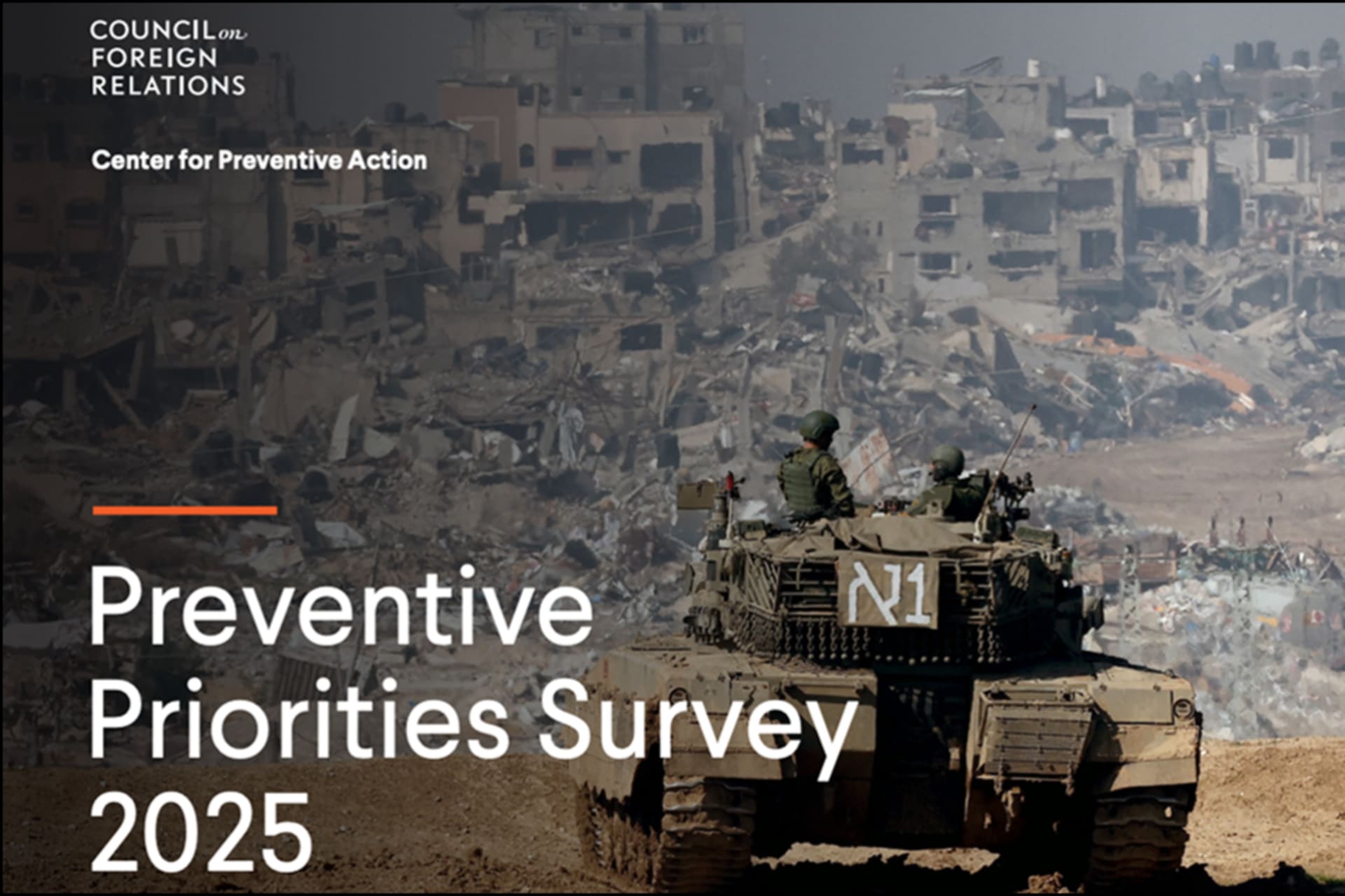
As a result of direct engagement efforts with reporters, editors, anchors, booking agents, and producers, media relations surged, showing a 47 percent increase in media hits year over year. CFR experts were featured in more than 17,500 mentions across global print, broadcast, and digital platforms. The team organized high-impact briefings for media on topics including global trade and tariffs, the Middle East, and Ukraine, and issued forty-three press releases highlighting major CFR products and initiatives, including the Election 2024 initiative, Max Boot’s Reagan: His Life and Legacy, the Task Force Report on space policy, the annual Preventive Priorities Survey, Edward Alden’s When the World Closed Its Doors: The COVID-19 Tragedy and the Future of Borders, and the launch of the Climate Realism Initiative.
The Global Communications team maintained its robust support for Foreign Affairs, helping the magazine maintain its status as the home of deeply considered essays that shape global discourse, providing more than twenty thousand media mentions (an 18 percent increase), and boosting record-breaking subscription revenue. The Global Communications team supported each essay release and issue launch with tailored media strategies, leveraging deep press relationships and author networks to amplify reach and impact. That work resulted in more than twenty thousand domestic and international mentions across print, television, radio, podcast, newsletters, and more—a 7.4 percent increase.
Overall, the team is taking a proactive approach—creating media resource guides and quick-turn media briefings alongside relationship-building efforts to respond to the demands of the news cycle and to take advantage of a wide range of media platforms, both traditional and emerging.
Institutional Communications
Global Communications expanded its scope to include executive messaging, reputational management, and crisis preparedness. Executive communications became a full-fledged operation, elevating Michael Froman’s media presence with sixty-seven media appearances, including recurring appearances in outlets such as Axios, BBC, Bloomberg, CNBC, CNN, the Financial Times, the New York Times, NPR, Politico, Semafor, the Washington Post, and TIME, whose March 2025 Leadership Brief newsletter interview with him highlighted the role of CFR—“America’s most influential foreign-policy institution”—at this critical moment. The team also strengthened institutional resilience through enhanced crisis planning and cross-department coordination.
Internal Engagement
The team launched an internal engagement strategy, recognizing that CFR staff are both participants and brand ambassadors. The strategy included the rollout of CFR Voices, a monthly spotlight on CFR experts in the news, along with enhancements to staff newsletters and all-staff communications. Those efforts, in partnership with Operations and Human Resources, are helping build a more connected, informed, and engaged workplace culture.
With a strong foundation in place, the next Global Communications chapter is about scale and strategy. The team is now focused on building long-term, Council-wide campaigns that amplify CFR’s voice on the world’s most pressing issues. It is poised to lead with clarity, creativity, and purpose—ensuring that CFR’s message resonates where it matters most.
Foreign Affairs
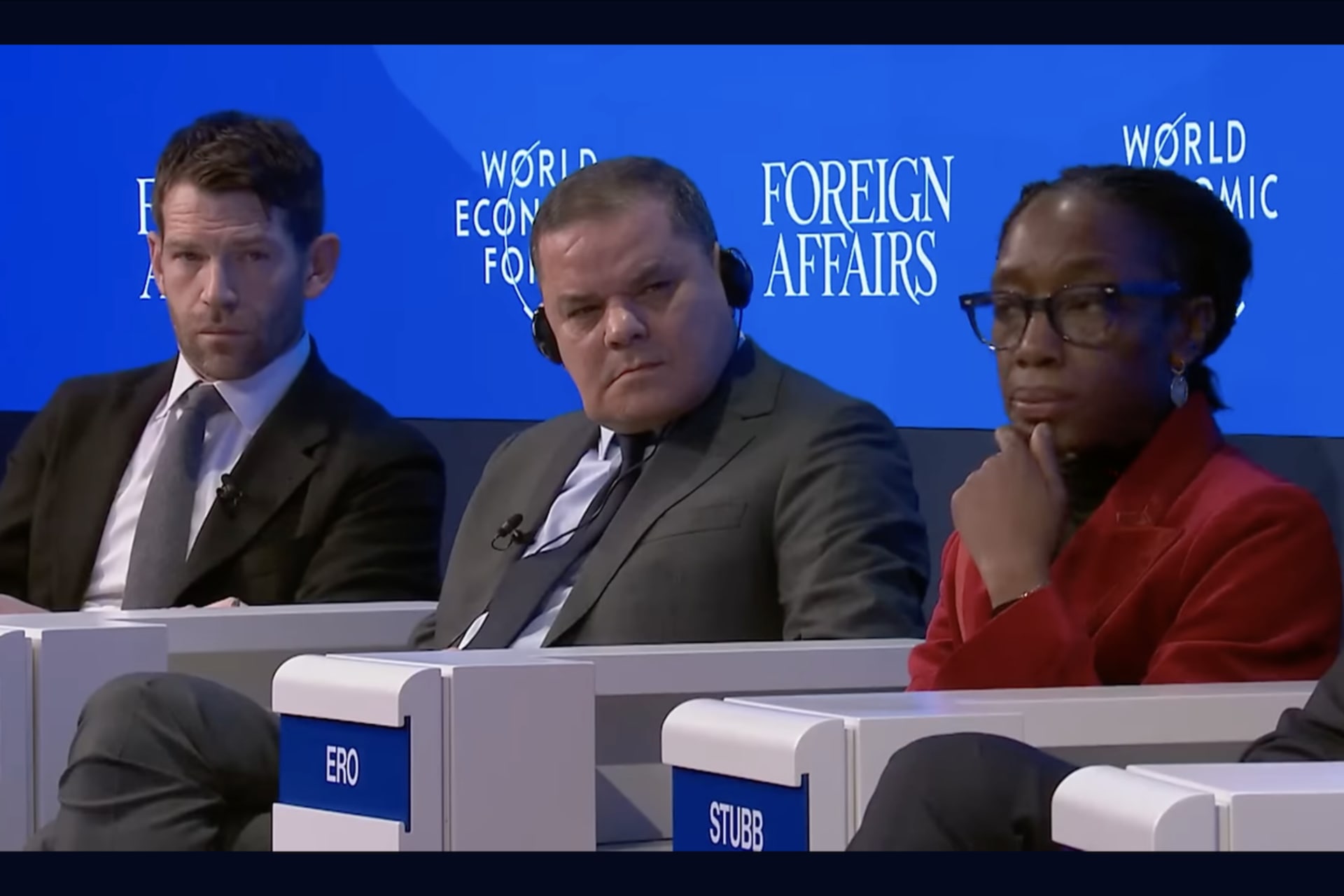
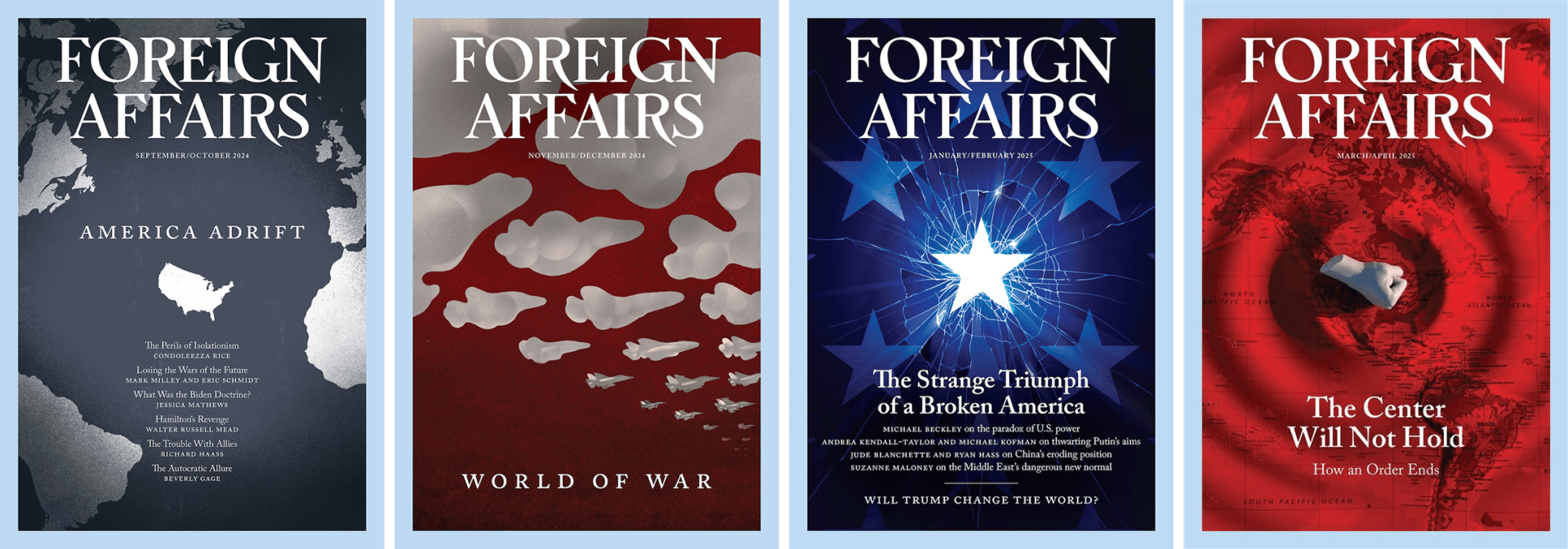
Foreign Affairs remains the leading publication in the field because of its analysis of U.S. foreign policy and global issues across its print, online, and podcast formats. In the past year, print issues of the magazine have featured debate-defining essays on topics ranging from China, the Middle East, and Ukraine to AI, energy, and the global economy.
Authors both well-established (Condoleezza Rice, Antony Blinken, Mitch McConnell, and Joseph Nye Jr.) and rising (Michael Beckley, Rebecca Lissner, Mira-Rapp Hooper, and Wess Mitchell) have published sweeping arguments on the United States’ changing role in the world. Mark Milley, Eric Schmidt, Mara Karlin, Stephen Biddle, and Lawrence Freedman have written on military issues; Jason Furman, Cecilia Rouse, and Daniel Yergin have written on economic and energy issues. Notable pieces have focused on China (including by Kurt Campbell and Rush Doshi), Russia and Ukraine (including by Andrea Kendall-Taylor and Michael Kofman), and the Middle East (including by Suzanne Maloney and Maha Yahya), along with much else: Amy Zegart on American innovation, Nicholas Eberstadt on “the age of depopulation,” Steven Levitsky on American democracy, and more.
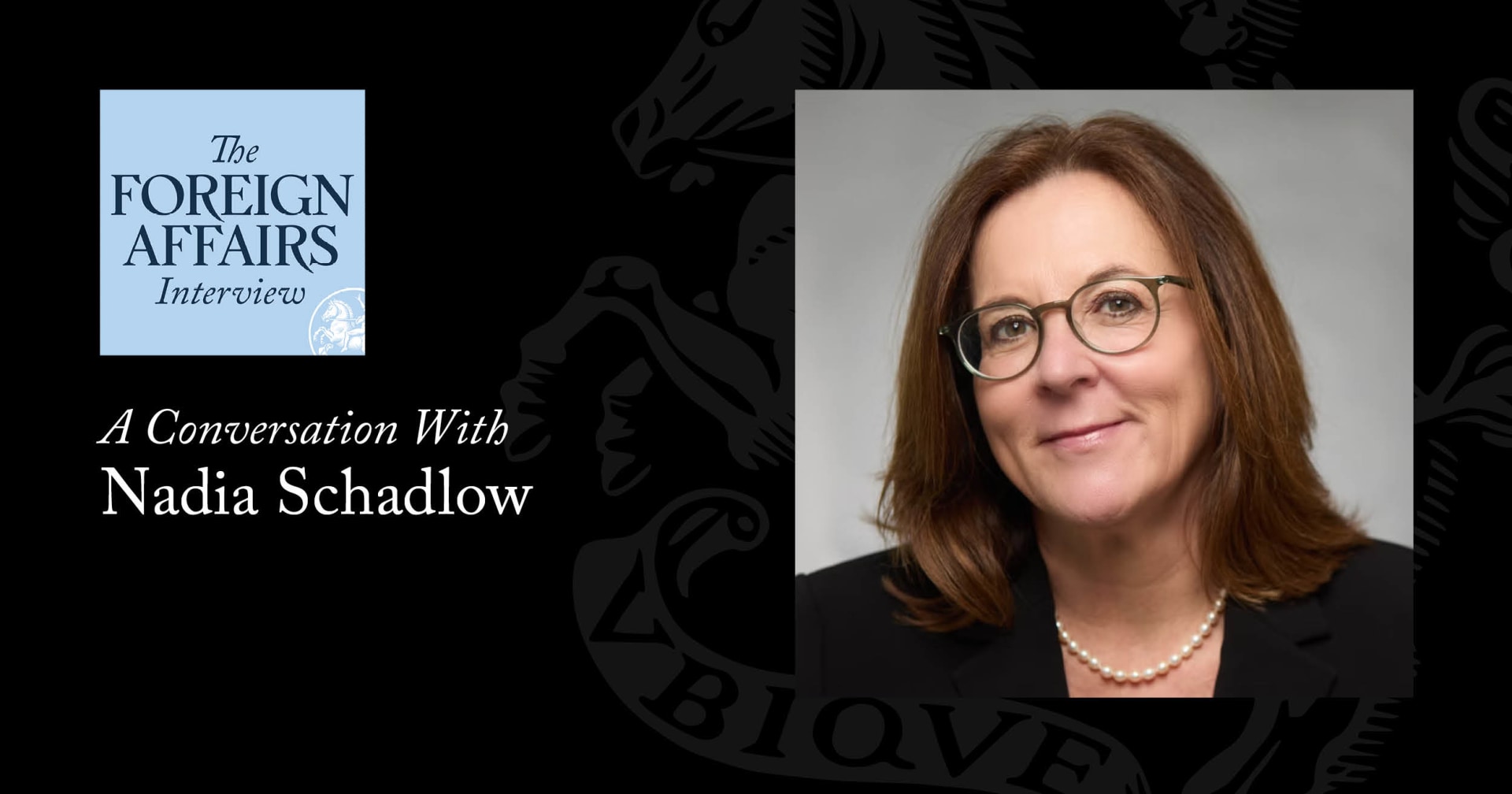
A wide range of distinguished authors have also published pieces on ForeignAffairs.com: Salam Fayyad and Amos Yadlin on the war in Gaza, Jens Stoltenberg and Mary Sarotte on Russia and Ukraine, and Zongyuan Zoe Liu and Stephen Hadley on China. The Foreign Affairs Interview podcast continued to grow, shifted to a weekly schedule in April, and featured notable guests over the past year, including Condoleezza Rice, Nick Burns, Fiona Hill, Kimberly Clausing, Nadia Shadlow, Dana Stroul, Adam Posen, and others.
Foreign Affairs maintained record revenue levels in the 2025 fiscal year, with total revenue topping $12 million and circulation rising slightly to 218,000, through increases in new subscription sales on ForeignAffairs.com. An upgraded print edition has also resulted in increased newsstand sales, especially internationally.
CFR Education
CFR Education empowers students and educators with nonpartisan, accessible tools to understand and engage with today’s complex international landscape. To succeed in such an environment, students need global affairs literacy—the ability to understand and engage effectively in today’s interconnected world. CFR Education provided new and updated resources this year to help high school teachers and higher education faculty build the knowledge, skills, and perspective that their students need to navigate today’s world.
In advance of the 2024 presidential election, CFR Education provided users with nonpartisan, fact-based resources, including a newsletter series and new primers on key voter issues that dominated debates and campaign messaging such as immigration, health, the economy, and conflict. An extensive collection of new climate content was also developed, covering the science of climate change, its societal and political challenges, and the complexities of climate action. Those resources were complemented by teaching supports and a robust schedule of professional development workshops, culminating in a virtual Earth Day event for educators cohosted in partnership with the American Museum of Natural History, National Geographic, and SubjectToClimate.
CFR Education provided professional development opportunities to thousands of educators in 2025. Workshops offered a forum for educators to share best practices on teaching complex topics such as the election, conflicts in the Middle East and eastern Europe, and climate change. Additionally, several virtual webinars helped instructors teach their students how to identify trustworthy online sources.
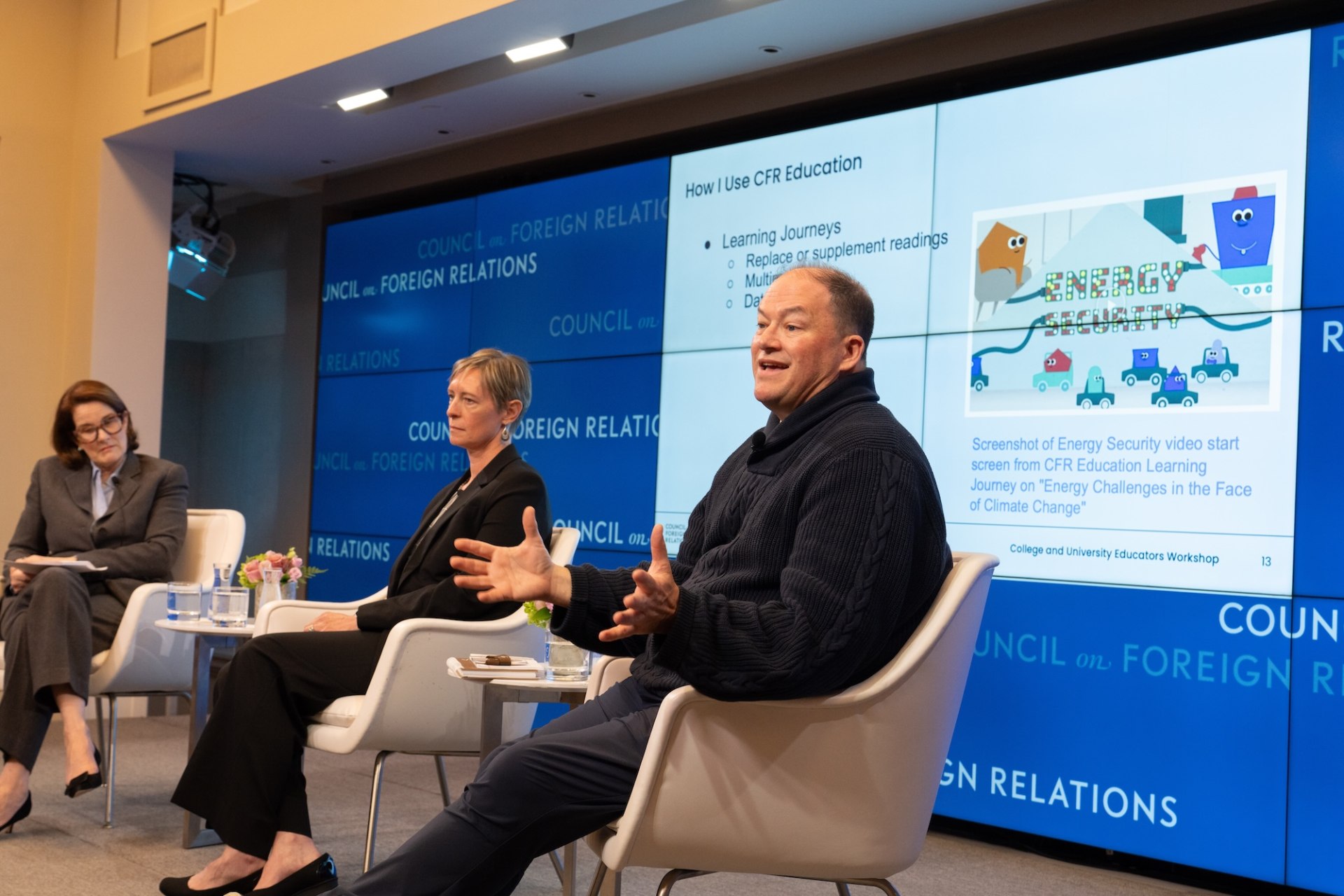
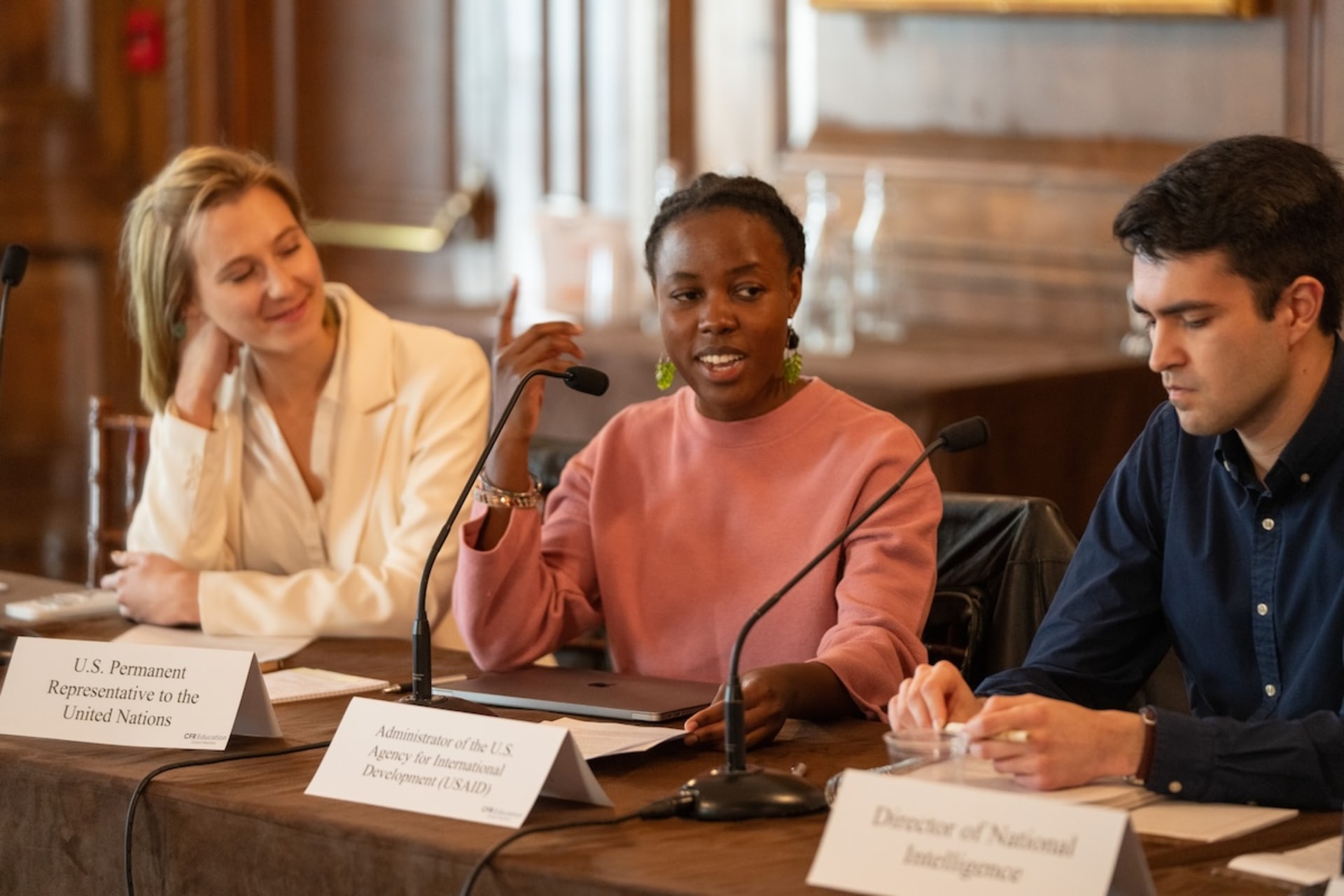
The 2024–25 academic year marked record participation in the CFR Education Ambassador program, which included ninety higher education faculty from forty-six states and significant representation from minority-serving institutions, as well as eighty high school instructors from thirty-three states. Both cohorts included public and independent schools. In addition to the program, CFR Education launched in-person professional development sessions for states, districts, and individual schools.
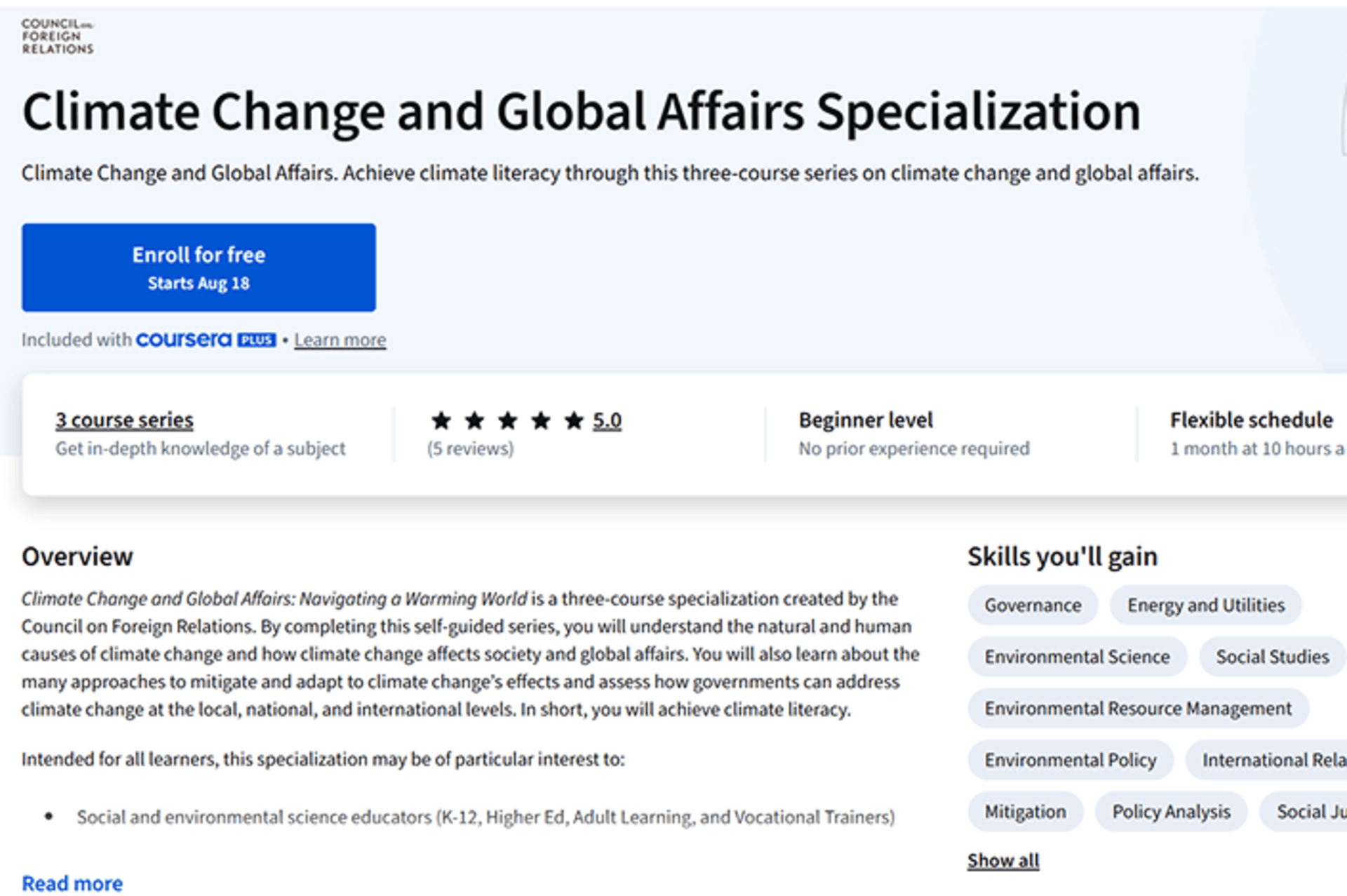
Last, CFR Education expanded learners’ access to global affairs content through partnerships with Coursera and ASU. In advance of Earth Day, a cobranded three-course specialization titled Climate Change and Global Affairs: Navigating a Warming World was launched on Coursera. Learners who complete that specialization earn a certificate in climate literacy from CFR. CFR Education also worked with ASU faculty to develop IR194: Introduction to Global Affairs on ASU’s Universal Learners Course platform. Students who complete that course receive a three-hour course credit from ASU, transferable to a range of higher education institutions across the country.
Membership
Since its founding in 1921, the Council on Foreign Relations has grown a membership of more than five thousand prominent leaders in the foreign policy arena, including top government officials, scholars, business executives, journalists, lawyers, and nonprofit professionals. The membership is composed of those residing in the greater New York and Washington, DC, areas and a plurality based around the United States and abroad.
CFR members enjoy unparalleled access to a nonpartisan forum in which they engage with and gain insight from experts in international affairs. Members have in-person access to world leaders, senior government officials, members of Congress, and prominent thinkers and practitioners in academia, policy, and business, many of whom are members themselves. Convening nearly one thousand events annually, CFR is dedicated to facilitating an intellectual exchange of ideas through expert panel discussions, symposia, town halls, livestreams, and CEO forums exclusively for members. Through exposure to CFR’s think tank, publications, briefing materials, and special content on CFR.org and ForeignAffairs.com, members benefit from an expansive collection of unmatched intellectual capital and resources.
The Council seeks quality, diversity, and balance in its membership. Criteria for membership include intellectual achievement and expertise; degree of experience, interest, and current involvement in international affairs; promise of future achievement and service in foreign relations; potential contributions to CFR’s work; desire and ability to participate in CFR activities; and standing among peers. New members are elected twice a year by the Board of Directors.
Applying for Membership
Eligibility Requirements
- Membership is restricted to U.S. citizens (native-born or naturalized) and permanent residents who have applied to become citizens.
- CFR visiting fellows are prohibited from applying for membership until they have completed their fellowship tenure.
- CFR members are required to fulfill annual dues requirements.
Candidates must submit an online application, complete with a nominating letter from a current CFR member and seconding letters from three to four other individuals.
To apply for membership, visit cfr.org/membership/individual-membership.
Membership Deadlines and Candidate Notification
The two annual membership application deadlines are March 1 and November 1. All membership candidates and their letter writers will receive notification of the election decisions in late June for the March 1 deadline, and in early March for the November 1 deadline.
For More Information
To learn more about the membership application process or for information on nominating a candidate, please visit cfr.org/membership/individual-membership or contact Membership at 212.434.9456 or [email protected].
Stephen M. Kellen Term Member Program
The Stephen M. Kellen Term Member Program, established in 1970 to cultivate the next generation of foreign policy leaders, encourages professionals from diverse backgrounds to engage in a sustained conversation on international affairs and U.S. foreign policy. Each year, a new class of term members between the ages of thirty and thirty-six is elected to serve a fixed five-year term. Term members enjoy a full range of activities, including events with high-profile speakers; an annual Term Member Conference; roundtables; trips to various sites, including military bases, international organizations, and U.S. governmental agencies; and one weeklong study trip abroad every couple of years.
For more information on the Term Member Program, please visit cfr.org/membership/term-member-program.
Applying for Term Membership
Eligibility Requirements
- Term membership is restricted to U.S. citizens (native-born or naturalized) and permanent residents who have applied to become citizens.
- Candidates for term membership must be between the ages of thirty and thirty-six on January 1 of the year in which they apply.
- CFR visiting fellows are prohibited from applying for term membership until they have completed their fellowship tenure.
- Graduate students should generally wait until after the completion of their degree to apply for term membership.
- CFR term members are required to fulfill annual dues requirements.
Term membership candidates must submit an online application, complete with a nominating letter from a current CFR member and seconding letters from two to three other individuals.
To apply for term membership, visit cfr.org/membership/individual-membership.
Term Membership Deadline and Candidate Notification
The annual application deadline for term membership is January 10. All term membership candidates and their letter writers will receive notification of the election decisions in late June.
Profile of the Membership
Between July 2024 and June 2025, CFR membership increased by 1 percent, from 5,337 to 5,397 members. Member records are maintained by CFR at 58 East 68th Street, New York, NY 10065.
Explore the Report
The Council continues to fulfill the mission that has guided it for over a century: informing and shaping the U.S. role in the world through the strength of its research and publications, its membership and community, and its convening power.