The Nuclear Nonproliferation Treaty
What is the NPT and how has the treaty influenced the spread of nuclear weapons?
By experts and staff
- Updated
What is the Nuclear Nonproliferation Treaty?
The Treaty on the Nonproliferation of Nuclear Weapons, known commonly as the , is a landmark international treaty and the foundation of international nuclear nonproliferation policy. Nuclear nonproliferation refers to the tools and policies used to diminish or eliminate the spread of nuclear weapons. The NPT’s goals are to
- prevent nonnuclear countries from getting nuclear weapons,
- support peaceful nuclear energy use, and
- lead to eventual nuclear in countries that already possess nuclear weapons.
What led to the creation of the NPT?
The United States was the first, and is so far the only, country to use weapons. In the final days of World War II, it dropped two bombs on the Japanese cities Hiroshima and Nagasaki, destroying them and killing more than one hundred thousand people in minutes. The bombs also had devastating, multigenerational effects on those who survived due to the high levels of radiation. Survivors of the blast and children of pregnant survivors faced increased rates of cancer in ensuing years. Less than six months after the bombs dropped, in 1946, the UN General Assembly called for the total elimination [PDF] of nuclear weapons.
Yet over the next twenty years, as UN representatives deliberated over how to prevent the proliferation, or spread, of nuclear weapons, four more countries obtained nuclear weapons: China, France, the , and the United Kingdom.
By August 1967, after many negotiations, the United States and the Soviet Union submitted a draft of a nonproliferation treaty to a UN committee focused on disarmament. The was in full swing, and all eyes were on the two countries; together, they held most of the world’s nuclear weapons and viewed each other as an existential threat. Over the next several months, the draft was revised to reflect nonnuclear countries’ concerns, such as eventual elimination of nuclear weapons. The General Assembly then opened the treaty for signature in July 1968.
Which countries joined the NPT (and which countries didn’t)?
When the NPT opened for signature, 59 countries signed it; the treaty now has 190 parties. Yet despite that nearly universal agreement, nine countries currently have nuclear weapons.
When those first fifty-nine countries signed, only five countries were recognized as “nuclear-weapon states.” Today, however, four more countries—which are not party to the NPT—possess or are believed to possess nuclear weapons: India, Israel, North Korea, and Pakistan. (Though the first three never joined the treaty, North Korea joined the NPT in 1985 but withdrew in 2003.) Numerous other countries have nuclear material that they could weaponize if they obtain certain tools and facilities and decide to engineer a bomb.
Is the NPT a success?
Most experts agree that the NPT has slowed the spread of nuclear weapons, but the treaty’s goal of disarmament has yet to be met. Some experts say the NPT has helped to create a , or acceptable rule of behavior, by putting the goal of nonproliferation in writing for international audiences. But others say the NPT is not as influential as it’s believed to be.
Here is how the NPT measures up to its goals:
Preventing the spread of nuclear weapons
Although the number of nuclear weapons in the world has shrunk since its peak in the 1980s, nine countries still possess them today. Also, the NPT does not address the possibility of nuclear weapons falling into the hands of groups.
Supporting peaceful nuclear energy use
The NPT encourages using nuclear materials peacefully, such as for energy and medical purposes. As a safeguard against countries diverting peaceful nuclear technology to develop weapons, each party of the NPT (and, voluntarily, India, Israel, and Pakistan) has agreed to monitoring by the International Atomic Energy Agency, the UN agency tasked with verifying peaceful nuclear use worldwide. To verify the purpose of their countries’ nuclear materials, 144 nations have agreed to additional, more intrusive measures. Those protocols allow the International Atomic Energy Agency to make surprise inspections at nuclear facilities to ensure those sites are not being used to build weapons. But not everyone has agreed to those rules.
Achieving nuclear disarmament
Several countries, such as Argentina and Brazil, considered launching nuclear programs and eventually decided against it. South Africa created a nuclear stockpile and then destroyed it. After the Soviet Union broke apart, the newly independent countries of Belarus, Kazakhstan, and Ukraine negotiated and ultimately transferred the weapons stationed in their territory to Russia.
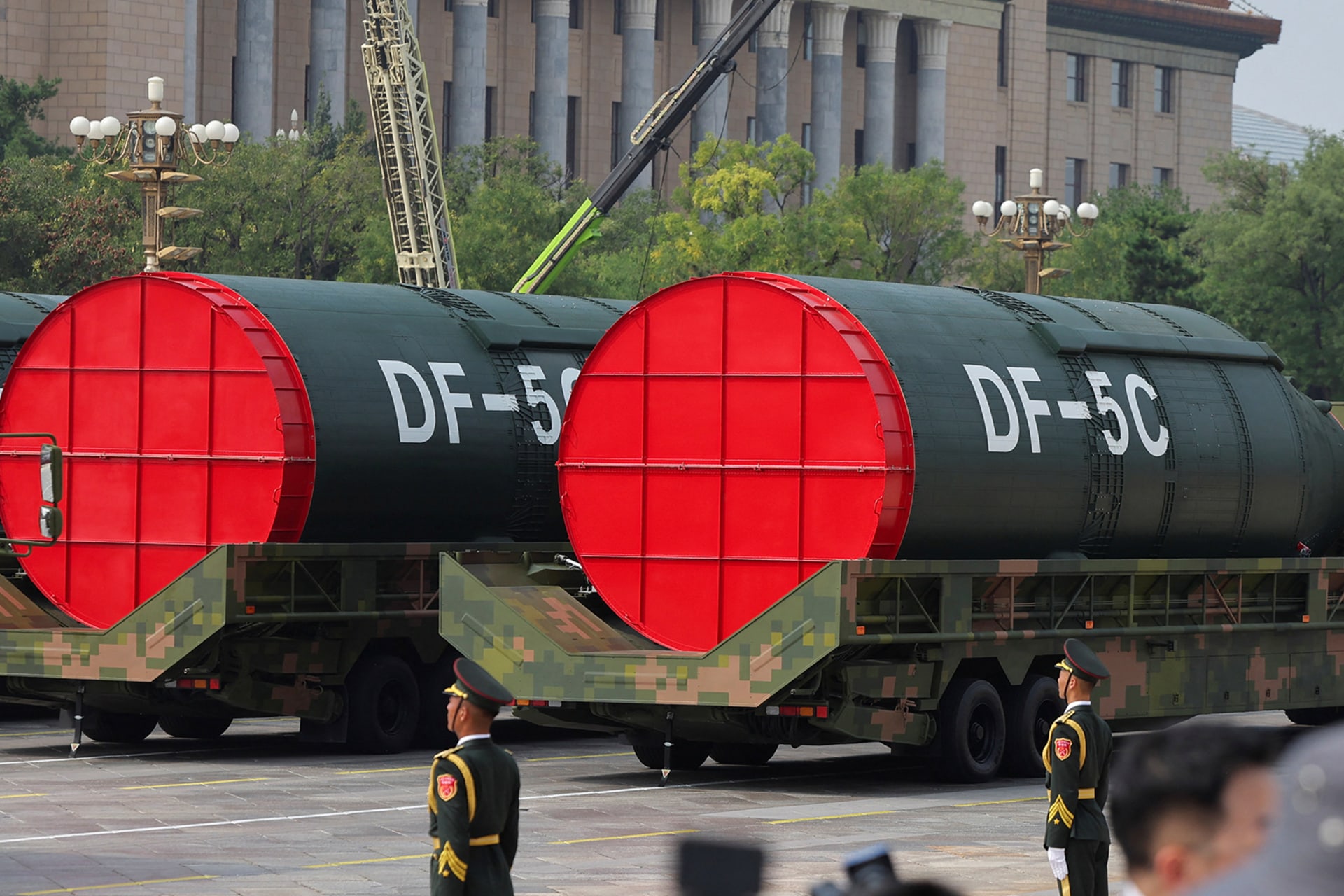
Still, full disarmament remains a distant possibility. The five countries that had nuclear weapons when the NPT went into effect—the United States, China, France, Russia, and the United Kingdom—still maintain sizable nuclear arsenals. Many countries without nuclear weapons argue that those countries have not met their commitments under the NPT to “pursue negotiations in good faith” and disarm. And some countries have pursued nuclear weapons despite the NPT. Libya maintained a secret nuclear weapons program for decades but dismantled it in 2003 under intense international pressure. By contrast, North Korea withdrew from the NPT that same year and conducted its first successful test of a nuclear weapon three years later. And Iran pursued a covert uranium enrichment program for years despite ongoing diplomatic pressure, , and military strikes.
Beyond the NPT
One way to prevent proliferation is to establish security guarantees, or pledges from a nuclear-armed country to protect nonnuclear armed allies in the event of an attack. Several countries, especially allies of the United States, have signed separate defense agreements to receive protection from nuclear weapons in the absence of their own. The United States has offered its nuclear “umbrella” to Japan, South Korea, and members of NATO.
Additional agreements and trade restrictions reinforce the NPT’s nonproliferation ambitions. Australia, for example, has agreements with twenty-five countries to guarantee that any uranium it sells to them is used only for peaceful purposes and is not transferred to third parties.
The future of the NPT
Countries that are party to the NPT are continuously working to improve it: every five years, they meet to discuss how to achieve the treaty’s goals of nonproliferation and eventual disarmament, a practice that gives this foundational agreement room to grow.
Used in

Pros and Cons of Cyberweapons Activity
Activities