The Origins of the Internet
The internet evolved from a niche government tool to a nearly universal platform for communications and entertainment.

By experts and staff
- Updated
The internet is central to our daily lives. It is a place to access a free flow of information and communicate with people all over the world instantly. But this wasn’t always the case.
Now a global, decentralized means of connection, the internet began as a secure, closed information-sharing network. Its use was confined to members of the U.S. Department of Defense and faculty at research institutions.
1962 - 1982: Military and Security
During the , the United States worried about an attack on its communication networks. Washington was primarily concerned with protecting phone lines, which were exposed and vulnerable. To address those concerns, the Department of Defense and the Massachusetts Institute of Technology (MIT) began to develop a closed computer network. This network, called Arpanet, was decentralized and safe from attack. But as the network expanded, to more places with more users, it became more difficult to maintain security.
1962Idea for an “Intergalactic Computer Network”

J.C.R. Licklider of the Defense Advanced Research Projects Agency (DARPA) and MIT first described what would become Arpanet, and eventually the internet, as an Intergalactic Computer Network. In a series of memos, Licklider conceived of a “globally interconnected set of computers through which everyone could quickly access data and programs from any site.” These memos were, in part, a response to American scientists’ fears of a Soviet attack on the nation’s telephone system.
1969Creation of Arpanet

Thanks in large part to research by Thomas Merrill and Lawrence Roberts, who created the first computer network using telephone lines, Arpanet came online. It delivered its first message from a computer at the University of California, Los Angeles, to another at the Stanford Research Institute. The system crashed after only the first two letters of the message, “login,” had been transmitted. By the end of the year, four computers were connected to Arpanet.
1973First International Connection

Arpanet made its first international connection across the Atlantic Ocean when University College London and Norway’s Royal Radar Establishment joined. As these computer networks grew together, so did the challenge of integrating them into a single, worldwide internet. At this point, Arpanet remained a secretive Defense Department project. The computer network was virtually unknown to the public.
1975Department of Defense Takes Control
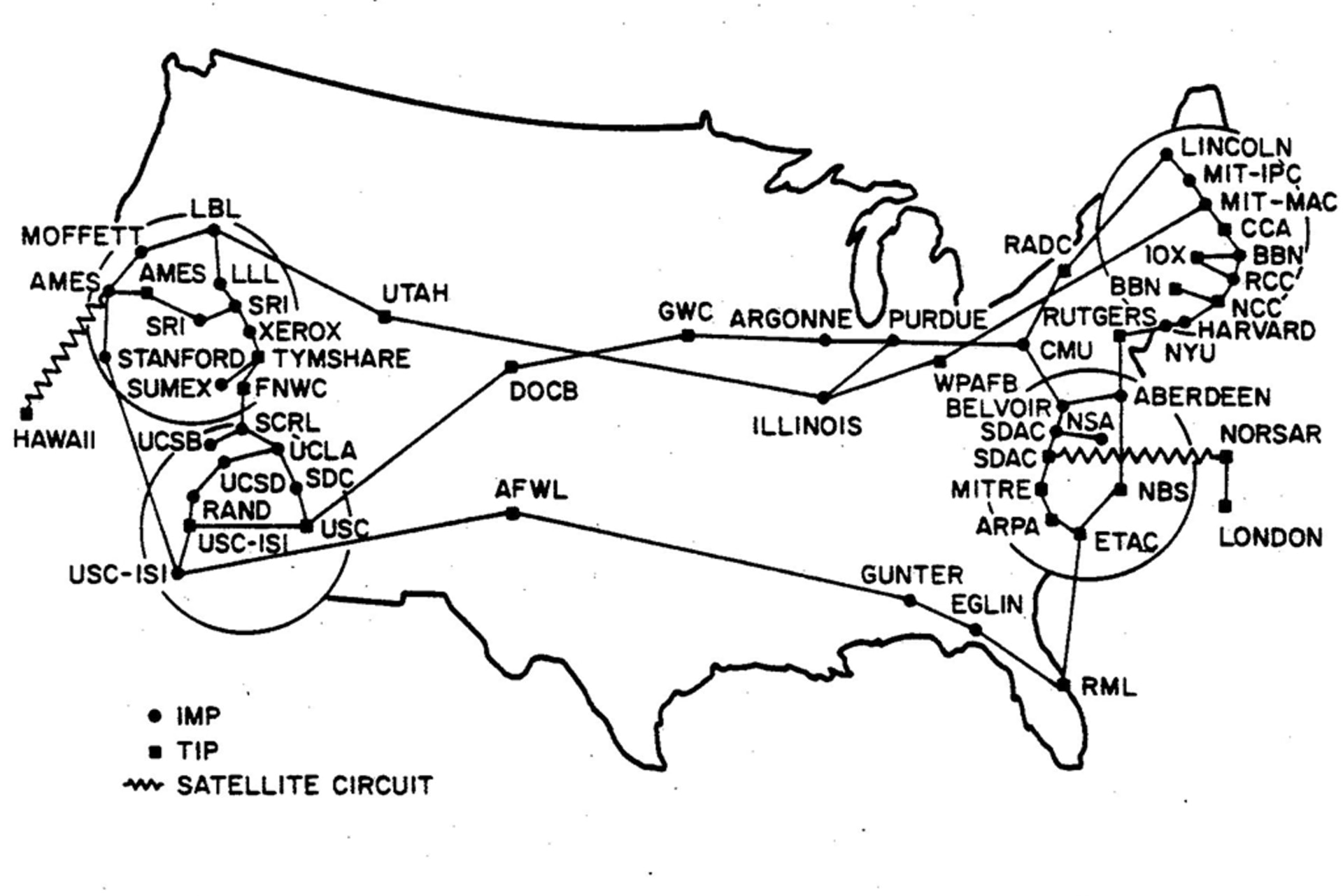
The Defense Department’s Defense Communication Agency took over control of Arpanet, which had reached fifty-seven network computers and was growing. As the network grew, it became increasingly difficult to figure out who was using it and who was doing what. As a result,the U.S. government’s initial security concerns resurfaced.
1983 - 1991: From Arpanet to the Internet
As the network grew, the Department of Defense began to find it difficult to know who was using the network; this gave rise to serious concerns over security. Therefore, in the early 1980s, researchers and the private sector took over much of the development and expansion of the Arpanet. Ultimately, Arpanet transformed into the internet we use today. During this period of innovation, developers, and inventors typically released their technology to the public domain.
1983Defense Department Closed Off From Arpanet
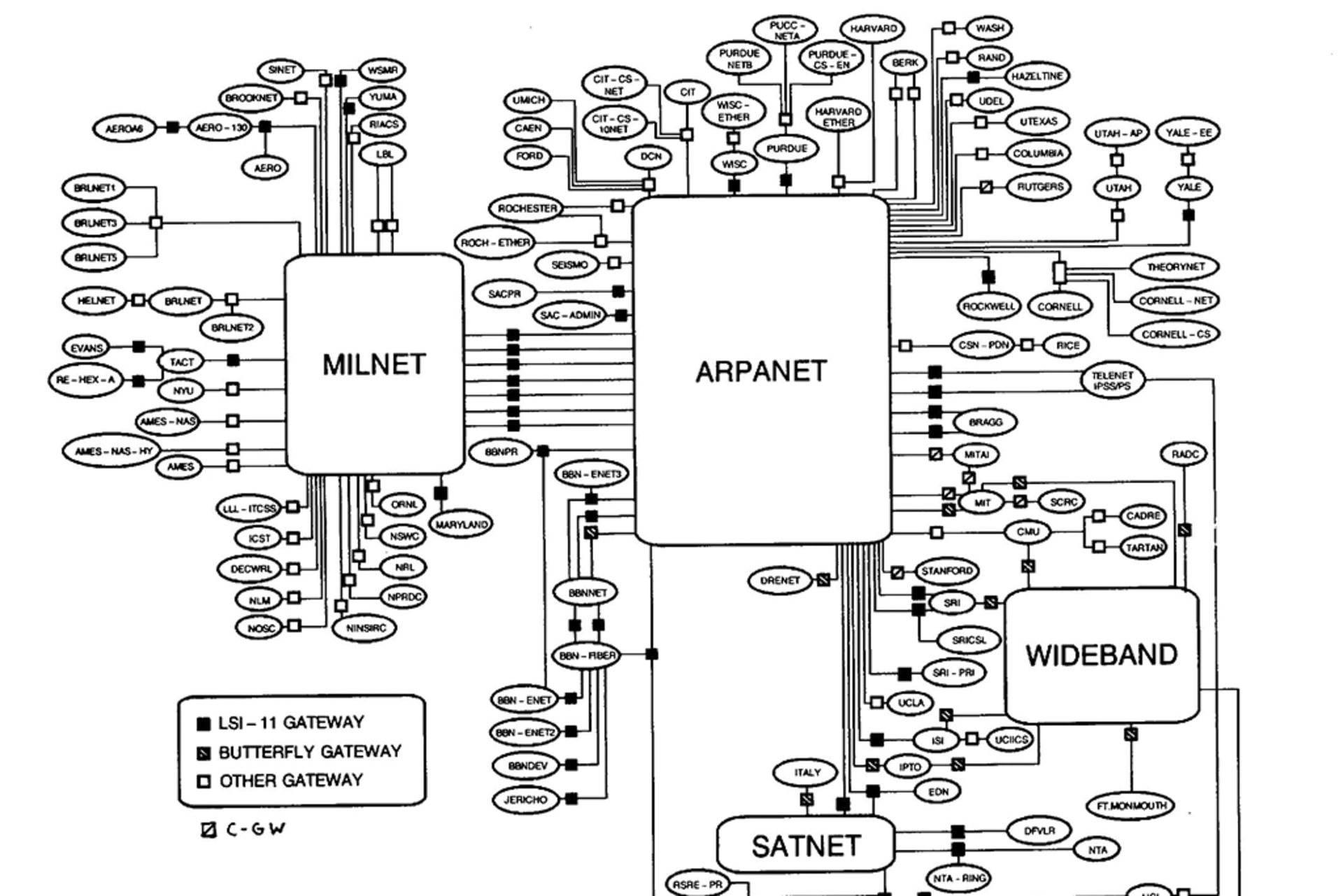
The Defense Department closed off its computers from the Arpanet. Washington cited the need for heightened security due to the “sensitive nature of military systems and the increasing sophistication of civilian computer experts and illegal system trespassers, often called ‘hackers.’” This resulted in the formation of the department’s own military network.
1986Creation of Internet Engineering Task Force

A community of network designers, operators, vendors, and researchers came together in San Diego, California, for the first Internet Engineering Task Force (IETF). The initial purpose of this organization was to establish and guide internet architecture and standards.
1988First Major Cyberattack
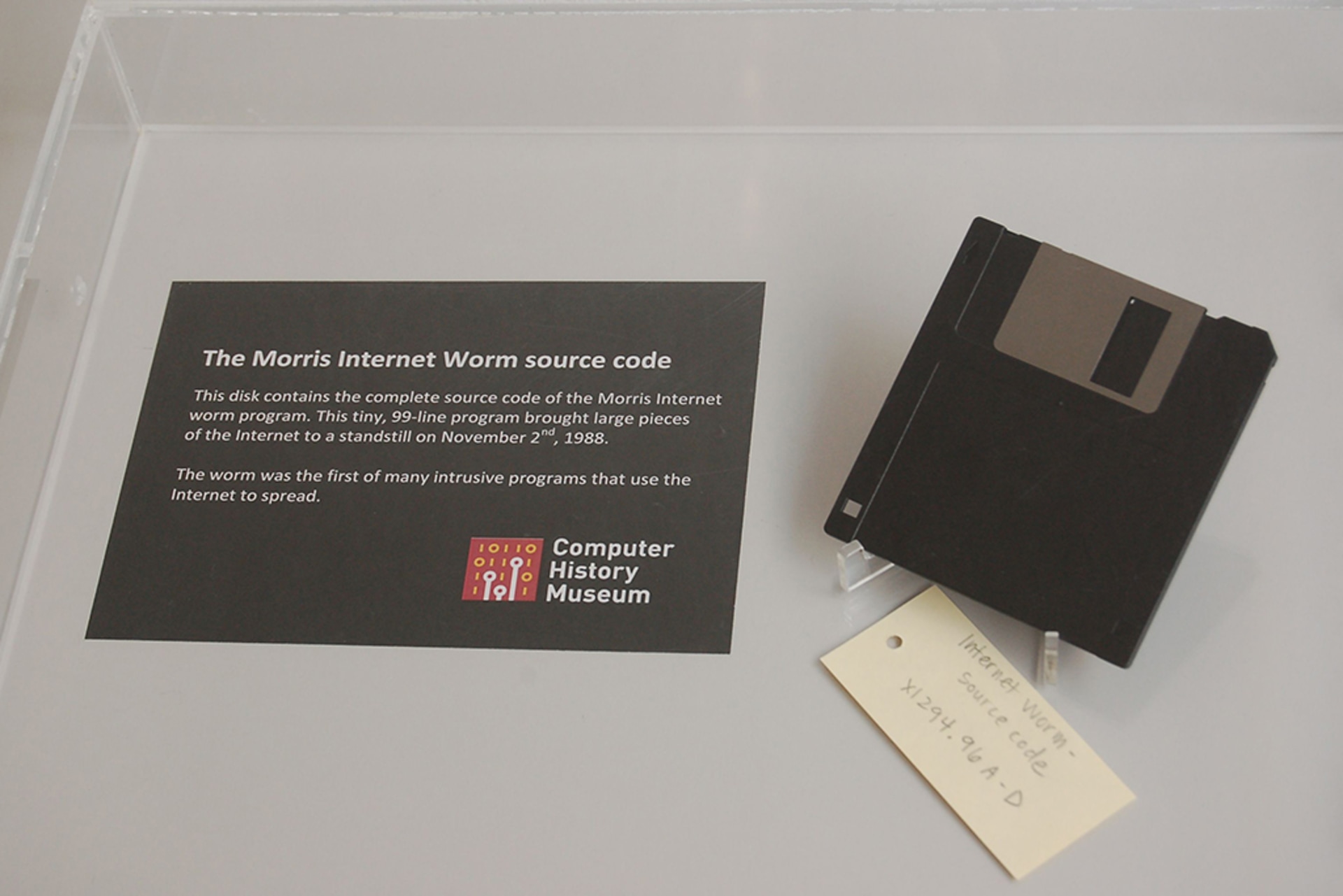
Robert Tappan Morris unleashed the first malicious internet-based attack known as the . Morris described the hack as an attempt to see how many computers were hooked up to the nascent network. Six thousand internet-connected computers—about 10 percent of all network users at the time—were affected. The Morris worm sparked an irreversible conversation on cybersecurity; Morris was one of the first people convicted under an anti-hacking statute. As punishment, he received a three-year probation, 400 hours of community service, and a $10,050 fine.
1990Arpanet Ceases to Exist

One year after released the first commercial dial-up service provider, Arpanet was decommissioned. Taking a step toward a worldwide internet, the military handed over administration to the National Science Foundation Network (NSFNET) to promote the development of this research and higher education network.
1991Invention of the World Wide Web

An English computer programmer named Tim Berners-Lee, at the European Organization for Nuclear Research (CERN), introduced the World Wide Web. It allowed the internet to be a web of information rather than simply a network to send and receive files. To achieve this, he developed the technology behind hypertext markup language (HTML), uniform resource identifier/universal resource locator (URI or URL), and hypertext transfer protocol (HTTP). All of these innovations exist in the current internet structure today. Berners-Lee turned over the technology to the public domain in 1993.
1992 - 1998: Commercialization and Public Use of the Internet
After the introduction of the World Wide Web by Tim Berners-Lee, the internet was ready for world-wide civilian consumption. As a result, the U.S. government further privatized its management to keep up with demand. However, lack of regulation gave rise to (ISP) monopolies, a legacy that consumers in the United States deal with today.
1991High Performance Computing Act of 1991

Introduced by then Senator Al Gore (D-TN), the High Performance Computing Act (HPCA) was passed by Congress in December. The bill allocated $600 million for high-performance computing. HPCA also created the National Research and Educational Network, and led to the creation of breakthrough internet technologies. These groundbreaking innovations include high-speed fiber optic computer networks that drastically improved internet usability.
1992First User-Friendly Web Browser
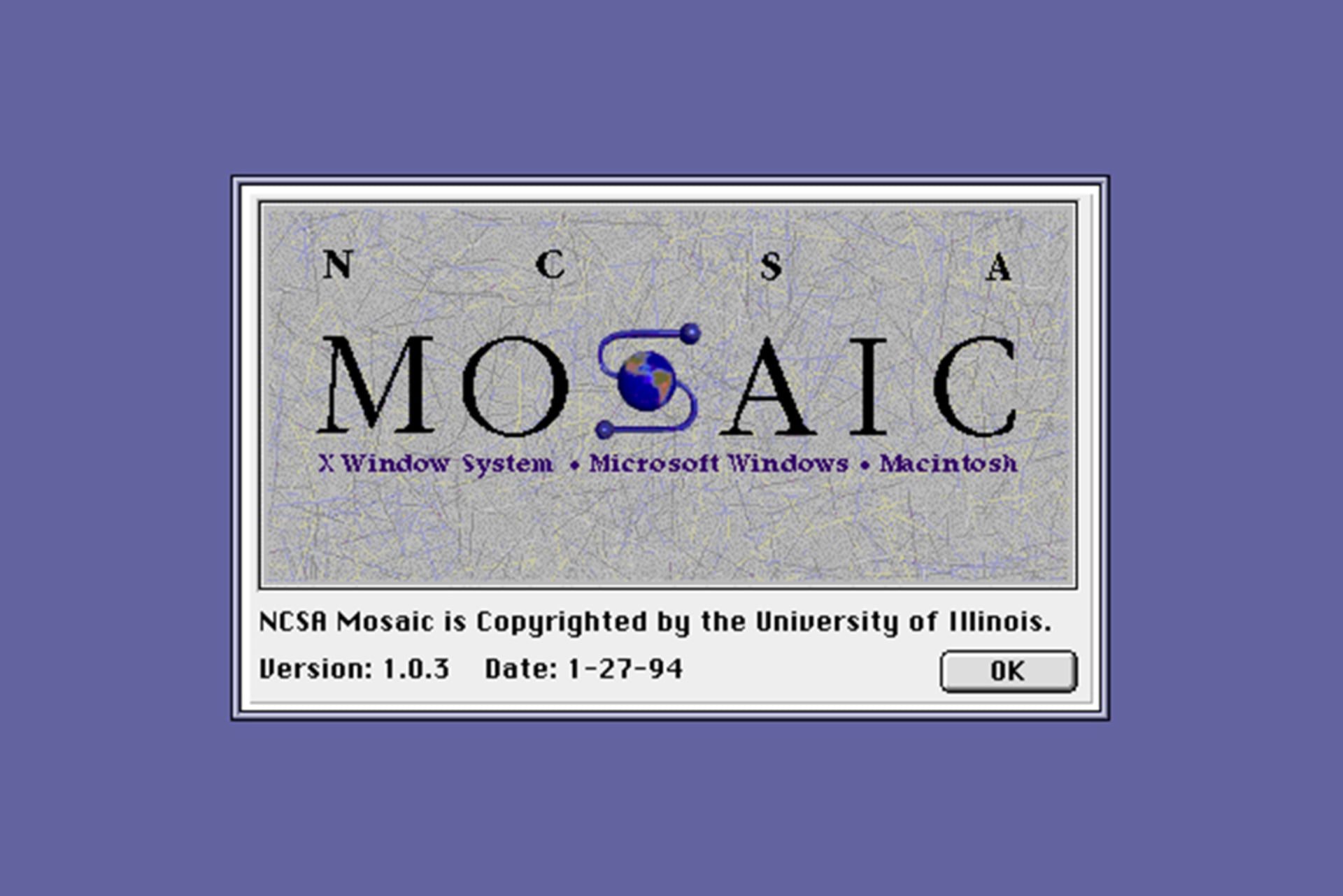
Funded in part by the HPCA, researchers at the University of Illinois developed the first user-friendly web browser called Mosaic (later renamed ). This browser allowed the user to view words and pictures on the same page, with scroll bars and clickable links. Before the invention of this browser, any multimedia would appear in a new window. This year, the number of computers connected to the internet surpassed one million.
1995Private Sector Takes Over Internet

When it became clear that the internet had much more use beyond the sharing of research, NSFNET was dissolved, fully privatizing the internet. At this point, the Bill Clinton administration turned over management of the internet’s growing backbone to the private sector. Commercialization of the internet also began in earnest, as (SSL) enabled online financial transactions. In September, eBay was founded.
1996Telecommunications Act of 1996

Congress passed the Telecommunications Act, which led to significant deregulation of internet service providers (ISPs). This legacy has led in part to ISP monopolies in certain areas of the United States. According to one report, in 2020, at least eighty-three million Americans had only one company to subscribe to for broadband internet service.
1998Launch of Internet Corporation for Assigned Names and Numbers

To keep up with the growing number of internet addresses on different domains such as .com, .net, and .org, due to the dot-com boom, the U.S. government privatized the (DNS). A non-profit organization called the Internet Corporation for Assigned Names and Numbers (ICANN) was formed to take over the responsibility to “administer policy for the Internet name and address system” from the University of Southern California’s Internet Assigned Numbers Authority. Along with other developments, the formation of ICANN marked an important transition from the internet’s military and higher education origins.