North Korea’s Foreign Policy: The Kim Jong-un Regime in a Hostile World
In North Korea’s Foreign Policy: The Kim Jong-un Regime in a Hostile World, CFR’s Scott A. Snyder and University of British Columbia’s Kyung-Ae Park offer a robust examination of North Korean foreign policy under Kim Jong-un, including its domestic drivers, summitry diplomacy, and nuclear program.
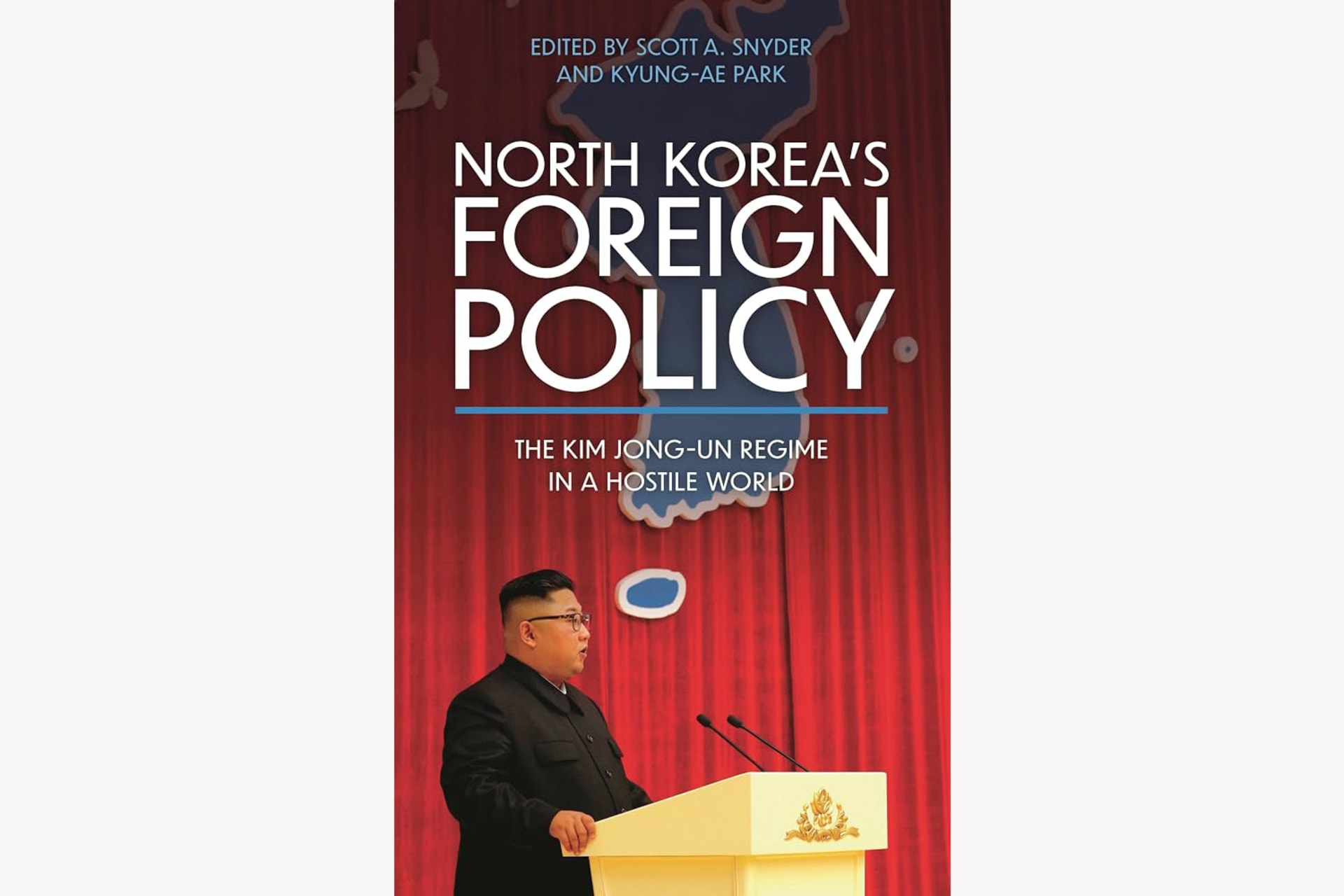
SUMMARY
Since Kim Jong-un’s assumption of power in December 2011, North Korea has undergone expanded nuclear development, political isolation, and economic stagnation. Kim’s early prioritization of simultaneous economic and military development, known as the byungjin policy, highlighted his goal of transforming North Korea’s domestic economic circumstances and strengthening its position in the world as a nuclear state. The central dilemma shaping Kim Jong-un’s foreign policy throughout his first decade in power revolves around ensuring North Korea’s prosperity and security while sustaining the political isolation and control necessary for regime survival.
To evaluate North Korea’s foreign policy under Kim, North Korea’s Foreign Policy: The Kim Jong-un Regime in a Hostile World examines the impact of domestic factors that have influenced the formation and implementation of Kim’s foreign policy, Kim’s distinctive use of summitry and effectiveness of such meetings as an instrument by which to attain foreign policy goals, and the impact of international responses to North Korea’s pursuit of nuclear capabilities on North Korea’s foreign policy.
This book is suitable for the following disciplines in undergraduate and graduate courses:
- International Relations
- East Asian Studies and History
- Contemporary East Asian Foreign Relations
- Asian Security
DISCUSSION QUESTIONS
For undergraduate and graduate courses on International Relations:
- What is the impact of North Korea’s development of nuclear weapons on its global stature and image?
- How do states use summitry as a tool of diplomacy?
- How have international sanctions influenced the goals and methods of North Korea’s foreign policy?
- What are some lessons that can be drawn from UN responses to North Korean nuclear and missile development?
For undergraduate and graduate courses on East Asian Studies and History:
- How does the byungjin policy fit into the history of North Korean politics?
- How has North Korean engagement with other states both in East Asia and with the international community evolved throughout the past decades?
- Historically, what have been factors shaping North Korea’s bilateral relations with China and Russia?
- What are the predominant patterns that have characterized North Korea’s foreign policy?
For undergraduate and graduate courses on Contemporary East Asian Foreign Relations:
- What lessons can be drawn from North Korea’s recent summit diplomacy with South Korea, the United States, China, and Russia?
- Given North Korea’s nuclear and economic strategies, what can we project about diplomacy and deterrence in East Asia?
- What are some lessons that the leaders of East Asian countries and the United States can learn by studying North Korea’s history of nuclear development and diplomacy?
- What are the implications of the intensifying U.S.-China strategic competition on regional dynamics in East Asia and North Korea’s foreign relations?
For undergraduate and graduate courses on Asian Security:
- How do North Korea’s nuclear and missile programs exacerbate the security dilemma facing U.S. allies in the region?
- What is the future of the U.S. nuclear umbrella and extended deterrence in East Asia given North Korea’s advancing capabilities?
- What role do North Korean cyber activities play in regional security dynamics and response options by the United States and UN?
- What can be expected of the alliance dynamics in East Asia in light of advancements in North Korean nuclear and missile capabilities and trilateral U.S.-South Korea-Japan responses?
ESSAY QUESTIONS
- How did Kim Jong-un consolidate his power between 2012 and2017? Compared to his predecessors, what are the different economic and military approaches Kim adopted and why?
- What led Kim to initiate summits with different leaders in 2018 and 2019? What was his objective, and what lessons were learned from the summitry?
- What are some of the tools and channels North Korea has used to engage with the international community? Which have generated the greatest benefits for North Korea?
Related Articles


Cold War Containment Discussion Activity
Activities
