Skip to content

Join CFR Education for a live walkthrough of the updated website – Sign up here.

Education

Boko Haram in Nigeria in 2017 (NSC) — Student

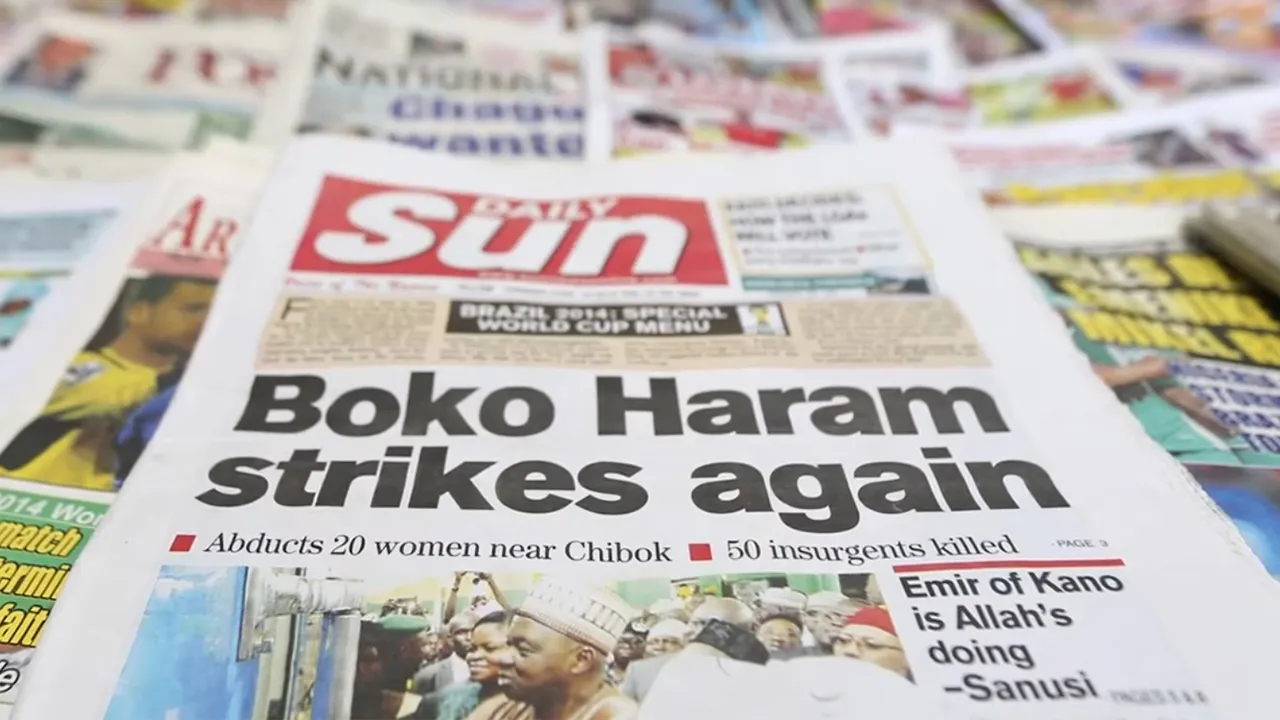
Set in February 2017. A Boko Haram attack threatens the stability of Nigeria, as the country seeks U.S. aid.

Level
High School, Higher Education

What is a simulation?

Simulations offer students the chance to role-play either the U.S. National Security Council or the UN Security Council.

How do I use them?

A simulation comprises two readings (a council guide and the case notes) of roughly 2,500 words each. They also offer detailed guidance for preparing for and running the simulation in the classroom and reflecting on the experience.

Case Overview

Set in February, 2017. Radical Islamist movement is waging an in northeast Nigeria estimated to have killed at least twenty thousand people in recent years. The insurgency threatens the stability of Nigeria, a major oil producer and Africa’s most populous country. Nigerian security forces have made some progress against Boko Haram, but humanitarian and media organizations have reported extensive human rights abuses by these forces, including the killing of civilians. Nigeria’s president has requested that the United States sell heavy military equipment to the country. However, a U.S. law, called the , prohibits military assistance to foreign militaries credibly accused of human rights abuses unless the foreign government takes action—something Nigeria’s government has yet to do. National Security Council (NSC) members need to advise the president on whether to authorize the sale despite legal and human rights concerns.

NSC Guide

Overview

The United States plays a critical role in establishing and maintaining international order. This is particularly true in an increasingly globalized world. The range of foreign policy issues that require its attention is vast. The United States must consider foreign policy issues from conflicts in Afghanistan, Nigeria, and Syria to tensions with Iran and North Korea; from long-standing alliances to complex, evolving relationships with Brazil, China, India, Russia, and South Africa. Issues on the agenda range from the stability of global finance to the promotion of economic opportunity in low-income countries; and from climate to health to nuclear proliferation to terrorism. The United States has a vested interest in myriad world affairs. Further, issues such as immigration, trade, cybersecurity, climate change, and global health underscore the fading distinction between domestic and international matters.

Interagency Process

Regardless of the scale of the problem, a successful foreign policy–making process starts by defining interests and goals. Policymakers and their advisors then formulate policy options to meet those goals and consider each option’s strengths and weaknesses. This process is challenging. In the best of times information can be unreliable or incomplete or an adversary’s intentions can be unclear. Often a decision’s consequences can be unknowable. Leaders frequently have to choose from a list on which every option is imperfect. Adding to this uncertainty is the complexity of the U.S. government’s foreign policy machinery. Numerous agencies—each with its own interests and biases—seek to influence how policy is decided and carried out. It takes considerable effort to run a process capable of producing sound policy decisions.

The National Security Council (NSC) plays a critical role in this effort. Its mission is to help the president effectively use a variety of instruments—military, diplomatic, or otherwise—to forge policies that advance U.S. national security goals.

The NSC was created by the National Security Act of 1947. This act defined the NSC as an interagency body intended to “advise the president with respect to the integration of domestic, foreign, and military policies relating to the national security.” The period after World War II was an age of expanded American interests and responsibilities. The NSC was expected to provide a place where the heads of federal departments and agencies could cooperate to develop recommendations for policies that would advance U.S. aims. The NSC and its staff were also meant to manage the policymaking process. This ensured that the president would receive a full range of advice and opinion from the departments and agencies involved in national security.

The NSC has evolved significantly over the years. The NSC has adapted to the preferences of successive presidents and the challenges they faced. Variables such as the attendees, the frequency of meetings, the manner in which information is passed to the president, the importance of consensus, and the relative dominance of the NSC over other government institutions have changed over the decades.

The NSC has evolved to comprise various interagency committees and a large staff to prepare analysis and coordinate policymaking and implementation. The NSC is at the center of the interagency process. This process is one through which relevant government agencies address foreign policy issues and help the president make and execute policy choices.

I. National Security Advisor

The national security advisor (formally assistant to the president for national security affairs) is at the heart of the NSC structure. The national security advisor’s role is twofold: to offer advice to the president and to coordinate and manage policymaking. Because they have direct access to the president and do not represent a cabinet department, national security advisors are in a unique position. From this neutral perch they drive foreign policy decisions, manage the actors involved, and mitigate conflict throughout the decision-making process.

II. National Security Council Staff

The NSC staff consists of individuals from a collection of agencies that support the president, the vice president, and the administration. NSC staff members are generally organized into directorates that focus on regions or issues. The size and organization of the staff vary with each administration.

The NSC staff provides expertise for the variety of national security policy matters under consideration. It manages numerous responsibilities, including preparing speeches, memos, and discussion papers and handling inquiries from Congress on foreign policy issues. Staff members analyze both immediate and long-standing issues and help prioritize  the agenda.

III. Committee Structure

Committees are at the core of policy deliberation and policymaking in the NSC. They fall into four categories:

  • The highest level is the National Security Council itself. Formal NSC meetings are chaired by the president and include individuals named by the National Security Act of 1947 as well as other senior aides the president invites.
  • The Principals Committee (PC) comprises cabinet-level officials who head major government departments concerned with national security, such as the secretaries of state and defense. The national security advisor traditionally chairs the Principals Committee.
  • The Deputies Committee (DC) includes the deputy leaders of the government departments represented on the principals committee and is chaired by the deputy national security advisor.
  • Interagency Policy Committees (IPCs) cover a range of regional areas and issues. Each committee includes officials who specialize in the relevant area or issue at one of the departments or agencies in the interagency system. IPCs are generally chaired by senior directors on the NSC staff. Much of the day-to-day work needed to formulate and implement foreign policy across the U.S. government happens at the IPC level.

This committee structure tackles both immediate crises such as an outbreak of conflict and enduring issues such as climate change. IPCs conduct analysis on an issue, gather views on it and its importance from various departments, formulate and evaluate policy options, and determine what resources and steps would be required to carry out those options. The Deputies Committee manages the interagency process up and down. It decides what IPCs to establish. and gives them specific assignments. It also considers information submitted by the IPCs before relaying it to the Principals Committee or the full NSC.

The Principals Committee is the highest-level setting, aside from the NSC itself, for debating national security issues. It consists of the heads of the NSC’s component agencies. The Principals Committee is essentially all the members of the NSC except the president and vice president. Formal NSC meetings, which the president chairs, occur whenever the president sees fit. They consider issues that require the president’s personal attention and a direct presidential decision.

The goal of this committee structure is to foster consensus on policy options or highlight where and why consensus cannot be reached. If officials at one level agree on an issue, it does not need to go to senior officials for a decision. This practice reserves the president’s time and that of members of the Principals Committee for the most complicated and sensitive debates.

When a crisis erupts issues sometimes do not follow the usual path up from the IPCs. In these cases, NSC staff members and officials in government departments and agencies generally draft papers drawing on their expertise, available intelligence, and any existing contingency plans. Policy options are then debated and decided at the appropriate level. The policymaking process can also deviate from this model based on the preferences of each president.

For the purposes of this NSC simulation, you will role-play the NSC meeting with the assumption that the committees described have already done their jobs. Any critical information has already been passed to the highest-level decision-makers.

Presidential Decisions

When the president makes a policy decision, it can take the form of a verbal instruction recorded and shared with relevant departments and agencies. The president can also issue formal decisions in documents that lay out the administration’s policy and explain its rationale and goals. These documents have gone by different names under different presidents. President Joe Biden issues national security memoranda and national security study memoranda. President Donald Trump issued national security presidential memoranda.

The president can also issue an executive order (EO). EOs are a more formal and public declaration of policy. In contrast, national security directives are generally directed internally to federal departments and are often classified. In the past, presidents have issued EOs for such purposes as facilitating sanctions against foreign individuals and establishing new offices in government departments to carry out foreign policy aims. For federal agencies, both national security directives and executive orders carry the full force of law.

Departments and Agencies

Although many executive branch departments and agencies are involved in foreign policy, the Department of State, the Department of Defense, and the intelligence community form the core of the foreign policy bureaucracy. The Department of the Treasury, the Department of Homeland Security, and the Department of Justice often play crucial roles as well.

The Department of State conducts the United States’ relations with other countries and international organizations. It maintains U.S. diplomatic presence abroad. The Department of State also issues visas for foreigners to enter the country, aids U.S. citizens overseas, and manages other programs to promote American interests. The secretary of state is the president’s principal foreign affairs advisor and has a keen understanding of the United States’ international relations. They are also well informed on the relationships between foreign countries, and the behavior and interests of their governments.

The Department of Defense carries out U.S. defense policy and maintains U.S. military forces. It includes the U.S. ArmyNavyMarine Corps, and Air Force, as well as an array of agencies related to defense. The department employs more than two million military and civilian personnel and operates military bases around the world. The secretary of defense is the head of the department and the president’s principal defense policy advisor. They also stay up-to-date on the security situation in foreign countries and the possibilities and implications of U.S. military involvement. The chairman of the joint chiefs of staff is the highest-ranking member of the U.S. armed forces and the president’s top military advisor.

The U.S. intelligence community consists of eighteen agencies and organizations, including the Central Intelligence Agency (CIA), National Security Agency (NSA), and Federal Bureau of Investigation (FBI), which gather and analyze intelligence. Each of these agencies has its own mission; for example, the NSA focuses on signals intelligence (information gathered from communications and other electronic signals) and the Defense Intelligence Agency on military information. The director of national intelligence is the president’s principal advisor on intelligence issues. They oversee this network of agencies with the aim of ensuring that they work together and deliver the best possible information to U.S. policymakers.

The Department of the Treasury carries out policy on issues related to the U.S. and global economies and financial systems. The secretary of the treasury serves as one of the president’s chief economic advisors and is responsible for addressing a range of economic concerns. The Treasury’s ten bureaus, which include the U.S. Mint and the Internal Revenue Service, do much of the department’s work, which ranges from collecting tax to printing currency and executing economic sanctions.

Created soon after the terrorist attacks of September 11, 2001, the Department of Homeland Security works to counter and respond to risks to American security. It focuses on issues such as terrorism prevention, border security and immigration, disaster response, and cybersecurity. Familiar agencies within the department include U.S. Customs and Border Protection, the U.S. Secret Service, and the Transportation Security Administration. The secretary of homeland security oversees the department and advises the president on relevant issues.

The Department of Justice investigates and prosecutes possible violations of federal law. The Department of Justice represents the U.S. government in legal matters and works more broadly to prevent and respond to crime. Agencies such as the FBI and the Drug Enforcement Administration are part of the department, as are divisions focusing on particular areas of law, such as national security and civil rights. Leading the department is the attorney general, who offers legal advice to the president and the heads of other departments.

Case Notes

The Issue

Since 2009, , a radical Islamist group, has fought against the secular government of Nigeria. In summer 2014, then President of Nigeria Goodluck Jonathan asked the United States to authorize his country’s purchase of U.S.-manufactured aircraft to help in its fight against the group. President Barack Obama rejected the sale. This was because U.S. law prohibited the transfer of heavy military equipment to Nigeria, partly because of human rights abuses by Nigeria’s security services. 

The legislation in question, commonly called the , forbids U.S. military assistance to foreign forces credibly accused of human rights abuses. It requires that the government of the accused group investigates and responds to the charges. International humanitarian organizations and the international press have reported extensive abuses by Nigerian forces. Anecdotal evidence has suggested that these abuses drive public support for Boko Haram. Observers have estimated that during certain periods the security services have killed as many civilians as Boko Haram. Even so, the Nigerian government largely dismissed the charges and conducted few credible investigations. 
Muhammadu Buhari, who replaced Goodluck Jonathan as president in 2015, claimed he would restore discipline within the military. In September 2015, he promised to issue new rules of engagement designed to protect civilians. However, these steps appear to have had little practical consequence.  In 2015, the human rights organization
International began issuing reports every year documenting ongoing human rights abuses. These reports included details about unlawful killings, arbitrary arrests, and torture. 

Accountability for abuses by the military remained elusive. The government refrained from launching a formal investigation into a 2014 incident in which the army killed some 640 recaptured prison escapees alleged to be members of Boko Haram. In December 2015, the army killed several hundred members of a Shiite sect known as the Islamic Movement of Nigeria (IMN). The army claimed that they had attacked the motorcade of the chief of army staff. A 2016 inquiry found the Nigerian army responsible for the killings. It also condemned the IMN for provoking the attack, and called for all involved parties to be prosecuted. Nigeria’s justice system did not take any further legal action, however. 

Decision Point–Set in February 2017

Despite Nigeria’s military abuses, in 2016, the United States considered selling 12 Super Tucano planes—light aircraft used for —to Nigeria.  However, on January 17, 2017, the same day the Obama administration planned to notify Congress of the aircraft sale to Nigeria, the Nigerian air force accidentally bombed a camp killing more than 100 people. As a result, in one of his last decisions as U.S. President, Obama stalled the sale of the aircraft to Nigeria. On February 15th, during a telephone call with President Buhari, President Donald Trump indicated that he would take another look at the proposed sale.

The National Security Council (NSC) is meeting to discuss the sale. NSC members need to decide whether Nigeria’s economic and strategic importance to the United States overrides legal and ethical concerns about ongoing human rights abuses. Specifically, the NSC should decide whether to advise the new president to recommit to the sale of the aircraft and/or to consider other forms of military aid in the future. The NSC should also consider whether the prospect of a closer military relationship could incentivize Nigeria to investigate claims of human rights abuses and take necessary steps to end them.

Background

In 2016, Nigeria had Africa’s largest population, 186 million and growing, especially in urban areas. The United Nations predicts that by 2050 Nigeria will be the third most populous country in the world. 

The country has more than 350 ethnic groups and languages and a population evenly divided between Christians and Muslims. Because of this, Nigeria has dealt with weak national identity. In 1967, Nigeria’s region attempted to secede, sparking a that lasted until 1970. After the war, a generation of military rule left Nigeria’s fragile. Democratic, civilian government was restored in 1999. However,  elite leaders continued to rule Nigeria as they did under the military, organizing themselves into political parties based on personalities rather than issues. 

Nigeria has Africa’s largest economy and is the continent’s largest oil producer. Since the 1970s, most of the country’s revenue has come from oil sales. The country also has immense reserves of other natural resources, including natural gas, gold, and coal. Despite this wealth, there is vast economic inequality. Some elites are spectacularly wealthy while most Nigerians have remained poor. By 2016, Nigeria was among the poorest, least developed, and most unequal countries in the world. The 2015–16 collapse of oil prices impoverished the country even further, and greatly reduced the government’s ability to respond to the security and humanitarian challenges of

Against this backdrop of inequality, weak democratic institutions, and fragmented national and religious identities, Boko Haram was born. The Islamist group was founded by Mohammed Yusuf in Nigeria’s northern Borno State in 2002. Boko Haram rejected the secular state, Western education, and traditional Nigerian elites. (Boko, meaning book in Hausa—one of Nigeria’s major languages—refers to Western education and values; haram refers to practices and beliefs forbidden by Islam. The group’s leaders call it by other names, which vary and are rarely used.) Although Boko Haram began as a primarily non-violent group, over time it became large, influential, and violent. 

In 2009, Boko Haram launched a rebellion in Maiduguri, the capital of Borno State. Nigerian security services responded brutally, killing over eight hundred people, destroying mosques, and murdering Yusuf in cold blood, an episode that went viral on social media. Boko Haram then went underground but reemerged in 2011 with much more violent leadership. The new leaders advocated practices and principles similar to those of the self-proclaimed Islamic State. Boko Haram was especially violent against Muslims who accepted the secular Nigerian state. Boko Haram routinely cited seventh-century beliefs to characterize them as “apostates” who had turned away from Islam, a charge that, according to these beliefs, justifies their execution. 

In increasingly sophisticated operations, Boko Haram conducted widespread kidnappings of women and girls, including the Chibok schoolgirls. This incident became well known internationally. It funded itself through ransoms and bank robberies. The group armed itself by raiding government armories, some of which had likely been deliberately left unlocked. It staged devastating attacks on government jails and prisons to free captured fighters. 

As of 2017 Boko Haram operated primarily in northeastern Nigeria. However,  it conducted operations in the Nigerian capital, Abuja, and in Kano, the largest city in the north. Its factions have also carried out operations in Cameroon, Chad, and Niger in the Lake Chad basin. Credible estimates hold that in the six-year period leading up to February 2017, Boko Haram killed over forty thousand people.

Support for Boko Haram has been difficult to judge. Past polling has indicated that about 10 percent of Nigeria’s population viewed the group favorably. However, Boko Haram did not advance a political or economic program. Unlike other radical Islamist movements, Boko Haram showed little interest in the United States. It attacked no Western facilities. Nevertheless, observers voiced concerns that Boko Haram could provide other radical jihadi Islamist movements opposed to Western interests access to sub-Saharan Africa. 

In February and March 2015, then President Goodluck Jonathan launched an offensive against Boko Haram. Jonathan employed  Chadian, Nigerian, and Nigerien troops supported by South African–led mercenaries. The offensive dislodged Boko Haram from most of the territories it had occupied but did not destroy it. Nigerian authorities were unable to reestablish firm control of those areas. As a result,  Boko Haram appeared to continue moving about freely. 

In the March 2015 Nigerian presidential election, Muhammadu Buhari defeated Jonathan on an anticorruption platform and a promise to destroy Boko Haram. After his inauguration, Buhari approved corruption investigations of numerous high-level officials of the Jonathan administration as well as senior military officers. Despite these investigations, Nigeria’s overall corruption status has remained unchanged since the election. 

Buhari also pursued military effort against Boko Haram but was unable to successfully eradicate the group. The Nigerian military conducted a number of momentarily successful operations against the group in 2015, and the number of monthly deaths in Nigeria declined. Buhari repeatedly claimed that the struggle against Boko Haram was all but over. But, despite this apparent initial success, Boko Haram remained a serious threat. 

Role of the United States

Policymakers in Washington have usually seen Nigeria as the most important U.S. partner in Africa. Successive U.S. presidents have supported Nigeria’s evolution toward democracy. This support comes not only because of the U.S. belief in democratic but also because of Nigeria’s size, diversity, and potential to be a helpful model for other African countries. Democratic failure in Nigeria could be a setback to the development and maintenance of democratic that have facilitated cooperation on various issues among many African countries. 

U.S. goals in Nigeria in this case included continued evolution toward democratic governance, , and respect for human rights. Another U.S. priority was economic development, which would likely promote political stability. In addition, Washington wanted to fight the expansion of militant movements. The United States has traditionally not had much leverage over the Nigerian government because of Nigeria’s size and oil wealth. Going into 2017, an economic crisis caused by falling oil prices and the threat of could provide Washington with greater negotiating advantage.

The forbids the U.S. State and Defense Departments from providing military assistance to foreign militaries if the U.S. secretary of state or defense has credible information that those groups have committed severe human rights violations. Accordingly, three options were possible in responding to Buhari’s request for U.S. authorization to acquire the Super Tucano planes:

NSC members could conclude that U.S. security interests mandate authorizing the sale or transfer of the weapons Buhari requests. 

In this case, National Security Council (NSC) members would need to advise the president on how to either meet or set aside the requirements. If the president agreed to Buhari’s request, Washington could press Abuja to set up a commission to investigate credible accusations of abuses by its security forces and take appropriate judicial action. This option would meet the Leahy Amendment’s requirements. It could open the door to a more extensive military relationship including the sale of more advanced weapons in the future. Addressing human rights abuses by the security services could also diminish ’s appeal. But if Abuja declined to take action, it would become more difficult for the United States to provide Nigeria with weaponry. It would also limit Washington’s ability to  build a closer relationship with the country. A public U.S. commitment to provide the requested weaponry could also politically strengthen Buhari’s hand with his critics and boost the Nigerian military’s morale. 

NSC members could conclude that it remains best for the United States to decline Buhari’s request given that the Leahy requirements cannot be met and should not be set aside. 

This option would be the preferred approach if NSC members feared that Nigerian security forces’ using American equipment would lead to significant civilian casualties. Worse, poor management by Nigerian forces could allow the aircraft to fall into the hands of Boko Haram. Further, aircraft require trained pilots. Therefore, any sale of aircraft would likely also require the United States to provide long-term training  assistance for Nigerian pilots. It would take a long time between the authorization of the transfer of the weapons and their use on the battlefield. NSC members could conclude that the risks of both giving the weapons to Nigeria and the possible delay in their actually being used outweigh the benefits of agreeing to Buhari’s request. 

NSC members could advise the president to refuse the sale of aircraft and other requested equipment but offer assistance to the Nigerian security forces and legal system, including courts and prisons. 

Anecdotal evidence has suggested that the Nigerian military faced severe shortfalls in the low-tech military equipment necessary for fighting an asymmetric war. The Nigerian military needed more ammunition, rifles, transport, tents, and medical equipment. The United States could provide these items without triggering the requirements of the Leahy Amendment. This option could include training and low-tech military equipment. However, it would not include heavier equipment such as aircraft. This type of assistance would likely actually prove more successful than heavy weapons against Boko Haram. It would also be unlikely to provide the immediate political boost Buhari sought. However, if such assistance helped Nigeria make its military, police force, and courts more professional and efficient, this option could conceivably reduce human rights abuses and pave the way for the United States to approve future requests for heavier military equipment.

Preparation and Role-Play

Roles Overview

Print these custom placards for use during your simulation. If you need to edit them, make a copy to your Google Drive.

President

  • How does , and the situation in Nigeria as presented in this case more generally, threaten U.S. national security?
  • What U.S. interests are at stake in this crisis and in the U.S. relationship with Nigeria generally?
  • What is the nature of the U.S.-Nigeria relationship? How has it changed over time?
  • Where does Boko Haram fit into the broader context of national security concerns facing the United States?
  • Why might the United States be reluctant to grant Nigeria’s request for equipment? How is the relevant in this case?
  • How does Nigeria’s evolving religious makeup facilitate or explain the rise and persistence of Boko Haram? What other factors contribute to Boko Haram’s rise and the Nigerian government’s efforts to prevent it?
  • What are the costs, benefits, and risks that accompany each policy option open to the United States?
  • What are the trade-offs raised by the potential policy options in this case? 

Vice President

  • How does , and the situation in Nigeria as presented in this case more generally, threaten U.S. national security?
  • What U.S. interests are at stake in this crisis and in the U.S. relationship with Nigeria generally?
  • Where does Boko Haram fit into the broader context of national security concerns facing the United States?
  • Why might the United States be reluctant to grant Nigeria’s request for equipment? How is the relevant in this case?
  • What is the range of attitudes in Congress on Boko Haram, the Nigerian security services, U.S.-Nigeria relations, and the Leahy Amendment in general?
  • If the U.S. president decided to grant Nigeria’s request, how would the White House need to work with Congress to modify or satisfy Leahy Amendment restrictions?
  • How do the media and public opinion affect U.S. policy toward Nigeria and, in particular, toward the actions of the Nigerian security services fighting Boko Haram?
  • What are the costs, benefits, and risks that accompany each policy option open to the United States? 

Chief of Staff

  • How does , and the situation in Nigeria as presented in this case more generally, threaten U.S. national security?
  • What U.S. interests are at stake in this crisis and in the U.S. relationship with Nigeria generally? How should these various interests influence a U.S. response? How should they be prioritized?
  • What is the range of attitudes in Congress on Boko Haram, the Nigerian security services, U.S.-Nigeria relations, and the in general?
  • How do the media and public opinion affect U.S. policy toward Nigeria and, in particular, toward the actions of the Nigerian security services fighting Boko Haram?
  • If the U.S. president decided to grant Nigeria’s request, how would the White House need to work with Congress to modify or satisfy Leahy Amendment restrictions?
  • What are the costs, benefits, and risks that accompany each policy option open to the United States?
  • What are the trade-offs raised by the potential policy options in this case? 

National Security Advisor

  • How does , and the situation in Nigeria as presented in this case more generally, threaten U.S. national security?
  • Where does Boko Haram fit into the broader context of national security concerns facing the United States?
  • What U.S. interests are at stake in this crisis and in the U.S. relationship with Nigeria generally? How should these various interests influence a U.S. response? How should they be prioritized?
  • Why might the United States be reluctant to grant Nigeria’s request for equipment? How is the relevant in this case?
  • Have U.S. leaders ever considered any transaction with Nigeria that might involve the Leahy Amendment?
  • What are the immediate security risks of the policy options being considered in this case? For example, what would be the implications or consequences of equipment sold to Nigeria by the United States being used to conduct human rights abuses?
  • What are the most important factors for the president to balance when making a decision?
  • Research the performance of past national security advisors and the ways in which they managed the process. Which advisors and policy processes have been considered especially successful or unsuccessful, and why?

Secretary of State

  • How does , and the situation in Nigeria as presented in this case more generally, threaten U.S. national security?
  • What is the nature of the U.S.-Nigeria relationship? How has it changed over time?
  • What U.S. interests are at stake in this crisis and in the U.S. relationship with Nigeria generally? How should these various interests influence a U.S. response? How should they be prioritized?
  • What are the positions and interests of other countries and organizations that have a stake in Nigeria’s fight against Boko Haram? How, if at all, might they help resolve, exacerbate, or otherwise shape the current situation?
  • What countries have requested U.S. assistance that prompted deliberations relevant to the ? How might these examples affect the U.S. decision in this case?
  • How, if at all, do events in relate to U.S. concerns about stability and security in Nigeria?
  • What kinds of potential effects might various U.S. policy options have on Nigerians? How, if at all, should the president consider these effects when making a policy decision in this case?
  • How is Abuja likely to react if Washington declines to sell it the requested equipment? How might this potential reaction inform the NSC recommendation in this case?

Secretary of Defense

  • How does , and the situation in Nigeria as presented in this case more generally, threaten U.S. national security?
  • Where does Boko Haram fit into the broader context of national security concerns facing the United States?
  • What are the immediate security risks of the policy options being considered in this case? For example, what would be the implications or consequences of equipment sold to Nigeria by the United States being used to conduct human rights abuses?
  • What is the state of military relationships among the United States and other countries involved in this case, which include Nigeria, the United Kingdom, Benin, Chad, Niger, Cameroon, and others? How might a U.S. acceptance or refusal of Nigeria’s equipment request affect these relationships?
  • Why might the United States be reluctant to grant Nigeria’s request for equipment? How is the relevant in this case?
  • What military capabilities does Nigeria currently use in the fight against Boko Haram? Why might Nigeria request attack helicopters and other military from the United States?
  • How have past efforts by Nigerian security services to fight Boko Haram, including by rescuing hostages, played out? What do these results mean for the U.S. policy response in this case?
  • What are the costs, benefits, and risks that accompany each policy option open to the United States? 

Secretary of the Treasury

  • How does the situation in Nigeria as presented in this case, and specifically, threaten the U.S. economy and the economies of U.S. allies?
  • What are the chief characteristics of Nigeria’s economy? What economic goals are Nigeria’s leaders pursuing today?
  • What role does oil play in Nigeria’s economy? How, if at all, do Boko Haram activity and other elements of Nigerian instability affect the oil industry in Nigeria and therefore, Nigeria’s economy?
  • What interests does the United States have in the economic stability and growth of Nigeria and its neighbors? What, if anything, do these interests suggest about the policy options in this case?
  • Does the United States import oil from Nigeria? Do any U.S. allies? More broadly, how do Nigerian exports (and any disruptions to them) affect international oil markets and, in turn, the U.S. economy?
  • How do Boko Haram’s attacks affect Nigeria’s economy? For example, what is the role of local markets in Nigeria’s society and economy? What are the effects of their closures?
  • What are the costs, benefits, and risks that accompany each policy option open to the United States?
  • What are the trade-offs raised by the potential policy options in this case? 

Chairman of the Joint Chiefs of Staff

  • How does , and the situation in Nigeria as presented in this case more generally, threaten U.S. national security?
  • Where does Boko Haram fit into the broader context of national security concerns facing the United States?
  • What is the state of military relationships among the United States and other countries involved in this case, which include Nigeria, the United Kingdom, Benin, Chad, Niger, Cameroon, and others? How might a U.S. acceptance or refusal of Nigeria’s equipment request affect these relationships?
  • What military capabilities does Nigeria currently use in the fight against Boko Haram? Why might Nigeria request attack helicopters and other military from the United States?
  • What are the immediate security risks of the policy options being considered in this case? For example, what would be the implications or consequences of equipment sold to Nigeria by the United States being used to conduct human rights abuses?
  • What are the costs, benefits, and risks that accompany each policy option open to the United States?
  • What are the trade-offs raised by the potential policy options in this case? 

U.S. Permanent Representative to the United Nations

  • What is the nature of the U.S.-Nigeria relationship? How has it changed over time?
  • What U.S. interests are at stake in this crisis and in the U.S. relationship with Nigeria generally? How should these various interests influence a U.S. response? How should they be prioritized?
  • What position do UN member states, particularly those on the UN Security Council, take on Nigeria’s fight against ? How are these governments likely to react to various policy responses by the United States?
  • What has been the role of the United Nations and its component parts in the fight against Boko Haram? What has this role been in dealing with human rights abuses by UN member governments? What role could or should the United Nations play in addressing the current crisis?
  • What countries have requested U.S. assistance that prompted deliberations relevant to the ? How might these examples affect the U.S. decision in this case?
  • What are the costs, benefits, and risks that accompany each policy option open to the United States?
  • What are the trade-offs raised by the potential policy options in this case? 

Attorney General

  • What U.S. interests are at stake in this crisis and in the U.S. relationship with Nigeria generally? How should these various interests influence a U.S. response? How should they be prioritized?
  • Have U.S. leaders ever considered any transaction with Nigeria that might involve the ?
  • What countries have requested U.S. assistance that prompted deliberations relevant to the Leahy Amendment? How might these examples affect the U.S. decision in this case?
  • Why might the United States be reluctant to grant Nigeria’s request for equipment? How is the Leahy Amendment relevant in this case?
  • If the U.S. president decided to grant Nigeria’s request, how would the White House need to work with Congress to modify or satisfy Leahy Amendment restrictions?
  • What are the trade-offs raised by the potential policy options in this case? 

Director of National Intelligence

  • How does , and the situation in Nigeria as presented in this case more generally, threaten U.S. national security?
  • Where does Boko Haram fit into the broader context of national security concerns facing the United States? How should this analysis shape your consideration of policy options in this case?
  • Why might the United States be reluctant to grant Nigeria’s request for equipment? How is the relevant in this case?
  • How does Nigeria’s evolving religious makeup facilitate or explain the rise and persistence of Boko Haram? What other factors contribute to Boko Haram’s rise and the Nigerian government’s efforts to prevent it?
  • What are the primary interests, motivations, and goals of the major actors in this crisis? What factors drive potential responses to it?
  • How, if at all, do events in relate to U.S. concerns about stability and security in Nigeria?
  • How have past efforts by Nigerian security services to fight Boko Haram, including by rescuing hostages, played out? What are the implications for the U.S. policy response in this case?
  • What are the immediate security risks of the policy options being considered in this case? For example, what would be the implications or consequences of equipment sold to Nigeria by the United States being used to conduct human rights abuses?

Secretary of Energy

  • How does , and the situation in Nigeria as presented in this case more generally, threaten U.S. national security?
  • What is the nature of the U.S.-Nigeria relationship? How has it changed over time?
  • What U.S. interests are at stake in this crisis and in the U.S. relationship with Nigeria generally?
  • What role does oil play in Nigeria’s economy? How, if at all, do Boko Haram activity and other elements of Nigerian instability affect the oil industry in Nigeria and, therefore, Nigeria’s economy?
  • Does the United States import oil from Nigeria? Do any U.S. allies? More broadly, how do Nigerian exports (and any disruptions to them) affect international oil markets and, in turn, the U.S. economy?
  • What are the costs, benefits, and risks that accompany each policy option open to the United States?
  • What are the trade-offs raised by the potential policy options in this case? 

General Advisor to the President

  • How does , and the situation in Nigeria as presented in this case more generally, threaten U.S. national security?
  • What is the nature of the U.S.-Nigeria relationship? How has it changed over time?
  • What U.S. interests are at stake in this crisis and in the U.S. relationship with Nigeria generally?
  • What are the positions and interests of other countries and organizations that have a stake in Nigeria’s fight against Boko Haram? How, if at all, might they help resolve, exacerbate, or otherwise shape the current situation?
  • What is the range of attitudes in Congress on Boko Haram, the Nigerian security services, U.S.-Nigeria relations, and the in general?
  • Why might the United States be reluctant to grant Nigeria’s request for equipment? How is the Leahy Amendment relevant in this case?
  • If the U.S. president decided to grant Nigeria’s request, how would the White House need to work with Congress to modify or satisfy Leahy Amendment restrictions?
  • What are the costs, benefits, and risks that accompany each policy option open to the United States? 

Guide to the Memorandum

All National Security Council (NSC) members except the president will write a position memo before the role-play. You can find more details about writing position memos under Student Resources. The president will write a presidential directive after the role-play. More details about that are also under Student Resources.

What is a memorandum?

  • A memo is a formal, succinct written message from one person, department, or organization to another. It is an important form of formal, written communication in the workplace. A memo is generally short, to the point, and free of flowery language and extraneous information. A memo is typically informative or decision-oriented and is formatted in a way that helps readers quickly grasp the main points.
  • In the NSC, memos consider, coordinate, and articulate policy options. They help analyze, evaluate, advocate, and channel those policy options and decisions within the bureaucracy.
  • Memos also function as historical record. Many memos related to NSC discussions and presidential decisions are filed in government archives. Some are later declassified and released to help people understand how policy was devised at a given time in U.S. history.

Guide to the Role-Play

  • There is no right or wrong way to participate in a role-play, but the better prepared you are, the more likely you will be able to advance a position effectively, and the more you and your peers will get out of the experience.
  • Be patient during the role-play. Do not hold back from sharing your perspective, but be sure to give others a chance to do the same.
  • Where there are competing interests, make the judgment calls that you would make if you were a government official, as informed by your earlier consideration of potential trade-offs. Ensure that the consequences of various decisions are carefully weighed.
RoundTimingObjectivesProcedural Notes
One:2 to 3 minutes per participantPresent initial positions to the president.Investigate the nuances of the positions through questioning.Clarify the central questions to be debated.Each participant presents their position statement. If time permits, the president may ask questions to understand each NSC member’s position and bring out the essential questions they wish to debate.
Two30 to 60 minutesClarify the obstacles, risks, opportunities, and threats.Evaluate the various positions on their merits.This is the debate portion of the role-play, when participants can defend their recommendations against others’ and identify potential areas of compromise agreement.
Three30 to 60 minutesNarrow the options to a few comprehensive and well- focused strategies that the president prefers.Provide the president with clear recommendations (from NSC members), perhaps as a consensus or through a vote.Arrive at a final presidential decision.This round should start with the president’s stating one to three preferred options to be fleshed out.

Wrap-Up

What Actually Happened

In a shift away from the policy of the Obama administration, President Donald Trump increased assistance to Nigeria. Trump approved the sale of twelve Super Tucano aircraft. In January 2021, shortly before Trump left office, the Nigerian government further proposed purchasing twelve heavy attack helicopters along with munitions and accompanying defense systems. Although the U.S. Congress initially blocked the sale over human rights concerns, President Joe Biden approved it in April 2022.

In the years since 2017, the Nigerian security forces and military have continued to commit human rights violations in their counterinsurgency fight. These have included illegal executions, enforced disappearances, arbitrary arrests, and incommunicado detentions. In one of the worst abuses, reports surfaced in February 2020 of the Nigerian military burning down villages and forcibly displacing hundreds of people.

remained active. Starting in late 2018, instances of violence spiked. Boko Haram increasingly began attacking Nigerian state targets. These targets are primarily military and police personnel. Successful attacks on troops and military installations allowed the group to supply itself to carry out further attacks. There has also been a shift in tactics and a new role for women within the group. Boko Haram has deployed more female suicide bombers than any other group in history. In 2019 alone, Boko Haram’s attacks forced more than sixty thousand Nigerians to flee to neighboring Cameroon and Chad. 

In May 2021, multiple Nigerian news reports announced the death of Abubakar Shekau. Shekau was the leader of Boko Haram’s main faction. In the months after the announcement, defections from Boko Haram multiplied. The group and various factions that have splintered off from it have continued to conduct attacks in Northern Nigeria.

In February 2023, Nigeria elected a new president, Bola Tinubu. Tinubu received international praise for some early economic reforms after taking office. However, Tinubu has also faced criticism over failing to adopt human rights reforms and allegations of corruption.

The Biden administration has stated its desire for closer U.S. ties with African countries. It has emphasized the importance of democracy and human rights to his administration. Apart from reversing some of Trump’s immigration policies toward Nigeria, Biden has yet to adopt significant or comprehensive policy steps regarding security strategy in West Africa. 

The Debrief

After the debate and deliberation close, the president will announce his or her decision, to be later finalized in the form of a written presidential directive. If time permits, you will participate in a debrief following the president’s announcement.

Be active in this debrief. The role-play might seem to be the most challenging part of the experience, but the debrief is equally important. It will reinforce what you learned during the role-play exercise and refine your analytical skills. It will also force you to step out of your role and to view the case from a personal perspective. You will have the opportunity to discuss any challenges you encountered as you worked through the discussion with your peers and how you felt about the final presidential decision.

The debrief will close with a reflection on the complexities and challenges of crafting foreign policy. This should help clarify your understanding of what you learned and answer any lingering questions. This exercise will also assist you in completing your final assignment, a written reflection.

Reflecting on the Experience

The following questions are proposed to guide the discussion in the in-class debrief. This is not an exhaustive list and may vary depending on how your role-play exercise unfolded. If your class or group does not hold a debrief, these questions will nonetheless help you reflect on the role-play and write your policy review memo: 

  • Which issues received adequate attention during the role-play? Which, if any, received excessive attention or were left unresolved?
  • Did the group consider long-term strategic concerns, or was it able to focus only on the immediate issue and the short-term implications of policy options?
  • Which U.S. interests did the group or the president prioritize in the presidential directive and why? Were you comfortable with this prioritization?
  • What techniques did you use to convince others that your policy position was the best option? What were successful strategies employed by others?
  • What were the most significant challenges to your position? Did any make you rethink or adjust your position?
  • Did your points cause anyone else to change their arguments or position?
  • What political, economic, and other issues arose that you had not previously considered?
  • If you could go back, what would you have done differently in presenting and advocating your point of view?

Written Reflection

The written reflection is your final assignment in the simulation. In the debrief discussion after the role-play, you and your peers went beyond the role you played and thought about the issue from a variety of perspectives. Now that the National Security Council discussion and debrief are behind you, you can consider whether you personally support your recommended policy given the full spectrum of arguments and considerations that arose. Shedding your institutional role and writing from a personal point of view, you will craft a policy review memo that outlines and reflects on the policy options discussed, incorporating and critiquing the president’s decision where appropriate.

If you played the role of president in the simulation, your memo should still reflect your personal opinion. You can comment on the course of action you ordered as president, further justify it, write more extensively on the options you dismissed, or suggest and support alternate options.

No matter which role you played originally, take into account all you have learned. Your instructor or facilitator will want to see whether and how your understanding of the issue and of the policymaking process has evolved from that expressed in your position memo.

More details about the written reflection are available under Student Resources.

Student Resources

Reading List

Essential Resources

Additional Resources

How to Conduct Research and Use Sources

Research and Preparation

  • Draw on the case notes, additional case materials, and your own research to familiarize yourself with
    • the goals of the NSC in general and of this NSC meeting in particular;
    • the U.S. interests at stake in the case and their importance to national security;
    • your role and your department or agency, including its purpose and objectives in the government and on the NSC;
    • the aspects of the case most relevant to your role;
    • the elements that a comprehensive policy proposal on the case should contain; and
    • the major debates or conflicts likely to occur during the role-play. You need not resolve these yourself, of course, but you will want to anticipate them in order to articulate and defend your position in the NSC deliberation.
  • Set goals for your research. Know which questions you seek to answer and refer back to the case notes, additional readings, and research leads as needed.
  • Make a list of questions that you feel are not fully answered by the given materials. What do you need to research in greater depth? Can your peers help you understand these subjects?
  • Using the case materials, additional readings, and discussions with your peers, weigh the relative importance of the U.S. interests at stake in the case. Determine where trade-offs might be required and think through the potential consequences of several different policy options.
  • Conduct your research from the perspective of your assigned role, rather than the particular perspective of the person who currently inhabits that office. Make sure to consider the full range of U.S. interests at stake in the case, whether diplomatic, military, economic, environmental, moral, or otherwise. This will help you strengthen your policy position and anticipate and prepare for debates in the role-play.
  • Consider what questions or challenges the president or other NSC members might raise regarding the options you propose and have responses ready.

Sources

  • Consult a wide range of sources to gain a full perspective on the issues raised in the case and on policy options. Seek out sources that you may not normally use, such as publications from the region(s) under discussion, unclassified and declassified government documents, and specialized policy reports and journals.
  • Remember: Wikipedia is not a reliable source, but it can be a reasonable starting point. The citations at the bottom of each entry often contain useful resources.
  • Just as policymakers tackle issues that are controversial and subject to multiple interpretations, so will you in your preparation for the writing assignments and role-play. For this reason, evaluate your sources carefully. Always ask yourself:
    • When was the information produced? Is it still relevant and accurate?
    • Who is writing or speaking and why? Does the author or speaker have a particular motivation or affiliation that you should take into account?
    • Where is the information published? Determine the political leanings of journals, magazines, and newspapers by reading several articles published by each one.
    • Who is the intended audience?
    • Does the author provide sufficient evidence for their analysis or opinion? Does the author cite reliable and impartial sources?
    • Does the information appear one-sided? Does it consider multiple points of view?
    • Is the language measured or inflammatory? Do any of the points appear exaggerated?
  • Take note of and cite your sources correctly. This is important not just for reasons of academic integrity, but so that you can revisit them as needed.
  • Ask your teacher which style they prefer you use when citing sources, such as Modern Language Association (MLA), Chicago Manual of Style, or Associated Press (AP).

How to Write a Position Memo

  • The first memo everyone (except the president) writes is called a position memo. It is written from the perspective of your assigned role. It presents a set of policy options for consideration by the NSC and recommends one of them to the president. The recommendation, or position, outlined in this memo is the one you will present during the role-play. (Keep in mind you may change your position as a result of the role-play discussion.)
  • The position memo will help your fellow NSC members consider the issue efficiently and facilitate decision-making by the president. Equally important, it will help you clarify your understanding of the case by forcing you to identify the essential facts and viable policy options.
  • If you have been assigned a specific role, remember that you are writing from the point of view of the department, agency, or office you represent, and not directly mimicking the policies or opinions of the person currently in that office (unless your instructor says otherwise). If needed, return to your case role description to understand the interests and position of your institution as well as goals of your role. Using the perspective of your institutional position, you will outline a set of options to address the crisis. Make sure you take into account the pros, cons, and ramifications of each policy option as it pertains to your role, institution, and as it is informed by your reading of the case materials and further research. Also, anticipate critiques of your proposed policy and incorporate your response into the memo. Doing so will help you prepare for the role-play.  

Note: If you are assigned the role of president, you will not write a position memo. Instead, you will write a two-page presidential directive (PD) at the conclusion of the role-play. You will address the PD, which will follow a memo format, to the NSC members and inform them of your final decision regarding the policy option or options to be implemented (see below).

If your teacher has chosen to assign you the role of general advisor to the president, you will not need to write the position memo from a particular institutional position. Instead, you will have the flexibility to approach the issue from your own perspective, incorporating a comprehensive assessment of the crisis into your argument.

Click here to see a sample of a position memo.

How to Write a Presidential Directive

The format of the presidential directive is simpler than that of a position memo. A directive contains a record of the policy option or options that the president has chosen as well as the accompanying orders to various parts of the government with details on how to carry out these decisions.

  • Start with a short paragraph describing the purpose of the memo. Everyone you are writing to was in the NSC meeting, so only brief context is needed.
  • Explain in numbered paragraphs the decisions you have made, why you have made them, and any details regarding how you want the decisions carried out.
  • Explain the communications strategy for the decision, considering both relevant foreign governments and the public. Also, consider that you may wish to keep certain elements of the decision secret from the public.
  • Include any additional details before you sign.
  • Be sure to include all the information necessary for NSC members to understand and carry out your intentions.

Click here to see a sample presidential directive.

How to Prepare for Role-Play

During the simulated NSC meeting, you will meet to debate and discuss U.S. policy options in response to the issues outlined in the case. Consistent with the NSC’s mission to advise the president, you should raise the issues that are most important for the president to consider. This will enable them to make the most informed decision on policy options. Though you may or may not agree with this decision, your responsibility as an NSC member is to provide the best possible analysis and advice from the perspective of your role.

Role-play Guidelines

  1. Stay in your role at all times. (Keep in mind that your role refers to the perspective and duties of the agency or department you represent, and not the specific person currently holding office of the role.)               
  2. Follow the general protocol for speaking.
    1. Signaling to Speak
      1. The National Security Advisor (NSA) will administer the meeting and should decide on a speaking order. Wait to be called on by the NSA.
      2. If you would like to speak out of turn, signal to the NSA, perhaps by raising a hand or a placard, and wait until the NSA calls on you.
    2. Form of Speech
      1. All NSC members (like the president in the following example) can be addressed as Mr./Madam/Mx. President or simply President [last name]. Before you begin the role-play, share which title you would like to use, and make sure to respect the title your fellow NSC members choose to use as well.
      2. Do not exceed predetermined time limits. If you exceed these limits, the NSA will cut you off.
      3. Frame your comments with a purpose and stay on topic. Remember that you must advise the president so that they can reach a decision on a precise policy question.
    3. Listening
      1. Take notes while others are speaking.
      2. Refrain from whispering or conducting side conversations.
      3. Applause and booing are not appropriate. Your words will be the most effective tool to indicate agreement or disagreement.

How to Write a Written Reflection

Guidelines

  • Subject (one short paragraph): Offer a brief statement about the significance of the issue as it relates to U.S. foreign policy and national security. Provide just enough information about the crisis so that the reader can understand the purpose and importance of your memo. Be sure to include an initial statement of whether you agree or disagree with the president’s decision.
  • Options and analysis (one paragraph per option): Present and analyze the options discussed during the debate, deliberation, or debrief. Discuss their drawbacks, benefits, and resource needs. Be sure to acknowledge any weaknesses or disadvantages of the proposed options.
  • Recommendation and justification (several paragraphs): Identify and explain your preferred policy option or options in more detail. Here, you can explain why you personally favor one or more of the recommendations that you initially presented or the president chose, or different options entirely. If you choose to support the options you presented in your position memo, make sure to justify why you feel yours is still the best position.
  • Reflection (one to two paragraphs): Discuss how your position and the presidential directive are similar; if they are not, discuss how they are different. Use this section to give your thoughts on what the president should have included in their directive, or what you would have done differently. Remember, this is from your point of view; you are no longer advocating on behalf of a department or agency.

Click here to see a full example of a written reflection.