Skip to content

Join CFR Education for a live walkthrough of the updated website – Sign up here.

Education

Dispute in the East China Sea in 2016 (UNSC) — Student

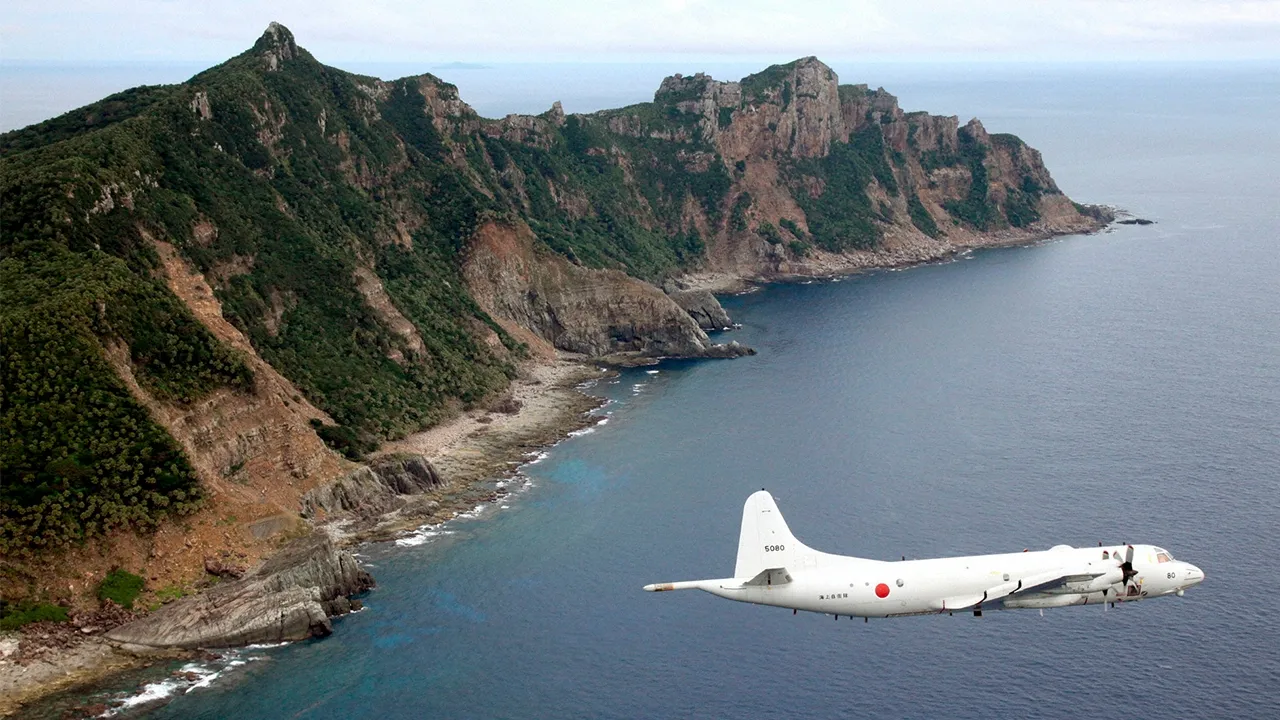
Set in September 2016. Japan and China challenge each other in the airspace above the Senkaku/Diaoyu Islands in the East China Sea.

Level
High School, Higher Education

What is a simulation?

Simulations offer students the chance to role-play either the U.S. National Security Council or the UN Security Council.

How do I use them?

A simulation comprises two readings (a council guide and the case notes) of roughly 2,500 words each. They also offer detailed guidance for preparing for and running the simulation in the classroom and reflecting on the experience.

Case Overview

Set in September 2016. Japan has long maintained an (ADIZ) that encompasses the Senkaku/Diaoyu Islands, over which it has administrative control. China declared its own ADIZ in 2013, stating it had the right to take military action against any aircraft that entered the zone without prior notification. Japan, along with the United States and South Korea, has protested the Chinese ADIZ and refuses to conform to China’s demand for prior notification. Japanese civilian and military aircraft continue to operate in the skies above the East China Sea. The intensification of the island dispute has raised political sensitivities in both countries, making it difficult for leaders to ignore the increasing interaction between ships and aircraft in the area. China now sends its coast guard to patrol the islands alongside Japan’s coast guard. The changing balance of military and economic power in Asia, growing popular distrust between the two nations, and deep dependence on the sea lands for access to energy resources and trade have heightened concerns that Japan and China may inadvertently end up in an armed clash. Miscalculation by their militaries or an unforeseen incident provoked by fishermen or activists could trigger a crisis. The United Nations does not take a position on the disputed sovereignty claims, but the UN Security Council is meeting to consider any action it should take to ease tensions in the East China Sea and to evaluate its long-term policy in the region. A UN decision in this case could be difficult to achieve because China, a -wielding permanent member of the council, has the ability to block many actions that have proven effective in past disputes.

UNSC Guide

Overview

The United Nations is the largest and most prominent international organization. The membership of the UN includes nearly all the world’s countries. It was established in 1945, after the end of World War II, by the United States and some four dozen other countries in an effort to build a more peaceful and cooperative postwar world. The United Nations has four main priorities: to keep peace throughout the world, promote fundamental human rights, strengthen international law, and pursue “social progress” and higher standards of living.

One of the most important functions of the United Nations is the maintenance of international peace and security. This is primarily the task of the UN Security Council, a decision-making body that comprises fifteen countries. Five of these countries hold permanent seats and ten are elected on a rotating basis. The five permanent members (known as the P5) are the United States, China, France, Russia, and the United Kingdom. The council’s main responsibilities are to evaluate threats to international peace and security and to promote the peaceful resolution of disputes. When a peaceful settlement cannot be reached, the Security Council can impose diplomatic or economic sanctions. The Security Council can even authorize using force to resolve conflicts and prevent new ones. The Security Council has addressed a variety of issues, such as civil wars, terrorism, arms control, and natural disasters.

Despite its prominent position the Security Council’s influence is limited. Any action requires the unanimous agreement of the P5. This means that no resolution can be adopted if even one permanent member votes no—or vetoes—the measure. This kind of agreement is often difficult to reach, especially when a permanent member thinks its interests will be jeopardized if the measure passes. Moreover, the United Nations lacks its own military forces and has no enforcement power. In short, the Security Council can only do that to which its member states agree. These factors mean that countries, especially major powers, can bypass the Security Council or ignore its decisions. Nonetheless, the United Nations is the only organization with essentially universal membership, making it an important feature of international affairs.

Resources related to UN:

The UN System

Since its founding in 1945, the United Nations has grown to include 193 member states. The United Nations has several subsidiary bodies, and a network of offices and programs around the world. The nature of the issues on the UN agenda has evolved over time. The Cold War and its associated conflicts dominated for much of the twentieth century. Hostility between the United States and the Soviet Union held up much UN activity. During the Cold War, the Security Council was often deadlocked, given the veto each country held as a permanent member. After the collapse of the Soviet Union in 1991, this dynamic began to change. In the past twenty years, issues including climate change, terrorism, and international migration have shifted the UN focus away from interstate conflict.  Increasingly, the focus is on problems that transcend national borders.

Organs

The United Nations is divided into six principal organs or parts: the General Assembly, the Secretariat, the Economic and Social Council, the Trusteeship Council, the International Court of Justice (ICJ), and the Security Council.

The General Assembly deliberates on the widest range of issues, spanning all areas of the United Nations’ work. The General Assembly is the only body in which all 193 UN member states are represented, each having one vote. General Assembly resolutions are nonbinding. In other words, they are recommendations.

The Secretariat carries out the institution’s day-to-day work. Led by the secretary-general and comprising tens of thousands of staff members from various countries, it staffs UN offices around the world. The Secretariat administers peacekeeping missions and operates communications, financial, and many other functions. As the organization’s chief administrative officer, the secretary-general attends sessions of UN bodies, consults with world leaders and others, reports on the work of the United Nations, and acts as a spokesperson.

The United Nations also includes the Economic and Social Council. This body is tasked with coordinating and discussing economic, social, and environmental issues. The United Nations also includes the Trusteeship Council, created to provide international supervision for decolonization and now largely inactive. Another organ of the United Nations is the International Court of Justice (ICJ), responsible for settling legal disputes between countries.

The UN Security Council

The Security Council is tasked with identifying and addressing threats to international security. In addition, it makes recommendations to the General Assembly for the appointment of the secretary-general and the admission of new members to the United Nations. Security Council decisions are communicated through resolutions. These are formal texts that outline steps to be taken and the reasoning behind those steps. In the absence of agreement, the body could also issue presidential statements. Presidential statements are similar in content and form to a formal resolution but do not legally bind member states.

Structure

Membership

The United States, China, France, Russia, and the United Kingdom make up the permanent members of the council. The remaining ten members are elected by the General Assembly to serve two-year terms. In electing nonpermanent council members, the General Assembly considers two factors. It must consider the “contribution of Members of the United Nations to the maintenance of international peace and security and to the other purposes of the Organization.” This stipulation means that aggressive, norm-defying countries tend not to be elected to the council and that countries that contribute significantly to the United Nations (financially or in the form of personnel and equipment) appear more frequently. Second, nonpermanent members must reflect an equitable geographic distribution, meaning members must be elected from each of the major regions of the world.

Presidency

The Security Council presidency is held on a rotating basis by both permanent and nonpermanent member states. The position rotates in English alphabetical order by country name, each country holding office for one month. The president presides over meetings and serves as the Security Council’s representative before all other UN organizations. However, the UN secretary-general, not the Security Council president, sets the agenda for council meetings. The president simply approves this agenda.

Subsidiary Organs

Various subsidiary organs exist to support the Security Council’s mission and implement its resolutions. These range from committees on sanctions, counterterrorism, and nonproliferation to international criminal tribunals that prosecute those responsible for genocide and war crimes. The council also maintains partnerships or close relationships with a variety of other elements in the UN system, such as the Department of Peacekeeping Operations, and the International Court of Justice.

Proceedings

Meetings of the Security Council are typically called when a state—even a nonmember (one of the two observer states at the United Nations or other states whose sovereignty is disputed)—brings a dispute to the Security Council’s attention. Meetings of the Security Council can also be called when the General Assembly refers a question to the council, or when the secretary-general raises a concern about international peace and security. Once the president decides that a meeting is necessary, they call for a session to address the issue.

Both UN members and nonmembers—the latter if they are parties to a dispute being considered by the Security Council—are invited to participate, though nonmembers do not have a vote in the council’s discussions. If a Security Council member is party to the dispute being discussed, it must abstain (in other words, formally refrain) from voting.

Both Security Council members and invited participants can introduce a draft of a resolution—a ruling or recommendation made by a UN body—expressing a Security Council decision. After debating proposals, any member can call for a vote. A resolution needs nine votes to pass. A dissenting vote from any of the five permanent Security Council members can defeat a resolution, no matter how many affirmative votes it receives. This powerful dissenting vote is known as the veto. Permanent members can use their veto for any reason. Typically, they do so to stop resolutions that threaten their national interests. Security Council members can also abstain from voting. In any case, a resolution passes as long as it receives nine votes and no permanent member exercises a veto. Permanent members sometimes abstain from a vote if they disagree with a resolution but are not sufficiently opposed to veto it.

Powers, Functions, and Tools

If a resolution passes, the Security Council has several powers that it can use to ensure that resolution’s implementation. Certain Security Council resolutions are considered legally binding on all UN member states. This means that countries are obligated to comply with the terms of the resolution. This power sets the Security Council apart from other UN organs, which are empowered only to issue recommendations.

The United Nations’ founding document, the UN Charter, lays out the tools the Security Council can use to execute its work. These are established in Chapter VI and Chapter VII of the charter. Under Chapter VI, the council can only make recommendations of how parties should resolve a dispute. Under Chapter VII, the council can use more forceful methods. Generally, resolutions under Chapter VII are considered legally binding.

Chapter VI: Peaceful Settlement of Disputes

Chapter VI allows the Security Council to seek solutions to disputes by “negotiation, enquiry, mediation, conciliation, arbitration, judicial settlement, resort to regional agencies or arrangements, or other peaceful means.”

Actions taken under Chapter VI include

  • referring legal disputes to the International Court of Justice,
  • recommending terms for the settlement of conflicts,
  • facilitating dispute resolution through a formal arbitration, and
  • launching peacekeeping missions.

The recommendations made under Chapter VI are just that—recommendations. They cannot be imposed on the parties concerned without their consent.

Peacekeeping missions can fall under Chapter VI or Chapter VII. In the case of Chapter VI missions, forces are deployed to help maintain a peace agreement, cease-fire, or other such arrangement that has already taken hold between warring parties. Peacekeeping missions under Chapter VI can include unarmed observers, lightly armed troops, or both. Their goal is to prevent new outbreaks of conflict and peacefully resolve disputes that arise. UN personnel tend to be stationed along a boundary line and their role is usually to report infractions of peace agreements rather than to intervene. Chapter VI peacekeeping missions require the consent (or agreement) of the parties involved in the conflict, are considered impartial, and do not use force except in self-defense.

Chapter VII: Maintaining or Enforcing Peace

Chapter VII addresses “action with respect to threats to the peace, breaches of the peace, and acts of aggression.”

Actions taken under Chapter VII include

  • severing diplomatic relations;
  • imposing economic sanctions, travel bans, and financial or diplomatic restrictions;
  • creating international tribunals, such as those for Rwanda and the former Yugoslavia;
  • establishing or modifying peace enforcement or peace-building missions; and

calling for military intervention, either by multinational forces (organized, e.g., by the North Atlantic Treaty Organization [NATO]) or by regional organizations (such as the African Union).

Unlike Security Council resolutions issued under Chapter VI, those adopted under Chapter VII are binding. Two examples of Chapter VII resolutions are Resolution 1695, which in 2006 imposed sanctions on North Korea for its nuclear program. Likewise, resolution 1973 in 2011 established the legal basis for military intervention in the Libyan civil war.

One of the most frequently used tools under Chapter VII is the imposition of sanctions. Sanctions are restrictions on a country, organization, or individual, typically limiting the target’s ability to travel, trade, or access financial resources. They can be used to discourage certain future actions, such as building nuclear weapons, to pressure a party to act, or to punish it for violating international rules. Sanctions can target entire sectors of a country’s economy. Generally,  the Security Council pursues targeted sanctions—sometimes called smart sanctions—against certain industries, businesses, or individuals. These can include arms embargoes, travel restrictions, or financial asset freezes.

Sanctions have become a popular tool because they offer a way to intervene in an issue without the risks and costs associated with using military force. However, sanctions have raised some concerns as well. Critics have argued that even highly targeted sanctions can have unintended consequences, especially on already vulnerable populations. Furthermore, the Security Council lacks a concrete method of enforcing its sanctions. Instead, it must rely on individual countries to enact them. If sanctions are weakly enforced, the target could possibly work around them, avoiding their effects and potentially discrediting the value of sanctions in the future.

If nonmilitary options, such as sanctions, fail to resolve a dispute, the Security Council can authorize a peace enforcement mission. Unlike Chapter VI peacekeeping missions, Chapter VII enforcement missions do not require the consent of the parties involved. Chapter VII enforcement missions are authorized to “take such action by air, sea, or land forces as may be necessary to maintain or restore international peace and security.” The personnel involved can include heavily armed troops and can use force in situations other than self-defense. Chapter VII peace enforcement missions can take different forms. Sometimes they are undertaken by UN peacekeeping forces and operate under UN command. In other instances they can be led by a coalition of member states authorized to do so by a Security Council resolution.

The line between Chapter VI and Chapter VII missions is not always clear. A Security Council resolution does not need to explicitly refer to the chapter it is invoking.  A mission’s mandate—or description of its mission—can change over time to adjust to changing circumstances; a mission established under Chapter VI can be expanded to also fall under Chapter VII if the situation evolves and requires a more robust intervention.

Current Issues

The Security Council was able to greatly expand its activities at the end of the Cold War. Without the United States and the Soviet Union in direct opposition, the number of vetoes declined significantly. The council was able to take action on a greater range of issues, including civil conflicts and humanitarian crises. During the 1990s, the Security Council authorized more peacekeeping missions than it had in the previous forty years combined. It authorized UN-led missions such as those in Rwanda and the former Yugoslavia. The Security Council also authorized coalition operations such as the 1990 Gulf War. Following the terrorist attacks of September 11, 2001, international terrorism also came to the forefront of the council’s agenda.

The Security Council has also broadened its view of international security in recent years, adopting resolutions on issues such as HIV/AIDS, the protection of women and children in humanitarian crises, and climate change. In 2015, the UN General Assembly adopted a series of seventeen Sustainable Development Goals (SDGs) aiming to promote global economic development, environmental protection, and social well-being. The SDGs emphasize the interconnected nature of global challenges and the need for cooperation across governments and institutions. Accordingly, the Security Council has paid increasing attention to the ways in which social, economic, and environmental factors influence the maintenance of peace and security.

Despite this increased activity, the Security Council continues to face significant challenges. The United Nations greatly expanded its peacekeeping efforts after the Cold War. But peacekeeping missions have faced criticism for being underfunded, for being limited in scope, and for abuses committed by peacekeepers themselves. In some cases, such as in Rwanda in 1994, peacekeepers have been accused of failing to prevent genocide. Those failures led many countries to argue for a new understanding of peacekeeping and foreign intervention. In 2005, UN member countries adopted the responsibility to protect (R2P) doctrine. This doctrine establishes that countries have a responsibility to intervene in cases of genocide or crimes against humanity that a national government cannot or will not stop. This remains a nonbinding norm, and its applicability in specific situations is often disputed. Moreover, conflicting interests among the security council’s veto-wielding permanent members often curtail the possibility of approving a robust intervention.

In recent years, renewed tension among the United States, China, and Russia has emerged as an obstacle to Security Council action. Observers and Security Council members themselves have sharply criticized the council’s inability to take action on the Syrian civil war. This inability to take action is in spite of multiple reports of war crimes and an estimated death toll of at least five hundred thousand people. Russia, an ally of Syria’s government, has vetoed several resolutions aimed at stabilizing the conflict and alleviating the growing humanitarian crisis, arguing that any such resolution would be a violation of Syria’s sovereignty. Vetoes have increased in the last decade, with Russia and the United States casting the majority of them.

These challenges have led many UN members, including the United States, to call for changes to the Security Council. Many observers argue that the council’s composition, which allots the five permanent seats to the winners of World War II (the United States, China, France, Russia, and the United Kingdom), does not reflect the power structure of today’s world. They argue instead for extending permanent membership to more countries and adjusting the regional distribution of permanent membership. These reforms could help better represent large and growing populations in Africa and South America. Another source of criticism has been the P5’s veto, which, critics assert, undermines the council’s ability to take action. In recent years, a growing number of UN member states—including France, a permanent member—have supported calls for P5 members to voluntarily refrain from using their veto power in situations involving mass atrocities. Other member states have suggested that the veto power be removed altogether.

Reform is controversial and complicated. Any reform of the Security Council would likely require an amendment to the UN Charter that is approved and ratified by a two-thirds vote of the General Assembly and then a vote in the Security Council. Permanent members of the Security Council would retain their usual right to veto. Given this, any reform of the UN Security Council that is not supported, or at least tolerated, by the P5 is unachievable, and garnering such support or tolerance will almost certainly prove impossible.

Case Notes

The Issue

Tensions between China and Japan have sporadically erupted in the East China Sea over the five small, uninhabited islands the Japanese refer to as the Senkaku and the Chinese call the Diaoyu. The islands have been the subject of competing claims by China, Japan, and Taiwan for decades. After a 2010 flare in tensions, Chinese and Japanese naval and air forces began to come in increasingly frequent contact, as both countries sought to demonstrate control over the islands. Both countries established Air Defense Identification Zones (ADIZ) and demanded that all aircraft give notice before entering them. Both of these zones include the disputed islands. Neither country has recognized the other’s ADIZ, and both continue to send civilian and military aircraft into the East China Sea airspace, claiming that they are doing so legitimately under . The increasing tensions in the East China Sea raised concern among observers about the risk of a miscalculation or accident sparking an armed clash between Asia’s two largest powers. Compounding these concerns, the United States has a defense treaty with Japan, meaning it could also be drawn into a potential conflict.

Although the United Nations has not formally taken a position in the dispute, it holds a strong interest in maintaining stability. A conflict involving China, Japan, and the United States has the potential to affect global stability, economic growth, and the security of those in the region. A conflict could also hinder cooperation on issues such as nuclear weapons and climate change. The UN Security Council has frequently considered similar maritime territorial disputes and could play a crucial role in maintaining stability in the East China Sea. Yet a UN decision in this case could be difficult to achieve. China, which has the ability to Security Council decisions, could block many actions that have proven effective in past disputes. 

Decision Point—Set in September 2016

Over the Summer of 2016, tensions in the East China Sea suddenly ratcheted up. In June, a Chinese frigate sailed through the disputed zone of the East China Sea. Although Chinese coast guard ships passed through the area before, this marked the first appearance of a Chinese naval vessel. In the following weeks, China alleged that Japanese fighters intercepted its military aircraft over the disputed islands. During the incident, Japan’s fighters briefly locked weapons radar on the Chinese aircraft. Two months later, hundreds of Chinese fishing vessels appeared in the waters near the disputed islands in the East China Sea. For the first time, these vessels were accompanied by seven Chinese law enforcement vessels.

The UN Security Council is convening to discuss, and take possible action on, the dispute between China and Japan in the East China Sea. The UN Security Council will consider both the immediate situation and the broader issue of the two sides’ competing claims. 

Background

Both China and Japan have made historical claims to over the Senkaku/Diaoyu islands. Japan dates its control over the islands to 1895, when the government claimed the territory on the grounds that the islands were uninhabited—belonging to no one. For a number of years, a Japanese family privately owned the islands. After Japan was defeated in World War II, the country was occupied from 1945 to 1952 by the United States, which administered the islands. The United States retained control of the islands even after the end of its occupation of Japan because of their strategic value as military bases.

In 1969, the islands attracted attention when a geological survey revealed that they likely sit atop vast oil and gas reserves. Then, in 1971, as the United States was negotiating the return of the islands to Japan, both China and Taiwan began publicly issuing claims of ownership. Despite these declarations, President Richard M. Nixon concluded the agreement and gave control back to Japan. 

China’s claim argued that Japan illegally annexed the islands during the Sino-Japanese War of 1894–95. Therefore, the islands should have been returned after World War II, when the Allied powers determined that Japan had to return all the territories it had taken from China. China has dated its sovereignty over the islands to the fourteenth century. China has also provided documents and maps to support this claim. Chinese officials have also described the islands as historically critical to their defenses, shielding China from attacks by the Japanese and other parties.

Taiwan made a similar claim that Japan illegally seized the islands 1895 and that they should have been returned after World War II. Taiwan argued that when the islands were seized, they were considered a part of its territory. When Japan was ordered to return Taiwan’s occupied territory in 1945, both the mainland and Taiwan belonged to the Republic of China. However, in 1949, the Chinese led to a division of the country, during which the Communist Party established the People’s Republic of China on the mainland and the government of the Republic of China fled to what is today Taiwan. China claims that Taiwan is a part of its territory, but Taiwan considers itself a separate country and argues that its control over the islands should have been restored following World War II.
 
Although the United States transferred control of the islands to Japan, it stayed neutral in the dispute that followed. Washington has stated that “a return of
over those islands to Japan, from which the rights were received, can in no way prejudice any underlying claims . . . nor can the United States, by giving back what it received, diminish the rights of other claimants.” 

Despite their disagreements over the islands, China, Japan, and Taiwan each tried to minimize the effects of the dispute on their overall relations. Although China challenged Japan over the islands in the early 1970s, the two countries still successfully negotiated a Treaty of Peace and Friendship in 1978. The two countries became increasingly interdependent trading partners as reforms over the 1980s and 1990s transformed China’s economy and opened the country to global commerce. Taiwan also continued to assert its sovereignty over the islands but maintained close economic and political ties with Japan. 

Tensions flared in 2010, when a Chinese fishing boat collided with Japanese coast guard vessels near the islands. The Japanese detained the captain of the Chinese vessel for more than two weeks. The Japanese charged the Chinese captain with obstructing the coast guard’s official duties. China retaliated by temporarily halting exports of critical materials used in Japan’s high-tech manufacturing industry. Chinese authorities also arrested four Japanese businessmen, accusing them of spying on a Chinese military installation. Japan and China soon resolved this initial flare in tensions. Japan released the captain and China agreed to release the detained businessmen. Nonetheless, the dispute remained a sensitive issue in both countries.

The issue continued to cause friction between China and Japan. In 2013, Japanese Prime Minister Shinzo Abe stated that his country would “expel by force” any Chinese landing on the islands. The next day, a Chinese spokesperson responded by labeling the islands a “core interest.” China had typically used the term core interest only to describe regions it would supposedly defend by force, such as Taiwan, Tibet, and Xinjiang. Later that year, China announced a new ADIZ over the East China Sea, an area that included the disputed islands.

China and Japan both continued to send their aircraft and naval vessels into the area, in the following years. Yet political leaders in Beijing and Tokyo have also recognized the danger inherent in this increasing military interaction. Chinese President Xi Jinping and Japanese Prime Minister Abe met in November 2014, agreeing to resume various diplomatic talks, including over natural resources in the East China Sea. The two leaders have met repeatedly since, but tensions remain high. 

Role of the UN Security Council

As tensions rose in 2016, the UN Security Council had several interests in the East China Sea. China and Japan are both major powers and a conflict between the two could involve several more major powers. The United States has been a treaty ally of Japan since 1960. Likewise, several other members of the UN Security Council are treaty allies with the United States most prominently France and the United Kingdom. Although the United States has remained neutral on the dispute, it has also stated that its commitment to Japan’s defense includes any threat to the islands. Consequently, rising tensions risked becoming an international confrontation, threatening global economic growth, and the immediate safety of those in the region. The dispute in the East China Sea therefore posed a clear threat to international peace and security worthy of the UN Security Council’s consideration.

The UN Security Council had a number of options available to help resolve the East China Sea dispute. Most of these would be difficult to enforce, difficult to approve, or both. Negotiations have frequently had weak enforcement systems. International rulings have often gone ignored. Stronger measures such as imposing or deploying peacekeepers were likely impossible for the council to approve given China’s Security Council . Given the high potential for a stalemate in the Security Council over this issue, members would have to carefully consider how the council could be most effective. 

The UN Security Council could consider the following options:

Call for negotiations to reduce tensions

The UN Security Council could direct China and Japan to negotiate in an attempt to resolve the situation peacefully, perhaps using a mediator. The United Nations could use its leverage to persuade Beijing and Tokyo to reduce their military forces in the region. The United Nations could encourage greater communication between the two countries’ militaries to avoid unintended incidents.

This option would be the least ambitious, yet it would be the most likely to gain the approval of member states. Calling for negotiations would offer a way to respond quickly to the situation at hand. However, this option could not guarantee that China and Japan would respond to such a call. Security Council members would need to consider how they could ensure that these negotiations succeeded where past talks had failed. If negotiations were successful, the UN Security Council would also need to consider what monitoring and enforcement measures it could adopt.

Refer the dispute for international

If China and Japan could not come to a peaceful agreement alone, the United Nations could adopt a resolution referring the matter to a third party for settlement. such as the United Nations’ International Court of Justice, or an independent body such as the Permanent Court of Arbitration. This option could prove more contentious among Security Council members than a call for negotiations. Security Council members would need to consider how, if at all, they could persuade China not to this option.

International arbitration could provide a legitimate forum for the dispute to be settled. However, if the Security Council decided to refer the dispute to any international body for arbitration, members need to be aware of the lack of enforcement mechanisms for any decision; China has rejected previous rulings against it in territorial disputes and could do so in this case as well. Furthermore, cases can take years to resolve, and the lack of immediate action could allow the dispute to escalate. This option would avoid certain risks that other options pose but could also signal a weak UN commitment to stability in the region.

Authorize military action to prevent escalation

The United Nations could adopt a resolution authorizing military action by the United States or other outside powers to prevent escalation of the dispute between China and Japan. This action could entail military forces from a third country conducting military patrols in the East China Sea to keep Japanese and Chinese forces separate. This could possibly prevent further incidents, and prevent escalation. However, involving military personnel in the dispute carries significant risks. The increase of military presence in the region could raise the chances of an accident or miscalculation; any military response would need to be effectively communicated to both Chinese and Japanese military forces in the area to minimize the risk of an unintended incident.

This option would be extremely difficult to implement, as China would likely veto any measures that could harm its national interests. Military actions involving outside powers, especially the United States, would likely not gain Chinese approval. Security Council members would need to consider what, if anything, they could do to persuade China to willingly allow outside military forces into waters it claims as part of its territory.

No action

The Security Council could decide it is unable to take meaningful action in the East China Sea in light of conflicting interests among council members. In this case, Security Council members could issue a presidential statement expressing concern about the situation but ultimately leave action up to individual countries. If the situation worsened, however, this decision could give rise to criticisms of the Security Council for failing to take action on a growing threat to international peace and security. 

Preparation and Role-Play

Roles Overview

Print these custom placards for use during your simulation. If you need to edit them, make a copy to your Google Drive.

Permanent Member

  • How does the situation in the East China Sea threaten your country’s national security?
  • What national interests are at stake in this crisis? How should they be prioritized?
  • What is the nature of the relationship between your country and Japan? How does this inform potential national action in this case?
  • What is your country’s relationship with other parties relevant to this case? How does this affect your response to the proposed policy options?
  • What are the costs, benefits, and risks that accompany each policy option open to the UN Security Council?
  • Are there any policy options that you absolutely do not support? If this policy option came to a vote, would you use a ? Why or why not?
  • How has your country’s veto usage changed over time? What issues does your country tend to use a veto on?
  • Have other permanent members used vetoes on votes regarding this issue? What kind of policy options or resolutions have they vetoed? How should this influence your negotiation strategy within the Council?
  • What are the trade-offs raised by the potential policy options in this case?
  • What are the positions and interests of other countries and organizations that have a stake in the situation in the East China Sea?

Nonpermanent Member

  • How does the situation in the East China Sea threaten your country’s national security?
  • What national interests are at stake in this crisis? How should they be prioritized?
  • What is the nature of the relationship between your country and both China and Japan? How does this inform potential national action in this case?
  • What is your country’s relationship with other parties relevant to this case? How does this affect your response to the proposed policy options?
  • Have permanent members used vetoes on votes regarding this issue? What kind of policy options or resolutions have they vetoed? How should this influence your negotiation strategy within the Council?
  • What are the costs, benefits, and risks that accompany each policy option open to the UN Security Council?
  • What are the trade-offs raised by the potential policy options in this case?
  • What are the positions and interests of other countries and organizations that have a stake in the situation in the East China Sea?

Nonmember State or Observer

  • How does the situation presented in this case threaten your country’s national security?
  • What national interests are at stake in this crisis? How should they be prioritized?
  • What is the nature of the relationship between your country and both China and Japan? How does this inform potential national action in this case?
  • What is your country’s relationship with other parties relevant to this case? How does this affect your response to the proposed policy options?  
  • Have permanent members used vetoes on votes regarding this issue? What kind of policy options or resolutions have they vetoed? How should this influence your negotiation strategy within the Council?
  • What are the costs, benefits, and risks that accompany each policy option open to the UN Security Council?
  • What are the trade-offs raised by the potential policy options in this case?
  • What are the positions and interests of other countries and organizations that have a stake in this issue? How, if at all, might they affect the current situation?

UN Secretary-General

  • How does a dispute in the East China Sea, and particularly the situation presented in this case, threaten global security?
  • What role should the United Nations play in resolving this crisis? What are the benefits and costs of versus responses?
  • What is the nature of the relationship between the United Nations and both China and Japan? How does this inform potential UN action in this case?
  • What are the costs, benefits, and risks that accompany each policy option open to the UN Security Council?
  • What are the trade-offs raised by the potential policy options in this case?
  • What are the positions and interests of UN Security Council member states and other organizations that have a stake in the situation in the East China Sea?

Guide to the Memorandum

Your assignment prior to the role-play is to prepare a set of prepared clauses for a potential Security Council resolution. These clauses, along with those of other students, will form the basis of the discussion in the role-play.

You should bring

  • two to three preambular clauses that describe the issue at hand, consider the international context, and outline previous agreements and existing organizations; and
  • three to four operative clauses that present responses to the situation.

Each operative clause should present a complete proposal. Make sure that your proposed solutions are within the powers of the Security Council and are practical. Your operative clauses might be designed to work in concert (perhaps economic sanctions, mediation, and a peacekeeping force) or might be a set of alternatives from which you hope one will be adopted (perhaps three peacekeeping proposals that differ in their details).

In writing each of your operative clauses, consider the following points:

  • Who: Who is acting, and for whose benefit?
  • What: What is the response specifically?
  • When: When will it be implemented? Is there a deadline, a time frame, or recurrence?
  • Where: Where will it be implemented specifically?
  • Why: Why is this solution effective?
  • How: How will this solution be implemented? If countries must support the response, how will they be persuaded to do so?
  • Funding: How will the response be funded?

If your operative clauses start to get long and messy, use subsidiary clauses!

The goal should be to create clauses that include all the information necessary for putting the plan into action. It can be helpful to imagine an official tasked with carrying out the resolution and asking whether they have all the information they need to implement it.

Guide to the Role-Play

  • There is no right or wrong way to participate in a role-play, but the better prepared you are, the more likely you will be able to advance a position effectively, and the more you and your peers will get out of the experience.
  • Be patient during the role-play. Do not hold back from sharing your perspective, but be sure to give others a chance to do the same.
  • Where there are competing interests, make the judgment calls that you would make if you were a government official, as informed by your earlier consideration of potential trade-offs. Ensure that the consequences of various decisions are carefully weighed.
RoundTimingObjectivesProcedural Notes
One: Public Meeting2 to 3 minutes per participantReceive a five-minute briefing from the secretary-general on the issue to be discussed. Present opening statements. Crystalize the central questions of debate.During opening statements, the president of the UN Security Council will recognize country representatives in the order in which they request to speak, and no representative may speak again if others have not yet spoken. Following opening statements, country representatives are free to openly debate the statements made, evaluating the various positions on their merits.
Two: Informal Meeting30 to 60 minutesDebate each participant’s proposed clauses. Edit, add, or drop proposed clauses and combine them into one or more draft resolutions. Draft a presidential statement using proposed clauses and/or new material if no draft resolution appears acceptable to the group.The president will recognize country representatives in the order in which they request to speak. Representatives should limit their statements to one minute each, but if time allows the president may permit them to speak longer. The president may also invite any participant to speak as they deem it appropriate. Any participant may motion for a ten- to fifteen-minute break, during which representatives can move freely and work on their draft resolutions individually or in small groups.  
Three: Public Meeting30 to 60 minutesHear summaries of any draft resolutions as well as arguments for and against adoption. Vote on draft resolutions in order of submission. Attempt to adopt a presidential statement by consensus if no resolutions are proposed or passed.The president will call first on the draft resolution’s main author(s) and then on other countries that wish to make arguments for or against the resolution. To be adopted, Security Council resolutions must receive at least nine votes in favor and no dissenting votes (vetoes) from any of the five permanent members. A state may abstain, often to indicate ambivalence or mild disapproval (in contrast to strong opposition). According to the charter, abstentions are mandatory if the state is a party to the dispute in question. Abstentions by permanent members do not count as vetoes; the resolution will pass if it receives the necessary nine votes.

Wrap-Up

What Actually Happened

Ultimately, China and Japan managed to prevent further escalation in the Summer of 2016. The United Nations Security Council was not convened to consider the issue, nor has the dispute been on the council’s agenda in the years since. The lack of Security Council attention to the issue has highlighted the body’s limitations in disputes where one or more of the permanent five members has interests at stake.

China and Japan have sought to manage the dispute between themselves and prevent further escalation. In 2018, Beijing and Tokyo both expressed a desire to “reset” ties. To this end, the two countries resumed economic talks for the first time in seven years and agreed to establish a crisis hotline to avoid unintended military incidents in the East China Sea. The hotline was delayed, but ultimately established in the spring of 2023. In 2019, China and Japan also took steps to plan an official state visit by Xi Jinping to Tokyo. As of 2023, however, little progress toward a state visit has been made. 

Meanwhile, neither country has lessened its involvement in the East China Sea. Japan has moved to build up its military strength, in part to counter Chinese activity in the region. China and Japan have each increased their military capabilities in the area, installing radar and missile systems and continuing to conduct military drills. The United States has participated in joint exercises with Japan, flying its aircraft over the East China Sea. Despite increased dialogue between the two countries, the Senkaku/Diaoyu Islands remain a potential source of conflict.

The Debrief

If time permits, you will participate in a debrief following the UN Security Council’s final vote.  

Be active in this debrief. The role-play might seem to be the most challenging part of the experience, but the debrief is equally important. It will reinforce what you learned during the role-play exercise and refine your analytical skills. It will also force you to step out of your role and to view the case from a personal perspective. You will have the opportunity to discuss any challenges you encountered as you worked through the discussion with your peers and how you felt about the UN Security Council vote.

The debrief will close with a reflection on the complexities and challenges of multilateral negotiations. This should help clarify your understanding of what you learned and answer any lingering questions. This exercise will also assist you in completing your final assignment, the policy review memo.  

Reflecting on the Experience

The following questions are proposed to guide the discussion in the debrief. This is not an exhaustive list and may vary depending on how your role-play exercise unfolded. If your class or group does not hold a debrief, these questions will nonetheless help you reflect on the role-play and write your written reflection: 

  • Which issues received adequate attention during the role-play? Which, if any, received excessive attention or were left unresolved?
  • Did the group consider long-term strategic concerns, or was it able to focus only on the immediate issue and the short-term implications of policy options?
  • Did time constraints affect the discussion and influence the drafting process?
  • What techniques did you use to convince others that your policy position was the best option? What were successful strategies employed by others?
  • What were the most significant challenges to your position? Did any make you rethink or adjust your position?
  • Did your points cause anyone else to change their arguments or position?
  • What political, economic, and other issues arose that you had not previously considered?
  • How did the simulation change your perspective on multilateral negotiations?
  • If you could go back, what would you have done differently in presenting and advocating your point of view?

Written Reflection

The written reflection is your final assignment in the simulation. In the debrief discussion after the role-play, you and your peers went beyond the role you played and thought about the issue from a variety of perspectives. Now that the UN Security Council meeting and debrief are behind you, you can consider whether you personally support your recommended policy given the subsequent discussion. Shedding your institutional role and writing from a personal point of view, you will craft a policy review memo that outlines and reflects on the policy options discussed, incorporating and critiquing the UN Security Council’s decision where appropriate.

No matter which role you played originally, take into account all that you have learned. Your instructor or facilitator will want to see if and how your understanding of the issue and of the policymaking process has evolved from that expressed in your position memo.

More details about the written reflection are available under Student Resources.

Student Resources

Reading List

Country Resources:

Essential facts about your country

Information about your country’s foreign policy

Essential Resources

Additional Resources

How to Conduct Research and Use Sources

Research and Preparation

  • Draw on the case notes, additional case materials, and your own research to familiarize yourself with
    • the goals of the UN Security Council in general and of this Council meeting in particular;
    • the national interests at stake in the case for the country you’re representing and their importance to national security;
    • the aspects of the case most relevant to your country;
    • the elements that a comprehensive UN Security Council resolution on the case should contain; and
    • the major debates or conflicts likely to occur during the role-play. You need not resolve these yourself, of course, but you will want to anticipate them in order to articulate and defend your position in the UN Security Council deliberation.
  • Set goals for your research. Know which questions you seek to answer and refer back to the case notes, additional readings, and research leads as needed.
  • Make a list of questions that you feel are not fully answered by the given materials. What do you need to research in greater depth? Can your peers help you understand these subjects?
  • Using the case materials, additional readings, and discussions with your peers, weigh the relative importance of the interests at stake in the case. Determine where trade-offs might be required and think through the potential consequences of several different policy options.
  • Conduct your research from the perspective of your assigned role, rather than the particular perspective of the person who currently inhabits that role. Make sure to consider the full range of country positions and foreign interests, whether diplomatic, military, economic, environmental, moral, or otherwise. This will help you strengthen your policy position and anticipate and prepare for debates in the role-play.
  • Consider what questions or challenges the secretary-general or other UN Security Council members might raise regarding the options you propose and have responses ready.

Sources

  • Consult a wide range of sources to gain a full perspective on the issues raised in the case and on policy options. Seek out sources that you may not normally use, such as publications from the region(s) under discussion, unclassified and declassified government documents, and specialized policy reports and journals.
  • Remember: Wikipedia is not a reliable source, but it can be a reasonable starting point. The citations at the bottom of each entry often contain useful resources.
  • Just as policymakers tackle issues that are controversial and subject to multiple interpretations, so will you in your preparation for the writing assignments and role-play. For this reason, evaluate your sources carefully. Always ask yourself:
    • When was the information produced? Is it still relevant and accurate?
    • Who is writing or speaking and why? Does the author or speaker have a particular motivation or affiliation that you should take into account?
    • Where is the information published? Determine the political leanings of journals, magazines, and newspapers by reading several articles published by each one.
    • Who is the intended audience?
    • Does the author provide sufficient evidence for their analysis or opinion? Does the author cite reliable and impartial sources?
    • Does the information appear one-sided? Does it consider multiple points of view?
    • Is the language measured or inflammatory? Do any of the points appear exaggerated?
  • Take note of and cite your sources correctly. This is important not just for reasons of academic integrity, but so that you can revisit them as needed.
  • Ask your teacher which style they prefer you use when citing sources, such as Modern Language Association (MLA), Chicago Manual of Style, or Associated Press (AP).

How to Write a UN Resolution

What is a UN resolution?

A UN resolution is a formal expression of the opinion or will of a UN body. Resolutions follow a common, relatively strict format and are published online once approved. They are written and approved (or rejected) in a complex process. They typically go through several drafts, and multiple countries are typically involved, though a single country may write a draft resolution on its own and seek a direct vote. You will navigate an abbreviated version of this collaborative process in your role-play.

A Security Council resolution has three sections:

  • header
  • preambular clauses
  • operative clauses

The entire resolution is one long sentence; individual items are separated by semicolons and commas. The header gives the date, an alphabetical list of countries that have contributed to the document (sponsors), and the name of the issuing body (in this case, the Security Council). This body serves as the subject of the sentence.

Preambular clauses provide a framework through which to view the issue by outlining past action on the subject (usually in treaties, conventions, and previous resolutions) and explaining the purpose of or need for a resolution. Preambular clauses are unnumbered, begin with adjectives or verbs, and end with commas. Common preambular words include

  • alarmed by
  • considering
  • convinced
  • emphasizing
  • guided by
  • having adopted
  • keeping in mind
  • mindful of
  • (re)affirming
  • recognizing
  • taking note/noting
  • underscoring

An example of an existing preambular clause is

  • Underlining that the NPT remains the cornerstone of the nuclear non-proliferation regime and the essential foundation for the pursuit of nuclear disarmament and for the peaceful uses of nuclear energy.

Operative clauses state the opinion of the organ and the actions to be taken. Unlike preambular clauses, operative clauses are sequentially numbered and follow a logical progression, each clause calling for a specific action. Operative clauses begin with italicized verbs, sometimes modified by adverbs, and end with semicolons (with the exception of the last clause). Common operative words include

  • authorizes
  • calls for
  • condemns
  • decides
  • emphasizes
  • (re)affirms
  • recommends
  • reiterates
  • requests
  • stresses
  • supports
  • urges

The last operative clause in a Security Council resolution is almost always “Decides to remain seized of the matter.” In line with Article 12 of the UN Charter, this language keeps the issue under the Security Council’s authority and prevents the General Assembly from taking its own action. An example existing operative clause is

  • Urges all States that have either not signed or not ratified the Treaty, particularly the eight remaining Annex 2 States, to do so without further delay.

Click here to see a full example of a UN Security Council resolution.

How to Write a Presidential Statement

If the Security Council is unable to come to agreement on a resolution, another option is to issue a presidential statement.

What is a presidential statement?

A presidential statement is made by the president of the Security Council on behalf of the council. It is adopted at a formal council meeting, issued as an official document, and published. No formal vote is taken on a presidential statement; instead, it is adopted by consensus (the agreement of all members, though some may abstain). Member states have the option of voicing opposition to the statement, which is then recorded in the document. Often released when the council cannot reach consensus on a resolution or is prevented from passing one by a permanent member’s veto, presidential statements are similar in content and tone to resolutions but tend to be less specific. They are not legally binding.

All presidential statements generally follow the same loose structure, which is more flexible and relaxed than that of a UN resolution:

  1. Overview: an overview of the meeting or informal session that gave rise to the statement in question.
  2. Body: five to fifteen paragraphs, each beginning with “The Security Council,” reflecting the consensus opinion of council members and sometimes providing an overview of past actions on the subject. A presidential statement is often used to reaffirm the council’s support for ongoing UN missions and initiatives or to provide progress reports on these initiatives.
  3. Signature: the signature of the president of the Security Council.

Click here to see a full example of a UN Security Council presidential statement.

How to Prepare for Role-Play

Role-play Guidelines

  1. Stay in your role at all times. (Keep in mind that your role refers to the perspective and duties of the country or position you represent, and not the specific person currently holding that role.)
  2. Follow the general protocol for speaking.
    1. Signaling to Speak
      1. The president of the UN Security Council will administer the meeting and should decide on a speaking order. Wait to be called on by the president.
      2. If you would like to speak out of turn, signal to the president, perhaps by raising a hand or a placard, and wait until the president calls on you.
    2. Form of Speech
      1. All UN Security Council members can be addressed as Mr./Madam/Mx. Ambassador or simply Ambassador [last name]. Before you begin the role-play, share which title you would like to use, and make sure to respect the title your fellow UN Security Council members choose to use as well.
      2. Do not exceed predetermined time limits. If you exceed these limits, the president will cut you off.
      3. Frame your comments with a purpose and stay on topic.
    3. Listening
      1. Take notes while others are speaking.
      2. Refrain from whispering or conducting side conversations.
      3. Applause and booing are not appropriate. Your words will be the most effective tool to indicate agreement or disagreement.

How to Write a Written Reflection

Guidelines

  • Subject (one short paragraph): Offer a brief statement about the significance of the issue as it relates to global politics and international organizations. Provide just enough information about the crisis so the reader can understand the purpose and importance of your memo. Be sure to include an initial statement of whether you agree or disagree with the UN Security Council’s decision.
  • Options and analysis (one paragraph per option): Present and analyze the options that were discussed during the debate, deliberation, and/or debrief. Discuss their drawbacks, benefits, and resource needs. Be sure to acknowledge any weaknesses or disadvantages of the proposed options.
  • Recommendation and justification (several paragraphs): Identify and explain your preferred policy option or options in more detail. Here, you can explain why you personally favor one or more of the recommendations that you initially presented or the UN Security Council voted on, or different options entirely. If you choose to support the options you presented in your position memo, make sure to justify why you feel yours is still the best position.
  • Reflection (one to two paragraphs): Discuss how your position and the final UN Security Council decision are similar; if they are not, discuss how they are different. Use this section to give your thoughts on what the UN Security Council should have included in its resolution or presidential statement and what you would have done differently. Remember, this is from your point of view; you are no longer advocating on behalf of a country or a UN agency.

Click here to see a full example of a written reflection.