![]()
Home |
Site Index |
FAQs |
Contact |
RSS
|
Podcast
Navigation
home > the cfr think tank > experts > richard n. haass
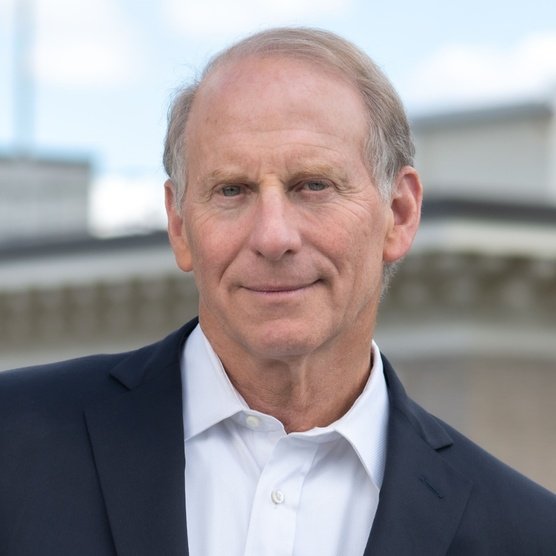
President, Council on Foreign Relations
Contact Info:
Phone: +1-212-434-9543; for all media requests, contact Lisa Shields at +1-212-434-9888 or lshields@cfr.org
E-mail: president@cfr.org
Location:
New York, NY
Media downloads:
One-page bio (PDF, 39K)
Video clip (MP4, 1.9 MB)
Video clip (MP4, 689K)
U.S. foreign policy; international security; globalization; Asia; Middle East
Experience:Richard Haass is president of the Council on Foreign Relations, a position he has held since July 2003. The Council on Foreign Relations is an independent, nonpartisan membership organization, think tank, and publisher dedicated to being a resource for its members, government officials, business executives, journalists, educators and students, civic and religious leaders, and other interested citizens in order to help them better understand the world and the foreign policy choices facing the United States and other countries.
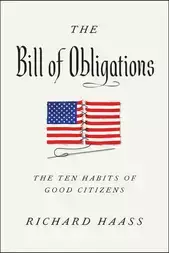
Haass is the author or editor of ten books on American foreign policy. His most recent book, The Opportunity: America's Moment to Alter History's Course, was published by Public Affairs. He is also the author of one book on management: The Bureaucratic Entrepreneur: How to Be Effective in Any Unruly Organization.
From January 2001 to June 2003, Richard Haass was director of policy planning for the Department of State, where he was a principal adviser to Secretary of State Colin Powell. Confirmed by the U.S. Senate to hold the rank of ambassador, Haass also served as U.S. coordinator for policy toward the future of Afghanistan and was the lead U.S. government official in support of the Northern Ireland peace process. For his efforts, he received the State Department’s Distinguished Honor Award.
Ambassador Haass has extensive additional government experience. From 1989 to 1993, he was special assistant to President George Bush and senior director for Near East and South Asian affairs on the staff of the National Security Council. In 1991, Haass was awarded the Presidential Citizens Medal for his contributions to the development and articulation of U.S. policy during Operations Desert Shield and Desert Storm. Previously, he served in the Departments of State (1981-85) and Defense (1979-80) and was a legislative aide in the U.S. Senate.
Haass also was vice president and director of foreign policy studies at the Brookings Institution, the Sol M. Linowitz visiting professor of international studies at Hamilton College, a senior associate at the Carnegie Endowment for International Peace, a lecturer in public policy at Harvard University’s John F. Kennedy School of Government, and a research associate at the International Institute for Strategic Studies. A Rhodes Scholar, Haass holds a BA from Oberlin College and the Master and Doctor of Philosophy degrees from Oxford University. He has received honorary doctorates from Hamilton College, Franklin & Marshall College, and Georgetown University.
Richard Haass was born in Brooklyn, New York, in 1951. He lives in New York City with his wife and two children.
Past Research Projects
April 29, 2008
| Speaker: | Richard N. Haass, President, Council on Foreign Relations |
|---|---|
| Presider: | Lisa Shields, Vice President of Communications and Marketing, Council On Foreign Relations |
Transcript
See more in Global Governance, Society and Culture, U.S. Strategy and Politics
April 24, 2008
| Author: | Richard N. Haass, President, Council on Foreign Relations |
|---|
Op-Ed
The Daily Star
Richard N. Haass explains the dynamics of a nonpolar world and predicts that “multilateralism a la carte is likely to be the new order of the day.”
See more in United States, Global Governance, U.S. Strategy and Politics
May/June 2008
| Authors: | Richard N. Haass, President, Council on Foreign Relations Kenneth Roth, Human Rights Watch Steven Simon, Hasib J. Sabbagh Senior Fellow for Middle Eastern Studies |
|---|
Podcast
This audio includes readings of selected articles from the May/June 2008 issue of Foreign Affairs.
See more in United States
April 17, 2008
| Authors: | Richard N. Haass, President, Council on Foreign Relations Martin S. Indyk, Director of the Saban Center for Middle East Policy, Brookings Institution |
|---|
Other Report
In February, Martin Indyk and Richard Haass engaged leading Gulf policymakers in detailed conversations about what they are looking for from a new American president. While all those with whom they spoke were fascinated by the American presidential primary elections and seem to be following the results closely, few have yet focused on the possibility that a significant change in U.S. foreign policy might result from a new administration in Washington. There was also a significant disconnect between leaders and publics: The leaders are focused on how the next administration will deal with complex regional security challenge posed by Iran, whereas the publics are hoping that a new president will resolve the Palestinian issue and press authoritarian governments to be more open, transparent and accountable.
See more in Middle East, U.S. Strategy and Politics, Presidency
May/June 2008
| Author: | Richard N. Haass, President, Council on Foreign Relations |
|---|
Foreign Affairs Article — Summary
The United States' unipolar moment is over. International relations in the twenty-first century will be defined by nonpolarity.
See more in United States, Grand Strategy
April 16, 2008
| Author: | Richard N. Haass, President, Council on Foreign Relations |
|---|
Op-Ed
Financial Times
“The unipolar era, a time of unprecedented American dominion, is over,” argues Richard Haass.
See more in United States, U.S. Strategy and Politics
May/June 2008
| Author: | Richard N. Haass, President, Council on Foreign Relations |
|---|
Podcast
From the May/June 2008 issue of Foreign Affairs: The United States' unipolar moment is over, but this is not all bad news. Washington can still manage the transition and make the world a safer place.
See more in United States, Global Governance
April 15, 2008
| Author: | Richard N. Haass, President, Council on Foreign Relations |
|---|
Op-Ed
Financial Times
Council on Foreign Relations president Richard Haass discusses the coming of the age of non-polarity.
See more in United States, U.S. Strategy and Politics
March 6, 2008
| Speaker: | Timothy F. Geithner, President and CEO, Federal Reserve Bank of New York |
|---|---|
| Welcoming Remarks: | Richard N. Haass, President, Council on Foreign Relations |
| Presider: | Charlene Barshefsky, Senior International Partner, Wilmer, Cutler, Pickering, Hale and Dorr, LLP |
Transcript
Panels discuss the current financial challenges.
See more in Economics, Business & Foreign Policy, International Finance
February 2008
Article
McKinsey Quarterly
Richard Haass says that businesses have much to learn from government as they compete in an increasingly complex global landscape.
See more in Business & Foreign Policy, Geoeconomics, International Finance
January 22, 2008
| Author: | Richard N. Haass, President, Council on Foreign Relations |
|---|
Op-Ed
Miami Herald
Richard Haass writes that foreign policy is having only a modest impact on the U.S. electorate in the presidential primaries.
See more in U.S. Strategy and Politics, U.S. Election 2008
January 2, 2008
Richard N. Haass, President, Council on Foreign Relations interviewed by Bernard Gwertzman, Consulting Editor
Interview
Richard N. Haass, an expert on the Middle East and South Asia from years in government, says that the latest developments in Pakistan lead him to see that country heading into a period of considerable “drift.”
See more in Pakistan, Democracy Promotion, Elections, Terrorism
January 2, 2008
| Author: | Richard N. Haass, President, Council on Foreign Relations |
|---|
Op-Ed
The National Interest
CFR President Richard N. Haass examines the global challenges facing the next U.S. president and advocates an interest-based approach to foreign policy.
See more in Grand Strategy, Presidency
August 15, 2007
| Speaker: | Benazir Bhutto, Former Prime Minister, Islamic Republic of Pakistan |
|---|---|
| Presider: | Richard N. Haass, President, Council on Foreign Relations |
Transcript
Pakistan's former Prime Minister talks about the challenges facing her country.
See more in Pakistan, Democracy Promotion, International Peace and Security
December 18, 2007
| Author: | Richard N. Haass, President, Council on Foreign Relations |
|---|
Op-Ed
Financial Times
Richard Haass writes that transatlantic cooperation will be less predictable and more selective in future.
See more in United States, Europe/Russia, NATO
December 10, 2007
| Speaker: | Terje Roed-Larsen, President, International Peace Academy |
|---|---|
| Welcoming Remarks: | Paul Stares, General John W. Vessey Senior Fellow for Conflict Prevention and Director, Center for Preventive Action, Council on Foreign Relations |
| Presider: | Richard N. Haass, President, Council on Foreign Relations |
Video
Watch Terje Roed-Larsen, president of the International Peace Academy, discuss the challenges facing conflict prevention efforts in the Middle East.
See more in Middle East, International Peace and Security, Conflict Prevention
December 10, 2007
| Speaker: | Terje Rød-Larsen, International Peace Academy |
|---|---|
| Presiders: | Richard N. Haass, President, The Council on Foreign Relations Paul Stares, Welcoming Remarks. General John W. Vessey Senior Fellow for Conflict Prevention, and Director, Center for Preventative Action, The Council on Foreign Relations |
Transcript
A transcript of the CFR Conflict Prevention Symposium, Session 1.
See more in United States, Conflict Prevention
December 10, 2007
| Speaker: | Terje Roed-Larsen, President, International Peace Academy |
|---|---|
| Welcoming Remarks: | Paul Stares, General John W. Vessey Senior Fellow for Conflict Prevention and Director, Center for Preventive Action, Council on Foreign Relations |
| Presider: | Richard N. Haass, President, Council on Foreign Relations |
Audio
Listen to Terje Roed-Larsen, president of the International Peace Academy, discuss the challenges facing conflict prevention efforts in the Middle East.
See more in Middle East, International Peace and Security, Conflict Prevention
November 28, 2007
| Speaker: | Richard N. Haass, President, Council on Foreign Relations |
|---|---|
| Presider: | Gideon Rose, Managing Editor, Foreign Affairs |
Audio
Richard N. Haass, president of the Council on Foreign Relations, discusses the outcome of the Annapolis Mideast peace conference.
See more in Middle East, International Peace and Security
November 28, 2007
| Speaker: | Richard N. Haass, President, Council on Foreign Relations |
|---|
Transcript
A conference call with CFR President Richard N. Haass on the Middle East peace talks in Annapolis.
See more in Middle East, Peacemaking
![]()
Climate change poses threats to national security in a number of ways. In this report, sponsored by the Center for Geoeconomic Studies, Joshua W. Busby offers specific recommendations for confronting this important issue, including a list of "no-regrets" policies.
This report, by International Affairs Fellow Michelle D. Gavin and sponsored by the Center for Preventive Action, surveys the current situation in Zimbabwe and proposes steps that can increase the likelihood that regime change, when it comes, will bring constructive reform instead of conflict and state collapse.
Complete list of Council Special Reports.
![]()
![]()
For more information on the David Rockefeller Studies Program, contact:
Gary Samore
Vice President, Director of Studies, and Maurice R. Greenberg Chair
+1-212-434-9627
gsamore@cfr.org
Sebastian Mallaby
Director of the Maurice R. Greenberg Center for
Geoeconomic Studies, Deputy Director of Studies, and Paul A. Volcker Senior
Fellow for International Economics
smallaby@cfr.org
Janine Hill
Deputy Director of Studies Administration
+1-212-434-9753
jhill@cfr.org
![]()
![]()
The David Rockefeller Studies Program is the Council’s “think tank.” Its work is integral to achieving the Council’s goal of contributing to the foreign policy debate. Fellows in the Studies Program do this by researching, writing, and commenting on the most important challenges facing the United States and the world.
![]()
Copyright 2008 by the Council on Foreign Relations. All Rights Reserved.