AN INITIATIVE OF THE COUNCIL ON FOREIGN RELATIONS connecting leading global foreign policy institutes

  • Topics

    • All Topics
    • Defense & Security
    • Diplomacy & International Institutions
    • Economics
    • Energy & Environment
    • Health
    • Human Rights
    • Politics & Government
    • Social Issues
  • Regions

    • All Regions
    • Americas
    • Asia
    • Europe & Eurasia
    • Global Commons
    • Middle East & North Africa
    • Oceania
    • Sub-Saharan Africa
  • Explainers

    • More Explainers
    • Backgrounders
    • In Briefs
    • Podcasts
    • Videos
    • Timelines
    • Special Projects
    • InfoGuides
  • Research & Analysis

    • Research & Analysis
    • Experts
    • Centers & Programs
    • Books & Reports
    • Blogs
    • Independent Task Force Program
    • Fellowships
  • Communities

    • All Communities
    • Members
    • Media
    • Academics
    • Congress
    • State & Local Officials
    • Religion Leaders
    • Local Journalists
  • Events

    • Events
    • Lectureship Series
    • Webinars & Conference Calls
    • Symposia
  • Member Login
Facebook Twitter YouTube Instagram LinkedIn
ForeignAffairs.com
Home
Home
Council of Councils
Home
Home
Council of Councils

Main navigation

Main navigation
  • About Us
  • Events
  • Global Memos
  • Member Articles
  • Global Governance Working Papers
  • Report Cards
Home
Home
Council of Councils
Drag
A U.S. flag flies above a razorwire-topped fence at the U.S. Naval Station Guantanamo Bay on December 10, 2008. REUTERS/Mandel Ngan/Pool (CUBA)
REUTERS/Mandel Ngan/Pool (CUBA)
Global Perspectives

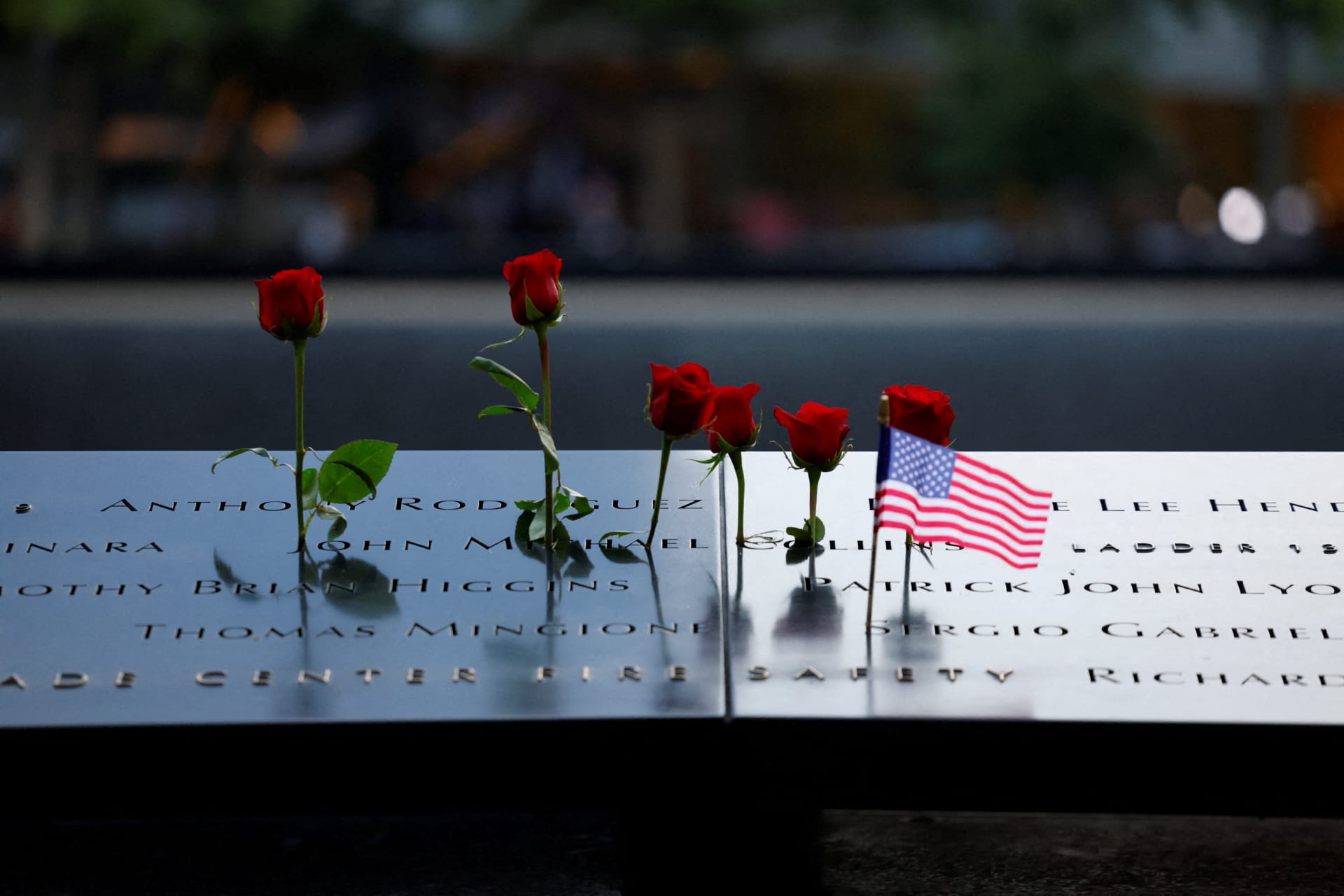
The 9/11 Effect and the Transformation of Global Security

The scale and audacity of the terrorist attacks on September 11, 2001, spurred sweeping changes in the way the United States, its partners, and adversaries used the machinery of state and technology to respond to threats. In this Council of Councils global perspectives, five experts reflect on the legacy of the attacks and offer insights into the biggest changes in counterterrorism, human rights, surveillance, international law of war, and border security.
REUTERS/Mandel Ngan/Pool (CUBA)

Global Memos

Briefs that gather opinions from global experts on major international developments.

Subscribe
View All
Canadian Prime Minister Justin Trudeau, European Council President Charles Michel, U.S. President Joe Biden, Japan's Prime Minister Yoshihide Suga, British Prime Minister Boris Johnson, Italy's Prime Minister Mario Draghi, French President Emmanuel Macron, European Commission President Ursula von der Leyen and German Chancellor Angela Merkel pose for a group photo at the G7 summit, in Carbis Bay, Britain, June 11, 2021.

Biden's Summitry Was Reassuring for the West. Now Comes the Hard Part.

Transatlantic relations were boosted by nearly a week of summits marking U.S.

World leaders appear on a video screen during a virtual Climate Summit with world leaders in the East Room at the White House in Washington, DC, on April 23, 2021. REUTERS/Tom Brenner

Biden's Welcome Climate Reboot and the Daunting Diplomacy Ahead

In this Council of Councils global perspectives roundup, experts at lead

An explosion caused by a police munition is seen while supporters of U.S. President Donald Trump gather in front of the U.S. Capitol Building in Washington, DC, on January 6, 2021.

U.S. Capitol Breach Was a Shot Heard Round the World

In this Council of Councils global perspectives roundup, members of five

Two men with surgical masks on stand in front of a large screen showing a virtual APEC Economic Leaders Meeting 2020, which was hosted in Malaysia on November 20, 2020.

Up in the Air: Ten Global Summits That Will Test Joe Biden in 2021

Summit diplomacy was a prominent casualty of COVID-19 during 2020.

A person uses an extinguisher toward a burning paper-made globe during a demonstration against the fossil fuel industry in Frankfurt, Germany on October 21, 2020.

Blueprint for 2021: Six Paths to a More Resilient World

In 2020, the world was confronted by a litany of challenges compounded by the coronavirus pandemic.

Democratic U.S. presidential nominee Joe Biden makes a statement on the 2020 U.S. presidential election results during a brief appearance before reporters in Wilmington, Delaware on November 5, 2020.

Biden and the World: Global Perspectives on the U.S. Presidential Election

In this Council of Councils global perspectives roundup, members of seventeen leading global think tanks reflect

The UN at 75

The UN Turns Seventy-Five. Here's How to Make it Relevant Again.

The United Nations, founded in the aftermath of World War II’s devastation,

DaSun Millard stands next to the newly named "Black Lives Matter Plaza" sign near the White House, during a protest in Washington, DC. on June 6, 2020. REUTERS/Jim Bourg

How U.S. Civil Protests Resonate With Publics Worldwide

Council of Councils global perspectives roundups gather opinions from experts on major international developments.

A medical worker in protective suit takes a break at an isolated ward of Wuhan Red Cross Hospital in Wuhan, China on February 16, 2020.

Coronavirus: The View From Italy, China, Singapore, India, and the UK

Council of Councils global perspectives roundups gather opinions from experts on major international developments.

An anti-Brexit demonstrator waves a Union flag alongside a European Union flag outside the Houses of Parliament in London on March 28, 2018. Tolga Akmen/AFP via Getty Images

Brexit Is Here: The EU and UK Must Brace for the Consequences

Council of Councils global perspectives roundups gather opinions from experts on major international developments.

Police fire tear gas at anti-extradition bill protesters during clashes in Sham Shui Po in Hong Kong, China, on August 14, 2019. REUTERS/Thomas Peter

The State of Democracy in 2020: Crisis or Renewal?

What are the prospects of democracy in 2020?

World leaders walk off after a family photo session at the G20 leaders summit in Osaka, Japan on June 28, 2019. REUTERS/Kevin Lamarque

Six Global Summits to Watch in 2020

As the second decade of this century comes to a close, effective multilateral cooperation seems to be on the ropes.

Subscribe

Events

The Council of Councils Tenth Annual Conference

May 24-25, 2021
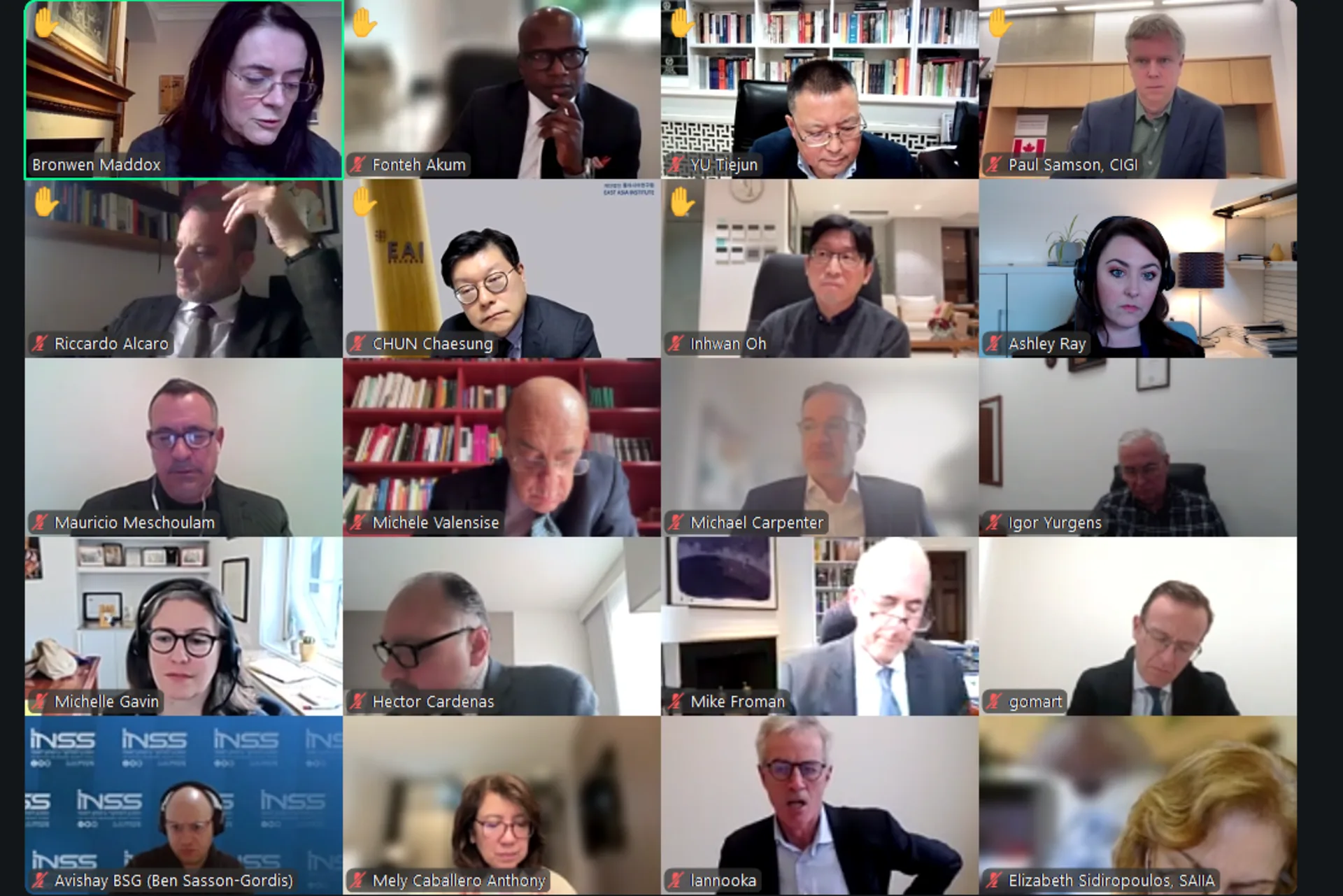
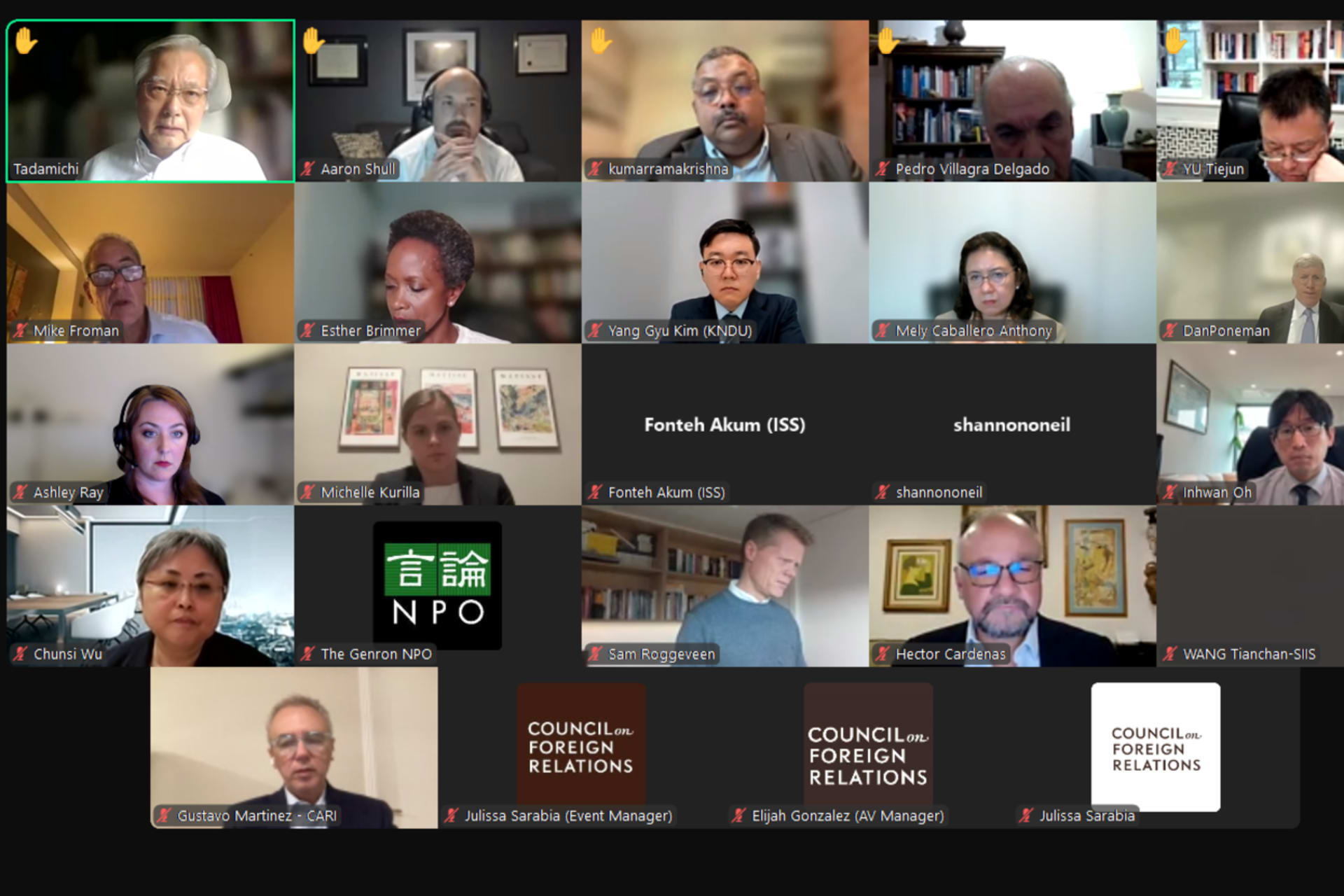
Participants at the Council of Councils Tenth Annual conference
All Events


The Council of Councils Ninth Annual Conference

Nov 9-10, 2020
Participants at the Council of Councils Ninth Annual conference
All Events

Global Governance Working Papers

These papers identify new principles, rules, or institutional arrangements that can improve international cooperation in addressing global challenges.

View All
An inflatable nuclear missile balloon stands at the ready before a protest held by the group Global Zero in McPherson Square on April 1, 2016 in Washington, DC. The protest, designed to rally support for the elimination of nuclear weapons, was timed to occur at the same time as world leaders were meeting at the Nuclear Security Summit being held today in Washington.

Reinventing Nuclear Disarmament and Nonproliferation as Cooperative Endeavors

Apr 21, 2021

Differences between nuclear and nonnuclear weapons states could seriously weaken the nuclear regime. Recasting disarmament as a common endeavor that addresses each country’s legitimate interests and priorities would improve its prospects.

A Spy Satellite orbiting the cloud covered Earth

The Outer Space Treaty: Overcoming Space Security Governance Challenges

Feb 23, 2021

Outer space is growing more crowded and contested. Rajeswari Pillai Rajagopalan recommends regulating activities that disrupt, deny, or destroy space systems to ensure outer space is available to all. 

A diplomat walks through the main doors of the assembly building at the UN headquarters in New York, on September 17, 2015. Mike Segar/Reuters

From Norm-Takers to Norm-Makers Making African Voices More Effective at the United Nations

Jul 27, 2020

African UN member states should act as unifiers and conveners rather than dividers. More coordination could help them overcome the structural challenges they face at the United Nations.

A Palestinian doctor examines a patient’s eyes at a medical center in a refugee camp in the West Bank town of Bethlehem, on May 7, 2012. Ammar Awad/Reuters

A Silent Crisis The Rise of Noncommunicable Diseases in Refugee Settings

Jan 30, 2020

Refugee health needs in non-camp, urban settings have increasingly shifted to noncommunicable diseases. Providing preventive care and specialist treatment requires a massive influx of resources, but it is well worth the investment.

Rohingya refugees wait for medical checkups in Cox’s Bazar, Bangladesh, on January 21, 2018. Mohammad Ponir Hossain/Reuters

Refuge From Disease Mitigating Communicable Diseases in Refugee Populations

Jan 30, 2020

Mitigating potential communicable disease in refugee populations is a subset of efforts for human rights, equality, and dignity. A basic multilateral framework could improve health care in these situations and provide an example for future challenges.

The Anticipatory Governance of Solar Radiation Management

The Anticipatory Governance of Solar Radiation Management

Jul 02, 2019

Emission reductions alone are unlikely to prevent severe climate change impacts. As researchers and policymakers pay increasing attention to measures such as solar radiation management (SRM), states and private actors need to agree on the potential role of SRM in the overall climate change regime and to recognize its limitations.

Reevaluating Global Trade Governance Structures to Address Climate Change

Reevaluating Global Trade Governance Structures to Address Climate Change

Jul 02, 2019

Climate change poses an immense challenge to the biosphere and global economy. To make international trade more environmentally friendly, the world needs to use rules that have been around for decades, create new rules, and find new space for climate change policy.

India and the World: Fueling a New Low-Carbon Growth Model

India and the World: Fueling a New Low-Carbon Growth Model

Dec 13, 2018

India’s capability to grow in a carbon-scarce world will determine the fate of the Sustainable Development Goals. For India and other countries to conduct low-carbon transitions in an economically sustainable manner, it is imperative that they address the fractured financial state of power distribution companies, the lack of developed financial markets, and stringent international financial regulations.

Arctic Governance: Challenges and Opportunities

Arctic Governance: Challenges and Opportunities

Nov 29, 2018

As national governments, international institutions, and nonstate actors explore different approaches to Arctic governance, a cohesive approach is necessary to address the environmental, economic, sociocultural, and geopolitical challenges this region faces.

This paper has benefited from numerous comments and suggestion from Council of Councils members, in particular Jennifer Spence (Centre for International Governance Innovation), Sergey Kulik (Institute of Contemporary Development), Ettore Greco (Institute of International Affairs), and Tobias Etzold (German Institute for International and Security Affairs). The author also thanks CFR’s editorial staff and Terrence Mullan for their valued contributions to this paper.

Global Monetary Policy Divergence and the Reemergence of Global Imbalances

Global Monetary Policy Divergence and the Reemergence of Global Imbalances

Jun 26, 2018

To minimize the risk of greater global imbalances, U.S. policymakers should rethink U.S. fiscal policy and focus on the transatlantic imbalances, not the bilateral trade deficit with China.

This paper has benefited from numerous comments and suggestion from Council on Council members, in particular Brad Setser and Terrence Mullan.

Domesticating the Giant: The Global Governance of Migration

Domesticating the Giant: The Global Governance of Migration

Jun 19, 2018

A global policy framework and consolidated institutional architecture can help states facilitate regular migration, cope with illegal crossings, and humanely respond to forced migration.

The author thanks Asmita Parshotam (South African Institute of International Affairs), David Kipp (German Institute for International and Security Affairs), Asli Selin Okyay (Institute of International Affairs), Stewart Patrick (Council on Foreign Relations), and Christophe Bertossi and Matthieu Tardis (French Institute of International Relations) for their comments.

Increasing International Cooperation in Cybersecurity and Adapting Cyber Norms

Increasing International Cooperation in Cybersecurity and Adapting Cyber Norms

Feb 23, 2018

The world must not allow the establishment of cyber norms to atrophy. It is imperative that international cyber cooperation increases to protect the stability and resiliency of the global digital economy. Proposals for cooperation include restarting the U.S.-Russia dialogue, reconvening UN experts and implementing existing norms, starting discussions on a global cybercrime convention, and codifying cyberattack legislation into international law.

Member Articles

A collection of CoC member institute articles, blogs, and reports on global governance and international cooperation.

View All
Solidarity in Response to the COVID-19 Pandemic
The authors examine the state of solidarity at global, regional, and national levels, and they present case studies on COVAX and the EU’s turbulent jo...
Jul 14, 2021 by Afifah Rahman-Shepherd, Charles Clift, Emma Ross, Lara Hollmann, Nina van der Mark, Benjamin Wakefield, Champa Patel, and Robert Yates, Chatham House
Beyond the UN: Closing the Humanitarian Funding Gap
As humanitarian assistance by governments outside the UN multilateral aid system increases, the world needs a better understanding of the different fu...
Jul 08, 2021 by Armida van Rij, Chatham House
The UN and Women's Marginalization in Peace Negotiations
UN Women and other international organizations have published reports arguing that women's participation increases the success and inclusion of peace ...
Jul 05, 2021 by Andrea Schneiker, Chatham House
Opportunities for Green Growth: In Search of Multilateral Coordination
The opportunity for a green recovery in a post-COVID-19 world requires long-term commitments and policies....
Jul 05, 2021 by Luca Franza and Nicola Bilotta, IAI
UN-AU Partnerships are Crucial to International Peace
Cooperation between the UN and the African Union (AU) in peace and security has improved markedly....
Jun 30, 2021 by Hanna Tetteh, ISS
The Urgent Race to Net Zero: Exploring African Priorities for COP26
The global COVID-19 pandemic has marked a turning point in business-as-usual practices, highlighting the need to re-think and re-establish economy-wid...
Jun 23, 2021 by Romy Chevallier, SAIIA
Global Governance at a Turning Point
This book collects contributions from international experts on how the 2021 Italian Presidency of the G20 could advance a renewed global governance ag...
Jun 14, 2021 by Ettore Greco, Fabrizio Botti, and Nicola Bilotta (eds.), IAI
Holding Up a Mirror to the World Trade Organization: Lessons from the COVID-19 Pandemic
The COVID-19 pandemic highlighted the shortcomings of trade multilateralism and its primary regulator, the World Trade Organization (WTO)....
Jun 03, 2021 by Amrita Narlikar, ORF
The Case for Waiving Intellectual Property Protection for COVID-19 Vaccines
This report argues that provisions under the WTO’s Trade-Related Aspects of Intellectual Property Rights are inadequate to ensure adequate production ...
Apr 06, 2021 by Prabhash Ranjan , ORF
Can the G20 Deliver? Priorities for a Post-Pandemic World
The Group of Twenty (G20) can lead the global economic recovery post-pandemic in a multilateral, inclusive, and sustainable manner....
Apr 05, 2021 by Shruti Jain, Aarshi Tirkey, and Nandini Sarma, ORF
Rebuilding Trust is Central to the UN’s Future
Amid a deepening geopolitical rivalry and North-South divide, the UN can bolster its legitimacy by supporting cross-regional relationships, identifyin...
Mar 25, 2021 by Sam Daws, Chatham House
An Agenda for the G20 to Reset Global Trade Cooperation
G20 countries can craft a collective trade and investment response to fight the pandemic, support global economic recovery, and build a better future....
Mar 01, 2021 by Anabel González, IAI

  • About CFR
  • Think Tank
  • Support CFR
  • For Media
  • Careers
  • Contact Us
Subscribe to receive Council of Councils Global Memos.
©2021 Council on Foreign Relations. All rights reserved. Privacy Policy and Terms of Use.

Browse more CFR newsletters

Search

Popular Searches

  • Report Card
  • Arctic
  • Regional Conference
  • Global Memos
  • G20 Summit
  • Migration
  • North Korea
  • China
  • India
Home
Home
Council of Councils

Main navigation

Main navigation
  • About Us
  • Events
  • Global Memos
  • Member Articles
  • Global Governance Working Papers
  • Report Cards

CFR.org

  • Topics

    • All Topics
    • Defense & Security
    • Diplomacy & International Institutions
    • Economics
    • Energy & Environment
    • Health
    • Human Rights
    • Politics & Government
    • Social Issues
  • Regions

    • All Regions
    • Americas
    • Asia
    • Europe & Eurasia
    • Global Commons
    • Middle East & North Africa
    • Oceania
    • Sub-Saharan Africa
  • Think Tank

    • More Think Tank
    • CFR Experts
    • Centers & Programs
    • Blogs
    • In the News
    • Publications
    • Fellowships
  • CFR Presents

    • CFR Presents
    • Events
    • Series
    • Explainers
    • Quizzes
    • Podcasts
    • Conference Calls
    • Independent Task Force Program
  • CFR Campus

    • All CFR Campus
    • About CFR Campus
    • Programs
    • Teaching Notes
    • Model Diplomacy
    • World101
  • About CFR

    • All About CFR
    • Membership
    • Member Programs
    • Outreach
    • For Media
    • Careers
    • Support CFR
    • Contact
  • Member Login
  • ForeignAffairs.com
Facebook Twitter Youtube Instagram Linkedin