 Council of Councils
 Think Global Health
 Online Store
Introduction
Over the last several decades, governments have collectively pledged to slow global warming. But despite intensified diplomacy, the world is already facing the consequences of climate…

Centers & Programs
Asia Program
Asia’s rise will define the twenty-first century. Pressing matters in East, South, and Central Asia—from North Korea’s nuclear program to the economic ascension of China and India—have global implications far beyond the region’s borders. And what happens in Asia will shape and be shaped by American foreign policy, society, and trade. The Asia program at the Council on Foreign Relations informs policymakers, business leaders, and the public at large about the complex future that lies ahead for the world’s largest and most economically dynamic continent.
60% share of the world’s population living in Asia
Featured

An uptick in the number of new marriages in 2023 is likely a only temporary blip rather than a long-term change from China's steady transition to a rapidly aging society.
China's decline in economy and influence might indicate its unlikeliness to displace the United States as a leading global power in the foreseeable future. This development calls for a reevaluation of the U.S. policy towards China.
As conflict intensifies in the Middle East, India's government attempts to juggle relations in the region.
China and India compete for leadership of the Global South, but it remains unclear whether either is winning.
Bangladesh’s unfree election is part of a larger trend of democratic regression in South and Southeast Asia.
This interactive map tracks China’s growing maritime influence through investments in strategic overseas ports. Users can plot the location of each port and view satellite images alongside detailed information on the share of Chinese ownership, the total amount of Chinese investment, and the port’s suitability for use by the Chinese military.
As China turns the page from its reform era, the Chinese Communist Party's official discourse increasingly references the country's imperial past.
The national security trial of Jimmy Lai, founder of Apple Daily and pro-democracy activist from Hong Kong, is scheduled to take place this December. Please join our speaker, Caoilfhionn Gallagher KC, accomplished human rights lawyer leading the international legal team defending Mr. Lai and an expert in accountability for crimes against journalists, to discuss the case of Jimmy Lai and Apple Daily and the wider ramifications for media freedom and the rule of law in Hong Kong and across the region.
Hearing on Security on the Korean Peninsula
Mr. Chairman, I am pleased to have the opportunity to testify before this committee on the security situation on the Korean Peninsula. We have just …
Chair Cleveland, Chair Glas, and members of the Commission, thank you for inviting me to testify before the Commission. I appreciate the opportunity to appear before you today to testify abo…
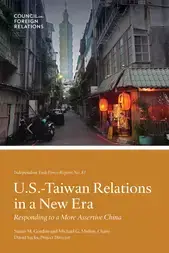
Although a conflict in the Taiwan Strait has thus far been avoided, deterrence has dangerously eroded. To maintain peace, the United States must restore balance to a situation that has been allowed to tilt far too much in China’s favor.
Itochu Corporation Managing Executive Officer Chino Mitsuru Claire shares about her path to corporate leadership.

The alliance between the United States and South Korea has endured through seven decades of shifting regional and geopolitical security contexts. Yet it now faces challenges from within. Domestic pol…
Program Experts


Senior Fellow for China and Indo-Pacific Studies and Director of the Initiative on China Strategy


Ira A. Lipman Chair in Emerging Technologies and National Security and Director of the Digital and Cyberspace Policy Program (ON LEAVE)


-
India's diplomacy will be tested if the Gaza war continues indefinitely, or if relations between Israel and Arab nations further decline.
-
Summary The U.S.-South Korea alliance has been the cornerstone of bilateral cooperation and the U.S. security presence in the Indo-Pacific region for over seven decades and continues to serve as a…
-
A court in Hong Kong has ordered the liquidation of Chinese property developer Evergrande Group, once the world’s largest real estate company. The failure could pose obstacles to China’s economic recovery.
-
The February 14 election marks a potential turning point in Southeast Asia’s most powerful state, likely determining its future relations with China and the United States, and the fate of the country’s own democracy.
-
The country’s steady military and technological progress, coupled with its leader Kim Jong Un’s increased hostility toward foreign influences, raises concern about Pyongyang’s ambitions. Here’s a breakdown of recent trends.