Letter From the Chair
Annual Report 2025
By experts and staff
- Published
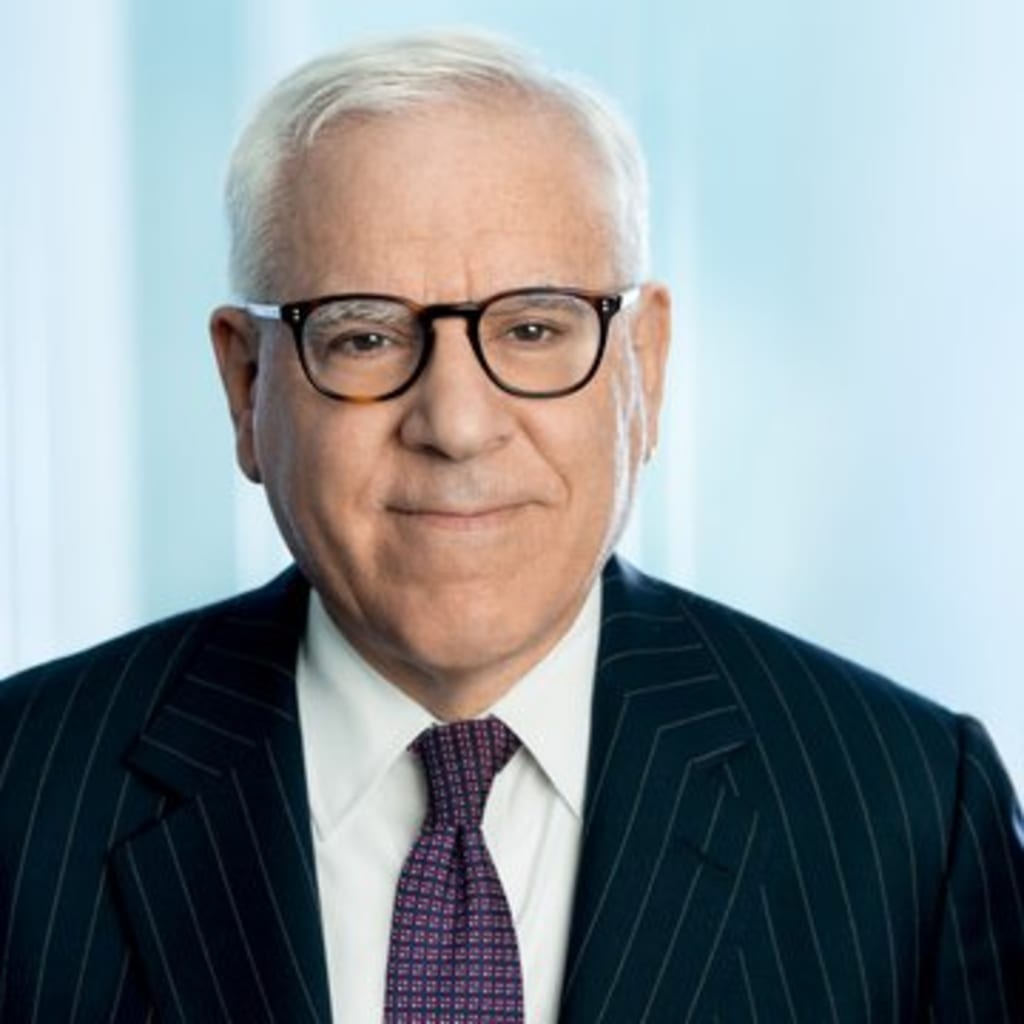
They say that history does not repeat itself but that it does rhyme. Looking back one hundred years ago, the pages of Foreign Affairs were filled with lively essays on the geopolitical implications of concentrated supply chains, the impact of retaliatory tariffs on U.S. exports, and the perpetual question of European security. Yet history can only take us so far. Today, the Council needs to blend the lessons of the past with fresh ideas and a scalable theory of impact. In the 2025 fiscal year, we endeavored to strike that balance and act with the urgency required to address the core foreign policy challenges facing the United States.
Grounded in its founding principles of nonpartisanship and independence, the Council served record demand across its activities this past year while laying the foundation to further increase impact and broaden the Council’s reach. That success was a testament to the resilience and commitment of the Council community, from its leadership and scholars to its staff, partners, and, importantly, members.
Council members are the lifeblood of the enterprise and a key driver of the institution’s growth and achievements. In addition, of course, to paying their dues, members are so often the central draw for the Council’s guests, the source of the thought-provoking questions that define our programming, the keepers of institutional memory, the sources of insight in Council publications, and ambassadors for U.S. engagement with the world.
Demand for life and term membership at the Council continues to rise, along with the quality and diversity, in all its dimensions, of prospective applicants. In the 2025 fiscal year, the Board elected 387 new life members, spanning a wide array of political perspectives, occupations, and hometowns. We also elected two hundred new term members, the Council’s largest term member class to date. The Council continues to enhance the member experience, with a renewed emphasis on Council trips and immersive programming. In that undertaking, we have worked to foster a vibrant and deeply connected community of foreign policy thinkers with unparalleled viewpoint diversity and expertise at the Council’s offices and around the country.
This year marks the completion of Mike’s second year as president of the Council. He has assembled a world-class leadership team that combines longtime veterans, talent promoted from within, and new faces who have brought best practices from other organizations. Together, they bring fresh ideas to the fore without diluting the strong traditions and practices that have made the Council the special institution it has grown to be over the last 104 years.
To help guide the Council’s management, and also represent broadly the interests of our membership, I am pleased to welcome Thomas E. Donilon, Christopher P. Liddell, and Linda Thomas-Greenfield to the Board of Directors—all of whom bring unique perspectives from the public and private sectors that will prove essential to the institution for years to come. Those new directors fill big shoes left by Stephen J. Hadley, James Manyika, and Richard L. Plepler, to whom we all owe a debt of gratitude for their combined thirty years of service to the Council. And at a time when the United States’ relationship with the rest of the world is changing rapidly and unpredictably, the Council has been proud to welcome Carl Bildt, David Cameron, and James Mwangi to the Global Board of Advisors—the body of global business leaders and former government officials charged with integrating international perspectives into all dimensions of the Council’s work.
I am pleased to report that the Council’s finances are as sound as ever. The Council’s diverse funding model and generous membership enabled the institution to close this past year on remarkably strong footing, including robust growth in the endowment—which funds a sizable portion of the Council’s operations. Even after making significant investments in the Council’s facilities, human capital, digital operations, and programming, we posted a modest budget surplus for the 2025 fiscal year.
Thanks to your support, the 2025 Annual Fund raised an all-time high of $11.1 million. Additional backing from leading philanthropists on the member roll and foundations brought in $32 million in unrestricted gifts, the largest-ever sum for a noncampaign year. The Corporate Program—the Council’s bridge to the business community—generated an additional $6.5 million in revenue and is well positioned to grow in the year ahead as member companies increasingly seek guidance from Council scholars to mitigate policy risks and capitalize on geopolitical trends. The CFR endowment achieved a return of 12.9 percent in the 2025 fiscal year, which brought the portfolio’s total assets to just shy of $670 million. Life and term member dues likewise remained strong, as did auxiliary revenues.
The Council’s magazine, Foreign Affairs, had another banner year, both in terms of defining the debate over major foreign policy issues and financially, despite broader upheaval in the media sector. In 1921, an issue of Foreign Affairs cost $1.25. Adjusted for inflation, the publication is an even greater bargain today. Foreign Affairs closed the 2025 fiscal year with total revenue of over $12 million, in line with the magazine’s record revenue from last year, and a stable subscription base. Much as it does for the rest of the Council, geopolitical volatility manifests in demand for the magazine’s insights.
This is an important time for the Council to step up and meet the moment. That will involve investing further in scholars, other talent, and the mechanisms necessary to ensure that the Council’s work reaches both policymakers and foreign policy experts, as well as opinion-makers and the broader public.
Throughout this effort, one element of the Council that will remain unchanged is our commitment to our founding principles of nonpartisanship, independence, and intellectual rigor. The past twelve months laid bare the critical importance of maintaining those principles. The Council does not take any institutional positions on issues. Rather, our position is that ideas, including those that could clash sharply with consensus foreign policy thinking, ought to be assessed openly, on their merits, right here at the Council.
As we head into the 2026 fiscal year, my fellow members of the Board and I look forward to helping shepherd the Council through this moment of upheaval and opportunity. My sincere thanks to all the Council’s supporters, including its staff and members, speakers, Foreign Affairs subscribers and contributors, and the interested public for making our work possible and strengthening the Council’s standing as the leading independent foreign policy institution in the world.