- Events
- Webinar
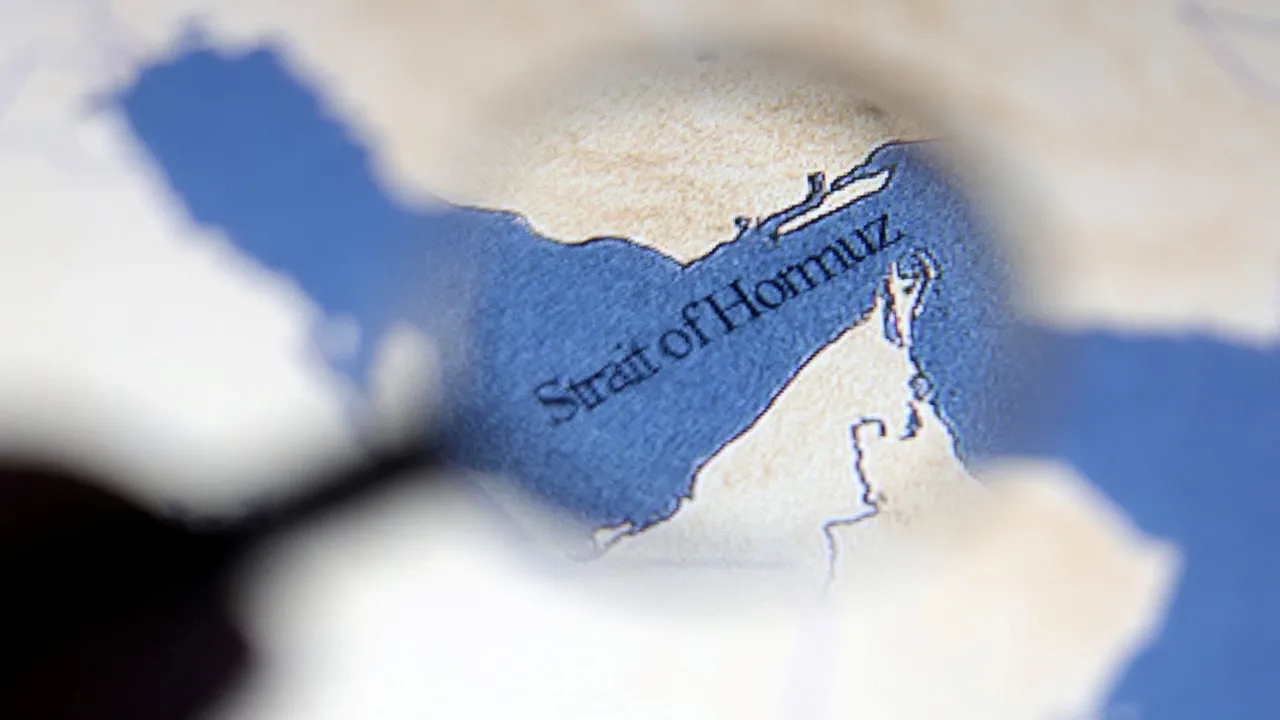
Global Affairs Expert Webinar: U.S.-Gulf Relations and the Strait of Hormuz
Watch Neda Bolourchi and Daniel B. Poneman colead a conversation on U.S.-Gulf relations and the Strait of Hormuz.
Event Date
Location
Neda Bolourchi, nonresident fellow at the Institute for Global Affairs at Eurasia Group, and Daniel B. Poneman, member of the board of directors at CFR and former U.S. deputy secretary of energy, colead the conversation on U.S.-Gulf relations and the Strait of Hormuz.
These webinars provide an opportunity for college and university educators and students to discuss global issues with CFR fellows, Foreign Affairs authors, and other leading experts. To register for future invitations, please complete this form or email [email protected] with your name, title, and academic affiliation.
Speakers
Neda Bolourchi
Nonresident Fellow
Institute for Global Affairs at Eurasia Group
Daniel B. Poneman
Member, Board of Directors; Former U.S. Deputy Secretary of Energy
Council on Foreign Relations
Presider
Irina A. Faskianos
Vice President, National Program and Outreach
Council on Foreign Relations
Transcript
FASKIANOS: Thank you so much. Welcome to today’s session of the Fall 2026 Global Affairs Expert Webinar series. I’m Irina Faskianos, vice president of the National Program and Outreach here at CFR. This webinar series provides a forum for students and educators to interact with CFR experts and other thought leaders and participate in foreign policy discussions. So we appreciate your joining us.
Today’s discussion is on the record. The video and transcript will be available on our website CFR.org/education, if you would like to share the materials with your colleagues or classmates. As always, CFR takes no institutional positions on matters of policy.
We’re delighted to have Neda Bolourchi and Daniel Poneman with us to talk about U.S.-Gulf relations and the Strait of Hormuz.
Dr. Bolourchi is a senior nonresident fellow at the Institute for Global Affairs at the Eurasia Group and a political historian at Rutgers University, specializing in Iran, the Middle East, technology, and U.S. foreign policy. She has served as a senior advisor and consulting technical expert to the U.S. Department of Defense, CENTCOM, and the U.S. Department of State, and is the executive director of the Public Affairs Alliance of Iranian Americans. A former human rights attorney, she has conducted extensive field research across the Middle East, including years on the ground in Iran and Syria.
Secretary Poneman is a member of the board of directors at CFR with expertise in nuclear security issues. He served as U.S. deputy secretary of energy and chief operating officer of the department from 2009 to 2014, including a period as acting secretary of energy, and previously served as special assistant to the president and senior director for nonproliferation and export controls at the National Security Council. He also served as president and CEO of Centrus Energy Corp., a supplier of nuclear fuel and services for the nuclear power industry.
So, thank you both for being with us. I think we’ll start first with you, Neda, to talk about the current state of U.S.-Gulf relations and the Strait of Hormuz, talking about energy and security dimensions, and what you see is the landscape that we are facing right now.
BOLOURCHI: Thank you so much, Irina. And thank you, everyone, for joining us today.
I’m going to approach the subject through the wider security system and systems analysis, which I think is really vital, whether you’re coming at things from a policy, legal, or risk analysis point of view. And I’m going to make seven connected points about what the Iran war has revealed. My focus is to try to answer three questions: What Gulf partners expect the United States to protect, what they are building for themselves, and how efforts to gain autonomy create potential new security dependencies.
My first two points I think a lot of us already know. The first one is that Hormuz is narrow, but the system it anchors is vast. And since the Iran-Iraq War, the United States military, Gulf governments, and energy planners have studied and war gamed disruption around the strait. Mines, missiles, interrupted exports, and price shocks were known risks. But knowing that a system is vulnerable is not the same thing as predicting exactly how its failure will propagate. Hormuz anchors a network of production fields—electricity, pipelines, ports, ships, insurers, and military production. Disabling only a few links can make an entire export route unusable. The broader effects on food prices, industrial inputs, and the wider economy were definitely foreseeable, and their scale, consequence, sequence, and interaction, those were harder to calculate. The failure is less a lack of awareness than a willingness to discount those systemic consequences.
And, relatedly, number two, Iran doesn’t need to close the strait physically to exercise leverage. Physical closure and commercial closure are not the same thing. Iran needs to create enough danger that shipping companies, crews, insurers, and customers become reluctant to use Hormuz. And that’s what we’ve seen for almost an entire six months. A tanker can retain the legal right and physical ability to—excuse me—transit, while remaining in port because insurance is unavailable, the crew will not accept the risk, or costs destroy economics of the cargo. Missiles, drones, harassment, and uncertainty, therefore, give Iran leverage exceeding the damage caused by any one attack. And this is how geography becomes coercive, power through markets.
Now, more recently we’ve seen, and my point number three, is that bypasses reduce dependence on Hormuz, but they can’t replace it. Saudi Arabia can move crude west through the East-West Pipeline to Yanbu. The UAE can move crude from Abu Dhabi to Fujairah. Iraq and Kuwait are considering additional outlets. In 2025, roughly twenty million barrels per day of oil and petroleum products moved through Hormuz. The principal Saudi and UAE bypasses can accommodate only a fraction of that flow. And even those barrels still depend on functioning infrastructure, secure terminals, ships, crews, and insurers. So my point is, a buried pipeline protects one segment of the chain. It cannot bury the export system. So, the relevant comparison is not a strait versus a pipeline. It’s one complete export system versus another.
Four, again kind of along the same lines, the market has adapted, but that also means that the bottleneck has moved. So we see emergency stock releases. So we can talk about U.S. and China and what the IEA (International Energy Agency) has done recently in the Q&A, but emergency stock releases, alternative routes, protected passages, additional production, and reduced demand absorbed part of the crude shock. But restoring crude flow does not repair damaged refineries, replenish product inventories, create additional tankers, or eliminate war risk insurance costs. The war has extended beyond crude supply into refined products, shipping, and logistics. Diesel remains particularly exposed to constrained product supplies and expensive freight for this very reason. The bottleneck moved. It did not disappear.
Five, in relation, again, to Saudi Arabia, and UAE, and others, and in particular UAE, has built redundancy. But it has not built strategic independence. And what this means is, in the Abu Dhabi crude oil pipeline it provides a route to Fujairah on the Gulf of Oman. For cargos traveling to Asia, tankers can enter the Indian Ocean without passing through either Hormuz or Bab al-Mandab. And that’s real strategic optionality. But LNG (Liquefied Natural Gas) exports, offshore production, refineries, and air and missile defense retain separate vulnerabilities. And expanding Fujairah also concentrates more strategic value in a coastal hub, a fixed coastal hub. Emirati redundancy is a form of strategic hedging, reducing exposure to Iranian coercion and uncertainty about Washington’s response. Yet, the infrastructure outside of Hormuz still requires intelligence, maritime security, and escalation management by the United States, as it is well-positioned to help.
Along these lines, number six, every workaround creates another indispensable node. Saudi Arabia demonstrates this work around paradox. Pressured Hormuz increases the importance of East-West Pipeline and Yanbu, but it makes their pumps, their power supply, and their terminals more consequential targets. And so once the oil reaches the Red Sea, as we’ve seen, it still requires secure shipping. Cargos traveling towards Asian markets may then encounter the threat environment surrounding Bab al-Mandab. And so each alternative gives Iran or an aligned actor another indispensable node to pressure. And the attack—what that means is that, obviously, the attack surface expands from one maritime passage to a regional network. And spare capacity on paper therefore does not necessarily constitute resilience. A genuine alternative must remain operational under the same crisis conditions that made the original route unavailable. And so for Washington, protecting Gulf flows may now mean defending inland infrastructure, ports, and Red Sea shipping, along with Hormuz. And that begs the question, where does reassurance end and an open-ended commitment to defend an expanding network begin?
And I think really importantly here, and one of the questions I’ve posed elsewhere, is number seven. Iran is operating on two strategic clocks. On the first clock, Tehran has demonstrated that it can impose global costs without defeating the United States conventionally or maintaining a perfect blockade. Limited actions produce market consequences and political pressure. On the second clock, Iran is teaching neighboring governments and outside buyers why dependence on this geography is intolerable for many. Repeated coercion strengthens the case for bypasses, alternative suppliers, hardened infrastructure, foreign naval involvement, and closer security coordination. Iran is therefore trading some of its structural leverage tomorrow for coercive leverage today. And that may be rational if immediate pressure produces a favorable settlement, but we still have to see if they can keep these clocks running at separate times.
So in sum, for the U.S. and its partners, resilience requires complete alternative corridors, repair capacity, viable insurance, and political mechanisms that keep separate theaters from becoming one connected escalation system. Gulf states want greater autonomy and diversified partnerships, yet their workarounds still depend heavily on U.S. intelligence, air and missile defense, maritime protection, and logistics. Washington has to determine which forms of resilience to build with its partners, which risks those partners must absorb themselves, and how to prevent infrastructure protection from becoming an unlimited security guarantee. We can bypass a strait. We cannot bypass the need for a functioning system.
FASKIANOS: Thank you, Neda.
Let’s go to you, Dan, to talk more about the energy and nuclear implications of the instability in the strait, and the implications of the U.S.-Saudi nuclear cooperation agreement on U.S.-Gulf relations.
PONEMAN: Sure. And, first of all, thank you, Irina, for setting this up. And welcome to all of our listeners out there. And that was an outstanding laydown by Neda. And I am going to sort of use that as a predicate.
I’m going to put this in a broader historic context, knowing we have a lot of students out there. And I’m going to make four points. So the open book test will have seven points from Neda and four from me. So only eleven for you all to remember. But the first one is that the eighty-year structural doctrine of security in exchange for oil flows and the petrodollar is breaking down in real time in the course of this Gulf War. And I’d like to remind folks that on his way back from Yalta, President Franklin Roosevelt stopped on the Great Bitter Lake on the USS Quincy, and he met with King Abdulaziz Ibn Saud, and started this strategic relationship with the Kingdom of Saudi Arabia which is, in many ways, the linchpin of the relationships we have throughout the Gulf.
And a deal was effectively struck. And it went through various iterations, but it was a general guarantee of energy security, security of passage, which you just heard a lot about from Neda. And in exchange for the security that we provided, we got oil flows through that passageway. And then in the time of the Arab oil embargo, when this massive bankroll of cash wound up in the states of OPEC (Organization of the Petroleum Exporting Countries), the United States then provided an additional service of basically recycling those petrodollars through the financial system. All of this led to a level of cooperation that’s actually important for us to remember. At the time when I first joined the National Security Council, just a couple weeks after Saddam Hussein rolled into Kuwait, we ran what we called a tin cup exercise to get ready for Desert Storm, and, in the process of Desert Shield, protecting our assets out there.
We had every member of the Gulf Cooperation Council (GCC)—the United Arab Emirates, Saudi Arabia, Oman, Bahrain, and so forth. And we had—outside of the GCC, we had Egypt and Morocco and even Syria all contributing, to the point where the $61 billion cost of that war and that defense process were borne by countries in the region—97 percent. The United States taxpayer paid only $2 billion. We used to joke we could almost run that war at a profit. And they provided in-kind contributions, they provided cash, they provided troops, they provided equipment. It’s hard to conceive, with the fraying that we’ve seen in recent times, that level of coherence and support for an American strategic dominance in the region. So that time has now been basically consigned in the dustbin of history by the shattering events of this Iran war.
The countries of the Gulf used to view their relationship with the United States as a vouchsafe for their security. And now they find that it’s turned them into targets. They’ve targeted AWS (Amazon Web Services) datacenters. They’ve targeted U.S. bases in the region. The United States is now withdrawing from the bases to get out of harm’s way, because it turns out Iran is able to extend its reach. And we’ve just seen lately the U.S. even withdrawing from Britain, because of the risk of a drone attack the kind of which we saw in Russia at the hands of Ukraine. So we have a dramatically different situation. But I think even though we’ve seen this dramatic, frankly, downturn in terms of the stability of the core relationship that goes back to the FDR meeting with King Abdulaziz, it’s not in isolation. We have witnessed an erosion.
This is my second point. This current downturn is actually the consequence and sequel to a longstanding erosion of our relations in the Gulf. I witnessed this personally. I told you about the—I had the benefit of working in the White House at the National Security Council during Desert Shield and Desert Storm. I saw the high point. Now, when I came back into the government at the Energy Department, this was the time when Mubarak was removed from power. And I had very senior, very senior level consultations in the Gulf. Real disappointment in America. Real disappointment in the administration. We live in this neighborhood. We understand the Muslim Brotherhood. We understand things that you don’t. We may disagree at times, but we’re partners. You should talk to us. You should consult with us. And we didn’t. And I took that message back to the White House, and they tried.
But relationships matter. And trust matters. So I have—we have all seen over the last few administrations sort of a variety of situations. Frankly, the relationships at a personal level have been much warmer with the Trump administration, for a variety of reasons we won’t go into here, than with either the Biden or the Obama administrations, on the one hand. On the other hand, there is a—there was a consistency in approach from the Biden and Obama administrations that you don’t see as much here, where you have the Trump administration sometimes running hot and cold, viewing things in a much more transactional way. What’s the logical response from the Gulf? They hedge. So you see a lot more relationships developing with China, energy relationships, renewable energy relationships, financial relationships. You see the UAE now even providing some support to the monetary arrangements that may help insulate against dollar diplomacy.
So, I think we have to be mindful that we are now in a very different and challenged security environment. And this diversification and this hedging is not something that’s going to change overnight. One thing I remember very clearly back in 1979 was when former Secretary of State George Shultz wrote a very famous op-ed about light switch diplomacy. You can’t flip our relations on and off in a light switch and expect our partners to just jump when we say jump and not jump when we say sit still. It’s just not the way countries operate. Countries are run by people, and so they respond to human stimuli.
So, that’s really the third point, that this—now this hedging, that is a process that has begun because of these inconstancies that we experience, is very actively taking place. And it’s actually taking on a much more formal form. And I’m sure Neda could talk a lot about the arrangements at Mecca that were made between Turkey and Pakistan and Saudi Arabia. This is a very clear hedging. When you don’t have the kind of confidence in a strategic partner and ally like they used to repose in the United States, you got to hedge your bets.
And I’m going to segue off of this third point to my fourth and final point, which is the one that Irina teed up, which is the Saudi-U.S. nuclear deal. Because I think this is part of—and I don’t know how consciously so—a potential way to claw back some of the influence and some of the stability that we have seen erode over the last several years. Why do I say that? Because a nuclear energy relationship is really a century-long relationship. It takes ten years to plan, finance, and build the thing. It takes thirty or forty years to run the plant. And it takes another twenty or thirty to decommission, and store the fuel, and so forth. And I have, for my sins, been involved with this program since I was deputy secretary. It took the United States sixteen years—sixteen years—to negotiate this nonproliferation deal.
In the interest of time, and since we can talk about it in Q&A if you desire, I’m just going to make three very simple points about this nuclear deal. And I published on this. I did a debate with CFR recently. You can find—Open to Debate. So you can go as deep as you like. I’m going to make just three points. Number one, I think you need to view the U.S.-Saudi nuclear deal in the context of the broader conversation that you’ve had with Neda and me so far. It’s part of an architecture of a relationship of the United States not only with Saudi Arabia, but throughout the Gulf region, in which we can be, in my view we should be, strategic partners in support of their energy security, as well as in support of the defense of their sovereignty, as well as their primary financial partner. And I think to begin with that premise, you now have to shift to the actual terms of the nuclear deal.
There’s been a lot of conversation around this. There’s been a lot of anxiety and tearing of hair and gnashing of teeth that it doesn’t include something known as the Additional Protocol. We can get into in question and answer. But the bottom line is this: The terms that have been negotiated by—actually, they’re all career diplomats who have negotiated for U.S. presidents of both parties—have all of the nonproliferation terms that the U.S. nonproliferation regime, which is the strongest statutory regime in the world—it’s got nonexplosive pledges, it’s got promises to consult with us before they do anything with the material, it requires U.S. prior consent before they do any sensitive activity.
And on top of that basic base layer of conditionality, there’s an additional—what’s called a Bilateral Safeguards Agreement which has very intrusive inspection mechanisms, not inspected by the U.S. but inspected by the International Atomic Energy Agency (IAEA). The director general of that agency, Rafael Grossi, has said that these extra provisions are, quote, “very, very similar” to the Additional Protocol that many people would prefer—that I would prefer, frankly. And he said he would not take to the IAEA Board of Governors a deal that did not serve the purposes and the cause of nonproliferation.
And the third thing to realize, and I’ll close with this, is it’s not like this is a multiple-choice exam and that the right answer is going to turn out to be, none of the above. If the U.S. doesn’t do this deal, there’s basically four alternatives—Russia, China, France, Korea. I would submit to you, none of them have conditions or will ask for conditions even as strong as we already obtained. And if Russia or China get the deal, now you’ve handed this hundred-year relationship to our strategic adversaries. That is the shortest way to make sure you’ll never see an Additional Protocol. That is the shortest way to accelerate the deterioration of the security benefits that we have obtained the last eighty years from the strategic partnerships in this part of the world. So I actually don’t think it’s a very close call. I think that it’s deeply in our national security interest to proceed with this level of nuclear cooperation.
And moreover, to just put it in one bit of context, I think we have to remember that while the United States invented nuclear technology and for decades dominated the field, in the last several decades, for a variety of reasons I won’t get into, we’ve lost our leadership. The Russian order book globally is $200 billion of reactors. We were down to zero, and we finally got a $15 billion deal in Canada. We used to dominate global enrichment of uranium, which is the most strategic part of the fuel cycle. Now, we have basically a very tiny factory in the United States, and Russia has 46 percent of the world market. So to think that we can strut around and dictate terms and prevent Saudi Arabia from doing a deal with somebody because we don’t happen to like one particular provision that they have declined to sign, I think is basically delusional.
So I wouldn’t advocate that. And I think if we are able to conclude this agreement, which will enter into force if the Congress does not object in the rest of this calendar year, then I think we at least have a beachhead on which we can build, hopefully, continue some of the cooperation in AI and so forth, and hopefully get through this conflict, that has exposed all of these things to an unprecedented level of danger and erosion of American interests. So I’ll stop there.
FASKIANOS: Thank you very much, both of you.
We’re going to go now to the questions.
(Gives queuing instructions.)
So, I’m going to go first to a raised hand from Hasan Isgandar.
Q: Can you hear me?
FASKIANOS: Yes. If you can identify yourself, that would be great.
Q: Hello. My name is Hasan Isgandar. I’m an assistant professor at Western Carolina University in North Carolina.
My question is, so we see that United States position in the Middle East has changed. And I read a lot of different magazines, including Foreign Affairs magazine, that United States is not in the Middle East anymore as much as it was before. It’s losing Middle East and many other regions. Do you think this pattern is specifically related to the current government, and it can be reverted by the upcoming governments? Or United States lost its hard and soft power grip forever? What do you think? Thank you.
PONEMAN: I’ll let you go first.
BOLOURCHI: I was going to say, you have the tenure. I think that Dan has really laid this out, in the sense that you can’t turn relationships on and off. I think that the rise of China and China’s being very open about—to not interfere with domestic politics, but to make available military sales and technological sales to the governments is very appealing. But I do think its past of what I would consider predatory—which is not an issue for the Gulf, but in Africa—the equivalence of predatory lending makes China not such a great partner. But it is reliable. It is—it generally takes a back seat. And that is attractive. I do think that we also see that the Turks are—that Türkiye is wanting to establish itself more. We have that with UAE and Saudi Arabia. But unlike Türkiye, who has a lot of its own industrial base and cooperates with the Russians, the Israelis, the French, the other countries really are based in the United States.
So I do think that while the Persian Gulf countries tend to favor Republican administrations, and as, you know, the former secretary alluded to that, I think that’s what he was saying with Obama and Biden, is that there tends to be a little bit of a preference for Republican administrations. I do think that someone who very strategically looks at these relationships, what has damaged these relationships, regardless of party, can work to sort of remedy this this concern. And it’s a really serious concern. You know, this whole entire year has been very significant for the Persian Gulf countries, and what Iran has done across the board, both commercially, personally, and then on a policy level. And so I think it’s two years away, but I do think it’s repairable. But it is going to take concerted effort.
PONEMAN: Yeah. I would just very quickly add—I 100 percent subscribe to what Neda just said. First, we have to recognize the problem. When I was in government, I don’t think we recognized it, frankly, enough. I think these personal relationships, and embedding them in structural relationships, was neglected, OK? I think both the AI investments that we’re talking about in the region and the energy, including nuclear, I think have an opportunity to repair that, but only if we’re mindful of it. And we have a little bit of a benefit because, as Neda has said, there are predatory aspects to what China is doing, that they do recognize. But I have to say that relationships are much easier to rupture than to repair. And I think it would take a concerted effort for a sustained period. And I’m not sure that we could ever really restore the status quo ante, but I think we can claw it back if we are conscious and if we are dedicated.
FASKIANOS: Thank you.
I’m going to take the next written question from a class of students at Macomb Community College in Michigan: If the U.S. failed to force Iran to make concessions through military and economic pressure, what would make diplomacy more likely to work? Would negotiating an agreement that provides Iran with economic benefits encourage future aggression? Or is that an acceptable compromise to prevent a global economic crisis?
PONEMAN: Yeah, I can—
BOLOURCHI: Dan, you want to start? Great.
PONEMAN: Sure. So, Lincoln Steffens once said, “I’ve seen the future and it works.” Unfortunately, he was talking about communism, but it’s a good line anyway. And my reference here, as some of you may recognize, is to the Joint Comprehensive Plan of Action, which was effectively the kind of deal that—and, by the way, I’m from Toledo, Ohio, so I’m sympathetic to our friends from Macomb, Michigan. But I think that the premise of the question is fundamentally sound. That was the deal. There were economic benefits that were intended to flow. There were real constraints on the number of machines, on the level of enrichment, on the requirement to fill the calandria of the heavy water reactor that could produce plutonium, which the other weapon fuel outside of enriched uranium. And I think it was, like, a colossal blunder to walk away from that thing. And if you need any evidence of that, the fact that Iran ended up with 400 kilograms of 60 percent highly enriched uranium when we abandoned that agreement is proof positive. I think that it was a mistake to do so.
So I think we should try to get back into some kind of diplomatic arrangement on that. I frankly think one of the complaints about that deal was that it was only ten years. I don’t know what the net assessment is, but I think it’s quite challenging to suggest that the level of damage and setback from Midnight Hammer would have been a longer-term setback than what we achieved through diplomacy. So I sometimes favor what we call a precision-guided document, because—I’ll make one final point on this. I’ve worked on nonproliferation since 1975. I’ve seen a lot of things. So what’s the object lesson of Saddam Hussein? He gave up his nuclear program. And where did he end up? Hanged. Gaddafi. He gave up his nuclear program, and he ended up being, like, torn to shreds in the street. Ukraine gave up their nuclear program. I don’t need to tell this group what happened in Ukraine. It was not their nuclear program. They had weapons from the legacy arsenal of the Soviet Union.
What happened to Kim Jong-il and Kim Jong-un, I should say? North Korea, they produced a seismic signal and they’re immune. So Iran was dancing around and flirting with this line. I’m not going to step over the line, so I’m going to kind of milk the leverage of having a near-nuclear capability. But I’m not going to cross the line, because then I got hammered. Well, they got hammered anyway. So now what incentive do they have to show any restraint? So if they have people either brave enough or crazy enough to try to keep working on this, and they can actually—which they’ve been able to do before—get enough fissile material, we’re going to have a big problem. Therefore, I do think we should get back into diplomacy. And, yes, I do think in exchange for giving up, in a verifiable way, their nuclear weapons option, they should get economic benefits.
FASKIANOS: Neda.
BOLOURCHI: I mean, I don’t think I have too much additional to say, which is except for precisely the reason Dan’s laid out is why the nuclear scientists have been targeted over the past several years and assassinated. And I think that—and also, you now have the—just as a reminder, you also had the assassination of their leader Khamenei, who had issued a religious edict against nuclear weapons. And I know that a lot of people did not take that seriously. They took it seriously, and walked this line that Dan was talking about. With his assassination, just as a sort of a point, that religious order goes out the window, if they—if his inheritor, which is his son, so decides. And that was a thing—that was an issue that had been brought up prior to February, that they were discussing even prior to that. So I think, you know, as many people politically do not want to say it, functionally, tangibly, very detailed provisions tend to work.
FASKIANOS: I’m going to go next to Julie Mueller. There you go. If you can unmute yourself.
Q: Hello. My name is Arian Mahobadi. I am a student of Southern Maine Community College in Portland, Maine.
I wanted to ask what the possibility of cooperation between the United States and China to stabilize the region, in lieu of talks between Xi and Trump, is.
FASKIANOS: Dan.
PONEMAN: All right, I’ll take a—I’ve had conversations in China about this. And I’m obviously not intimate to the conversation with the President Xi Jinping. This is a big problem. And I was with a sort of track one and a half, very high-level delegation in China about a year ago. And I would just say, they gave us no comfort. No comfort. We were in these conversations. And a lot of what we were complaining about was the military support. You know, the Chinese were trying to draw this fine line. We’re not giving weapons. We’re not giving actual weapons. And so our complaint was, well, even if you’re not, and I’m not so sure about all that, you’re definitely giving them dual-use equipment that will facilitate their war effort. And one of our very high-level interlocutors, who was obviously serving tea at the time, held up a spoon. He goes, what is a dual-use item? Is this spoon a dual-use item? So basically, they told us, not in so many words but functionally, to pound sand. And so I repose very little confidence that, you know, we’re going to be able to get them to back off. I hope I’m wrong, but maybe Neda can give us a cheerier response.
BOLOURCHI: I think the little bit that I can sort of add to—or a little bit of cheeriness, is that, I mean, China is, and its reserves are precisely, I think, why the gas and diesel and the cost around the world of this war not higher. That the Chinese—and I want to sort of temper that by saying, their reserves, their renewables, their reductions significantly helped costs around the world, as did the United States reserves, as well as the international reserves. So it was a joint effort. Everyone has, I think, when answering this question, to remember that China really doesn’t want instability anywhere where it’s impacted. And so this fluctuation and wars is really not what it is looking for, because it hits its economic capacity, and its GDP. And you may recall that it hasn’t quite—I think it was earlier this year I had a friend who came back from China and was, like, they are internally reducing prices, right? They still have not recovered as expected from COVID. They’re still having internal domestic issues.
And even without discussing that part, China does not want fluctuations to its production lines. And all of that stems from the Strait of Hormuz, its access to Iran, in particular. And so it is very happy to see—as the Iranians were with Afghanistan and Iraq—China is very happy to see the United States, in essence, shoot itself in the foot and stand back, to an extent, and let these mistakes happen. But to a point, because China does hold a vast majority of the United States debt. So if you—right? So if someone owns your debt, it’s not just your problem. It’s their problem. And so I think that really goes to, like, the systems analysis and globalization of the world, of the interconnectedness. There’s a point, I think, where China will say, OK, like, enough. Like, and I do think we are in that period. And so, yes. I think China is happy to let the United States make mistakes, to a point.
FASKIANOS: I’m going to take a written question from Daria Gulino, who’s an undergrad student at Lewis University: If the war ends and peace is achieved, why does it still take months or years for prices and trade to return to previous levels?
BOLOURCHI: I will go ahead. Because, in essence, the capacity and the passthrough have not caught up, right? So it’s taken us months to get there. And so we just spent six months, in essence, where the products coming through the Strait of Hormuz were not coming. You had offsets again. The reserves around the world, you had bypassed, like I talked about, with Saudi Arabia coming—really turning on in September. The UAE, earlier, trying to really, with their bypass capacity. But that is just a fraction, as I mentioned, of what was originally pre-February 28 outflow. So, knowing the difference between your capacity, your outflow, and your products.
And so, again, some products are higher refined than other products. So, like, diesel is still in particular very high because the refining that has to happen with diesel. And in essence, you’re still dealing with the downstream products, like fertilizer. I think we’re still going to be looking at significantly high food prices because the food that is being produced now was—right, its season for planting and seeding and fertilizing was months ago. So the cost is still going to carry forward, even though we’re seeing a decline in the average pricing and capacity and outflow is happening. We’re still paying for what was input in terms of cost months ago. That would be my—yeah.
FASKIANOS: Great.
Dan, anything, or shall I go on to the next question?
PONEMAN: No, that was perfect.
FASKIANOS: Great.
OK. I’m going to go to a raised hand from Jihyun Kim. If you can identify yourself.
Q: Hello, can you hear me?
FASKIANOS: Yes.
Q: Wonderful. My name is Jace Hudson. I’m an undergraduate political science major at Bradley University.
What exact policies can the U.S. implement to strengthen energy infrastructure in the Gulf?
PONEMAN: Well I’ll take a first stab at that. I guess I would divide it into perhaps three segments.
First of all, in terms of the traditional structures—and you already heard a lot of this from Neda—you can bury pipelines, you can do certain things to harden targets. They are naturally quite soft targets, like the Ras Laffan refinery. A vast refinery of that scope, in terms of the LNG terminal, that’s very hard to repair in a short period of time. But you can do certain things also in terms of your defense posture, and making sure that you are robust against possible attacks from the Houthis or whoever it might be. So that’s, if you will, the sort of base case of what you do about existing infrastructure.
The second one, and we talked a little bit about this, is to the extent that they do want to pursue other forms of energy that are not nuclear, but, you know, potentially could diversify their energy infrastructures. This could be solar and so forth. These also tend to be, candidly, somewhat soft targets. You know, windmills and solar panels can be wiped out pretty easily. So the third one, and I kind of saved the best for last, is I do think that nuclear is a very good energy security measure for the region. And, you know, I was very involved for many, many years with the United Arab Emirates’ effort. And really they did an incredibly good job.
They decided in the mid-2000s that for desalination and urbanization needs they were going to need a lot more baseload power. And actually, I was in the private sector at that time. And they came and asked some advice. And they said, look, we don’t have anything. We got to either build, like, for base load a lot of coal plants or nuclear plants. And they already had sort of a carbon agenda that is an anti-carbon agenda, which some of you might have heard Masdar, their big initiative to build a carbon-free city, and ultimately economy. And so we don’t really like coal. And if you buy a lot of coal and inventory it, we got to, like, spray it down with water in the desert so it doesn’t catch fire. So we like nuclear.
And so we said, that’s a good idea. You live in a dangerous neighborhood. Probably good to tell people you’re not going to build bombs. So they did. And so they had a very responsible nonproliferation policy. They hired the best safety regulators in the world, because they could afford to. And they cut a contract, which was a very, you know, hard-negotiated contract with Korea. And the most successful project probably this century has been the four plants they built at Barakah, you know, for like $20 billion. And I think it provides now 25 percent of the country’s electricity. And these are actually quite robust facilities against possible attack. And you can defend them, you know, reasonably easily.
So that’s, again, why I think the Saudi nuclear is oh-so important. And actually, before Fukushima, a lot of the Gulf countries were interested in nuclear. And for reasons that are obvious to everybody, the Fukushima thing kind of spooked everybody out of the net for a while. But now, precisely because of energy security, nuclear has become much more popular. And I would say, this is not confined to the Gulf. This is—even Taiwan, where I spent a fair bit of time, which is the only country more anti-nuclear after Fukushima than Japan—for reasons I had never completely understood—they’re coming around. Japan has gone from a policy to minimize nuclear to a policy to maximize nuclear. Belgium, Sweden, the Netherlands, all of these countries in Europe, even Germany. Friedrich Merz has said it was a huge mistake to give up nuclear. So the zeitgeist in favor of nuclear for both, frankly, climate change and energy security reasons, is really powerful. And I think that’s a good answer for energy security in this region.
FASKIANOS: Neda, anything to add, or?
BOLOURCHI: I would just, in sort of the little bit that I would add in support of nuclear, is I would remind everyone that in pre-1979 Iran, I think, was it 1973 or 1975, the shah of Iran basically started moving the country towards nuclear, with the idea that they needed to diversify—they needed more power, and they shouldn’t waste their—what are expendable—you know, limited resources. So back in the seventies the Pahlavi government was moving towards that, specifically for diversification purposes.
FASKIANOS: Thank you.
I’m taking a written question from Gary Armstrong, who’s a professor in international relations at William Jewell College in Kansas City: Are there any U.S. concessions? Sorry, it just popped out. There we go. Are there any U.S. concessions you would support to end the war? Some favor stepping away from our demand for zero enrichment. Some have proposed scaling back or withdrawing U.S. naval bases in the Gulf, and so on and so forth. Are there any that you would support or advocate for?
BOLOURCHI: I mean, I think that when you talk about different provisions to a new agreement you have to be realistic. So I’ve talked about and written about, for World Politics Review in particular, why, you know, five days before February 28, why the Islamic Republic was not going to concede, right, at any point. And they still haven’t. And that’s to understand that government and that it’s an entrenched government. So when you’re looking at provisions, you need to understand that this is a government, like all—like most governments, they have to walk away with a win, a quote/unquote “win.” And my understanding of the last agreements that about 3 percent enrichment, I think, again, with the provisions that Dan has talked about, right? Like, and as a lawyer and as a historian, I really get into the nitty-gritty of what each thing has to say, what the accessibility is, when it is, surprise visits, all these things. So the notion that the last JCPOA was horrible and it can’t be improved upon, I don’t buy that. And also, I do think the Islamic Republic had already basically agreed to come down to about 3 percent.
I think, despite—you know, there’s been some discussion of, like, is the world turning in favor or against them, for the United States or not for them. These are not—when you’re trying to do with policy and planning and get a resolution, and if you actually want a resolution to this, if the Islamic Republic is giving you 3 percent, work from there, right? Talk about access. Talk about inspections. Talk about surprise inspections. Talk about cameras. Like, we now have the—if you didn’t think that it was possible in 2015 or 2016, we are now living in a different technological age. The tech—and so the constant monitoring that happens in the rest of the world can happen in the Islamic Republic. (Laughs.) So if you are not ideological, and you aren’t starting from the basis of this regime has to go, but you actually want some kind of resolution to this issue, those are the places I start with and would say, these are—these are tangible, real starting points.
And so I just—I think I named, like, four things in there that—I’m terribly sorry, I don’t remember who our questioner was—but I think there are some things that the United States very practically can agree on, and move from as a basis, and that were usable. Zero is not going to happen. It just is not.
FASKIANOS: Dan, from your experience.
PONEMAN: So, to get back to the direct question, should we make concessions? I think the candid answer, and consistent with Neda’s comments, is we must. You know, there are times when you can dictate terms, like Appomattox, right? Grant was—you know, got unconditional surrender. Like after we defeated Saddam Hussein, right? Like the battleship Missouri after the U.S. defeated Japan. This is not the situation we face. They have moves. They’ve proved they have moves. So if we want a deal that’s going to restore something, which won’t be but might approximate the status quo ante, we’re going to have to make concessions. Given that fact, and as Neda was suggesting, life is full of compared-to-what’s. Do I like zero enrichment? I love zero enrichment, right? I’m one of the last ones who gave up on it. I used to discuss with Richard Haass, your former president here at CFR, this in various sessions decades back. We’re not there. And we can live with, again, as Neda said, 3 percent. Three percent is far from a weapons capability.
And so I think we also have, as Neda suggested, transparency and verification. And not to get really brutal about it, but one of the things I find sort of odd about the criticism of the U.S.-Saudi deal is does anybody really think that the U.S., if they built a so-called black box enrichment facility and some years later some black-clad ninjas come rappelling down helicopters, take it over from Saudi Arabia, they’re going to sort of go in there, figure out how to run it, run it for long enough to get enough uranium, design a bomb, all into the watchful eye of Bibi Netanyahu, or whoever his successor might be, or any American president? Does anyone think, A, that that’s going to be faster than we can muster B-2s to stop them? I think that’s sort of crazy. And so, you know, take a look at—well, there’s just a lot of options that we have. And I think we’re going to have to make concessions.
And, frankly, the kind of concessions that I would make would be in the financial sphere. We used to talk about, when I was in government doing deals with North Korea or Iran, whoever it might be, big for big. If they give up something meaningful, we could embrace a very different kind of relationship. They didn’t show any interest in it at the time. And now we’ve got instead of the aging gerontocracy with fatwas against nuclear, you know, a very angry and resentful younger generation. So it may not be feasible. But I do think we have to be willing to get into a negotiation in which, if we want to get a deal out of it, we’re going to have to give something up against a country of ninety million people, and a lot of existing resources.
FASKIANOS: Thank you.
I’m going to take the next question from Jack Churchill Valencia. Raised hand. If you can identify yourself. And you have to unmute yourself.
Q: Yeah. My name is Jack Churchill Valencia. I’m a fourth year at Northeastern University, international affairs and international business student.
And I just have a question about what a future looks like, where China is the, like, global hegemon. I know, like, there’s a lot of young people on this call who’ve only ever known the U.S. as, like, the sort of head of world power. And a lot of, like, reasonable metrics are showing, you know, there’s a rise of the petro-yuan, 90 percent of rare earth minerals are being made in China. And there’s just, like, a complete flip of exports and imports from 2000 to 2025, like, in our lifetime. So, what do you guys expect, like ten, twenty years down the road? What is that—if you guys think the—you know, the world order is going to flip, and China is going to be on top, or if you think the U.S. can hold on. What do you think that looks like?
PONEMAN: I’m going to make a very quick thing here, because I see we’re coming to the top of the hour, and I’m sure Neda will improve it. In a word, bad. It looks bad, right? And I am not one of those who thinks, oh, well, they have the cheapest solar panels, so why don’t we just buy that? We like green. We like solar. Let’s buy. So they overproduce and they collapse the photovoltaic industry in both Europe and the United States. They don’t let their consumers consume them. They just punch stuff out the door. That is bad, right?
And, by the way, do you think they observe the same kind of labor and environmental standards in producing all this stuff? They do not, right? Well, how about automobiles? Oh, we love EVs. That’s green. That’s clean. Well, now, you know, BYD, I don’t know what the latest price, $12,000 bucks. I mean, we thought we had this thing in the bag, you know, Tesla and so forth. The Europeans who, you know, Olaf Scholz would send dozens of CEOs over there to sort of do deals. Their industries are really suffering. So if we don’t stop this, we’re in big trouble.
And, to your point, you know, I think in nineteen out of the twenty critical minerals they dominate, not only in the raw resources, which they buy up all the mines all over Africa, but now in the processing thereof. So we’re going to replace dependence on OPEC and a strangulation by those countries against our economies to a dependence on Chinese critical minerals for all the other things that we need, in terms of clean energy and so forth? So if we don’t get our act together collectively as Americans and with our partners, I do not like that future. So read Graham Allison about Thucydides trap. Read our very own, CFR’s Rush Doshi, about the long game. And if we don’t get our act together to play the long game, I think we’re in big trouble.
BOLOURCHI: I don’t want to agree, but I absolutely agree. And, you know, I have a good colleague who is a specialist in in biotech, Chinese biotech. And she’s always, like, waffling. And sometimes I think that that might—not to get too personal—but I think that might be protecting sources. I would just sort of say, years ago we lost Africa. Back to what Dan was saying. I think that’s why we’re in South America right now. And more than anyone—I ended up having a conversation, and I’m sure he said it somewhere else, but the CEO of Uber. I mean, just—Uber left China. And his description of what happens inside of China for Chinese companies vis-à-vis non-Chinese companies, he was, like, be happy that they’re largely still inside of China. And he proceeded to describe what they experienced before they just withdrew.
Again, what we would consider in the legal profession predatory lending across Africa. I just, as a human rights, you know, I did human—like, just that—there are just so many categories. And one can argue the ends justify the means. I don’t think they do, when we don’t live that way. Those are not our values as Americans. We are accustomed to a different way of life, that has—right, in terms of human dignity, in terms of lifestyle, in terms of consumerism, and I could keep going. I so I just think that there’s a lot out there. And while I don’t want to be part of the doom and gloom, I really—and I don’t know what the answer is. That is a bigger grand strategy conversation. I have very significant doubts and hesitation.
FASKIANOS: So we are almost at the end of our time. So, I want to ask each of you, invite you to make a minute of final remarks, or any thoughts on careers in foreign relations, or lawyer—to be a lawyer, human rights lawyer, or work in the government, that you want to leave the group with. So, Neda, why don’t we start with you, and then we’ll end with Dan.
BOLOURCHI: Well, I’m glad that you brought up the legal thing. I think—and most of my students go to law school. I highly recommend it. I think it opens the world to you. I think once you’ve started practicing, even in one field, you can switch into others and go into business. I highly believe in service. So I definitely—while right now it may not be, like, as viable as before, definitely, government service in some form not only will be great for you, but you will be giving back to the country. I’m a big law school—go to law school kind of person. So.
FASKIANOS: Dan.
PONEMAN: I just spent two days in the Clinton Library in Little Rock, because I’m trying to do more research. I wrote a memo on whether or not President Clinton should decide to bomb North Korea in 1994. And I’ve written some about this, but I want to go deep, given what’s going on in Iran. Why do I say that? Because as I’m reading my files—it was really quite emotional—it wasn’t Xeroxed. It was actually the notes I took, and so forth. And I got emotional because here I was, in my thirties, getting to work on the most important issues in the world. And my boss at the time, National Security Advisor, Tony Lake, said, your definition of professional satisfaction is working hard on difficult problems that matter.
So, just as Neda gave you a pitch for law, with everything crazy that’s going on in the world, please do consider public service. There’s a satisfaction out of helping other people, something larger than yourself, something that intrinsically matters, that is really very hard to match anywhere else. And I, I just feel lucky to have had that opportunity. And I’m inspired. I’m grateful to Irina and the Council for bringing so many students together. When you guys—I would trade with any of you to be twenty-two again, right, to have that in front of me. It’s a great, exciting world, huge problems. And that’s why we need young people, like you and your professors who are also, you know, on the line here, to really think seriously about giving something back to the country that supported us and provided all these values that we’re trying so hard to protect.
FASKIANOS: Well, thank you both. What a great way to end a terrific hour. I’m sorry we couldn’t get to all of the questions and comments. We’ll have to invite you back. But, Neda Bolourchi and Dan Poneman, really appreciate your taking the time to be with us.
Our next Global Affairs Expert Webinar will be on Wednesday, October 21, at 1:00 p.m. Eastern Time (EDT), on artificial intelligence. And in the meantime, I encourage you to learn about CFR paid internships for students and fellowships for professors at CFR.org/career-opportunities. And visit CFR.org, ForeignAffairs.com, and ThinkGlobalHealth.org, for research and analysis on global issues. And, of course, CFR.org/education for free, expert-informed teaching and learning resources.
So, again, thank you, Dan, Neda, and all of you. And we look forward to you joining us again on October 21.
BOLOURCHI: Thank you.
PONEMAN: Thank you all.
FASKIANOS: Thank you.
(END)