- Events
- Webinar
Global Affairs Expert Webinar: What the Midterms Mean for U.S. Foreign Policy
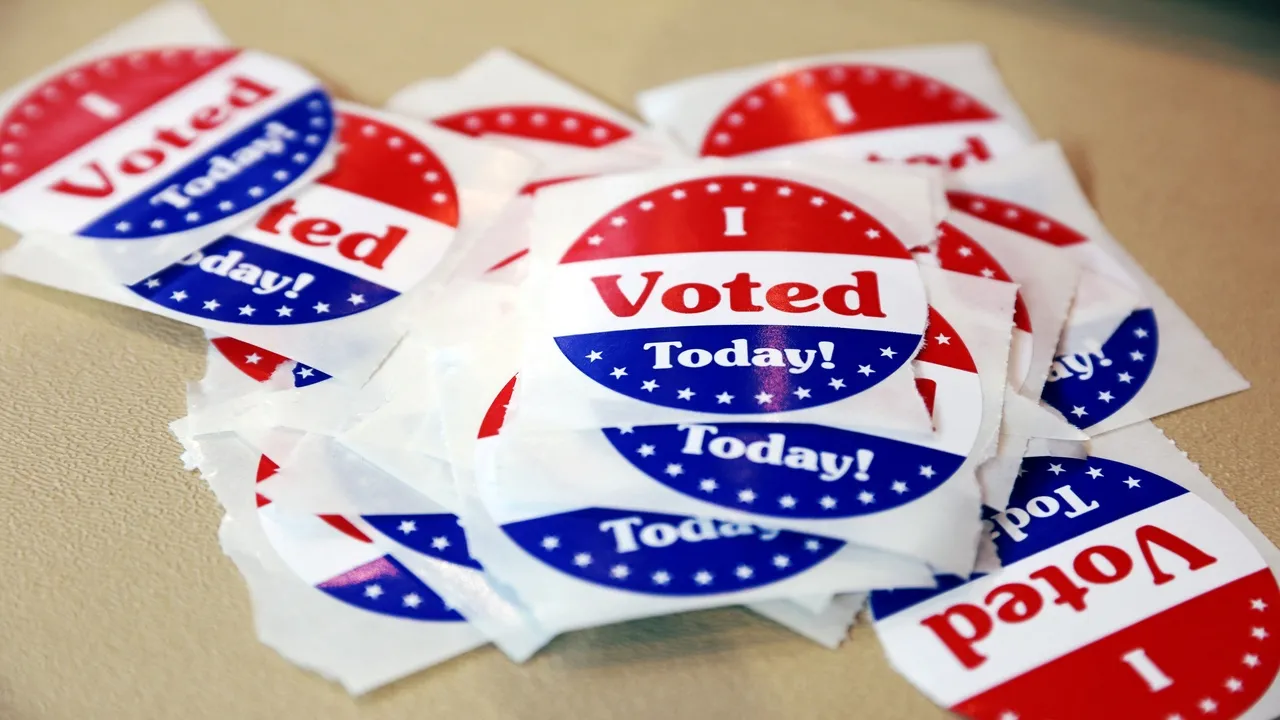
Watch James M. Lindsay lead a conversation on what the midterms mean for U.S. foreign policy.
Event Date
Location
James M. Lindsay, the Mary and David Boies distinguished senior fellow in U.S. foreign policy at the Council on Foreign Relations, leads a conversation on what the midterms mean for U.S. foreign policy.
The Global Affairs Expert Webinar series provide an opportunity for college and university educators and students to discuss global issues with CFR fellows, Foreign Affairs authors, and other leading experts. To register for future invitations, please complete this form or email [email protected] with your name, title, and academic affiliation.
Speaker
James M. Lindsay
Mary and David Boies Distinguished Senior Fellow in U.S. Foreign Policy
Council on Foreign Relations
Presider
Irina A. Faskianos
Vice President, National Program and Outreach
Council on Foreign Relations
Transcript
FASKIANOS: Thank you, and welcome to today’s session of the Fall 2026 Global Affairs Expert Webinar series. I am Irina Faskianos, vice president of the National Program and Outreach here at CFR. This webinar series provides a forum for students and educators to interact with CFR experts and other thought leaders and participate in foreign policy discussions.
Today’s discussion is on the record, and the video and transcript will be available on CFR.org/education if you would like to share with your colleagues or classmates. As always, CFR takes no institutional positions on matters of policy.
We’re delighted to have James Lindsay with us to discuss what midterms mean for U.S. foreign policy. Dr. Lindsay is the Mary and David Boies distinguished senior fellow in U.S. foreign policy at CFR, where his work focuses on U.S. national security policy and the domestic politics of U.S. foreign policy. He has served as senior vice president and director of studies at CFR, as director for global issues and multilateral affairs on the National Security Council, as senior fellow at the Brookings Institution, and as the inaugural director of the Robert Strauss Center for International Security and Law at the University of Texas at Austin. Dr. Lindsay is a coauthor, with Ivo Daalder, of The Empty Throne: America’s Abdication of Global Leadership, and he hosts the weekly CFR podcast, The President’s Inbox. And if you haven’t already subscribed to it, I commend it to you and we will send a link so you can sign up after this.
So, Jim, thanks very much for being with us to talk about the upcoming midterms that are looming large. Could you talk about what is at stake in the midterm elections for U.S. foreign policy and what different outcomes in Congress might mean for the administration’s ability to advance its priorities abroad?
LINDSAY: I would be happy to do so, Irina. Thank you for having me. And I want to thank everybody who is joining us for this webinar.
I guess I would begin with the $64,000 headline, which is the upcoming midterm election is about whether or not divided government will return to Washington, DC. The 2024 elections left the Republicans in control of both ends of Pennsylvania Avenue. Democrats found themselves essentially on the outside looking in as decisions get made. If Democrats take back either the House or the House and the Senate, the political dynamics in Washington, DC, change; they change on domestic policy and they’ll change on foreign policy.
And I guess let me sort of step back here and just really sort of make three broad points that I will try to elaborate on. One is that it is pretty clear the Democrats are going to win the House come Election Day, and they have a pretty good shot at taking back the Senate. The second point I’ll make is that the return of divided government will give Congress more of a say over foreign policy than it currently has and give Democrats more of a say over foreign policy than they currently do, but not as much, I think, as many people imagine, and certainly not as much power as most Democrats hope for. Third point I will make is that there’s no evidence that the midterm elections are going to discourage President Donald Trump from pursuing the foreign policy that he has pursued for the last two years. So let me sort of elaborate on each of those points.
Now, when I say that November 3 is likely to be a very good day for Democrats and that we’re likely to see a blue wave, I’m putting aside fears that many people have articulated that the Trump administration will interfere with balloting on Election Day or with vote counts. I can’t put a probability on the likelihood of that happening. I think the likelihood it will happen declines as we get closer to Election Day. But, obviously, if we have a major disruption to how elections are normally carried out, we’re all in uncharted waters, and I really can’t speak to that.
But let’s assume we have a normal Election Day. The reason to be pretty confident that Democrats will take back at least control of the House is the fact that House midterm elections essentially function as a referendum on the president. In thirty-seven of the past forty-one congressional midterm elections—that takes us all the way back to the time of Abraham Lincoln—the president’s party has lost seats in the midterm elections. So, essentially, House midterms a referendum on the president, president doesn’t do terribly well. And I will note the president does or the president’s party does worse the more unpopular the president is. And I think if you look at public opinion polls, it is pretty clear that Donald Trump has lost a lot of popularity. He’s polling in the mid-thirties, and this is the lowest popularity he’s had in either of his two terms as president.
Senate midterms do not follow the same pattern. And that has to do with the fact that the Senate map varies from election cycle to election cycle, with only one-third of the seats being up. This year’s Senate map was very favorable to Republicans back in January. They were talking about the potential that they might actually grow their majority in the United States Senate. Events over the last eight months have scrambled that picture, and now there’s talk that the Democrats could not just pick up the four seats they need to take control of the Senate; perhaps several seats more.
And I think here, for people watching things on Election Day, the really important thing to look for is the final seat margin. The larger the majority’s margin, the easier the chamber is to manage. Narrow margins make maverick lawmakers into kingmakers. Joe Biden discovered this the hard way during his first two years in office, when he had to deal with a very close Democratic lead in the Senate that gave Senators Joe Manchin and Kyrsten Sinema considerable power over what legislation could pass.
Second point I would make is that winning the House, or winning the House and the Senate, will give the Democratic Party more power than it currently has. The majority party decides who chairs congressional committees, what issues those committees will investigate, the ability to extend subpoenas, what issues will get to the floor for a vote, and just as important, what issues do not come to the floor for a vote. If the Senates take—or, excuse me, if the Democrats take back the Senate, they will gain the ability to decide which presidential nominations for executive branch positions or seats on the federal courts will come to a vote. So that’s a considerable improvement for Democrats over where they are right now. But when we speak specifically about trying to use a majority in Congress to control American foreign policy the Democrats are going to face should, again, they take the majority, some significant headwinds.
The first headwind is that the Constitution puts some presidential decision-making on foreign policy beyond the reach of Congress. Only the president can decide who to negotiate with, when to negotiate, what to negotiate over, and what offers to make. Congress can criticize those choices, but it cannot control or direct them.
Now, of course, some aspects of foreign policy are controllable by law, assuming that the Democrats agree on what they want to do, in what priority they give different issues. And that could be a very big assumption given that in this election Democrats have been very clear about what they’re against, not necessarily what they’re for. Congressional Democrats are going to find that legislative math works against them because, of course, the way Congress can enact a law—or, excuse me, to control the president is to enact a law. We all know the basics of enacting laws. You have to get a majority in the House. A majority in the Senate has to agree. It’s actually more than a majority in the Senate; it’s effectively a supermajority because the Senate has the filibuster. By all indications, the Democrats are going to keep the filibuster. So that means, in most cases, to move forward on legislation, congressional or Senate Democrats are going to need to get to sixty votes. They’re not going to have sixty Democratic seats even under the most optimistic talk of a blue wave next week. That means you have to get Republicans to cross the aisle.
And I’ll just say as a broad observation, certainly in this century, lawmakers find it very difficult to oppose presidents of their own party. And I don’t know that even a bad Election Day for Republicans will change that dynamic, because those Republicans who remain in Congress will come from redder states because they have a much bigger electoral cushion, and they’re going to have to worry about not 2028 general election but the 2028 primaries. And so they’ll still be worried that the president, who remains very popular with the core of the Republican Party, might oppose them in a primary. So that will be a hindrance trying to build up a winning coalition.
But even beyond that, let’s assume that we do have a meeting of the minds on Capitol Hill and Congress moves legislation; what we’re going to discover is any legislation it moves is subject to a presidential veto. And I will just note on that score that presidential vetoes are very hard to override, particularly in foreign policy. Congress has overridden just two pieces of foreign policy legislation that were vetoed in the last forty years.
So the reality is that we’re likely to see a lot of legislative gridlock, a lot of partisan infighting, and that’s going to push Democrats in the direction of exercising their oversight abilities. Think the ability of committees to hold hearings, to conduct investigations, to issue subpoenas. Now, here the challenge is going to be: What kind of hearings and investigations are the Democrats going to launch? To what extent are the investigations going to be designed to appease what I take to be a very strong desire among rank-and-file Democrats to go after the Trump administration? To what extent are the hearings or investigations designed to build an agenda going forward? Either way, the theory behind Congress using congressional hearings is that what will happen is they will change the political discourse, raise the price to the president of refusing to acknowledge where the political winds are blowing, and ideally have the White House change course.
And that takes us, really, to the third point I want to make, which is that Donald Trump is not likely to respond to the election results next week the way many people think or hope that he will. I think many people have in mind Bill Clinton in 1994. President Clinton saw Democrats lose I believe it was forty-one seats in the House. The Republicans took control of Congress. And what Bill Clinton did was, in essence, to pursue a policy called triangulation. He looked at where his former allies, the progressive Democrats, were; he looked at where Republicans were; and he headed for the middle ground so he could champion himself as the sort of compromiser-in-chief, that he was in essence trying to unite the best ideas of both parties.
I want to note, though, that not all presidents react the way Bill Clinton did. Fast-forward to 2006. George W. Bush is president. The big issue then is the public’s unhappiness over the occupation of Iraq. Republicans lose thirty-one House seats. The expectation is that President Bush will read the political tea leaves and diminish the U.S. investment in Iraq. But come January of 2007, President Bush does exactly the opposite. He launches the surge in Iraq, running directly counter to where the public mood was. Congress tried to force a drawdown. President Bush vetoed the bill, and he was able to sustain his policy.
Now, that takes us, of course, to Donald Trump, and it seems to me that Donald Trump is more likely to follow the George. W. Bush example than to follow the Bill Clinton example. I will just note that President Trump’s political style throughout his entire political career, and I think even his business career, is that when he’s challenged he doesn’t back down; he doubles down. And I would expect to see him do much the same going forward.
Indeed, I will note that President Trump over the last four or five months has conducted himself on foreign policy in a way that’s unusual for presidents heading into the midterms. I will note the president has got a lot of advice from his senior staff and Republican lawmakers that he should focus on affordability. Instead of focusing on affordability, which he has dismissed as a hoax, he has pursued his foreign policy agenda, which among other things has included imposing fresh tariffs on Canada, making life very difficult for congressional Republican candidates in northern states like Maine and Minnesota. He has struck a diesel deal with Russia. And I think most significantly, he gave a waiver to Russia on the application of the sanctions embedded in the Lindsey O. Graham Russia and Iran Sanctions Act. That was a bill just passed last month with overwhelming bipartisan majorities to impose sanctions on Russia. I think the expectation on Capitol Hill was the president would impose those sanctions, and he chose not to. So, again, I expect President Trump going forward to exert the authorities of his office because I think he understands perhaps better than many of his critics that over the last eight decades the United States has created an imperial presidency for a president who is willing to run counter to the political headwinds and push the boundaries of his authority.
So let me just stop there. Hopefully, we have something to chat about.
FASKIANOS: Jim, we definitely do. Thank you so much for that.
We’re going to open it up to all of you now for your questions.
(Gives queuing instructions.)
Please be concise. And, obviously, we will also be monitoring the Q&A written questions. And if you do, please, if you could include where you’re from.
So I’m going to take the first written question from David Bame. He’s an instructor at California State University San Marcos: Could you provide some more details on the two veto override votes in the last forty years that you mentioned?
LINDSAY: I would be happy to do so, David.
The first one came in 1986, when Congress and the White House disagreed over U.S. policy towards South Africa. Ronald Reagan was the president of the United States. He wanted to pursue and had pursued a policy of seeking to work with the government in Pretoria when the rest of the world was seeking to sanction and ostracize South Africa. The president’s policy of constructive engagement lost political support and Congress passed legislation that required U.S. sanctions on South Africa. The president vetoed the bill and Congress overrode it.
The other one—other instance, came in 2016 with the passage of the Justice for Victims of Terrorism Act (sic; Justice Against Sponsors of Terrorism Act). I believe I have that correct. President Obama was president. The gist of the legislation was to enable people who had been victims of terrorism, particularly the families who lost loved ones in September 11, to be able to sue, and the subtext was to sue the Kingdom of Saudi Arabia. President Barack Obama vetoed the bill, believing that it would complicate U.S. diplomacy with the Saudis, and Congress overrode the veto.
FASKIANOS: Thank you.
I’m going to take the next question from Dan Drezner.
Q: There we go. Sorry. Hi, Jim. Thanks. I always appreciate your insights on this. And I do apologize; I hopped onto the Zoom five minutes late, so it’s possible I missed this part of the conversation.
Two questions. The first is, what is the likelihood that you see the U.S. or the Trump administration deciding to use military force in Cuba after the midterms, given the sort of ongoing embargo following the Venezuela operation? And, second, I’m wondering if you could talk a little bit about how—if the Democrats take the Senate, what you expect the effect to be on, basically, confirmations and on sort of the upper-tier policy principles. Trump has demonstrated a willingness to go for acting folks in particular, and I’m wondering if there are cases where clearly someone’s not going to get Congress, Trump’s decision is I’ll just—that’s fine, I’ll have Pete Hegseth resign, I’ll just appoint someone acting—Bill Pulte or something like that.
LINDSAY: Good to hear from you, Dan. Hope all is well. As usual, two really good questions. I will take them in the order you have presented them.
First, on the issue of Cuba, my guess is—and it’s purely a guess—that U.S. military operations against the government in Havana will be low as long as the conflict in the Middle East—the war with Iran—continues. I think, as you know, the United States has deployed a fair amount of its military forces into the Middle East region, and we will see whether or not President Trump will opt to renew the fighting there. He has said quite pointedly he would not attack Iran before November 3. He has left unstated what he will do after November 3. I will note—and I’ve written this on CFR.org—the president faces some very significant constraints in operating against Iran if he were to decide to renew the fighting there. There’s a significant downside. We’ll see how the president settles all of that out.
The question, I think, in Cuba is that also I think the administration is hoping that its economic pressure, which is considerable, will eventually lead the government in Cuba to begin to negotiate some agreement that the administration can tout as putting Cuba on the road to democracy, or at least a less repressive regime. So we’ll see what happens there.
Your question about how Senate Democrats will handle presidential nominations very ably points out the dilemma that Senate Democrats are going to find themselves in, and this takes us back to who Donald Trump is as a president. And that is, they can block nominees they don’t like; they run the risk that the president will simply ignore the majority in the Senate and go ahead with temporary appointees. Now, some people will say, well, we can take this to the courts. But as you know, Dan, and I think most people on this call know, the U.S. Supreme Court has generally been reluctant to want to wade in and police the separation of boundaries between the White House and Congress, particularly when it comes to foreign affairs issues. I think the Court is really reluctant to do that, so I don’t see that as being an avenue. And even if it were, the legal system takes quite a while to unfold. So I think Senate Democrats are going to have to make some calculations on their own as to which risk they would rather face.
One thing I will note is—and this has always been the case for the United States Senate, regardless of which party controlled it—is that the president gets to set the agenda. So, obviously, you’re hoping that the president is going to send up a candidate, whether for senior Cabinet position or a federal court, that is acceptable—may not be your ideal candidate, but least acceptable. But, obviously, presidents can refuse to do that. And the problem the Senate has is if you—if you turn down one candidate you don’t like, the president’s likely to send another candidate up that you may not like, and at what point can you sustain that kind of process?
Just one final point is overlying all of this in the Senate for the next two years is going to be election 2028. And I’ll just note that Election Day midterm 2026 is next Tuesday; the presidential election campaign 2028 kicks off on Wednesday morning, November 4. And if you look at the United States Senate on the Democratic side, there’s four, six, eight senators who will be thinking about whether to run and may indeed decide to run, and they’re going to have their own calculations about how what their fellow Democrats are doing may help or hurt them in terms of the campaign they may choose to run. So if Chuck Schumer does become the Senate majority leader, he is going to have his hands full trying to orchestrate a variety of agendas because, again, Democrats may agree on what they’re against, but there’s some significant differences—personal, institutional, and policy-wise—over how they think the Democratic Party should proceed.
FASKIANOS: Thank you.
I’m going to take a written question from Lavender Odinaka Ekweremadu, who is a PhD candidate at Southern University and A&M College: If control of Congress changes after the midterms, which foreign policy areas are most susceptible to legislative constraints and which are likely to remain under presidential control?
LINDSAY: The issues in foreign policy that are most susceptible to congressional control will be those that require appropriations. Or, maybe I should take a step back. The president is weakest in foreign policy where he needs Congress’s consent to proceed, and that’s oftentimes when we’re talking about appropriations.
But, again, I will note the challenge here for Congress—Democrats, Republicans—is that much of what President Trump wants to do in foreign affairs doesn’t require him to get congressional consent. That’s partly because of the way the Constitution is written. I’ve already mentioned that the Constitution puts the president in charge of negotiating with the rest of the world. It’s not a power Congress can invade. But also, Congress over time has delegated a fair amount of statutory authority to the White House. And indeed, White House lawyers, not just in the Trump administration but in preceding administrations, have been very good at going through the law books, the statute books, finding old statutes, and finding discretion in them that Congress may or may not have intended when they passed that legislation.
So I would note that, you know, people often talk about Congress should reclaim its powers, but the way Congress would reclaim its powers is by passing a law. So even if you could assume that you could get Democrats and Republicans to agree on how, for example, to rein in the tariff power, which is a pretty big issue and also I think would be a big legislative hill to climb, it almost certainly would be vetoed by President Trump, because it would go to the heart of his agenda and attack one of his favorite tools for foreign policy.
So I think the biggest place where Congress can matter is in terms of funding issues—deciding what can be funded/what can’t be funded, providing directives in terms of how money is to be spent. That doesn’t necessarily bind the president. We can talk all about how presidents find multitude of ways to get around Congress. They’ve been doing it for more than two centuries, and it’s a pretty well-developed toolkit on that—on that score. But that is where I think you’re going to see the greatest impact if we do get a Democratic Congress. And again, if you get a Democratic Congress, Democrats are going to be more successful than if it’s a Democratic House and a Republican Senate.
FASKIANOS: Thank you.
I’m going to take the next question from KJ Goldstein, who’s an undergrad student at Washington College. If you could unmute yourself. There you go.
Q: Thank you very much.
All right. So I have a two-part question.
So my first part is: If Democrats do well in the primaries, will they move to impeach members of Trump’s administration and Trump as well? I’ve been seeing a lot on TikTok, Instagram, stuff like that, Mike Johnson being like, if Democrats win, if the Democrats do well in the primaries, and they will have most people in Trump’s current administration tried for impeachment.
My second part of my question is tied to the 2028 presidential race. I’ve been seeing President Trump isn’t talking about running again in 2028, and obviously in the Constitution can only run twice. So I was just going to ask, like, how realistic do you think that is, and does he have, like, a legit chance to get a third term?
LINDSAY: Thank you for your questions, KJ. I will take them in the order you posed them.
In terms of impeachment, I think it is fairly unlikely that the Democrats will seek to impeach President Trump, largely because they’ve lived through that experience twice already. The basic dynamics haven’t changed. There will not be enough votes if you got a bill of impeachment passed in the House to get the Senate to convict.
And I would also say there may be more of an appetite to target certain senior Cabinet members. There’s been a lot of talk about that. But I will just note that Democrats also recognize that such efforts carry with them a significant political downside, and that is they may end up disappointing voters. Yes, there are some hardcore Democrats who want to see the Democrats get up and fight, who would cheer on going after and impeaching a Cabinet officer. The problem for Democrats is they already have those votes, and if you’re looking particularly to 2028, you’re really looking to people who aren’t necessarily going to vote Democratic. And so you run the risk of just winning a big election in which you’re going to Washington for voters who want you to fix their problems, and if they see you not addressing their problems but engaging in what they may view as a partisan food fight, you could be setting yourself up for failure come 2028. And my sense is Democrats are very, very aware of this issue, and the question is, how do you balance it? And I think those are—could be really could be really tough calls to make. And my sense is congressional Democratic leaders will want to lean in as much as they can to issues where they can go back to the voter and say, we promised you we were going to fight for this, and we have done that. So that’s what I would expect. I don’t think you’re going to see sort of an impeachment-palooza, as it may be put.
In terms of President Trump running for a third term in 2028, I do not see any realistic, conceivable way in which you could get around the constitutional prohibition on two terms in the presidency. And I would argue that if indeed you could, then of course Democrats would say we’ll run Barack Obama and see how things go. But I think, for the most part, Donald Trump’s presidency will end at noon on January 20, 2029.
FASKIANOS: I’ll take a written question from Jo Hannah Fitzwater, instructor at Coastal Carolina Community College: If Democrats do gain a majority in the House and/or Senate, would there be a possibility that the recent easing of sanctions on Russia or this current diesel deal with Russia could be blocked or reversed? Also, could there be a greater possibility that a possible peace deal would be more advantageous to Ukraine as opposed to advantageous to Russia?
LINDSAY: I think the answer to both questions is no.
The first question really turns on the ability of Congress to legislate. I would assume that if Congress voted to direct the president to impose sanctions that he would veto the bill. And again, as I’ve argued before, it’s just generally very hard to get Congress to override a presidential veto in the area of foreign policy.
On the second question, I would say no because, at the end of the day, the negotiating power is a plenary presidential power. The president gets to decide what he is going to negotiate. And presidents can and have negotiated agreements that may be very unpopular, either in the broader public, with elements of their own party. Just think of the deal that Barack Obama negotiated with Iran, the Joint Comprehensive Plan of Action. That was unpopular with a lot of Democrats, not just Republicans. Yet, Congress was not able to move to block that agreement.
Again, I don’t think we can exaggerate how much authority presidents have when it comes to foreign affairs. Again, it’s a function of the constitutional powers they’re given. It’s a function of prior congressional delegations of authority. It is a function of the courts being generally reluctant to dive into national security matters and parcel out the differences between presidents and Congress. It has a lot to do with what Alexander Hamilton in Federalist No. 70 called the inherent advantages of the presidency: activity, decision, secrecy, and dispatch. When you put all of those together, you have a competition between the two ends of Pennsylvania Avenue on foreign policy that heavily favors the occupant of the White House.
FASKIANOS: Going next to Heather Gregg, Naval Postgraduate School. If you can—there you go.
Q: Thank you so much for your talk.
This is not good news for people that want the war in Iran to end. But my question is actually about the continuing resolution that we’re under right now. That’s set to expire on December 11. My assumption is we’re going to have another short CR (continuing resolution). I don’t see us passing a budget. And I’m wondering what you think is going to happen after Congress is seated, on January 3 I believe. Thank you.
LINDSAY: Well, it’s hard, Heather, to answer your question about what Congress is going to do on January 3 if we don’t know what actually gets done in the so-called lame-duck session of Congress. And you know, we will get some sense early on as to how both parties plan to play the lame-duck session because, as you point out, you can kick issues down the road or you can try to resolve them.
I don’t have a good feel for how those tactical decisions are going to play out, in part because it’s unclear what signals the White House will send about what it will accept, even beyond the questions of what Republican lawmakers and Democratic lawmakers on the Hill think they should do.
FASKIANOS: Thank you.
I’m going to take the next question, written question, from Ted Vician, who’s a graduate student at Arizona State University: What influence does the House have over foreign military sales and foreign military financing appropriations?
LINDSAY: Well, I mean, there’s a very complicated legal system that has been set up that gives the—gives Congress in general some say to reverse military sales, but it can be very difficult to exercise. Moreover, the flipside is important to keep in mind: Congress may want the president to sell weapons or provide weapons to other countries, and the president may not be inclined to do so.
And I think one of the things to pay attention to in the second two years of President Trump’s term is: What is his policy toward Taiwan? Is the United States going to continue to make significant arms sales to Taiwan, or will the president decide that’s not the way he wishes to go given whatever the state of play may be with his negotiations with Beijing? So I think there’s a big question mark surrounding all of that, and I can’t claim any great insight into what President Trump plans to do on that front.
FASKIANOS: Thank you.
I’m going to take the next question from John Mathiason, a visiting lecturer at Cornell University.
Q: Thank you. This is a very interesting discussion.
Let me throw one thing that hasn’t seemed to come up in the election, which is the relationship between the United States and the multilateral system, the UN. I’ll give you a—two facts, and then the question is: Is there anything Congress to do about it?
Fact number one: The eighty-first session—the eightieth session of the General Assembly finished in September, adopted 310 resolutions. The United States voted against 54 percent of them. That’s the highest the U.S. has ever voted against regimes, because if you vote against a resolution you’re not bound by it. Fact one.
Fact number two: The United States is not participating in the climate change Conference of Parties because we have withdrawn from the United Nations Framework Convention on Climate Change and won’t send a delegation. Now, the question is, since this was a treaty, it was ratified by the Congress. Can the U.S. withdraw from it without getting the Congress to come along? Over to you.
LINDSAY: OK. Big questions there.
Let me first point out that for Congress, the challenge when it comes to the issues you point out is that it has no authority to dictate the United States’ negotiating position. So, again, Congress can pass resolutions—they’ve done it many, many times in its history—suggesting how they would like to see the president vote or not vote on these issues, but the decision of, you know, is the United States delegation to any international body going to vote for a resolution or oppose a resolution is beyond Congress’ power to control. It can have opinions, lawmakers can have opinions, but they don’t have an ability to direct what the president does, and that’s not going to change in the next two years.
Your second question gets into an issue that has never been settled as a matter of constitutional law, and that is: Can a president unilaterally exit a treaty without congressional or Senate approval? Now, this issue came up in a very pointed way in 1978-1979 when President Jimmy Carter announced that the United States was abandoning the mutual defense treaty with the Republic of China, with Taiwan, because we were establishing formal diplomatic relations with the People’s Republic of China. Senator Barry Goldwater, Republican of Arizona, was joined by a number of other senators who filed a lawsuit arguing that President Carter had exceeded his constitutional authorities by unilaterally withdrawing the United States from the treaty. The case eventually made its way to the Supreme Court, and the Supreme Court in Goldwater v. Carter decided essentially not to take the case, effectively handing a political victory—and that’s all that really mattered—to President Trump (sic; Carter).
And the Court, in a seven to two vote, was in some sense all over the map as to why it couldn’t take up the issue that the Goldwater lawsuit charged. Some argued that this was inherently a political question; it wasn’t a question for the Supreme Court to handle because it wasn’t a legal question. Others argued that it was premature to take up the issue. Still others argued that they were happy to rule, and they would have ruled for the president.
So this is—this is an unsettled matter. People who are legal historians would note that presidents have left treaties without congressional approval before. Presidents have at times left treaties at the direction of Congress. So this is sort of a murky issue.
And again, I mean, you know, maybe because I’m watching a terrific baseball World Series I’m thinking in baseball terms, there’s the old saying, ties go to the runner. In these sort of issues, just given the unwillingness of the Supreme Court to call balls and strikes on these issues, the president gets to decide and Congress is left—it can carp, it can criticize, but it doesn’t have effective means to be able to change or overrule what the president has decided.
FASKIANOS: Thank you.
I’m going to take a written question from Shamika Mitchell, professor at SUNY Rockland Community College: I am one of the civil discourse and civic engagement fellows for SUNY for this academic year. Could you talk about President Trump’s lack of civil discourse—using insulting, denigrating, and pejorative language—and the potential impact on voters?
LINDSAY: Well, that’s a great question. I would have to say personally I am not a big fan of the language and rhetoric that we are seeing, not just by the president, but by other people in the political spectrum. I work at an organization which prides itself on trying to promote civil, reasoned discourse, so I would prefer that we find a way to lower temperatures and actually talk about the issues that divide us. I think a lot of American voters feel the same way, even people who are supporters of President Trump. However, it’s not clear how you reestablish the perhaps more genteel political discourse we had in years past—though, being someone who spends a lot of time thinking about history, we shouldn’t exaggerate how restrained and civil our political discourse has been in the past. At times, it has been quite brutal. So what we’re seeing now is not new in American politics, even if one is not a fan of it.
FASKIANOS: Thank you.
I’m going to go next to Mojúbàolú Olufúnké Okome, please.
Q: Good afternoon. Thank you very much.
I’m way more uncertain than you are in terms of being able to speculate successfully on what President Trump is liable to do in any situation. But you’re very kind of calming and certain. So I’d like to know what kind of discernible grand strategy you think informs the president’s pursuits of governance in both domestic and foreign affairs. But I’m more interested in the foreign affairs element, you know.
LINDSAY: I’d be happy to answer that question. I wrote a whole book about it with Ambassador Ivo Daalder. It’s called The Empty Throne. I won’t bore you by covering all of what that book covered. I would just boil it down to, the president has a view of foreign affairs that rests on the notion that was described more than 2,000 years ago in the Melian Dialogue that the great historian Thucydides recorded. And that is, the strong do as they wish, the weak suffer as they must. The presidency’s foreign affairs about power, particularly about hard power. He’s deeply skeptical of talk about soft power. And in his view, the United States has not exercised its power wisely for the past eighty years. That the United States has allowed its friends, partners, and allies to free ride on American security guarantees, while they were stealing jobs from the United States.
And I think that explains why the president often directs his most intense animus not at presumed American adversaries, like China and Russia, but at America’s friends, partners, and allies. And I think the president has been very consistent on this point. And I’ll just take you back to September 2, 1987. He took out full-page advertisements in the New York Times, Washington Post, and Boston Globe, laying out his worldview. And if you go back and read those advertisements, you swap out the names of a few countries, it could be a campaign speech given today. So the president has been consistent over the course of his political career.
FASKIANOS: Thank you.
I’m going to go next to—so many questions—from Nestor Vilchez, who’s a PhD candidate at the University of Southern Mississippi: Yesterday, President Trump doubled down on his proposal to incorporate Venezuela as the fifty-first U.S. state. How credible is this idea, under either a Democratic or Republican majority in Congress? Or is he just using this concept politically to speak to his base and ease ongoing public concerns regarding energy and high gas prices?
LINDSAY: Well, I can’t speak to what motivated President Trump to make that claim. What I can say is I see no conceivable scenario under which Venezuela becomes part of the United States of America. I don’t get any sense that the people of Venezuela will wish to become part of the United States. And I think it would be an extraordinarily high mountain to climb to persuade the Congress of the United States to incorporate Venezuela as the fifty-first state. And here again, you know, this question takes us back to the fundamental issue of the balance of power between presidents and Congress.
Presidents are most powerful when they don’t need congressional approval to act. Or, put differently, presidents have the most freedom when they’re free to act, until Congress gets in the way. The flip side is presidents are at their weakest when they can’t accomplish what they want unless Congress goes along. And in this particular case, there is no way under American law that Venezuela could become a state without Congress sanctioning it. We have a long body of law on this issue. And it’s been one of the big questions in American politics, starting almost as soon as the Constitution went into effect, as thirteen states quickly became much larger in number.
FASKIANOS: We’re going to take the next question from Lilyanna Powell, who’s a legal studies student at Gannon University: I know we touched on this before, but how likely do you think it is that Trump would use claims of rigged ballots or election fraud to challenge the results of midterm elections, future elections, and potentially slow Democratic gains?
LINDSAY: Well, the president has been consistent for at least the last six years in questioning the integrity of American elections. His charges are almost entirely baseless, but that has not stopped him from doing so. It has also encouraged lots of speculation about why he is doing it. Whether it’s to get his voters to turn out, or just to generally energize them, or because he’s laying the foundation for an effort to try to block the outcome of the 2026 election, I can’t say. The, I think, reality is, is that it is very hard, and will be very hard, for the president of the United States to, in essence, overturn on his own the results of next week’s election. That’s in part because the courts have shown that they intend to apply traditional interpretations of election law.
And I will note that in 2020, when President Trump challenged the results of his election, I think he went something like zero-for-sixty in the courts in terms of his legal challenges. So I would anticipate that the courts will act on the same principles going forward. There has been talk about various really arcane ways in which the Republican majority of this Congress could prevent Democrats from being seated in the next Congress. I think most of those arguments, while they could happen, I think the probability that they could ever be carried out are pretty close to zero. I can’t imagine that the American public would watch an election on November 3 produce, let’s say, a blue wave, and then sit idly by, getting a Congress in January that did not reflect those election results.
FASKIANOS: Thank you.
I’m going to go next to Mario Molins, who’s an assistant professor at Miami-Dade College. If you could accept the unmute. All right, we may be having technical—oh, there we go. Good.
Q: Thank you.
If there is a Democratic majority in the Senate after these midterms, would that purport any opportunity for the filibuster rules to be changed? Do you see any opening towards changing the filibuster rules with the Democratic majority in the Senate?
LINDSAY: Well, you ask a great question, Mario. And I will note that at the start of each new Congress, each body gets to set its rules. So Senate Democrats, assuming, you know, in your scenario they are the majority, could abolish the filibuster. I just don’t see that happening. In good part, because Senate Democrats have leaned heavily on the filibuster over the past two years as their main lever for extracting any concessions out of Republicans. I think what Senate Democrats fear is if the Senate became a purely majoritarian institution, as the House is, that, in essence, they would find themselves shut out of government effectively. And that is why Republicans refused—or, have refused this year to abolish the filibuster, despite very intense pressure from President Trump to do so.
He did that mostly in the context of his effort to get the so-called SAVE Act passed. But Senate Republicans realizing that they may find themselves in the minority, or knowing they will find themselves in the minority in the future, and fearing that that may come sooner rather than later, have refused to sign off in the abolition of the filibuster. Could Democrats tweak the filibuster? Yes, but to the extent that they do it’s not going to change the fundamental dynamics or the legislative math.
FASKIANOS: I’m going to sneak in one last question from Gary Prevost, professor at College of Saint Benedict. If you could be quick, that would be great.
Q: My question turns on the war in Iran and a potential U.S. military intervention in Cuba, both of which the Trump administration has talked a lot about. What I’ve focused on a lot this year has been how Republicans, in the Senate especially, have had questions about both of these. What’s your sense of how that may play out going into 2027, if both of the House and the Senate have gone to the Democratic side? But I’m not looking at the Democrats. I’m looking at how that would affect the thinking of those Republicans who have real questions about these two military operations, one real and the other potential.
LINDSAY: Yeah. Well, a quick answer to that excellent question, Gary, is that Republican lawmakers could find themselves cross-pressured. That is, they may personally be opposed to the use of military force. They may be hearing from their constituents not to use military force. But they will feel a lot of pressure from the president to stand by him if he made these choices. And I would also note that if we do see a blue wave that hits the Senate as well as the House, keep in mind that that most likely means the senators, Republican senators, most inclined to cooperate with Democrats are going to be former senators. You’re going to have a redder, more MAGA Republican caucus in the United States Senate, which would lead to, you know, this idea that it’s harder for Republicans to join forces with Democrats. But of course, in all these questions there’s always a caveat. And the caveat being that there are, I think, red lines, even for Republican lawmakers. So if, for example, we saw the introduction of ground forces into a conflict in Iran, I suspect that would be a bridge too far for most Republican lawmakers, Senate and in the House.
FASKIANOS: Well, thank you, Jim. I’m sorry we can’t get to all the questions, but we pride ourselves at ending on time. Again, Jim Lindsay, he hosts the CFR podcast The President’s Inbox. And I also neglected to mention at the outset that Jim oversaw the project “The Best and Worst Foreign Policy Decisions in U.S. History.” Jim, do you want to just say one word about that project? Because it was really terrific.
LINDSAY: Well, thank you, Irina. We have a wonderful website up on CFR.org on “The Best and Worst Foreign Policy Decisions in U.S. History.” And there are a lot of materials there. It’s designed for high school students, college students, and lifelong learners. So just Google it and enjoy.
FASKIANOS: Great. And we will send a link in the follow-ups so that you all can access it and circulate it. Again, thank you all.
The last Global Affairs Expert Webinar of the semester will be on Thursday, November 12 at 1:00 p.m. (EST) with Jenny Town at the Stimson Center on North Korea. And in the meantime, I encourage you to learn about CFR paid internships for students and fellowships for professors at CFR.org/careeropportunities. And visit CFR.org, ForeignAffairs.com, and ThinkGlobalHealth.org for research and analysis on global issues. And, of course, CFR.org/education for free expert-informed teaching and learning resources.
Again, thank you all for being with us. Thank you, Jim. And I hope you all enjoy the rest of your day.
LINDSAY: Thank you, Irina.
(END)
Related Articles

CFR Education at NCSS 2026
Conference