Opposing Communism in 1947
How should the United States support Greece in its fight against communist rebels? Explore this simulation set in 1947.
- Level
- High School, Higher Education
Need guidance for how to run your mini simulation?
Overview
The United Kingdom has just announced it can no longer support the Greek government in its fight against a communist rebel movement. Should they succeed, these communist fighters could bring Greece into Soviet orbit. How should the United States respond?
Students will understand the origins of containment and U.S. foreign policy during the .
Students will understand that after World War II, the United States faced a question as to what its role in the postwar world should be.
The Situation
After World War II, the wartime between the United States and the quickly dissolved into mutual mistrust. As the victorious Allies sought to shape the postwar world, the Soviet Union set out to establish a in Eastern Europe. After the war, Moscow installed pro-Soviet governments and supported communist movements in several European countries. Soviet expansion was initially consistent with wartime agreements among the Allies. However, growing communist movements in Europe and the Middle East raised suspicions among policymakers in the United States and the United Kingdom. The West suspected that Soviet ambitions extended beyond a regional sphere of influence.
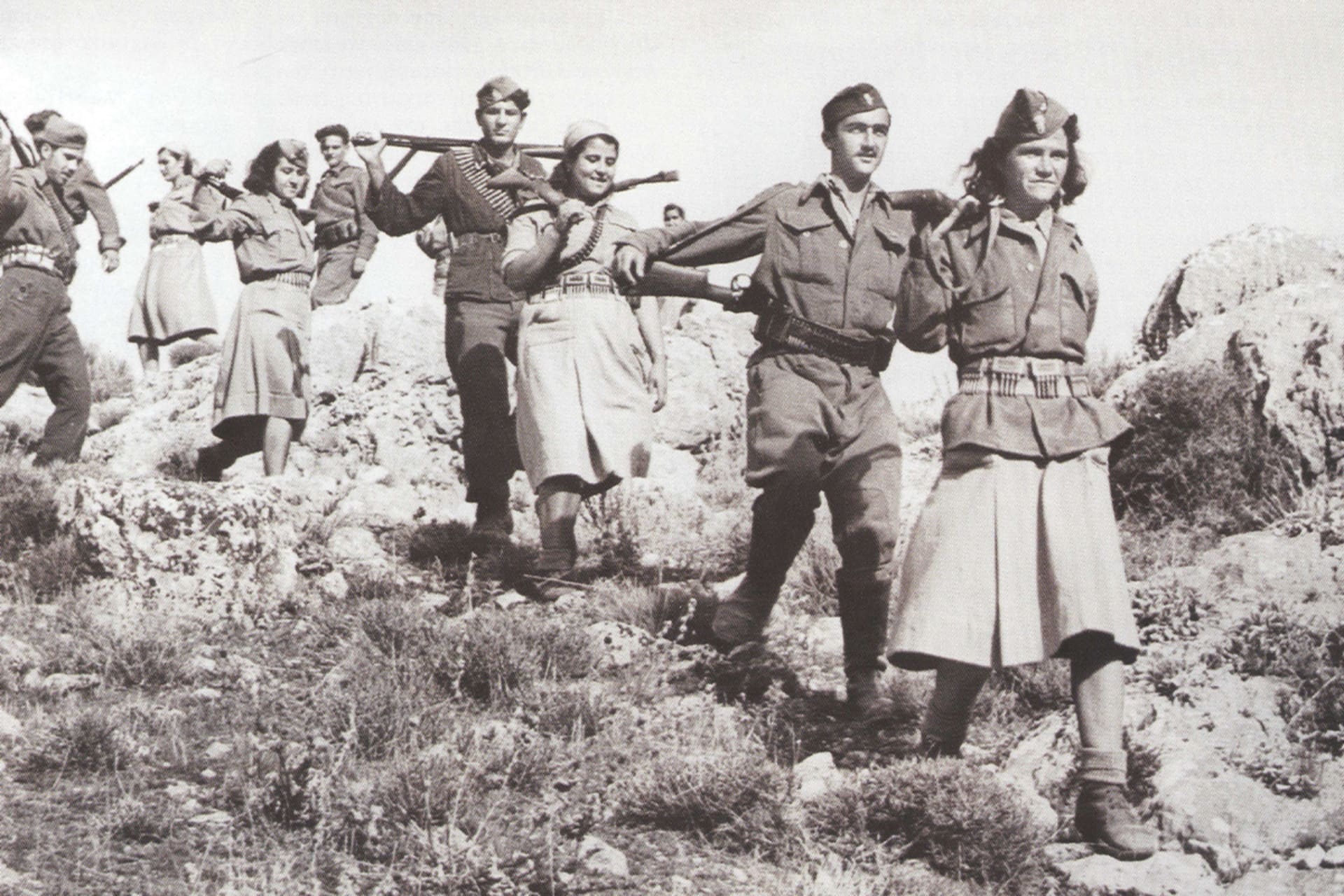
By 1947, communist governments ruled nearly all of Eastern Europe. Greece, which had been liberated from German occupation with British assistance, was the exception. Even there, however, communist forces rebelling against the monarchist government threatened to knock Greece into the Soviet Union’s orbit. Seeking to maintain influence in Greece and prevent the spread of , the United Kingdom supported the Greek government. The British government spent roughly $300 million on financial aid, arms, and military training—a substantial sum at the time. Greek communists, on the other hand, received support from neighboring communist countries. British and American policymakers suspected that the Soviet Union also covertly supported the Greek communists. Western observers feared that if the Greek communists prevailed, their triumph could trigger a domino effect. This outcome could lead to expanding Soviet influence into neighboring Turkey—which controlled a strategic choke point between the Mediterranean and Black seas. Beyond Turkey, the West feared that communism could then spread rapidly through the Middle East. Some analysts further speculated that Soviet expansion could propel Europe back toward war.
So far, the United States had pursued piecemeal responses to Soviet expansion and was providing limited loans and arms sales to the Greek government. In the Harry S. Truman administration, however, many thought that the situation required a more systematic strategy. The Soviet Union wanted to expand communism, they argued, not only to enlarge its regional influence but to weaken Western powers and destroy democratic ideals worldwide. Accordingly, Soviet expansion directly threatened U.S. values and national security. But administration officials also asserted that the Soviet Union was cautious and would withdraw when it met resistance. Every effort to expand communism, therefore, required a response. However, some policymakers opposed such a universal approach. They argued that committing to counter communism at every turn could sacrifice the United States’ ability to choose its battles. For example, such a universal approach to fighting communism could potentially obligate the country to act against its interests or commit resources in disadvantageous situations. After a long and destructive war, many U.S. lawmakers were also wary of further entanglements in European affairs. These policymakers questioned why the United States should be responsible for countering Soviet activity in Europe. With much of Western Europe engulfed in a postwar economic crisis, though, European powers alone lacked the strength to counter Soviet influence in Europe for long. As Soviet expansion continued, U.S. policymakers would soon have to decide how to respond.
Decision Point
Set on February 21, 1947
A particularly poor harvest and a savage winter have sent Britain’s already struggling economy into turmoil. To the shock of the United States, the British embassy in Washington, DC, has sent a message to the U.S. State Department announcing that the United Kingdom will halt its aid to Greece within six weeks. London is now requesting that the United States take over the financial burden of supporting the Greek government in its fight against communist rebel forces. Without foreign support, the Greek government would be unlikely to prevail in the . President Truman has convened his advisors to discuss a course of action regarding Greece. As they deliberate, advisors will need to consider the risks of Soviet influence extending over Greece. Truman’s advisors will also have to weigh the risks against the costs of further U.S. involvement in European affairs. Considering recurring Soviet efforts to expand the state’s influence abroad, advisors should also consider whether the time has come to announce a universal policy toward expanding Soviet influence.
Cabinet members should consider the following options:
- Provide extensive financial and military aid to Greece and announce a universal policy of containing future communist expansion. This would both provide the Greek government forces the best chance at victory in their civil war. This policy option is also most likely to deter future Soviet expansion. However, this option commits significant U.S. resources to Greece with no guarantee of stability there. Moreover, it could lead the United States into future financial or military commitments that could be costly and put U.S. personnel at risk.
- Provide financial and military aid to Greece without a promise of action beyond Greece. This option could still provide the Greek government with the support it needs to win its civil war. However, unlike the first option, it would avoid future commitments. That said, this option would also have a limited deterrent effect on future Soviet expansion. Likewise, mustering support for this aid could prove difficult without a clear strategy.
- Continue current levels of support to Greece, but do not commit further resources. This would entail selling arms, providing diplomatic support, and assisting the Greek government in obtaining loans, but nothing more. This option would prevent U.S. entanglement in a foreign war while providing limited assistance to suppress communism in Greece. However, it would likely not be enough to ensure the Greek government’s victory. This would leave the United States to face the potential expansion of Soviet influence into Greece, Turkey, and the Middle East, which could destabilize the postwar order.
Additional Resources
- George Kennan's "Long Telegram" (February 22, 1946)Wilson Center
- Henry Wallace, "Achieving an Atmosphere of Mutual Trust and Confidence" (1946)History Matters
- Walter Lippmann's "Critique of Containment" (1947)Teaching American History