Israeli-Palestinian Conflict Timeline
Explore the history and important events behind the long-standing Middle East conflict between the Israelis and the Palestinians from 1947 to today.
By experts and staff
- Updated
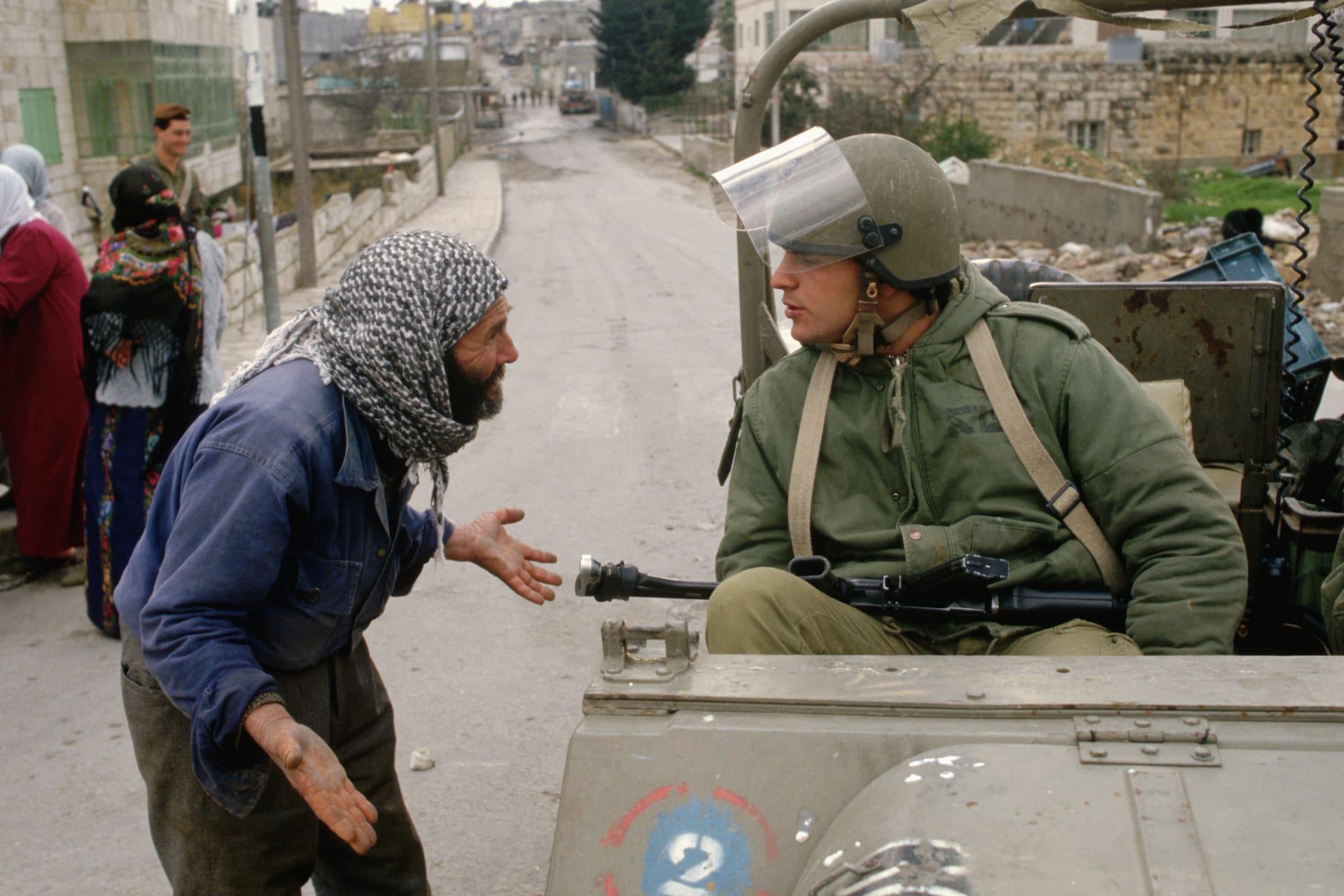
The conflict between the Israelis and the Palestinians reflects a long-standing struggle in the region encompassing the land between the Jordan River to the east and the Mediterranean Sea to the west.
Tensions over territorial, religious, and political issues date back nearly a century and have repeatedly boiled over into open warfare.
This timeline explores some of the pivotal moments in the conflict from 1947 to today.
Nov 29, 1947UN Partition Plan
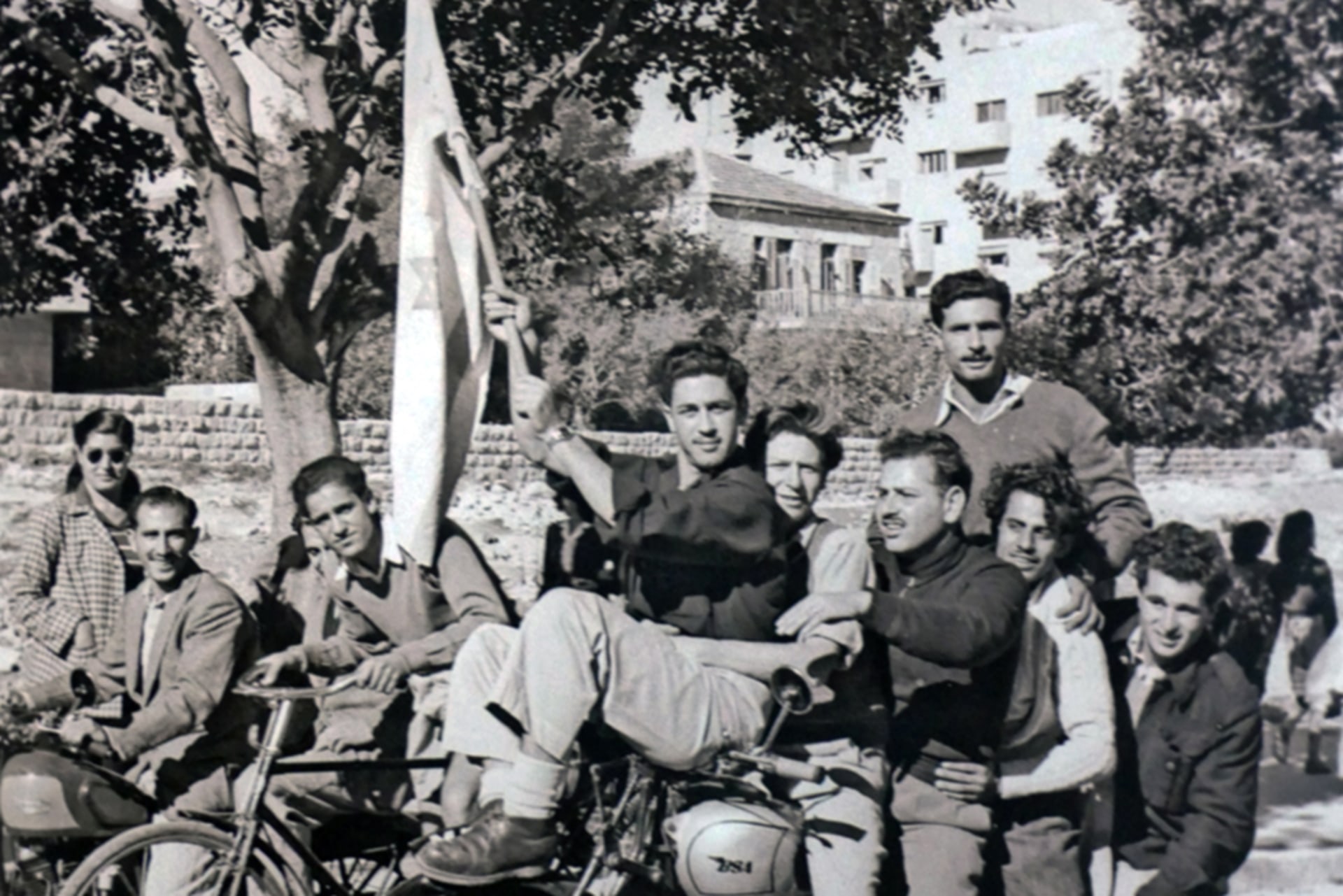
The UN General Assembly passes Resolution 181, calling for the division of what was then called Mandatory Palestine into two states, one Jewish and one Arab. The resolution also envisions an international, UN-run body to administer Jerusalem. The territory has been under the military and administrative control (known as a mandate) of the United Kingdom since the defeat of the Ottoman Empire in World War I. The Jewish community in Palestine welcomes the resolution, but Arab states and Palestinian leaders reject it. Civil strife and violence intensify between the Jewish and Arab communities of the Palestinian territories.
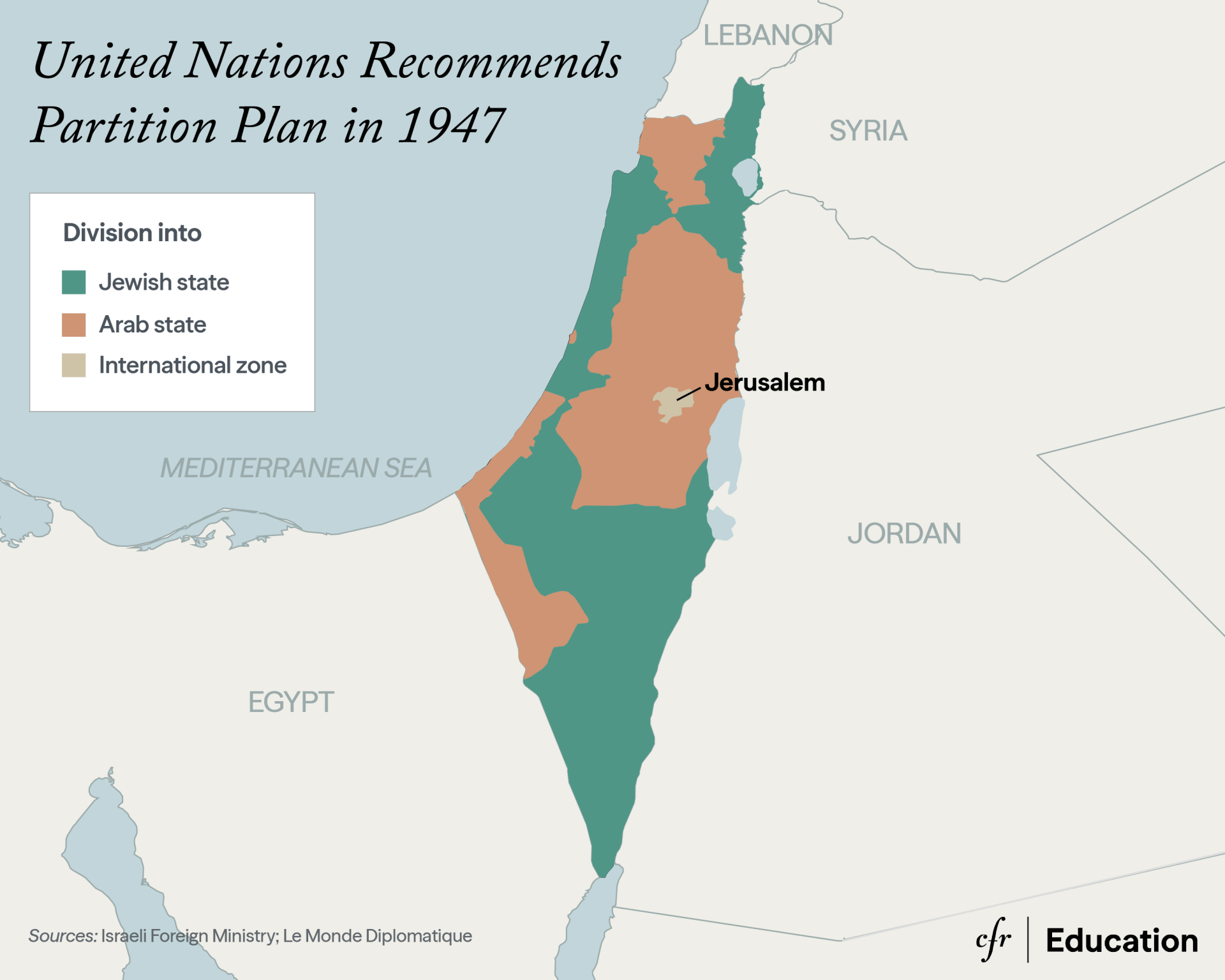
May 14, 1948Israel Declares Independence, Arab Countries Invade
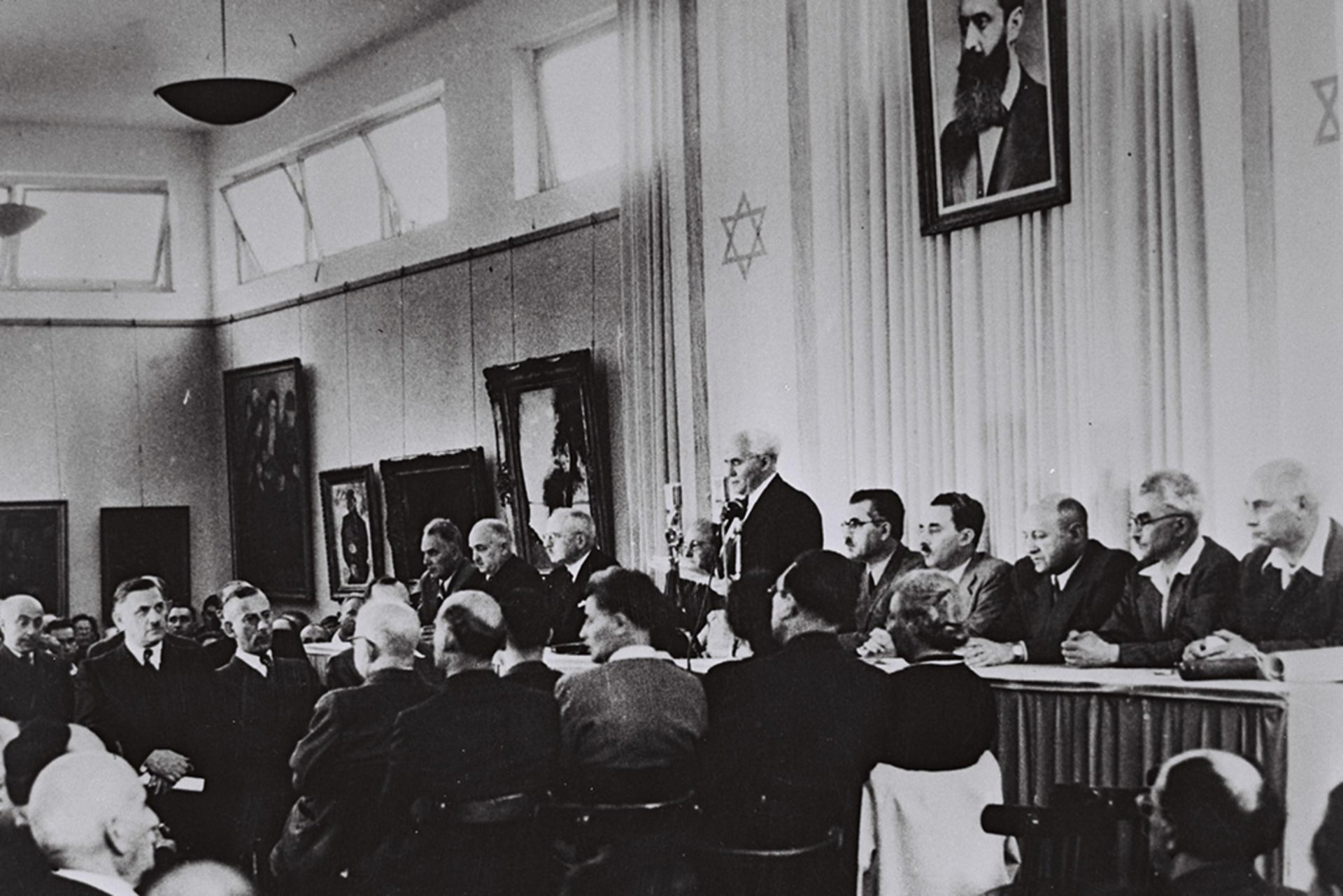
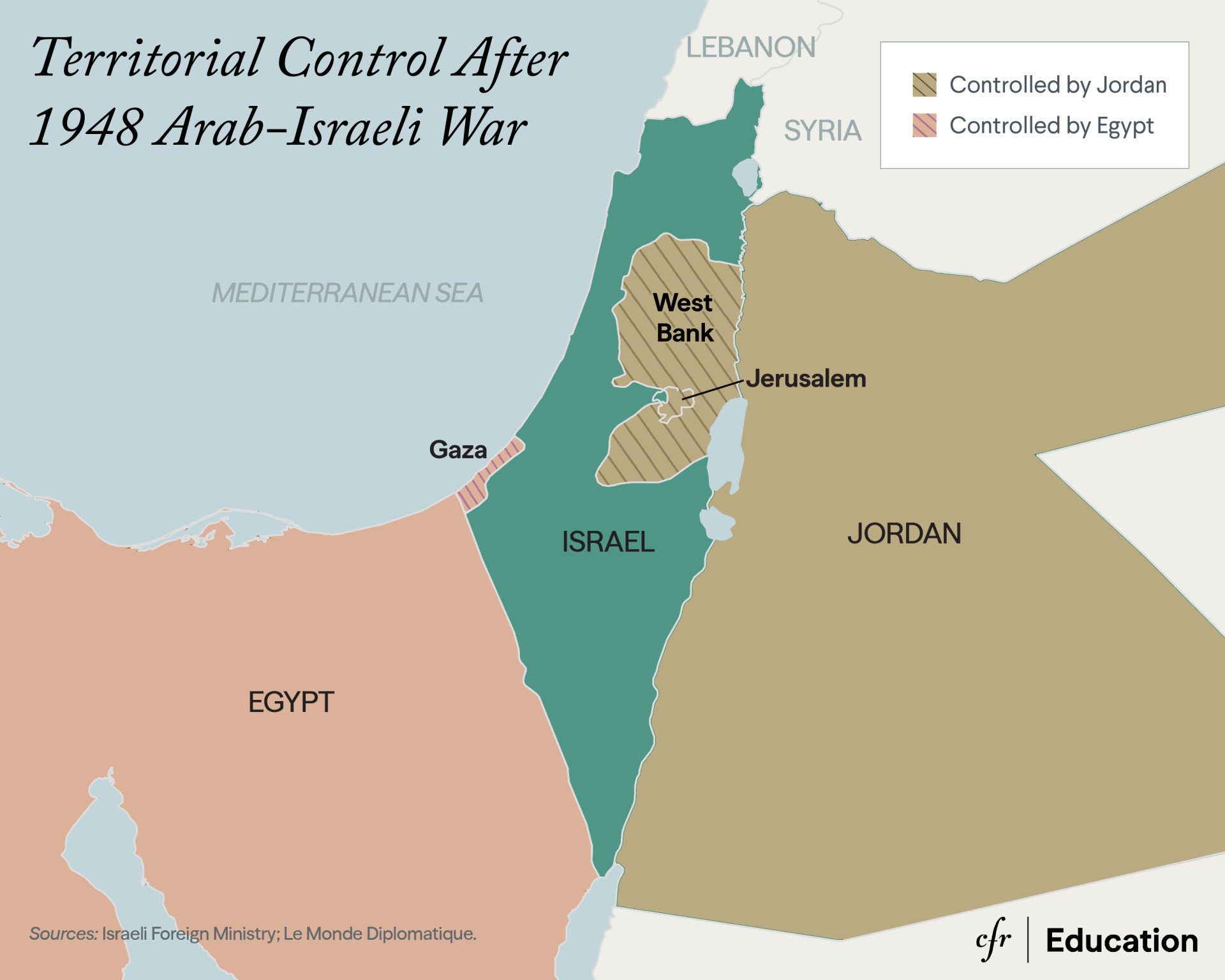
The British Mandate for Palestine expires and Israel declares its independence, triggering the first Arab-Israeli War. Following Israel’s declaration, the armies of Egypt, Iraq, Jordan (then Transjordan), and Syria invade Israel. Lebanon, after deciding at the last moment not to invade, deploys defensively along its southern border and provides limited support to Arab forces. (Smaller contingents from other Arab states also later reinforce that .) Combat continues into early 1949. Between February and July that year, Israel signs separate agreements with Egypt (February 24), Lebanon (March 23), Jordan (April 3), and Syria (July 20). Israel retains the territory provided to it by the United Nations and captures some of the areas designated for the envisioned Palestinian state. Israel gains control of West Jerusalem; Egyptian forces are pushed back as far as Gaza, where they remain; and Jordan gains the West Bank and East Jerusalem, including the Old City and its historic Jewish quarter.
Dec 11, 1948UN Addresses Palestinian Displacement
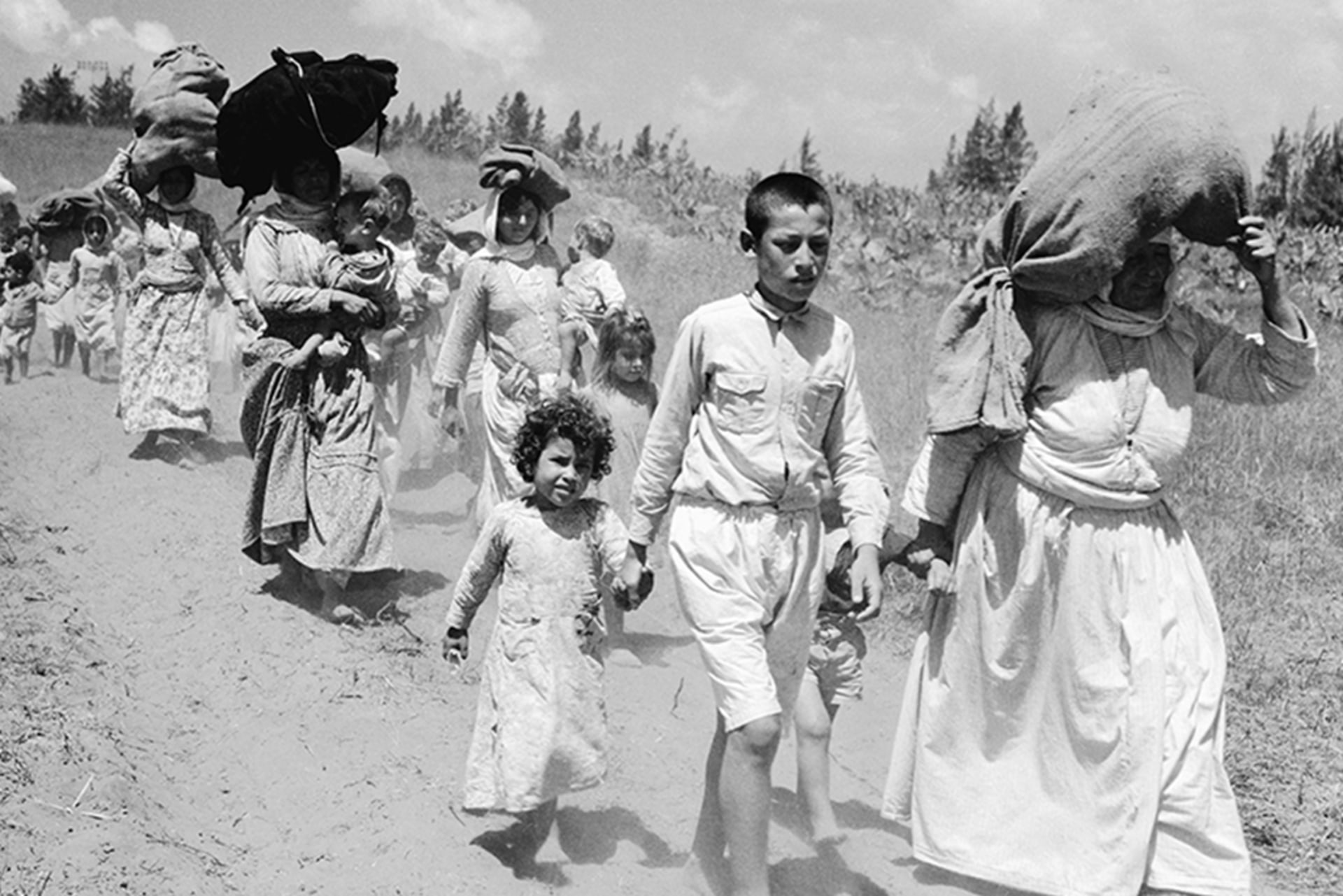
Over the course of the first Arab-Israeli War, at least seven hundred thousand Palestinian flee their homes in an exodus known to Palestinians as the Nakba (Arabic for “catastrophe”). In 1948, the UN General Assembly passes Resolution 194, which calls for the of Palestinian refugees who wish to return. The Palestinians will later point to Resolution 194 as having established a “right of return” for Palestinian refugees and their descendants. In the decades that follow, however, debate ensues about whether the resolution actually constitutes a binding right and how such a return would work, especially given the large number of descendants of Palestinian refugees.
Dec 8, 1949UN Relief and Works Agency for Palestine Established
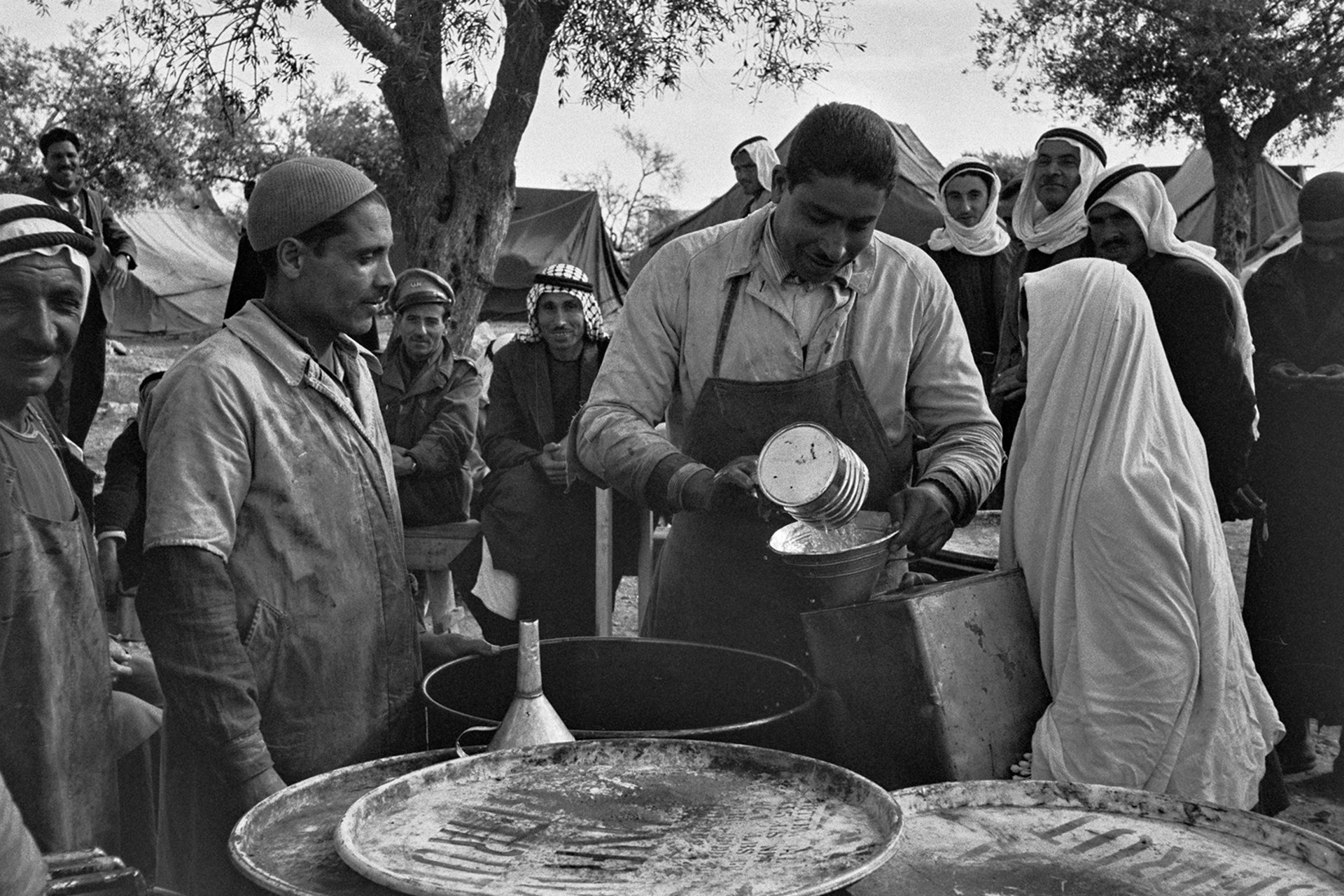
The UN General Assembly votes to create the UN Relief and Works Agency for Palestine Refugees in the Near East to provide health, education, and relief services to displaced Palestinians. The agency begins operations in May 1950, serving registered refugees across Jordan, Lebanon, Syria, the Gaza Strip, and the West Bank.
May 1964The PLO Is Founded
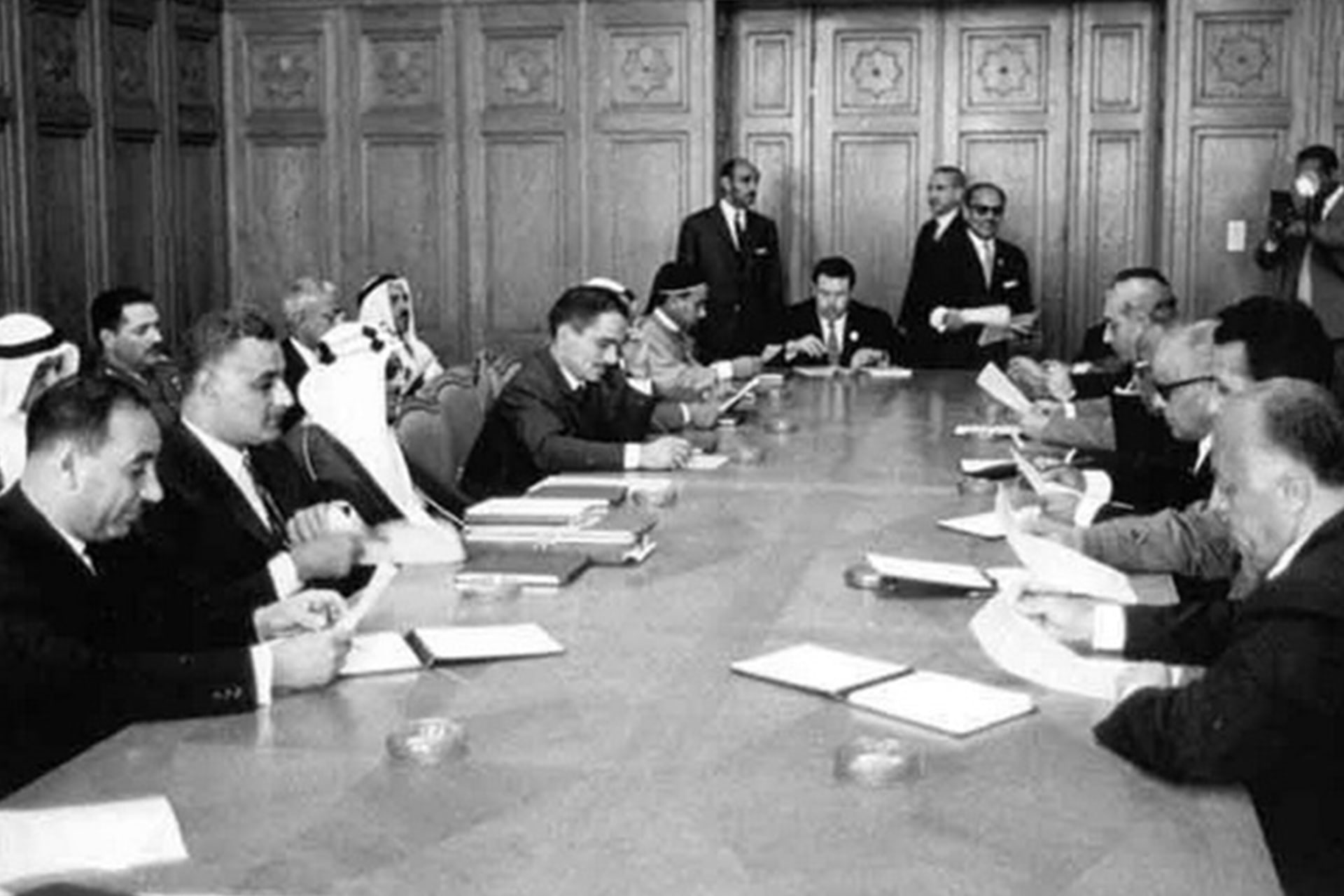
At an Arab League summit in January, leaders of Arab countries ask Palestinian political figures to establish an organization to represent and mobilize the Palestinian people. Months later, delegates from various Palestinian groups convene in East Jerusalem for the first Palestine National Council, where they form the Palestine Liberation Organization (PLO). The PLO’s founding charter declares all of Mandatory Palestine to be Arab land, rejects the 1947 UN partition plan, and calls for armed struggle to liberate Palestine and eliminate the State of Israel. In 1974, member states of the Arab League designate the PLO “the sole legitimate representative of the Palestinian people.”
Jun 5–10, 1967The Six-Day War
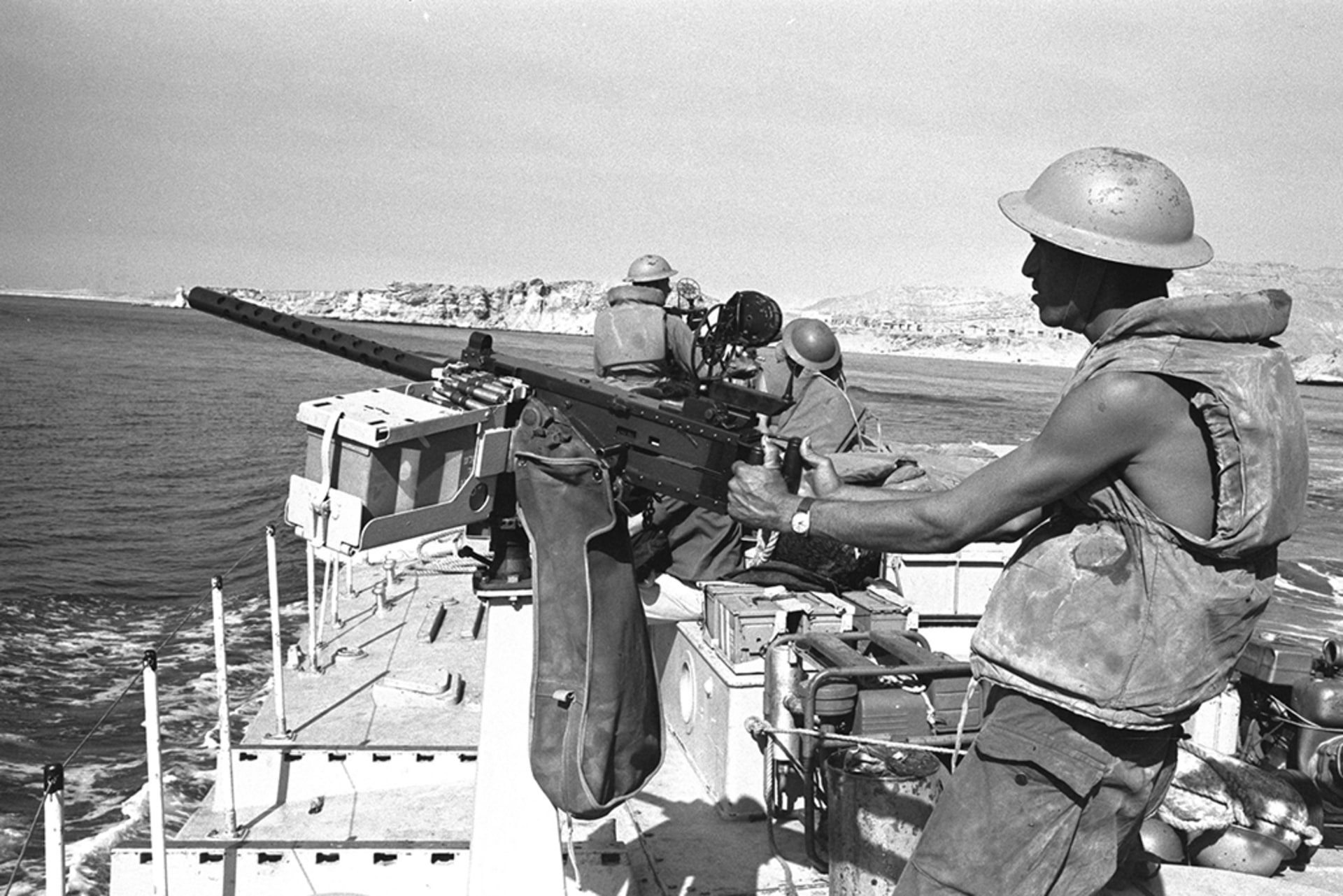
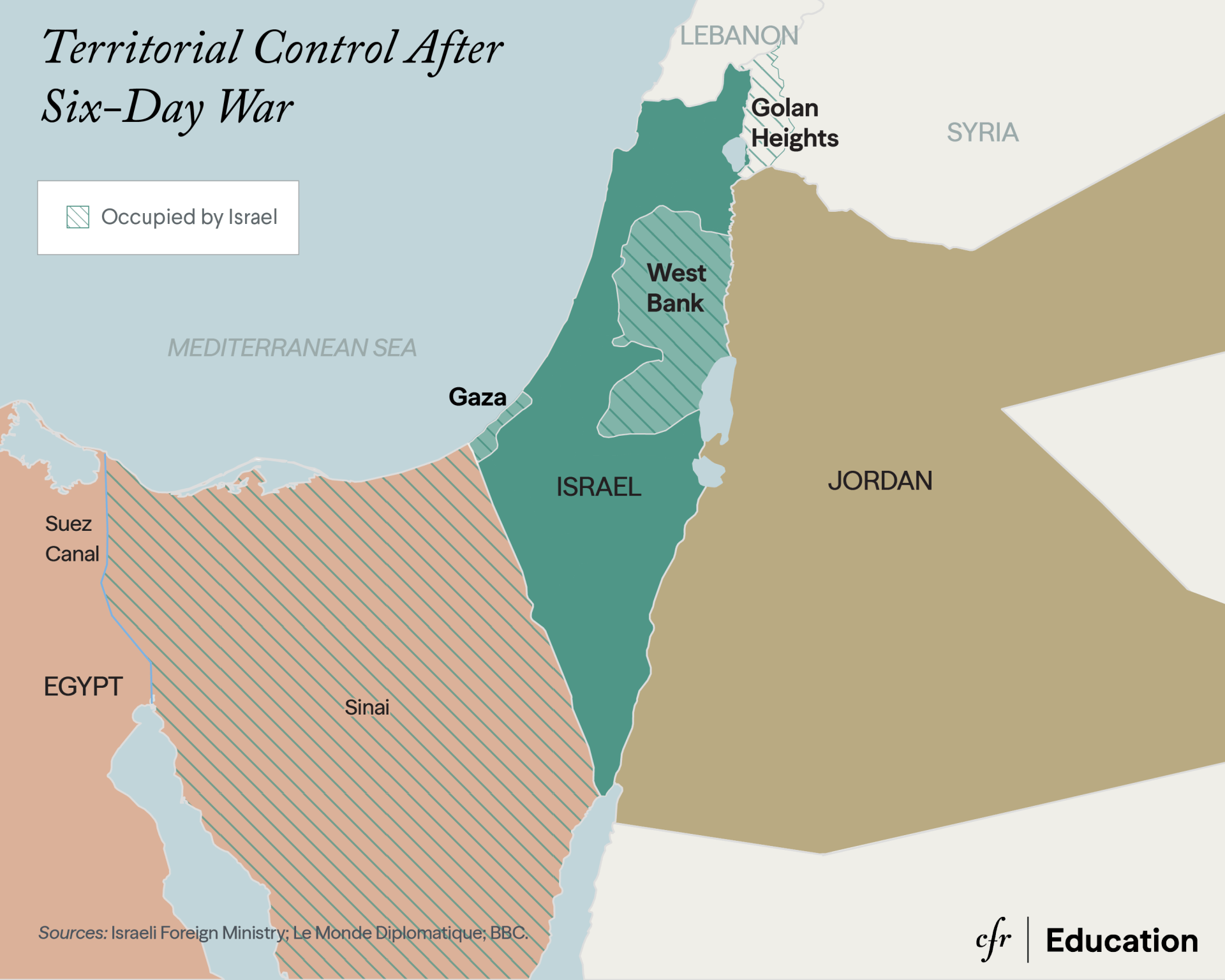
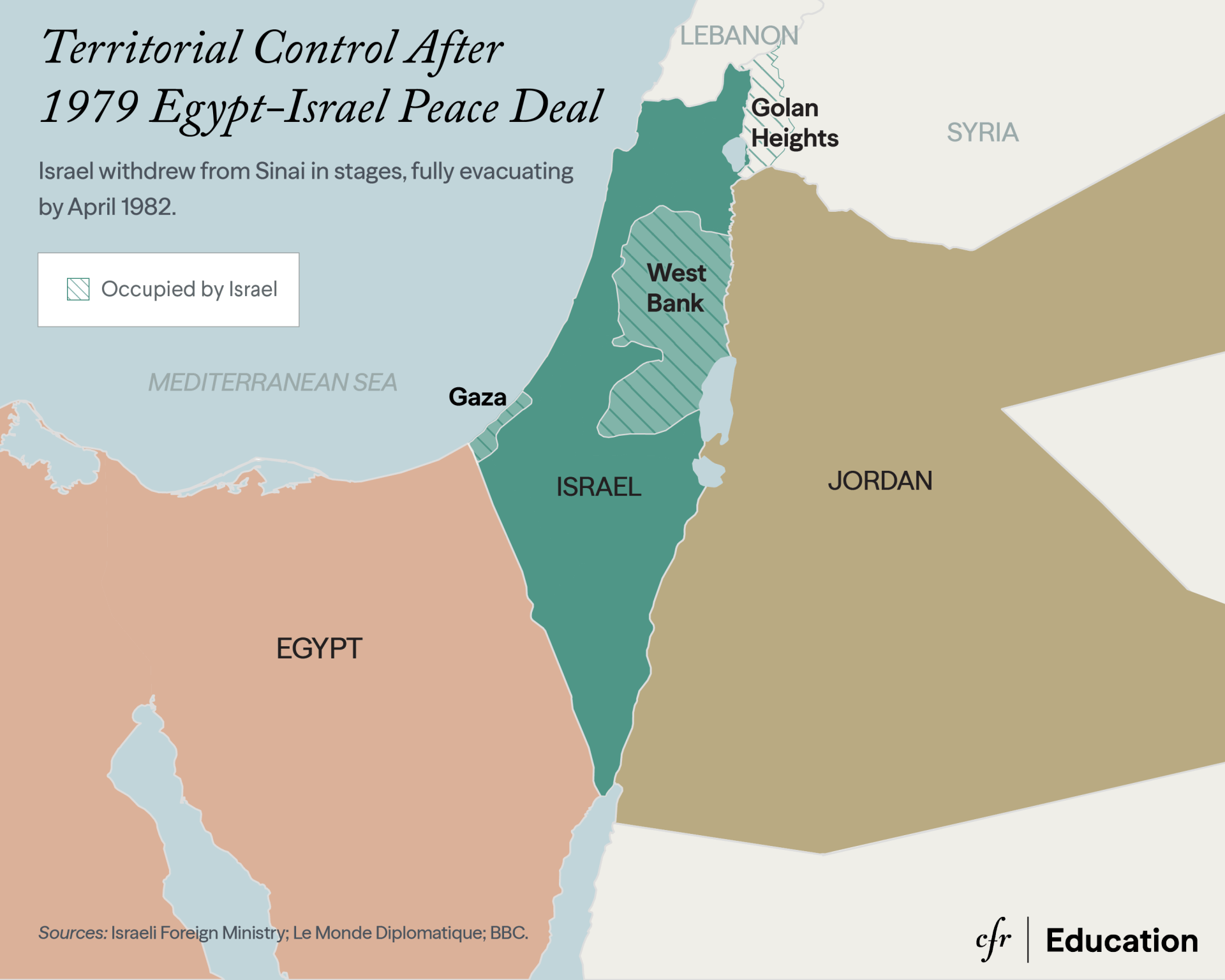
After Egyptian, Jordanian, and Syrian forces begin mobilizing along Israel’s borders, Israel determines an attack is imminent and launches a . Within six days, Israel wins a decisive victory: it suffers roughly eight hundred casualties; its adversaries suffer an estimated twenty thousand killed and tens of thousands more wounded. Israel emerges with control of the Gaza Strip and the West Bank—areas inhabited primarily by Palestinians—as well as all of East Jerusalem. Israel also takes control of Syria’s Golan Heights and the Sinai Peninsula, which is part of Egypt. The conflict displaces roughly three hundred thousand Palestinians. Israel continues to occupy the Sinai Peninsula until April 1982. It withdraws from parts of the West Bank between 1994 and 1997 and abandons its settlements and military bases in Gaza in 2005.
Nov 22, 1967UN Security Council Calls for Israeli Withdrawal and Arab Recognition
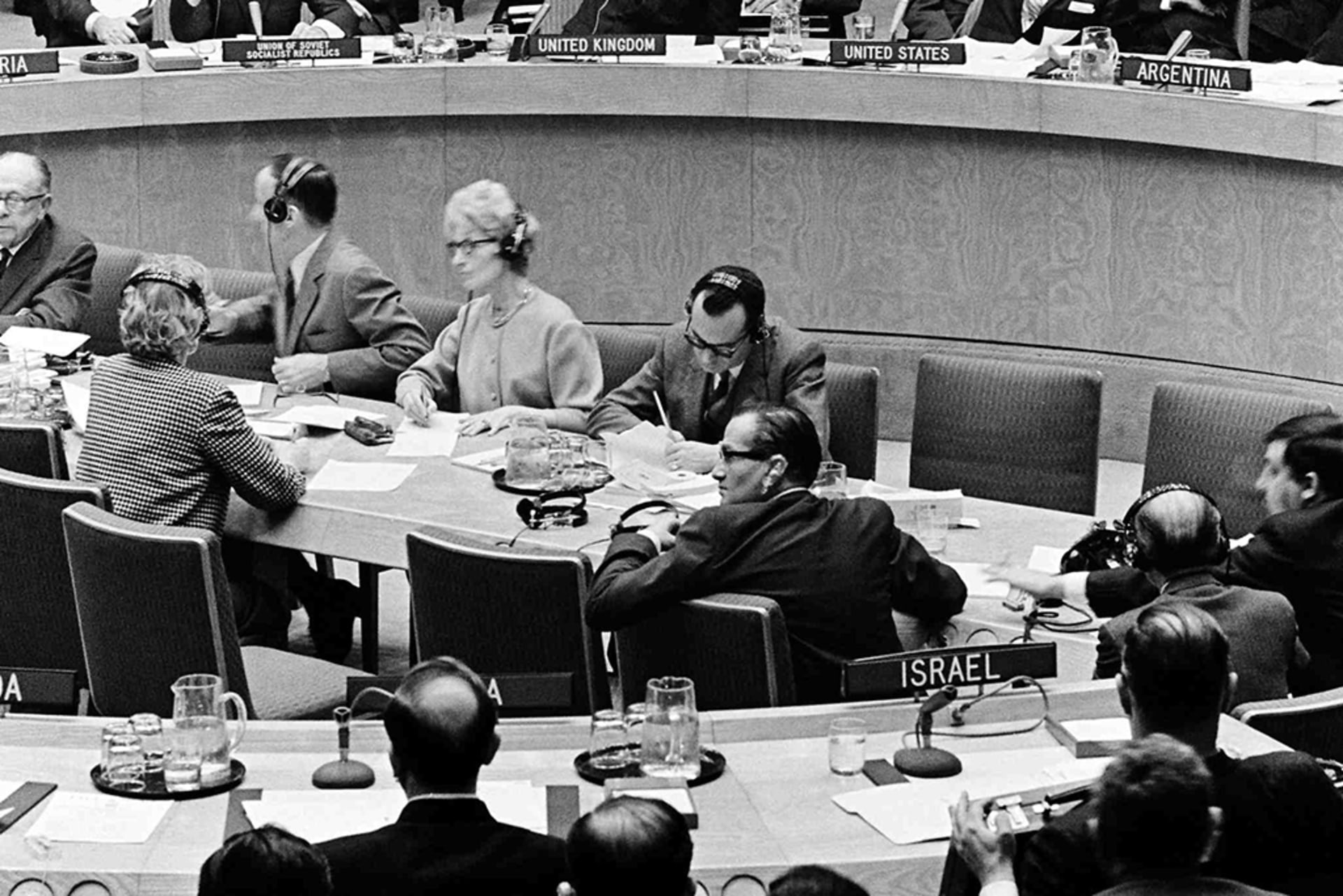
The UN Security Council passes Resolution 242 calling for Israeli “withdrawal . . . from territories occupied in the recent conflict,” the termination of “states of belligerency,” and “respect for and acknowledgment of the , territorial integrity, and political independence of every state in the area and the right to live in peace within secure and recognized boundaries.” The resolution establishes the concept of land for peace, linking Israeli withdrawal to Arab recognition of Israel as a sovereign state. Because the English text is ambiguously worded (referring to “territories occupied,” not “the territories occupied”), Israel and Arab states will interpret the extent of Israel’s required withdrawal differently in the decades that follow.
Oct 6, 1973The October War
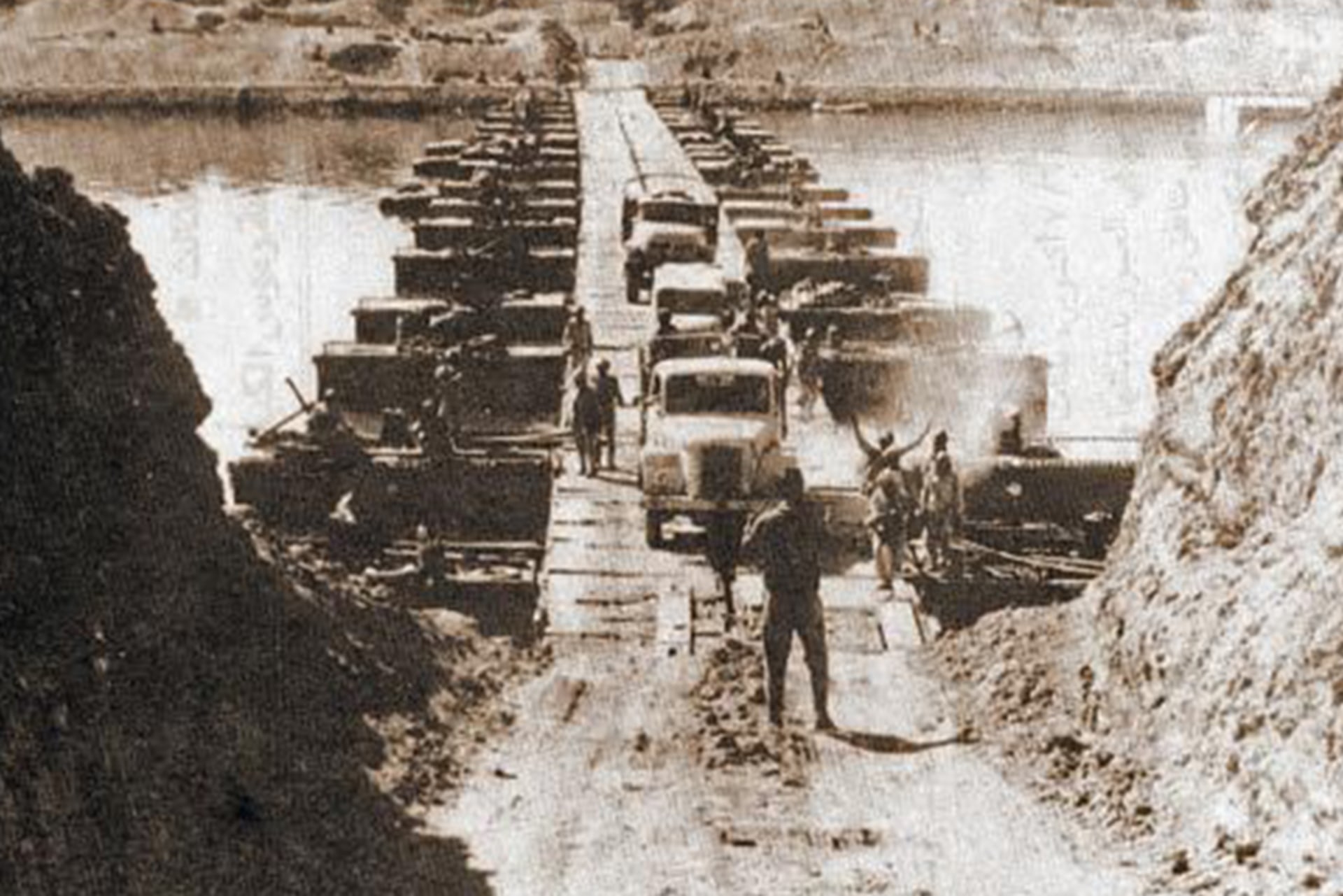
Another Arab-Israeli War, known variously as the October War, the Ramadan War, and the Yom Kippur War, erupts when Egypt and Syria launch a surprise attack to retake the Israeli-occupied Sinai Peninsula and Golan Heights. tensions spike as the aids Egypt and Syria and the United States aids Israel. The Organization of Arab Petroleum Exporting Countries begins an oil on countries that support Israel, and the price of oil skyrockets, helping to trigger a deep in the United States. The fighting ends after the United States and the Soviet Union negotiate a UN-sponsored ceasefire. The UN Security Council passes Resolution 338, which calls for implementing UN Security Council Resolution 242.
Sep 17, 1978The Camp David Accords
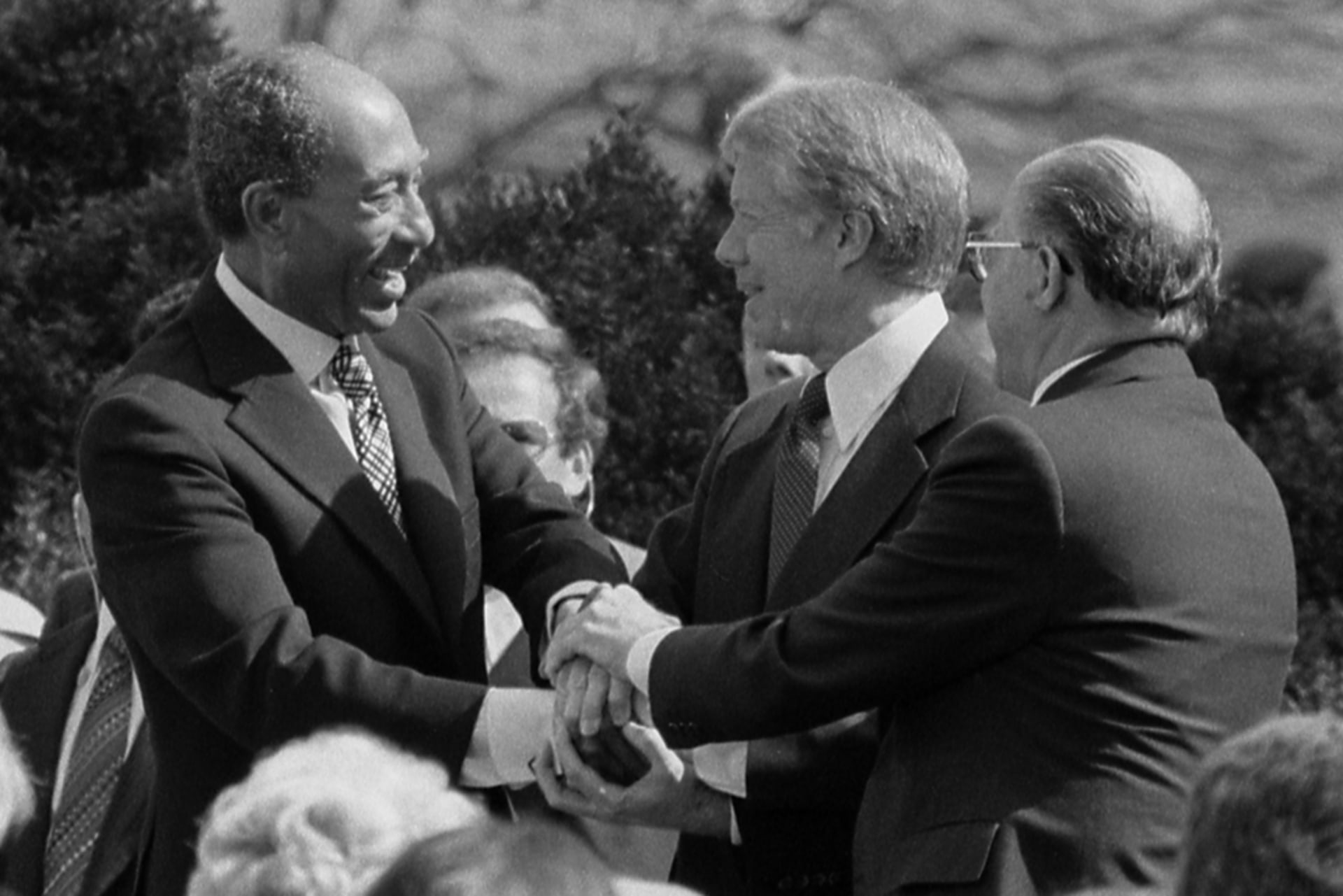
U.S. President Jimmy Carter, Egyptian President Anwar Sadat, and Israeli Prime Minister Menachem Begin sign the Camp David Accords after thirteen days of U.S.-mediated negotiations at Camp David, the U.S. presidential retreat in Maryland. The accords include two framework agreements. One establishes the basis for a future peace treaty between the two countries. The other lays out a “Framework for Peace in the Middle East,” committing the Egyptian and Israeli governments, along with other parties, to negotiate the status of the Gaza Strip and the West Bank. The plan calls for a transition toward Palestinian self-government in those regions, followed by talks on their final status. Palestinian organizations and other Arab countries, however, which were not included in the talks, condemn the accords and shun Egypt over its role in negotiating them.
Mar 26, 1979Israel and Egypt Sign Peace Deal
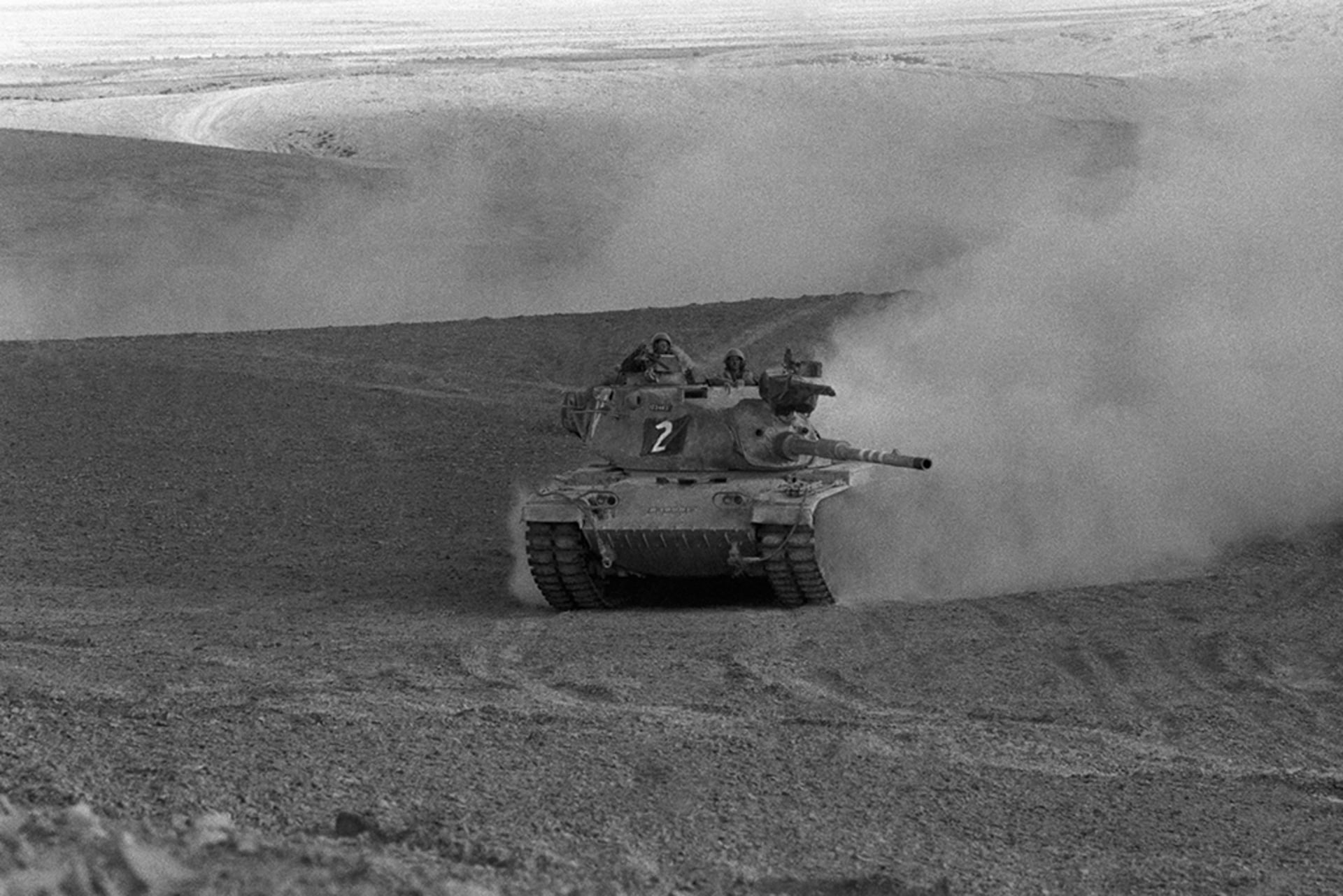
Following the Camp David Accords, Egypt and Israel sign a peace treaty, the first between Israel and one of its Arab neighbors. The treaty commits Israel to withdraw in stages from the Sinai Peninsula and evacuate its settlements there. That process concludes in April 1982. The termination of the state of war between Egypt and Israel leads to the normalization of diplomatic and commercial relations between the two countries. Israel’s prime minister and Egypt’s president exchange letters reaffirming their commitment—outlined in the Camp David Accords—to negotiate the creation of an elected self-governing authority for the Palestinian inhabitants of the Gaza Strip and the West Bank.
Dec 9, 1987First Intifada
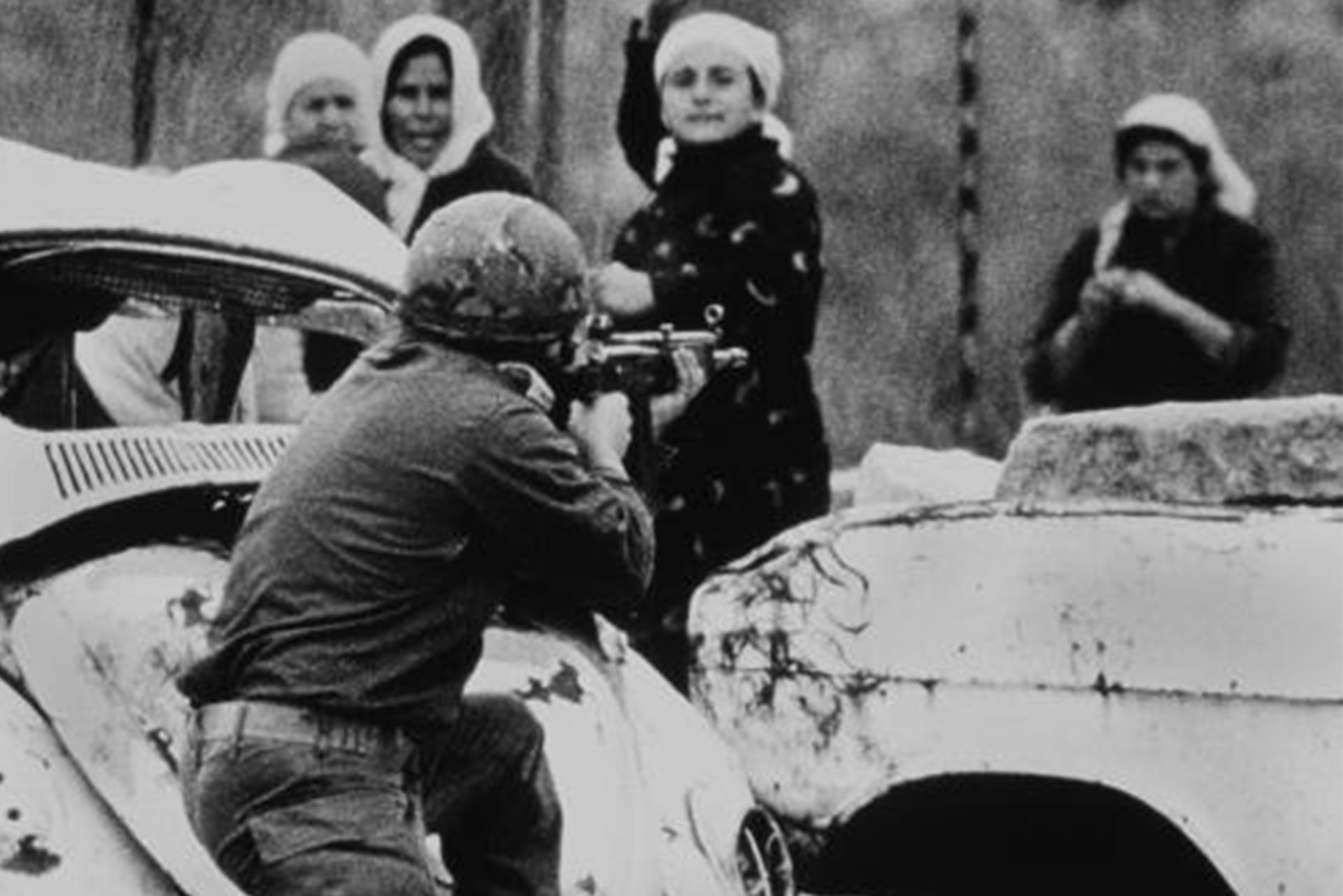
On December 8, an Israeli military truck collides with a car in Gaza, killing four Palestinians. Although it was an accident, rumors spread that the crash was an act of retaliation for the stabbing death of an Israeli in Gaza days earlier. The next day, Palestinian demonstrations begin to spread across Gaza and the West Bank, marking the start of the first intifada, or uprising, against Israeli occupation in those areas. The image of Palestinians throwing rocks at Israeli tanks becomes the enduring symbol of the intifada. Over the next six years, roughly two hundred Israelis and thirteen hundred Palestinians are killed.
Feb 11, 1988Hamas Is Founded
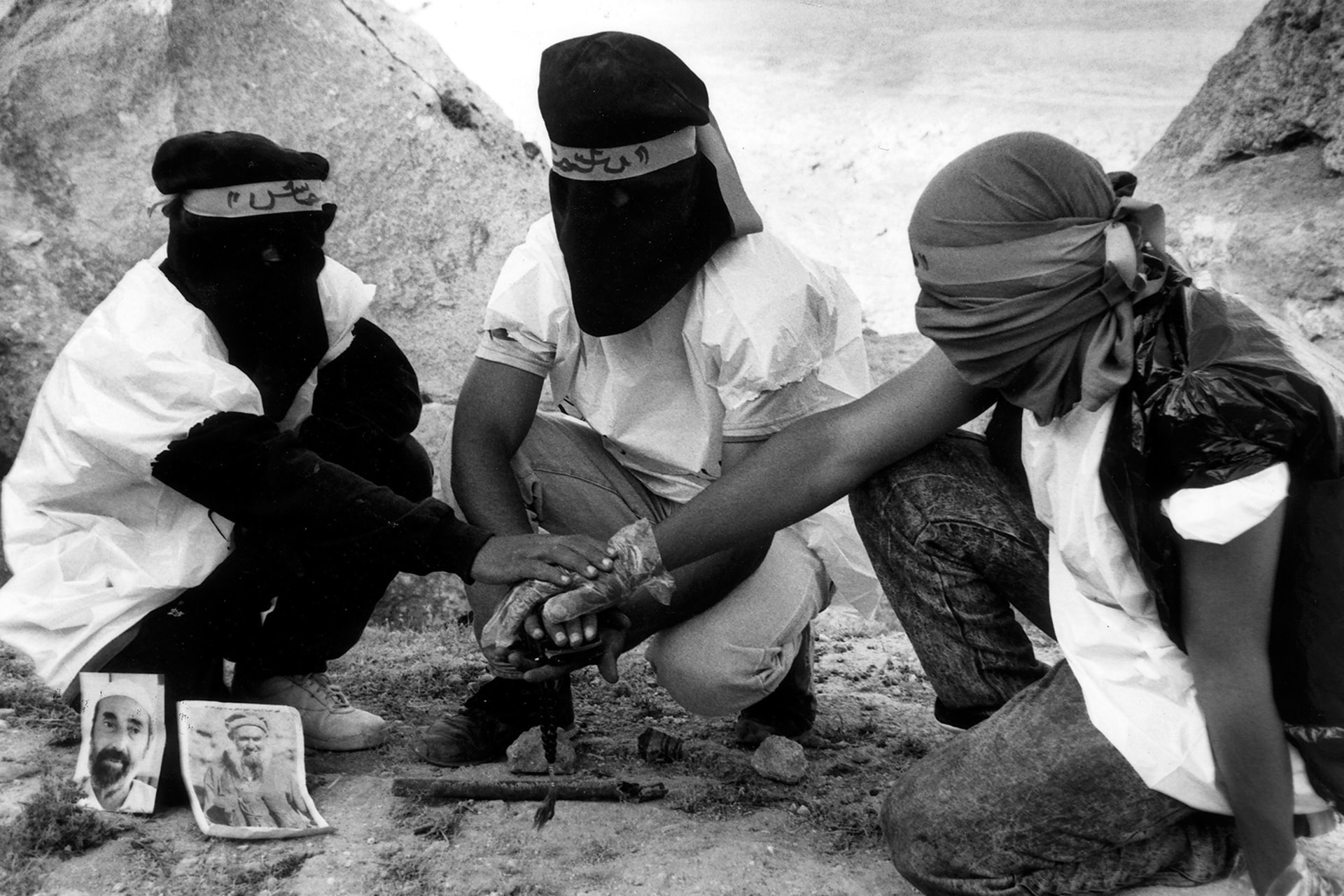
Following the outbreak of the first intifada, a Palestinian cleric named Sheikh Ahmed Yassin establishes a militant offshoot of the Muslim Brotherhood in the Gaza Strip, aiming to bolster its standing after losing popular support to Palestinian Islamic —a Gaza-based group that has begun carrying out operations against Israel. The group begins distributing leaflets and organizing strikes, protests, and clashes with Israeli forces under the name Hamas (“zeal” in Arabic, and an acronym of Harakat al-Muqawama al-Islamiyya, which translates to “Islamic Resistance Movement”). By August 1988, Hamas formally adopts a charter endorsing armed jihad against Jews and the establishment of an Islamic state across all of historic Palestine. The United States designates Hamas a foreign terrorist organization in 1997.
Jul 31, 1988Jordan Surrenders Claims on East Jerusalem and the West Bank
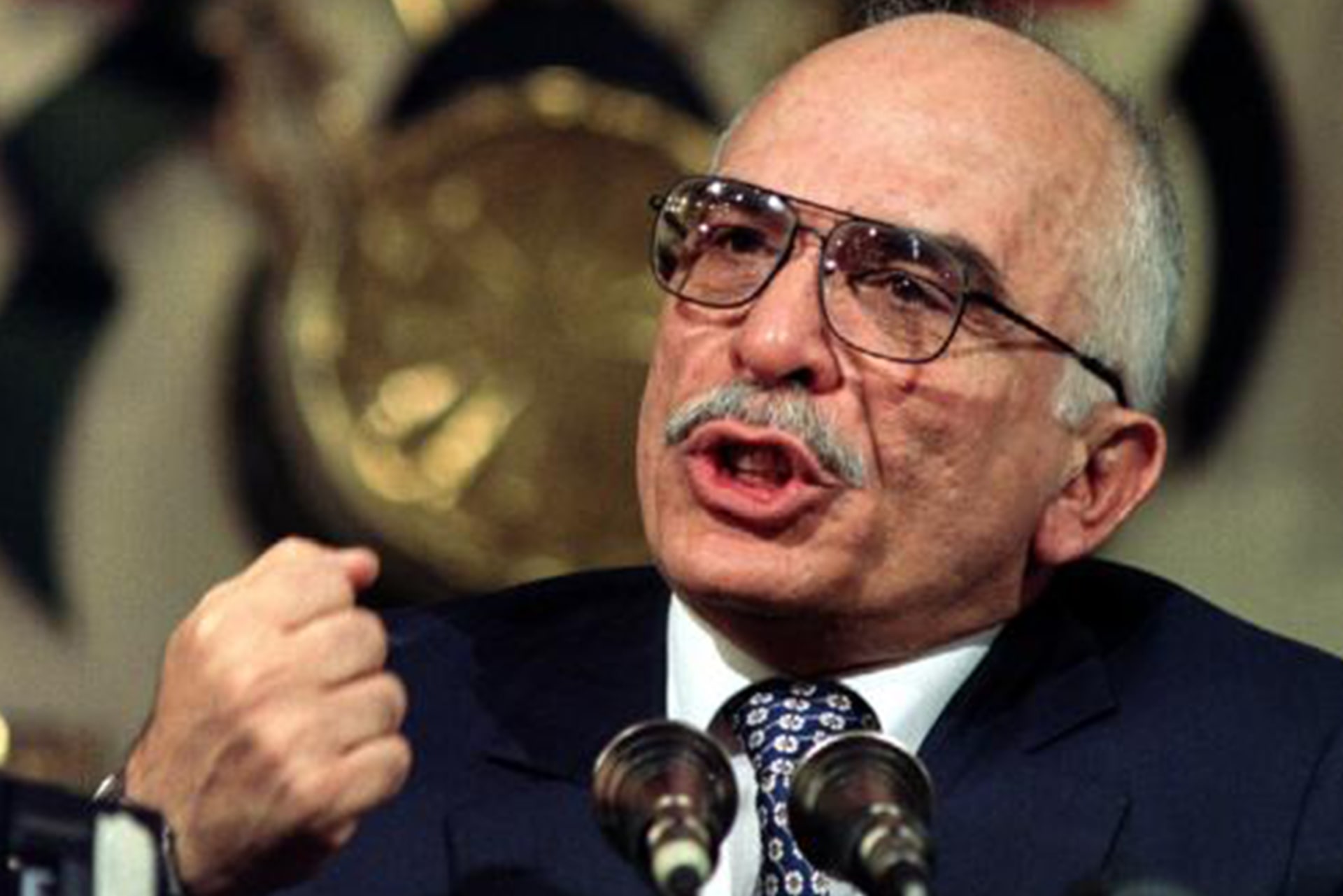
King Hussein of Jordan relinquishes his country’s claims to East Jerusalem and the West Bank—which Jordan had administered before Israel captured those areas in 1967— in favor of the claims of the PLO. In December of the same year, PLO Chairman Yasir Arafat denounces violence, recognizes Israel’s right to exist, and acknowledges UN Security Council Resolution 242 and the concept of land for peace. The United States responds to Arafat’s announcement by beginning direct talks with him, though it suspends the talks in 1990 after Arafat refuses to condemn a Palestinian terrorist attack against Israel.
Oct 30, 1991The Madrid Peace Conference
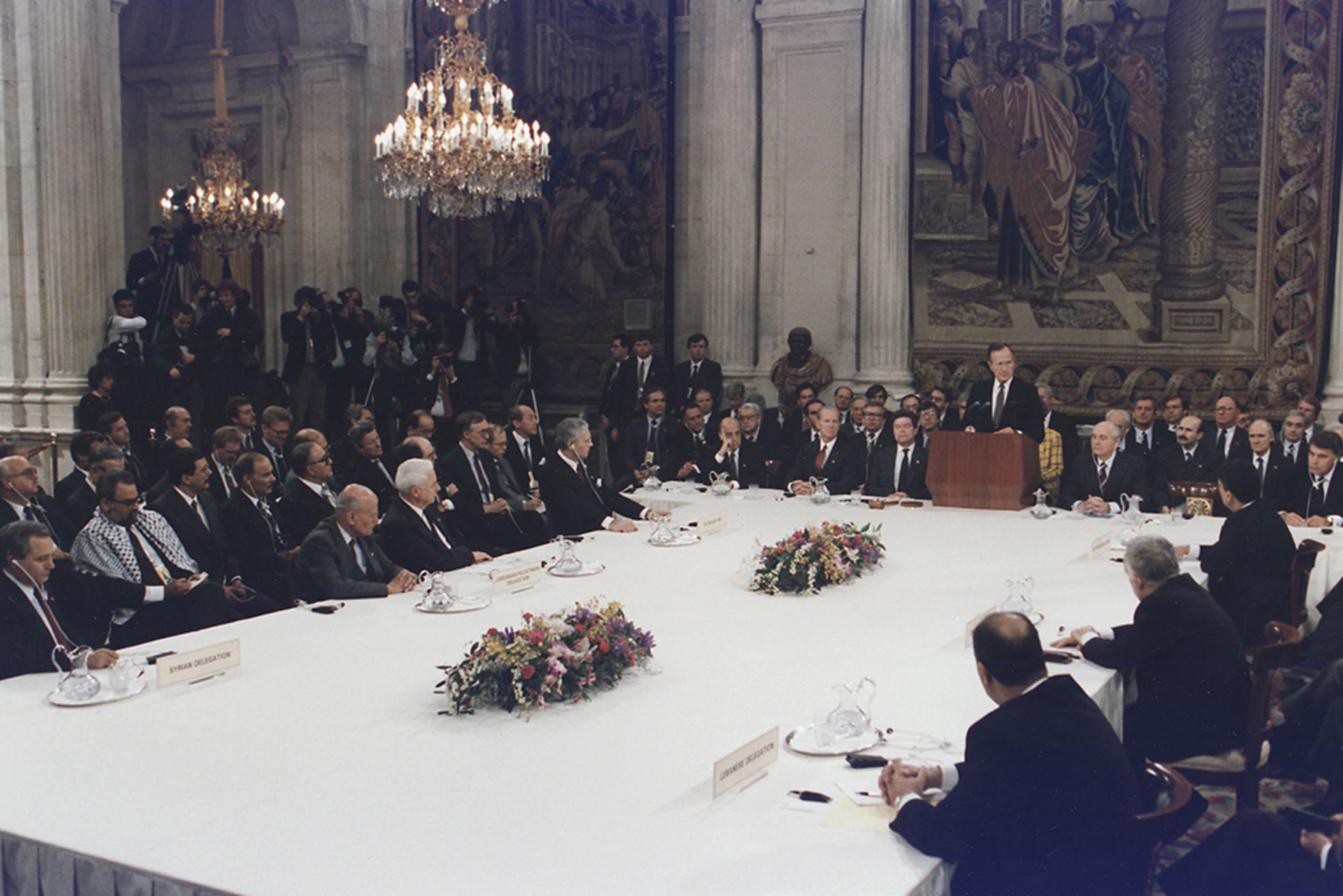
A potential breakthrough in the Arab-Israeli stalemate comes in the wake of Operation Desert Storm, in which a U.S.-led coalition reversed Iraq’s August 1990 invasion and occupation of Kuwait. During the war, Iraqi President Saddam Hussein tried to link Iraqi withdrawal from Kuwait to Israeli withdrawal from the Palestinian territories—a connection the United States rejected. Meanwhile, the PLO, which backed the Iraqi invasion, emerges politically isolated and badly weakened. The United States and Soviet Union, having found a rare piece of common ground in condemning the invasion of Kuwait, attempt to seize the postwar moment by cosponsoring a peace conference in Madrid, Spain. It focuses not on the recently concluded war but on resolving the Arab-Israeli conflict, establishing the linkage that the United States previously rejected. The conference is the first face-to-face negotiation among Israel, the Palestinians, and the Arab states of Jordan, Lebanon, Syria, and the Gulf states. At Israel’s insistence, the proceedings exclude the PLO; Palestinian representatives attend instead as part of a Jordanian delegation. The subsequent U.S.-sponsored talks produce no breakthroughs, as the Palestinian delegates insist they lack authority to negotiate and that no progress is possible until Israel deals directly with the PLO.
Sep 13, 1993The Oslo Accords
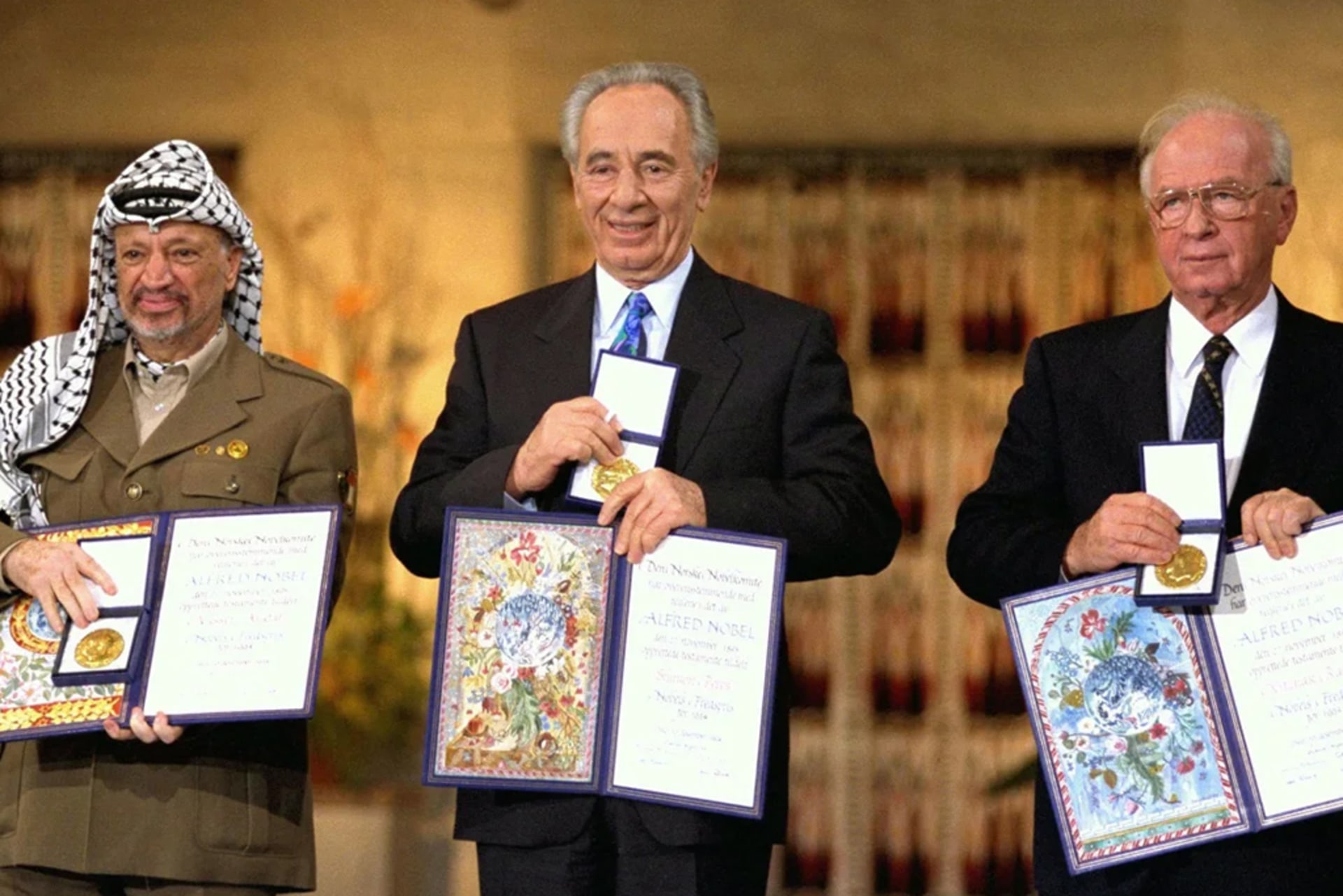
After months of secret negotiations in Norway, Israel and the PLO sign the Declaration of Principles on Interim Self-Government Arrangements, which becomes known as the first of two Oslo Accords. It is the first direct agreement between the two parties. In an exchange of letters before signing, the PLO recognizes Israel’s right to exist and renounces terrorism, while Israel recognizes the PLO as the legitimate representative of the Palestinian people. The agreement sets out a five-year interim period, during which Israeli forces would withdraw from the Gaza Strip and parts of the West Bank, and a Palestinian Authority (PA) would administer education and culture, health, social welfare, direct taxation, and tourism in those areas. During that interim period, final-status negotiations would begin, addressing the most contentious issues, including Jerusalem, refugees, settlements, borders, and security. Palestinian leader Arafat, Israeli Prime Minister Yitzhak Rabin, and Israeli Foreign Minister Shimon Peres win the Nobel Peace Prize in 1994 for their role in the negotiations.
May 4, 1994The Gaza-Jericho Agreement
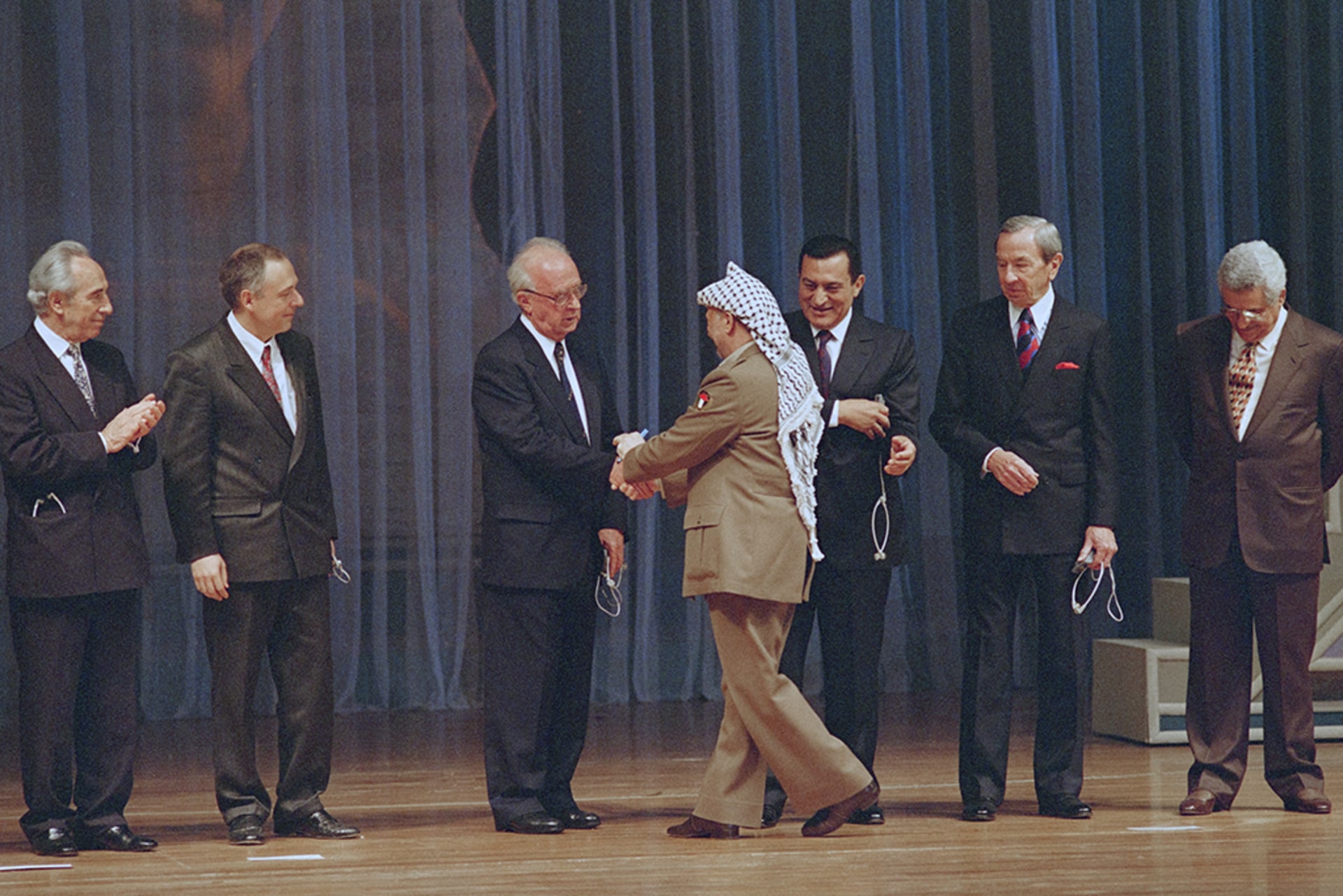
The Israelis and the Palestinians sign the Gaza-Jericho Agreement, which begins implementation of the Oslo Accords. The agreement provides for an Israeli military redeployment in Gaza and from Jericho, a town in the West Bank, and for a transfer of authority from Israeli military administration to the newly formed PA. The agreement also establishes the structure and composition of the PA, its jurisdiction and legislative powers, a Palestinian police force, and relations between Israel and the PA. Arafat returns to the Gaza Strip after a long absence.
Oct 26, 1994Israel and Jordan Sign a Peace Treaty
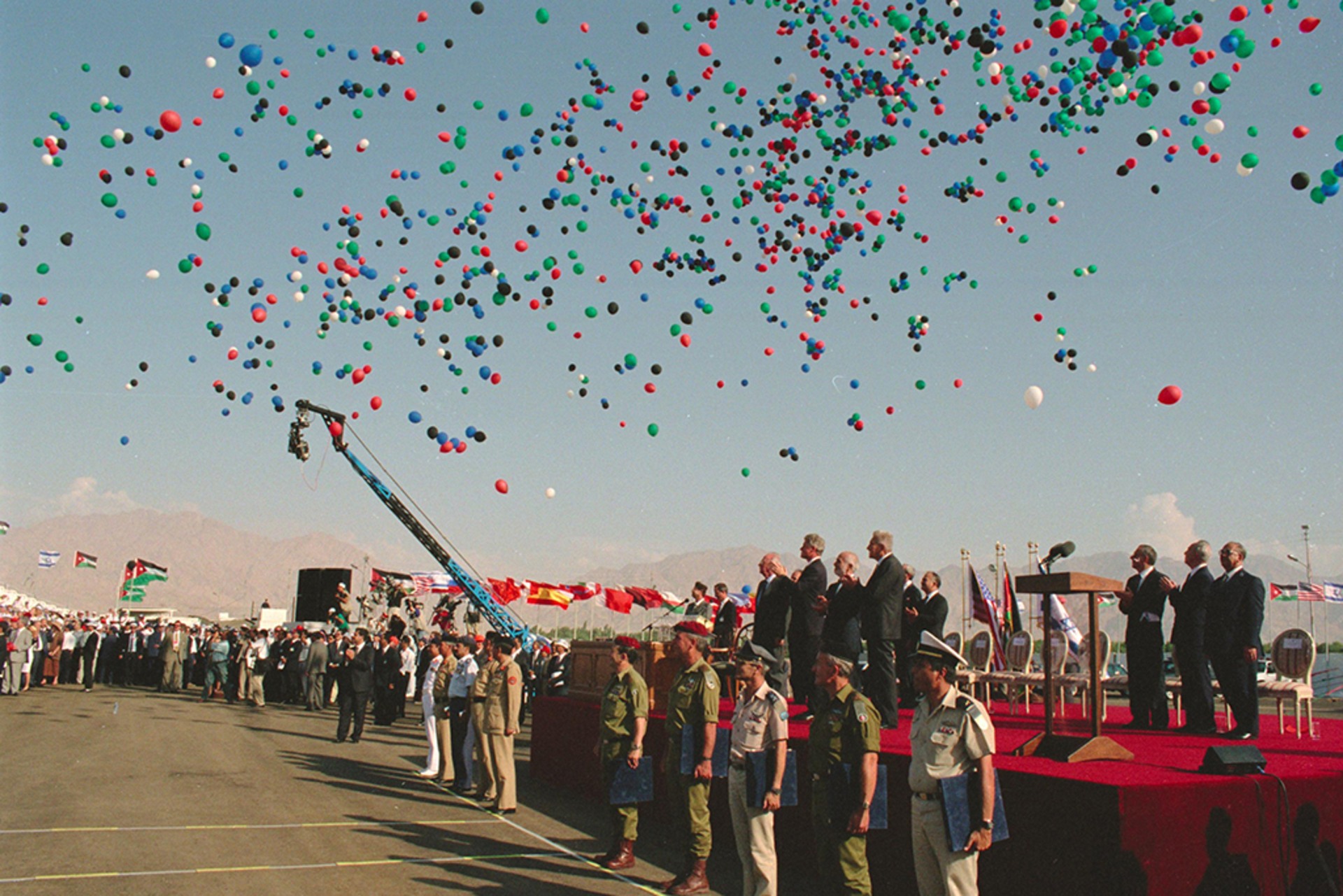
A peace treaty between Israel and Jordan settles land and maritime boundaries, regulates water-sharing from the Jordan and Yarmouk rivers, establishes diplomatic and commercial relations, and provides for cooperation on security, refugees, border crossings, civil aviation, energy, the environment, and culture. It also accords special administrative responsibilities for Jerusalem’s Muslim holy places to Jordan. This is Israel’s second peace treaty with an Arab state.
Sep 28, 1995Oslo II Accord
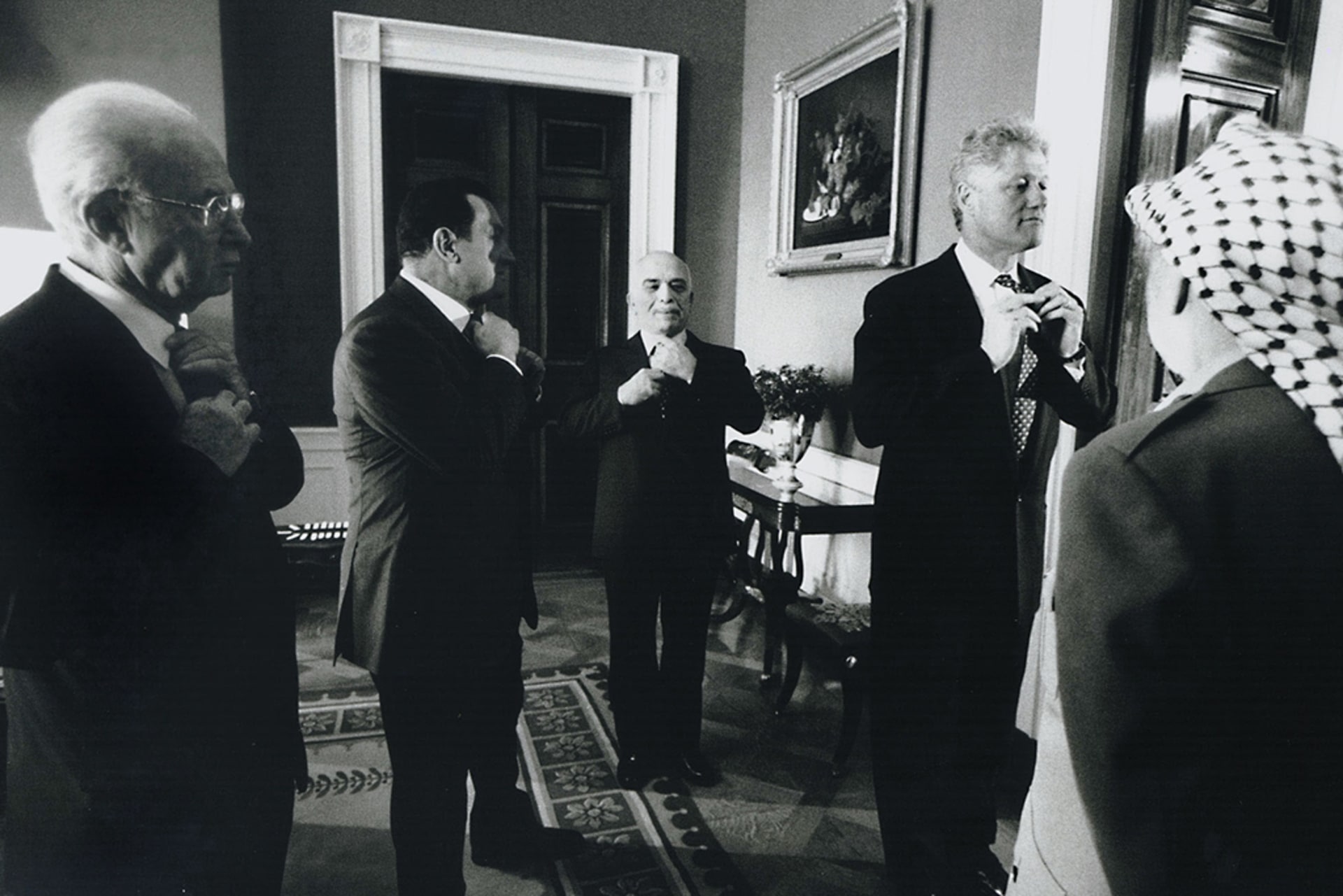
Israeli and Palestinian negotiators sign the Interim Agreement, sometimes called Oslo II. It gives the Palestinians control over additional areas of the West Bank and defines the security, electoral, public administration, and economic arrangements that will govern those areas until a final peace agreement is reached in 1999. Building on the 1993 Declaration of Principles, Oslo II divides administration of the West Bank into three zones. In Area A, covering major Palestinian cities, the PA has full civil and security control. Area B, covering most other Palestinian towns and villages, falls under PA civil control but joint Israeli-Palestinian security control. And Area C, covering Israeli settlements, military zones, and most rural land (roughly 60 percent of the West Bank), falls under full Israeli civil and security control. Oslo II also defines the structure of an elected Palestinian Council and Palestinian Authority; the redeployment of Israeli forces; and security, electoral, and economic arrangements pending a permanent status agreement by 1999. The Areas A/B/C division endures into the 2020s and becomes a persistent source of friction between Israeli settlers, the Israeli government, the PA, and Palestinian residents.
Nov 4, 1995Yitzhak Rabin Assassination
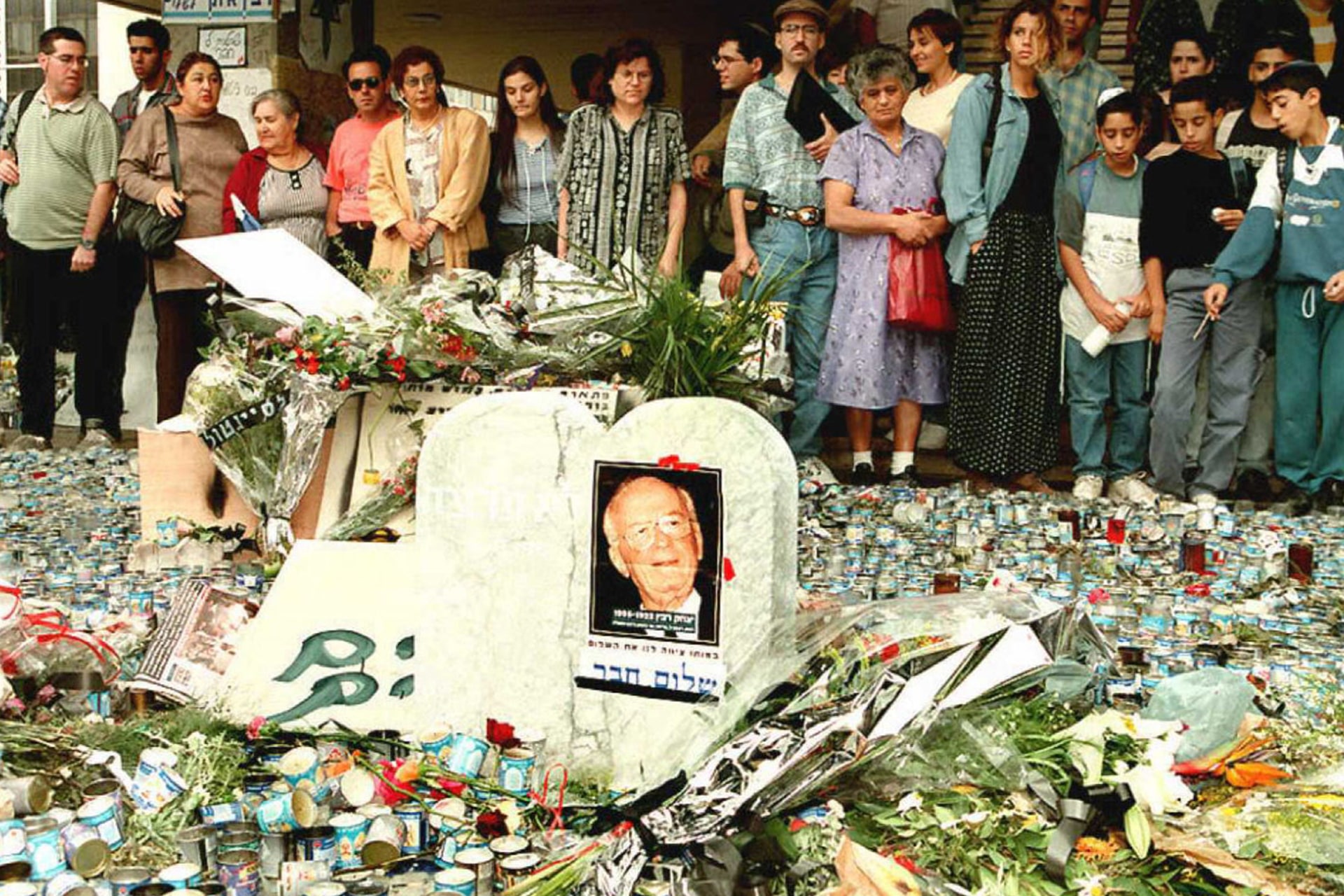
A far-right Israeli law student opposed to the Oslo Accords and to territorial concessions to the Palestinians assassinates Israeli Prime Minister Yitzhak Rabin in the city of Tel Aviv. Foreign Minister Shimon Peres becomes acting prime minister, but the loss of Rabin—who had embraced the Oslo Accords—deals a lasting blow to the peace process.
1996–99Oslo Process Falters
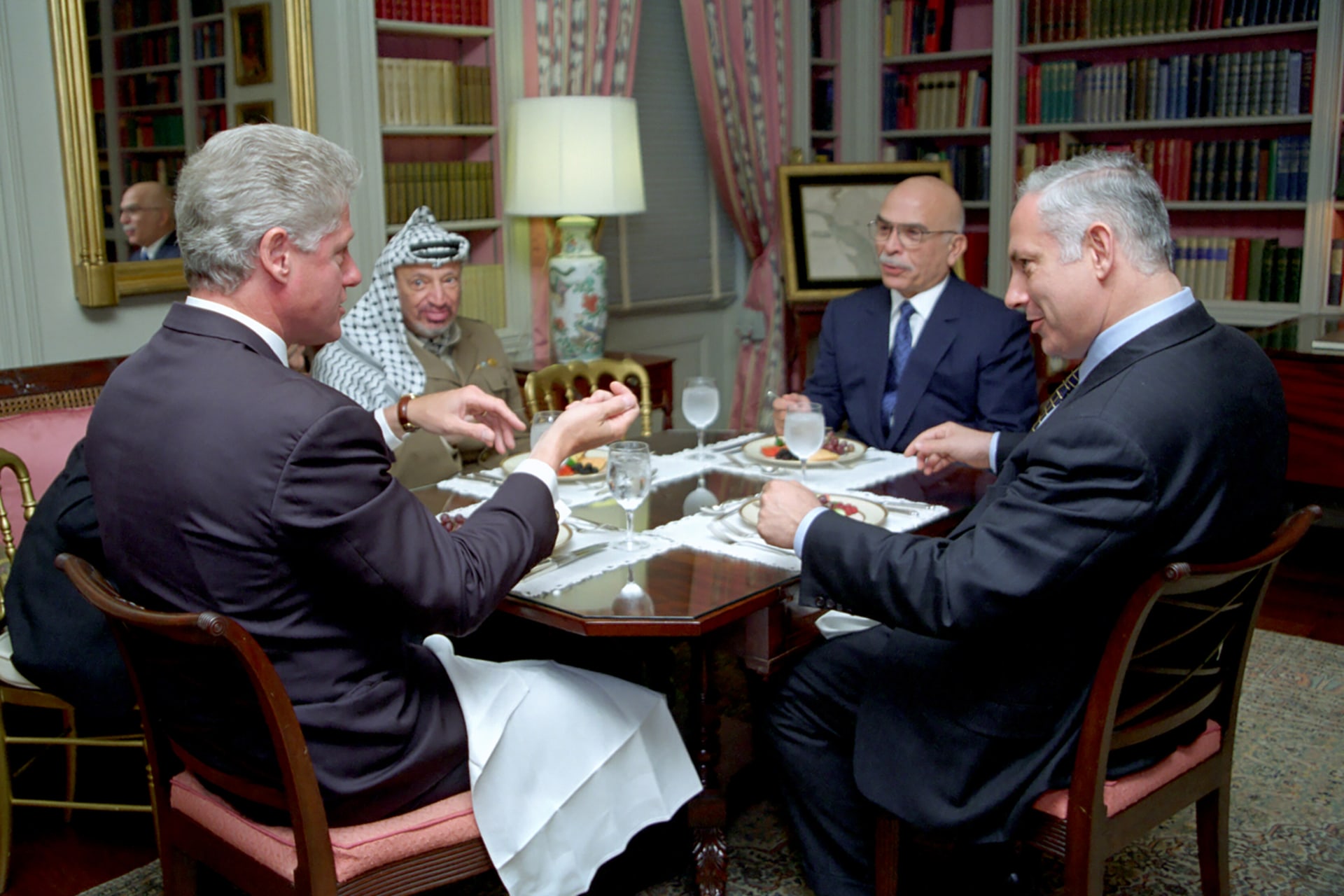
Months after Rabin’s assassination, a wave of Hamas and Palestinian Islamic Jihad suicide bombings in early 1996 kills dozens of Israeli civilians after the Israelis kill Yahya Ayyash, a Hamas leader and bomb maker. The attacks further erode Israeli confidence in the peace process and in Peres’s leadership. In May 1996, Benjamin Netanyahu of Israel’s Likud Party—which had opposed the Oslo process—narrowly wins elections to become prime minister. Fearing the collapse of the peace process, U.S. President Bill Clinton attempts to mediate continued negotiations over the implementation of the Oslo Accords. Those negotiations yield the 1997 Hebron Protocol and the 1998 Wye River Memorandum, both of which outline Israeli redeployments and withdrawals from territory in the West Bank. The latter agreement sparks backlash among both supporters of the peace process—who grow frustrated at the pace of its implementation—and opponents—who dislike the memorandum’s proposed concessions. In Israeli elections for prime minister in May 1999, politician Ehud Barak ousts Netanyahu on a platform of reviving negotiations and pursuing a comprehensive settlement.
Jul 11–25, 2000Camp David Summit
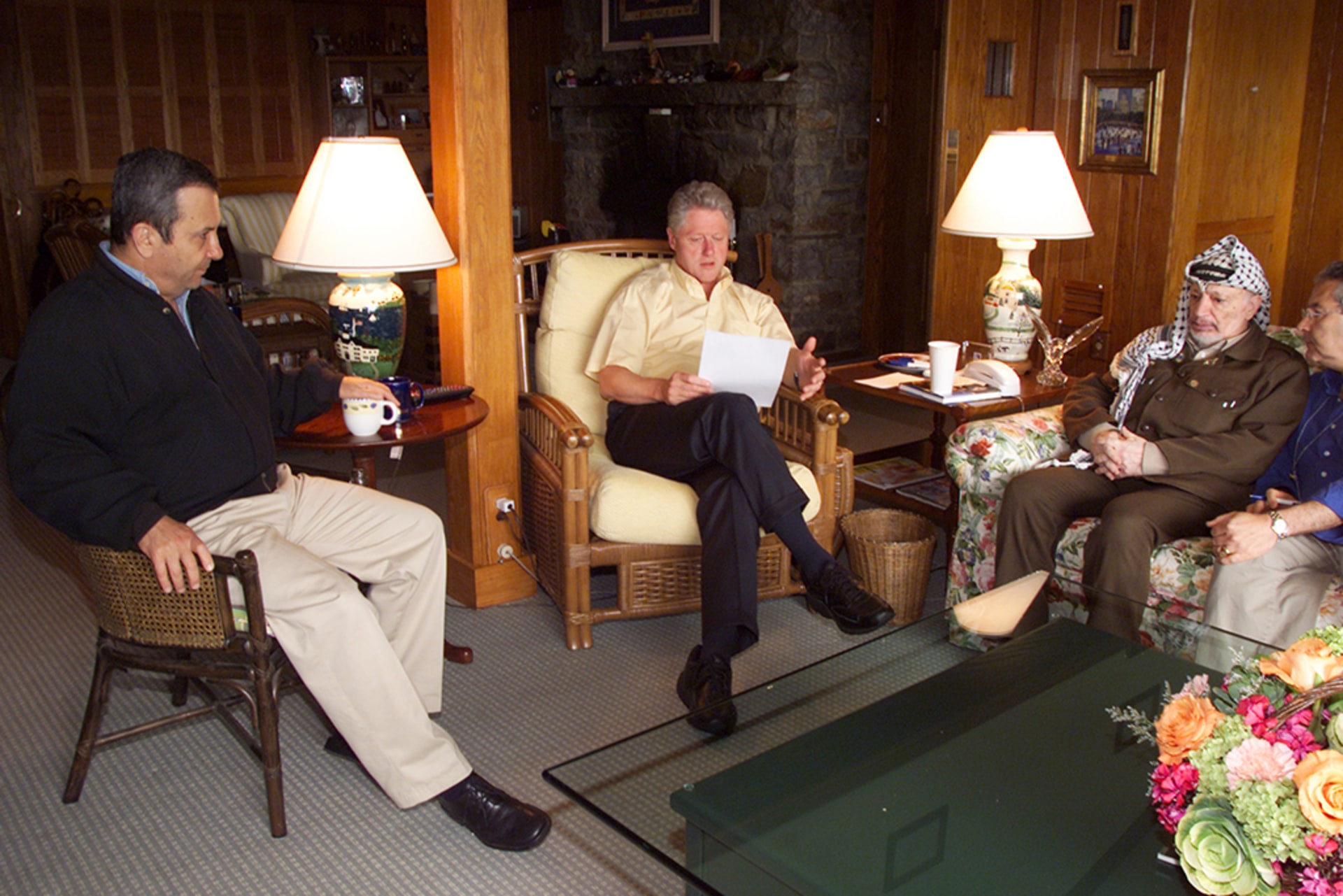
Clinton hosts Israeli and Palestinian leaders for talks at Camp David. Reports indicate that Barak is prepared to accept, among other things, Palestinian sovereignty over 91 percent of the West Bank and certain parts of Jerusalem. The deal would include a land swap in which some Israeli land would go to the Palestinians in compensation for the remaining 9 percent of the West Bank, which would go to Israel. Two weeks of intensive discussion, however, fails to produce an agreement. Clinton blames Arafat for the failure. Before leaving office several months later, Clinton lays out the “Clinton Parameters,” a set of bridging proposals on borders, Jerusalem, refugees, and security that he presents to both sides in December 2000. A final round of negotiations in January 2001 in the Egyptian Red Sea town of Taba comes closer to agreement than any before it but ends inconclusively as Barak’s government collapses and Clinton leaves office. Controversial retired Israeli General Ariel Sharon and his Likud Party defeat Barak and his Labor Party in February 2001 and do not resume the talks.
Sep 28, 2000The Second Intifada
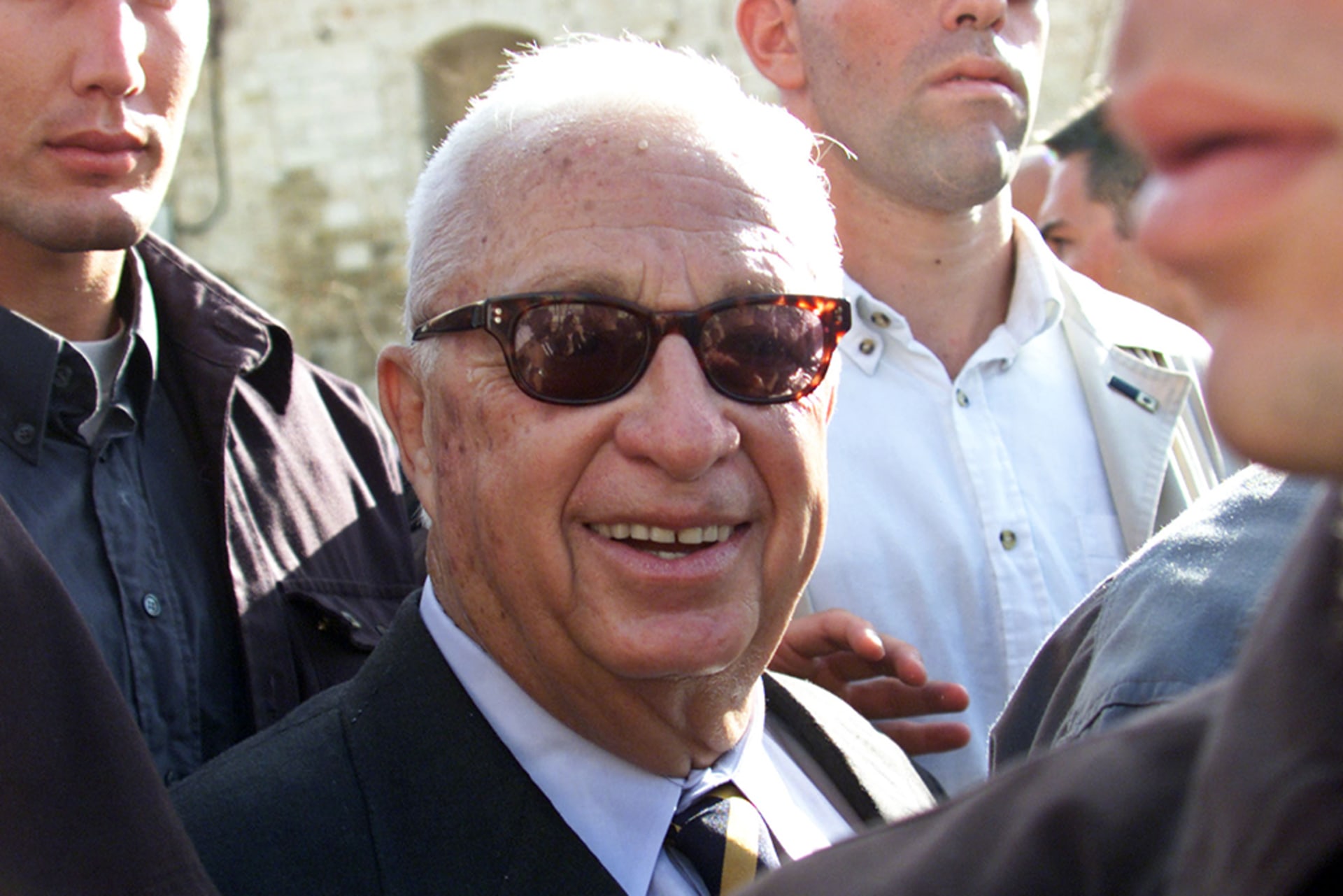
Israeli politicians, including Sharon, visit the Temple Mount/Haram al-Sharif. The complex is an enduring source of tension in Jerusalem; it is Judaism’s holiest site and Islam’s third holiest, after Mecca and Medina. Palestinians view the visit as a deliberate provocation. Demonstrations against the visit turn violent, marking the beginning of a second intifada. (Some analysts later allege that the violence was not spontaneous; rather, Arafat encouraged the uprising to pressure Israel into offering concessions.) The second intifada is markedly more violent than the first, featuring waves of Palestinian suicide bombings against Israeli civilians, the emergence of new Palestinian armed factions such as the al-Aqsa Martyrs Brigades, and large-scale Israeli military operations in Palestinian cities. By the time the uprising winds down in early 2005, roughly three thousand Palestinians and one thousand Israelis have been killed, and Israeli public opinion has shifted sharply against the prospect of a negotiated settlement.
Jan 3, 2002The KARINE A Incident
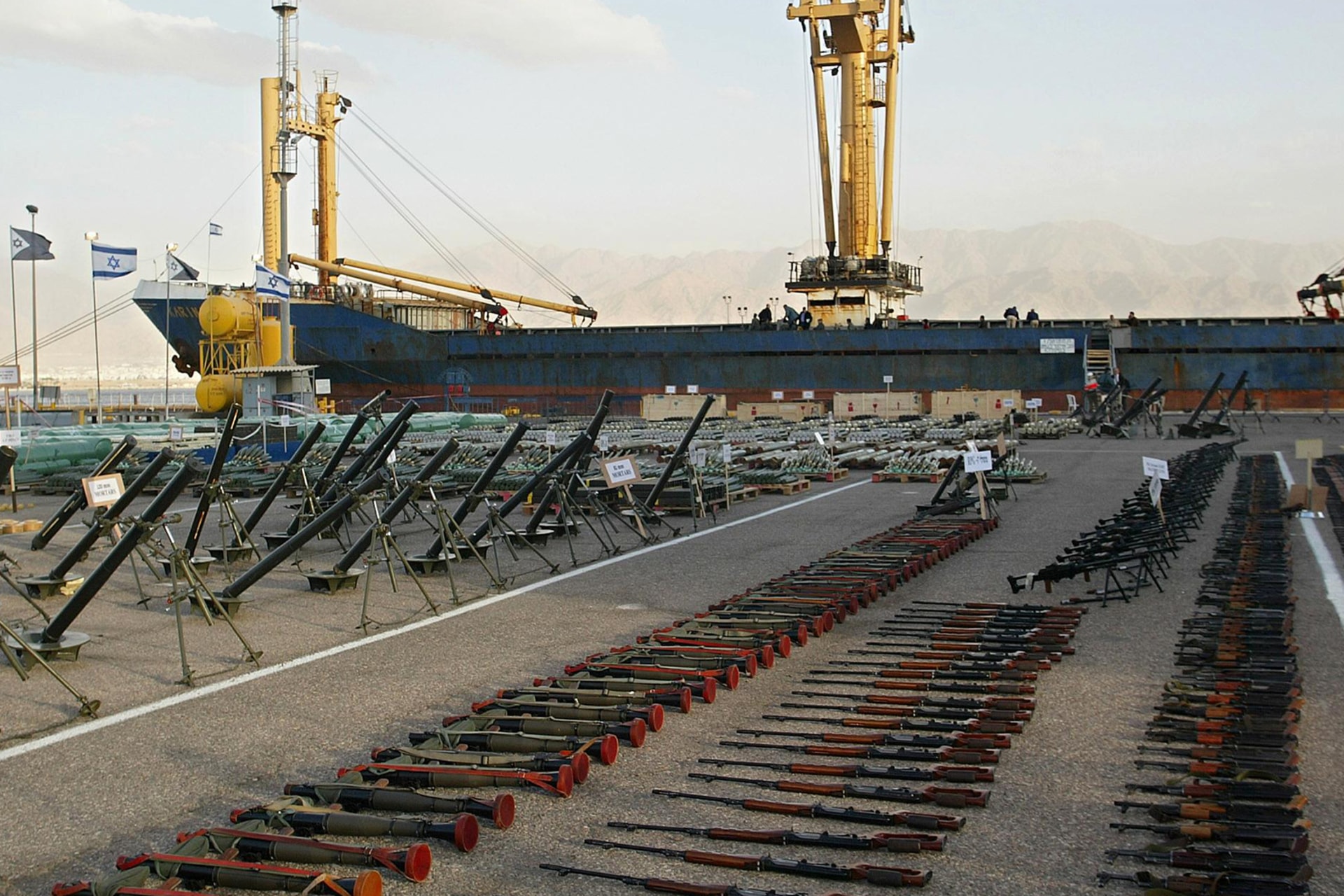
The Israeli navy intercepts the MV Karine A, a freighter in the Red Sea carrying roughly fifty tons of weapons, including rockets, mortars, anti-tank missiles, and explosives. The United States and Israel accuse the PA and Iran of coordinating the shipment, though Arafat denies involvement. The Bush administration concludes that Arafat is not a credible partner for peace, hardening U.S. policy toward the Palestinian leadership in the months that follow.
Mar 27, 2002The Passover Massacre
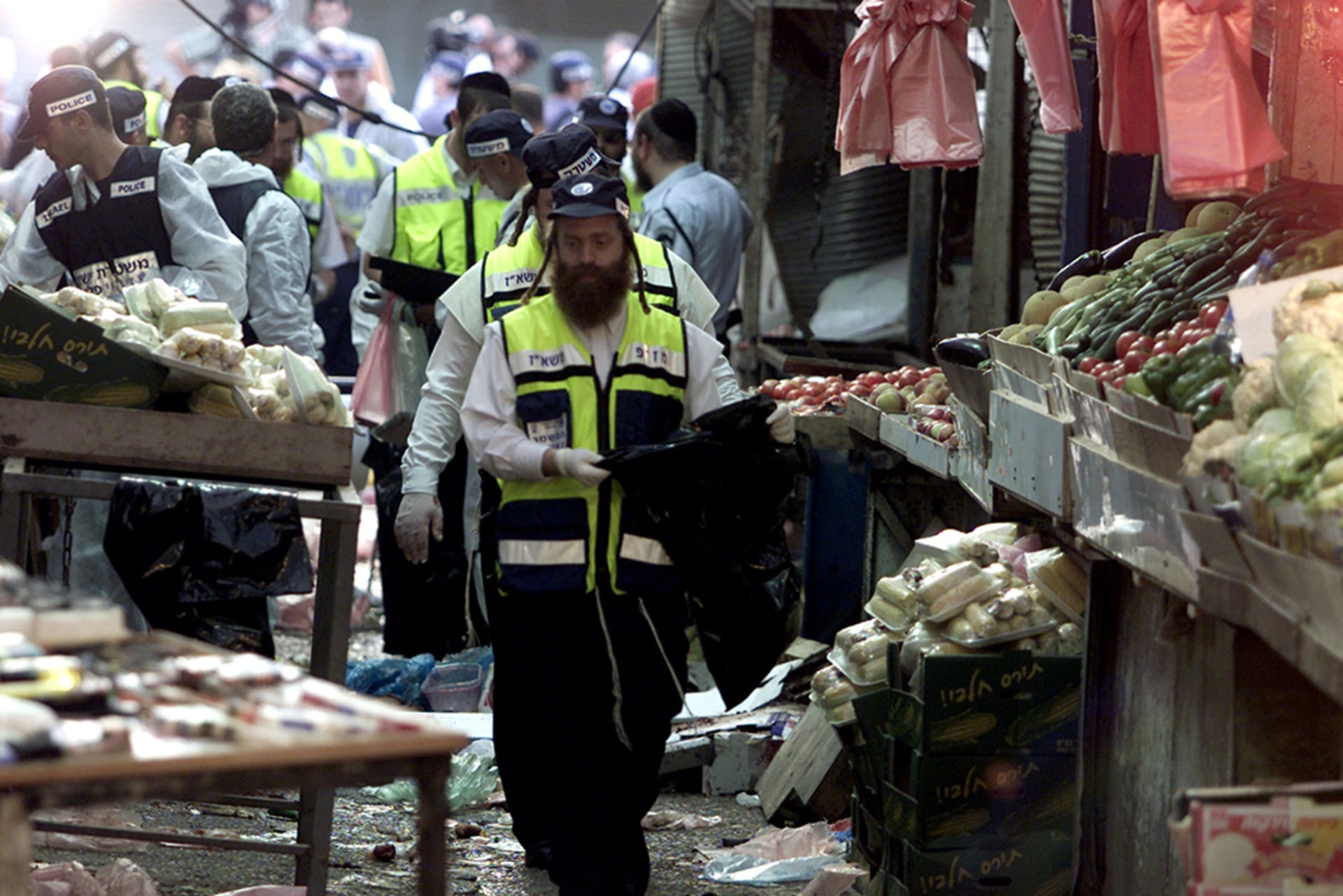
A suicide bomber kills thirty people at a Passover celebration at a hotel in the Israeli city of Netanya. Hamas claims responsibility for the attack. As a result, the Israeli military reoccupies portions of the West Bank, including the city of Ramallah, where the PA is located and where Arafat has his West Bank headquarters. Israeli forces surround Arafat’s compound, where he will remain largely confined for the rest of his life.
Jun 23, 2002Israel Begins Building the West Bank Barrier
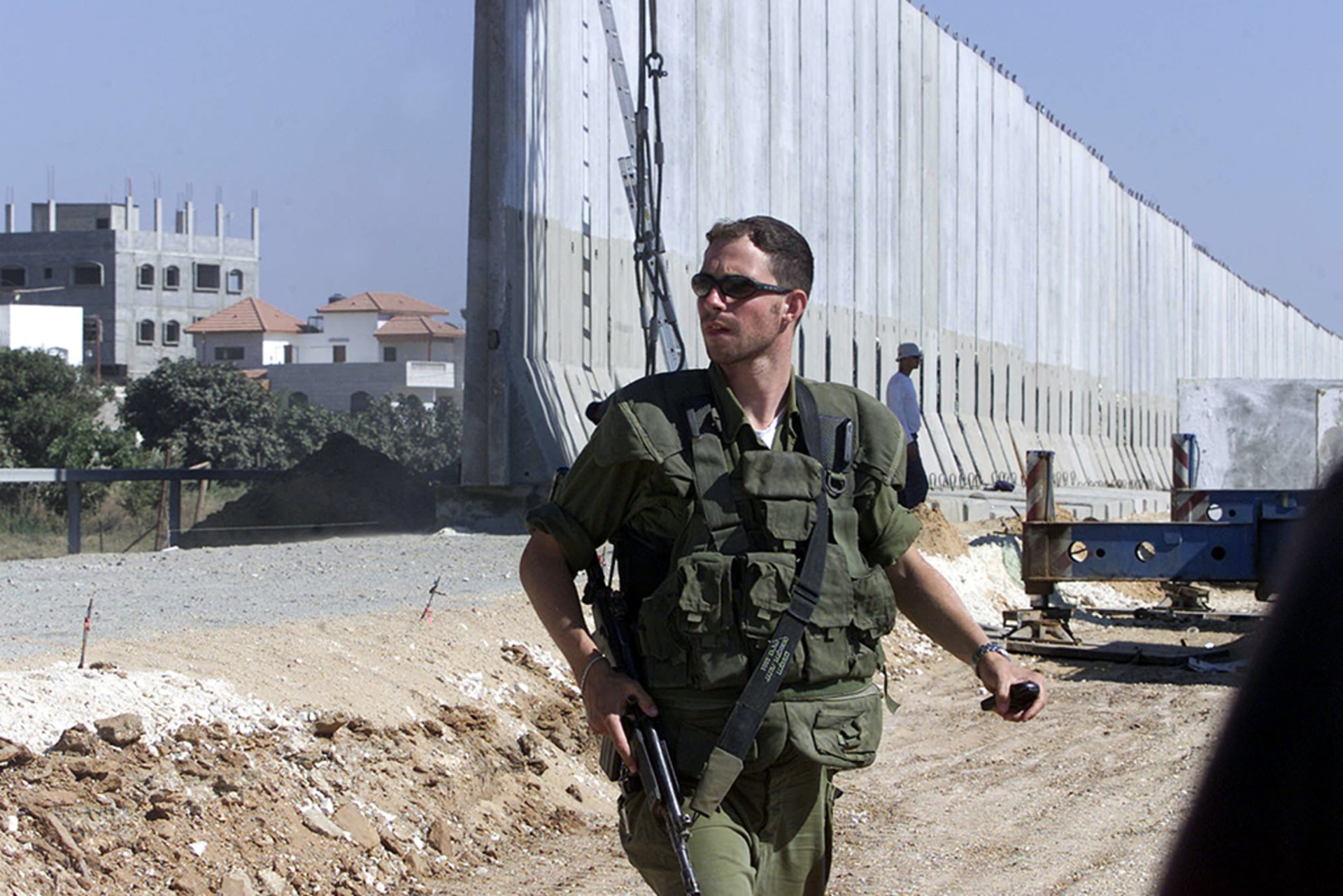
Israel begins building a security barrier in the West Bank to protect Israeli cities and towns following a wave of Palestinian suicide bombings that took place amid the ongoing second intifada. The barrier, which is a wall in some stretches and a fence in others, is controversial because in places it cuts deep into West Bank territory to protect settlements. Most Palestinians in the West Bank must apply for Israeli-issued permits and pass through checkpoints to enter Jerusalem, which they hope will one day be the capital of their state. Some Palestinian villages are sliced in half, and some Palestinians are unable to get to work or school because of the security barrier’s path. Israel’s Supreme Court forces changes in the barrier’s route, but the barrier continues to impede Palestinian movement and commerce in certain areas.
Jun 24, 2002George W. Bush Calls for a Two-State Solution
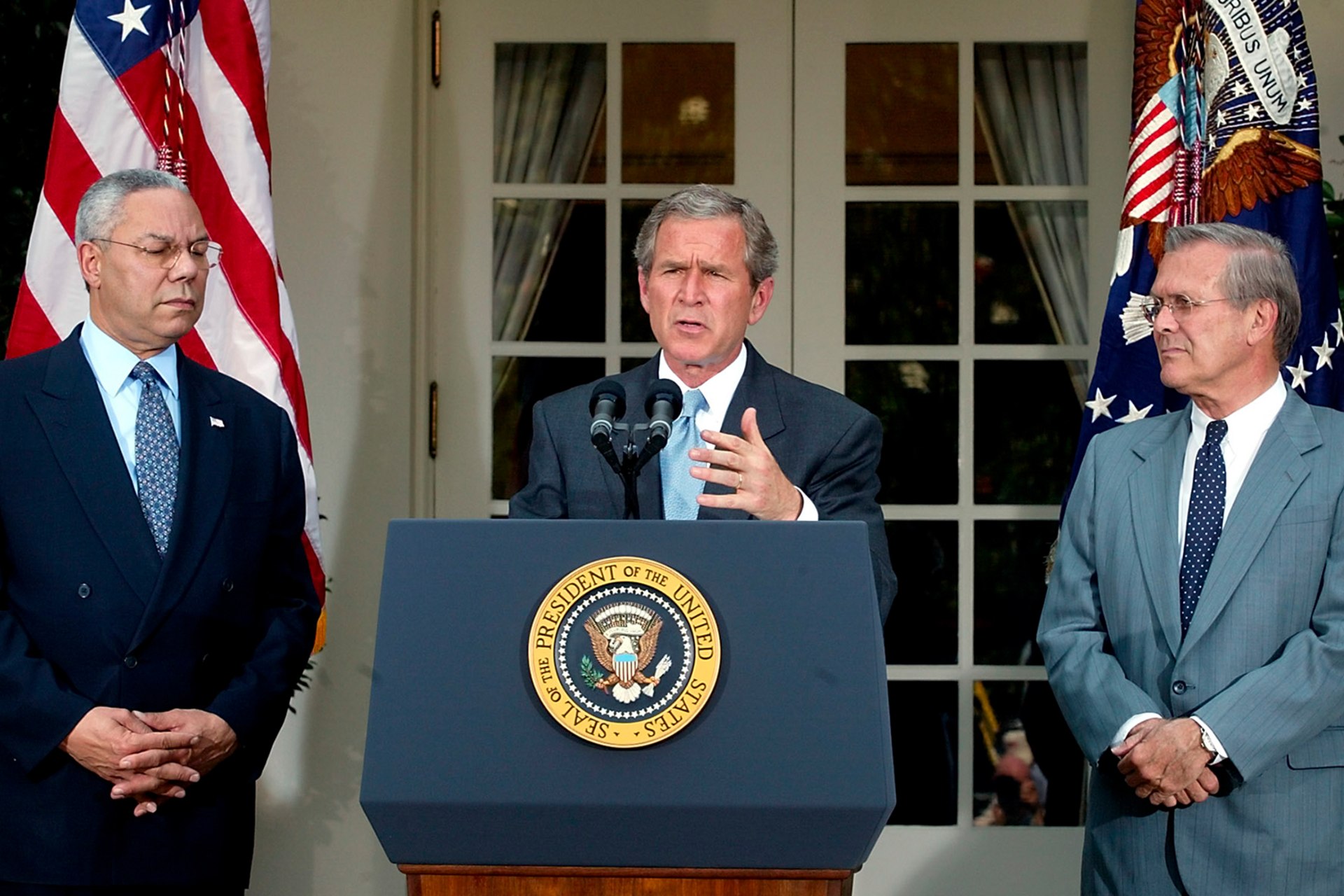
President George W. Bush delivers a speech calling for peace based on “two states, living side by side in peace and security.” He is the first sitting U.S. president to explicitly support the two-state solution and the creation of a future Palestinian state. Bush conditions that vision, however, calling on Palestinians to elect entirely new leadership, “not compromised by terror.”
Apr 30, 2003Road Map for Peace
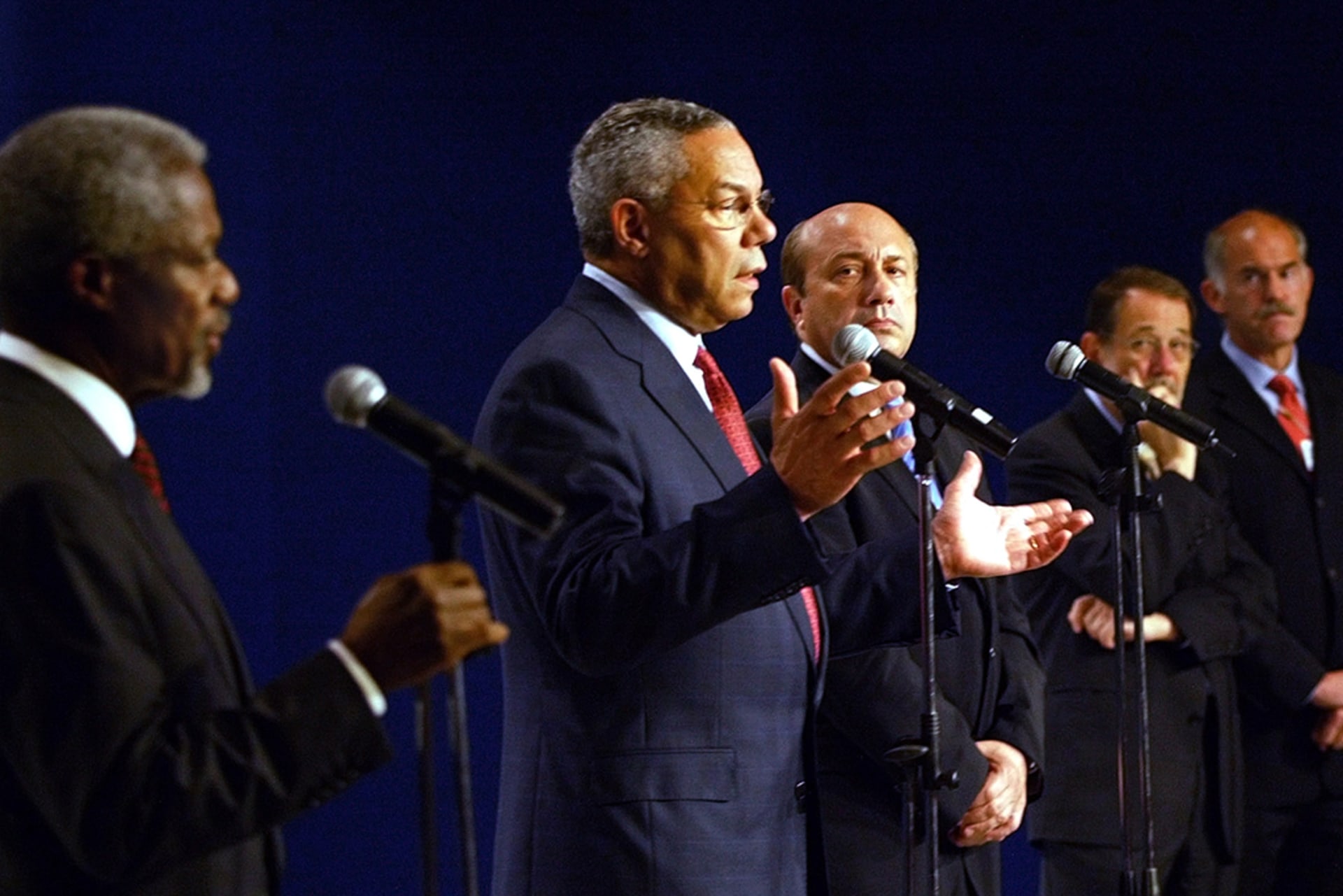
The Quartet, a group created to pursue Middle East peace comprising the United States, Russia, the , and the United Nations, puts forth a Road Map for Peace based on the outline Bush offered in his 2002 speech. The road map lays out a plan for peace based on Palestinian reforms and a cessation of terrorism in return for an end to Israeli settlements and a new Palestinian state.
Aug 15, 2005Israeli Disengagement From Gaza
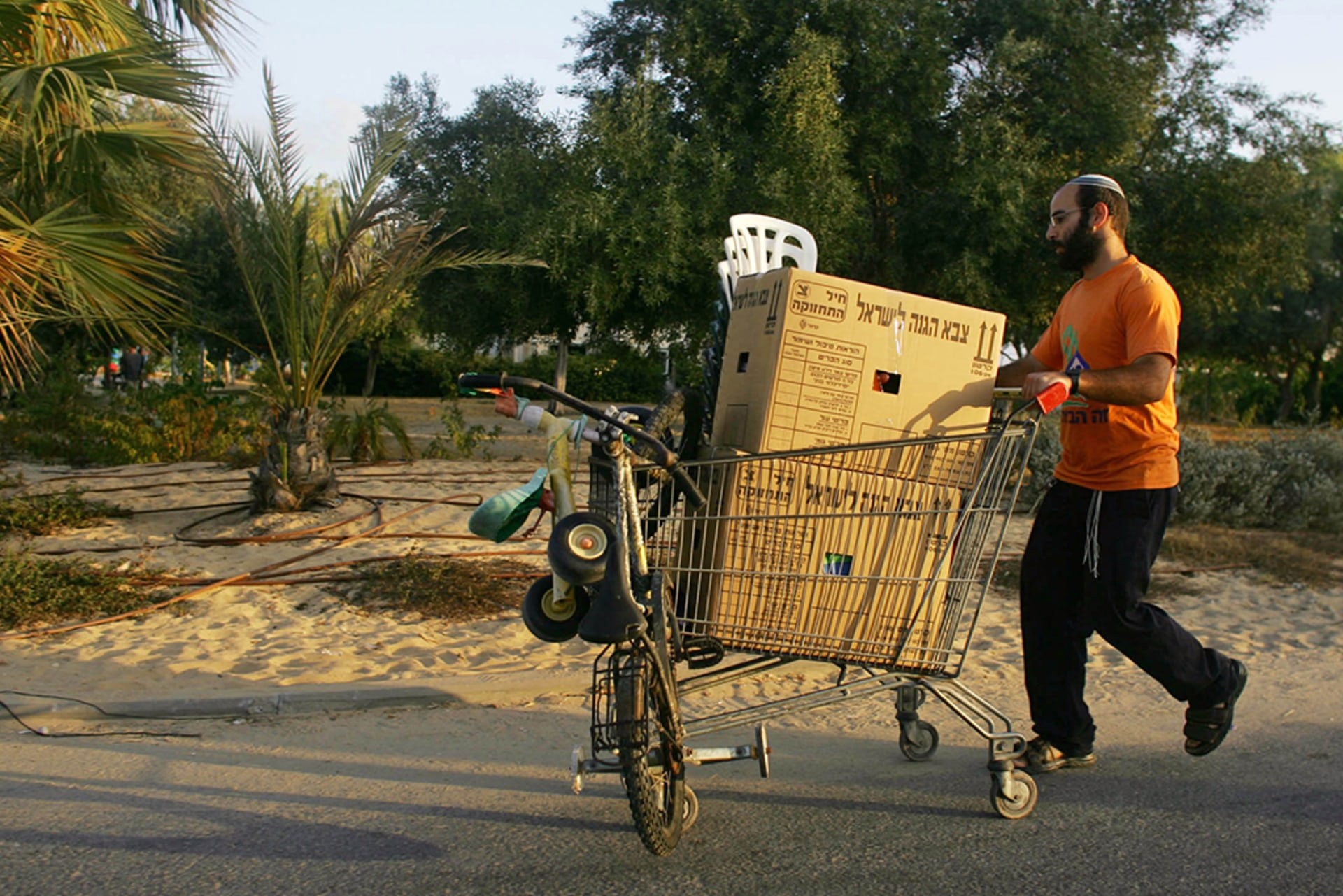
Israel begins a withdrawal of settlers and military forces from the Gaza Strip, removing roughly 7,500 Israeli settlers from 21 settlements (and 4 additional settlements in the northern West Bank). The withdrawal is completed by September 12. The Israeli military remains in control of Gaza’s borders (except the Gaza-Egypt border, which is controlled by Egypt), airspace, and coastline. The PA and several Arab governments criticize Israel for not coordinating with them on the withdrawal and warn that it could allow Israel to consolidate its hold on the West Bank. Not long after Israel’s withdrawal, Hamas, Palestinian Islamic Jihad, and other smaller militant groups begin firing rockets from Gaza into southern Israel.
Jan 25, 2006Hamas Expands Power in Gaza
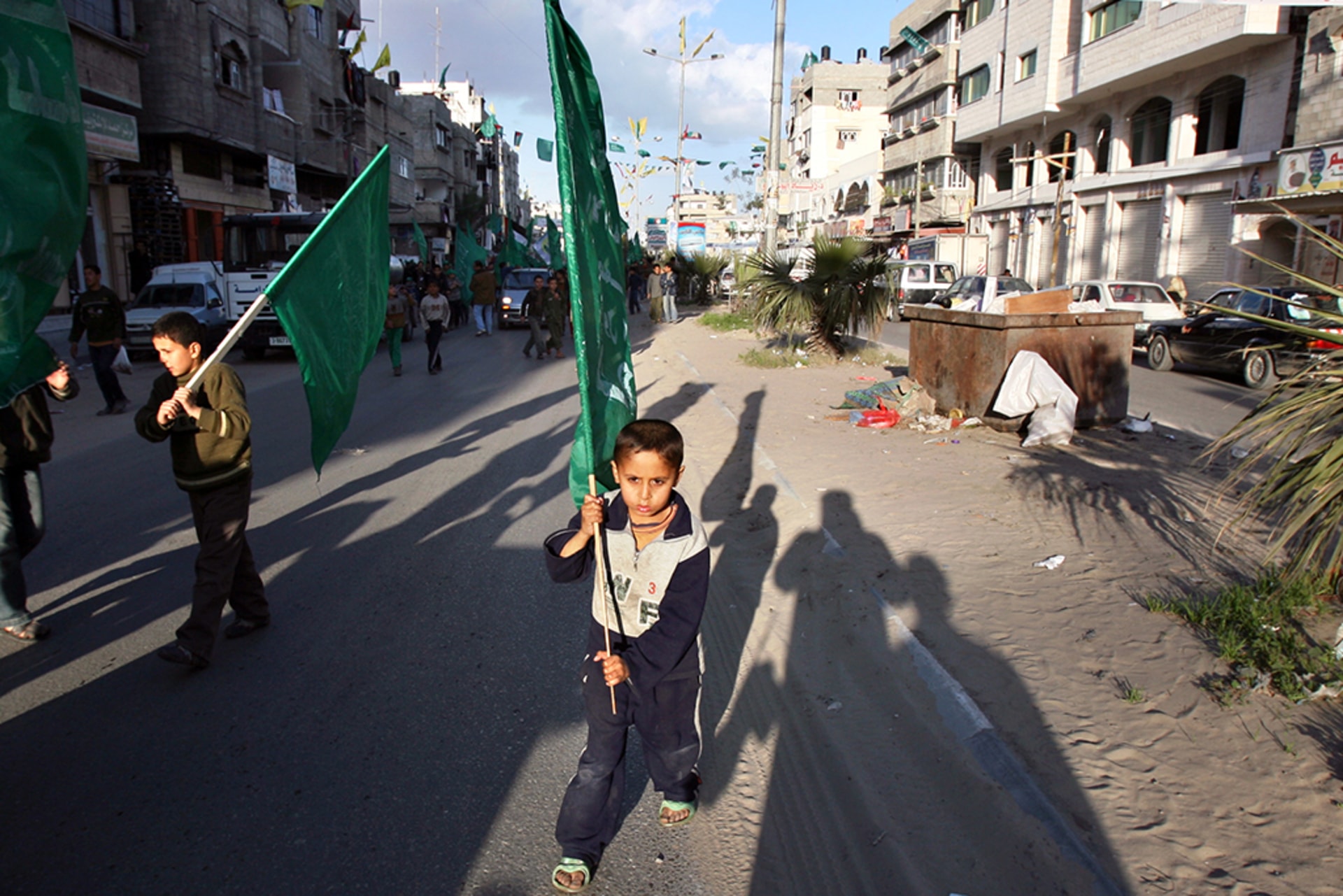
Hamas defeats Fatah, a Palestinian political faction founded in the 1950s that long dominated the PLO, in Palestinian elections. The United States and other countries encouraged the elections but refuse to recognize the legitimacy of a Hamas-led government. They suspend their aid to the PA because they consider Hamas a terrorist organization. Hamas forms a government in March under Prime Minister Ismail Haniyeh, while Fatah’s Mahmoud Abbas retains the PA presidency. Clashes between the two factions’ rival security forces escalate over the following year.
Jun 25, 2006Gilad Shalit Taken Hostage
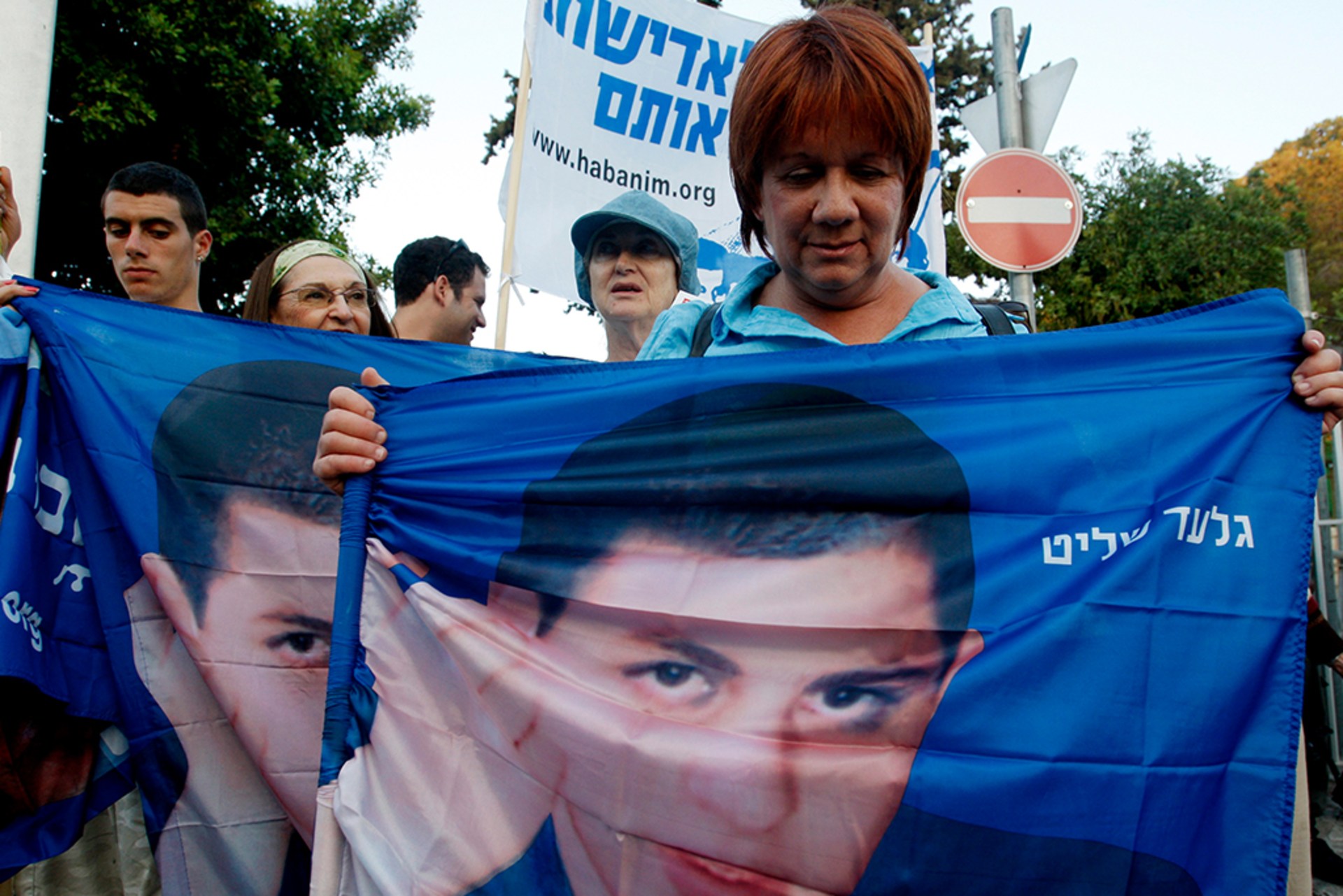
Hamas operatives kidnap Israeli soldier Gilad Shalit on Israeli soil near the Gaza Strip. The Israeli military tries and fails to free him. He is held captive in Gaza until 2012, when Israel—with the help of the United States and Egypt—negotiates his release, in exchange for 1,027 Palestinians held in Israeli prisons, 280 of them serving life sentences for planning or carrying out attacks on Israelis. Among those released is Yahya Sinwar, who will later lead Hamas in the Gaza Strip and serve as the principal architect of the October 7, 2023, attack on Israel.
Feb–Jun 2007Hamas Takes Over Gaza
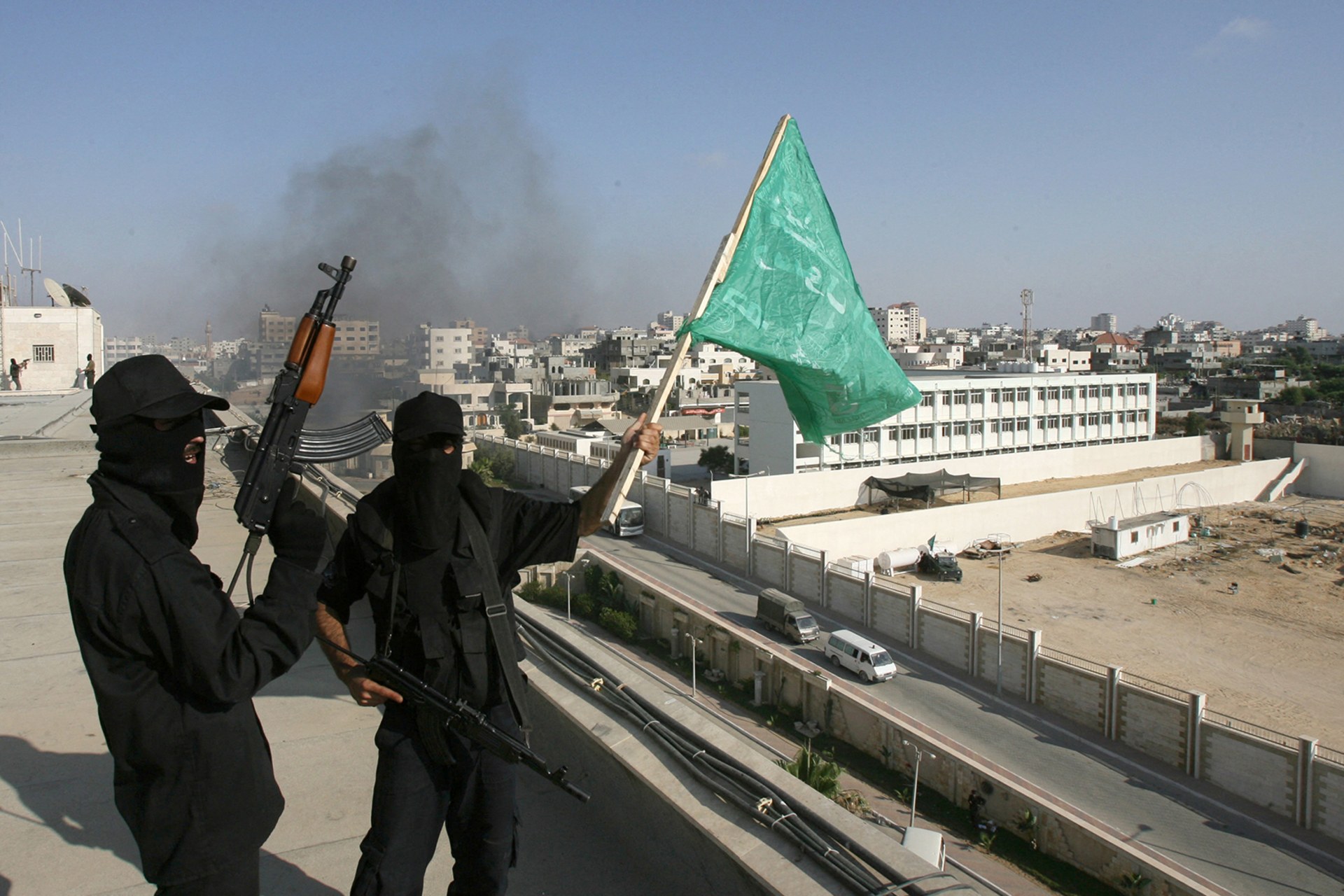
With clashes between Fatah and Hamas continuing, Saudi Arabia brokers the Mecca Agreement between the two parties to form a national unity government. The deal collapses within months. In June—after months of planning and with Iranian encouragement—Hamas forces rout Fatah security services and seize control of the Gaza Strip in a brief . The PA, led by Fatah, retains administrative control of the West Bank. In response to the takeover, Egypt and Israel impose a tight on the Gaza Strip that restricts the movement of people and goods and that remains in place in various forms for years.
Dec 27, 2008First Gaza War
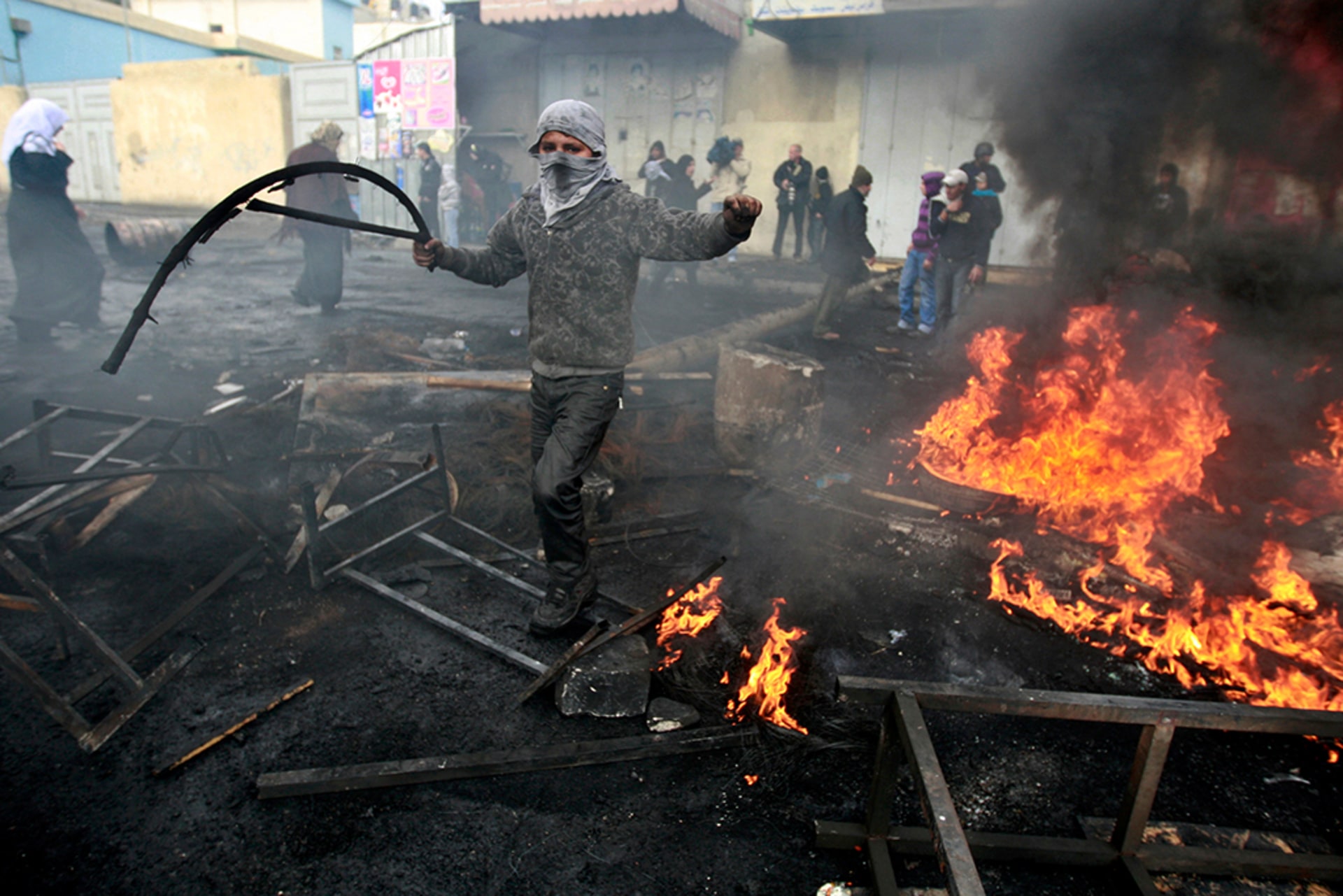
Following nearly eight hundred rocket attacks from Gaza on Israeli towns in November and December, Israel launches an air and ground campaign in the Gaza Strip to stop rocket fire and degrade Hamas’s military capabilities. The war lasts less than a month but kills roughly fourteen hundred Palestinians and thirteen Israelis. The high civilian share of the Palestinian dead, Israel’s use of white phosphorus munitions in densely populated areas, and strikes on UN facilities draw international criticism. A UN fact-finding inquiry later accuses both Israel and Hamas of conduct that could amount to war crimes.
Nov 14, 2012Israel Launches Operation Pillar of Defense
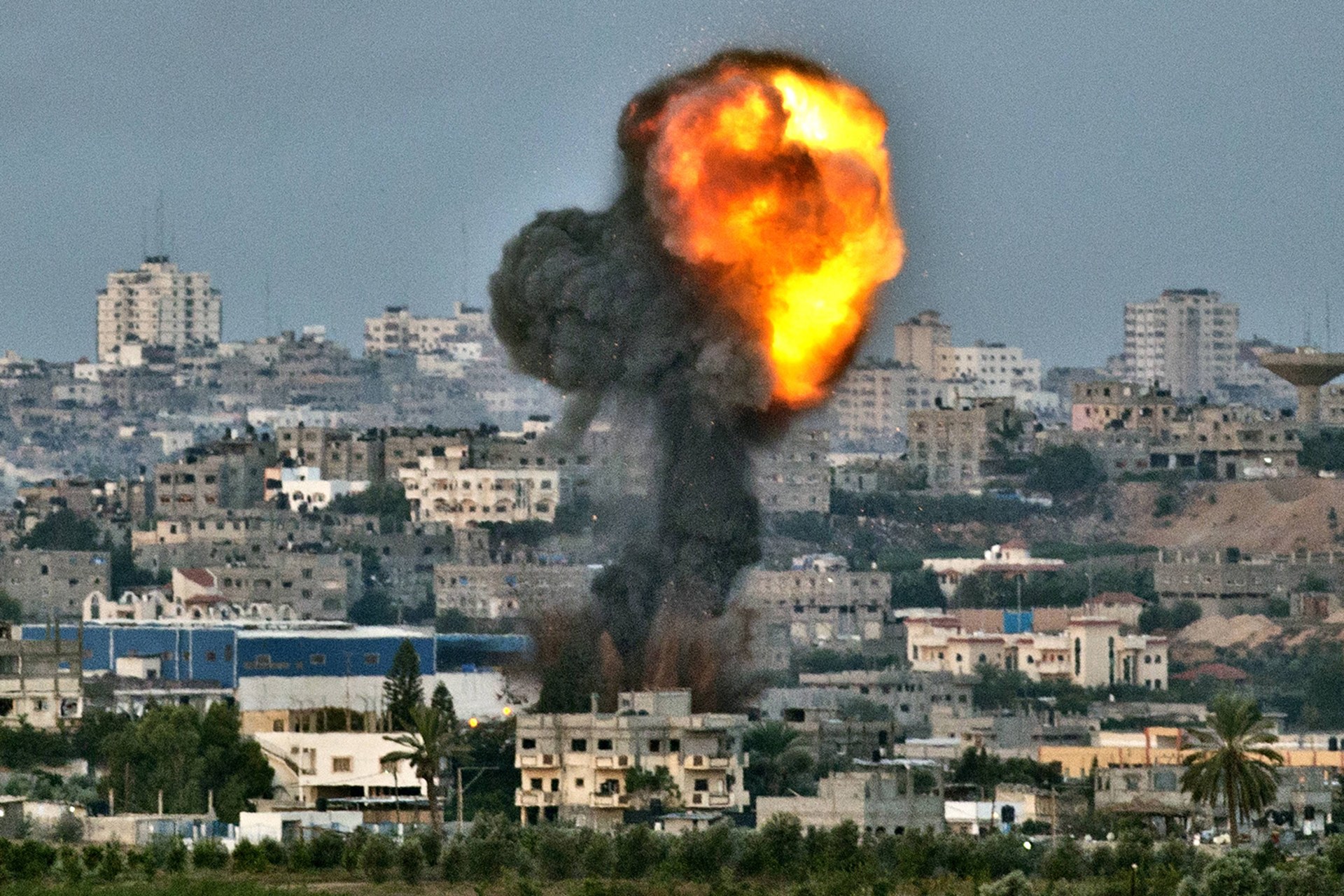
Following weeks of escalating rocket fire from Gaza, an Israeli air strike kills Ahmed Jabari, the head of Hamas’s military wing. The strike opens Operation Pillar of Defense, an eight-day Israeli air campaign to degrade Hamas’s rocket arsenal and command structure. Hamas and other militant groups respond by firing roughly fifteen hundred rockets at Israel. The conflict kills roughly one hundred seventy Palestinians and six Israelis before the United States and Egypt broker a ceasefire.
Nov 29, 2012Palestine Gains Observer Status at the United Nations
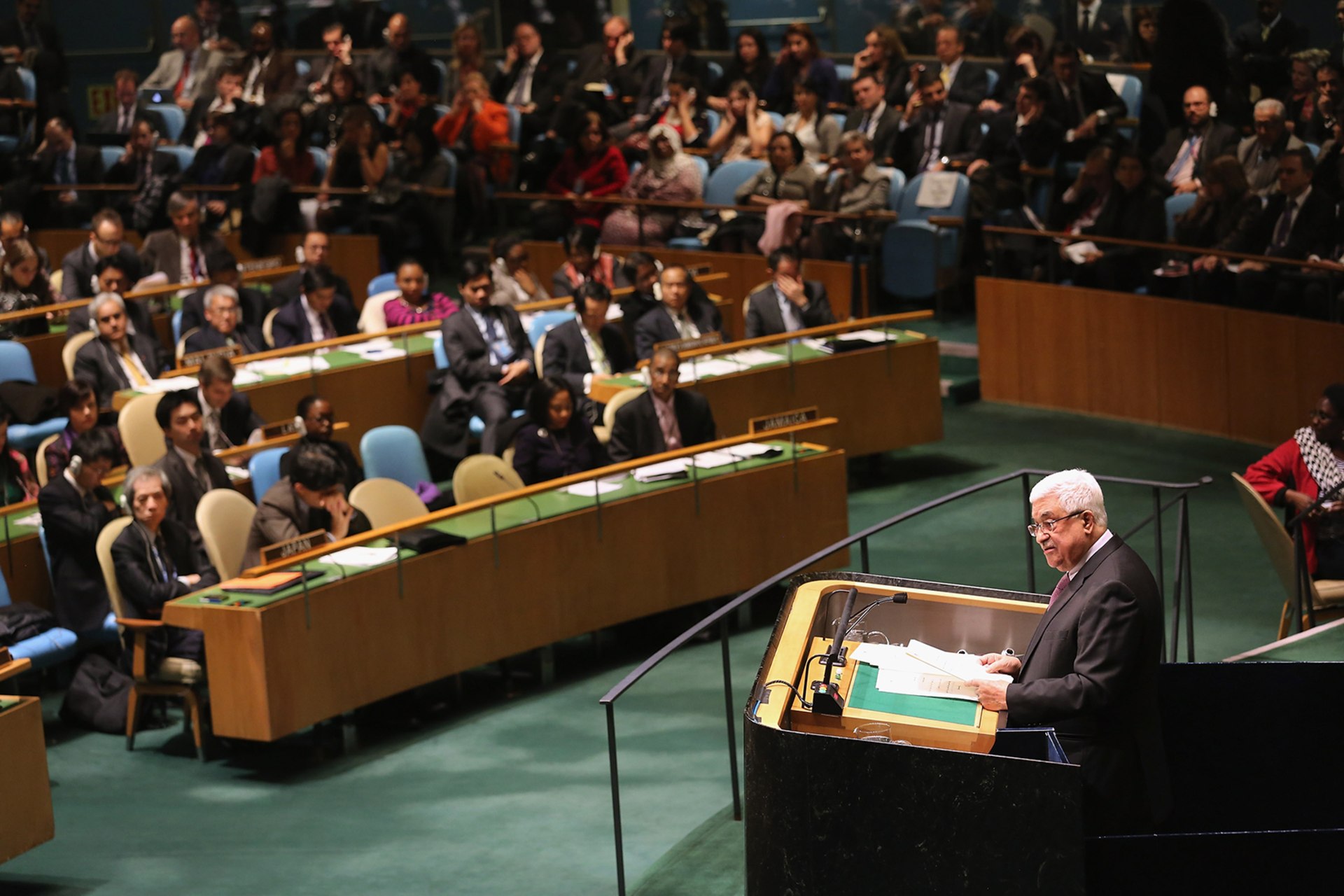
The UN General Assembly votes to upgrade Palestine’s standing from an observer “entity” to a “non-member observer state,” the same category the Vatican holds. The move follows a failed 2011 bid for full Palestinian UN membership, which would require Security Council approval that the United States had vowed to block. PA President Mahmoud Abbas frames the vote as recognition of Palestinian statehood, while Israel and the United States maintain that statehood can come only through direct negotiations.
Jul 30, 2013Negotiations Face Continued Hurdles
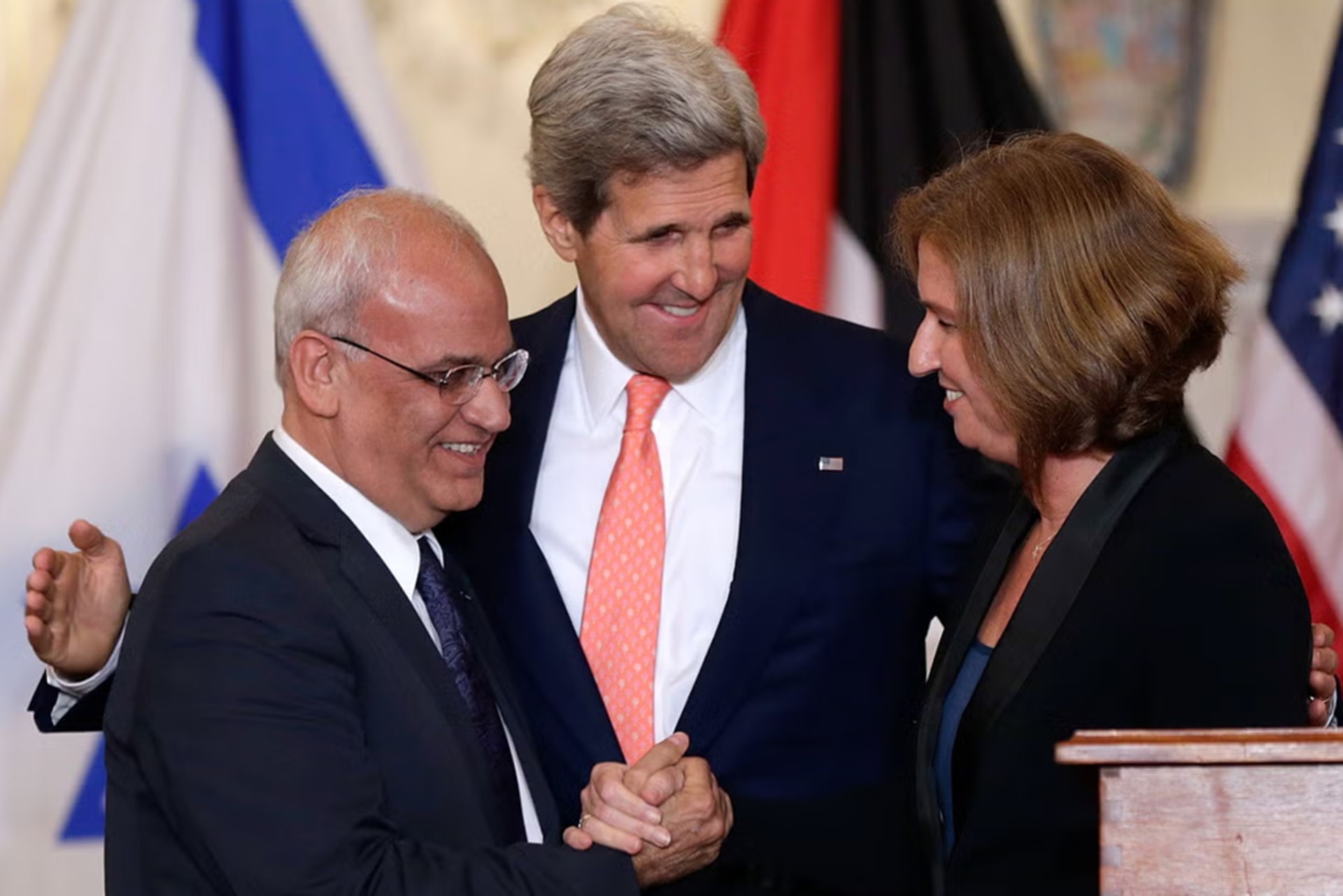
U.S. Secretary of State John Kerry seeks to restart final status negotiations, notably on borders, Jerusalem, and refugees. The process begins with Israel’s agreement to release 104 Palestinian prisoners and the Palestinians’ agreement not to use their new observer state status at the United Nations to advance the cause of statehood. Negotiations between Israel and the PA collapse in April 2014 over such issues as Israeli settlement growth, the delay and ultimate cancellation of the release of a final round of prisoners, and Palestinian attempts to join several international organizations.
Apr 23, 2014Another Attempt at a Palestinian Unity Government Fails
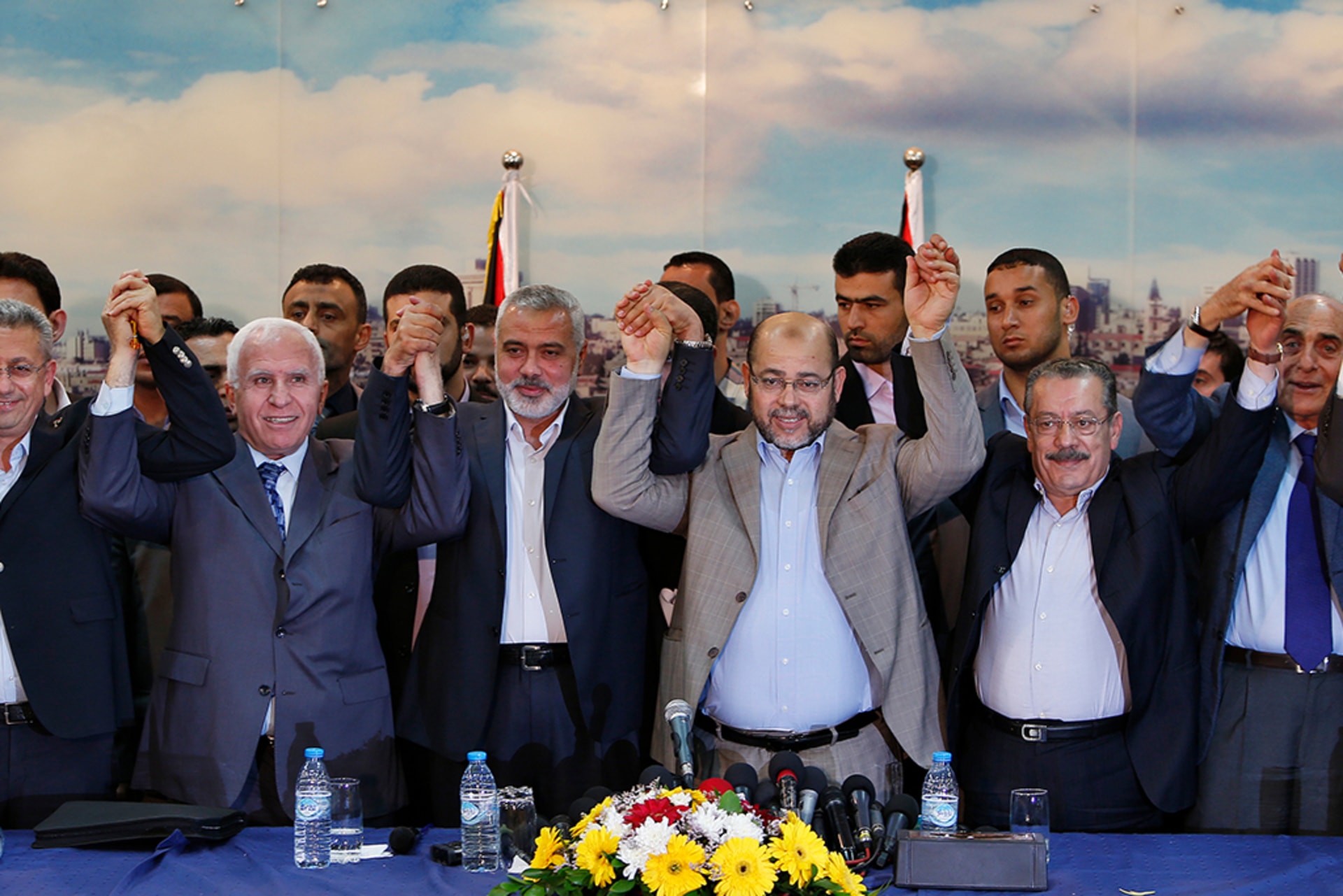
The PLO and Hamas sign an Egyptian-brokered agreement to form a unity government. The agreement quickly unravels over disputes about the timing of new elections, control of the Gaza Strip’s security forces, payment of public-sector salaries, and pressure from the United States and Israel, both of which condition continued engagement on Hamas accepting past agreements (the Oslo Accords) and renouncing violence. The unity government’s failure means that the Gaza Strip and the West Bank remain disconnected and under the control of rival Palestinian leaderships.
Jul 8–Aug 26, 2014Operation Protective Edge
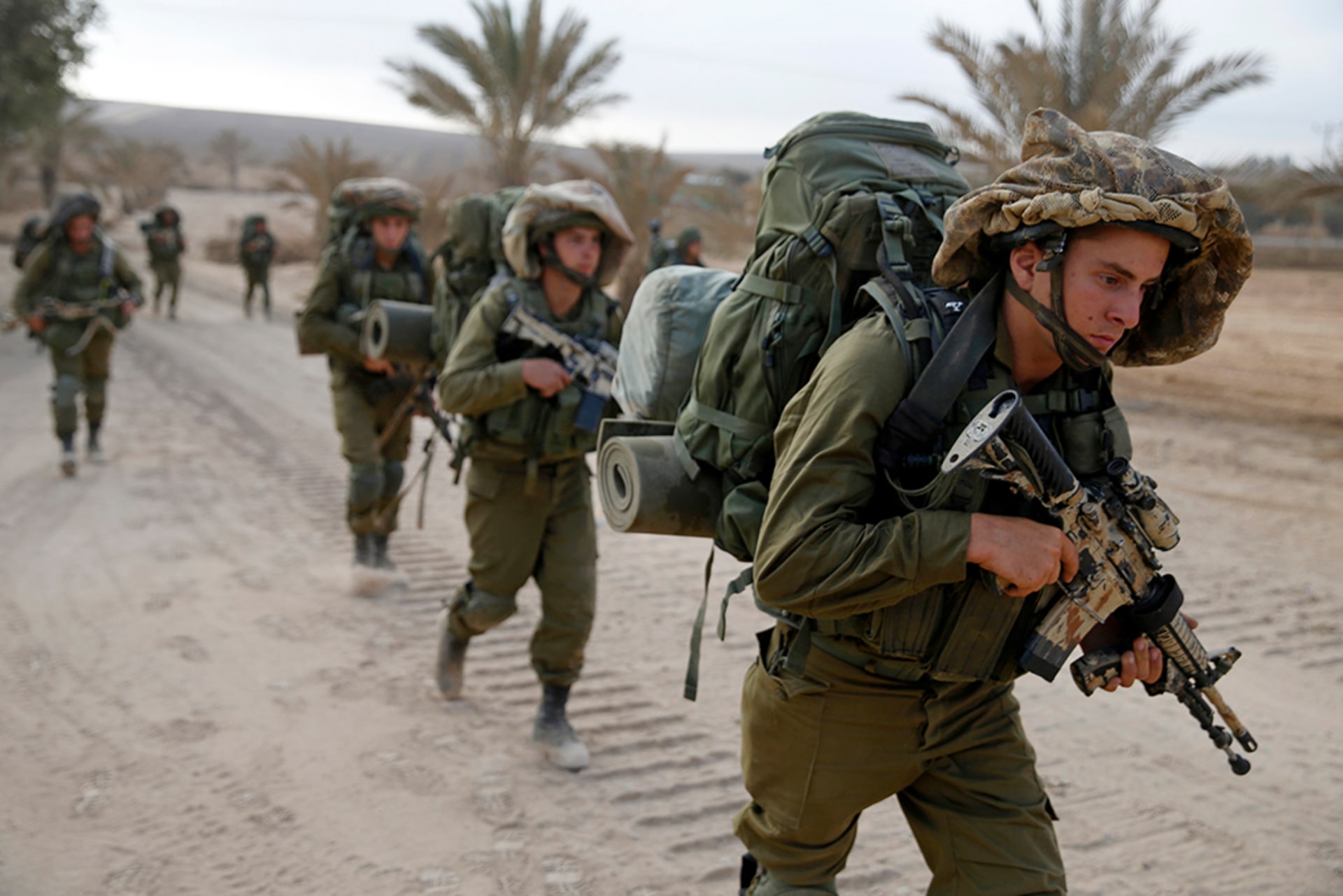
After Hamas militants kidnap and murder three Israeli teenagers in the West Bank, kicking off a series of escalating events, Israel invades Gaza. The operation, code-named Protective Edge, lasts fifty days, killing about two thousand Palestinians, sixty-six Israeli soldiers, and five Israeli civilians. Unlike the conflicts from 2008 to 2009, Palestinian rocket fire targets major Israeli cities. The Egyptian government—under President Abdel Fattah el-Sisi and hostile to the Muslim Brotherhood and, by its affiliation, Hamas—quietly encourages Israel to decisively defeat Hamas. Egypt ultimately brokers a ceasefire in August.
Sep 2015Wave of Knife Attacks Grips Jerusalem and the West Bank
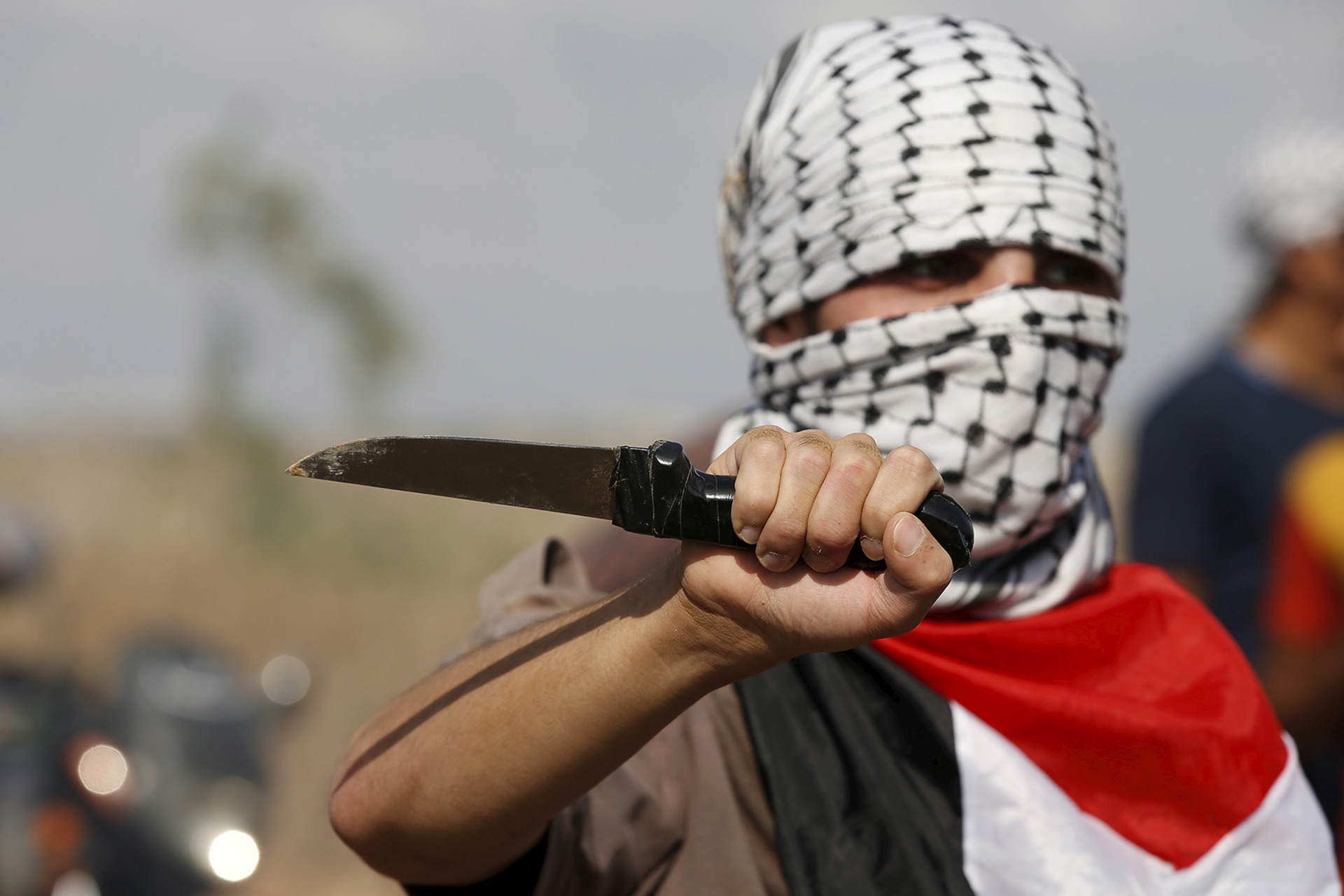
A surge of stabbing, car-ramming, and shooting attacks targets Israeli civilians, soldiers, and police across Jerusalem, the West Bank, and inside Israel. The assailants are mostly Palestinian teenagers and young adults acting individually rather than at the direction of a group. Hundreds of attacks take place over the following months, killing about forty Israelis and injuring several hundred more. Israeli security forces kill more than two hundred Palestinians during the same period—roughly one hundred thirty of them while allegedly carrying out attacks, and the remainder in protests, clashes with security forces, and as bystanders. Some of those killings draw criticism from human rights organizations, which question whether every instance warranted lethal force. Some analysts attribute the violence’s immediate cause to rumored Israeli plans to restrict Muslim access to the Temple Mount/Haram al-Sharif complex or to ease long-standing restrictions on Jewish prayer there. Others point to broader frustrations, including stagnating Israeli-Palestinian diplomacy and continued Israeli settlement expansion.
May 1, 2017Hamas Issues Revised Document
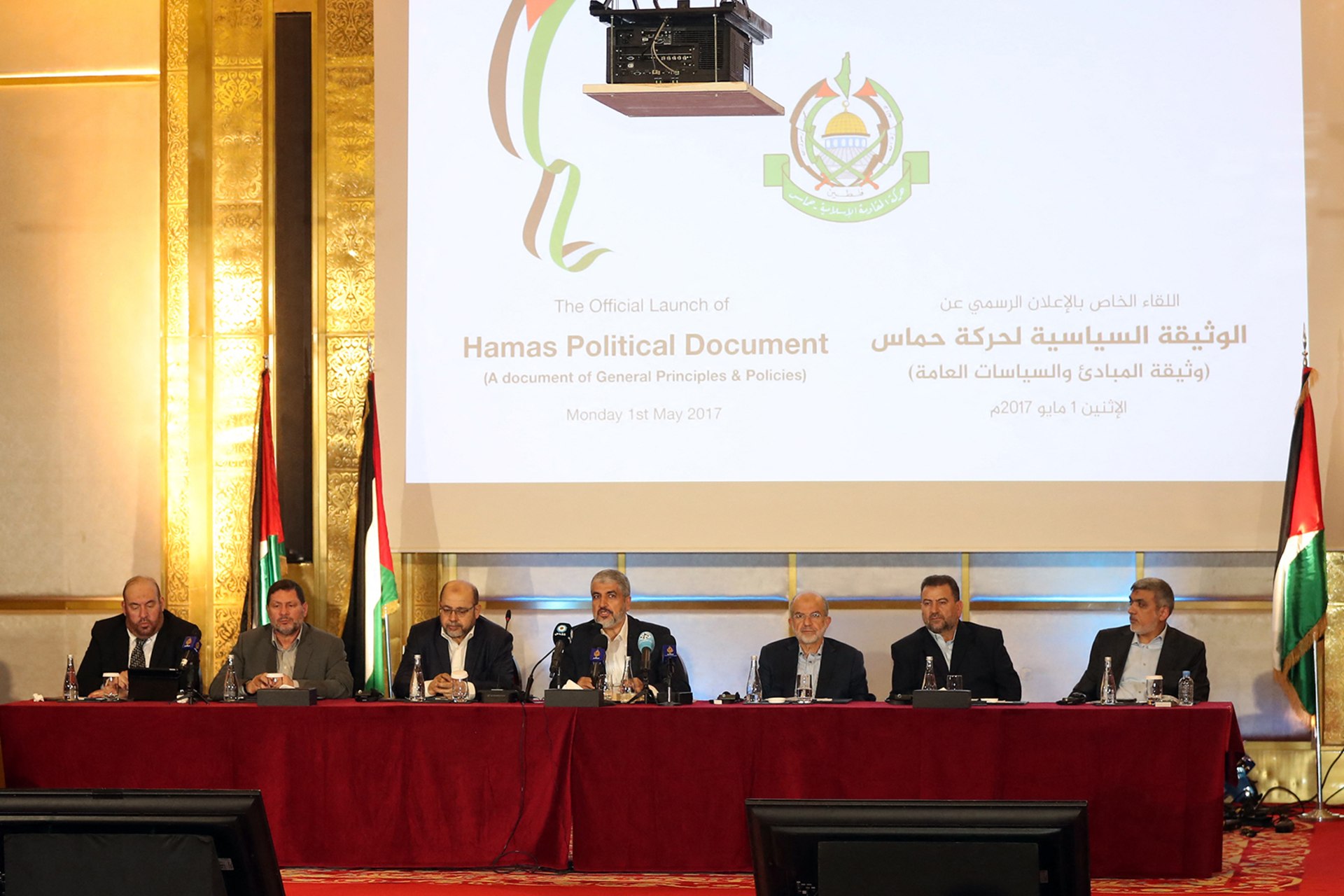
Hamas leaders unveil “A Document of General Principles and Policies” at the organization’s political bureau in Doha, Qatar. Hailed as a major revision of the group’s 1988 charter, the document excises references to violence against Jews in general, narrowing its scope to Israelis and Israel. The new document declares the Balfour Declaration, the British Mandate Document, and the UN Partition of Palestine to be null and void and states that the establishment of Israel is illegal. Some observers argue that, despite its hard-line stance, the document leaves room for Hamas to accept a two-state solution. They emphasize the passage in the “Document of General Principles and Policies” that states that establishing a Palestinian state with Jerusalem as its capital and the return of refugees along the lines of the June 4, 1967, borders is “a formula for national consensus.” Whether a consensus has been reached accepting a state along those borders, or whether such a formula remains subject to debate, remains unclear.
Dec 6, 2017Trump Moves U.S. Embassy to Jerusalem
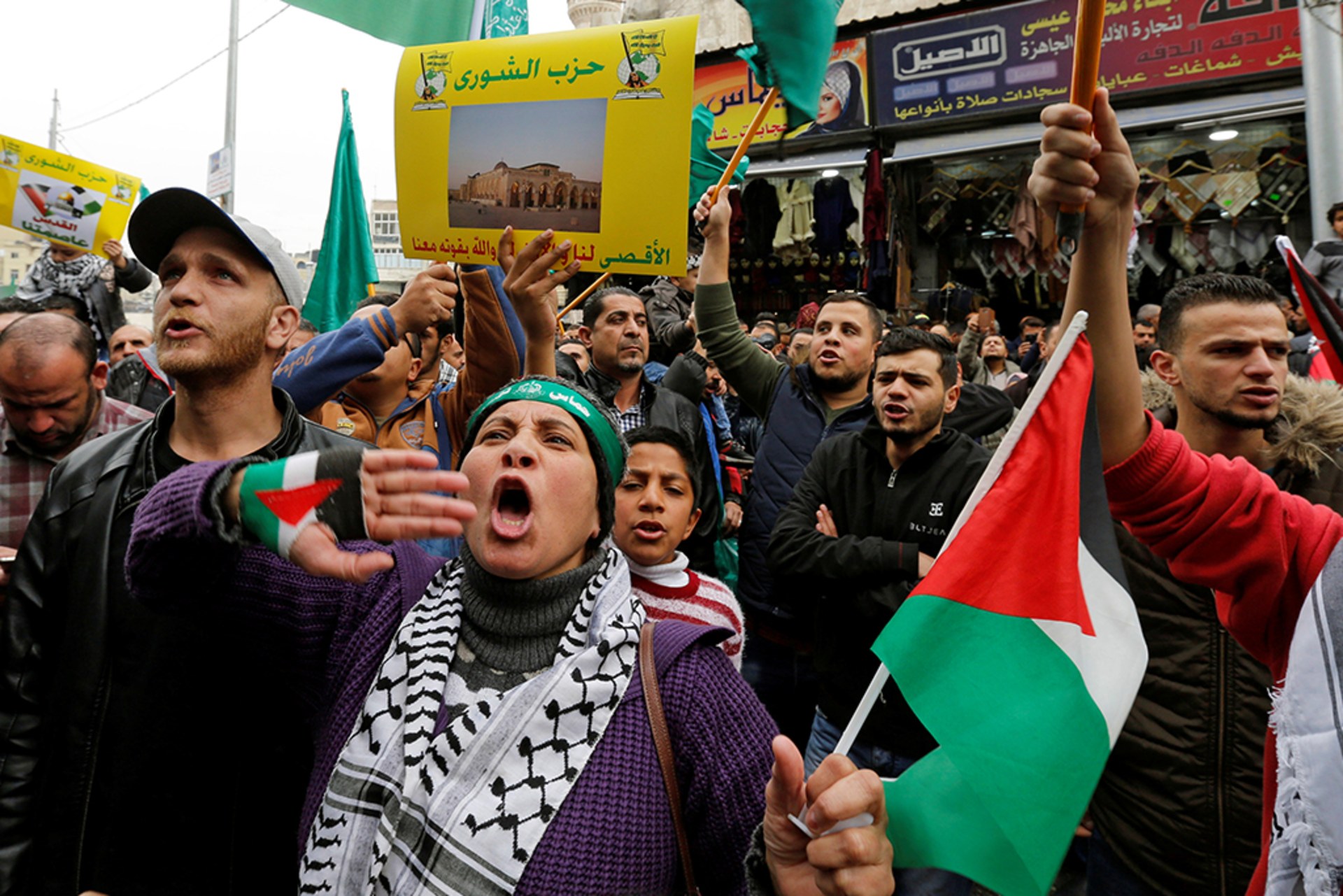
The Trump administration formally recognizes Jerusalem as the capital and announces plans to move the U.S. embassy there from Tel Aviv, though the move does not occur until May 2018. Although Congress passed a law recognizing Jerusalem as Israel’s capital in 1995, successive administrations have delayed implementing the legislation, fearing it could damage peace negotiations. Numerous foreign leaders, including those of Egypt, France, Saudi Arabia, Turkey, and the United Kingdom, along with UN Secretary-General António Guterres, criticize the change. It also sparks protests and violence throughout East Jerusalem, Gaza, and the West Bank, as well as in Egypt, Iran, Iraq, and Jordan. In January 2018, Palestinian President Mahmoud Abbas declines to meet with U.S. Vice President Mike Pence during Pence’s trip to the region.
Mar 25, 2019The United States Recognizes Israeli Sovereignty Over the Golan Heights
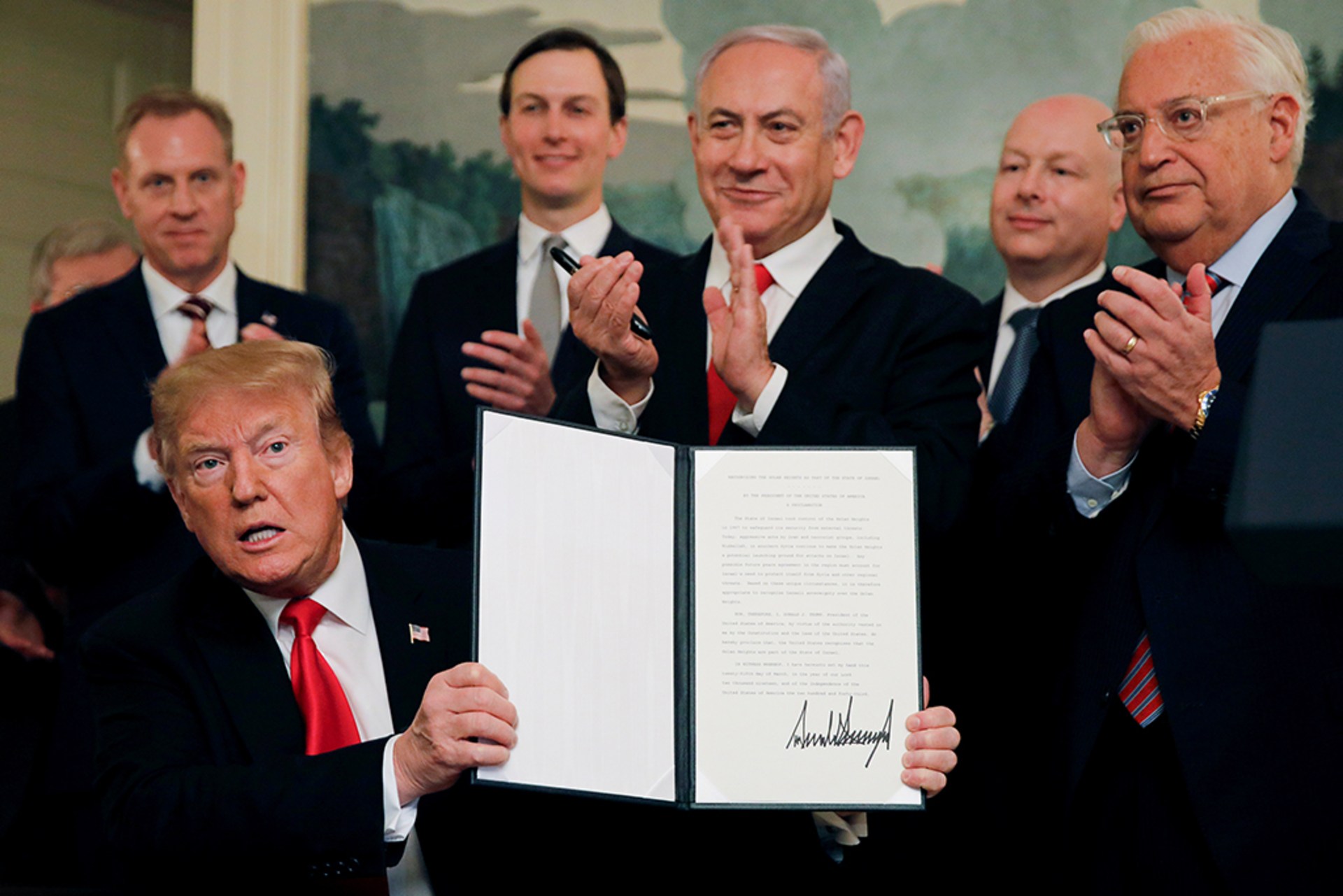
The Trump administration recognizes Israeli sovereignty over the Golan Heights, which Israel captured from Syria in the 1967 Six Day War and formally annexed in 1981. The Golan provides commanding views into both Israel and Syria and a strategic advantage for whichever side controls it. The United States is the first country to recognize Israel’s sovereignty over the territory.
Jan 28, 2020Trump Administration Proposes Peace Plan
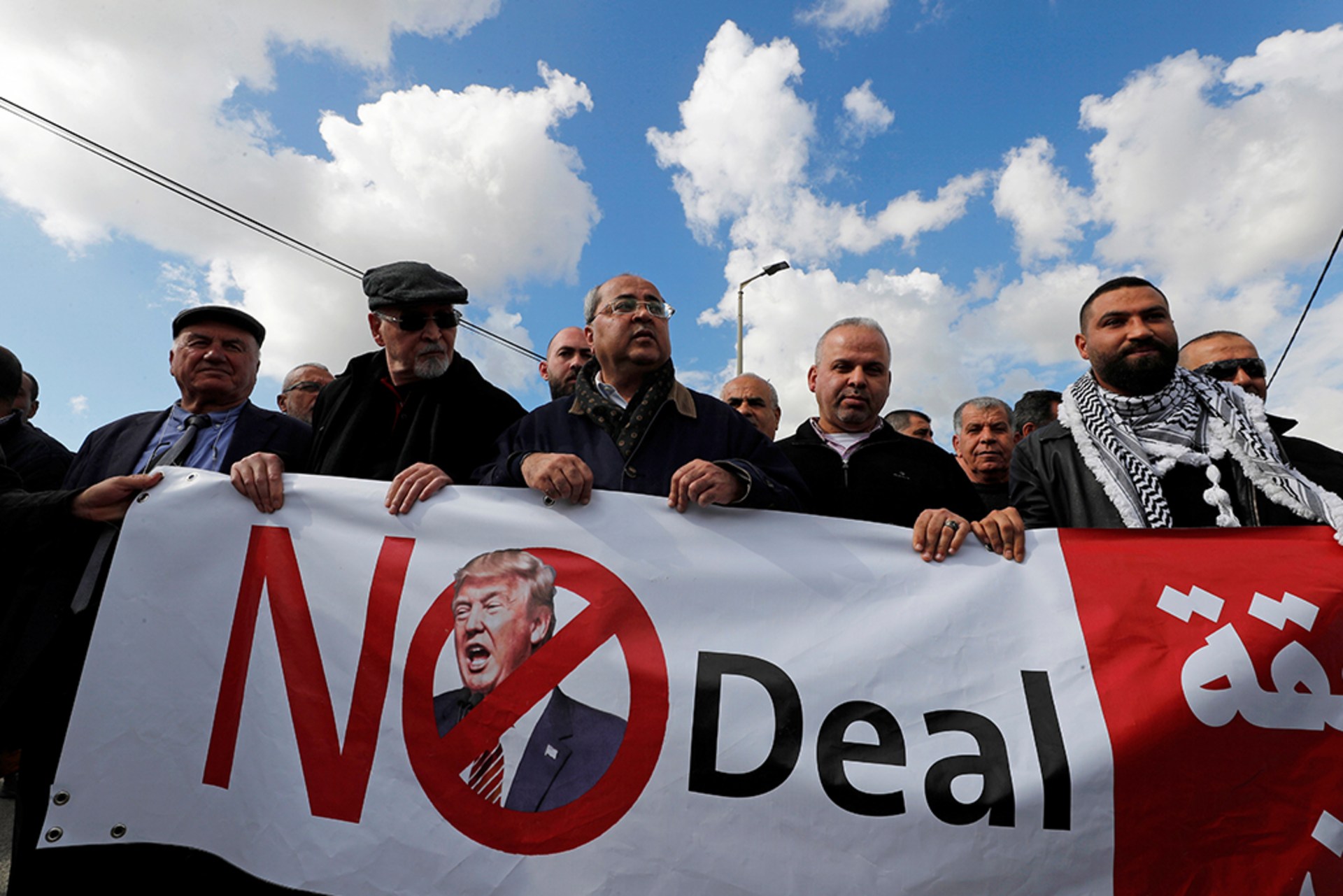
Trump unveils his administration’s proposed Israeli-Palestinian peace plan, crafted by U.S. and Israeli diplomats without Palestinian input. The plan calls for a two-state solution with significant economic aid to the Palestinians. Many analysts criticize the plan as being one-sided, stipulating impossible requirements for Palestinian statehood and paving the way for Israeli of the West Bank. Some also point out that the proposal bears a striking resemblance to a 1979 Israeli plan for settlement expansion. Palestinian authorities reject the idea immediately. Following its announcement, Netanyahu announces Israel’s plan to annex portions of the West Bank as outlined in Trump’s proposal.
Sep 15, 2020United States Brokers Abraham Accords Between Israel and Some Arab States
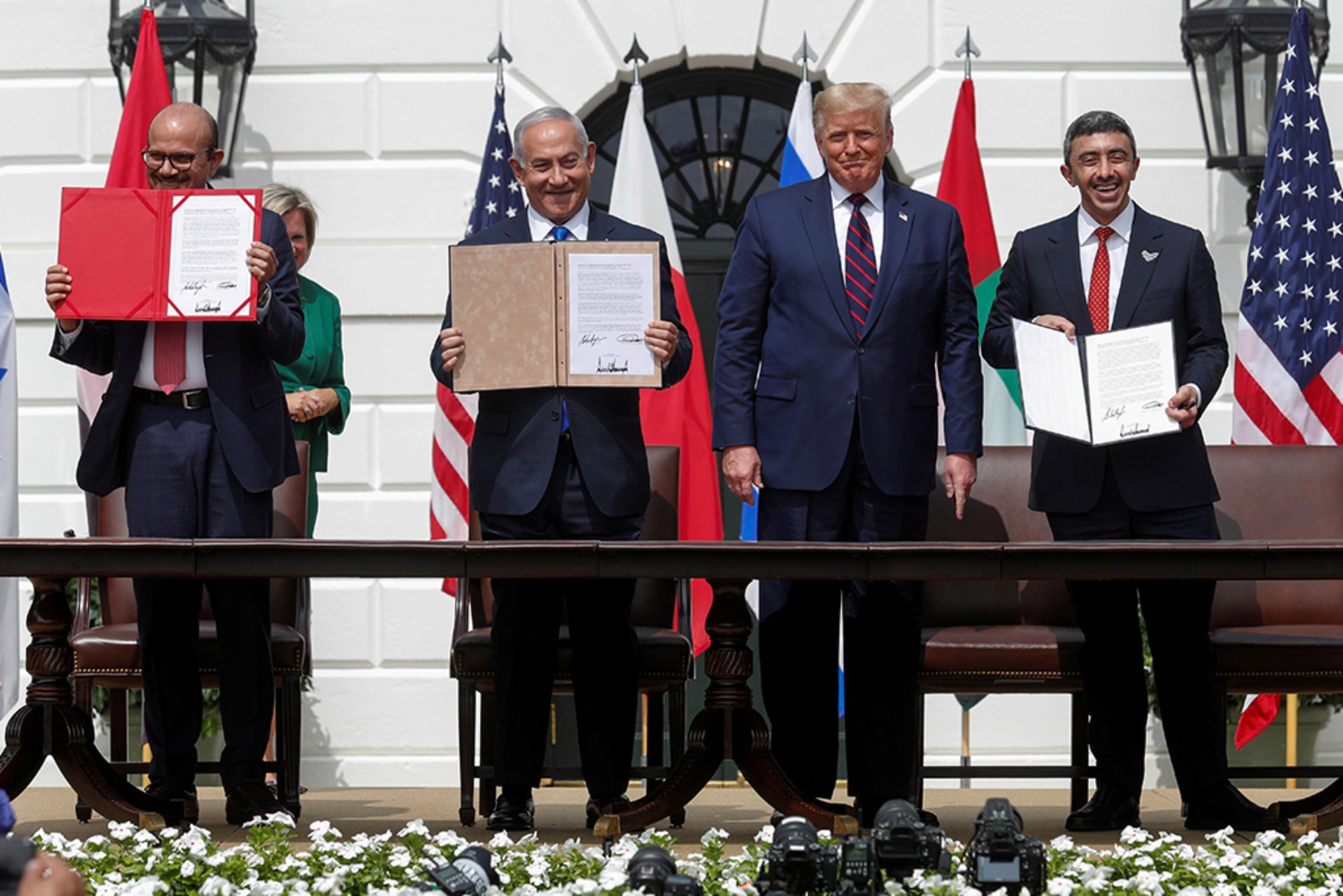
Bahrain and the United Arab Emirates sign the Abraham Accords, a series of bilateral agreements that normalize diplomatic relations with Israel. They become the first Arab countries to formalize ties with Israel in over twenty-five years. In return, Israel announces the suspension of plans to annex territory in the West Bank. The next month, Sudan agrees to normalize relations (and compensate victims of two terrorist attacks plotted from Sudan) in exchange for its removal from the U.S. list of state sponsors of terrorism. In December, Morocco signs on as well, after the United States recognizes its sovereignty over the disputed Western Sahara region. The Palestinian leadership rejects the accords, arguing they reward Israel without securing concessions on Palestinian statehood. Reactions elsewhere are mixed: some Western and Arab governments, including Egypt and Oman, welcome the accords. Other countries, including Iran and Turkey, condemn them, with Iranian officials calling them a betrayal of the Palestinian cause. Saudi Arabia, a highly sought-after potential addition to the accords, maintains that it will normalize relations with Israel only in exchange for a path toward Palestinian statehood.
May 2021Israel-Hamas Crisis
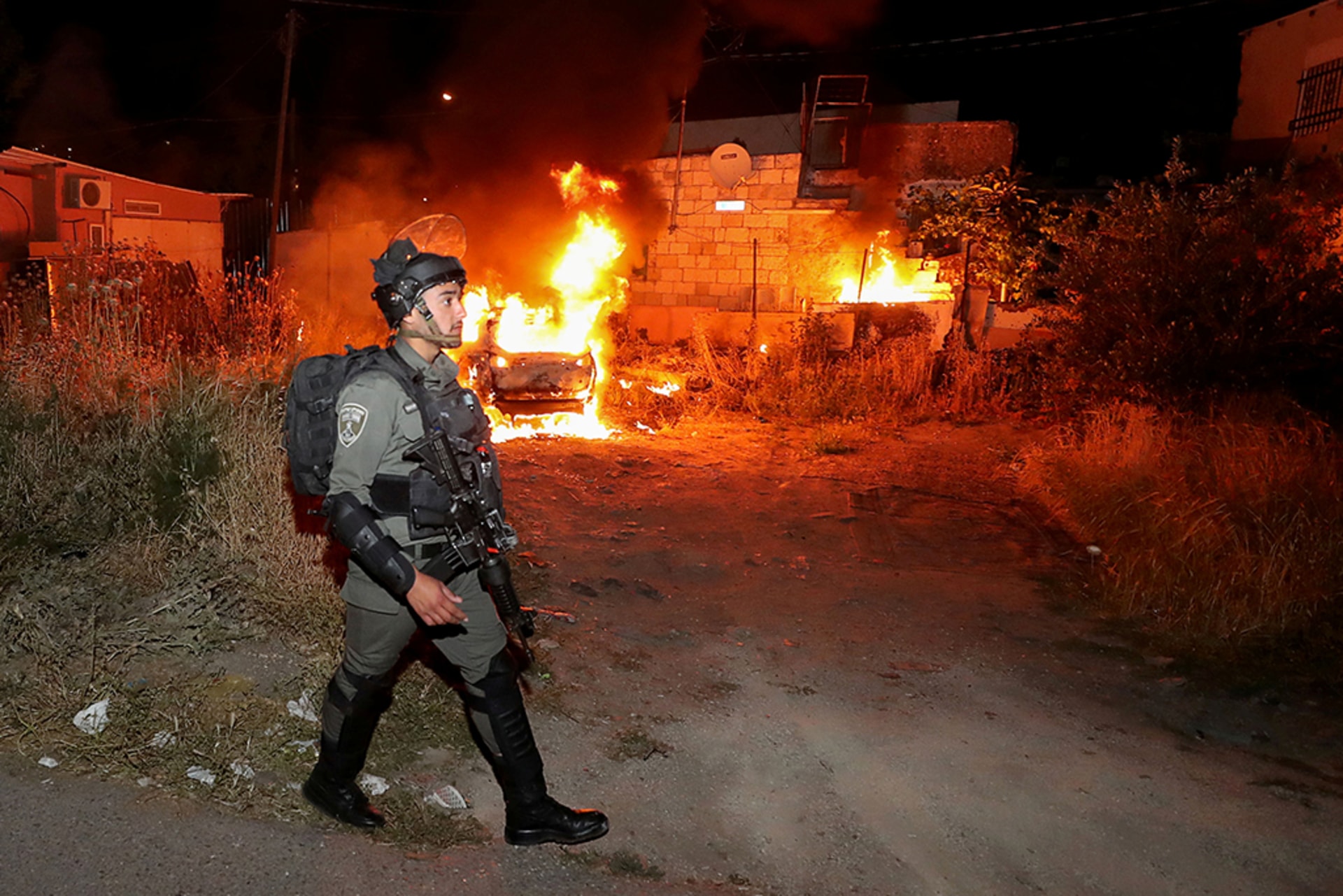
Weeks of rising tensions in East Jerusalem spark conflict between Israel and Hamas. The tensions’ immediate cause is a legal battle to allow the evictions of several Palestinian families from East Jerusalem’s Sheikh Jarrah neighborhood. Although the Israeli supreme court later stays the evictions, the case sparks escalating protests in Jerusalem. Amid the growing unrest, Israeli authorities impose restrictions on Muslims entering Jerusalem to worship during Ramadan. As tensions mount, clashes between protesters and police erupt around the al-Aqsa Mosque, injuring hundreds of Palestinians and dozens of Israeli police. Hamas and other militant groups fire rockets toward Israeli cities, including Jerusalem—an escalation Israel regards as crossing a red line. Israel responds with an eleven-day air campaign against militant targets in the Gaza Strip. By the time Egypt brokers a ceasefire on May 21, the conflict has killed roughly two hundred fifty Palestinians and thirteen Israelis.
2022A Deadly Year in the West Bank
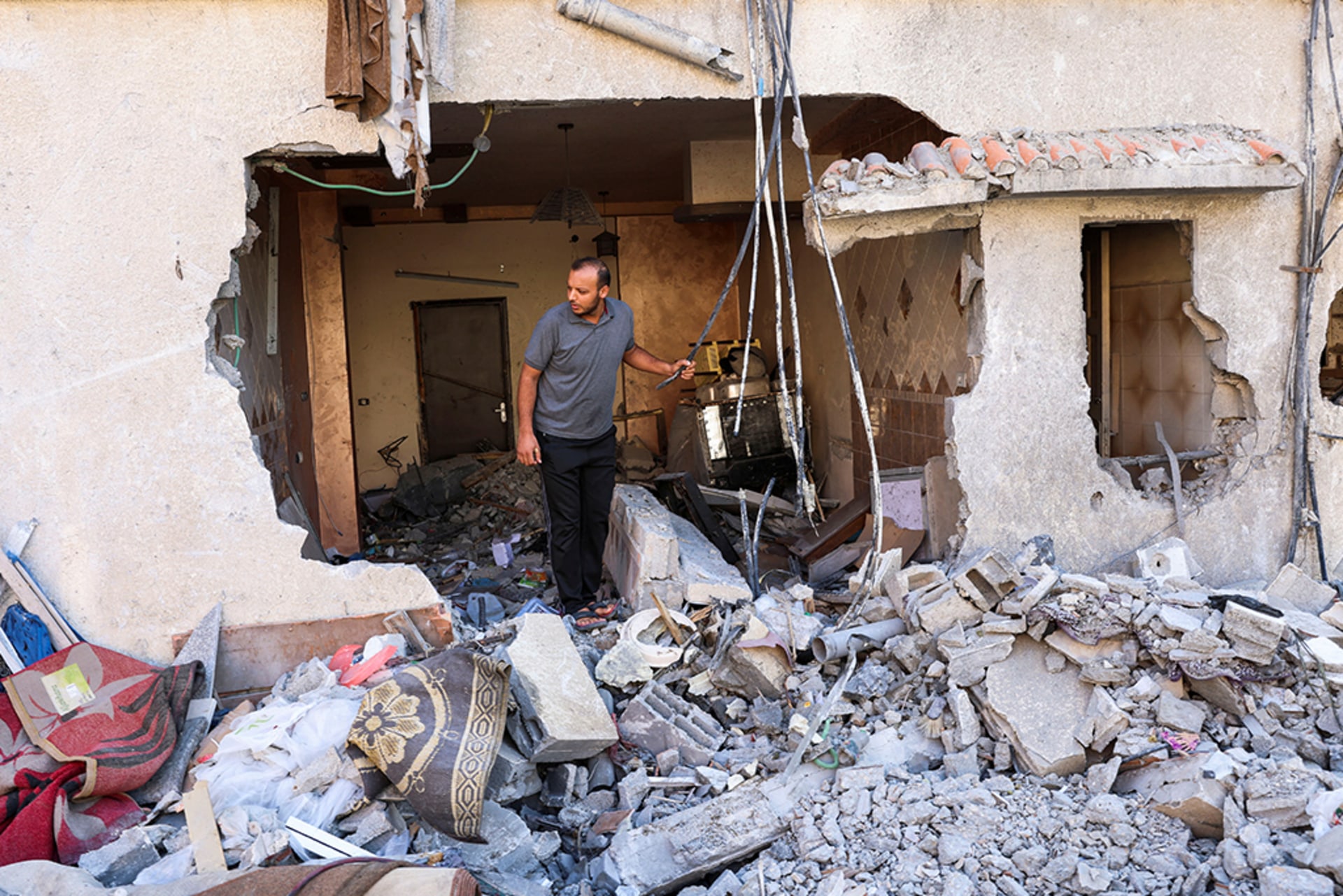
Following Palestinian attacks inside Israel earlier in March that kill nineteen people, Israel launches Operation Break the Wave, a campaign of near-daily raids in the West Bank. The operation unfolds amid the most significant resurgence of Palestinian armed militancy in the West Bank since the second intifada. Newly formed groups such as the Jenin Battalion and the Lions’ Den draw recruits from younger Palestinians who view the Fatah-led PA as ineffective. By the end of 2022, Israeli forces have killed roughly one hundred seventy Palestinians and Palestinian attacks have killed twenty-nine Israelis.
Oct 7, 2023Hamas Leads Deadliest Ever Attack Against Israel
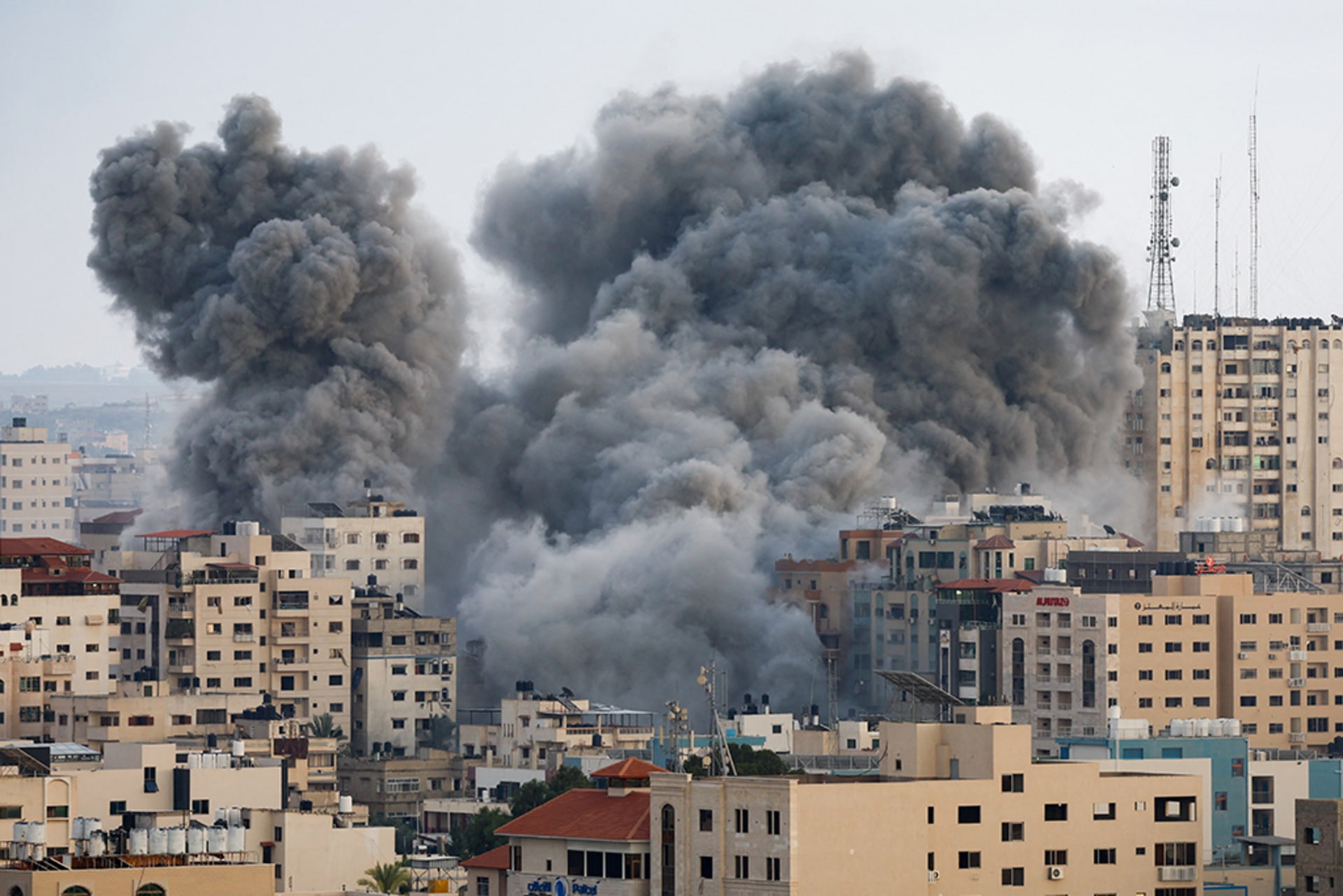
Hamas, supported by other Palestinian armed groups, launches an unprecedented surprise attack on Israel that kills approximately twelve hundred people, most of them civilians. Militants also take 251 hostages. It is the deadliest attack in Israel’s history. Israel responds immediately by launching air strikes in Gaza. Then, on October 27, the Israel Defense Forces launch a ground offensive called Operation Swords of Iron to destroy Hamas in Gaza. Tens of thousands of Palestinians—civilians and fighters—are killed in the ensuing two-and-a-half years of war, while Israel loses about one thousand soldiers in Gaza, including during the October 7 attacks. International bodies, including the International Criminal Court and International Court of Justice, subsequently launch investigations into both Israeli and Hamas officials for violations of . Both parties reject those claims.
Nov 24, 2023Weeklong Truce Frees Some Hostages
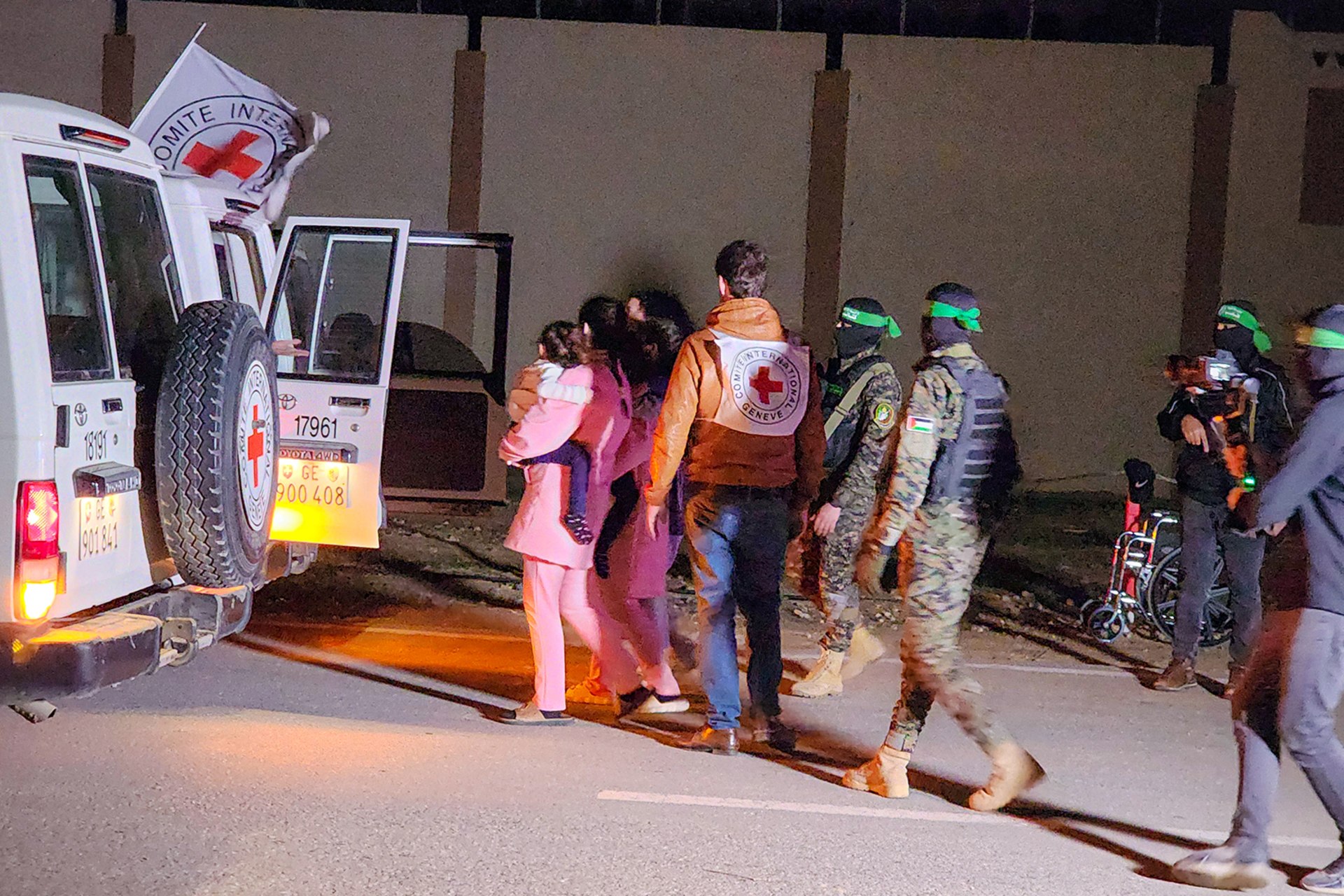
Israel and Hamas agree to a temporary ceasefire brokered by the United States, Egypt, and Qatar. The truce initially lasts four days and is later extended to roughly a week. Under its terms, Hamas releases one hundred five hostages, primarily women and children, while Israel frees about two hundred forty Palestinian prisoners in exchange. Both sides also allow a surge of humanitarian aid into Gaza. Fighting resumes on December 1, with more than one hundred hostages still held in Gaza.
Sep 17–Nov 27, 2024Israel Expands Operations Into Lebanon
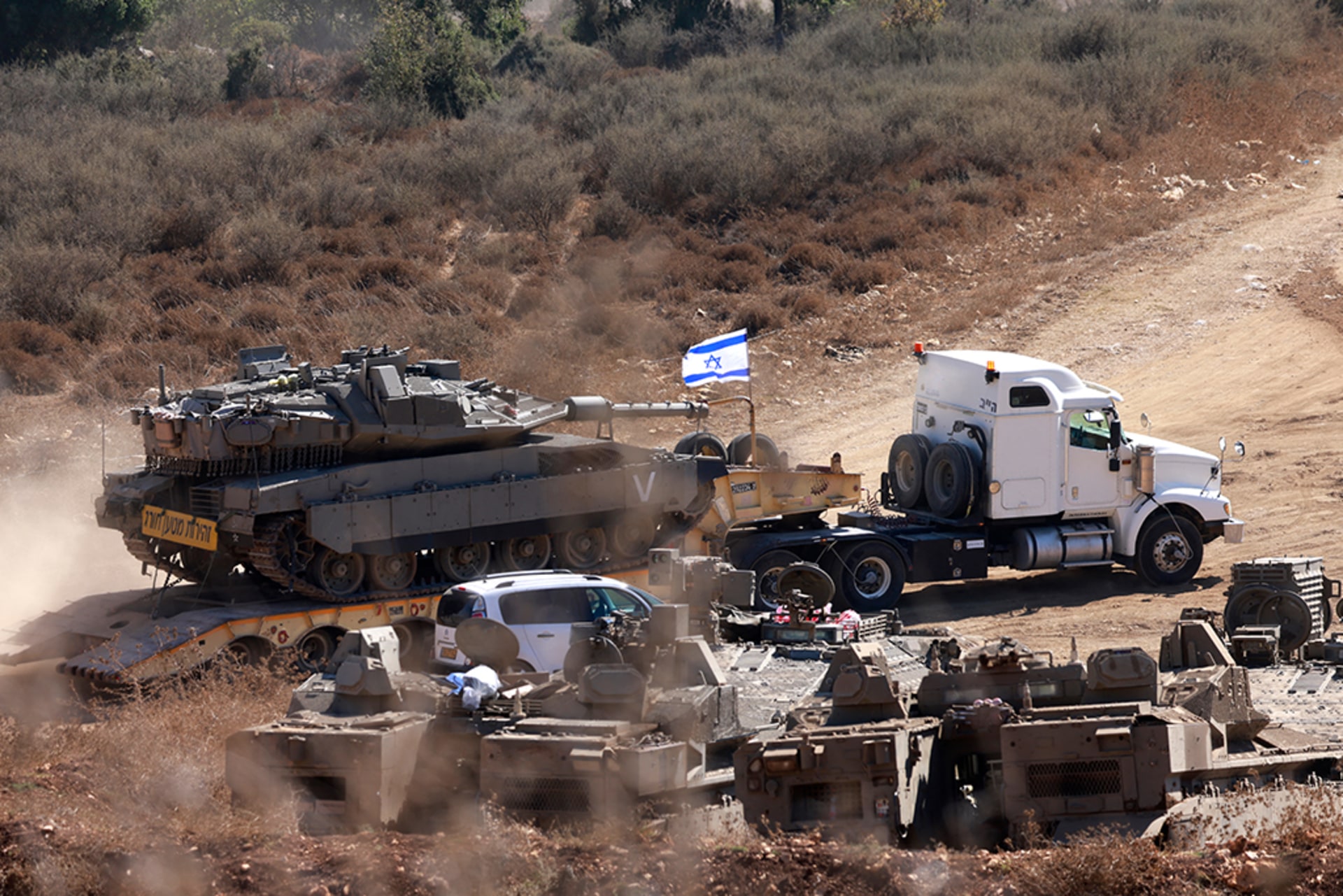
Nearly a year after the October 7 attacks, tensions escalate between Israel and the Lebanese militant group Hezbollah, which has expressed support for Hamas in Gaza and operated as Iran’s most important group in the region. Hezbollah had been exchanging aerial attacks with Israel since October 8, 2023. But the conflict escalates in September after Israel launches a coordinated attack against Hezbollah operatives using explosive pager devices. In the following weeks, Israel launches aerial attacks that kill the group’s longtime leader, Hassan Nasrallah, as well as other senior Hezbollah members. Then, in October, Israeli forces mount a ground invasion in southern Lebanon to dismantle the group. In support of Hezbollah, Iran launches more than one hundred fifty ballistic missiles at Israel, prompting Israel to retaliate. The exchange marks the first direct hostilities between the two countries. Israel and Hezbollah agree to a ceasefire in late November, although sporadic attacks continue in its wake. Hezbollah launches new attacks on Israel in February 2026 after a joint U.S.-Israeli attack on Iran. In response, Israel resumes ground operations in Lebanon in March 2026.
Jan–Mar 2025Ceasefire Agreement Proves Short-Lived
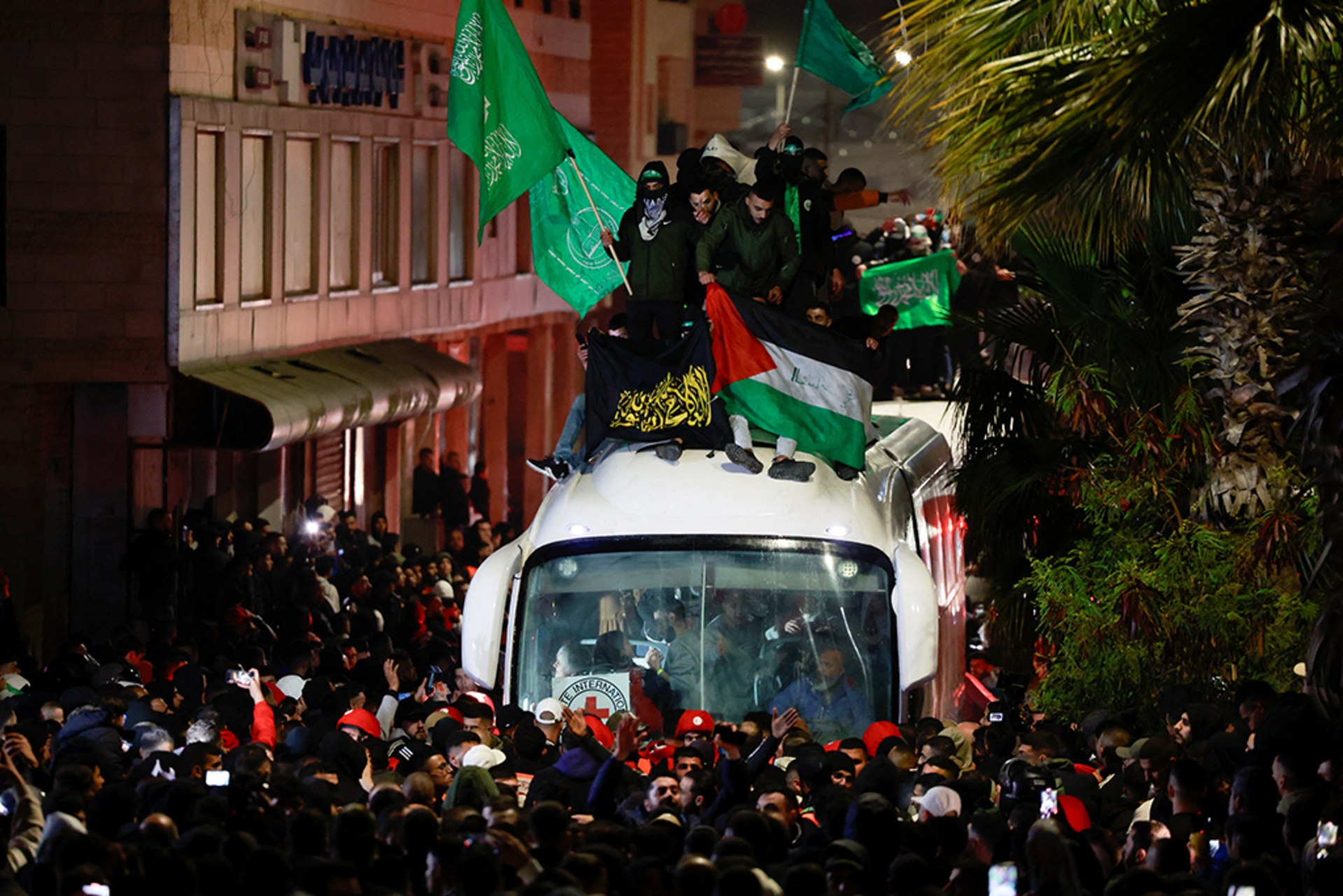
The Israeli government and Hamas agree to a ceasefire, which takes effect in January 2025. Under its terms, Hamas agrees to release additional hostages, while Israel releases Palestinian prisoners in exchange. Israel also agrees to admit humanitarian aid to address the dire humanitarian situation for residents in Gaza. The ceasefire initially lays out a path toward the full end of the war. Within months, however, both sides begin accusing each other of violating the agreement’s terms. In March, Israel launches renewed air strikes and blocks aid and energy going into Gaza, and in May, it renews full-scale ground operations.
October 9, 2025United States Brokers a New Ceasefire
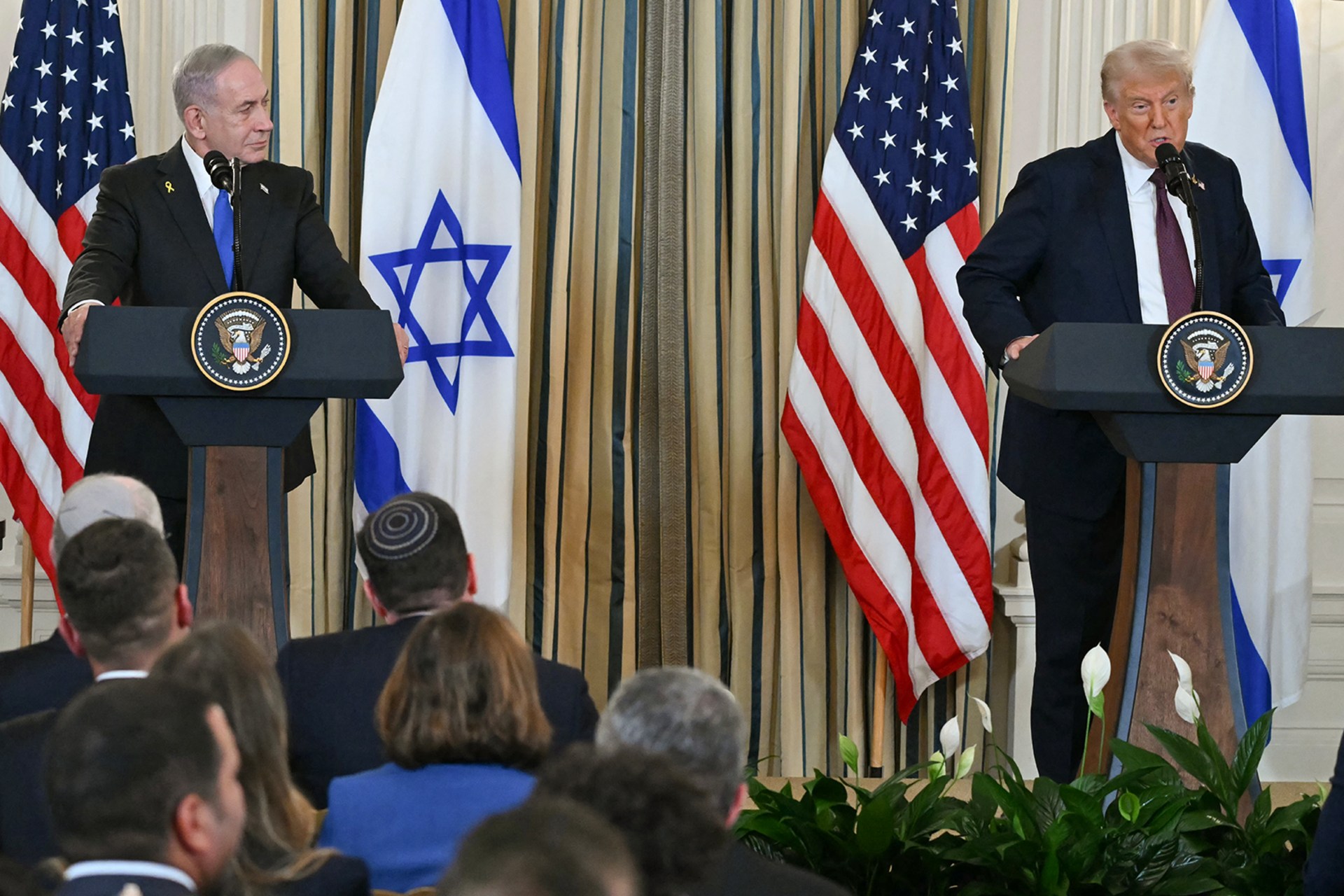
In late September, the Trump administration unveils a twenty-point plan to end the war. Two weeks later, Israel and Hamas agree to its first phase, which calls for ending hostilities, a partially withdrawing Israeli forces, and significantly increasing humanitarian aid to Gaza. It further mandates that Hamas release and return all hostages in exchange for Israel’s release of 250 Palestinian prisoners serving life sentences, 1,700 other Gazan detainees, and the bodies of 15 Palestinians for each deceased hostage received. The deal’s second phase requires Hamas to demobilize and agree to a transitional government in Gaza, and an international stabilization force to maintain security. To support the deal, the Trump administration also demands an international Board of Peace, comprising officials from more than sixty invited countries and chaired by Trump. The Trump administration announces the beginning of the second phase in January 2026, following the recovery of the last hostage’s remains. Implementation moves slowly, however; months after the announcement, Hamas has not disarmed, a transitional government and stabilization force have yet to materialize, and fewer than half of the countries invited have agreed to join the Board of Peace. Meanwhile, both Israel and Hamas continue to report regular ceasefire violations. The war has killed more than seventy thousand Palestinians, including both civilians and fighters, and roughly two thousand Israelis, including about one thousand soldiers and roughly nine hundred civilians killed in the October 7 attacks.