Response to 9/11
Should the United States strike al-Qaeda in Afghanistan in response to 9/11? Explore this historical simulation set in 2001.
- Level
- High School, Higher Education
Need guidance for how to run your mini simulation?
Overview
Following the deadliest foreign attack on U.S. soil, the president of the United States learns that the terrorist organization and its leader, , are responsible for the 9/11 attacks and are in Afghanistan. How should the United States respond?
Students will understand that the 9/11 attacks represented a new brand of terrorism that could require a new brand of policy in response.
Students will understand that after 9/11, the United States had to decide whether its counterterrorism efforts should include military action, and, if so, at what scale?
The Situation
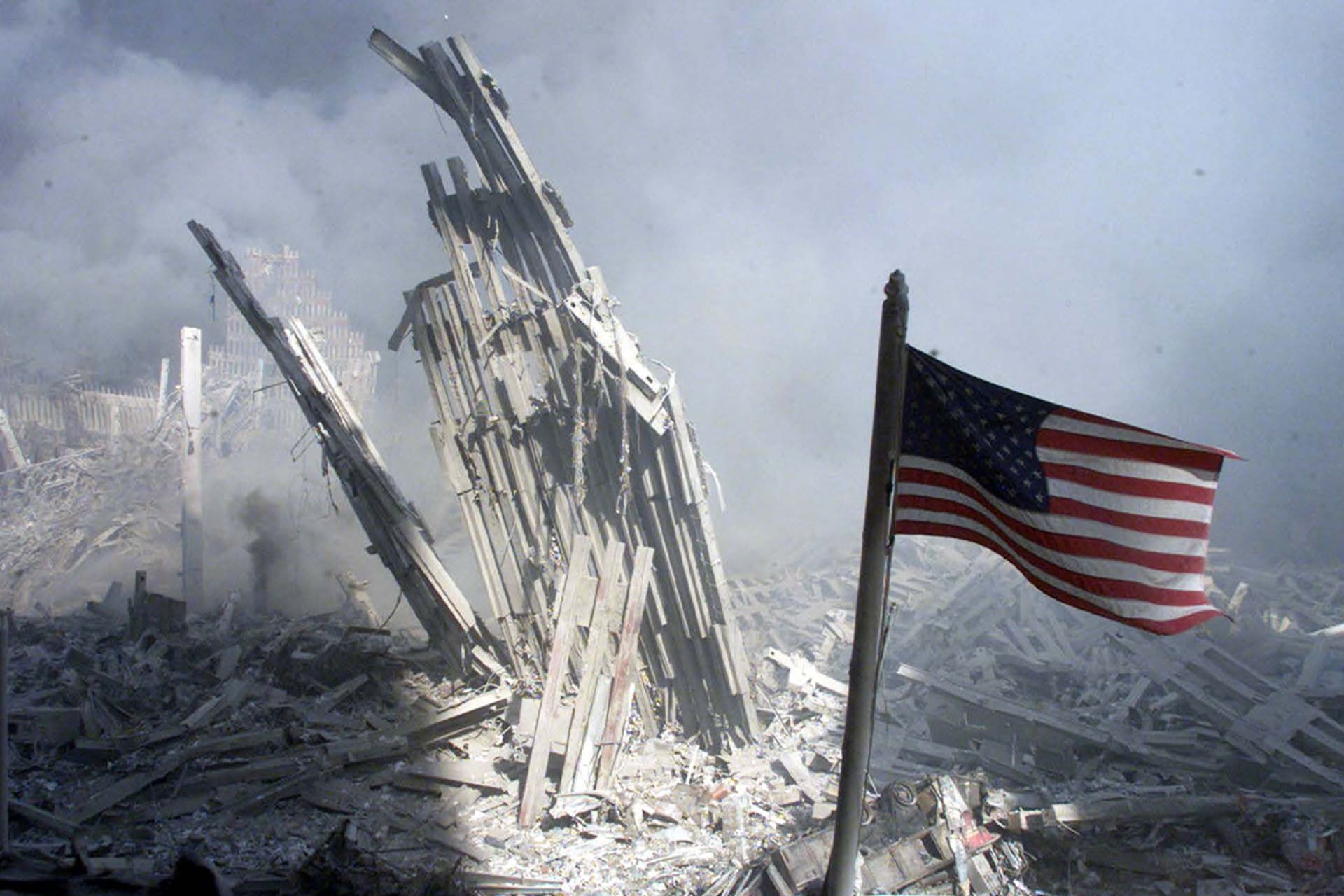
On the morning of September 11, 2001, al-Qaeda-affiliated terrorists killed nearly three thousand people on the U.S. mainland. The terrorists executed the attacks by hijacking four planes, using them as weapons to kill innocent civilians. Two planes were crashed into the World Trade Center towers in New York and another into the Pentagon in Washington, DC. A fourth plane crashed in a field in Pennsylvania after passengers fought back. Television headlines read “LIVE: America Under Attack” while much of the world watched the World Trade Center towers collapse, the Pentagon burn, and Americans lose their lives. September 11, 2001, represented the deadliest foreign terrorist attack on U.S. soil. Al-Qaeda targeted U.S. symbols of finance and security, while seeking to maximize civilian casualties. U.S. intelligence agencies had issued agencies mounting warnings about the growing ambitions of armed Islamist groups such as al-Qaeda. However, 9/11 came as a complete surprise to the George W. Bush administration, the American people, and the world.
Terrorism is not new. Several attacks on the United States occurred throughout the twentieth century. However, such events were largely seen as isolated incidents rather than an overriding national security concern. A new Islamist group founded by Osama bin Laden, al-Qaeda, escalated attacks throughout the 1990s. Al-Qaeda killed dozens of Americans with bombings of two U.S. embassies in East Africa in 1998 and the USS Cole in Yemen in 2000. Al-Qaeda fundamentally rejected U.S. ideals and interests. Specifically, al-Qaeda opposed U.S. involvement in the 1990–91 Gulf War and U.S. support for the governments of Egypt, Israel, and Saudi Arabia. Bin Laden saw the United States as an occupying force against Islam. In 1998, bin Laden issued a religious decree calling on his followers to partake in the killing of Americans. The intelligence community ramped up of bin Laden; however, they had yet to fully recognize al-Qaeda’s attacks as an entirely new brand of terrorism that posed a significant threat to U.S. security. Increasingly coordinated and deadly incidents by Islamist terrorist organizations spawned even more terrorist groups. These emerging organizations used similar recruitment networks, sophisticated methods of communication (including the internet), and staunch funders to sustain attacks.
The magnitude of the 9/11 terrorist attacks drove the United States to consider responding with military action. The United States had intervened in conflicts throughout the 1990s in pursuit of human rights and strategic goals. Most notably, it led the Gulf War against the Iraqi of Kuwait. In the past, military action has allowed the United States to punish aggressors, protect its interests and values, and demonstrate U.S. geopolitical power. However, such aggressive actions abroad have also inflicted collateral damage. The rise of anti-American sentiment and a worsening global reputation have been byproducts of this military action. In response to 9/11, policymakers considered combating a terrorist organization—as opposed to a country—a move that could magnify those downsides. Many argued over the varying degrees of military action needed to address the overriding threat terrorism posed. Others warned that using force could facilitate recruitment for terrorist groups, leading to a greater likelihood and frequency of foreign attacks. Instead, these policymakers argued, the United States should address the root causes of terrorism to prevent future acts of violence.
Decision Point
Set on the evening of September 11, 2001
This morning the United States suffered the deadliest foreign terrorist attack on U.S. soil in history. Americans are still searching for loved ones. The nation is consumed by fear, grief, and uncertainty as to what will come next. The director of Central Intelligence has just told the president that the terrorist group al-Qaeda and its leader, Osama bin Laden, are responsible for the attack. According to U.S. intelligence, the Taliban regime in Afghanistan is providing safe haven to bin Laden and the al-Qaeda terrorists who organized 9/11. The president has convened the National Security Council (NSC) to decide whether the United States should take military action, and at what scale, in response to the devastating attacks. (A separate NSC meeting is being assembled to discuss domestic measures in response to 9/11.) All policy options will entail congressional authorization, which—considering the severity of the attacks—the president does not expect will be difficult to secure. NSC members should consider how quickly policy options are likely to achieve results. Additionally, the NSC should take into account security concerns, public opinion, and costs in the wake of 9/11.
NSC members should consider the following policy options:
- Do not take military action, but target conditions that sustain al-Qaeda. This policy option involves the implementation of programs to reduce extremism, poverty, and corruption abroad. For example, the NSC could opt to apply economic and other pressures to organizations and countries supporting al-Qaeda. This option could minimize the recruitment prospects and financial capacity of al-Qaeda. However, such a response would not target the terrorists behind 9/11, could disappoint Americans, and could be slow to produce results.
- Implement targeted military action against al-Qaeda leadership responsible for 9/11. This policy option would entail the U.S. military aggressively using intelligence and military assets to detain or kill specific terrorists. By targeting the organizers of 9/11, this option could limit al-Qaeda’s capacity to execute attacks. This option directly counters the threat of al-Qaeda leadership and offers a defined endpoint; however, it does not address the overriding threat terrorism currently poses. Finding all targeted terrorists could prove difficult. In some cases, this measure could require cooperation from participating countries.
- Launch a war against al-Qaeda and those who support the group in and outside Afghanistan. This option could address the considerable threat terrorism poses and appease public opinion. By launching a full-scale military operation, the NSC could forcefully show that attacking the United States carries consequences. However, this response requires the biggest financial and logistical commitments. A military operation also risks killing or wounding U.S. personnel and innocent civilians abroad. Moreover, this policy option also lacks a defined endpoint and could generate anti-American sentiment that would foster more enlistment in al-Qaeda.