Skilled Immigration Today
In this book, CFR Senior Fellow Jagdish N. Bhagwati and coauthor Gordon Hanson examine the causes and consequences of the international migration of skilled workers with a particular emphasis on the policy challenges confronting the governments in sending and receiving countries. Teaching notes by Professor Bhagwati.
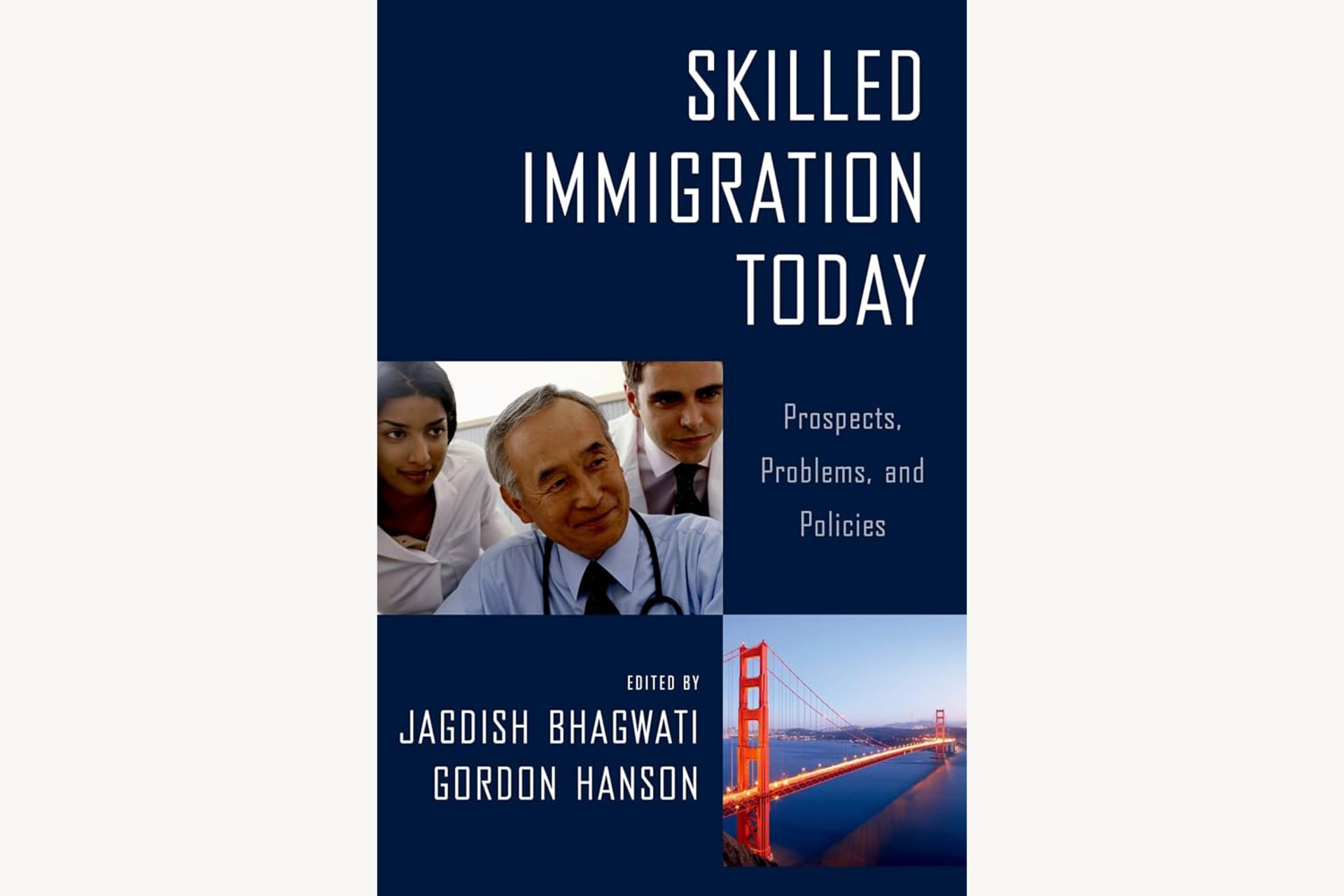
Summary
Skilled Immigration Today: Prospects, Problems and Policies examines the causes and consequences of the international migration of skilled workers with an eye toward identifying the policy challenges confronting governments in both sending and receiving countries. Skilled immigration into rich countries and competition for talent and professional skills are of major concern among nations today. Comprehensive immigration reform is back on Congress’ legislative agenda. Skilled immigration is likely to be included in the proposed reform agenda in the hope that it will bring pro-immigration troops into battle. Though immigration reform in the United States may fail yet again, the specific issue of skilled immigration, and how to redesign it, will remain one of the central issues before the world community.
How important is the phenomenon? How do the legal immigration systems of rich countries address their needs? How do professional associations that may find such inflows a threat to their members’ earnings seek to curtail these? What are the implications on the sending countries, which are generally less developed, of the brain drain phenomenon? How should tax policy be changed in light of the growing phenomenon of skilled migrant flows? These and a host of related policy questions are addressed uniquely in Skilled Immigration Today. Bhagwati and Hanson present an informed awareness of the rich history of the phenomenon and several policy initiatives already attempted with sophisticated theoretical analysis. The essays, with an overview that ties them together, are written by today’s foremost immigration experts.
These teaching notes discuss questions and suggestions for further projects, including debate and op-ed writing assignments, which may be useful for students in any of the courses below.
This book is suitable for undergraduate and graduate courses in the following disciplines:
- International Political Economy
- Development Economics and Development Policy
- Comparative Public Policy
- Immigration Policy
Essay and Discussion Questions
For undergraduate and graduate courses on International Political Economy:
- Why would policymakers in receiving countries have an incentive to restrict inflows of skilled workers?
- Is it conceivable that countries could negotiate multilateral treaties on migration similar to those that govern international trade?
- How will ongoing demographic changes in industrialized and developing countries affect the policies that govern international migration?
- Are there ways that sending and receiving countries can coordinate policy efforts to mitigate negative consequences of international migration on public finances?
For undergraduate and graduate courses on Development Economics and Development Policy:
- How does skilled migration differ in its causes and consequences from unskilled migration?
- How does the international migration of skilled labor affect prospects for economic growth in sending and receiving countries?
- What policies in sending countries might improve prospects for the emigration of skilled labor to contribute positively to economic development?
- How do tax policies in sending and receiving countries affect skilled immigration and how are these policies in turn likely to be affected by migration?
For undergraduate and graduate courses on Comparative Public Policy and Immigration Policy:
- What policies could sending countries enact to make skilled emigrants more likely to return home? Would such policies be desirable?
- How and why do domestic interest groups in receiving countries seek to manipulate policies governing skilled immigration?
- What accounts for the United States attracting relatively large numbers of skilled immigrants even though its policies appear biased in favor less skilled entrants?
- How do policies governing illegal immigration, refugees and asylum seekers, and family reunification affect the migration of skilled labor?
Related Articles

For Migrants, Labels Matter
Readings