Boko Haram in Nigeria in 2017 (NSC)
Set in February 2017. A Boko Haram attack threatens the stability of Nigeria, as the country seeks U.S. aid.
- Level
- High School, Higher Education
What is a simulation?
Simulations offer students the chance to role-play either the U.S. National Security Council or the UN Security Council.
How do I use them?
A simulation comprises two readings (a council guide and the case notes) of roughly 2,500 words each. They also offer detailed guidance for preparing for and running the simulation in the classroom and reflecting on the experience.
Educator Overview
Case Overview
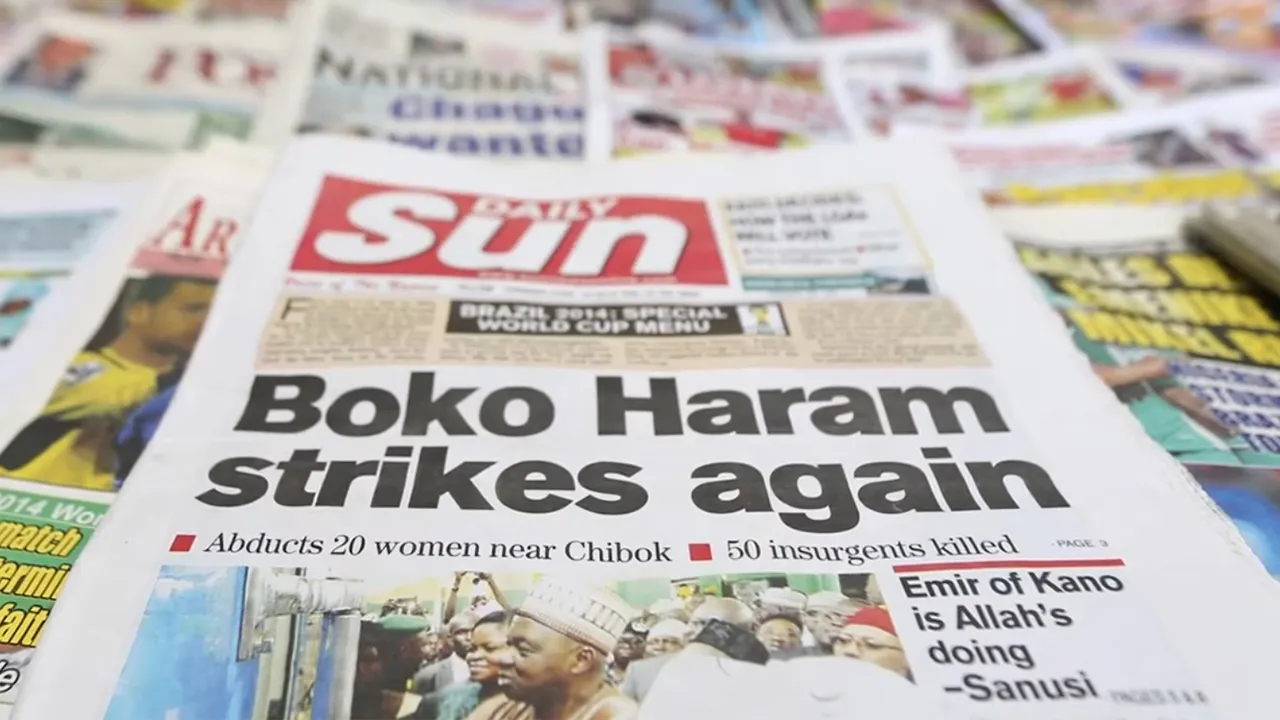
Set in February, 2017. Radical Islamist movement Boko Haram is waging an insurgency in northeast Nigeria estimated to have killed at least twenty thousand people in recent years. The insurgency threatens the stability of Nigeria, a major oil producer and Africa’s most populous country. Nigerian security forces have made some progress against Boko Haram, but humanitarian and media organizations have reported extensive human rights abuses by these forces, including the killing of civilians. Nigeria’s president has requested that the United States sell heavy military equipment to the country. However, a U.S. law, called the Leahy Amendment, prohibits military assistance to foreign militaries credibly accused of human rights abuses unless the foreign government takes action—something Nigeria’s government has yet to do. National Security Council (NSC) members need to advise the president on whether to authorize the sale despite legal and human rights concerns.
Decision Point
Despite Nigeria’s military abuses, in 2016, the United States considered selling 12 Super Tucano planes—light aircraft used for surveillance—to Nigeria. However, on January 17, 2017, the same day the Obama administration planned to notify Congress of the aircraft sale to Nigeria, the Nigerian air force accidentally bombed a refugee camp killing more than 100 people. As a result, in one of his last decisions as U.S. President, Obama stalled the sale of the aircraft to Nigeria. On February 15th, during a telephone call with President Buhari, President Donald Trump indicated that he would take another look at the proposed sale.
The National Security Council (NSC) is meeting to discuss the sale. NSC members need to decide whether Nigeria’s economic and strategic importance to the United States overrides legal and ethical concerns about ongoing human rights abuses. Specifically, the NSC should decide whether to advise the new president to recommit to the sale of the aircraft and/or to consider other forms of military aid in the future. The NSC should also consider whether the prospect of a closer bilateral military relationship could incentivize Nigeria to investigate claims of human rights abuses and take necessary steps to end them.
Learning Goals
CFR Education extended simulations use a variety of pedagogical tools to create an effective, meaningful, and memorable learning experience for students that builds their global literacy. Students will develop crucial skills such as critical thinking, communication, collaboration, and creativity. Students will complete authentic assessments that feel relevant: instead of five-paragraph essays and book reports, students will write policy memos and participate in a role-play of a meeting of a foreign policy–making body. There are no right or wrong answers in actual policy deliberations, and there are none here, either; students will walk away from this experience with an appreciation for the complexity of policy questions.
In this simulation, students will learn about the National Security Council, as well as meeting these learning outcomes specific to this simulation:
- Students will understand the threat Boko Haram poses to Nigeria, the surrounding region, and international peace and security.
- Students will consider whether to provide United States support to the Nigerian government in light of legal and ethical concerns about ongoing human rights violations.
- Students will evaluate options for providing U.S. authorization for heavy weaponry in a manner that adheres to the Leahy Amendment.
Concepts and Issues
Concepts
- Human rights
- Insurgency
- Oil and other natural resources
- Terrorism and counterterrorism
- U.S. military assistance and sales
Issues
- U.S.-Nigeria relations
- Leahy Amendment
- Nigerian political and religious dynamics
- Security sector reform
- U.S. promotion of human rights, democratization, and the rule of law
- Regional security in West Africa
Policy Options
This section presents context, potential benefits and drawbacks, and other information about the policy options outlined in the case that you may find helpful as you guide the role-play and assess students.
Policymakers in Washington have usually seen Nigeria as the most important U.S. partner in Africa. Successive U.S. presidents have supported Nigeria’s evolution toward democracy. This support comes not only because of the U.S. belief in democratic governance but also because of Nigeria’s size, diversity, and potential to be a helpful model for other African countries. Democratic failure in Nigeria could be a setback to the development and maintenance of democratic norms that have facilitated cooperation on various issues among many African countries.
U.S. goals in Nigeria in this case included continued evolution toward democratic governance, rule of law, and respect for human rights. Another U.S. priority was economic development, which would likely promote political stability. In addition, Washington wanted to fight the expansion of militant terrorist movements. The United States has traditionally not had much leverage over the Nigerian government because of Nigeria’s size and oil wealth. Going into 2017, an economic crisis caused by falling oil prices and the threat of Boko Haram could provide Washington with greater negotiating advantage.
The Leahy Amendment forbids the U.S. State and Defense Departments from providing military assistance to foreign militaries if the U.S. secretary of state or defense has credible information that those groups have committed severe human rights violations. Accordingly, three options were possible in responding to Buhari’s request for U.S. authorization to acquire the Super Tucano planes:
NSC members could conclude that U.S. security interests mandate authorizing the sale or transfer of the weapons Buhari requests.
In this case, National Security Council (NSC) members would need to advise the president on how to either meet or set aside the Leahy Amendment requirements. If the president agreed to Buhari’s request, Washington could press Abuja to set up a commission to investigate credible accusations of abuses by its security forces and take appropriate judicial action. This option would meet the Leahy Amendment’s requirements. It could open the door to a more extensive bilateral military relationship including the sale of more advanced weapons in the future. Addressing human rights abuses by the security services could also diminish Boko Haram’s appeal. But if Abuja declined to take action, it would become more difficult for the United States to provide Nigeria with weaponry. It would also limit Washington’s ability to build a closer relationship with the country. A public U.S. commitment to provide the requested weaponry could also politically strengthen Buhari’s hand with his critics and boost the Nigerian military’s morale.
NSC members could conclude that it remains best for the United States to decline Buhari’s request given that the Leahy requirements cannot be met and should not be set aside.
This option would be the preferred approach if NSC members feared that Nigerian security forces’ using American equipment would lead to significant civilian casualties. Worse, poor management by Nigerian forces could allow the aircraft to fall into the hands of Boko Haram. Further, aircraft require trained pilots. Therefore, any sale of aircraft would likely also require the United States to provide long-term training assistance for Nigerian pilots. It would take a long time between the authorization of the transfer of the weapons and their use on the battlefield. NSC members could conclude that the risks of both giving the weapons to Nigeria and the possible delay in their actually being used outweigh the benefits of agreeing to Buhari’s request.
NSC members could advise the president to refuse the sale of aircraft and other requested equipment but offer assistance to the Nigerian security forces and legal system, including courts and prisons.
Anecdotal evidence has suggested that the Nigerian military faced severe shortfalls in the low-tech military equipment necessary for fighting an asymmetric war. The Nigerian military needed more ammunition, rifles, transport, tents, and medical equipment. The United States could provide these items without triggering the requirements of the Leahy Amendment. This option could include training and low-tech military equipment. However, it would not include heavier equipment such as aircraft. This type of assistance would likely actually prove more successful than heavy weapons against Boko Haram. It would also be unlikely to provide the immediate political boost Buhari sought. However, if such assistance helped Nigeria make its military, police force, and courts more professional and efficient, this option could conceivably reduce human rights abuses and pave the way for the United States to approve future requests for heavier military equipment.
Running the Simulation
CFR Education extended simulations are project-based learning activities. Project-based learning (PBL) leads to better learning outcomes and improves skills, and is more fun than traditional instructional methods. The website that students will navigate throughout the simulation is divided into several parts:
In the NSC Guide, students will learn about the National Security Council, the body they will be simulating. Included are details on its history, how it works, who its major players are, and more. There is also a video interview with experts who have served on the body.
In the Case Notes, students dive into the actual situation they will be trying to solve in their simulation. At the beginning is a clear decision point: the question that students will debate during the role-play. This is followed by detailed background material and a discussion of the role that the United States plays.
Preparation and Role-Play includes details on the various roles students could take on, guidelines for the memorandum they will write (the student playing the role of president has a slightly different task), as well as an outline of how the discussion will flow during the role-play.
The Wrap-Up is an important part of the project and includes reflection questions and guidelines for reflecting in a class discussion and in a second memorandum. For historical cases, this section also includes a short description of how the decision point was addressed by policymakers in real life.
The simulation also includes Student Resources, which include a reading list to support research, additional directions and exemplars for writing assignments, and other tips students may find helpful.
Tips for Role-Play
Once students have read the simulation and prepared their position memos, here is how we recommend structuring the role-play:
| Round | Timing | Objectives | Procedural Notes |
|---|---|---|---|
| One | 2 to 3 minutes per participant | Present initial positions to the president. Investigate the nuances of the positions through questioning. Clarify the central questions to be debated. | Each participant presents their position statement. If time permits, the president may ask questions to understand each NSC member’s position and bring out the essential questions they wish to debate. |
| Two | 30 to 60 minutes | Clarify the obstacles, risks, opportunities, and threats. Evaluate the various positions on their merits. | This is the debate portion of the role-play, when participants can defend their recommendations against others’ and identify potential areas of compromise agreement. |
| Three | 30 to 60 minutes | Narrow the options to a few comprehensive and well-focused strategies that the president prefers. Provide the president with clear recommendations (from NSC members), perhaps as a consensus or through a vote. Arrive at a final presidential decision. | This round should start with the president’s stating one to three preferred options to be fleshed out. |
Tips for the National Security Advisor
In Round 1, call on everyone for their opening statements, keeping to a strict time limit—if students have more to say, they can say it in Round 2. The president doesn’t have a specific time limit, but you should keep things moving by not letting the president get bogged down on one issue or policy option.
In Round 2, students do not need to follow a prescribed speaking order; you can call on them as they raise their placards. Work to include everyone and prevent anyone from dominating. As debate goes on, remind students they can change their minds. If it will help move things along, help students see when they are agreeing with each other without realizing it. Feel free to pose questions or propose discussion topics if you feel that certain issues are not receiving adequate consideration. Ultimately, it’s up to you to judge when Round 2 has run its course and it is time to move on to Round 3. You will want to move on when all policy options have been discussed and all of the president’s questions have been answered. The room does not need to come to a consensus—every option just needs to have a fair airing.
In Round 3, ask students to make a final case for their positions. If, during the course of the discussion, some students seem to have coalesced into blocs, you could ask one student to present on behalf of the bloc. If consensus seems possible, you could work toward it; if not, just make sure each option has been clearly presented to the president. Remember, the NSC is not democratic and is an advisory, not decision-making, body. There is no vote, and the president does not need to choose the most popular option.
Tips for the President
Before Round 1, review all the position memos, if you can. During Round 1, as students are presenting their opening statements, you can ask questions to clarify or help draw out the differences between one policy option and another. Try not to get too deep in the weeds, though—that is what Round 2 will be for.
In Round 2, you can take a more active role. If you have concerns about a policy option, ask questions; if some policy options seem stronger than others, say so. If an element of the issue is not being discussed, raise it.
In Round 3, once you have heard all the policy options, it is all down to you. You should choose whichever policy option you think is best, or combine the strongest elements of several different options. Remember, the NSC is not democratic and is an advisory, not decision-making, body. There is no vote, and you do not need to choose the most popular option. Your decision must be made and announced before the wrap-up discussion, although the written presidential directive can come later.
Tips for Online Classes
We suggest conducting the role-play in three rounds, and that three-round structure is a helpful way to approach chunking the role-play for online learning as well. You can conduct each round synchronously or asynchronously.
In round one, participants present their positions.
- In a synchronous meeting, you can go through opening statements using videoconferencing software, allowing for live clarifying questions.
- However, this is probably the easiest round to conduct asynchronously. You could disseminate positions in writing by having participants share their position memos or write a summary for the purpose of the role-play. You could also have participants record a video of themselves delivering their opening statement and disseminate it for all to watch.
In round two, participants debate the various policy options.
- In a synchronous setting, you can simply run a full-class discussion for round two. If you need more structure or want to prod reticent participants, consider starting by randomly assigning students to breakout rooms, assigning each breakout room one policy option. After working through pros and cons, representatives from each breakout room can share out to kick off the general discussion.
- In an asynchronous setting, consider a discussion forum, with a thread for each policy option. Coach the National Security Advisor and President to be active in the forum, raising questions and responding to points.
In round three, debate begins to coalesce around the policy options that the president favors.
- This round can be approached similarly to round two, but the president should set the topics for breakout rooms or forum threads.
Flashpoints
To add spice or challenge to the role-play, partway through the discussion throw in one of the following flashpoints—additional hypothetical developments that fit within the case’s existing decision point—or create your own.
- A coalition of U.S., British, and Nigerian human rights organizations releases a report containing fresh evidence of widespread abuses by Nigerian security forces in their fight against Boko Haram and other insurgent groups. The report ascribes “hundreds, perhaps thousands, of previously unreported deaths” to Nigerian forces. It ignites a firestorm in the international press and on social media. President Buhari says he will not tolerate the abuses and pledges “a full, independent, and transparent investigation” of every charge. However, he also notes that “we are fighting against people who kill civilians, who kidnap and enslave women and children.” Privately, one of Buhari’s senior advisors conveys to the U.S. ambassador in Abuja that the president’s request for heavy military equipment still stands.
- Only four days after the massive Boko Haram attack in Lagos, two more suicide bombings occur at a crowded commercial center in the city. The first bombing kills six and injures fifteen more. The second occurs twenty minutes later, when emergency personnel and civilians have begun to crowd the scene. Another thirty-two people perish, and some one hundred are injured. Boko Haram has not yet claimed responsibility for the blasts, though political leaders and observers widely assume it is responsible. At the presidential residence in Abuja, President Buhari pledges “to stop at nothing to protect all Nigerians from the scourge of terrorism.” In a conversation with the U.S. ambassador in Abuja, one of Buhari’s senior advisors argues that the attacks should ensure swift and favorable consideration of Nigeria’s request for heavy military equipment.
- Nigeria’s attorney general, who also serves as minister of justice, announces that “several dozen” soldiers will be arrested in the coming days and tried on charges of human rights abuses and extrajudicial killings in the fight against Boko Haram. Reports from U.S. diplomats and intelligence officers in Nigeria, along with media reports, offer competing interpretations. Some believe the announcement is a major step toward accountability and discipline in the Nigerian security forces. Others believe nothing will come of the announcement, which they view as a transparent effort by President Buhari’s administration to curry favor with the United States and other international partners. Following the speech, several senior Nigerian officials tell diplomats at the U.S. embassy in Abuja that they hope this move will allow the United States to consider President Buhari’s request for heavy military equipment more favorably.
After introducing a flashpoint, you might want to help students refocus their discussion by considering critical questions such as these:
- Who is affected by this event or development, and how?
- Is there any uncertainty about what has taken place? How credible is the report?
- Does this event or development affect the feasibility of any policy options? If so, how?
- Does this event or development affect the desirability of any policy options? If so, how?
NSC Assessment
Case Assessment
- What is Boko Haram? Why is the group considered a threat to Nigerian, West African, and possibly U.S. security?
- What is the Leahy Amendment? How should this affect the policy decision in this case?
- What factors have shaped Nigerian politics? How have Nigerian politics evolved over time?
- What are the main characteristics of Nigeria’s economy? What is the role of oil in particular?
- What are the major criticisms of the ways in which Nigeria has sought to fight Boko Haram?
Writing Assignments — Overview
- What are the four categories of tools available to U.S. leaders crafting foreign policy, and what is the range of specific tools in each?
- What is the interagency process and how is it related to the NSC system?
- What are the various committees in the NSC system and how do they interact to drive U.S. policymaking and implementation?
- What are the responsibilities of the national security advisor (NSA)?
- What are the major departments and agencies involved in the U.S. national security and foreign policy–making process? What are their responsibilities?
Each CFR Education extended simulation involves writing assignments that help students think through policy options and reflect on their learning experience.
In NSC cases, there are three types of writing assignments.
- Before the role-play, everyone but the president writes a position memo.
- After the role-play, the president writes a presidential directive.
- As part of the wrap-up, everyone writes a written reflection.
Simulations (on the student-facing side) have instructions for written assignments, and samples for each of these writing exercises. You can also find sample rubrics below.
Samples:
Below are sample rubrics for your use in assessing the writing students will do as part of this extended simulation.
These are single-point rubrics. Jennifer Gonzalez, who writes the blog Cult of Pedagogy, has a great explainer, but the bottom line is that single-point rubrics are relatively easy for students to digest but still have all the advantages of giving structure to instructors’ feedback.
NSC Position Memo Rubric
| CONCERNS What needs improvement | CRITERIA What is expected | ADVANCED What is excellent |
| Subject and Background paragraphs - Briefly explains the significance of the issue in the context of U.S. foreign policy - Clearly identifies the central question - Does not summarize the case | ||
| Objectives bullet points - Lists several objectives of the department the writer represents - Objectives are grounded in knowledge of the role of the department - Objectives help to shape the analysis of options described in the next section | ||
| Options and Analysis paragraphs - Lists all options mentioned in the case - Lists other potential options - Analysis considers advantages, disadvantages, and trade-offs | ||
| Recommendation and Justification paragraphs - Clearly identifies a preferred option or options - Supports the choice with appropriate analysis - Explains why other options are less preferable - Written with the president as the intended audience |
NSC Presidential Directive Rubric
| CONCERNS What needs improvement | CRITERIA What is expected | ADVANCED What is excellent |
| Purpose - Provides context for the memo - Is succinct | ||
| Decisions - Clearly states the decisions made - Explains the decisions convincingly - Details how to implement them | ||
| Communications strategy - Contains an effective strategy for relevant foreign governments - Contains an effective strategy for the public |
NSC Written Reflection Rubric
| CONCERNS What needs improvement | CRITERIA What is expected | ADVANCED What is excellent |
| Subject paragraph - Is brief - Places the issue in the larger context of U.S. foreign policy - Clearly states whether the writer agrees or disagrees with the president’s decision | ||
| Options and Analysis paragraph - Discusses each option that came up during the role-play in discrete paragraphs - Weighs the advantages and disadvantages of each option - If options from the position memo are discussed, those options contain additional analysis | ||
| Recommendation and Justification paragraph - Makes a clear recommendation based on the writer’s personal position - Supports the recommendation effectively | ||
| Reflection paragraph or paragraphs - Reflects on and critiques the president’s decision - Is written from a personal point of view, not that of the assigned role |
Downloadable rubrics are available here: