North Korean Nuclear Threat (UNSC)
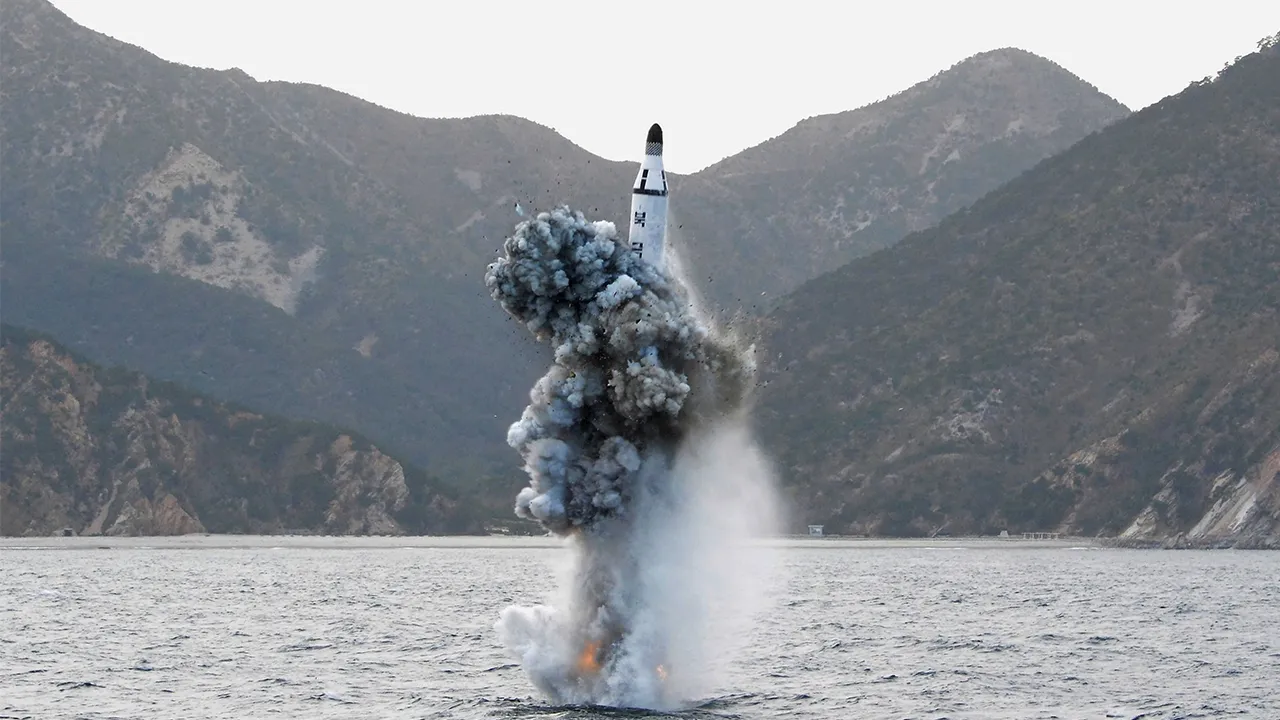
North Korea has reportedly acquired the technological capability to hit North America with a nuclear weapon.
- Level
- High School, Higher Education
What is a simulation?
Simulations offer students the chance to role-play either the U.S. National Security Council or the UN Security Council.
How do I use them?
A simulation comprises two readings (a council guide and the case notes) of roughly 2,500 words each. They also offer detailed guidance for preparing for and running the simulation in the classroom and reflecting on the experience.
Educator Overview
Case Overview
Fictional, set in the present day. The Democratic People’s Republic of Korea (North Korea) has for decades pursued its nuclear ambitions to the dismay of both Western countries and its neighbors in East Asia. It recently announced the successful launch of a satellite from a three-stage rocket, and U.S. and allied intelligence services conclude that North Korea now possesses the reentry technology for an intercontinental ballistic missile that could reach the North American west coast. The director of national intelligence has concluded that the missile launch, combined with North Korea’s ongoing nuclear tests and its mastery of warhead miniaturization technology, means the country is capable of following through on past threats to fire a nuclear-armed missile against the United States. The president has called an emergency meeting of the United Nations Security Council to present this new intelligence and discuss an international response to North Korea’s enhanced capabilities.
Decision Point
U.S. intelligence officials now believe, based on debris recovered from a recent North Korean satellite launch, that North Korea has the technology needed to reach the west coast of North America. The launch came days after Kim walked away from nuclear negotiations with the United States. Kim cited concerns over proposed inspections of its nuclear sites. The U.S. director of national intelligence has concluded that the launch means that the country is now capable of following through on past threats to fire nuclear-armed missiles at the United States. The United States has requested a meeting of the UN Security Council to present this new intelligence and discuss an international response to North Korea’s enhanced capabilities.
Learning Goals
CFR Education extended simulations use a variety of pedagogical tools to create an effective, meaningful, and memorable learning experience for students that builds their global literacy. Students will develop crucial skills such as critical thinking, communication, collaboration, and creativity. Students will complete authentic assessments that feel relevant: instead of five-paragraph essays and book reports, students will write policy memos and participate in a role-play of a meeting of a foreign policy–making body. There are no right or wrong answers in actual policy deliberations, and there are none here, either; students will walk away from this experience with an appreciation for the complexity of policy questions.
In this simulation, students will learn about the UN Security Council, as well as meeting these learning outcomes specific to this simulation:
- Students will understand the history of North Korea’s pursuit of nuclear weapons against the international community’s attempt to stop the proliferation of such weapons.
- Students will consider how the North Korean nuclear threat could undermine international peace and security.
- Students will evaluate the options available to the UN Security Council in response to the North Korean nuclear threat.
Concepts and Issues
Concepts
- Alliances
- Nationalism
- Nuclear nonproliferation
- Sanctions
- Deterrence
- Negotiations
- Rogue states
- Preventive attacks
Issues
- Security and diplomacy in Northeast Asia
- Legacy of the Cold War and the Korean War
- Chinese support of North Korea
- Nuclear-related agreements and institutions
Policy Options
North Korea’s pursuit of a nuclear weapons program is motivated principally by the desire to develop a deterrent against an attack by external forces, particularly the United States or South Korea. North Korea’s threats have been directed primarily toward the United States and its allies. The Kim regime regards the U.S. military presence in South Korea (which hosts nearly 28,000 U.S. troops as of September 2023) as an obstacle to a North Korea–led unification of the peninsula. It also sees the United States as the most dangerous military threat it faces.
The most important priority for the UN Security Council on this matter is eliminating North Korea’s nuclear weapons program. The Security Council is a core part of global efforts to stop the spread, or proliferation, of nuclear weapons. Among other things, it is charged with responding to violations of the NPT. Most frequently, the Security Council acts by imposing sanctions on any country or group that violates the treaty. Since North Korea’s withdrawal from the NPT in 2003, the Security Council has been at the center of international efforts to halt the country’s nuclear development. After Pyongyang’s first nuclear test in 2006, the Security Council unanimously approved a series of sanctions that have grown increasingly severe in response to tests.
North Korea already has the capability to hit South Korea and Japan with nuclear missiles. Advancements in its nuclear technology and missile capabilities could pose a serious security threat not just to the United States but also to its allies. Furthermore, the capabilities could pose a threat to the Asia-Pacific region more broadly. A nuclear attack by North Korea on one of its rivals could destroy cities and kill millions of people, potentially triggering a devastating conflict in the region.
North Korea’s nuclear progress and the failure of international responses could encourage other countries to acquire nuclear weapons. Countries such as Japan and South Korea could face domestic political pressure to respond to acquire nuclear weapons of their own to deter North Korea. Such pressure would be a defeat for global nonproliferation efforts. Likewise, it would make any conflict in Northeast Asia far more destructive.
Any response to North Korea’s nuclear development will need the approval of all five of the Security Council’s veto-wielding permanent members (P5). Although the Security Council has been unanimous in its past condemnations of North Korea’s nuclear endeavors, the diverging interests of the P5, especially of China, Russia, and the United States, could get in the way of any new action. China has offered only a mixed record of supporting and upholding sanctions against North Korea. It values North Korea as a buffer between itself and the thriving capitalist democracy of South Korea. Russia has increasingly seen North Korea as a strategic partner, especially since the war in Ukraine began. Both countries have reasons to oppose harsh penalties against North Korea.
With those concerns in mind, the Security Council has a few options it could pursue in response to the North Korean nuclear threat.
Condemn testing and call for negotiations to resume.
The UN Security Council could adopt a resolution condemning North Korea’s latest missile test. This resolution could also call on it not to test or use missiles or nuclear weapons in the future. This resolution could also outline consequences if North Korea does not comply. Potential consequences include additional sanctions. The Security Council could further call for North Korea to return to negotiations over its nuclear program. In exchange, such negotiations could offer sanctions relief, economic aid, or a formal peace treaty ending the Korean War. Such negotiations could take place between the United States and North Korea alone, under the previous framework of the Six Party Talks, or in a new format. If an agreement is achieved, the Security Council could also call on North Korea to admit outside inspectors to monitor the agreement’s progress.
This is the least ambitious option, but it is the most likely to pass. If successful, this option could reduce the threat of North Korean nuclear missiles and avoid rising tensions or even war. However, this option cannot guarantee any results. North Korea has ignored similar resolutions. Past negotiations have failed or led to broken promises from North Korea. The Security Council risks giving North Korea aid or sanctions relief and receiving nothing in return. At best, failed negotiations would result in no change to the situation. At worst, they could lead to the Kim regime increasing its nuclear development, damage the United Nations’ reputation, and bring the world closer to nuclear conflict.
The Security Council could choose to pursue negotiations first; should they prove unsuccessful, it could then resort to one of two other options.
Adopt new sanctions.
The UN Security Council could adopt a new round of sanctions against North Korea. This could further limit the country’s access to fuel, raw materials, and luxury goods. The Security Council could also call for states to crack down on North Korea’s illegal activities abroad to restrict its access to funds and nuclear materials.
Expanding sanctions would be driven by the assumption that the best path forward is to isolate North Korea until its government collapses or changes. The Security Council has approved sanctions in response to past nuclear tests, but so far these have not stopped North Korea’s nuclear development. Stronger sanctions could finally produce change. However, there is no guarantee that sanctions will have the desired effect. Sanctions have already put North Korea’s economy in a dire situation. Additional pressure on the economy could lead to further worsening conditions for North Koreans rather than any policy change on nuclear weapons. Moreover, sanctions take time to have an effect. During this time, North Korea’s nuclear program would continue to pose a threat.
Authorize preventive military strikes.
The UN Security Council could adopt a resolution calling on North Korea to denuclearize and authorize member states to enforce that resolution by force. This would lead the United States and possibly its other allies to launch a preventive military strike. This strike would be aimed at destroying as many missile and nuclear–related sites and as much equipment as possible. Even if these strikes could not completely eliminate North Korea’s nuclear program, they could set it back for the foreseeable future. Given the current phase of North Korea’s nuclear weapons development, this option would likely require a large-scale military operation to succeed.
This option offers a crucial benefit. It could reduce the threat of North Korea’s missiles and nuclear weapons for years to come. Preventive strikes would also demonstrate a strong international commitment to nonproliferation. They could further send an effective warning to North Korea and others against developing nuclear weapons in the future.
However, China borders North Korea and has signed a security treaty with North Korea. It is unlikely to allow any military action by the United States or its allies. Moreover, a military intervention comes with significant risks. A preventive strike cannot guarantee the destruction of all North Korean nuclear capabilities. A military strike also risks a North Korean retaliation that could escalate and have devastating results. South Korea’s densely populated capital, Seoul, is particularly vulnerable to North Korea’s military because of how close it is to the border with the North. Even limited retaliation by North Korea could lead to many deaths and a high level of destruction in Seoul. Moreover, if North Korea fears losing its nuclear weapons, it could also decide to use them first.
Running the Simulation
CFR Education extended simulations are project-based learning activities. Project-based learning (PBL) leads to better learning outcomes and improves skills, and is more fun than traditional instructional methods. The website that students will navigate throughout the simulation is divided into several parts:
In the UNSC Guide, students will learn about the UN Security Council, the body they will be simulating. Included are details on its history, how it works, who its major players are, and more. There is also a video interview with experts who have served on the body.
In the Case Notes, students dive into the actual situation they will be trying to solve in their simulation. At the beginning is a clear decision point: the question that students will debate during the role-play. This is followed by detailed background material and a discussion of the role that the United Nations plays.
Preparation and Role-Play includes details on the various roles students could take on, guidelines for the draft resolution clauses they will write, as well as an outline of how the discussion will flow during the role-play.
The Wrap-Up is an important part of the project and includes reflection questions and guidelines for reflecting in a class discussion and in a second memorandum. For historical cases, this section also includes a short description of how the decision point was addressed by policymakers in real life.
The simulation also includes Student Resources, which include a reading list to support research, additional directions and exemplars for writing assignments, and other tips students may find helpful.
Tips for Role-Play
Once students have read the simulation and prepared their draft clauses, here is how we recommend structuring the role-play:
| Round | Timing | Objectives | Procedural Notes |
|---|---|---|---|
| One: Public Meeting | 2 to 3 minutes per participant | Receive a five-minute briefing from the secretary-general on the issue to be discussed.Present opening statements.Crystalize the central questions of debate. | During opening statements, the president of the UN Security Council will recognize country representatives in the order in which they request to speak, and no representative may speak again if others have not yet spoken. Following opening statements, country representatives are free to openly debate the statements made, evaluating the various positions on their merits. |
| Two:Informal Meeting | 30 to 60 minutes | Debate each participant’s proposed clauses.Edit, add, or drop proposed clauses and combine them into one or more draft resolutions.Draft a presidential statement using proposed clauses and/or new material if no draft resolution appears acceptable to the group. | The president will recognize country representatives in the order in which they request to speak. Representatives should limit their statements to one minute each, but if time allows the president may permit them to speak longer. The president may also invite any participant to speak as they deem it appropriate. Any participant may motion for a ten- to fifteen-minute break, during which representatives can move freely and work on their draft resolutions individually or in small groups. |
| Three:Public Meeting | 30 to 60 minutes | Hear summaries of any draft resolutions as well as arguments for and against adoption.Vote on draft resolutions in order of submission.Attempt to adopt a presidential statement by consensus if no resolutions are proposed or passed. | The president will call first on the draft resolution’s main author(s) and then on other countries that wish to make arguments for or against the resolution. To be adopted, Security Council resolutions must receive at least nine votes in favor and no dissenting votes (vetoes) from any of the five permanent members. A state may abstain, often to indicate ambivalence or mild disapproval (in contrast to strong opposition). According to the charter, abstentions are mandatory if the state is a party to the dispute in question. Abstentions by permanent members do not count as vetoes; the resolution will pass if it receives the necessary nine votes. |
Tips for the President of the UN Security Council
In Round 1, you will chair a formal session. Make absolutely sure that every country gives their opening statement before any country is allowed to speak a second time. You will also have to use your judgment about when to move into the more informal meeting of Round 2. Give enough time for students to flesh out their positions and to identify potential allies, but do not wait too long—the most productive negotiations happen in informal meetings, so you want to save time for those in Round 2.
In Round 2, you will call on speakers one at a time. The time limits on speeches are a little looser, so pay close attention to make sure everyone is included and no one dominates. Deciding whether to grant a break for negotiations is a matter of balance. Negotiations can be advanced in small-group discussions, but it is also important for the whole body to be updated on what goes on during the breaks. You will want to strike a balance between breaks for negotiating, and informal meeting time for giving updates and rounding up support for resolutions. It is often helpful to set a deadline for the end of Round 2 to encourage negotiators to come to agreements in a timely manner.
In Round 3, completed draft resolutions will be presented, discussed, and voted on. Before starting, make sure you are clear on the order in which the resolutions were submitted and who is sponsoring each one. When it comes time to vote, it will be helpful to remind everyone of the unique voting rules of the Security Council. If none of the resolutions passes, you can allow further debate and attempt to vote again, or you can move on and guide the council through debate on a presidential statement. Use your judgment about which process is more likely to be successful.
Tips for Online Classes
We suggest conducting the role-play in three rounds and that three-round structure is a helpful way to approach chunking the role-play for online learning as well. You can conduct each round synchronously or asynchronously.
In round one, participants present their positions.
- In a synchronous meeting, you can go through opening statements using videoconferencing software, allowing for live clarifying questions.
- However, this is probably the easiest round to conduct asynchronously. You could disseminate positions in writing by having participants share their position memos or write a summary for the purpose of the role-play. You could also have participants record a video of themselves delivering their opening statement and disseminate it for all to watch.
In round two, participants debate the various policy options.
- In a synchronous setting, you can simply run a full-class discussion for round two. If you need more structure or want to prod reticent participants, consider starting by randomly assigning students to breakout rooms, assigning each breakout room one policy option. After working through pros and cons, representatives from each breakout room can share out to kick off the general discussion.
- In an asynchronous setting, consider a discussion forum, with a thread for each policy option.
In round three, debate begins to coalesce around the draft resolutions that have substantial support.
- This round can be approached similarly to round two. In this round, organize breakout rooms or threads around each draft resolution.
Flashpoints
To add spice or challenge to the role-play, partway through the discussion throw in one of the following flashpoints—additional hypothetical developments that fit within the case’s existing decision point—or create your own.
- North Korea conducts another missile test, firing a medium-range missile over the Sea of Japan. Unlike previous tests in which missile debris fell in waters near Japan, this time debris fall on the northern part of the main Japanese island of Honshu. Though the debris hit a rural area, some property damage and injuries—possibly fatal—are reported. Japan’s prime minister immediately declares on television that “Japan will take strong action, together with our allies, to combat the North Korean threat.”
- Following a state visit by Kim Jong-un to the northern Chinese city of Shenyang, the Chinese government announces that China plans to strengthen its economic partnership with North Korea. China, which accounts for 90 percent of North Korea’s foreign trade, will increase the flow of both food and raw materials that could be used to develop North Korea’s missile program despite UN sanctions. Analysis from the U.S. intelligence community, as well as the intelligence services of South Korea and Japan, indicates that the Chinese government is aiming to demonstrate that it will not fundamentally change its relationship with North Korea despite its concerns about Kim’s behavior.
After introducing a flashpoint, you might want to help students refocus their discussion by considering critical questions such as these:
- Who is affected by this event or development, and how?
- Is there any uncertainty about what has taken place? How credible is the report?
- Does this event or development affect the feasibility of any policy options? If so, how?
- Does this event or development affect the desirability of any policy options? If so, how?
UNSC Assessment
Case Assessment
- Why is North Korea’s nuclear and missile development considered a threat to international peace and security?
- What have countries and organizations such as the United Nations done in the past to stop or limit North Korea’s development of nuclear facilities, nuclear weapons, and missiles?
- What interests and goals motivate North Korean policies, particularly in its pursuit of a nuclear program?
- How do historical tensions, specifically those related to the Cold War and the Korean War, affect the dispute over North Korea’s nuclear and missile development today?
Writing Assignments — Overview
- What are the six organs of the United Nations system? What are their responsibilities?
- How is the UN Security Council structured? How are Security Council decisions made?
- What are the two categories of tools that the UN Security Council has at its disposal to implement its decisions, and what are the range of specific tools available in each?
- What is the difference between a Chapter VI peacekeeping mission and a Chapter VII peace enforcement mission?
- What are the main challenges and limitations that the UN Security Council faces as it carries out its work? What solutions have been proposed to address these challenges?
Each CFR Education extended simulation involves writing assignments that help students think through policy options and reflect on their learning experience.
In UNSC cases, there are two types of writing assignments.
- Before the role-play, everyone writes draft clauses for a Security Council resolution.
- As part of the wrap-up, everyone writes a written reflection.
Simulations have instructions for written assignments (found under the Student Facing Simulation), rubrics, and samples for each of these writing exercises.
Samples:
Below are sample rubrics for your use in assessing the writing students will do as part of this extended simulation.
These are single-point rubrics. Jennifer Gonzalez, who writes the blog Cult of Pedagogy, has a great explainer, but the bottom line is that single-point rubrics are relatively easy for students to digest but still have all the advantages of giving structure to instructors’ feedback.
UN Security Council Draft Clauses Rubric
| CONCERNS What needs improvement | CRITERIA What is expected | ADVANCED What is excellent |
| Purpose - There are two to three preambular and three to four operative clauses - Clauses are properly formatted and styled | ||
| Preambular clauses - Accurately identify relevant prior agreements and existing organizations | ||
| Operative clauses - Are practical and within the UN Security Council’s powers - Address who - Address what - Address when - Address where - Address why - Address how - Address funding |
UN Security Council Written Reflection Rubric
| CONCERNS What needs improvement | CRITERIA What is expected | ADVANCED What is excellent |
| Subject paragraph - Is brief - Places the issue in the larger context of U.S. foreign policy - Clearly states whether the writer agrees or disagrees with the president’s decision | ||
| Options and Analysis paragraph - Discusses each option that came up during the role-play in discrete paragraphs - Weighs the advantages and disadvantages of each option - If options from the position memo are discussed, those options contain additional analysis | ||
| Recommendation and Justification paragraph - Makes a clear recommendation based on the writer’s personal position - Supports the recommendation effectively | ||
| Reflection paragraph or paragraphs - Reflects on and critiques the Security Council’s decision - Is written from a personal point of view, not that of the assigned role |
Downloadable rubrics are available here: