Why does this page look this way?
It appears that you are using either an older, classic Web browser or a hand-held device that allows you to view our content but may not work with every feature of our site. If you are using an older browser, please upgrade for the best experience.
Navigation
home > by publication type > op-eds > America's Destiny Is to Police the World
| Author: | Max Boot, Jeane J. Kirkpatrick Senior Fellow for National Security Studies |
|---|
February 19, 2003
Financial Times
The intransigence of France, China and Russia last week makes it unlikely that the United Nations Security Council will pass another resolution authorising a war in Iraq. But even if it did, everyone realises this would be only a fig leaf for US-led action. If the US does not step forward, nothing will happen - not even weapons inspections. In other words, America is once again forced to play Globocop.
This stirs up opposition on both the left and right, at home and abroad. Why should America take on the thankless task of policing the globe, critics wonder? To answer that question, start by asking, does the world need a constable? That is like asking whether London or New York needs a police force. As long as evil exists, someone will have to protect peaceful people from predators. The international system is no different in this regard from your own neighbourhood, except that predators abroad are far more dangerous than ordinary robbers, rapists and murderers. They are, if given half a chance, mass robbers, mass rapists and mass murderers.
There are, to be sure, lots of international laws on the books prohibiting genocide, land mines, biological weapons and other nasty things. But without enforcement mechanisms, they are as meaningless as the Kellogg-Briand Pact of 1928, which outlawed war as an instrument of national policy.
The hope of idealistic liberals for more than a century has been that some international organisation would punish the wicked. But the League of Nations was a dismal failure, and the UN is not much better. It is hard to take seriously a body whose human rights commission is chaired by Libya and whose disarmament commission will soon be chaired by Iraq.
The UN provides a useful forum for palaver, but as an effective police force it is a joke, as shown by its failure to stop bloodlettings in Bosnia, Rwanda and elsewhere. It is almost impossible to get a consensus among the UN's member states, even when it comes to a threat as well documented as that posed by Saddam Hussein.
The best multilateral alternative is probably Nato. Unlike the UN, Nato has the advantage of being composed exclusively of democracies that share a common heritage and, presumably, common interests (though the French, Belgians and Germans seem to have forgotten this for the time being). But even before the current contretemps over Turkey, it was already obvious that the alliance is too large and unwieldy to take effective military action. As Kosovo showed, targeting by committee does not work very well. The European Union is even less effective, since it can neither field an effective military force nor agree on a common foreign policy.
So who does that leave to be the world's policeman? Belgium? Bolivia? Burkina Faso? Bangladesh? The answer is pretty obvious. It is the country with the most vibrant economy, the most fervent devotion to liberty and the most powerful military. In the 19th century Britain battled the "enemies of all mankind", such as slave traders and pirates, and kept the world's seas open to free trade. Today the only nation capable of playing an equivalent role is the US. Allies will be needed but America is, as Madeleine Albright said, "the indispensable nation".
Sceptics will reply that America has an isolationist past and no desire to play Globocop. Congressman Jimmy Duncan, a Tennessee Republican, complained recently: "It is a traditional conservative position not to want the United States to be the policeman of the world."
But rumours of American isolationism are much exaggerated. Since the earliest days of the Republic, American traders, missionaries and soldiers have penetrated the farthest corners of the world. America even has a long history of military action abroad. In 1904, President Theodore Roosevelt declared: "Chronic wrongdoing, or an impotence which results in a general loosening of the ties of civilised society, may ultimately require intervention by some civilised nation, and in the western hemisphere the adherence of the United States to the Monroe Doctrine may force the United States, however reluctantly, in flagrant cases of such wrongdoing or impotence, to the exercise of an international police power."
When Roosevelt wrote those words, the western hemisphere was the only place where the US exercised military hegemony. In the rest of the world, America could count on the Royal Navy to defend "civilised society". Today, America exercises almost as much power everywhere around the world as it once had only in the Caribbean. In fact, it has more power in both relative and absolute terms than any other state in history. Thus, by Roosevelt's logic, the US is obliged to stop "chronic wrongdoing", for the simple reason that nobody else will do the job. That is what the US has been doing for the past decade in places like Bosnia, Kosovo, Afghanistan, and now Iraq.
Unfortunately a cop's work is never done. Even after Mr Hussein is gone, other tyrannies, such as North Korea and Iran, will continue to threaten world peace. Taking on all of them is a big commitment, but as Kipling warned America, "Ye dare not stoop to less."
The writer is Olin senior fellow at the Council on Foreign Relations and author of "The Savage Wars of Peace: Small Wars and the Rise of American Power."
To order Task Force reports, Council Special Reports, and Critical Policy Choices, please call, fax, or order online from our distributor, the Brookings Institution Press: phone +1.800.537.5487, fax +1.410.516.6998.
For information on other reports that are not for sale, or for general publications information, please call +1.212.434.9516 or email publications@cfr.org.
Start-Up Nation addresses the trillion-dollar question: How is it that Israel—a country of 7.1 million, only sixty years old, surrounded by enemies— produces more start-up companies than large, peaceful, and stable nations like Japan, China, India, Korea, Canada, and the UK? With the insights of geopolitical experts and investors, the authors examine this nation’s adversity-driven culture to answer this question and offer prescriptions for a global economy on the rebound.
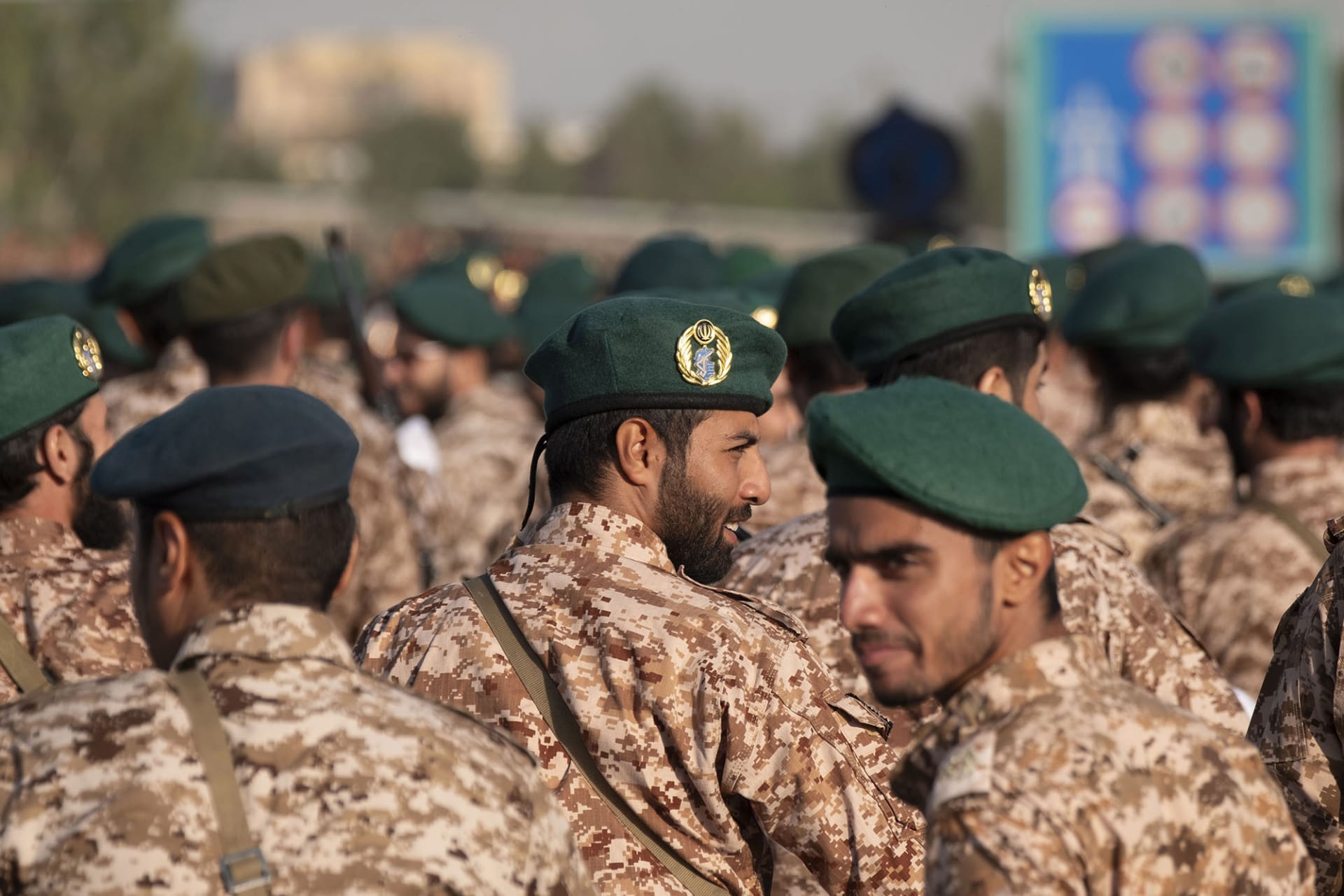
In Forces of Fortune, Vali Nasr presents a paradigm-changing revelation that will transform the understanding of the Muslim world at large. He reveals that there is a vital but unseen rising force in the Islamic world—a new business-minded middle class—that is building a vibrant new Muslim world economy and that holds the key to winning the cold war against Iran and extremists.
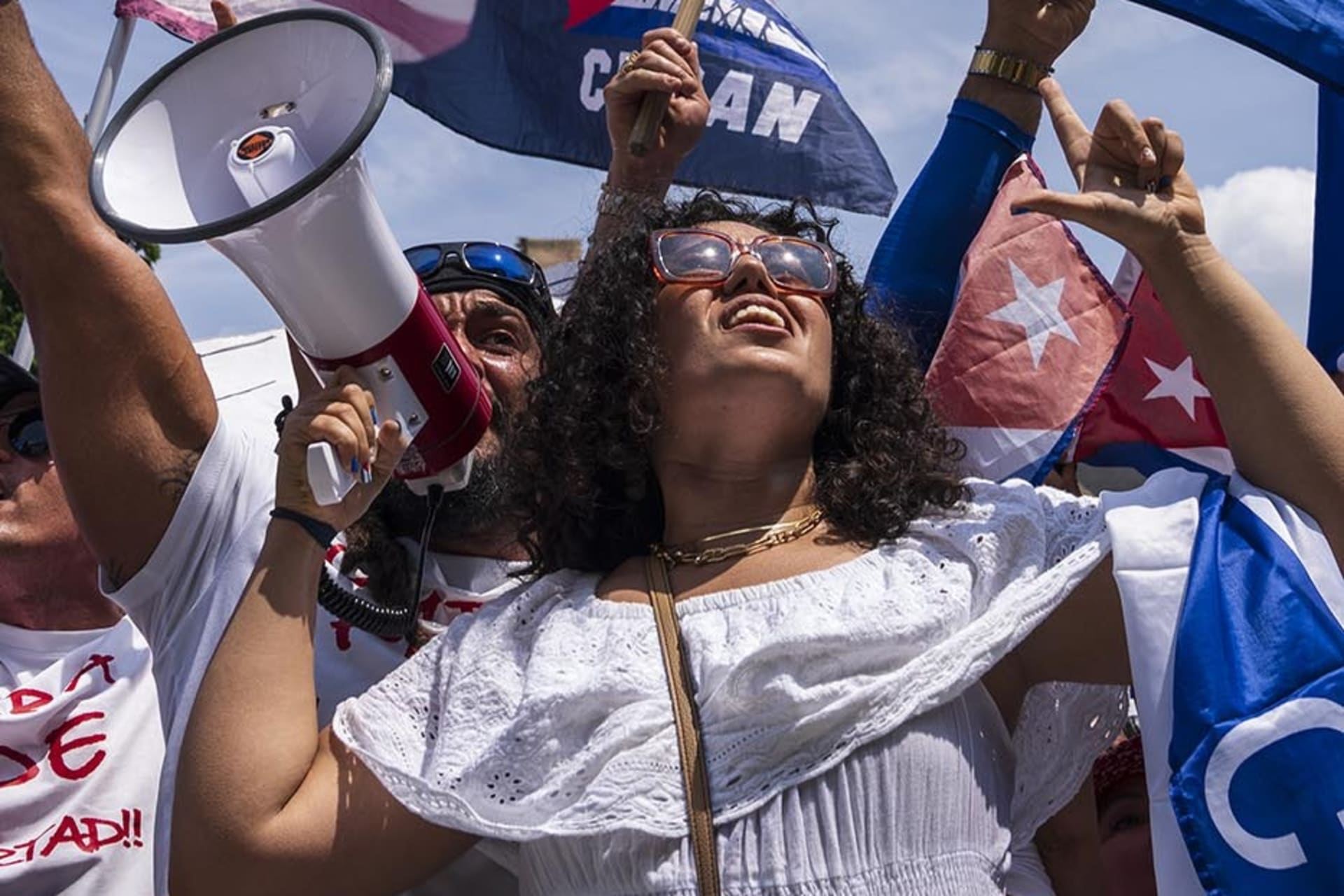
In Cuba: What Everyone Needs to Know, Julia E. Sweig presents a remarkably accessible portrait of Cuba's unique place on the world stage over the past fifty years, including its internal politics, its often fraught relationship with the United States, and its shifting relationship with the global community.
Complete list of CFR Books
Browse Content By Region IssuePublication TypeThe Think TankFor The MediaFor Educators About CFR
Copyright 2009 by the Council on Foreign Relations. All Rights Reserved.