Building a Resilient Tomorrow
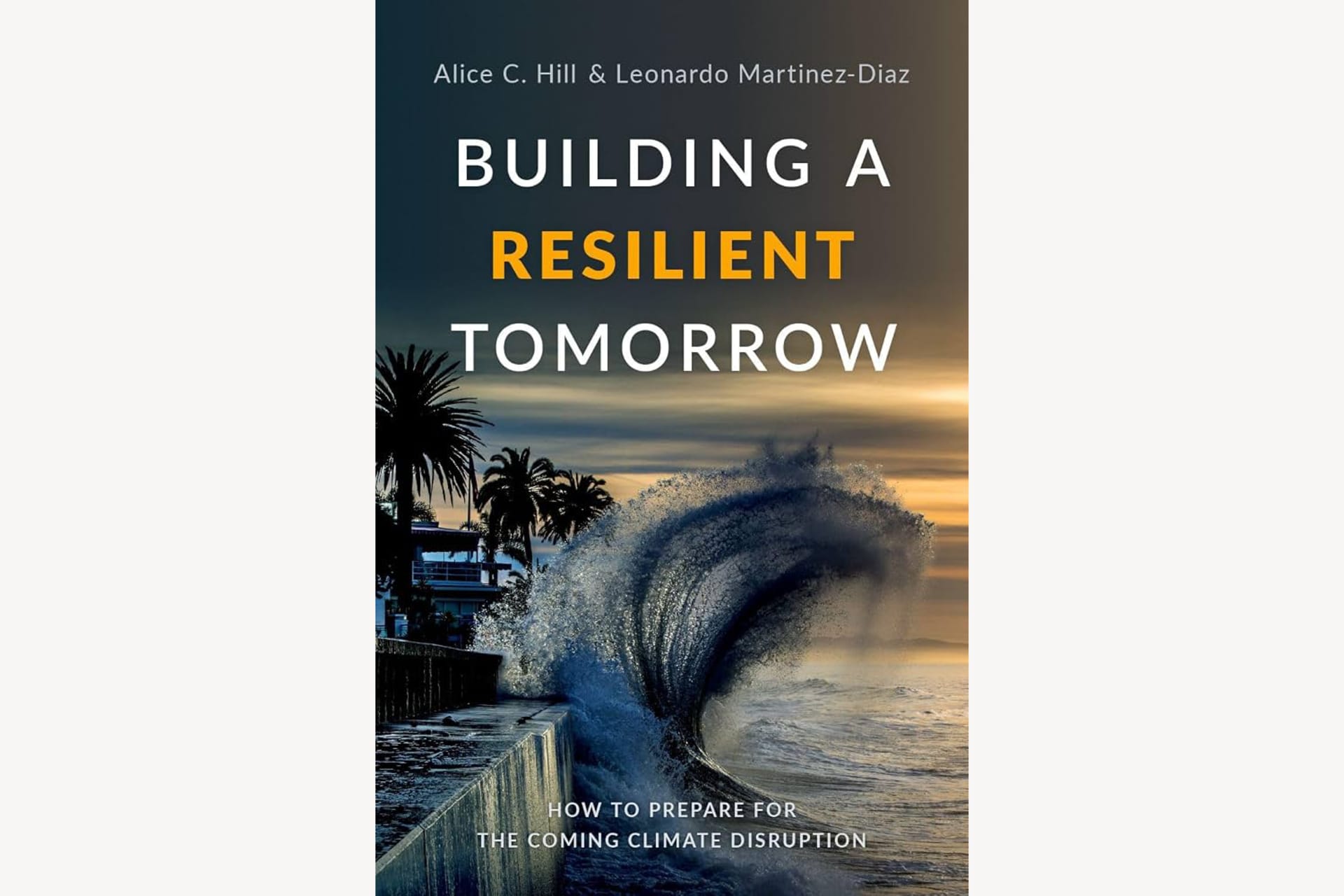
Building a Resilient Tomorrow draws on international and national examples, some revealed for the first time, to provide an interdisciplinary narrative covering a range of climate resilience solutions.
SUMMARY
This book examines ways that communities can reduce, absorb, and recover from climate change impacts. It offers behind-the-scenes stories from the authors’ experiences working at the highest levels of the U.S. government. It also presents real-world analysis of what is and isn’t likely to work in the policymaking realm as well as concrete, actionable policy recommendations. Drawing on international and national examples and stories, the book offers an interdisciplinary narrative covering a range of climate resilience solutions.
The book examines systems that can drive resilience including the rules and practices that govern how and where we build, the courts, and the financial system. Turning to the tools that leaders in business and government can deploy to build resilience, it delves into money, climate data and information, and improved approaches to decision-making. The hardest challenges that climate change will hurl at us—emerging threats to human health, increasing economic and social inequality, unprecedented levels of migration, and increased risks to geopolitical stability and national security—present lessons to better prepare for associated risks and to strengthen climate resilience.
The book is suitable for high-school seniors and undergraduate and graduate students in the disciplines below:
- Architecture, design, and planning
- Business administration (Management, Governance, Risk management)
- Civil engineering
- Environmental studies
- Medicine and public health
- Social Sciences
- Economics and finance
- Geography
- Law
- Politics / Political Science
- International relations
- Political economy
- Public administration
- Public policy
DISCUSSION QUESTIONS
Chapter 1
- What does the term “resilience” mean as applied to climate change?
- Why is the term important in addressing climate change?
- What is its relationship to climate mitigation (cutting greenhouse gas emissions)?
Chapter 2
- What exactly is a “no-more” moment and how does it apply to the Netherlands and Florida?
- Why has it been difficult in the past to build resilience in the absence of “no more” moments?
- How can we overcome those barriers?
Chapter 3
- Why are markets important to promoting resilience at a system-wide level?
- What is preventing stock, bond, real estate, and insurance markets from reflecting climate risk?
- What market transformations would better address climate resilience?
Chapter 4
- What are “climate bailouts,” and why are they a threat to a country’s fiscal health?
- What are traditional ways governments pay for resilience investments?
- What are innovative ways to raise funding for resilience? Why are these methods considered untraditional?
Chapter 5
- What does “climate data revolution” refer to?
- What are ways that climate scientists and researchers can better connect data and instigate its use for policymakers?
- Who should provide weather and climate data, and what are the associated costs? Explain your answer.
Chapter 6
- How are availability bias, optimism bias, and loss aversion bias obstacles to building resilience against climate change?
- How can “nudging” techniques help promote climate resilience?
- What are the limitations of “nudging” techniques?
Chapter 7
- What threats to human health will climate change bring?
- What can the Zika virus tell us about health threats?
- How can the U.S. health care system better identify, cope, and respond to future risks?
Chapter 8
- How will climate change impacts affect poor and vulnerable communities?
- What role do savings, insurance, and mobility have in ensuring financial resiliency toward climate impacts?
- What concrete steps can governments take to ensure that resilience solutions are inclusive and do not exacerbate inequality?
Chapter 9
- What are drawbacks to the United States’ buyout approach?
- What are “receiver communities,” and why is it important to invest in them?
- How can we create fruitful discussions of managed retreat in ways more likely to be well received by the public?
Chapter 10
- How are climate change impacts jeopardizing U.S. military readiness?
- What national security threats are emerging as a result of climate change?
- What steps can help U.S. policymakers take to make climate-informed decisions based on the best scientific evidence?
Related Articles
Sovereignty in a Global World Lesson Plan
Lesson Plans

What Is Water Scarcity?
Readings