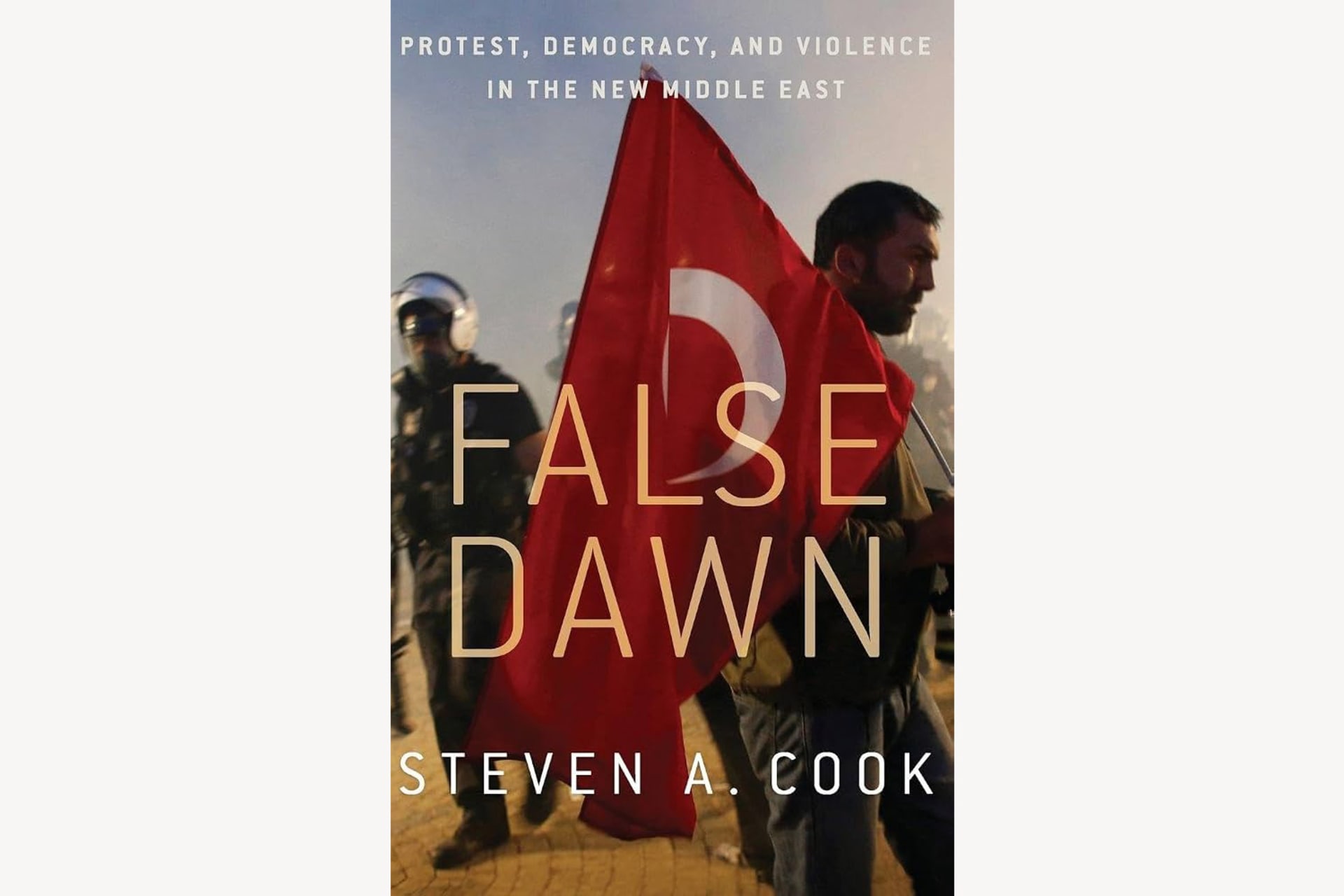
False Dawn
In False Dawn, Steven A. Cook examines why Egypt, Libya, Tunisia, and Turkey did not transition to democracy, explaining how and why Middle East uprisings didn’t succeed.
SUMMARY
Nearly a decade after Arabs across the Middle East poured into the streets to demand change, hope for democracy has disappeared in a maelstrom of violence and renewed state repression. In False Dawn, noted Middle East expert Steven A. Cook examines events across the region from the initial uprising in Tunisia to the failed coup in Turkey to explain why Middle Eastern countries did not make transitions to democracy. Despite appearances, there were no true revolutions in the Middle East eight years ago: none of the affected societies underwent social revolutions, and the old structures of power weren’t eliminated. Even purported successes like Tunisia still face significant barriers to democracy because of the continued strength of old regime players. Libya, the state that came closest to revolution, has fragmented into chaos, and Turkey’s president, Recep Tayyip Erdogan, has used the repressive institutions he promised to change to undermine his opponents and reinforce his personal political power.
After taking stock of how and why the uprisings failed to produce lasting change, Dr. Cook considers the role of the United States in the region. What Washington cannot do, he argues, is shape the politics of the Middle East going forward. While many in policymaking believe that the United States must “get the Middle East right,” American influence is quite limited; the future of the region lies in the hands of the people who live there.
This book is suitable for the following undergraduate and graduate courses:
- International Relations
- Middle East Politics
- U.S. Foreign Policy
DISCUSSION QUESTIONS
For undergraduate or graduate courses on International Relations:
- What role can international institutions play in encouraging democratic transitions?
- Discuss how each major paradigm of IR theory (Realism, Constructivism, Liberalism) views the Arab Spring.
- Why or why not is it surprising that intra- and inter-state conflict has increased in the Middle East since the Arab uprisings?
For undergraduate or graduate courses on Middle East Politics:
- What is the state of democracy in the Middle East today?
- What role can external actors such as foreign governments, NGOs, UN, IMF or the World Bank play in encouraging democracy in the Middle East?
- Could the Arab Spring have succeeded today? Have there been lasting elements of success in any of the four countries discussed in False Dawn?
For undergraduate or graduate courses on U.S. Foreign Policy:
- Does the United States have an obligation to promote democracy abroad?
- Is the promotion of democracy a national interest of the United States?
- Through what methods does the United States advance democracy in other countries, and in what instances has this been done?
Related Articles

Industrialization on Trial Lesson Plan
Lesson Plans