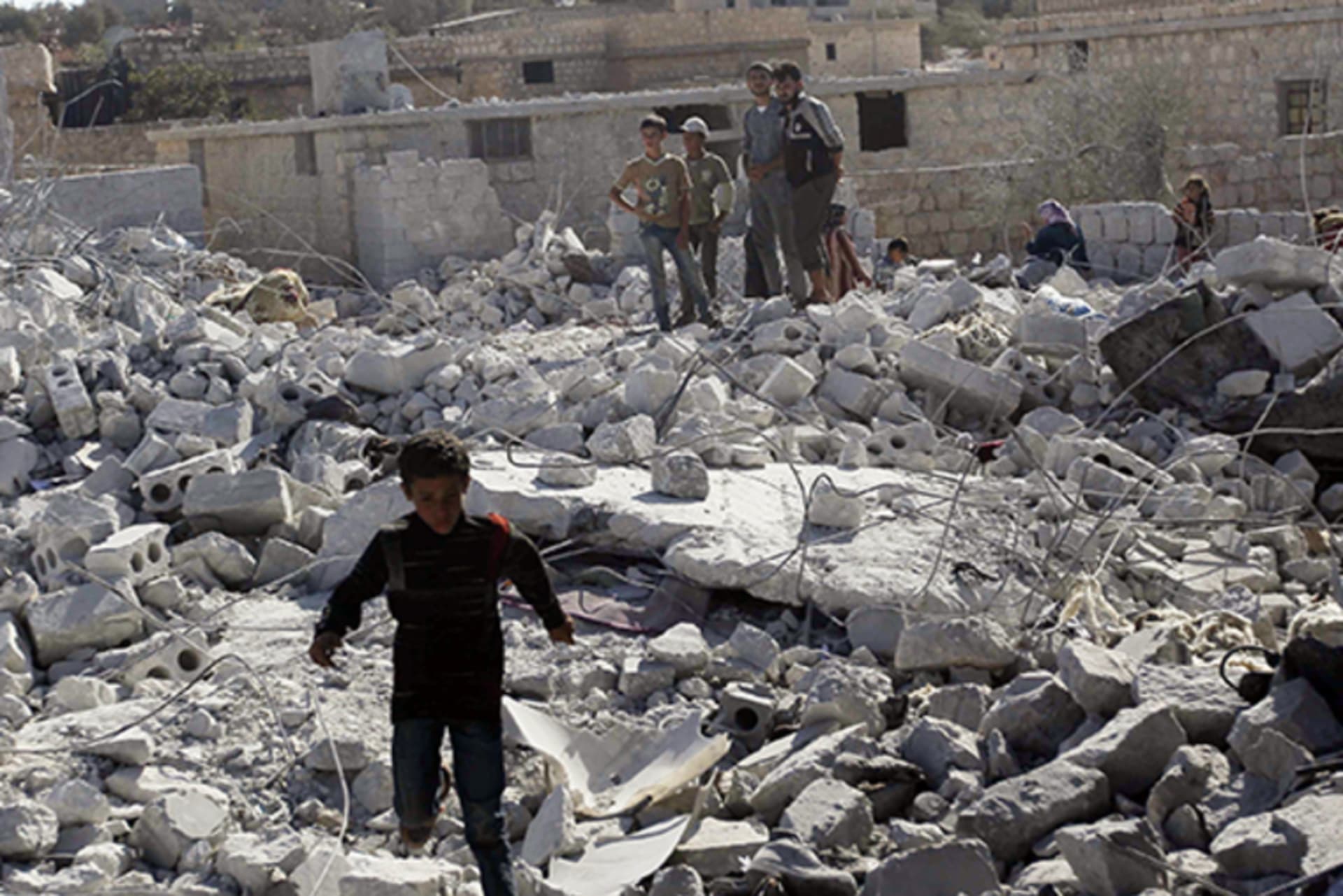
A Great Place to Have a War
In his book A Great Place to Have a War, Joshua Kurlantzick tells the story of the CIA’s covert war in Laos during the Vietnam War. He examines how the country became, surprisingly, a U.S. policy priority, and analyzes why and how the CIA was able to build the war into one of the biggest covert operations in U.S. history. He further uses the Laos war as a prism to examine the CIA’s operations in the global war on terror today.

SUMMARY
Between 1961 and 1973, the Central Intelligence Agency (CIA) carried out one its biggest covert operations in one of Southeast Asia’s smallest states. In A Great Place to Have a War: America in Laos and the Birth of a Military CIA, Council on Foreign Relations Senior Fellow for Southeast Asia Joshua Kurlantzick tells the story of Operation Momentum, the CIA’s covert plan, and four individuals who were instrumental in creating an army of ethnic Hmong to fight communist forces in Laos . The battle wound up devastating the country, leaving Laos one of the most bombarded places on earth.
The book also recounts how the war in Laos transformed the CIA from an organization primarily devoted to intelligence gathering to one increasingly focused on paramilitary operations. Kurlantzick notes that Laos was a transformative experience for the agency, “ … afterward, its leadership would see paramilitary operations as an essential part of the agency’s mission, and many other U.S. policymakers would come to accept that the CIA was now as much a part of waging war as the traditional branches of the armed forces.”
After the Vietnam War, the CIA reduced its paramilitary branch, but continued to be involved in paramilitary operations. In the post-9/11 global war on terrorism era, the agency has again become primarily focused on low-intensity conflict rather than spying. A Great Place to Have a War poses questions for policymakers today about the proper role of the Central Intelligence Agency in U.S. foreign policy–making. It also touches on other questions such as whether a proxy war fought by local armies working with CIA operatives can be curtailed, and what happens to the entire idea of war when an attack can be launched remotely, with minimal U.S. manpower on the ground at sites of battles.
This book is suitable for undergraduate courses on:
- International Relations
- Southeast Asia Studies
- Intelligence Studies/Intelligence History
DISCUSSION QUESTIONS
For undergraduate courses on International Relations/Southeast Asian Studies:
- How have the events of the Laos war determined the course of Laos’s political development up to the current day? Compare and contrast the political development in Laos with the political development in Vietnam over the same period.
- Are there similarities in how U.S. policymakers viewed Laos in the Vietnam War and how they view small but strategically important states in the global war on terror today?
- Are there parallels in how the United States currently treats local allies in the global war on terror to the treatment of the Hmong, the key U.S. ally in Laos? What, if any, are the policy similarities?
For undergraduate courses on Intelligence Studies/Intelligence History:
- What are the differences between how the United States developed its policies toward Laos in the early- and mid-1960s, and how policy strategies are conceived today for the global war on terror?
- In light of the U.S. experience in Laos, comment on how much the CIA should be given control of paramilitary operations in conflict zone.
- If the CIA is given paramilitary powers, what kind of oversight should it have, and who should provide it? What is the ideal relationship between the CIA and U.S. military Special Operations Forces in the current war on terror?
- What lessons does the Laos war hold for how U.S. policymakers today should handle situations in which Washington enlists local proxy armies, and has to manage expectations of a prolonged U.S. presence in countries where U.S. forces and proxy armies are fighting together?
ESSAY QUESTIONS
For undergraduate courses on International Relations/Southeast Asian Studies:
- After the end of the Vietnam War, what does the refugee experience of the Hmong coming to the United States tell us about refugee management? Specifically, how could refugee inflows be better managed for those migrating from conflict zones today?
- Compare and contrast the historical and current U.S. policies toward Laos with U.S. policies toward Vietnam. Why have these two bilateral relationships diverged in recent years, with Vietnam becoming one of the United States’ closest strategic partners in Southeast Asia, while relations between the United States and Laos remain limited?
For undergraduate courses on Intelligence Studies/Intelligence History:
- How did the Laos battle go from a small-scale operation in the early 1960s, to one of the biggest paramilitary and bombing operations ever? Offer insights as to how policy was made in Laos during this time in history, and weigh the pros and cons of how these policies were developed. What can U.S. policymakers take away from the Laos experience about U.S. operations in the war on terror?
- What lessons can be drawn from the United States’ eventual loss in the Vietnam War, and the failure of U.S. allies in Laos to maintain control of the country militarily and politically? In what ways was the Laos operation an intelligence and/or military failure, and in what ways might it have been considered a political failure?
- What is the appropriate role of Congress in overseeing U.S. operations in the global war on terror? What tools is Congress utilizing or underutilizing in such monitoring?
- Is there a policy that the United States could have pursued in Laos during the Vietnam War era that would have allowed U.S. allies to maintain popular support as well as triumph militarily and politically? Compare policies enacted in Laos to what occurred in the Philippines, with U.S. support, a decade prior.
Related Articles
Industrialization on Trial Lesson Plan
Lesson Plans