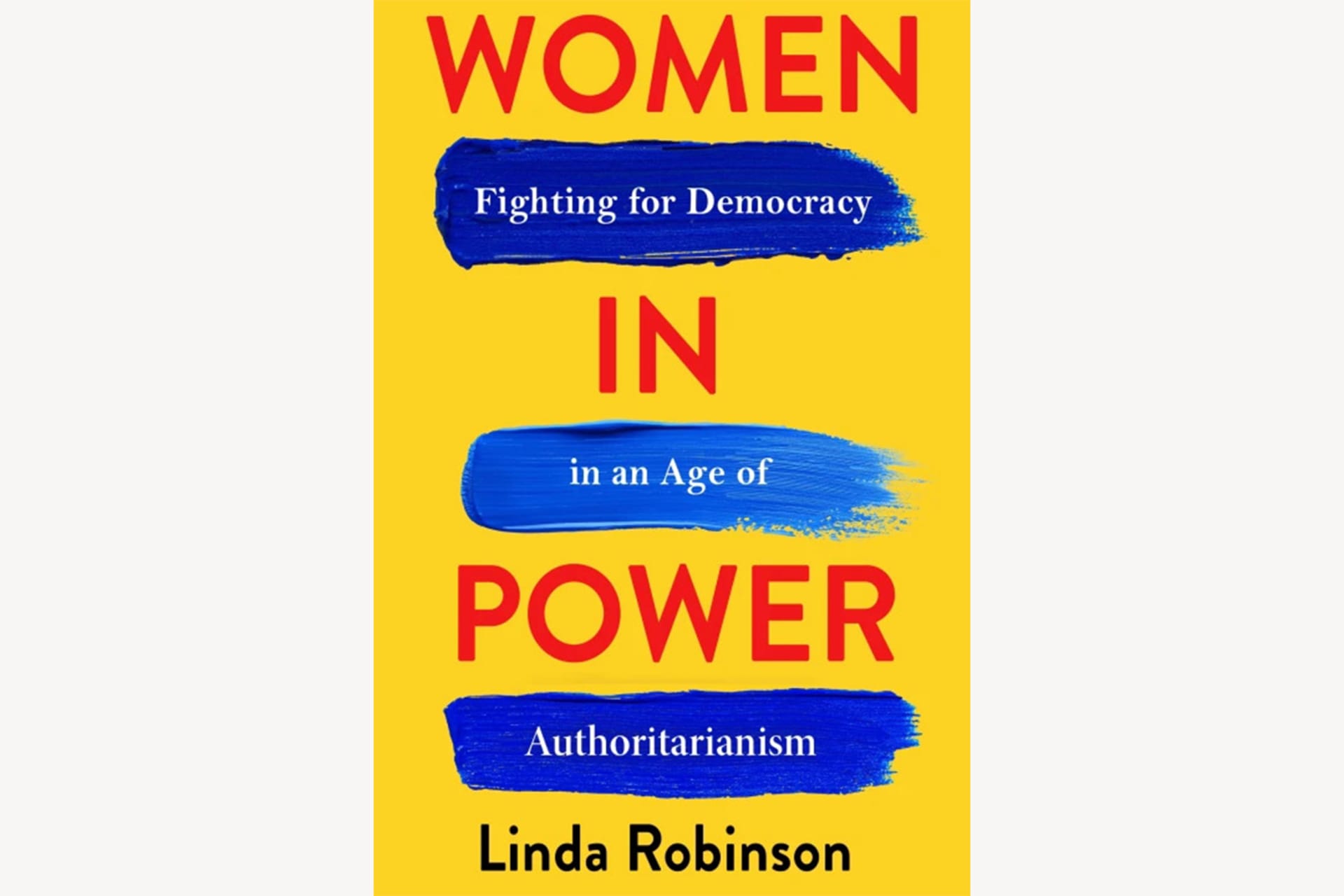
Women in Power: Fighting for Democracy in an Age of Authoritarianism
Women in Power: Fighting for Democracy in an Age of Authoritarianism explores the connections between the current wave of democratic backsliding and the stalling of women’s political leadership after decades of steady gains. Despite the challenging headwinds, many women who have been elected as presidents and prime ministers have forged successful policies to foster resilience at home and fend off aggression from abroad. Many have also championed international reforms to improve global governance, access to finance, and other systemic solutions. Their track records and governing formulas provide valuable lessons for other aspiring leaders and show that women are equally capable of serving at the helm of government.
By experts and staff
- Published
SUMMARY
Women in Power: Fighting for Democracy in an Age of Authoritarianism explains how the global democratic crisis is entwined with the backlash against women in politics—and how women leaders are fighting back against misogynistic authoritarianism and weaponized digital attacks to create more resilient democracies.
Through exclusive interviews, Linda Robinson tells the powerful stories of the women on the frontlines of the battle between democracy and authoritarianism. Analysis of examples from around the world shows how these remarkable leaders have confronted existential threats by strengthening their countries, expanding gender equality, and promoting policies that benefit all. Tsai Ing-wen crafted a strategy to defend Taiwan from Chinese aggression while advancing social reforms. Estonia’s Kaja Kallas and Moldova’s Maia Sandu fought Russian hybrid warfare by pursuing European integration. Balkan leaders Vjosa Osmani and Nataša Pirc Musar bolstered their democracies against Serbian and Russian destabilization and internal strife. Mia Mottley of Barbados became a global champion for climate justice, following the successful rescue of her country from the twin challenges of mounting debt and climate damage. Robinson analyzes the hard-won lessons of these and other recent leaders—including New Zealand’s Jacinda Ardern, Finland’s Sanna Marin, and Sigrid Kaag of the Netherlands. This book provides a set of governing formulas and systemic reforms to shore up democracy for countries—including the United States—facing existential threats.
This book is suitable for undergraduate and graduate courses in the following disciplines:
- Political Science
- Comparative Politics
- International Relations
- National Security
- Peace and Conflict Studies / Conflict Resolution
- Feminist, Women’s, Gender, and Sexuality Studies
MAIN TAKEAWAYS
- Recent women leaders have developed successful playbooks for addressing authoritarianism, hybrid warfare, and domestic polarization.
- Political leaders globally can learn from these examples.
- Women leaders face new headwinds today related to democratic erosion and rising authoritarianism.
- Systemic reforms of global governance, digital technology, and electoral representation broaden political participation including that of women.
DISCUSSION QUESTIONS
For undergraduate and graduate courses in Political Science/Comparative Politics/ International Relations:
- How are the domestic and foreign policies of the leaders in the case studies combined to respond to external threats and internal vulnerabilities? What are the similarities and differences in each of these cases? For example, compare how former Taiwanese President Tsai Ing-wen combatted Chinese aggression to how Moldovan President Maia Sandu responded to Russian interference.
- What are the factors and conditions that contributed to women leaders rising to leadership positions? How did each leader overcome doubts about their ability to serve as commander in chief and respond to attacks from adversaries to prevent their election?
- What practices did women leaders in this book employ to build domestic and international coalitions? What negotiating tactics and skills did they draw on, for example those used by Prime Minister Mia Mottley to pursue reform through her Bridgetown Initiative?
- How are the barriers to women’s leadership globalized across geographic boundaries? What social movements and narratives are instrumental in deterring and delegitimizing women as political leaders? How is technology employed in the service of this political marginalization?
For undergraduate and graduate courses in Conflict Resolution/National Security:
- How do leaders in this book respond to attacks on gender norms and social cohesion? Draw on the cases from Vjosa Osmani of Kosovo and Nataša Pirc Musar of Slovenia, for example, of efforts to reach across political and social divides.
- What is the relationship between rising authoritarianism and stalling women’s leadership? How is this trend represented in each case analyzed in the book?
- How have emerging technologies created new threats for leaders to address when managing domestic and national security? What are some examples of these threats and how could they continue to grow in the future?
- How do these leaders succeed in resolving conflicts domestically and internationally? For example, look at how Kaja Kallas has approached national security concerns against Russia from her role as former Estonian prime minister to her current position as EU diplomat.
For undergraduate and graduate courses in Feminist, Women’s, Gender, and Sexuality Studies:
- How do the women assessed in this book advance gender equality without catalyzing a backlash? What governing measures do they pursue to avoid creating winners and losers and to demonstrate the social benefits of gender equality? What is the relationship between women’s rights and democracy? How do authoritarian regimes, such as Russia and China, weaponize gender equality?
- What stereotypes about leaders and qualities that a leader should have are directly and indirectly broken down by the women in this book?
- How do emerging technologies exacerbate and even create abusive and threatening effects for women seeking political leadership?
- What factors encourage social norms to evolve to better support women’s political leadership?
ESSAY QUESTIONS
For undergraduate and graduate courses in Political Science/Comparative Politics/ International Relations:
- What other recent cases demonstrate women’s competence in managing foreign policy and national security crises? What counterexamples exist and how might these relative successes and failures be explained?
- Given the rapid advance of artificial intelligence, what proposals are most promising to support development of safe, human-centered technology, and what constituencies are mobilizing behind legislative and policy action?
For undergraduate and graduate courses in Feminist, Women’s, Gender, and Sexuality Studies:
- What are the most productive proposals for reducing hostility to women and gender equality in a time of increased polarization and zero-sum argumentation?
FURTHER PROJECTS
- Draft a policy brief with recommendations for policymakers to take to manage and resolve a new global conflict or issue that is not included in the book. Draw on lessons that the women leaders provide in their respective case studies.
SUPPLEMENTARY MATERIALS
“Freedom in the World 2026,” Freedom House
Democracy Report 2026: “Unraveling The Democratic Era?,” V-DEM.
Inter-Parliamentary Union and UN Women, “Women in Politics: 2026,” 2026.
“Global Gender Gap Report 2025,” World Economic Forum, June 11, 2025.
Agostina Bergia; Ashley Weinbergm, “When the public turns hostile: Political violence against parliamentarians,” Inter-Parliamentary Union, 2026.
“2023 Gender Social Norms Index (GSNI),” UNDP (United Nations Development Programme), 2023.
Sanna Marin, Hope in Action: A Memoir About the Courage to Lead (Scribner, 2024).
Jacinda Ardern, A Different Kind of Power: A Memoir (New York: Crown, 2026).