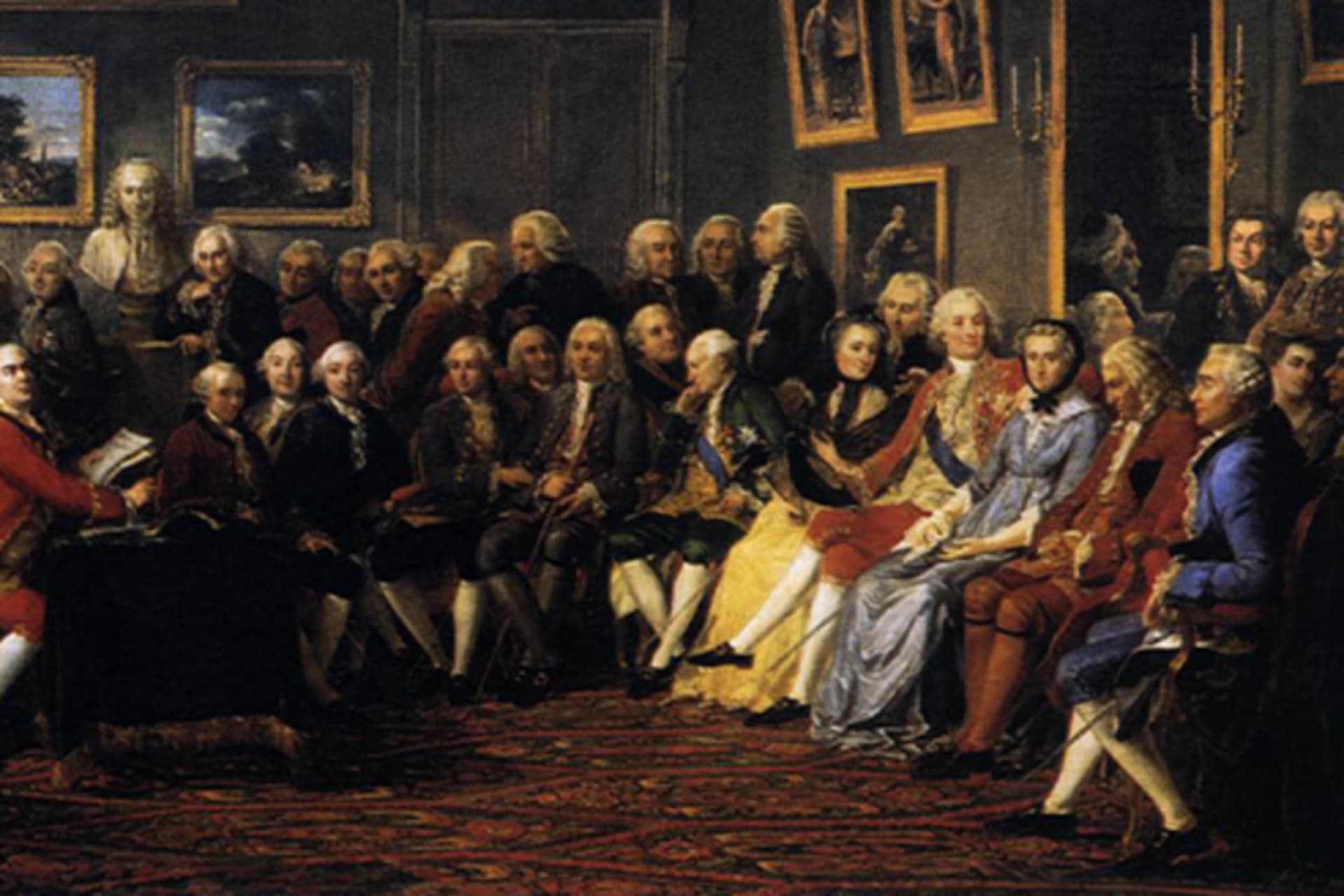
Enlightenment Lesson Plan
- Length
- One 50-minute period
- Grade Level
- High School
Learning Objectives
- Students will identify and explain key ideas from the Enlightenment and evaluate their contemporary relevance by connecting the ideas to twenty-first century life.
Homework
- Have students read CFR Education’s “What is the Enlightenment and How Did It Transform Politics?”. As they read, students should use pen and paper or an online discussion forum to discuss one idea from the reading that they found surprising and one place they see that idea alive today - in their school, community, news, or personal life.
Instructional Plan
- (5 minutes) Introduction: Begin class with a think-pair-share based on the following prompt: “According to your reading, Katharina Henot was tortured and executed in 1627 because officials said she caused a plague of caterpillars. What would have had to change for that not to have happened?” As students share their responses, be careful not to correct or explain - simply receive the responses as a way to prime a discussion of the Enlightenment’s five influential ideas without explicitly naming them.
- (10 minutes) Enlightenment Scenario Sort: Next, divide students into small groups. Give each group a set of 8-10 index cards with scenarios written on them (scenario examples below). Have groups sort the scenarios into two piles: “Pre-Enlightenment mindset” and “Enlightenment-influenced.” Then, have students label each of the “Enlightenment-influenced” scenarios with one of the five ideas from the reading.
- (10 minutes) Identifying Enlightenment Ideas in Practice: Once students have sorted and labeled the scenarios, ask each group to choose one scenario from the Enlightenment pile and answer: “Which Enlightenment idea does this represent? What specifically shows that idea in action? How is this scenario similar to or different from the Katherina Henot situation?” Conclude this activity by asking each group to share out their selected scenario, the idea they identified, and why it matters. As students share, name each of the five ideas from the reading explicitly and track them on the board at the front of the classroom.
- (10 minutes) Enlightenment Ideas Today: Use the five ideas listed on the whiteboard as a base for a structured whole-class discussion based on the following discussion prompt: “The resource says the world has become less free and less democratic every year between 2005 and 2019. If you had to identify the one Enlightenment idea most at risk right now - in the U.S. or globally - which would you choose, and why?”
- Ensure that students follow the ground rules of civil discourse in this conversation: one student speaks at a time, speakers must respond to what was actually said, speakers should be sure to disagree with ideas rather than the person behind the idea. As instructor, the primary role is to facilitate a civil conversation and encourage students to connect the ideas outlined in the reading with their own lived experiences.
- (5 minutes) Conclusion: Conclude the session by asking students to write a 3-5-sentence response to the following question: “Choose one Enlightenment idea. Describe one place in your life - your school, your community, your country - where this idea is relevant. What is at stake if it weakens?” Collect these responses at the end of class to measure student comprehension and engagement with the lesson.
Scenario Ideas
- A government arrests someone without explaining the charge.
- A student newspaper publishes criticism of school leadership.
- A ruler claims authority because “God chose me.”
- Scientists publicly challenge a long-held belief using evidence.
- A king is overthrown after refusing to listen to representatives of the people.
- A country holds elections, but only property-owning citizens are allowed to vote.
- A town bans certain books because they challenge tradition.
- A country has different sets of laws for low- and high-income citizens.
- Citizens vote to remove a leader from office.
- A person is accused of wrongdoing and gets a fair trial.
- A government allows free speech, but bans certain forms of expression that it claims incite harm to others.
- Businesses are allowed to trade goods without needing special permission from the government.
- A social media platform removes posts critical of the government.
- A court strikes down a law passed by elected officials because it violates constitutional rights.
- A company dominates a market and drives out competitors, limiting consumer choice.
- A ruler consults advisors and assemblies but ultimately retains final authority over all decisions.
- A law guarantees equal rights, but in practice certain groups still face discrimination.
- The government removes business regulations to encourage economic growth, but working conditions become unsafe.
- Citizens successfully overthrow a monarch, but the new leaders refuse to share power.