Cyber Clash With China (UNSC)
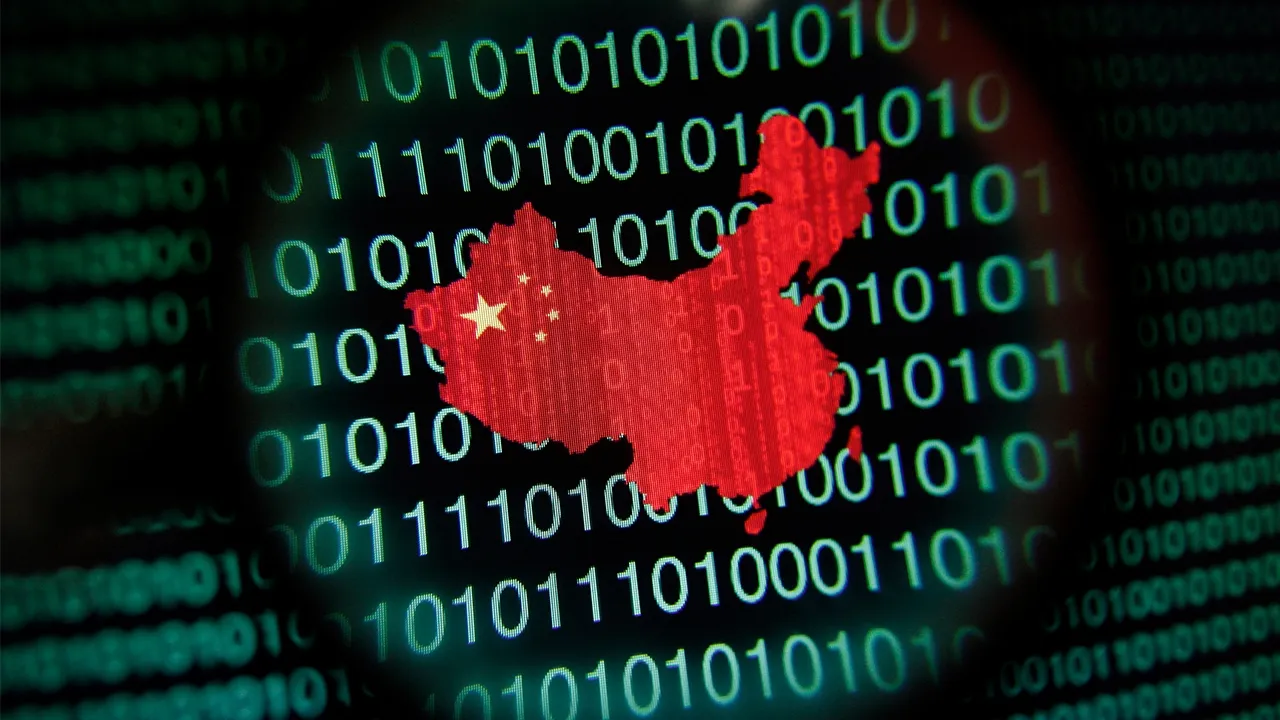
Tensions escalate between the United States and China as the Nasdaq faces a devastating cyberattack.
- Level
- High School, Higher Education
What is a simulation?
Simulations offer students the chance to role-play either the U.S. National Security Council or the UN Security Council.
How do I use them?
A simulation comprises two readings (a council guide and the case notes) of roughly 2,500 words each. They also offer detailed guidance for preparing for and running the simulation in the classroom and reflecting on the experience.
Educator Overview
Case Overview
Fictional, set in the present day. Cyberspace is a new domain of conflict that has few accepted standards of behavior. Basic questions about it—including how countries should respond to cyberattacks—are still unresolved. In recent years, China has exerted authority over areas of the South China Sea also claimed by other Asian countries, leading to tension with the United States. Last week, following a near miss when the U.S. Air Force conducted a flight near a shoal claimed by China in the South China Sea, the Nasdaq stock market was hacked, which significantly harmed the U.S. economy. U.S. intelligence agencies believe some in the Chinese government knew about the attack, for which a Chinese hacker collective claimed credit. UN Security Council members need to control the issue before it escalates further.
Decision Point
China, Brunei, Malaysia, the Philippines, Taiwan, and Vietnam have competing territorial claims in the South China Sea. In recent years, China has exerted authority over the area by increasing the size of existing islands or creating new ones. China has also constructed new ports, military installations, and airstrips. The United States has promoted the right of military vessels to operate in China’s claimed two-hundred-mile exclusive economic zone. The United States has also rejected China’s claim to a twelve-mile territorial zone around the artificial islands it has built. Since 2015, the United States has signaled its opposition by flying military aircraft and sending U.S. Navy ships near certain islands.
Last week, the U.S. Air Force conducted a flight near a shoal claimed by China in the South China Sea. Three days later, the Nasdaq Stock Market suffered a hack that damaged computers and forced the suspension of trading for two days. This imposed significant costs on several major multinational companies and dented confidence in the U.S. financial system. An underground hacker collective based in China known as the Zheng He Squadron has claimed responsibility for the hack. The group has known ties to the People’s Liberation Army, China’s military. U.S. intelligence agencies assess with 90 percent certainty that the hack occurred with the knowledge or support of parts of the Chinese government. Beijing claims no knowledge of the attack.
The U.S. secretary of state has declared that the attack represents a grave threat to U.S. national security and that Washington is considering all options, including military action, in response. In an effort to manage the dispute and avoid escalation, the UN Secretary-General has convened a meeting of the UN Security Council to discuss and take possible action on the cyber conflict between two of the Security Council’s permanent members, the United States and China.
Learning Goals
CFR Education extended simulations use a variety of pedagogical tools to create an effective, meaningful, and memorable learning experience for students that builds their global literacy. Students will develop crucial skills such as critical thinking, communication, collaboration, and creativity. Students will complete authentic assessments that feel relevant: instead of five-paragraph essays and book reports, students will write policy memos and participate in a role-play of a meeting of a foreign policy–making body. There are no right or wrong answers in actual policy deliberations, and there are none here, either; students will walk away from this experience with an appreciation for the complexity of policy questions.
In this simulation, students will learn about the UN Security Council, as well as meeting these learning outcomes specific to this simulation:
- Students will understand that cyberspace is a new domain of conflict with few accepted standards of behavior and continues to be difficult to find agreement around.
- Students will consider the extent to which cyberattacks pose a threat to international peace and security.
- Students will evaluate what action the UN Security Council should take related to rising tensions in the South China Sea and cyberspace.
Concepts and Issues
Concepts
- Cyberattacks and cybersecurity
- Nationalism
- Human rights
- Terrorism and counterterrorism
- Peacekeeping
Issues
- U.S.-China relations
- Territorial disputes in the South China Sea
- Definition of standards for behavior in cyberspace
- Military, economic, and other activities in cyberspace
- Information and communications revolution
Policy Options
This section presents context, potential benefits and drawbacks, and other information about the policy options outlined in the case that you may find helpful as you guide the role-play and assess students.
The United Nations has sought to define the rules of behavior for cyberspace for nearly two decades. As cyberweapons become more sophisticated and widespread and their use increasingly risks escalation or unintended global consequences, this task has grown more urgent. However, the UN Security Council has yet to specifically address the issue of cybersecurity in a formal setting, though it has addressed the issue in informal discussions and as it relates to broader subjects. As the threat cyberwarfare poses grows more apparent, council members will need to consider what role they can play to prevent or respond to cyber clashes to maintain international peace and security.
Furthermore, although the dispute at hand is primarily between the United States and China, its roots in the ongoing territorial disputes in the South China Sea give it far-reaching implications. Several other countries involved in maritime disputes with China—including Brunei, Japan, Malaysia, the Philippines, Taiwan, and Vietnam—will have an interest in how the Security Council can manage or resolve the dispute and the broader issue of cyber behavior. Japan, the Philippines, Taiwan, and Vietnam have also been targets of Chinese cyberattacks. Moreover, the United Nations has yet to successfully deescalate disputes in the South China Sea. This impacts countries’ access to fishing rights, oil exploration, and shipping lanes. To date, the UN Permanent Court of Arbitration has primarily addressed territorial claims. The court has dismissed China’s claims of its “historic title” in the South China Sea in a case brought by the Philippines and other countries in 2016. However, China has so far ignored its rulings. The Security Council could offer an avenue to more robust action or more fruitful negotiations.
Securing any council action in the dispute is likely to be difficult. Given that both parties to this dispute, the United States and China, are veto-bearing permanent members of the Security Council, the council’s influence in this matter is likely to be modest. Both countries will be able to block any action they perceive as against their interests. Therefore, policy options that criticize or impose penalties on either party, including sanctions, are likely to be exceedingly difficult for the council to approve. A country could still propose such resolutions in an attempt to embarrass the other side and force it to use its veto. Security Council members will need to explore what action is possible given the likelihood of a U.S. or Chinese veto and how to negotiate the support of permanent members. Members could explore actions that could prevent the crisis from escalating, even if the Security Council cannot impose a comprehensive resolution. Some members could also use this occasion to advance broader norms of behavior in cyberspace. In general, member states will need to weigh the desire for a timely response to a crisis against the need to secure support from as many council members as possible, especially permanent members.
The principal policy options available in this case are discussed below. These responses are available individually, in combination, or all together.
Call on the United States and China to negotiate
Council members could adopt a resolution calling on the United States and China to enter negotiations over their behavior in the South China Sea and in cyberspace. Negotiations could occur through the offices of the secretary-general or another respected authority. This option would be the easiest to implement. It bears the least risk of drawing a U.S. or Chinese veto. Negotiations could steer the current clash away from escalation. They could also facilitate a broader discussion of both countries’ practices in cyberspace. However, it is also the least likely to have lasting effects. The United States and China could be reluctant to accept the outcome of any international arbitration. Indeed, Beijing has ignored prior rulings by the International Court of Justice regarding the South China Sea. In addition, this option does nothing to address the establishment of broader norms in cyberspace.
Manage the dispute within the UN Security Council
The Security Council could attempt to address the dispute using its own powers. This option could include several actions. The council could commission a report on how the dispute has been managed with recommendations for how to manage the dispute without escalation. Council members could further adopt a resolution prohibiting certain actions, such as military responses or cyberattacks on critical infrastructure, in an attempt to prevent escalation. Finally, Security Council members could propose sanctions on one or both parties as punishment for their actions and as a deterrent to escalation.
Defining what actions are appropriate in the current conflict could prevent escalation and also set a precedent for the negotiation of future cyber norms. However, commissioning a report and recommendations would take significant time. Securing the consent of both the United States and China to place limitations on either country’s actions would be difficult. Imposing any form of sanctions is likely impossible. Council members pursuing this option will need to consider what actions are most likely to allow consensus and whether proposing actions that will force a veto is worthwhile as a tactic to shame one or both parties.
Use the dispute to establish broader cyber norms
The Security Council could use this dispute as an opportunity to debate norms of conduct in cyberspace more broadly. This could include questions regarding what types of targets are appropriate and whether and when kinetic military measures (i.e., those against physical targets) are justified in response to cyberattacks. Given the binding nature of UN Security Council resolutions, a resolution that establishes a strong standard of conduct in cyberspace provides the council with an avenue to deter or punish future attacks. Such a resolution could also establish a committee within the Security Council to address cybersecurity issues as they arise, similar to its counterterrorism committee.
However, reaching consensus on an issue as broad as cyber practices will take time. This could allow the current dispute at hand to potentially escalate unaddressed. Moreover, given that other UN forums on cyber practices have failed to reach consensus, often largely because of the United States, China, and Russia, the Security Council is not guaranteed to prove more effective.
Do Nothing
The Security Council could decide it is unable to take meaningful action on the dispute in light of conflicting interests among council members. In this case, Security Council members could issue a presidential statement expressing concern about the situation but ultimately leave action up to individual countries. If the situation worsens, however, council members could revisit the matter.
Running the Simulation
CFR Education extended simulations are project-based learning activities. Project-based learning (PBL) leads to better learning outcomes and improves skills, and is more fun than traditional instructional methods. The website that students will navigate throughout the simulation is divided into several parts:
In the UNSC Guide, students will learn about the UN Security Council, the body they will be simulating. Included are details on its history, how it works, who its major players are, and more. There is also a video interview with experts who have served on the body.
In the Case Notes, students dive into the actual situation they will be trying to solve in their simulation. At the beginning is a clear decision point: the question that students will debate during the role-play. This is followed by detailed background material and a discussion of the role that the United Nations plays.
Preparation and Role-Play includes details on the various roles students could take on, guidelines for the draft resolution clauses they will write, as well as an outline of how the discussion will flow during the role-play.
The Wrap-Up is an important part of the project and includes reflection questions and guidelines for reflecting in a class discussion and in a second memorandum. For historical cases, this section also includes a short description of how the decision point was addressed by policymakers in real life.
The simulation also includes Student Resources, which include a reading list to support research, additional directions and exemplars for writing assignments, and other tips students may find helpful.
Tips for Role-Play
Once students have read the simulation and prepared their draft clauses, here is how we recommend structuring the role-play:
| Round | Timing | Objectives | Procedural Notes |
|---|---|---|---|
| One: Public Meeting | 2 to 3 minutes per participant | Receive a five-minute briefing from the secretary-general on the issue to be discussed.Present opening statements.Crystalize the central questions of debate. | During opening statements, the president of the UN Security Council will recognize country representatives in the order in which they request to speak, and no representative may speak again if others have not yet spoken. Following opening statements, country representatives are free to openly debate the statements made, evaluating the various positions on their merits. |
| Two:Informal Meeting | 30 to 60 minutes | Debate each participant’s proposed clauses.Edit, add, or drop proposed clauses and combine them into one or more draft resolutions.Draft a presidential statement using proposed clauses and/or new material if no draft resolution appears acceptable to the group. | The president will recognize country representatives in the order in which they request to speak. Representatives should limit their statements to one minute each, but if time allows the president may permit them to speak longer. The president may also invite any participant to speak as they deem it appropriate. Any participant may motion for a ten- to fifteen-minute break, during which representatives can move freely and work on their draft resolutions individually or in small groups. |
| Three:Public Meeting | 30 to 60 minutes | Hear summaries of any draft resolutions as well as arguments for and against adoption.Vote on draft resolutions in order of submission.Attempt to adopt a presidential statement by consensus if no resolutions are proposed or passed. | The president will call first on the draft resolution’s main author(s) and then on other countries that wish to make arguments for or against the resolution. To be adopted, Security Council resolutions must receive at least nine votes in favor and no dissenting votes (vetoes) from any of the five permanent members. A state may abstain, often to indicate ambivalence or mild disapproval (in contrast to strong opposition). According to the charter, abstentions are mandatory if the state is a party to the dispute in question. Abstentions by permanent members do not count as vetoes; the resolution will pass if it receives the necessary nine votes. |
Tips for the President of the UN Security Council
In Round 1, you will chair a formal session. Make absolutely sure that every country gives their opening statement before any country is allowed to speak a second time. You will also have to use your judgment about when to move into the more informal meeting of Round 2. Give enough time for students to flesh out their positions and to identify potential allies, but do not wait too long—the most productive negotiations happen in informal meetings, so you want to save time for those in Round 2.
In Round 2, you will call on speakers one at a time. The time limits on speeches are a little looser, so pay close attention to make sure everyone is included and no one dominates. Deciding whether to grant a break for negotiations is a matter of balance. Negotiations can be advanced in small-group discussions, but it is also important for the whole body to be updated on what goes on during the breaks. You will want to strike a balance between breaks for negotiating, and informal meeting time for giving updates and rounding up support for resolutions. It is often helpful to set a deadline for the end of Round 2 to encourage negotiators to come to agreements in a timely manner.
In Round 3, completed draft resolutions will be presented, discussed, and voted on. Before starting, make sure you are clear on the order in which the resolutions were submitted and who is sponsoring each one. When it comes time to vote, it will be helpful to remind everyone of the unique voting rules of the Security Council. If none of the resolutions passes, you can allow further debate and attempt to vote again, or you can move on and guide the council through debate on a presidential statement. Use your judgment about which process is more likely to be successful.
Tips for Online Classes
We suggest conducting the role-play in three rounds and that three-round structure is a helpful way to approach chunking the role-play for online learning as well. You can conduct each round synchronously or asynchronously.
In round one, participants present their positions.
- In a synchronous meeting, you can go through opening statements using videoconferencing software, allowing for live clarifying questions.
- However, this is probably the easiest round to conduct asynchronously. You could disseminate positions in writing by having participants share their position memos or write a summary for the purpose of the role-play. You could also have participants record a video of themselves delivering their opening statement and disseminate it for all to watch.
In round two, participants debate the various policy options.
- In a synchronous setting, you can simply run a full-class discussion for round two. If you need more structure or want to prod reticent participants, consider starting by randomly assigning students to breakout rooms, assigning each breakout room one policy option. After working through pros and cons, representatives from each breakout room can share out to kick off the general discussion.
- In an asynchronous setting, consider a discussion forum, with a thread for each policy option.
In round three, debate begins to coalesce around the draft resolutions that have substantial support.
- This round can be approached similarly to round two. In this round, organize breakout rooms or threads around each draft resolution.
UNSC Assessment
Case Assessment
- What are the chief characteristics of cyberspace as a domain of conflict? What advantages and disadvantages arise when governments and other entities contemplate using or defending against cyber weapons?
- What have been the main achievements and shortcomings in the effort to develop rules and norms for how countries should behave in cyberspace?
- What are the principal motivations underlying Chinese cyber strategy? How has China sought to implement this strategy?
- How has the United States reacted to Chinese cyber activities? What policy steps has the United States pursued with China in the cyber realm more broadly?
Writing Assignments — Overview
- What are the six organs of the United Nations system? What are their responsibilities?
- How is the UN Security Council structured? How are Security Council decisions made?
- What are the two categories of tools that the UN Security Council has at its disposal to implement its decisions, and what are the range of specific tools available in each?
- What is the difference between a Chapter VI peacekeeping mission and a Chapter VII peace enforcement mission?
- What are the main challenges and limitations that the UN Security Council faces as it carries out its work? What solutions have been proposed to address these challenges?
Each CFR Education extended simulation involves writing assignments that help students think through policy options and reflect on their learning experience.
In UNSC cases, there are two types of writing assignments.
- Before the role-play, everyone writes draft clauses for a Security Council resolution.
- As part of the wrap-up, everyone writes a written reflection.
Simulations have instructions for written assignments (found under the Student Facing Simulation), rubrics, and samples for each of these writing exercises.
Samples:
Below are sample rubrics for your use in assessing the writing students will do as part of this extended simulation.
These are single-point rubrics. Jennifer Gonzalez, who writes the blog Cult of Pedagogy, has a great explainer, but the bottom line is that single-point rubrics are relatively easy for students to digest but still have all the advantages of giving structure to instructors’ feedback.
UN Security Council Draft Clauses Rubric
| CONCERNS What needs improvement | CRITERIA What is expected | ADVANCED What is excellent |
| Purpose - There are two to three preambular and three to four operative clauses - Clauses are properly formatted and styled | ||
| Preambular clauses - Accurately identify relevant prior agreements and existing organizations | ||
| Operative clauses - Are practical and within the UN Security Council’s powers - Address who - Address what - Address when - Address where - Address why - Address how - Address funding |
UN Security Council Written Reflection Rubric
| CONCERNS What needs improvement | CRITERIA What is expected | ADVANCED What is excellent |
| Subject paragraph - Is brief - Places the issue in the larger context of U.S. foreign policy - Clearly states whether the writer agrees or disagrees with the president’s decision | ||
| Options and Analysis paragraph - Discusses each option that came up during the role-play in discrete paragraphs - Weighs the advantages and disadvantages of each option - If options from the position memo are discussed, those options contain additional analysis | ||
| Recommendation and Justification paragraph - Makes a clear recommendation based on the writer’s personal position - Supports the recommendation effectively | ||
| Reflection paragraph or paragraphs - Reflects on and critiques the Security Council’s decision - Is written from a personal point of view, not that of the assigned role |
Downloadable rubrics are available here: