Map of the Cherokee Nation

Worst Decision

6

Forcible Removal of the Cherokee Nation

Scroll to begin

Introduction

In the early nineteenth century, white settlers in the eastern United States increasingly encroached upon the lands of Native Americans. Although the U.S. government had signed treaties demarcating native territory, political pressure grew to disregard them. In 1830, Congress passed the Indian Removal Act, which authorized the president to grant lands west of the Mississippi River to Native American tribes that gave up their lands east of the river. In 1832, the U.S. Supreme Court ruled that Native Americans constituted “separate nations” who were not subject to state law. President Andrew Jackson ignored the ruling. On May 23, 1838, the first members of the Cherokee Nation were pushed out of their lands in what is now the southeastern United States and forced to walk to their new territory in northeastern Oklahoma. Four thousand of the sixteen thousand Cherokee who began the journey died on what became known as the Trail of Tears. SHAFR historians ranked the forcible removal of the Cherokee Nation as the sixth-worst U.S. foreign policy decision.
The Cherokee Nation

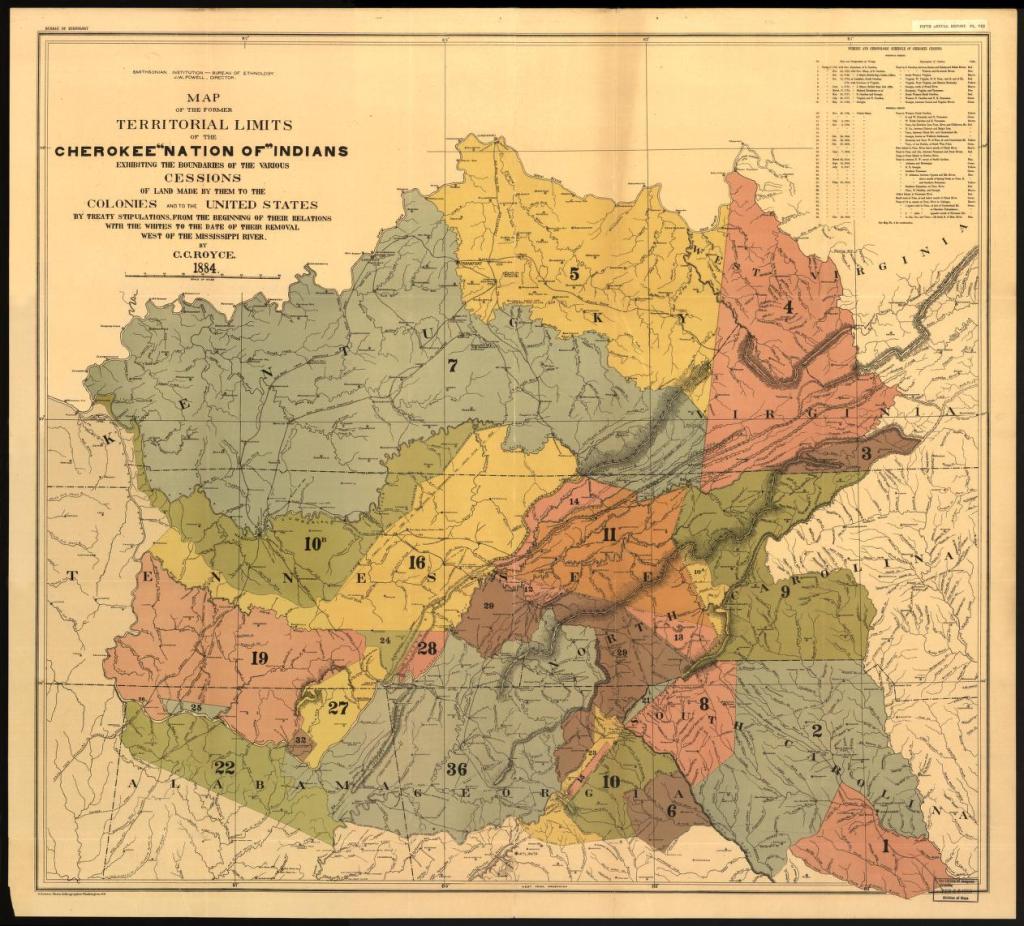
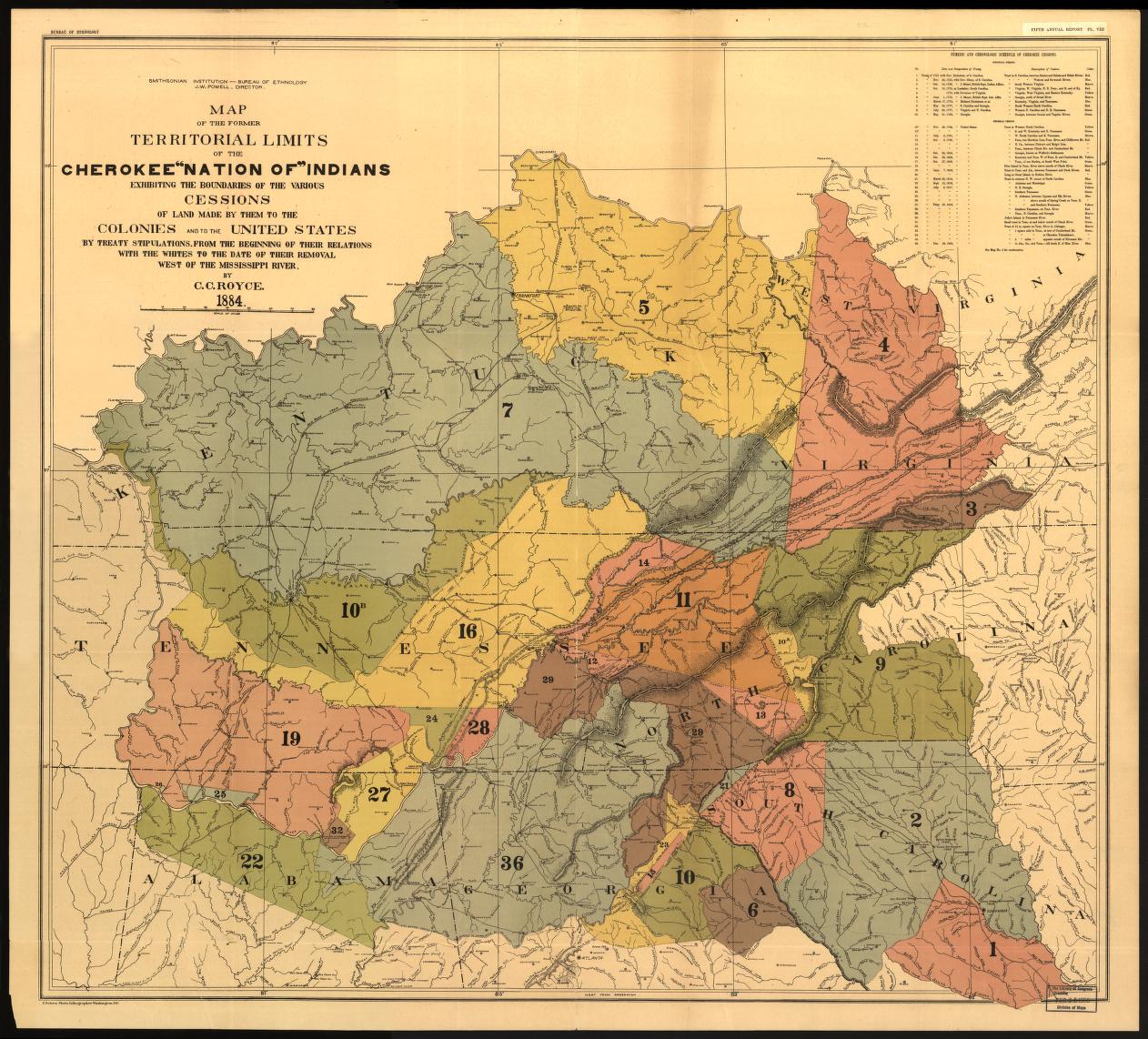
The Cherokee lived in the southeastern United States in parts of what are now Alabama, Georgia, North Carolina, South Carolina, Tennessee, and Virginia. The arrival of European settlers in the eighteenth century put pressure on Cherokee lands. The Cherokee signed a series of treaties, first with the American colonies and then with the United States, governing their relations. The 17971 Treaty of Holston placed the Cherokee “under the protection of the said United States of America” and established the boundaries of their territory.

At the urging of many Americans, including President George Washington, the Cherokee adopted European-American culture and practices. They hoped to both improve their standard of living and diminish the potential for conflict with white settlers. The Cherokee exchanged traditional dress for Western-style clothing and shifted from traditional hunting and gathering to growing and trading crops and livestock. The Cherokee also developed a written language that enabled a rapid shift to mass literacy, and they created a formal government with a written constitution and elections. Conversion to Christianity was common among the Cherokee elite, as was enslaving Black people.

Map of the Cherokee Nation

Map showing territory allocated to Cherokee Nation, 1884. Courtesy of the Library of Congress/C.C. Royce.

The Indian Removal Act

Neither the treaties nor the willingness to assimilate eased the pressure on Cherokee lands. With the Louisiana Purchase in 1803, President Thomas Jefferson and others proposed setting aside lands west of the Mississippi for Native Americans. They argued that the separation of the two communities would prevent conflict and enable Native Americans to prosper. Jefferson never acted on his proposal, but the idea resonated with many Americans, especially in the South. Georgia argued that when it ceded its claims to lands west of its current borders, the federal government had agreed to expel Native Americans, most of whom were Cherokee, from their state.

In 1829, President Andrew Jackson took up the settlers’ cause. He opposed the existence of sovereign Indian governments operating with existing states and argued they were unconstitutional. In his annual message to Congress, he called for “setting apart an ample district west of the Mississippi,” though he said that the “migration should be voluntary.” Congress passed the Indian Removal Act in May 1830. It authorized Jackson to negotiate the transfer of Native American tribes to land west of the Mississippi River. A few Native Americans were quickly bribed or forced to abandon their lands. The vast majority, however, refused.

Andrew Jackson National Portrait Gallery Smithsonian

President Andrew Jackson. Courtesy of the National Gallery of Art/Thomas Sully.

Worcester v. Georgia

The provisions of the Indian Removal Act primarily targeted the so-called Five Civilized Tribes: the Cherokee, Chickasaw, Choctaw, Creek, and Seminole. Over the course of 1831 and 1832, the Choctaw, Creek, and Chickasaw were removed from their lands after U.S. negotiators struck deals with tribal leaders who were willing to leave their ancestral homes. The Seminole fought two wars to avoid being expelled entirely from their lands.

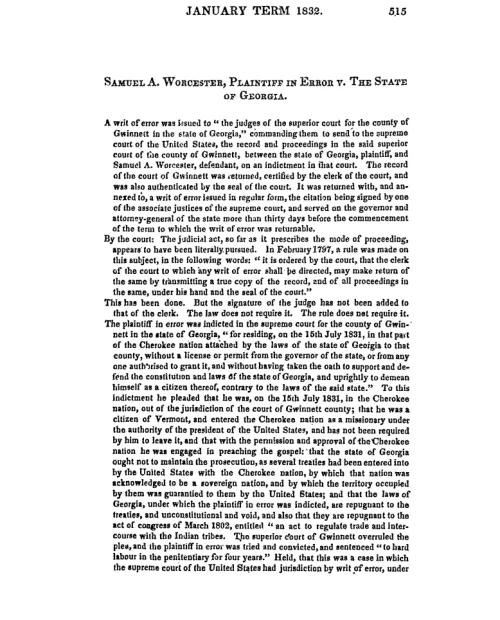
Emboldened by Jackson’s support and spurred by the discovery of gold on Cherokee land, the state of Georgia in 1829 claimed jurisdiction over the Cherokee Nation. The Cherokee turned to the courts to defend their sovereignty. In Worcester v. Georgia (1832), the U.S. Supreme Court sided with the Cherokee Nation, finding that it and other Native American tribes were sovereign nations and not subject to state laws. Jackson is often quoted as responding to the ruling by saying that Chief Justice “John Marshall has made his decision, now let him enforce it.” There is no record of Jackson ever uttering those words. However, they capture his view of the Supreme Court’s decision. He and other U.S. officials simply ignored it.

SCOTUS decision

Report of Worcester v. the State of Georgia, Supreme Court of the United States, 1832. Courtesy of the Library of Congress.

The Treaty of New Echota

Most Cherokee leaders rebuffed the Jackson administration’s call to leave their ancestral lands. U.S. negotiators responded as they had with the other Native American tribes: they found a minority faction of Cherokee that was willing to negotiate. Led by Major Ridge, members of the Treaty Party believed that the United States would take their land no matter what. They saw their only option as making the best deal they could. On December 29, 1835, they signed the Treaty of New Echota. It ceded all Cherokee lands in exchange for $5 million and an equal amount of territory in what is now northeastern Oklahoma.

Principal Chief John Ross, the elected leader of the Cherokee Nation, and most other Cherokee leaders denounced the Treaty of New Echota. Ridge’s Treaty Party represented fewer than five hundred Cherokee. The vast majority of Cherokee supported the National Party, which they argued was the only group that could speak for the Cherokee Nation. These protests fell on deaf ears. In May 1836, the Senate approved the Treaty of New Echota by a single vote. Ross submitted a petition in early 1838 with nearly sixteen thousand signatures asking Congress to void the treaty. Congress never took up the petition.

Principal Chief John Ross, 1850. Courtesy of the Library of Congress.

I have signed my death warrant.

Major Ridge, leader of the Treaty Party, after signing the Treaty of New Echota

The Trail of Tears

The Treaty of New Echota gave the Cherokee two years to leave. Members of the Treaty Party left for Oklahoma on their own terms. Most Cherokee, however, refused to move. On May 26, 1838, acting at the direction of President Martin Van Buren, who had succeeded Jackson a year earlier, federal troops under the command of Major General Winfield Scott began to remove the Cherokee. Although Scott’s Orders No. 25 forbade the use of violence against the Cherokee, the directive was widely ignored. A thousand Cherokee escaped the roundup by fleeing into the hills or because they had accepted land settlements or married white settlers. (Their descendants today constitute the Eastern Band of Cherokee Indians.)

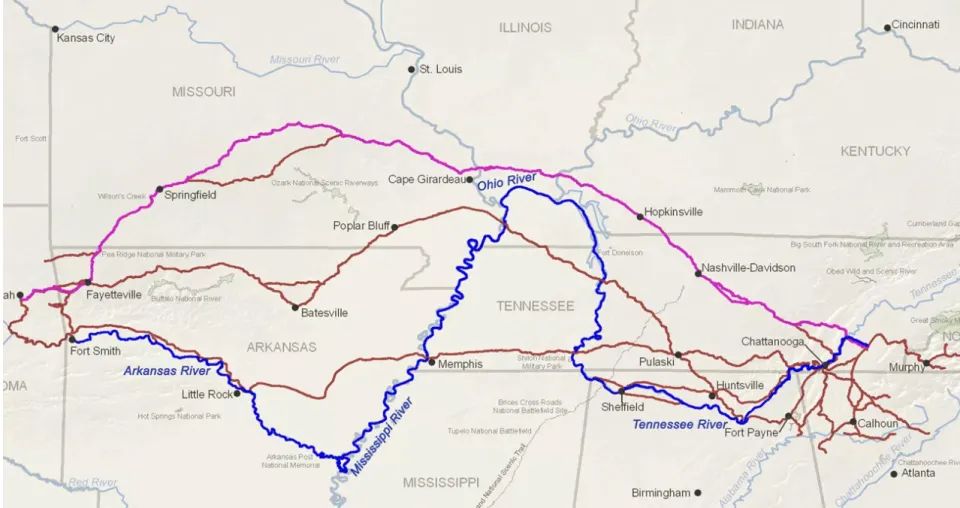
Most Cherokee were initially confined to internment camps where overcrowding, malnutrition, and poor sanitation produced diseases like dysentery. Those who survived these conditions began the eight-hundred-mile walk to their new homeland in October. Some seven thousand U.S. troops pushed them forward. The Cherokee followed several different routes, passing through Tennessee, Kentucky, Illinois, Missouri, and Arkansas before reaching Oklahoma. The Cherokee were poorly provisioned and equipped for the march, and they faced bitter winter weather. By the time they completed their trek in March 1839, four thousand had died on the Trail of Tears. Ridge and two other leaders of the Treaty Party were murdered by fellow Cherokee on June 22, 1839.

The most frequently used land route (pink), water route (blue), and other routes (red) used by Cherokee Nation. Courtesy of the National Park Service.

Long time we travel on way to new land. People feel bad when they leave Old Nation. Womens cry and make sad wails. Children cry and many men cry...but they say nothing and just put heads down and keep on go towards West. Many days pass and people die very much.

A Cherokee who walked the Trail of Tears

The Legacy of the Forcible Removal of the Cherokee

The forced removal of the Cherokee epitomized the United States’ treatment of Native American peoples. The United States repeatedly signed treaties defining and purporting to respect the boundaries of Native American lands. Just as frequently, the United States broke its treaty commitments and ran roughshod over the rights of Native Americans. Claims that the Cherokee and other Native Americans voluntarily left their lands were a fiction. They were compelled to move at gunpoint and endured great hardships traveling to their new lands. Many did not survive the trek. In forcibly expelling the Cherokee and other Native Americans from their lands, the United States abandoned its constitutional principles and violated its own laws.

National Security Archive, GWU

Learn More

Primary documents, books, articles, and more on the forced removal of the Cherokee Nation.

Primary Documents

Books

Articles

Lectures and Podcasts

Documentaries and Short Videos