Best Decision

10

Handling of the Cuban Missile Crisis

Scroll to begin

Introduction

A U.S. Air Force surveillance flight over Cuba in October 1962 turned up evidence of what U.S. officials had feared: the Soviet Union was installing nuclear-armed missiles on the island. The discovery triggered a thirteen-day crisis that brought the world to the brink of nuclear war. President John F. Kennedy initially favored air strikes to take out the missile sites before they became operational. As a first step, he ordered a naval quarantine, or blockade, of Cuba. But worried about escalation to the unthinkable, he pursued backchannel communications with Soviet leader Nikita Khrushchev that ended the crisis. Alarmed by how close they had come to nuclear Armageddon, Kennedy and Khrushchev subsequently negotiated several agreements that lowered tensions between their two capitals and opened the door to the arms-control era. SHAFR historians ranked JFK’s handling of the Cuban Missile Crisis as the tenth-best U.S. foreign policy decision.
U.S.-Soviet Tensions

Tensions with the Soviet Union ran high when Kennedy took office in January 1961. There were numerous potential flashpoints between the two nuclear powers. One, however, lay close to U.S. shores: Cuba, where Fidel Castro had seized power in 1959. Opposed to U.S. dominance of the island, he courted Moscow’s support. In January 1961, just before leaving office, President Dwight D. Eisenhower broke off diplomatic relations with Cuba. Three months later, Kennedy authorized the Bay of Pigs invasion, the CIA-orchestrated plan to oust Castro. The Bay of Pigs was a debacle and raised doubts at home and abroad about JFK’s readiness to be president.

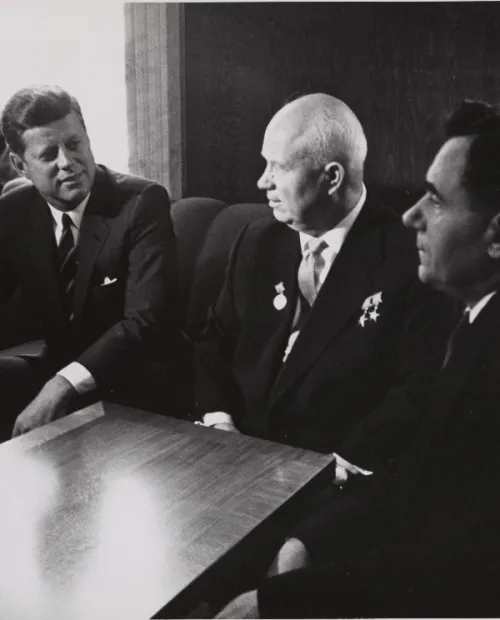
Kennedy hoped to repair the damage and lessen U.S.-Soviet tensions by meeting Khrushchev in June 1961. The Vienna Summit, however, was another disaster. After it ended, Kennedy told a reporter it had been the “worst thing in my life. He savaged me.” Khrushchev, by comparison, believed he had intimidated his younger and far less experienced counterpart. Two months later, the Soviet leader ordered the construction of the Berlin Wall. Tensions between the two superpowers flared.

President John F. Kennedy with Soviet Premier Nikita Khrushchev in Vienna, Austria, June 4, 1961. Courtesy of the John F. Kennedy Presidential Library and Museum.

Missiles in Cuba

By summer 1962, U.S. intelligence officials suspected that the Soviets were shipping medium-range ballistic missiles to Cuba. That would enable Moscow to destroy much of the eastern United States, including Washington, DC, with little notice. Kennedy warned Moscow in September that he would not tolerate offensive weapons in Cuba. Two weeks later, Soviet Foreign Minister Andrei Gromyko publicly denied that the Soviet Union was installing weapons in Cuba that could threaten the United States.

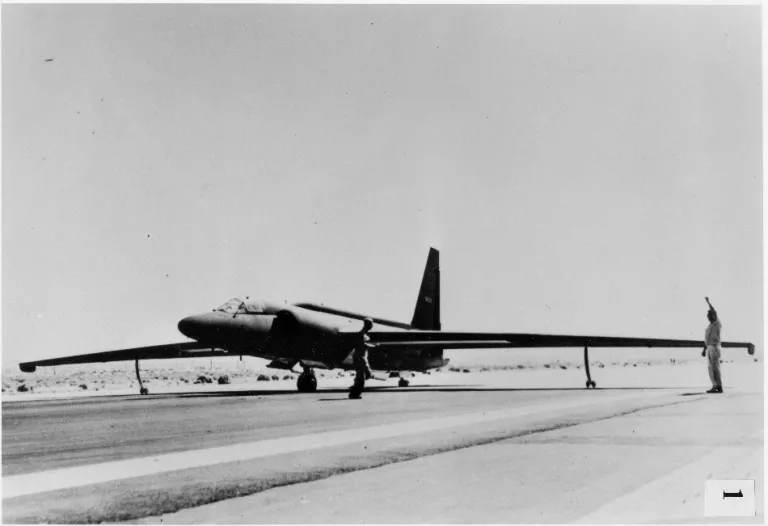
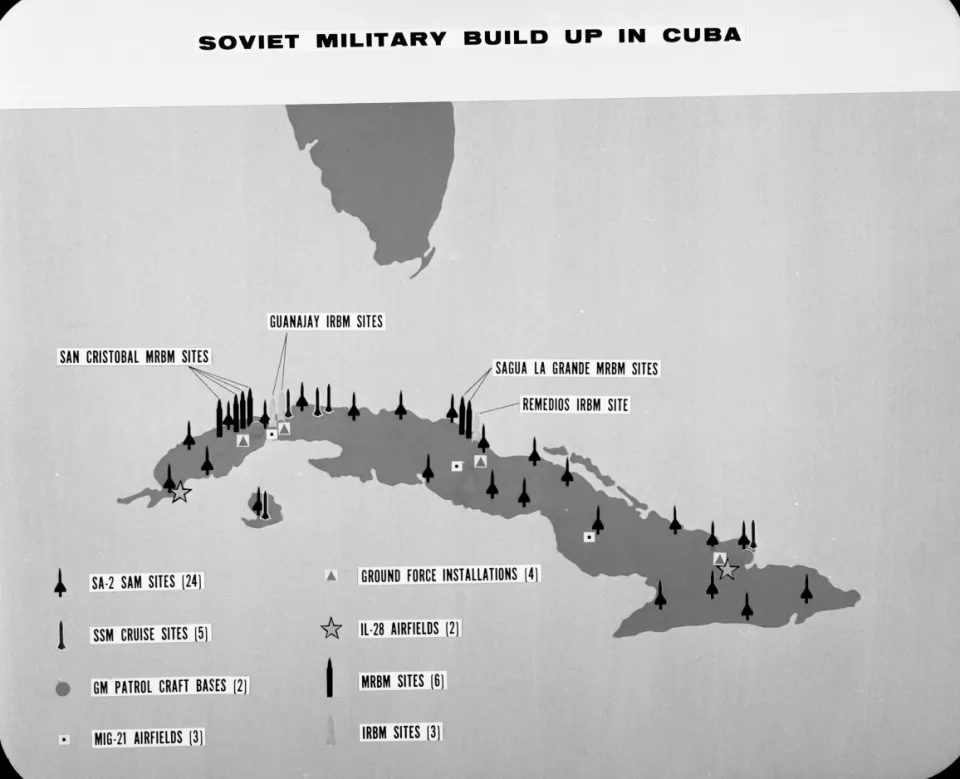
U.S. officials soon discovered that Gromyko had lied. On Sunday, October 14, 1962, a U-2 spy plane flew over Cuba. The 928 photographs it took in its 6-minute run through Cuban airspace were quickly sent to the Naval Photographic Interpretation Center in Maryland. Staff there worked throughout the night to develop the photos. By late afternoon on Monday, October 15, analysts concluded that medium-range Soviet missiles, presumably equipped (or ready to be equipped) with nuclear warheads, were in Cuba. The Cuban Missile Crisis began.

types and locations of the eight categories of Soviet offensive and defensive weapons systems deployed in Cuba in the fall of 1962

Map of the Soviet weapons systems that were deployed in Cuba, February 6, 1963. Courtesy of the John F. Kennedy Presidential Library and Museum.

The ExCom Meets

Kennedy was sitting in his White House bedroom in his pajamas reading the newspaper on Tuesday morning when his national security advisor, McGeorge Bundy, informed him that the Soviets were installing missiles in Cuba. Kennedy decided to stick to his morning schedule while Bundy arranged for the administration’s national security team to meet at the White House.

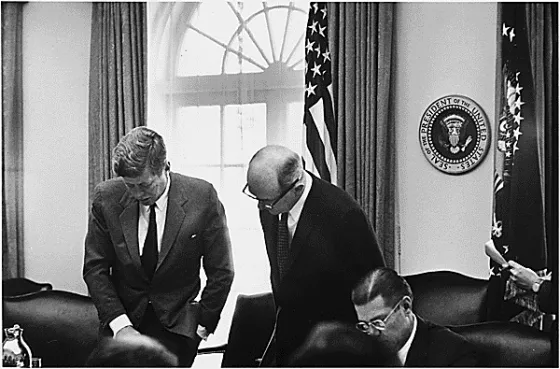
Kennedy met with the group, known as the Executive Committee, or ExCom for short, just before noon. An immediate decision was made to order more U-2 surveillance flights over Cuba. The conversation then turned to how the United States should respond to the Soviet provocation. Secretary of Defense Robert McNamara raised the possibility of blockading Cuba, but much of the discussion focused on air strikes against missile installations. The possibility that the United States might strike first troubled Attorney General Robert F. Kennedy. He passed a note to his brother saying, “I now know how Tojo felt when he was planning Pearl Harbor.”

President John F. Kennedy and Attorney General Robert F. Kennedy Discuss Military Options for Cuba, October 16, 1962.

Meeting of the Executive Committe of the National Security Council- Cuba Crisis. President Kennedy, Secretary of State Dean Rusk, Secretary of Defense Robert S. McNamara. White House, Cabinet Room. Courtesy of the National Archives NAID: 194246

President John F. Kennedy with Secretary of State Dean Rusk and Secretary of Defense Robert S. McNamara at a meeting of the Executive Committee of the National Security Council, October 29, 1962. Courtesy of the National Archives and Records Administration.

Kennedy Keeps to His Schedule

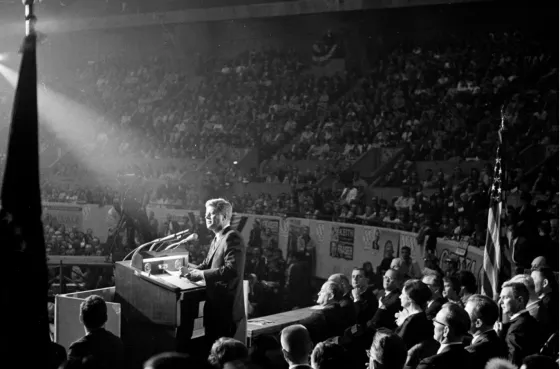
Kennedy wanted the Soviet missiles removed from Cuba, but he was unsure how to make that happen. For several days, his advisors debated his options. To avoid tipping off either the Soviets or the American public that a crisis was underway, Kennedy kept to his previously announced public schedule. That included attending rallies around the country to promote Democratic congressional candidates and hosting Gromyko in the Oval Office. In that meeting, Gromyko repeated the lie that no offensive Soviet weapons were in Cuba.

On Saturday, October 20, Kennedy cut short a campaign trip to the Midwest by claiming a fever. He returned to Washington and met with his advisers. The discussion covered several options but focused on two: airstrikes or a naval blockade. The discussion prompted Kennedy to hedge his bets. He ordered the imposition of a blockade, though he would call it a naval quarantine, and directed the Pentagon to develop plans for an airstrike. Kennedy also decided he would inform the nation and the world about the crisis in a public address on Monday night.

Cecil Stoughton. White House Photographs. John F. Kennedy Presidential Library and Museum

President John F. Kennedy speaks in St. Paul, Minnesota, October 6, 1962. Courtesy of the John F. Kennedy Presidential Library and Museum/Cecil Stoughton.

The Crisis Goes Public

Kennedy addressed the nation at 7 p.m. on October 22. Administration officials had briefed members of Congress, and foreign leaders that day about the situation. Kennedy spoke personally with the leaders of France and the United Kingdom as well as with congressional leaders. His message to them was the same as to the American public: the United States had discovered “unmistakable evidence” that the Soviet Union was installing nuclear-tipped missiles in Cuba in “flagrant and deliberate defiance” of Soviet assurances to the contrary. This provocation presented “a clear and present danger” not just to the United States but to the entire Western Hemisphere. As a result, the United States had imposed “a strict quarantine on all offensive military equipment under shipment to Cuba.”

Kennedy ended his speech by stressing that his goal was “not the victory of might, but the vindication of right—not peace at the expense of freedom, but both peace and freedom, here in this hemisphere, and, we hope, around the world. God willing, that goal will be achieved.” The question now was how the Soviet Union would respond.

President John F. Kennedy Addresses the Nation on the Cuban Missile Crisis, October 22, 1962

Kennedy and Khrushchev Exchange Letters

Khrushchev answered by letter the next day. The Soviet leader neither admitted to the presence of Soviet missiles in Cuba nor offered any concessions. Instead, he accused the United States of “naked interference in domestic affairs of the Cuban Republic.” Kennedy responded with a bluntly worded letter, telling the Soviet leader, “I hope that you will issue immediately the necessary instructions to your ships to observe the terms of the quarantine.” U.S. officials expected the Soviet ships headed toward Cuba to reach the quarantine line on Wednesday, October 24. The question was whether they would dare the U.S. Navy to stop them.

Kennedy got his answer that morning. During an ExCom meeting, news arrived that Soviet ships had stopped dead in the water. Unbeknownst to the ExCom, Khrushchev had decided after Kennedy’s speech to order Soviet ships outside the quarantine line to turn around. “We’re eyeball to eyeball,” Secretary of State Dean Rusk whispered to Bundy, “and I think the other fellow just blinked.” Kennedy and his advisors thought the crisis had peaked. They were wrong.

Searching for a Solution

Hours after the news arrived that Soviet ships were reversing course, Kennedy received another letter from Khrushchev. It said that the Soviet Union would not respect the quarantine. Rather than test Khrushchev, Kennedy allowed a Soviet ship carrying petroleum products to cross the quarantine line on Thursday, October 24. The administration scored a public relations victory that same day when Adlai Stevenson, the U.S. ambassador to the United Nations, denounced the Soviet Union at a UN Security Council meeting for lying about its activities in Cuba. But that night, Kennedy learned that some of the Soviet missiles in Cuba were now operational. That number would increase with each passing day.

A potential break came on Friday, October 26. A reporter relayed a proposition from the KGB station chief in Washington to end the crisis. As the ExCom assessed the promising offer, a letter from Khrushchev arrived proposing similar terms. (Unbeknownst to Kennedy and his advisers, Castro had just written to Khrushchev urging him to launch a preemptive nuclear first strike on the United States if it attacked Cuba. Khrushchev ignored Castro’s plea.) Kennedy went to bed that night thinking he had a way out of the crisis that protected U.S. prestige and interests, but the next day turned out to be the most dangerous one of the crisis.

U.S. Ambassador Adlai Stevenson Confronts the Soviet Ambassador at the United Nations, October 25, 1962

Black Saturday

On Saturday, October 27, a new letter from Khrushchev arrived. It stated that the Soviet Union would remove its missiles from Cuba only if the United States removed missiles it had stationed in Turkey. Khrushchev’s previous letter had tied the withdrawal of Soviet missiles solely to a U.S. pledge not to invade Cuba. Khrushchev looked to be upping the price of any deal.

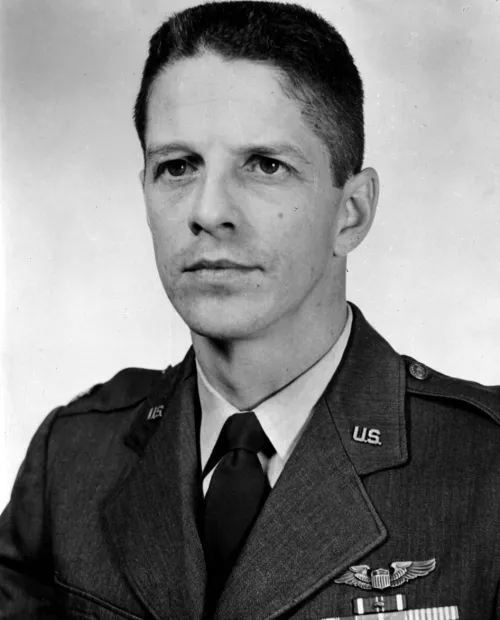
The news got worse. A U.S. pilot on a routine U-2 reconnaissance flight over the Arctic became disoriented by the aurora borealis and flew three hundred miles into Soviet airspace. The Soviets scrambled planes to intercept him, while the U.S. Air Force dispatched two fighters to provide a possible escort. The pilot recovered his bearings and returned to international airspace, however, before the Soviet fighters could shoot down his plane. Another U.S. U-2 pilot was not so lucky. Major Rudolph Anderson was shot down by a Soviet surface-to-air missile on a surveillance flight over Cuba. He became the only person to die from enemy fire during the crisis. The decision to fire on Anderson’s U-2 was made by Soviet generals in Cuba and ran contrary to Khrushchev’s orders.

Maj. Rudolf Anderson Jr.

Major Rudolf Anderson Jr. Courtesy of the United States Air Force.

A Private Message and a Public Deal

Faced with different messages from Khrushchev, Kennedy opted to respond to the first, more conciliatory letter. On Saturday night, Robert Kennedy delivered a letter, vetted by the ExCom, to Soviet Ambassador Anatoly Dobrynin. The letter stated that if the Soviet Union withdrew its nuclear missiles and bombers from Cuba, the United States would end the quarantine and pledge not to invade Cuba. But Robert Kennedy also had a private message from his brother to Khrushchev that was not shared with other ExCom members: The United States would also remove its missiles from Turkey within six months of a Soviet withdrawal from Cuba. JFK had concluded Khrushchev needed more than a pledge not to invade Cuba before he could agree to a deal. Fearing a domestic political backlash, Kennedy was unwilling to make that offer publicly.

Kennedy’s gambit worked. On Sunday morning, October 28, Radio Moscow broadcast the news that Khrushchev had ordered Soviet offensive weapons in Cuba be returned to the Soviet Union. The Cuban Missile Crisis was over.

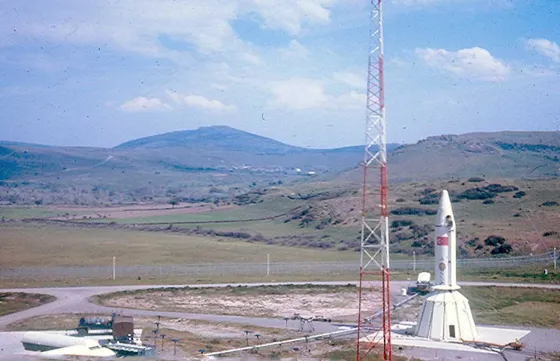
Jupiter intermediate-range ballistic missile (IRBM) at Çiğli Air Base in Turkey, 1963. A squadron of 15 Jupiters became operational there in March 1962. (Photo courtesy of the late Lewis Mills)

Jupiter intermediate-range ballistic missile (IRBM) at Çiğli Air Base in Turkey, 1963. Courtesy of Lewis Mills

The Legacy of the Cuban Missile Crisis

The Cuban Missile Crisis brought the world closer to nuclear war than people realized at the time. It only became known years later that a Soviet submarine almost fired a nuclear-armed torpedo after a U.S. destroyer dropped depth charges on it and that Soviet troops in Cuba were armed with short-range tactical nuclear weapons. Had the United States invaded Cuba, the Soviets likely would have responded by launching a nuclear strike on the U.S. naval base at Guantanamo Bay, Cuba. Kennedy avoided that horrific outcome, however, with some luck and through the calibrated use of power and diplomacy. Chastened by how close they had come to nuclear Armageddon, Kennedy and Khrushchev agreed in June 1963 to create a direct telegraphic link, or hotline, between the two capitals to keep the lines of communication open in a crisis. A month later, the United States, the Soviet Union, and the United Kingdom agreed to the Limited Test Ban Treaty, which barred nuclear testing in the atmosphere, underwater, or in outer space. A near-miss had opened the door to the arms control era.

This is horrifying. It meant that had a U.S. invasion been carried out . . . there was a 99 percent probability that nuclear war would have been initiated.

Former Secretary of Defense Robert McNamara in 1992 upon learning that Soviet troops had nuclear-armed artillery in Cuba during the missile crisis

National Security Archive, GWU

Learn More

Primary documents, books, articles, and more on the Cuban Missile Crisis.

Primary Sources

Books

Articles

Documentaries and Short Videos

Lectures and Podcasts