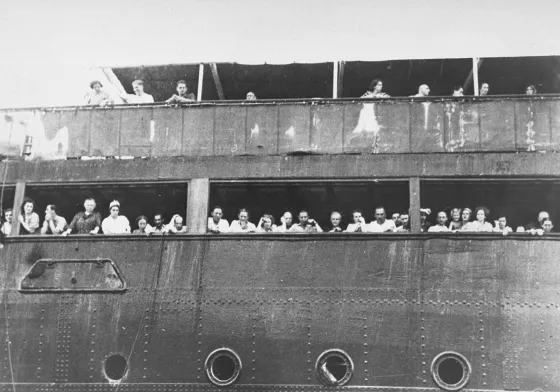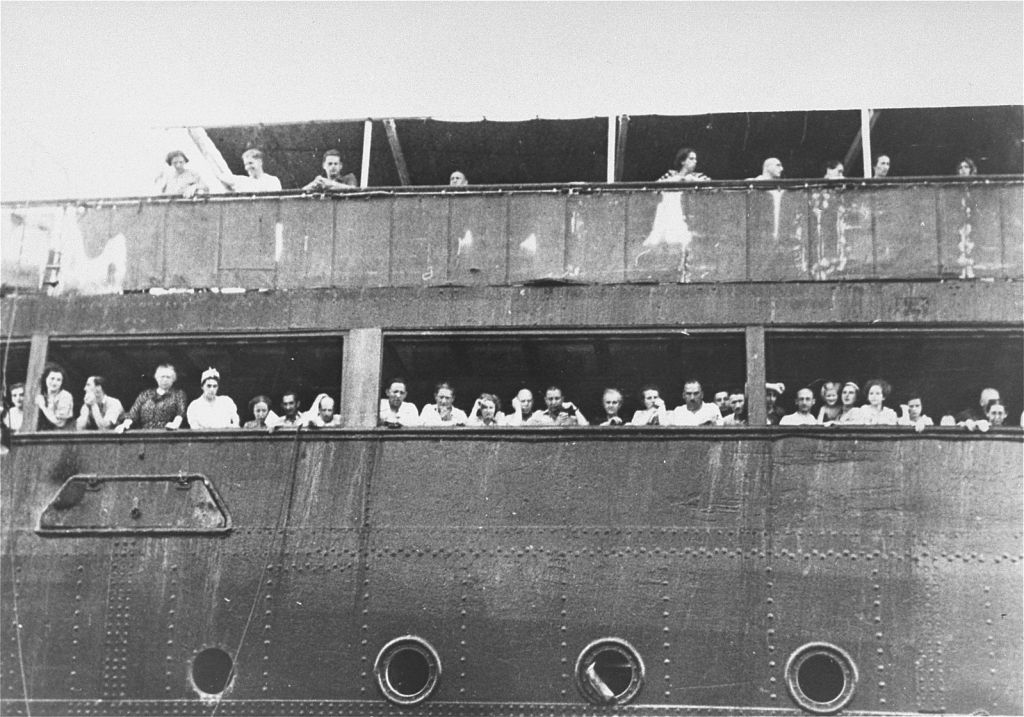
Jewish refugees aboard the MS St. Louis on June 3, 1939. Courtesy of the National Archives and Records Administration.

Worst Decision

8

Limits on Jewish Refugees From Germany

Scroll to begin

Introduction

Nazi Germany’s persecution of so-called non-Aryans in the 1930s pushed Jews, first in Germany and then in the countries that Germany seized, to seek refuge elsewhere. Many refugees hoped to find safety in the United States. Yet even as Nazi control over Europe expanded, the United States strictly limited immigration. The refusal to address the growing humanitarian crisis reflected antisemitism, nativism, bureaucratic red tape, and unfounded fears that refugees would become a burden on the government or work as German spies. The United States stuck to its restrictive immigration policy even though President Franklin D. Roosevelt and other leading U.S. officials condemned Germany’s treatment of Jews, and U.S. newspapers frequently covered the plight of refugees. The U.S. refusal to admit more refugees meant that tens of thousands of people who might have been saved instead perished in the Holocaust. SHAFR historians ranked the U.S. insistence on limiting the number of Jewish refugees in the years before World War II as the eighth-worst U.S. foreign policy decision.
Nazi Germany Persecutes Jews

Adolf Hitler began persecuting German Jews as soon as he became German chancellor in January 1933. He promoted the boycott of Jewish businesses, encouraged the public burning of books written by Jewish authors, stripped Jewish immigrants from Eastern Europe of German citizenship, and set up the first concentration camp. In 1935, he enacted the Nuremberg Laws, which revoked the citizenship of German Jews and barred them from marrying non-Jewish Germans. In March 1938, Germany absorbed Austria in the Anschluss, extending its persecution to Austrian Jews. Six months later the Munich Conference allowed Germany to annex the Sudetenland, the predominantly German-speaking region of Czechoslovakia.

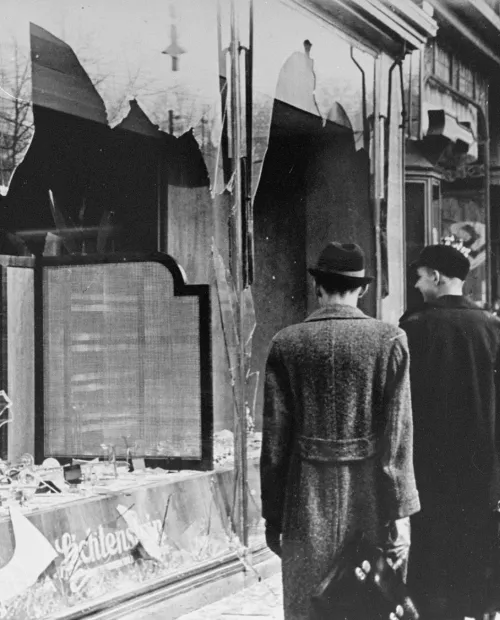
In November 1938, Hitler unleashed Kristallnacht (Night of Broken Glass). That attack on Jews in Germany, Austria, and the Sudetenland destroyed two hundred synagogues, ruined thousands of Jewish-owned businesses, and sent thirty-thousand Jewish men to concentration camps. President Franklin D. Roosevelt said he “could scarcely believe that such things could occur in a twentieth century civilization” and recalled the U.S. ambassador to Germany.

Germans pass by the broken shop window of a Jewish-owned business that was destroyed during Kristallnacht, November 10, 1938. Courtesy of the National Archives and Records Administration/Bildarchiv Abraham Pisarek.

Anti-Immigrant America

The Depression-era United States was hostile to immigrants. The surge in immigration in the three decades before World War I produced a backlash that led to the passage of the National Origins Act of 1924, which sought to limit the number of immigrants and to preserve the existing ethnic make-up of the United States. To that end, the law capped all immigration at 165,000 people per year—20 percent of the average annual immigration flows before World War I. The law also barred immigration from Asia and severely restricted immigration from Eastern and Southern Europe while setting more generous quotas on immigration from northern Europe.

The onset of the Great Depression intensified the public’s fear of immigrants, who were seen as competitors for scarce jobs and potential burdens on the government because they might not be able to support themselves. At the same time, demagogues like Father Charles E. Coughlin, a Catholic priest in the Detroit suburbs, used a new technology, radio, to whip up racist, xenophobic, and antisemitic sentiment across the country.

Roosevelt’s Role

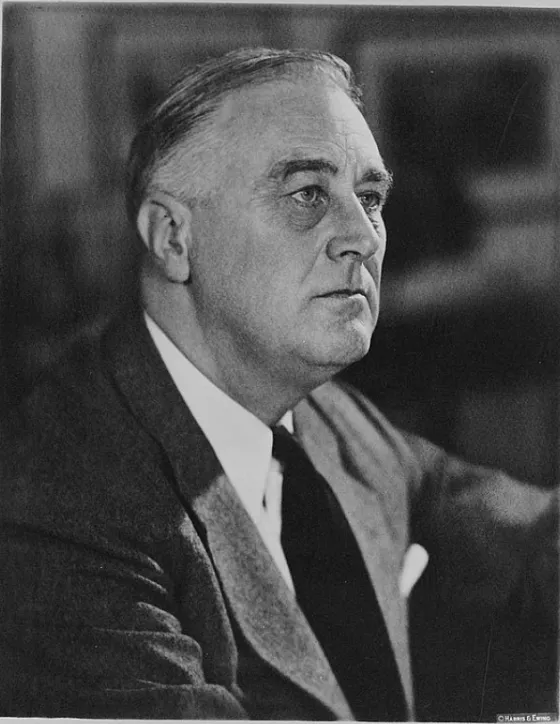
Roosevelt’s complicated views of Jews helped shape his administration’s response to the growing refugee crisis. He appointed more Jews to public office than all his predecessors combined, including the first Jewish secretary of the treasury and the third Jewish Supreme Court justice. Yet, FDR also shared many of the prejudices of the day about “non-assimilable immigrants” and Jews coming to dominate certain professions. The plight of Jewish refugees never became a personal priority.

FDR instead left refugee policy to the State Department to handle. Despite being married to a woman from an Austrian-Jewish family, Secretary of State Cordell Hull also did not see the refugee issue as a priority. To the contrary, his subordinates vigorously enforced immigration laws. As a result, potential refugees found themselves in a catch-22. They wanted to escape Nazi persecution but could not enter the United States because the Nazis denied them the documents U.S. officials demanded. As a result, the annual quota of 27,370 visas for German refugees was not filled in any year between 1933 and 1938.

Library of Congress, Prints and Photographs Division, Farm Security Administration/Office of War Information, Franklin D. Roosevelt 1941

President Franklin D. Roosevelt, 1941. Courtesy of the Library of Congress.

The Evian Conference

In 1938, FDR broke with his relative passivity and called for an international conference on refugees. In July 1938, delegates from thirty-two countries met in the resort town of Evian-les-Bains, France. The U.S. representative was not a senior government official but a friend of FDR’s. Like all the delegates, he lamented the plight of Jewish refugees. And like most delegates, he suggested that the solution was for other countries, but not the United States, to welcome them. Hitler taunted the conference’s work: “The whole democratic world is oozing sympathy for the poor tormented Jewish people, but remains hard-hearted and obdurate when it comes to helping them.”

evian. Accession Number 2018-55

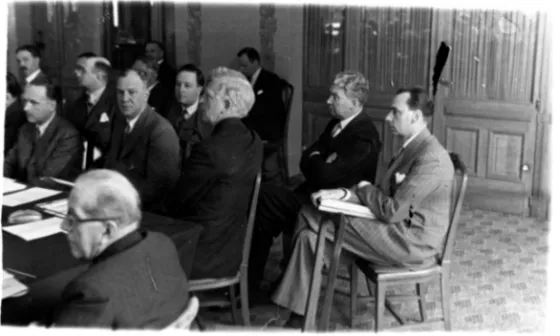
Delegates at the Evian Conference, July 1938. Courtesy of Harry S. Truman Library & Museum.

The world seemed to be divided into two parts–those places where the Jews could not live and those where they could not enter.

Dr. Chaim Weizmann, addressing the Peel Commission on November 25, 1936

The Wagner-Rogers Bill

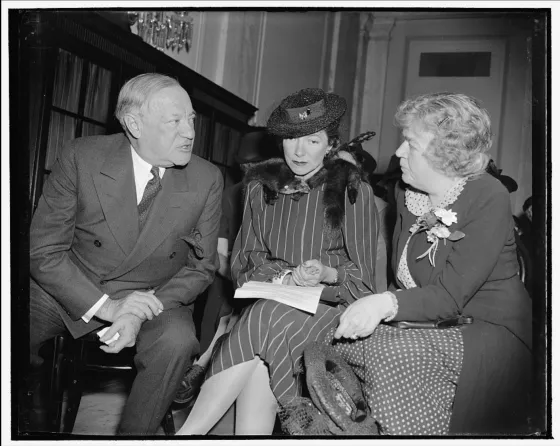
In 1939, Democratic Senator Robert Wagner of New York and Republican Representative Edith Nourse Rogers of Massachusetts introduced legislation to allow ten thousand German children under the age of fourteen to enter the United States in 1939 and again in 1940. These admissions would be above the annual quota for German immigrants. Eleanor Roosevelt, FDR’s wife, publicly supported the bill.

The legislation had little public support, however. One public opinion poll showed that only a quarter of Americans favored it. Opponents argued that it would increase unemployment and that the United States should help poor Americans instead. At the time, FDR was seeking to persuade Congress to loosen the terms of the Neutrality Act, which limited what aid the United States could send to France and Great Britain. Not wanting to antagonize anti-immigration lawmakers, he directed his staff to take no action on the Wagner-Rogers bill. It died in committee.

Library of Congress, Prints and Photographs Division, Harris & Ewing Collection. Actress Helen Hayes urges Senate to pass Wagner-Rogers Bill. April 20, 1939

Senator Robert Wagner (left) and Rep. Edith Nourse Rogers (right) discussing the Wagner-Rogers bill with actress Helen Hayes, April 20, 1939. Library of Congress, Harris & Ewing Collection.

The Voyage of the Damned

The inflexibility of U.S. policy was on public display in late spring 1939. That May, the German ocean liner MS St. Louis departed Hamburg, Germany, for Cuba. The ship carried 937 passengers, mostly Jews hoping to wait in Cuba until they obtained a visa to enter the United States. When the ship reached Havana, Cuban authorities said that all but twenty-eight passengers lacked the documents needed to enter the country and barred them from disembarking. After a week of fruitless appeals, the St. Louis departed Havana.

The St. Louis’s captain hoped that the United States would offer his passengers safe haven. Those hopes were quickly dashed: the quota for admissions for German immigrants had been filled for 1939. Accepting the refugees required Congress to pass a new law or Roosevelt to use his executive authority to allow them into the United States. Neither acted. Canada likewise refused to accept any passengers. The St. Louis returned to Europe, ending what became known as “the Voyage of the Damned.” Roughly 250 of the ship’s passengers died in the Holocaust.

Jewish refugees aboard the MS St. Louis

Jewish refugees aboard the MS St. Louis, June 3, 1939. Courtesy of the National Archives and Records Administration

War Begins in Europe

The outbreak of war in Europe in September 1939 had the perverse effect of intensifying U.S. efforts to limit the number of Jewish refugees it accepted. Leading Americans argued that Europe fell so quickly to the Nazi onslaught because Germany had placed spies and saboteurs abroad. Even FDR repeated unfounded claims that Jewish refugees might be forced to spy for the Nazis.

As a result, the State Department imposed more requirements on refugees. Among other changes, refugees now could not have a close family member still living in Nazi-controlled territory. In mid-1941, the State Department closed its consulates in southern France and Portugal, cutting of the final places in Europe where Jews might escape. It was not until January 1944, after a report criticized the State Department’s obstructionism, that Roosevelt shifted authority for refugee policy to an independent War Refugee Board. It was tasked with rescuing people under Nazi oppression and ultimately aided hundreds of thousands of people in the final months of the war.

www.auschwitz.org

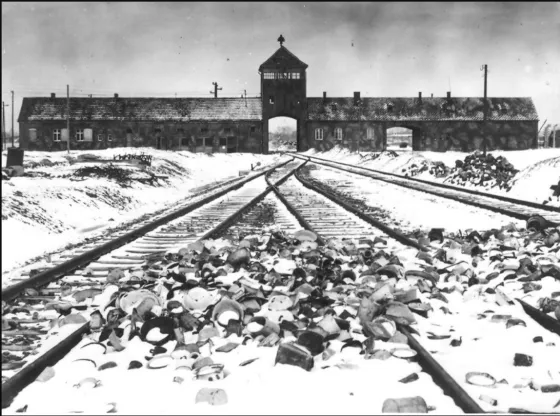
The railway entrance to Auschwitz-Birkenau called "The Gate of Death." Courtesy of the Auschwitz-Birkenau Memorial and Museum, www.auschwitz.org.

The Legacy of the Limits on Jewish Refugees

The refusal of the United States to relax the restrictions that severely limited the number of Jewish refugees entering the United States before World War II meant that tens of thousands of people who might have been saved instead perished in the Holocaust. The United States stuck to its restrictive immigration policy with full knowledge of Germany’s persecution of Jews. Roosevelt and other leading U.S. officials condemned it, and U.S. newspapers frequently covered the plight of refugees. The indifference to the plight of European Jewry would, however, have one positive consequence. After World War II, and in direct recognition of its mistakes before and during the war, the United States championed domestic and international laws that sought to address the challenges facing refugees and displaced persons.

National Security Archive, GWU

Learn More

Primary documents, books, articles, and more on the limits on Jewish refugees from Germany.

Books

Articles

Documentaries and Short Videos

Lectures and Podcasts