China and the United States Reach Trade Plan
By experts and staff
- Published
- CFR Editors
Welcome to the Daily News Brief, CFR’s flagship morning newsletter summarizing the top global news and analysis of the day.
Subscribe to the Daily News Brief to receive it every weekday morning.
Top of the Agenda
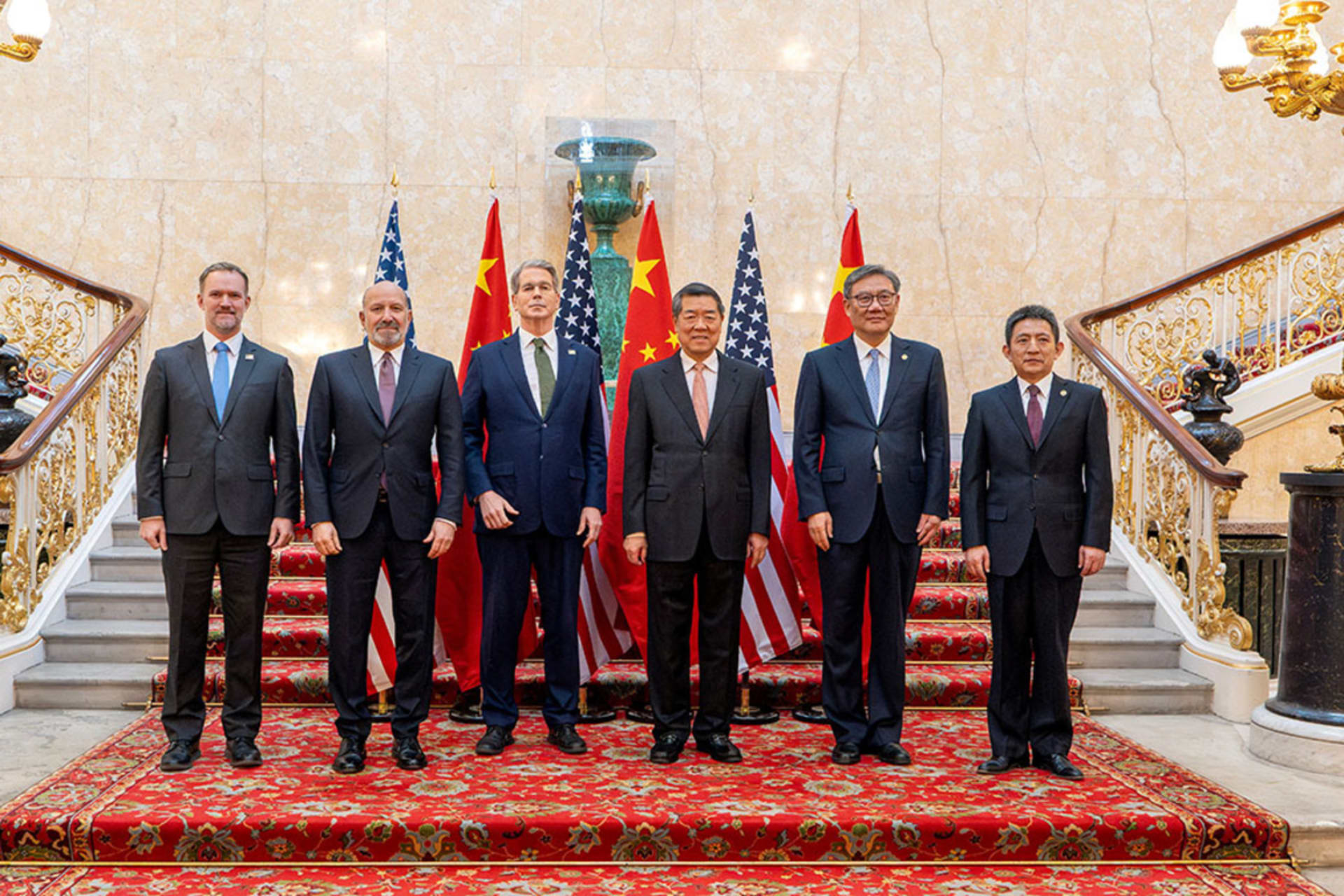
Washington and Beijing reached a plan in London for reducing export controls, officials announced after two days of high-level talks concluded late last night. They suggested the countries agreed on a pathway to address the punitive trade measures that each had imposed following a May 12 trade deal reached in Geneva. U.S. President Donald Trump posted on social media this morning that Beijing would supply magnets and rare earths, while Washington would take steps that include allowing access for Chinese students at U.S. universities. He said the deal still requires his final sign-off as well as that of Chinese President Xi Jinping.
What we know.
- The framework reached yesterday would remove Chinese restrictions on the exports of rare earths and magnets, as well as export controls recently imposed by Washington, U.S. Commerce Secretary Howard Lutnick said yesterday.
- Beijing in recent weeks complained about new U.S. restrictions that affected sales of chip design software to China and the use of certain Huawei chips worldwide.
- Chinese Vice-Minister of Commerce Li Chenggang said the two sides agreed to return to the May 12 consensus, though that deal was framed as a partial step toward resolving broader trade differences at the time.
- If the two sides do not reach a wider agreement by August 10, tariffs of around 30 to 145 percent on the U.S. side and 10 to 125 percent on the Chinese side are due to snap back.
The backdrop. As talks concluded yesterday, the World Bank lowered its projection of worldwide GDP growth this year from 2.7 to 2.3 percent, citing trade tensions. That’s the weakest growth in over twenty years, except for the recessions from the 2008 financial crisis and the coronavirus pandemic. The bank used tariff rates from late May to create the forecast, assuming that Washington will maintain its current tariff suspensions. Increased U.S. tariffs would cause global growth to further diminish, it estimated.
“China has discovered it has leverage over the United States by using the rare earths and other critical minerals that it controls to turn on and off the spigot. And the United States has responded to that. The question will be whether the United States, which put on additional export controls in the name of national security…will be willing to trade that off against other interests like access to critical minerals that feed into a number of other products.”
—CFR President Michael Froman on CNBC
Across the Globe
EU punishes Russia. Brussels is seeking a ban on transactions connected to the Nord Stream pipelines and a lower price cap on Russian oil as part of the latest punitive measures for Russia’s invasion of Ukraine, European Commission President Ursula von der Leyen said yesterday. The Nord Stream ban requires approval from all European Union (EU) member countries, while lowering the oil price cap would also need U.S. cooperation because it is a Group of Seven (G7) measure.
Pakistan hikes defense spending. The country’s government will increase military spending by around 17 percent in fiscal year 2026, officials announced yesterday. The move comes after the country’s recent military clash with India. Despite this boost, total defense spending will remain below the recent record set in fiscal year 2022, according to the country’s finance ministry.
U.S. stance on Palestinian state. Washington no longer fully endorses an independent state for Palestinians, U.S. ambassador to Israel Mike Huckabee told Bloomberg yesterday, marking a major shift from prior U.S. policy. He said that if one is formed, it might not include current Palestinian territories but be located in a different part of the region. A State Department spokesperson declined to comment yesterday, while the White House referred to former comments by Trump proposing a U.S. takeover of Gaza and said that the president was unsure about a two-state solution to the Israeli-Palestinian conflict.
Sanctions on Israeli ministers. Australia, Canada, New Zealand, Norway, and the United Kingdom sanctioned Israeli Finance Minister Bezalel Smotrich and National Security Minister Itamar Ben Gvir yesterday, saying they had repeatedly incited “violence against Palestinian communities.” The sanctions announcement mainly focused on violence in the West Bank. Israel’s foreign minister called the sanctions “unacceptable” and the United States condemned them, saying they did not advance the prospect of a truce in Gaza.
Zimbabwe’s lithium controls. Zimbabwe, Africa’s top lithium producer, said yesterday it will ban the export of lithium concentrates beginning in 2027. The country has banned the export of lithium ore since 2022 in an effort to increase domestic processing. Lithium concentrates are a middle step before the raw mineral becomes battery-grade material.
Sentence for Argentine ex-president. Former Argentine President Cristina Fernández de Kirchner lost her final appeal against a corruption conviction yesterday. The ruling upholds her six-year prison sentence and bars her from a planned run for a legislative seat in September. She rejected the decision, calling the judges “puppets” of Argentina’s economic elite.
School shooting in Austria. Ten students and a gunman died in a high school shooting yesterday in the Austrian city of Graz. Levels of gun violence are relatively low in Austria, but gun ownership is higher than in most European countries. Chancellor Christian Stocker declared three days of mourning and called the event a “national tragedy.”
Alleged Libyan role in Sudan. Sudan’s military accused Libyan warlord Khalifa Haftar’s forces of attacking border posts yesterday. Although Sudan previously accused Haftar of sending weapons to the Sudanese paramilitary Rapid Support Forces, this was the first time Libya was accused of directly participating in Sudan’s conflict. Haftar denied involvement in the attack, and Sudanese forces said today they withdrew from the border area.