China and United States Trade Detente
By experts and staff
- Published
By
- CFR Editors
Welcome to the Daily News Brief, CFR’s flagship morning newsletter summarizing the top global news and analysis of the day.
Subscribe to the Daily News Brief to receive it every weekday morning.
Top of the Agenda
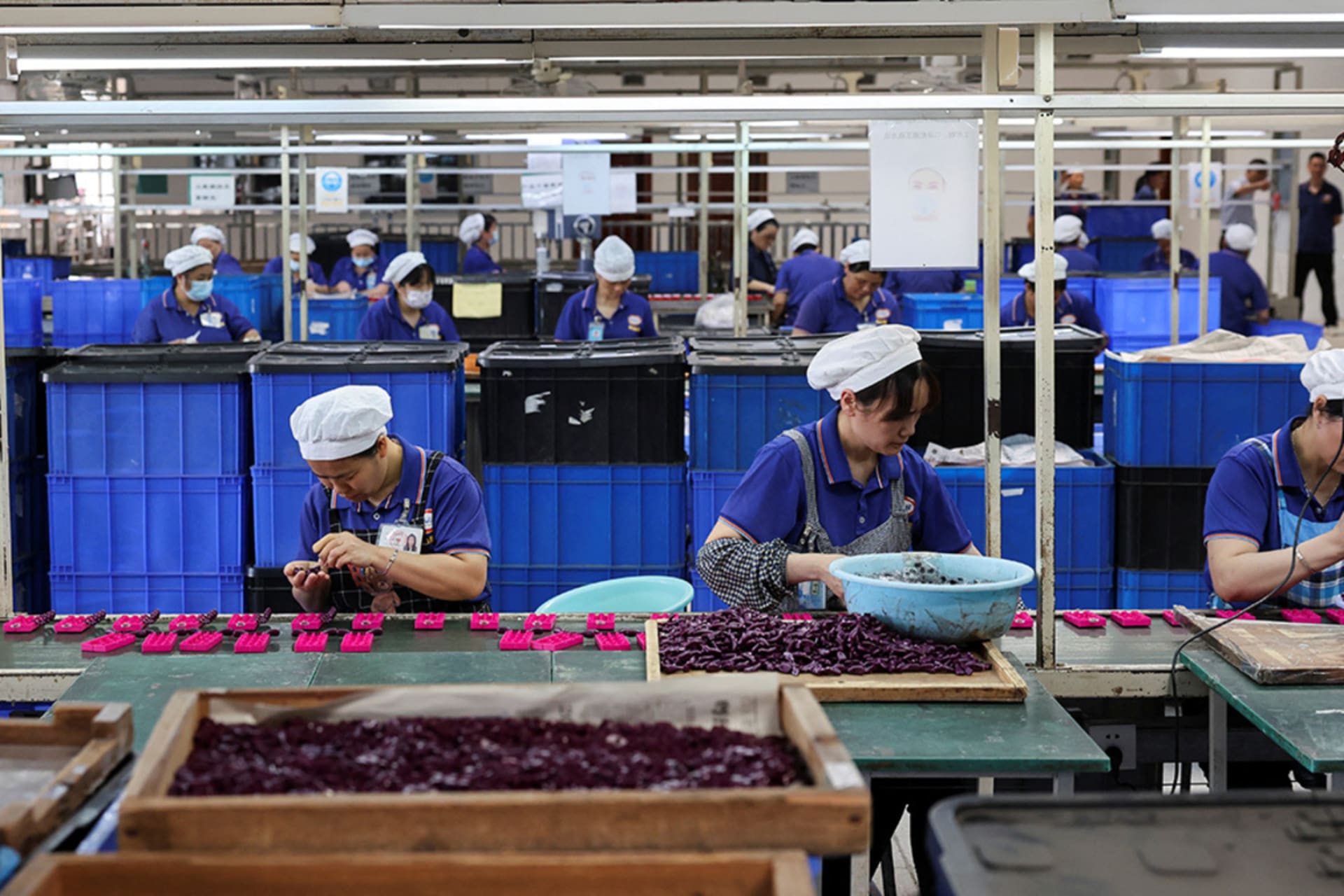
Washington and Beijing agreed to pause tariffs for ninety more days while they continue to negotiate a broader economic agreement. The countries announced the extension yesterday, when a previous ninety-day pause was due to expire. Each voiced satisfaction with ongoing talks, with U.S. President Donald Trump saying yesterday he has a “very good” relationship with Chinese President Xi Jinping and a Chinese embassy spokesperson in Washington calling the pause a “win-win.”
The details.
- This leaves U.S. tariffs introduced this year on Chinese goods at 30 percent and Chinese tariffs on U.S. goods at 10 percent—down from a respective 145 and 125 percent in April.
- China announced yesterday that it will postpone trade and investment restrictions for some U.S. companies that it had originally announced in April.
- The latest tariff extension was discussed at bilateral talks in Sweden late last month. Those talks also focused on restoring China’s rare earth exports after a pause, a process that U.S. Trade Representative Jamieson Greer said early this month was still incomplete.
Looking forward.
- Trump has said that he is likely to meet with Xi before the end of the year if the two countries make an official deal.
- In bilateral talks with China, the United States also sought to address issues like China’s purchases of Russian and Iranian oil and China’s role in fentanyl trafficking, according to U.S. Treasury Secretary Scott Bessent.
- Trump called Sunday for China to quadruple its purchase of U.S. soybeans to address the U.S. trade deficit with the country.
“Today’s trade policy represents a return to a form of power politics in which might makes right. The United States is acting unilaterally because, as the largest economy and consumer market in the world, it can. And China, lip service to multilateralism notwithstanding, is increasingly doing the same. Contagion could follow, spurring cycles of unilateralism and transactionalism that could easily spin out of control.
—CFR President Michael Froman, Foreign Affairs
Across the Globe
Indonesia-Peru trade deal. The countries signed an agreement to increase market access for each others’ goods yesterday as Peruvian President Dina Boluarte visited Jakarta. Negotiations took fourteen months. Indonesia exported some $331 million in goods to Peru last year, while Peru exported $150 million in goods in the other direction. Indonesia also seeks to join the Comprehensive and Progressive Agreement for Trans-Pacific Partnership, where Peru is a member.
Reaction to journalists’ killing. Officials from Germany, Qatar, and the United Kingdom were among those who yesterday condemned Israel’s targeted killing of Al Jazeera journalists in Gaza. Israel had previously claimed one of the reporters had run a Hamas cell, which the journalist and the network denied. The nonprofit Committee to Protect Journalists said at least 192 journalists have died in Gaza since the war began in 2023.
National guard in DC. Trump ordered the deployment of eight hundred National Guard troops in Washington, DC, yesterday after criticizing levels of crime in the city. Violent crime in the capital has dropped in the past two years. It is unusual to use the U.S. military in a domestic crime-fighting role and follows a June deployment of the National Guard in California that is currently being challenged in court.
Death of Colombian politician. Presidential hopeful Miguel Uribe died in Bogotá yesterday, two months after being shot at a campaign rally. While a shooter was arrested, investigators have not announced a motive for the incident. The assassination attempt was reminiscent of high levels of political violence in the country in the 1980s and 1990s.
Japan-Pakistan currency cooperation. Japanese tech firm Soramitsu is working in partnership with the Japanese government to help Pakistan’s central bank develop a digital currency for a pilot launch this year, Nikkei reported. One of its capabilities would be to send and receive money without internet access. If successful, it could be replicated in other countries.
Armenia-Azerbaijan peace. The countries published yesterday the text of a peace deal announced Friday in Washington. They pledged to give up all claims to each other’s territory and cease using force against each other. The agreement also bans the deployment of third countries’ troops on their shared border. It has been initialed but not yet officially signed.
Russia’s strategy in Donetsk. Russian troops have broken through part of the front line of fighting in eastern Ukraine near the logistics hub of Pokrovsk, according to a Ukrainian open-source intelligence group. Ukraine’s military said yesterday it was responding to Russian offensives in the area. Russian forces have aimed to advance toward the city in recent weeks.
Iran’s stance on inspections. A senior International Atomic Energy Agency official traveled to Iran yesterday for a first visit since the Israel-Iran war in June. Ahead of the talks, Iranian officials said they would not permit inspections of Iran’s nuclear sites until reaching a new framework agreement for cooperation with the UN nuclear watchdog.
What’s Next
- Today, the United Nations marks International Youth Day.
- Today, the UN Security Council debates the Middle East and Yemen in New York.
- Tomorrow, German Chancellor Friedrich Merz convenes a virtual summit on Ukraine.
- Tomorrow, Typhoon Podul is expected to make landfall in Taiwan.