Hyundai Raid Sparks U.S.-South Korea Tensions
By experts and staff
- Published
- CFR Editors
Welcome to the Daily News Brief, CFR’s flagship morning newsletter summarizing the top global news and analysis of the day.
Subscribe to the Daily News Brief to receive it every weekday morning.
Top of the Agenda
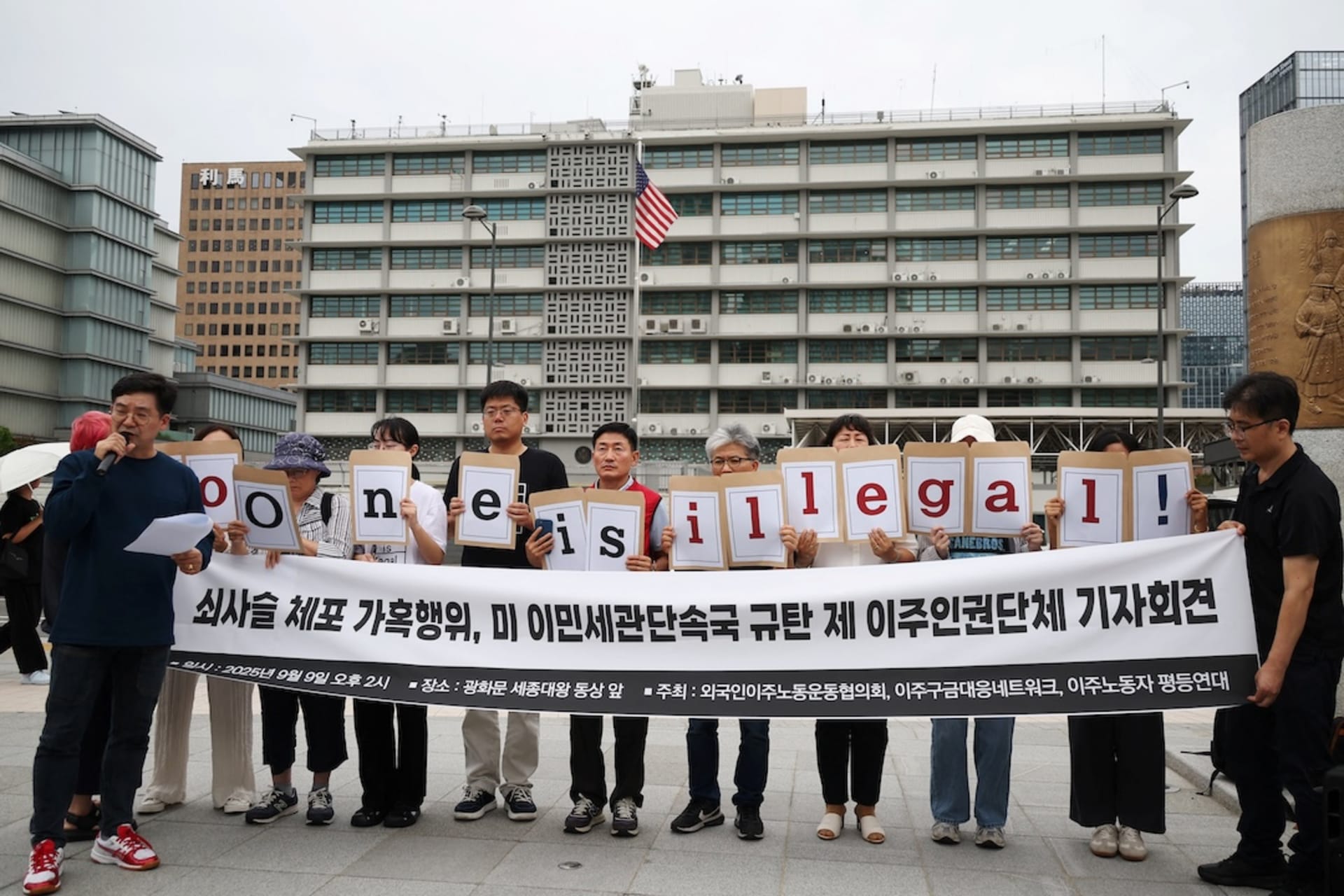
South Korea’s Foreign Minister Cho Hyun is in Washington today after an immigration raid at a U.S. Hyundai factory last week rattled the two countries’ alliance. Cho will discuss the pending departure of more than three hundred South Korean workers that the United States detained—and try to hold together a plan for $350 billion in South Korean investments in the United States that is part of a tariff deal. The bilateral tensions come as the U.S. Supreme Court yesterday empowered the Donald Trump administration to carry out immigration raids in Los Angeles based on factors that lower courts said were most likely unconstitutional, including race or speaking English with an accent.
The raid’s fallout.
- The raid on the Hyundai plant in Georgia prompted broad criticism among the South Korean business community. Work on the plant was frozen, and LG and Hyundai are among companies that paused some business travel to the United States.
- The policy director of the South Korean president’s office, Kim Yong-beom, said that Seoul’s plans for large-scale investments in the United States cannot proceed unless concerns around potential immigration actions are addressed. “The government has conveyed the public outrage felt by our citizens directly to the United States,” Kim said.
- Seoul seeks to ensure that the workers leave the United States voluntarily rather than being deported and that they are permitted re-entry.
The Supreme Court case.
- In a 6–3 ruling, the Supreme Court backed the Trump administration’s push to carry out immigration raids based solely on factors such as race, whether a person speaks English with an accent, and the type of work that they do.
- Immigration rights groups had argued that the policy violates the Fourth Amendment, which bars unreasonable searches, saying it amounts to “blatant racial profiling.”
- Farms in multiple U.S. states have reported labor shortages as immigration authorities increasingly target workplaces.
“Workplace raids are highly visible and cause a lot of outrage…Some of the undocumented are working very low-wage, menial jobs that are hard to get Americans to do at any wage. Others are filling in gaps in the high-tech industries.”
—CFR expert Edward Alden in Foreign Policy
Across the Globe
PM ousted in Nepal... Prime Minister K.P. Sharma Oli resigned today in the wake of antigovernment protests. At least nineteen people have died in what is the country’s worst unrest in decades. The youth-led demonstrators objected to a social media ban, government corruption, and lack of economic opportunities. Oli had recently begun a fourth term.
...and in France. France’s government collapsed after some 65 percent of the legislature voted to oust Prime Minister François Bayrou yesterday. President Emmanuel Macron is expected to name his fifth prime minister in less than two years “in the coming days.” Bayrou had tried to advance unpopular spending cuts that also triggered plans for trade union strikes on September 18.
Incumbent victory in Norway. The ruling left-wing Labour Party of Prime Minister Jonas Gahr Støre won another term yesterday, improving on its vote share from the last elections in 2021. Støre is expected to form a coalition with four smaller center-left parties that will control just over half of the legislature. Meanwhile, the anti-immigration Progress Party grew to become the second-largest force in parliament.
Evacuation order in Gaza. An Israeli military spokesperson ordered all remaining one million residents of Gaza City to evacuate today as Israel prepares to operate in the area with “great force.” Though the military already issued evacuation orders for parts of the city, only 10 percent of residents had left as of last Wednesday. Israel says the operation is necessary to defeat Hamas, while the UN humanitarian office warned last week that it would lead to civilian “catastrophe.”
Ethiopian dam launch. Africa’s largest hydroelectric dam was officially inaugurated in Ethiopia today despite ongoing disputes with Egypt and Sudan regarding the project, which could provide power and electricity across East Africa. The latter countries say that it could unfairly divert water from the Nile River. Years of attempts to mediate the dispute by the United States, United Arab Emirates, and World Bank have failed.
U.S. shift on disinformation. The United States told European countries it is turning away from joint efforts to push back against disinformation from countries including China, Iran, and Russia, unnamed European officials told the Financial Times. Until now, a memorandum of understanding signed under the Joe Biden administration had kept cooperation on the issue alive even after a State Department initiative responsible for the work ended in April.
African climate model. Commercial banks and development banks signed a deal designed to mobilize up to $100 billion for industrial projects powered by green energy, Kenyan President William Ruto said yesterday at the Africa Climate Summit in Ethiopia. The framework for the projects was first announced at the annual UN climate summit, COP28, in 2023. Ethiopia is bidding to host COP32 in 2027.
Crackdown on Turkish opposition. Turkish police used pepper spray on demonstrators who sought to bar the entry of a court-appointed leader to the main opposition Republican People’s Party (CHP) headquarters yesterday. Critics said the court’s appointment of a former lawmaker to lead the party is the latest step aimed at weakening it. Authorities jailed the CHP’s Ekrem İmamoğlu—who was the mayor of Istanbul and a leading opponent to President Recep Tayyip Erdoğan—earlier this year.