President Trump’s Iran Address Left Critical Questions Unanswered
The president’s speech last night dodged the most significant questions that Americans, and U.S. allies, have about Operation Epic Fury.
By experts and staff
- Published
Experts
![]() By James M. LindsayMary and David Boies Distinguished Senior Fellow in U.S. Foreign Policy
By James M. LindsayMary and David Boies Distinguished Senior Fellow in U.S. Foreign Policy

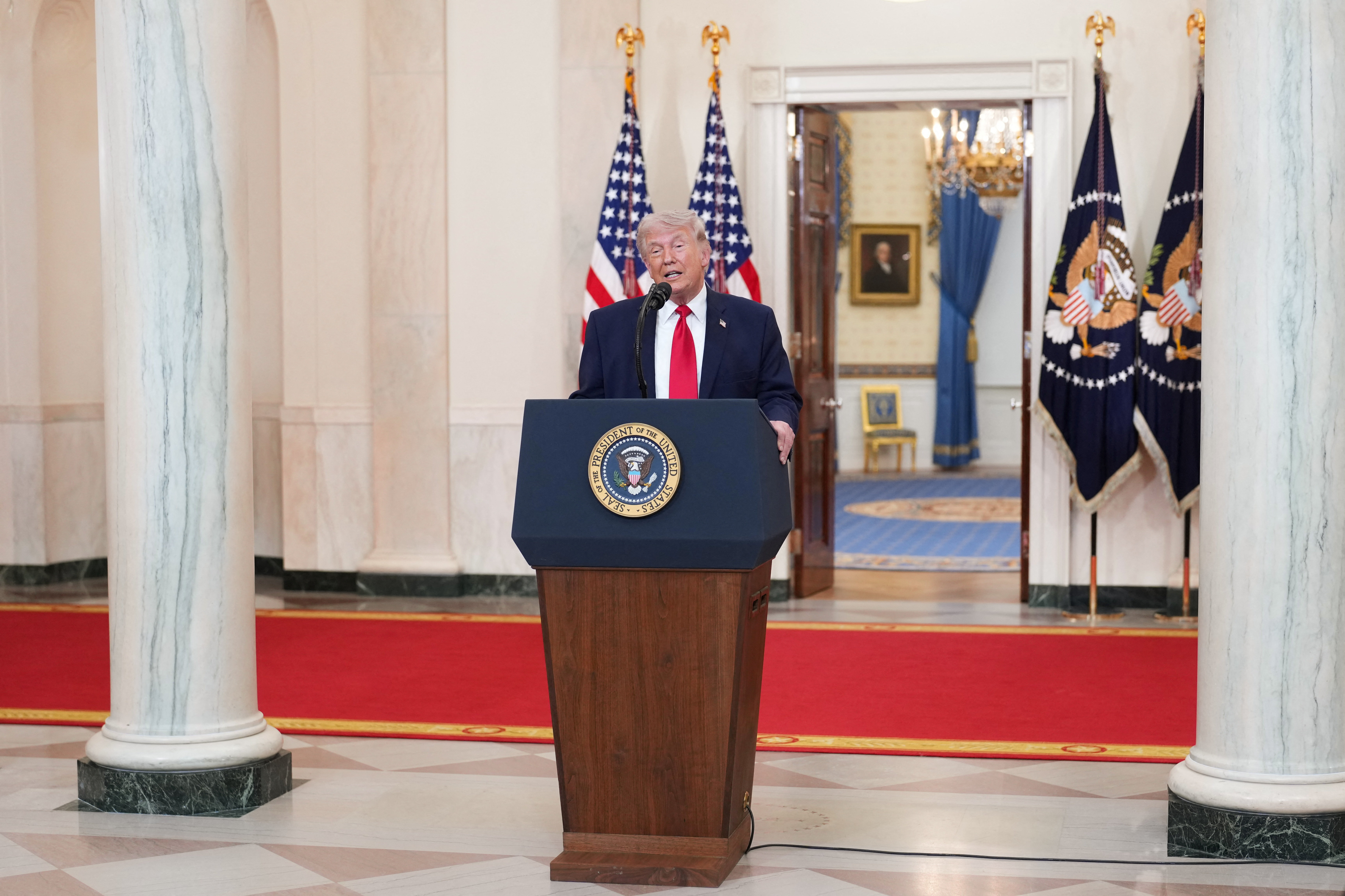
Donald Trump addressed the nation on the Iran War last night. To judge by news reports, his goal was to reframe the public debate in his favor. Poll after poll shows that Americans remain deeply skeptical about the war’s merits and likely consequences. That skepticism has persisted despite the administration’s insistence that Operation Epic Fury is substantially degrading Iran’s military capabilities and will soon end.
Political scientists would have cautioned the Trump team about how much a presidential speech can move public opinion. For all the talk of a presidential bully pulpit, there’s not much evidence it exists. To borrow a phrase that Bruce Jentleson coined years ago, Americans are “pretty prudent.” They care less about what is said than what has happened already and what is likely to happen tomorrow.
Trump’s nineteen-minute address did little to address those concerns. Most of his remarks instead rehashed points he has been making since Operation Epic Fury began. He extolled the bravery and professionalism of the U.S. military (which are immense), denounced the evils of the Iranian regime (which are many), and promised better days ahead (which may or may not be coming).
Fact-checkers and subject-experts will spend the next day or so plumbing the exaggerations and misstatements in Trump’s speech. No, his administration has not eliminated inflation in the United States or brought in $18 trillion in investments. No, encouraging other countries to buy their oil and gas from U.S. producers will not solve energy shortages or prevent energy price spikes. To the contrary, more buyers for U.S. oil and gas means higher prices for Americans, especially in the short run. That is Econ 101. And no, killing one set of Iranian leaders only to elevate harder-line leaders to power does not constitute regime change.
The more troubling aspect of Trump’s speech is that he glided over the biggest challenges the United States faces in seeking to settle the war on its terms, not Iran’s. Three stand out.
- Can the United States keep Iran’s military capabilities degraded? Trump said last summer that Operation Midnight Hammer had “obliterated” Iran’s nuclear program. But one of the justifications for launching Operation Epic Fury was that Iran was a week or two away from having a nuclear weapon. Rebuilding stocks of conventional weapons is an even easier task. Will the United States need to periodically bomb Iran—or “mow the lawn” in Pentagon parlance —to keep Tehran in check?
- If the United States has substantially degraded Iran’s ability to project power, as Trump argued, why has Iran been able to close the Strait of Hormuz? This is no minor setback. Trump’s own National Security Strategy, released just four months ago, argued that “America will always have core interests in ensuring that… the Strait of Hormuz remain open.” The world is discovering that the state of a country’s military is only part of its ability to project power. Geography matters as well.
- How will Trump square bombing Iran “back to the stone ages” and letting others re-open the Strait of Hormuz with his promise not to let U.S. Gulf allies “get hurt or fail in any way, shape, or form”? Putting aside the fact that indiscriminately targeting civilian energy infrastructure is a war crime, Iran would almost certainly retaliate against its Arab neighbors in kind. That would create a massive humanitarian disaster in the Gulf. Even if Trump’s threat to destroy Iran’s energy infrastructure is a bluff, the closure of the Strait of Hormuz remains a dire economic threat to Saudi Arabia, the United Arab Emirates, Qatar, Kuwait, and Iraq. If the United States with its unrivalled military deems re-opening the strait too risky, why would other capitals think differently? The safer alternative for countries that depend on Gulf oil and gas might be to pay the Iranians for the right to transit the Strait. That, of course, would fill Tehran’s coffers and enable it to rebuild its military and reassert its regional influence, thereby undercutting U.S. Gulf allies and defeating the purpose of Operation Epic Fury.
Until Trump and his advisers can answer these questions, it is hard to see how the Iran War will advance U.S. interests rather than set them back.