United States to Send Weapons to Ukraine
By experts and staff
- Published
- CFR Editors
Welcome to the Daily News Brief, CFR’s flagship morning newsletter summarizing the top global news and analysis of the day.
Subscribe to the Daily News Brief to receive it every weekday morning.
Top of the Agenda
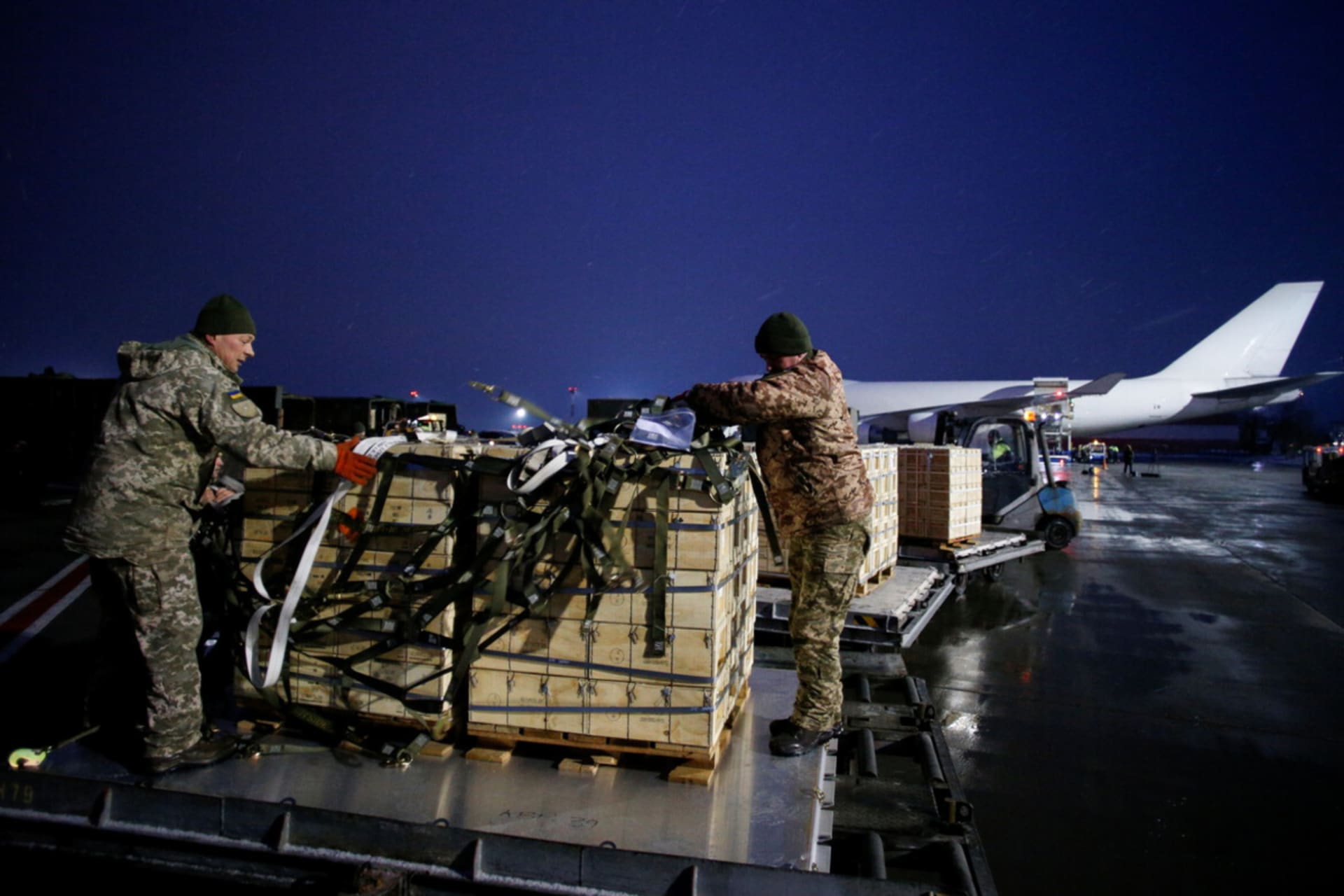
U.S. President Donald Trump said yesterday that he would send weapons to Ukraine via NATO. Trump has stepped up criticism of Russia this week and said he was “looking at” a Russian sanctions bill with bipartisan support in the Senate. He also said that he would make a “major” statement about the Kremlin on Monday. It comes as Russia amplified its attacks on Ukraine this week with record-high drone strikes that suggested a change in tactics.
The potential weapons deal.
- Trump told NBC yesterday that he’d struck a deal with NATO to distribute weapons and that the alliance would “reimburse the full cost.”
- NATO Secretary-General Mark Rutte posted on social media Thursday that he had spoken to Trump and was now “working closely with Allies to get Ukraine the help they need.”
- Two unnamed sources told Reuters that the Trump administration would for the first time use a presidential drawdown authority that the Joe Biden administration often invoked to help Ukraine, which allows for withdrawing arms from U.S. stockpiles for allies in emergencies.
- The sources added that the package could be worth $300 million.
- U.S. Secretary of State Marco Rubio, speaking to reporters from Malaysia yesterday, said Washington was “actively” in conversation with European countries about sharing Patriot batteries with Ukraine.
The latest negotiations.
- In Malaysia, Rubio also met with Russian Foreign Minister Sergey Lavrov. Both sides called the conversation “frank.”
- In Italy, European leaders convened yesterday for an annual conference on Ukraine’s recovery. They announced a new equity fund and private-public partnerships anticipated to result in around $12 billion in investments.
- Countries that agreed to send troops as a postwar stabilization force also met to develop plans. They decided on a future headquarters in Paris that would later rotate to London. Keith Kellogg, the U.S. special envoy for Russia and Ukraine, attended the meeting.
“The Trump administration clearly needs a better strategy—sending the message to [Russian President Vladimir] Putin that, contrary to his pronouncements, time is not on his side and that, as the Russian ruler likes to taunt Ukraine, the terms of any negotiated settlement will be worse for Russia the longer he persists on his current course.”
—CFR expert Thomas Graham
Across the Globe
Fresh round of tariffs. Trump unveiled a 35 percent tariff on Canadian imports yesterday for an August 1 deadline, reigniting trade tensions with one of the United States’ biggest trading partners. The move exempts goods covered by the U.S.-Mexico-Canada Agreement. Meanwhile, Brazil pledged yesterday to counter Trump’s threatened levies with a matching 50 percent tariff of its own.
UK-France deals. During a state visit to the UK, French President Emmanuel Macron and UK Prime Minister Keir Starmer announced two deals. The first is a nuclear security agreement that will have the allies work together to deploy weapons if Europe comes under major threat. The second is a migration deal to address English Channel crossings; as part of this pact, the UK will return some migrants to France in exchange for an equal number of migrants from France that have closer ties to the UK.
Houthi attack aftermath. Ten people have been rescued from the Red Sea after the second attack in a week by Yemen’s Houthi rebels, which sank a Liberia-flagged cargo ship, according to the European Union’s maritime security mission. Twenty-five people were on board, and three were killed. The Houthis claimed the attack and released video of them launching missiles. The group also claimed it had taken some of the ship’s survivors to an undisclosed location.
U.S. sanctions UN official. Top UN human rights officials called to reverse U.S. sanctions on Francesca Albanese, an independent UN official investigating Israel over its conduct in Gaza. The State Department sanctioned Albanese on Wednesday, reportedly after unsuccessfully trying to get the UN’s human rights body to cut Albanese from her position. Last month, Albanese said the International Criminal Court should prosecute U.S. executives profiting from Israel’s war in Gaza. She decried the sanctions as “obscene” yesterday.
Trump’s Africa summit. Trump pressed the presidents of five African countries to accept deported migrants from the United States while hosting the leaders this week. At the three-day White House gathering, Trump has sought to deepen economic ties, predominantly through “shifting aid to trade.” It has not gone entirely smoothly: Trump angered Liberians after making comments about the “beautiful English” of the English-speaking country’s president.
Peru’s human rights amnesty. A law granting amnesty to military and police prosecuted for human rights abuses during the country’s 1980–2000 conflict has passed Peru’s Congress. It is now being considered by President Dina Boluarte. Human rights organizations said the law could overturn more than 150 convictions and affect 600 cases; lawyers for victims said they would appeal to international bodies.
Birthright citizenship block. A federal judge in New Hampshire issued a ruling yesterday that blocks Trump’s executive order to end birthright citizenship for some children. The judge granted the plaintiffs class action status, which allowed a new order blocking the policy. A Supreme Court ruling two weeks ago had narrowed the power of lower courts on nationwide injunctions, which prevented the administration from acting while legal battles played out; the judge said “class action is different.”
Outcome of Iran strikes. Israeli intelligence indicates that Iran could retrieve some uranium from the three nuclear sites that the U.S. and Israel attacked last month, an unnamed Israeli official told media in Washington. The official added that such retrieval attempts would likely be detected, and that Israel believes Iran’s nuclear program was set back by about two years. Separately, the AP has reported that Iran’s retaliatory strike on a U.S. air base in Qatar had hit a dome that stored communications equipment.
What’s Next
- Today, Russia’s foreign minister visits North Korea.
- Today, Bosnia marks the thirtieth anniversary of the Srebrenica genocide.
- Today, Trump will visit the Texas flood sites.
- This weekend, the Wimbledon tennis tournament has its final matches.