U.S.-Central Asia Summit
By experts and staff
- Published
- CFR Editors
Welcome to the Daily News Brief, CFR’s flagship morning newsletter summarizing the top global news and analysis of the day.
Subscribe to the Daily News Brief to receive it every weekday morning
Top of the Agenda
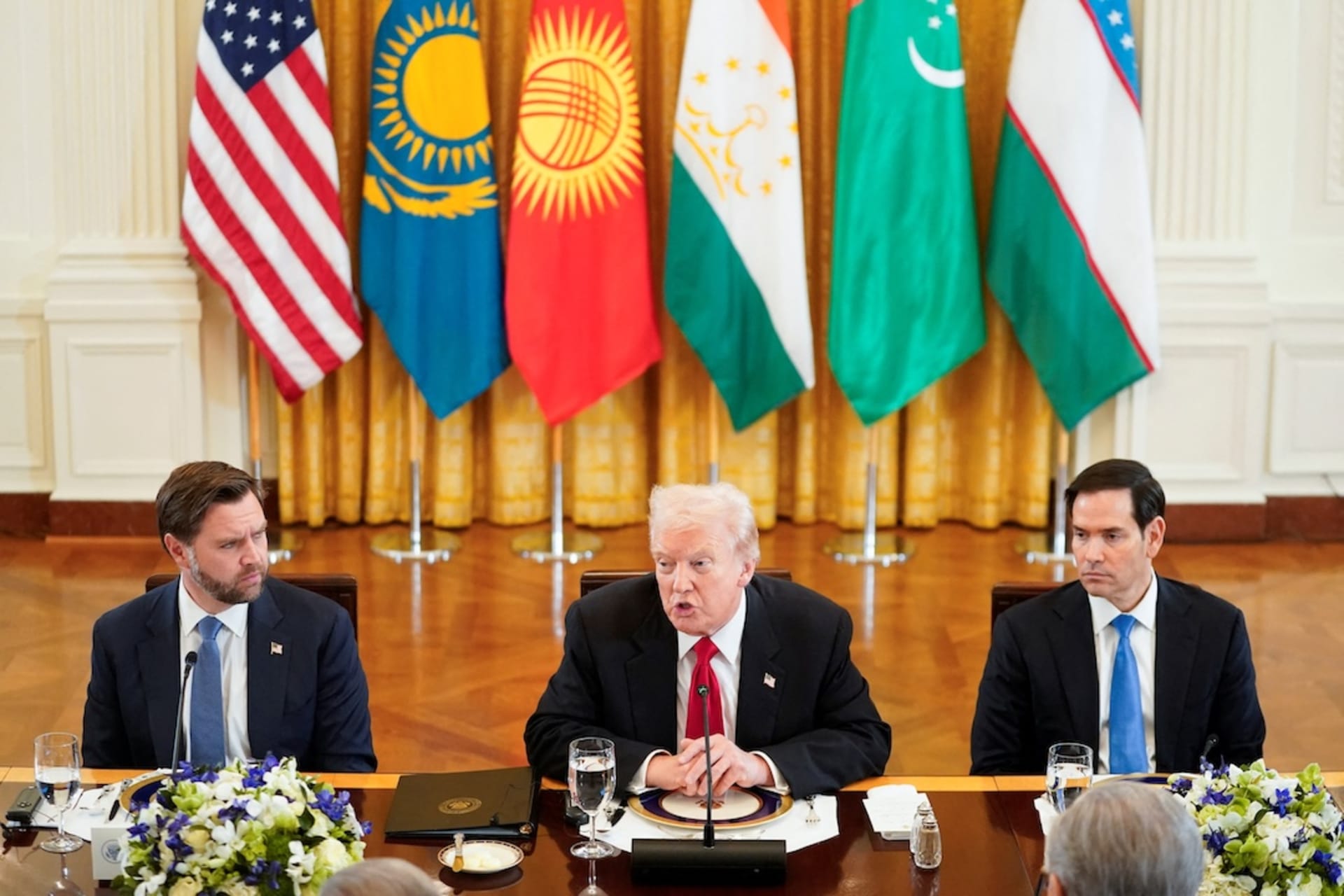
The Trump administration announced plans to increase cooperation with Central Asian countries as regional leaders met with Trump in Washington yesterday. Uzbekistan will buy and invest more than $100 billion in the United States over ten years, while Kazakhstan will join the Abraham Accords, Trump said. Kazakhstan announced the signing of commercial deals with the United States worth $17 billion. The leaders of Kyrgyzstan, Tajikistan, and Turkmenistan also visited the White House. The five Central Asian countries hold large deposits of copper, gold, and rare earths, and produce roughly half the world’s uranium, a key component in the production of nuclear fuel. The agreements mark a step toward competing with China and Russia, which currently play major roles in the region’s critical minerals sector.
Deep dive. Uzbekistan’s planned purchases and investments in the United States will focus on areas such as critical minerals, aviation, and auto parts, Trump announced, adding that almost $35 billion in transactions will be made over the next three years. Kazakhstan, Tajikistan, and Uzbekistan agreed to buy up to thirty-seven Boeing airplanes from the United States. And while Kazakhstan had already normalized relations with Israel—the key component of the Abraham Accords—officially joining the Accords will bring increased economic “dividends,” Kazakh President Kassym-Jomart Tokayev told the New York Times.
Zoom out. Sergio Gor, U.S. ambassador to India and special envoy to South and Central Asia, told Central Asian officials Wednesday that they’d have “a direct line to the White House” and “the attention that this area very much deserves.” The five Central Asian countries have been meeting with the United States since 2015 in an annual summit, but the intensifying global race for critical mineral assets has increased Washington’s attention to the relationship in recent years. U.S. trade with Central Asian countries is currently hampered by a 1974 legal provision limiting trade with former Soviet economies, but that may soon change: earlier this week, a bipartisan group of senators introduced a bill to repeal it.
“At the end of the day, there are a limited number of countries with the geological assets to help secure contemporary critical-materials supply chains, and the Trump administration must determine how best to engage with them. Yet the United States must do more than mine and refine.” —CFR expert Heidi Crebo-Rediker, Foreign Affairs
Across the Globe
Sudan ceasefire talks. Paramilitary group Rapid Support Forces (RSF) said yesterday it accepted a ceasefire proposal put forth by the United States and Arab countries. The Sudanese army, the RSF’s opponent in the country’s two-year civil war, said yesterday that it was committed to defeating the RSF by force. Several previous attempts to mediate an end to the war have failed.
War powers resolution fails. The Senate voted down a proposed resolution yesterday that would have required congressional approval for military action against Venezuela. The 49-51 vote was largely along party lines, with only two Republicans breaking with the Trump administration. It was the second time in a month that a resolution to assert congressional power over the use of military force failed.
Israel strikes in Lebanon. Israel carried out multiple strikes in southern Lebanon yesterday, saying it was targeting Hezbollah. Despite the ceasefire between the two countries reached last November, Israeli Prime Minister Benjamin Netanyahu warned earlier this week that Israel would increase strikes on Lebanon if its government did not ramp up efforts to disarm Hezbollah.
Modi-Trump talks. Trump said yesterday that his trade talks with India are “going good,” called Indian Prime Minister Narendra Modi “a great man,” and floated a possible 2026 visit to India. The U.S.-India relationship has cooled in recent months due to U.S. tariffs and Trump’s involvement in the India-Pakistan border crisis, which India considers a bilateral issue. While the Quad—a group that includes Australia, India, Japan, and the United States—was due to meet in India in the later half of this year, that meeting has now been pushed to 2026.
Forest protection fund. Countries including Brazil, Indonesia, and Norway pledged $5.5 billion to a new fund aimed at preserving tropical rainforests worldwide. The investment fund, officially launched yesterday, intends to pay a share of its profits to countries that keep their forest standing. Brazil hopes the fund will eventually grow to $125 billion, with much of the money eventually coming from private investors, and support more than seventy countries with tropical rainforests.
Spanish anti-crime raid. Spanish authorities arrested thirteen people across multiple cities suspected of being members of the Venezuelan Tren de Aragua crime group. The gang is among those the Trump administration recently designated as terrorist organizations. Many Venezuelans who have fled the country’s economic crisis in recent years have gone to Spain.
Drop in Chinese exports. China’s total exports fell in October for the first time in eight months, reversing a trend that had allowed it to offset falling U.S. trade by boosting exports to other partners. Prices for many of China’s top exports such as cars, solar panels, and batteries have been falling, and countries including Brazil, India, and Turkey have recently raised tariffs on Chinese goods. Still, China has already exceeded $3 trillion in exports this year, the fastest it has ever reached that milestone.
EU visa tightening. The European Union (EU) announced tightened visa rules for Russians today, citing the “weaponization of migration, acts of sabotage, and potential misuse of visas.” Russians will now be required to apply for a new visa each time they travel to the bloc, with some exceptions for dissidents, journalists, and human rights activists.
What’s Next
Today, Hungarian Prime Minister Viktor Orbán visits Washington, DC.
Today, French President Emmanuel Macron visits Mexico.
Sunday, the EU and the Community of Latin American and Caribbean States hold a summit in Colombia.