U.S. Government Begins Reopening
By experts and staff
- Published
- CFR Editors
Welcome to the Daily News Brief, CFR’s flagship morning newsletter summarizing the top global news and analysis of the day.
Subscribe to the Daily News Brief to receive it every weekday morning
Top of the Agenda
The U.S. government is reopening after its longest-ever shutdown, triggering a return to work for hundreds of thousands of Defense and State Department workers. Though active-duty military and some civilian defense workers stayed on the clock, the forty-three day shutdown included mass furloughs at those departments. It also suspended the release of U.S. economic statistics, roiled flights at airports, and halted some international aid and overseas development funding.
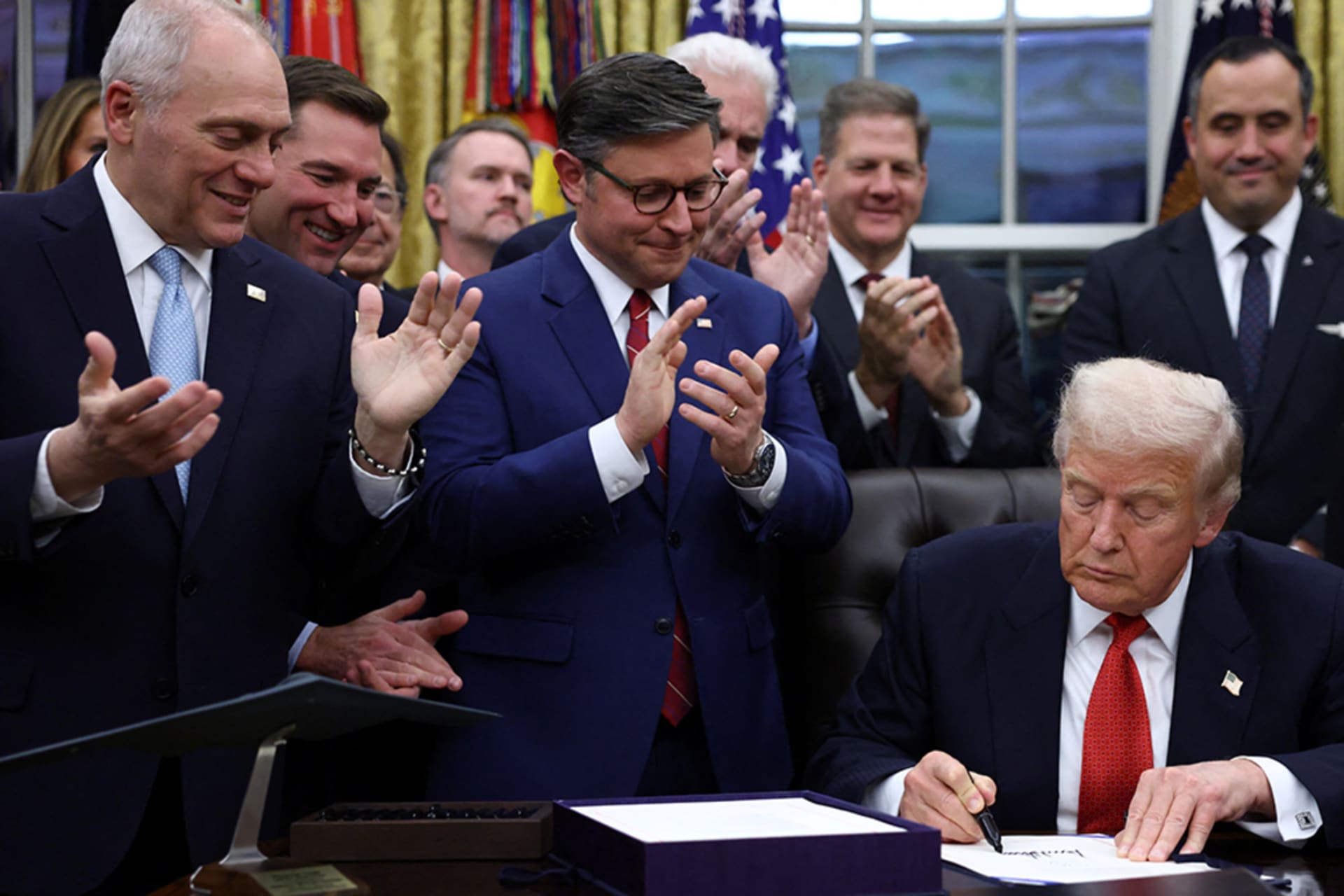
How it ended. President Donald Trump signed a bill to reopen the government last night, hours after the House of Representatives advanced it along party lines. Eight Senators broke with the Democratic caucus to support it on Monday. Democrats folded on a key demand regarding the removal of subsidies for health insurance, which have not been restored in the new funding package. However, the new spending package provides back pay for some furloughed workers and funds the government through the end of January.
Lingering impacts. While some federal benefits, such as SNAP food aid, are expected to be restored quickly, other government functions may take longer to fully return. There is now a backlog of unreleased economic data on topics like jobs, inflation, and exports. While private sector and state government estimates suggest the job growth has remained weak during the shutdown, these evaluations are often based on less comprehensive data than the federal government has available. Some foreign policy experts have also warned of a lingering hit to U.S. credibility after the shutdown froze funding for new projects at agencies like the U.S. International Development Finance Corporation (DFC).
“For DFC, paralysis means pausing investment activity and dealmaking mid-transaction without a clear restart timeline; placing existing investments and commitments at risk; indefinitely holding project development activities; and potentially causing permanent harm to the international credibility of the United States’ leading development finance tool as a reliable long-term financial partner. This was an unforced error.”
—CFR expert William Henagan writes for the Greenberg Center on Economic Studies
Across the Globe
G7 talks Russia…Group of Seven (G7) foreign ministers jointly pledged to maintain economic pressure on Russia over its war in Ukraine following a meeting in Canada yesterday. In talks regarding a potential end to the war, Russia has made a demand that Ukraine cannot agree to, U.S. Secretary of State Marco Rubio told reporters.
…and the Caribbean. The officials also discussed the U.S. military campaign against alleged drug traffickers in the Caribbean, which French Foreign Minister Jean-Noël Barrot argued violated international law. Rubio countered that Europe does not dictate how the United States defends its security. He also denied news reports that London had suspended some intelligence-sharing due to concerns over the boat strikes, saying Washington was not asking for help in its campaign and “nothing has changed or happened that has impeded in any way our ability to do what we’re doing.“
Iraq’s election results. Prime Minister Mohammed Shia’ al-Sudani’s political group won eight out of eighteen districts in Tuesday’s parliamentary election, topping opponents but not securing enough seats to govern without a coalition. Since al-Sudani took power, he has focused on balancing Iraq’s foreign policy interests between the United States and Iran.
Kenyan elected at ICJ. After multiple rounds of voting, Kenyan jurist Phoebe Okowa was elected yesterday to fill a vacant seat on the International Court of Justice (ICJ). The spot opened after Somali Judge Abdulqawi Yusuf resigned. Okowa will serve for the remainder of Yusuf’s term, which ends in February 2027.
More powers for Pakistani leader. The country’s legislature approved a constitutional amendment expanding army chief Asim Munir’s authority over the military and granting him lifetime legal immunity. The measure also restricts the independence of Pakistan’s Supreme Court. Two parties opposed the bill, including that of former Prime Minister Imran Khan, who remains jailed on a corruption conviction.
U.S. sanctions targeting Iran. The United States announced new sanctions yesterday on thirty-two people and entities across Europe and Asia that it said had supported Iran’s ballistic missile program. This is the second tranche of new sanctions imposed by the Trump administration on Iran since UN sanctions on the country snapped back earlier this year following the full expiration of the 2015 nuclear deal.
Toyota investment. Toyota announced yesterday it plans to invest $10 billion in the United States over the next five years. It’s the largest such announcement by a Japanese auto firm since Trump took office. Toyota plans to increase U.S. production of components it usually makes domestically following a Trump administration push for local production.
Climate action flotilla. On the third day of COP30 in Brazil yesterday, activists sailed dozens of boats near the site of the climate talks to mark the start of a “people’s summit” focused on civil society demands. This is the first time in years that COP is hosted in a democratic country. Security guards did remove demonstrators without credentials who broke into the main conference area Tuesday.
What’s Next
Today, Thailand’s king and queen begin a state visit to China.
Today, the G20 holds a think tank summit in South Africa.
Tomorrow, Cypriot President Nikos Christodoulides visits Germany.